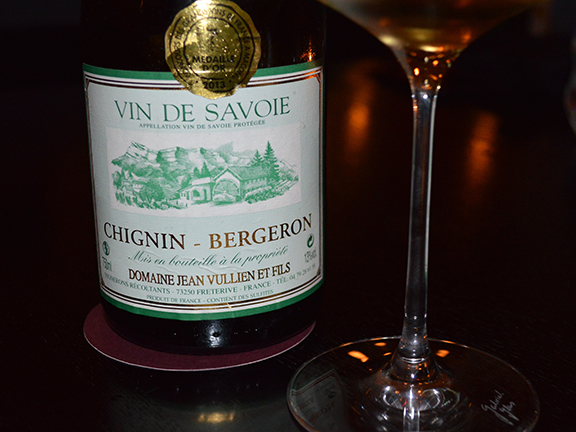
Foradori 2012 Teroldego, wow, what a wine!

foradori teroldegoOn Sunday night we hosted our Levy-Kelly cousins at our house for a spaghettata and a little post-Thanksgiving celebration.

The newest member of the mishpucha, Chiara, who’s from Viterbo, made some excellent meatballs for the occasion and we paired with a bottle of 2012 Teroldego by Foradori, a wine that really blew me away for its value and extreme quality and originality.

I actually drank the last glass in the bottle on Monday night and it was even better than than the previous evening: its vibrancy and electric fruit seemed even more present after a day of aeration.

It had that “nervousness,” as Italian like to describe the tension between the wine’s acidity and tannin.

Pretty hard to beat its value at $30 a pop in our market (about $25 in California).

In other news…

Just had to share this photo of Lila Jane, snapped this morning as she was helping her mother bake cookies. Not a bad gig being the daughter of a cookie lady, eh?

cookie monster

Franciacorta (in a plastic cup) for a southeast Texas Thanksgiving

TASTE FRANCIACORTA WITH ME IN SEATTLE ON MONDAY, DECEMBER 7.
CLICK HERE FOR DETAILS AND RSVP INFO (FREE TASTING).

what is the best wine to pair with thanksgivingOne of the things I’ve enjoyed the most about living in central and southeast Texas is how passionate people are about cookery and how devoted they are to family culinary traditions.

The Parzen family spent its holiday this year in Bridge City, a town that sits between Port Arthur, birthplace of Janis Joplin, and Orange, birthplace of Tracie P and the last city on Interstate 10 as you head east through Southeast Texas toward Louisiana (pronounced without the o around those parts).

That’s my Thanksgiving plate (above). And if you’re wondering about the peas and mayonnaise, that’s eight layer salad (not to be confused with seven or nine layer salad). My mother-in-law Mrs. B substitutes the traditional iceberg lettuce with romaine because she knows my preference for leafy greens.

Those are some the sides (below): boiled corn, sweet potato pie topped with roast pecans and marshmallows, mashed potatoes, and the seven layer salad (foreground).

thanksgiving recipesHouston (two hours away by car) is probably the closest urban area where Franciacorta is available but I was happy to bring a few bottles from my private stash to share with the wine lovers.

Honestly, not everyone in southeast Texas likes to drink wine. Beer, “Crown” and Sprite, gin and tonic, and sweetened tea were the beverages of choice this year (and most years, for that matter). But everyone made a point of tasting “Jeremy’s wine,” if not for any other reason than hallmark southeast Texan politeness (another one of my favorite things about living in Texas, where, even when people may find my background exotic and generally don’t share my political views, they always treat me with great humanity).

Southeast Texans aren’t squeamish about day-drinking and we began opening bottles around 1 p.m. about an hour before the meal was served.

what is the best glass for champagneWhen you can’t be with the stemware you love, love the stemware you’re with.

With literally 20+ guests, not counting the ebb-and-flow visitors, and a tide of kids (bouncing off the walls from all the sugar they consume on a feast day), it really wouldn’t be advisable to break-out your best Riedel at a southeast Texas Thanksgiving.

Although it’s not ideal, the plastic cup, once rinsed with a drop or two of wine, is not a bad vessel for sparkling wine, which is served sufficiently chilled so as not to be affected by the heat imparted by your grasp (unless you intend to nurse your wine, which really doesn’t occur with any great frequency at a southeast Texas Thanksgiving).

I really liked the way that Franciacorta worked with the meal this year: it had just the right amount of freshness and depth to work well with the savory, sweet, and tart dishes (because the Franciacorta consortium is my client, and an extra-sensitive one at that, I’m not going to reveal which producer I poured, but suffice it to say that it’s a wine currently available in Texas at Spec’s).

The best thing was how the wine’s trademark sour quality just seemed to wrap itself around the myriad flavors of the Thanksgiving repast. Although the brut, extra brut, and nature (no dosage or “zero dosage”) are my favorites, even the wines with greater amounts of residual sugar will show this character.

As much as I love a great glass of Lambrusco with Thanksgiving, Franciacorta has emerged as my number-one Thanksgiving wine.

I’ll report more on pairing with classic southeast Texas holiday menus after Christmas, when we essentially eat the exact same meal in southeast Texas.

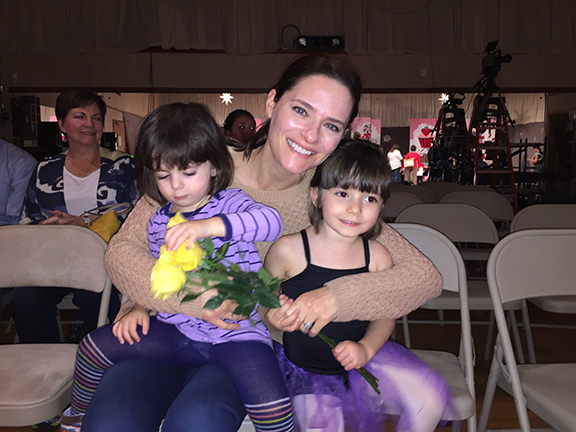
In the meantime, please allow me to share this photo of our girls (below), snapped at the Houston Museum of Natural Science on the Saturday of Thanksgiving weekend.

I can’t really put my finger on it but it really captures their spirit, verve, and sweetness. Just look at Lila Jane’s coy smile. The girls had a blast at Thanksgiving this year.

Thank you to everyone who shared, liked, and commented so graciously on my post yesterday on “My planned parenthood (with a lower case p).” I felt it was important to share in the light of what’s been happening in our country this year.

natural science museum houston hours

My planned parenthood (with a lowercase p)

In June of 1997, one month short of my 30th birthday and the month I completed my graduate studies in Italian at U.C.L.A., I began to experience moderate discomfort and noticeable swelling in my groin (I’ll leave the description of my symptoms at that; apologies for the TMI).

As a full-fellowship student, teaching associate, and research assistant at the Department of Italian, I had decent — however bureaucratically challenged — health insurance.

With my mind racing at a thousand miles an hour imagining all the worst-possible outcomes of my pathology, I hastily made an appointment at the student health clinic.

The student doctor who examined me was quick to diagnose me with Chlamydia, a sexually transmitted disease commonly found among sexually active university students.

She referred me to the school’s men’s health clinic.

But there was a problem: I wasn’t able to get an appointment at the clinic until after the end of the academic year and as a result I wouldn’t have been covered by my university health insurance at that point nor would I be eligible to access the service.

By mid-July, I had celebrated my 30th birthday and was rooming at my then single older brother’s house in La Jolla (in exchange for cooking and cleaning). Every day, I used public transportation to commute to the research library at U.C.S.D. where my goal was to complete my dissertation by summer’s end.

My symptoms hadn’t become markedly worse but they hadn’t gone away. With no income and little savings (typical of a grad student), I couldn’t afford the gap insurance (Cobra) for which I was eligible and I could scarcely afford the deductible payment that would have come with the temporary coverage.

And so I made an appointment at Planned Parenthood on Thomas Ave. in Pacific Beach.

The clinician there prescribed and supplied me with antibiotics at a nominal charge (around $25, if I remember correctly).

By the end of the summer, I filed my dissertation, received my Ph.D., and left California for New York City, where I had landed my first post-grad job (not in academia but in rolling stock; yes, trains, but that’s a story for another time).

My health insurance kicked in right away and with great celerity, I made an appointment to see a doctor in midtown who, after a brief physical examination, told me that, in fact, I didn’t have Chlamydia. I had a congenital hernia, he said. It wasn’t severe and wouldn’t affect my health in the short-term but it needed to be operated.

A month or so later, they operated on me at the New York University medical center and I recovered just fine. I didn’t have to pay a penny thanks to my coverage and just a few months later I had landed my first desk job as an editor at La cucina italiana (the English-language version of the Italian masthead).

Yesterday, when I read that one of the victims at the Planned Parenthood shooting on Friday in Colorado was a 29-year-old man, a veteran of the war in Iraq, the memory of my visit to Planned Parenthood in San Diego flooded my mind. I was the same age as him and like him, I was transitioning from one chapter of my life to another.

Today, as a 48-year-old father of two, an avid supporter of women’s reproductive rights and the right of access to reproductive health care, a resident of a state that has severely restricted those rights, and a supporter of stricter gun laws (who lives in a state where it will become legal to carry a handgun openly next month), I wonder what life will be like here for the microtexans (ages 2 and nearly 4) Tracie P and I are raising when they reach their teens.

Nearly a decade will pass before Tracie and I will be prompted to explain to our daughters what Planned Parenthood is and the role that it plays in civil society. But I hope that, should they need it, they will have access to affordable reproductive health care — even if they are financially challenged (something I don’t hope or foresee for them but a concern nonetheless).

Had the Affordable Care Act been in place when I was a graduate student, I may have never found myself visiting Planned Parenthood. But I’m sure glad that it was there for me when I needed it (although it turned out I didn’t really need it at all).

Had I had Chlamydia and had it gone untreated (because of a lack of access to reproductive health care), my fertility could have been impacted and it’s possible that I wouldn’t have been able to become a father.

When we finished decorating our Christmas tree yesterday afternoon before hosting a family party for our cousins, Georgia P (our oldest) asked Lila Jane to give her hug and “do Christmas together.”

I can’t imagine life here — or anywhere — without them.

christmas tree decorations children

A miracle and a ray of hope from the land of Verdicchio this Thanksgiving

buy thanksgiving ornamental pumpkinsHere at home in Houston, we spend an inordinate amount time talking about butterflies, dinosaurs, and rocket ships. Thankfully, the little domestic bubble our microtexans (ages 2 and almost 4) inhabit is impermeable to the helter-skelter world outside.

I thank goodness for that: for as long as is humanly possible, Tracie P and I are determined to shelter our children from the blood-curdling news that seems to arrive from Europe, Africa, and the Middle East every day.

O tempora o mores! wrote Cicero during another tumultuous chapter of western civilization.

“Oh times, oh manners!” Edgar Allan Poe would translate the great Latin orator’s exasperation some two thousand years later, give or take a few.

What a time we live in! Where has our decency gone?

As the unspeakable atrocities of international terrorism drive political discourse in our country, there is talk of religion-based “registries” and a closing of our nation’s borders to humanity’s most downtrodden.

“The Statue of Liberty must be crying with shame,” quoted New York Times columnist Nicholas Kristof in his Saturday opinion, referring to a tweet from a reader.

Our children’s paternal great-great-grandparents were refugees who fled war and persecution, religious-based registries and closed borders in Europe. (You might be surprised by the refugees that Kristof alludes to in his piece.)

In Italy, the embrace of refugees from the Middle East and Africa has been hailed by some as a last hope for the financial well-being of the nation.

“They work, they have children, and they finance Europe,” wrote Maurizio Ricci (back in September, before the Paris attacks) for the RepubblicaBloomberg financial pages in a widely cited opinion piece. It’s estimated, he noted, that Europe will need 250 million immigrants by 2060 in order to sustain its civil society.

One of the reasons that immigrants will play such a vital role in the next generations of Italian life is that Italy has the lowest birthrate in the industrialized world today (according to ISTAT, Italy’s national institute of statistics).

Although there have been a few moderate spikes in population growth there in the last century (notably in the period that immediately followed the Second World War), Italy’s birthrate is the lowest it’s been in 150 years (according to a report published earlier this year).

Anecdotally, as someone who attended university in Italy in the late 1980s and early 1990s, I can tell you that few of my Italian friends from that period of my life have married and started families. Of the literally scores of my Italian middle-class, college-educated, and now nearly fifty-year-old counterparts with whom I regularly keep in touch (primarily through social media channels), hardly a third of them have children.

That’s not because I like being friends with childless peers. It’s because the socio-economic outlook for mid-life Italians (my peers) is so bleak that few have seen the point in making more Italians.

“Midway on our life’s journey, I found myself/In dark woods, the right road lost…,” wrote the poet (as translated by Pinsky).

In the light of this ongoing demographic trend, the news of a baby born Saturday in the land of Verdicchio (in the Marches, in Adriatic central Italy) was greeted by exclamations of joyous wonderment in the Parzen household.

Friends of ours, a couple (whom I won’t name here out of respect for their privacy) who faced fertility challenges, finally have the baby boy they had so patiently awaited and desired for so long.

They live in the country and grow grapes for wine and olives for oil without the use of chemicals or additives. They advocate for wholesome living and sustainable consumption. They count their carbon footprints down to the weight of the bottles they ship their wines in.

Their child has been born atop an atoll of idealism that sits amid a sea of uncertainly. As my mother-in-law would rightly say, he is a miracle… a precious miracle.

Their new son is just one of the things that I will be grateful for this Thanksgiving. Among my blessings, I will count him along with butterflies, dinosaurs, and rocket ships.

Happy Thanksgiving, everyone.

I’m taking the rest of the week off from blogging. See you next week!

Taste Franciacorta with me in SEATTLE Monday, December 7

do bianchi franciacortaIt’s official: I’ll be doing the last tasting of the 2015 Franciacorta Real Story campaign in Seattle on December 7 at Osteria La Spiga.

Details follow. The tasting is open to all free of charge.

But if you would like to attend, please shoot me an email (jparzen@gmail.com) so we can get a sense of how many people to expect.

FRANCIACORTA REAL STORY
TASTING AND SEMINAR
WITH JEREMY PARZEN, PH.D.

MONDAY, DECEMBER 7
4-6 P.M.
FREE
OSTERIA LA SPIGA
Capitol Hill
Seattle, Washington
Google map

Franciacorta is a place.

Franciacorta is an Italian wine appellation.

Franciacorta is a wine.

Franciacorta is a classic-method sparkling wine produced using Chardonnay, Pinot Noir, and Pinot Blanc in the foothills of the Alps in Brescia province, Italy (about an hour east of Milan by car). Since the 1960s, winemakers there have made some of Italy’s (and the world’s) most coveted sparkling wines thanks to the area’s unique growing conditions, including: the wide variety of morainic, limestone, and clay subsoils of the Franciacorta amphitheater; the maritime influence of Lake Iseo to the north (part of Italy’s beautiful Lake District); and the Alpine climate of their high-lying vineyards. Because Franciacorta growers are able to achieve greater ripeness than their counterparts in other sparkling wine regions and because they have a wider diversity of soil types, their wines stand apart from their transalpine cousins for their remarkable freshness, rich fruit character, and signature minerality (some would call it salinity).

These tastings have been really fun (this is the 6th and last tasting for 2015). They’ve been a great way to connect with wine professionals and lovers across the country. Thanks to everyone who’s come out to taste with me this year. It’s been a blast. I really appreciate your support and hope to see you in Seattle!

“Cannelloni waits for no one”: scenes from Tony Vallone’s 50th anniversary celebration

salt encrusted fish whole recipe bestAbove: Tony served salt-encrusted Gulf of Mexico red snapper for 300+ persons last night.

In coming hours and days, much will be written about last night’s charity gala celebration of my friend and client Tony Vallone’s fiftieth anniversary as a restaurateur at his flagship restaurant in Houston, Tony’s.

It was back in 1965, he recounted when he took the mic, that he answered an ad for “a $500-a-month rental for a small wooden-framed restaurant where the Galleria now stands on Sage road.”

The landlord? Developer Gerald Hines.

best gulf red snapper recipeAbove: the snapper was served in a Barolo reduction, a Tony’s classic. In the arc of the menu’s narrative, this dish represented the 1970s and America’s “culinary awakening,” said Tony.

“In those days,” Tony told the 300+ crowd of rapt diners, “there were no refrigeration trucks. You couldn’t get fresh clams. You couldn’t get fresh mussels. Either you used canned or you used [gulf] oysters. That was all we had here. For calamari, I had to go to a bait camp to buy it because it wasn’t sold [in food shops].”

“There weren’t many Italian restaurants here in Houston in the 1960s. They were mostly American. And so you didn’t get pasta and seafood. When I started cooking these dishes, which Neapolitans had been doing for centuries, it was new here and it clicked.”

“This was the point of the original Tony’s. A very small and very Italian restaurant.”

cannelloni sausage recipe best brooklynAbove: he served sausage-filled cannelloni as a nod to the 1960s and his beginnings as an Italian restaurateur, “a modern interpretation of a classic,” as he put it. To my palate, there were countless layers of meaning in this ineffably delicious dish. Even when Tony does passé, he does it with unrivaled panache.

Each of the dishes that Tony served last night was inspired by a decade of cooking at Tony’s.

The cannelloni (above), a homage to Italian cuisine in the United States circa 1965.

Salt-crusted Gulf of Mexico red snapper (top), an allusion to the 1970s and Americans’ “culinary awakening” as they embraced fresh seafood and locally sourced ingredients.

The “decade of America’s opulence,” the 1980s, was represented by heirloom veal served with Ossetra caviar (below).

veal provimi recipe bestAbove: over my years working with Tony, he’s talked to me about how much fun it was to cook in Houston in the 1980s during the first oil boom when the sky was the limit for opulent eating. I loved how he served caviar and veal as a metaphor for those times.

The crème de la crème of Houston society and the energy-and-gas crowd was in attendance at last night’s event.

The cheapest seats cost $500 per person and table could be had for a cool $10k.

The dinner sold-out within two days of when it was first announced by the co-presenter Memorial Hermann, the largest not-for-profit hospital system in Houston (according to its Wiki entry).

More than 300 persons attended and there was a waiting list of 260+. The only crasher I spotted was Houston mayoral candidate Bill King.

best private dining houstonAbove: Tony’s is one of the most beautiful restaurants I’ve ever had the pleasure to dine in. But last night, with the entire house open for the event, it shimmered like the star it fêted.

It’s understandable that Houston’s elite would be so eager to attend the gathering and support its featured charity, Life Flight, Houston’s “critical care air medical transport service,” for which the event raised more than $400k.

After all, for five decades, Tony’s has been the backdrop of their finest moments, from marriage proposals to wedding receptions, from dinners-with-an-important-client and nights-out-with-the-boss to anniversaries and milestone birthdays.

chef kate mclean houstonAbove: many of Tony’s team members have worked with him for more than 40 years. They are fiercely proud of their work together. Tony insisted that we snap pics with all the staff last night, front and back of the house.

For me, the nearly five years that I’ve worked with Tony have truly been one of the most fascinating and culinarily rewarding experiences of my professional life.

In so many ways, the contours of Tony’s career shape a gastronomic narrative that arches over all of us.

I am old enough to remember a time before words like trattoria, risotto, and al dente were commonly used in American culinary parlance; a time when we still said Parmesan in place of Parmigiano Reggiano; a time before Barolo, Barbaresco, and Brunello when there was only Napa Valley Cabernet Sauvignon, Merlot, Zinfandel, and Chardonnay.

For five decades now, Tony — himself, an ante litteram foodie — has been and continues to shine as a pioneer of the American real food movement.

Just think of how many people tasted arborio or radicchio for the first time in his restaurants over the years. Contemplate how many diners had their first kiss with prosciutto di San Daniele or extra-virgin olive oil from Sicily at his tables. Consider how many wine lovers first drew Nebbiolo, Corvina, or Sangiovese to their lips from stemware that had been polished in Tony’s kitchen (when I first moved to Texas in 2008, he was the only restaurateur who had Bartolo Mascarello and Giuseppe Quintarelli on his wine list, btw).

He is a bona fide national treasure and I am unabashedly proud to call him amico.

Thank you, Tony, and mazel tov for 50 years well spent as you have shared your passion for great food with us.

Our city, our nation, and my family are all the better for it.

As you put it so sagely and succinctly last night as you encouraged your guests to turn their attention to the rolled, stuffed housemade pasta on the plates before them, the first dish served on an unforgettable evening: cannelloni waits for no one…

best birthday cakes houston

Bruno Giacosa Barolo fetches potentially record price in rare wine auction

rocche castiglione fallettoAt an auction of rare Italian wines held yesterday at Bolaffi in Turin, a buyer paid €17,500 (with fees) for an 11-bottle lot of Bruno Giacosa 1971 Barolo Rocche di Castiglione Falletto (Red Label), a potentially record price for Italian wine at auction.

According to a blog post published today by Slow Wine editor Giancarlo Gariglio, the wines were included in a selection of 579 lots from the private cellar of Italian food and wine writer Luigi Veronelli (1926-2004), who has been called “one of the architects of Italy’s current food and wine renaissance.”

At €1,590 per bottle, the sale (when adjusted for the current exchange rate) could top the $1,680 paid for a bottle of Giacomo Conterno 1961 Barolo Monfortino in 2009, an auction price considered by wine trade observers to be the highest ever paid at the time for a single bottle of Italian wine.

Slow Wine was an official co-presenter of the auction, which netted €922,000, noted Gariglio, a record for the auction house.

“We finally have our Henri Jayer!” he wrote with unabashed pride.

bruno giacosa 1971

Label images via FineWineGeek.com.

“You opened the Merlot without me?” My Thanksgiving recommendations for @HoustonPress @EatingOurWords

selbachAbove: there are handful of one-liter bottles of the 2010 Selbach Riesling that — I’m guessing — have been sitting on the shelves at the flagship Spec’s in Houston (the behemoth Texas retailer) for a few years now. I snagged one for around $15 and it is drinking nicely.

My friend and colleague Cathy Huyghe recently blogged about her new experiment, the “Blue Collar Wine Guide,” for Forbes.com.

She was prompted, she wrote, by her revelation that “I don’t spend much time writing about how most people actually drink it.”

“Maybe… just maybe,” she opined, “we’re writing about wine as ‘wine people’ and not as real people. Maybe we’re too busy writing for people who are already in some imaginary inner circle. Maybe we aren’t listening well enough to what people actually like and what people actually drink.”

Whoever the we in her pluralis majestatis, I took inspiration from her post for my post today for the Houston Press, “5 THANKSGIVING WINES UNDER $20 OR ‘YOU OPENED THE MERLOT WITHOUT ME?'”

Capping my selections at $20 ($5 less than Eric Asmiov’s Thanksgiving “fret-free” picks for the New York Times), I set about shopping for wines that readily available in southeast Texas with the added criterion of familiarity.

I generally don’t care for slightly oaky Cabernet Sauvignon from Argentina. But I recognize that a lot of people like wines like it, including many of my fellow Texans and the people who read the Houston Press, the weekly rag in America’s fourth-largest city.

balandranAbove: my go-to wine shop, the Houston Wine Merchant, is sold out of the 2014 Costières de Nîmes rosé by Balandran (a wine imported locally). But there are still a few bottles left on the shelves of Spec’s. Great value, great wine.

Is it wrong to recommend wines that I don’t particularly like myself, even though they represent objective value for the average American wine drinker today?

In my mind, Eric remains the best wine writer in popular American wine writing today. A Solomon among wine scribes, he always manages to strike a healthy balance between writing about what he personally likes and what he may not drink in his off time.

picpoul de pinetAbove: Tracie P and I both really liked the citrus and dried-citrus fruit in this Picpoul by Gérard Bertrand that I picked up about the Houston Wine Merchant.

The three wines featured in this post’s photos didn’t make it into my piece for the Houston Press. I really liked each one of them but I didn’t think they worked well for the average Joanne who’s out shopping on her once-or-twice-a-year wine-finding mission.

When I shared a draft with Tracie P this morning, she approved.

“Am I a sell-out?” I asked her, hoping that my personal wine-culture-war crisis wouldn’t be the demise of our felicitous union.

“No,” she replied, “you’re writing about wines that people can actually find and that they want to drink at Thanksgiving.”

And even though she made me edit out some of the more off-color humor about our homelife, I had fun writing about what it’s like for a La Jolla-raised grandson of eastern-European Jewish immigrants to play sommelier for his southeast-Texan family.

Here’s the link. Buona lettura! And thanks for reading.

The siege of Paris circa 1532. Today, as she shudders and weeps, so do we…

siege paris terrorismAbove: Paris as it appeared around the mid-fifteenth century in a painted manuscript. The panel depicts Merovigian king Dagobert I (603-639 C.E.; see attribution below) in Saint-Denis (just north of the city’s center). But the image of the “skyline” of Paris is what it looked like in the time of artist fifteenth-century French artist Jean Fouquet.

With hushed tone on Friday afternoon, Tracie P asked me if I had read the news of the siege of Paris when I had wrapped up my work week and turned my attention to our daughters.

We didn’t want to betray our alarm as we furtively glanced at the feeds on our phones, which bubbled over with horrific dispatches from the capital.

Our thoughts turned to an American wine writer colleague and friend who’s currently visiting there; to another friend, a Turkish-German wine educator from Rome who was visiting there.

Our memories turned to our many friends who live there, fellows from my days performing there: in February 2009 Tracie P accompanied me to Paris to play a few shows with my then-active French-language band; over the years, I’ve played guitar in Parisian rock venues on maybe ten occasions.

By Saturday morning, one of the New York Times accounts of the terror began: “a wine consultant and rock music fan, thought the concert he was attending Friday night had simply taken a particularly raucous turn.”

It all hit too close to home for us.

My mind turned (escaped?) to Ariosto’s sixteenth-century epic poem, Orlando furioso, and its chilling account of the siege of Paris by Saracen king Rodomonte. In the now nearly twenty years since I obtained my doctorate in Italian studies, I had forgotten that one of the similes employed by Ariosto in those famous stanzas was viticultural.

In its time and beyond, Orlando furioso was and is of the most influential and popular texts in the Western canon (although we hardly remember it today). When it was published in its entirety in 1532, it was already a blockbuster.

In one of the most celebrated examples of “military poetry” in all of literature (below), Ariosto conveyed the panic, mayhem, and terror of Rodomonte’s siege of Paris through a series of analogies.

The translation comes from David R. Slavitt’s 2010 rendering (Harvard Press; available on Google Play, btw, for less than $14 with tax). The original (from the 1974 Garzanti edition) follows for Italian readers.

Think of a bull, a different one this time,
that has been penned in the square all day and young
children have teased and poked it without rhyme
or reason, and then it breaks out and runs among
the crowd in the street and suddenly all that prime
beef turns into a weapon. Some are flung
up into the air and some are gored…
That was Rodomonte and his sharp sword.

He cut off the heads of fifteen or twenty as though
he were pruning vines and lopping the weak
runners that sap the plant. But there was no
wine but only blood that came from this freak
viticulturist pantomime. His slow
but gory progress through the throng to seek
an egress left arms and heads strewn in the street
so that it hardly seemed to be a retreat.

Chi ha visto in piazza rompere steccato
a cui la folta turba accaneggiato,
stimulato e percosso tutto ‘l giorno;
che ‘l popul se ne fugge ispaventato,
ed egli or questo or quel leva sul corno:
pensi che tale o più terribil fosse
il crudele African quando si mosse.

Quindici o venti ne tagliò a traverse,
altritanti lacsiò del capo tronchi,
ciascun d’un colpo sol dritto o riverso;
che viti o salci par che poti e tronchi.
tutto di sangue il fier pagano asperse,
lasciando capi fessi e bracci monchi,
e spalle e gambe ed altre membra sparte,
ovunque il passo volga, al fin si parte.

Orlando furioso, Canto 18, 19-20.

Maybe I turned to Renaissance Italian poetry to avoid the overwhelming fear and terror in my heart. Maybe I turned to Ariosto because I am unable to come to wrap my mind around the absolute horror experienced by our fellows.

Thank you for letting me share it here. Today, our thoughts and hearts go out to our Parisian sisters and brothers. In a way, Paris belongs to all of us and we to her. As she shudders and weeps, so do we.

*****

See also Gustave Doré’s nineteenth-century illustrations of Orlando furioso, including this panel depicting Rodomonte’s rampage through the streets of Paris.

Image source: “Dagobert Ier réfugié à Saint-Denis” by Jean Fouquet. Licensed under Public Domain via Commons.

Vive la France!

Solidarity for our French sisters and brothers… thoughts and prayers for all those affected by yesterday’s attack on French citizens and Parisian visitors… vive la France!

french flag vive la franceFrench flag image via Wisegie.