The story behind Nascetta (and Anascetta)

Romeo, doff thy name!

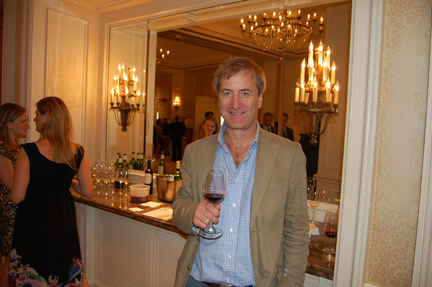
Above: Valter Fissore of Elvio Cogno (Novello) single-handedly delivered the Nascetta grape from oblivion after he tasted a wine made using this once highly praised grape in 1991. The wine had been bottled in 1986.

It’s regrettable that when I tasted the Nascetta grape for the first time last year, it was served to me ice cold and was described as a “light-bodied white wine.”

While in Piedmont in March of this year, I happily learned that Nascetta is actually a noble white grape variety that can produce long-lived, structured wines. And I had the great fortune to taste Valter Fissore’s excellent 2001 bottling — a nearly decade-old expression of this grape. In my notes, I wrote “rosemary, sage, petrol,” and was blown away by the structure of the wine, its lively acidity, and most of all its gorgeous, unctuous mouthfeel.

Yesterday, in a wonderful post on drinking the last extant bottling of a vintage, Cory nudged me to fulfill a promise to explore the origins of the name. And so here it is.
First of all, a little history.

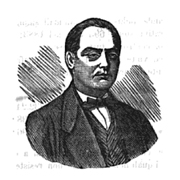
The name Nascetta was coined by 19th-century Piedmontese enologist Giovanni Gagna (left, 1833-1881), who believed erroneously that the grape was related to the Sardinian grape Nasco (from the Sardinian nuscu, from the Latin muscus, meaning moss). Remember: for the better part of the 18th and 19th centuries, Sardinia, Nice, Savoy, and Piedmont were ruled by the House of Savoy (the Kingdom of Sardinia), with its court in Turin and so commerce between Sardinia and Piedmont was fluid during that period.

In 1877, Count Giovanni di Rovasenda listed the grape using its dialectal name, Anascetta, in his landmark Saggio di una ampelografia universale (Essay on Universal Ampelography). The fact that he uses the dialectal inflection of Gagna’s name for the grape is an indication of how popular the grape was in Piedmont at that time, when it was commonly blended with Favorita (Vermentino) and Moscato. (In Piedmontese dialect, an initial a is added to certain words to compensate for syncopated, i.e., lost vowels; in this case, the acquisition of the initial a would appear hypercorrective, a phenomenon not uncommon in the morphology of Piedmontese.)

Here’s where it gets a little complicated.

Above: The confusion regarding the name of this grape was created in part by Valter’s frustration with labeling requirements. In 2001, he bottled the wine as a non-vintage vino da tavola (table wine) because the grape was not yet authorized for the Langhe Bianco DOC appellation.

Let’s start with some chronology:

1991 – Valter tastes a bottling of 1986 by farmer Francesco Marengo (Novello).
1994 – Valter produces 800 bottles from his own planting of the grape, labeled as Nas-cetta; following this vintage, Valter is forced to stop labeling the wine as Nas-cetta after he is fined for listing an unauthorized grape variety name on the label.
2000 – Nascetta (the grape) is added to the catalog of authorized grape varieties for Langhe.
2004 – Valter bottles the wine as Langhe Bianco DOC but cannot list the grape variety on the label; he labels the wine “Anas-cëtta” using a “fantasy” name because the grape is not authorized for the Langhe Bianco DOC labeling (it’s authorized for the blend but not the label).
2010 – After Valter’s successful lobbying, the 2010 vintage will be first labeled as Langhe Nascetta [sic] DOC.

Above: Valter’s Nascetta is an excellent value for a structured, age-worthy white. Be sure to serve it at cellar or room temperature.

When I asked Valter directly about his use of diacritics (in this case the umlaut and the hyphen), he told me flatly that he introduced them in the labeling for purely proprietary reasons. The mutation of the grape names Nascetta and Anascetta was inspired by his frustration with labeling requirements. The good news is that the confusion has been resolved and this noble white grape will be labeled as “Langhe Nascetta DOC” beginning with the 2010 vintage.

While in Piedmont in March, I also tasted another excellent bottling of Nascetta by Rivetto.

Be sure to read Cory’s post on the last bottle of 2001 and Whitney’s post, too.

… O, be some other name!
What’s in a name? that which we call a rose
By any other name would smell as sweet;
So Romeo would, were he not Romeo call’d,
Retain that dear perfection which he owes
Without that title. Romeo, doff thy name,
And for that name which is no part of thee
Take all myself.
Txakolina, Txakolina, Txakolina!

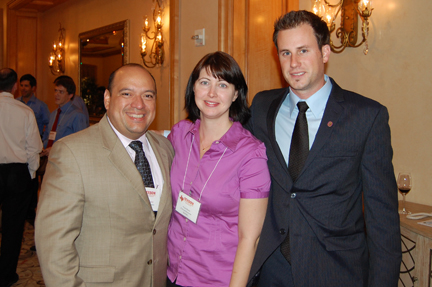
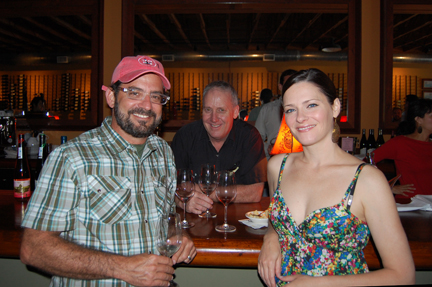
Above, from left: Importer of Basque, Spanish, and French wines André Tamers, Vino Vino owner Jeff Courington, and Tracie P at a Txakolina tasting in Austin on Saturday.

When I moved back to California from New York, a lot of concerned friends asked me, “what will you blog about? what will drink in California?” When I decided to move to Texas nearly two years ago, people admonished: “there won’t be anything interesting for you to drink there!”

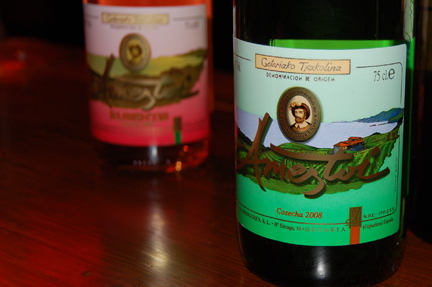
Above: My favorite in the flight was the Ameztoi Txakolina, so bright and fresh in the glass, with white fruit and spice on the nose and in the mouth. Low alcohol and gentle spritz. At under $20, the wine quickly shot up the charts to reach a top-five slot in my favorite wines of summer.

Well, folks, I’m here to tell you: I’m alive and well in Texas and drinking good juice!

Over the weekend, Tracie P and I attended a fantastic Txakolina tasting, hosted by André Tamers (the wine’s main proponent and Svengali in this country) and Jeff Courington, my client and friend, owner of the best little wine bar in Austin, Vino Vino.

Like manna from heaven, my sheer enjoyment of reading Eric the Red’s recent article on Txakolina was redoubled with a flight of the wines, poured personally for us by the dude who is making the synonymous Txakoli and Txakolina (pronounced CHAHK-oh-lee, CHAHK-oh-LEE-nah) household words here in the U.S.

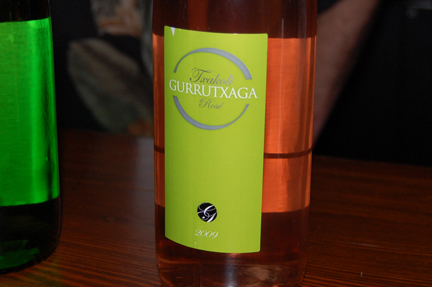
Above: I also really loved this rosé by Gurrutxaga. It had a crazy spicy note on the nose and was wholly sexy in the mouth. A truly and utterly “original” wine on my palate.

The world of wine is encyclopedic in breadth and I am constantly reminded that, beyond my love affair with Italian wine, there are so many fantastic wines to learn about, to taste, to pair with… now, more than ever, thanks to small importers like André, who launched his company more than 10 years ago when he was living with his wife and painting (oil on canvas) in Spain.

Txakolina is a truly “original” wine, to borrow a phrase I once heard Angelo Gaja use in a speech. Like Nebbiolo from Langa or Chardonnay from Chablis, it could be made in no other place in the world. It tastes of the place where it is raised and the people who make it. (Again, please see Eric the Red’s recent article on Txakolina for a great profile of the region, the people, and the wines.)

Being the self-appointed philologist of the enoblogosphere, I couldn’t help but nose around the interwebs in a search for the meaning and origins of the name Txakoli (Chacoli in Spanish, also spelled Sakoli). The lemma txak seems to denote small or little from what I can find in Basque language dictionaries available online. The editors of the Diccionario vasco-español-francés (Alfred Mame et Fils, Tour, 2 vol., 1905-1906) often translate the term (which appears in numerous instances in the two tomes) as vinaza (Spanish) or petit vin (French), literally, little wine, akin to the Italian vinello, an easy-drinking, light-bodied wine. According to the dictionary, the term also is used to denote wine must used to obtain distillate.

Above: Tracie P and I munched down an entire plate of Chef Esteban’s excellent fresh Manchego, dressed with basil, roast peppers, and olive oil. A sublime pairing with the Txakolina.

Beyond the great music and people here, the Texan lifestyle and the fact that the love of my life loves this town, Austin is such a great city because it attracts some of the brightest and best people I’ve ever met. Txakolina is sold in 26 states. Texas is one of them. When I asked André why he flies here especially to attend the tasting (now in its second year), he told me “because Jeff [owner of the venue] is a friend.”

The whole world may be talking about the wines of the Basque country these days. But here in Austin, we’re drinking it!

Fake pesto, real good

pesto

Summertime means fresh basil and pesto chez Parzen. Last night, before me and Tracie P cozied up on the couch for a Saturday movie and some Lini Lambrusco, I whipped up some “fake” pesto with some beautiful basil we found at the Central Market on Lamar.

True pesto is made with Pecorino, pine nuts, boiled potatoes and green beans, and extra-virgin olive oil, ideally from Liguria.

Pan-Italian pesto is generally made with Parmigiano Reggiano and omits the potatoes and green beans. And while true pesto should be milled by hand, using a mortar and pestle, fake pesto is super easy to make: just combine the ingredients in a food processor and pulse until you obtain the desired consistency.

Here’s how I made my “fake” pesto:

Pan-Italian Pesto

serves 4

1 handful pine nuts
1 heaping handful cubed Parmigiano Reggiano
(avoid pre-grated cheese!)
2 small bunches fresh basil (or 1 large bunch)
2 medium-sized cloves garlic, peeled
pinch of kosher salt
¼ extra-virgin olive oil (I love Sardinian San Giuliano)

Combine all the ingredients in a food processor and mill using short pulses. Add the olive oil as needed to obtain the desired consistency.

In the meantime, in a large pot, cook the pasta (long noodles, no short pasta!) in generously salted water until slightly undercooked. Before straining, add a few tablespoons of the cooking water to a large mixing bowl. Strain the pasta and transfer to the mixing bowl. Fold in the pesto, reserving a dollop per serving to top the pasta.

Et voilà!

And remember: the chalice from the palace has the brew that’s true! NOT the vessel with the pestle!

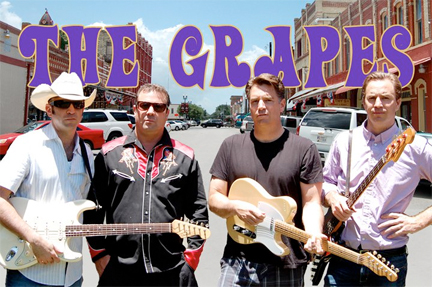
The Grapes at Zenbu (La Jolla) Thurs. Sept. 2

Just a quick post this busy Friday morning to let ya’ll know that my band The Grapes will be playing in La Jolla at one of my favorite restaurants in the world, Zenbu.

We’ll be rocking some old-school Americana, roots, and blues, with a touch of British invasion — featuring my BFF John Yelenosky on his fav Kinks tunes and me on my fav Beatles. Justin Richert, another high school buddy, will be sitting in on lap steel (!!!).

The show is free and the sushi can’t be beat…

Hope to see you there!

Buon weekend, ya’ll!

Italy meets California circa 1982 (by Burton Anderson, Wine Spectator)

Source: Alfonso Cevola. Check out his truly stunning post on tasting Sangiovese in Tuscany in the 1970s, Our Sangiovese.

The above image of Ezio Rivella (now president of the Brunello producers association) has been culled from the December 1-15, 1982 issue of the Wine Spectator. The article, filed from Florence, was written by Burton Anderson and is entitled “Italian vintners look to Cabernet, Chardonnay for future wine styles; results mixed so far.”

“We’re deliberately adopting a California style because our main market is the United States and also because the technology is more suitable,” Rivella, then director of Banfi, told Anderson. “But we have an advantage. Conditions in our hill vineyards are not only better than in Napa or Sonoma, they’re the best I know of anywhere. We plan to fully exploit this advantage in our wines, which will be aged in barriques of split French oak.”

A picture’s worth a thousand words, isn’t it?

In other [Brunello] news…

Who knew that Gianfranco Soldera was a natural winemaker? Read what he had to say in an interview published last week, translated and posted by Mr. Franco Ziliani and me at VinoWire.

97 Barolo, mole, and blues pair well in Austin, Texas

From the “damn, I love this town” department…

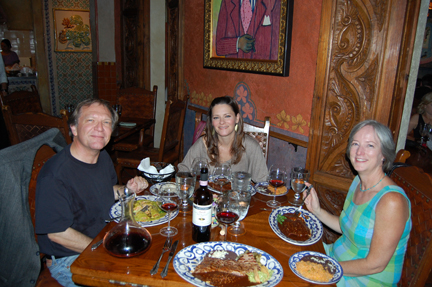
Our friends Mike and Magaret (whom we know because they come to nearly every wine tasting I lead here in Austin!) wrote the other day saying they had a very special bottle of wine they wanted to share with Tracie P and me: Guido Porro 1997 Barolo Lazzairasco (!!!). We were thrilled, of course…

Regretfully, not many places allow corkage in Texas (in part due to the fact that the Texas Alcohol and Beverage Commission discourages it, even though it’s not illegal). But working in the wine business has its perks: my friend and colleague Brad Sharp, wine director at one of our favorite restaurants in the world, Fonda San Miguel, allowed us to bring in this bottle, which Mike hand-carried back from Barolo in 2001. (Btw, whenever we BYOB we always buy a commensurate bottle from the list, in this case some López de Heridia, and we tip generously, keeping in mind that the bill is less than it would have been had we ordered a second bottle at dinner. Fyi, Fonda does not allow corkage.)

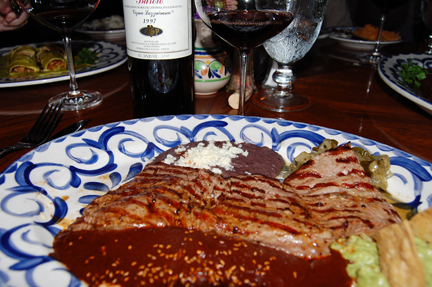
In Piedmont, summer months are for Barbera, Pelaverga, and other lighter-bodied red wines that pair well with the lighter foods of warm months. In Mexico, however, heavier foods like mole (a chocolate and chile sauce used to dress meats and enchiladas) are served all year. And so in the spirit of transnational culinary fusion, I paired with carne asada tampiqueña and a cheese enchilada dressed with mole sauce. The combination was FANTASTIC!

Like its brother cru Lazzarito, Lazzairasco (just a few hectares) is one of the great vineyards of Serralunga d’Alba, where some of the richest and most austere Barolo is produced by the appellations oldest subsoils (on the east side of the Barolo-Alba road which divides the “natures” of Barolo).

Although it was one of the indisputably great harvests of a remarkable string of excellent years in Piedmont, 1995-2001, 1997 is not one of my favorite vintages: it was the warmest (as was 2000) and while it was highly praised in the U.S. for its ripe fruit, it didn’t have the balance of, say, 1999 or 2001 (my favs).

Porro is one of the great traditionalist producers of Barolo and this wine entirely surprised us with its lip-smacking acidity and its wild berry fruit character. I knew we were going out on an organoleptic limb with this pairing but wow, did it deliver a sensorial treat — an usual pairing that rewarded us for our daring.

And in keeping with the Austin cosmic cowboy spirit, after dinner we headed over to meet other friends at the Gallery at the Continental Club, where Jimmie Vaughan was sitting in with Hammond B3 player Mike Flanigin. The Gallery at the Continental only holds 50 persons and the “guest” musicians are not advertised (you have to be in the know to find out about which super stars might be appearing on any given night).

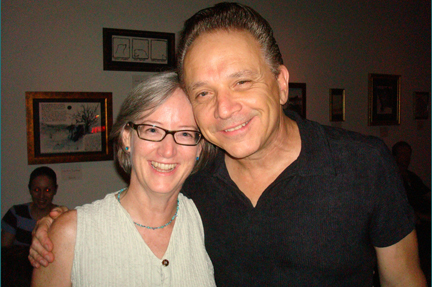
Jimmie’s riding high these days, with an awesome new album (that we LOVE) and world tour. He’s also a super sweet guy and he took a moment out for me to snap this photo of him and Margaret.

The dude is a living legend. I mean, how many people in world once lent a wah-wah pedal to Jimi Hendrix?

If only they served Nebbiolo at the Continental Club…

Red, white, and bubbly carpet: TexSom 2010

Nearly 300 people attended the standing-room-only, sold-out TexSom 2010, the 6th-annual Texas Sommelier Conference, which began yesterday at the Four Seasons hotel in Irving (Dallas, Texas). That’s reigning “Best Sommelier in Texas” June Rodil who helped out with pouring duties for the “Emerging Regions of Italy” seminar.

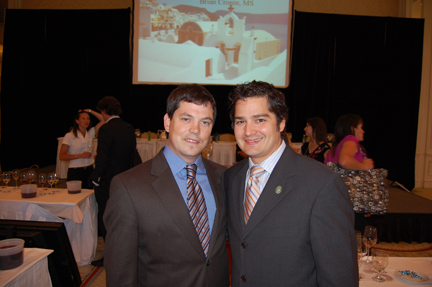
The event draws some of the best and brightest stars in the world of wine, like Master Sommelier Bobby Stuckey (left), who took time out to pose for a paparazzo with Jamie Adams, VP The Sorting Table.

The ever-affable Bartholomew Broadbent is a sponsor and a perennial attendee.

Seven Texas wine professionals will be “seated” at the Court of Master Sommeliers Masters Exam next Monday in Dallas, including Craig Collins (left) and Devon Broglie (right), both of whom serve on the board of the Texas Sommelier Conference.

Best-dressed Texas wine professional D’Lynn Proctor will also be seated at next Monday’s exam.

The “Italian Wine Guy” Alfonso Cevola, Italian Wine Director for Glazer’s Distribution, was in fine form as always.

The Duchman Family Winery (Driftwood, Texas) was also a sponsor of the event and was represented by its Events Mananger Paula Rester (center), Tasting Room Manager Bill Elsey (right, who participated in the “Best Sommelier in Texas” competition) and the president of the winery’s distributor, D’Amore Wine Selections, Julio Hernández.

Wine professionals travel from all over the state to attend, like Antonio Gianola (left), who authors one of my favorite wine lists in Houston, and Greg Randle, who educates and blogs about wine in Austin.

Kevin Pike (Sales Manager for Thierry Theise), together with Master Sommelier Emily Wines (nomina sunt consequentia rerum!) delivered one of the best seminars (on German wines) I’ve ever attended… anywhere. Chapeau bas, Kevin and Emily!

How the paparazzo always gets to go home with the prettiest girl in the room will forever remain a mystery!

Today’s trade-only event begins with a seminar on “Management of a Beverage Program” with moderator James Tidwell MS and panel Bobby Stuckey MS, Antonio Gianola, Paul Roberts MS, and Drew Hendricks MS. Nearly 300 people are expected for the Grand Tasting this evening.

Two favorite white wines for summer (and the ultimate sushi wine?)

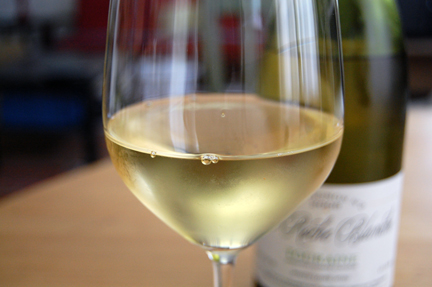
Above: Tracie P and I have been enjoying a lot of my number-two white wine of the summer of 2010, the Clos Roche Blanche 2008 Sauvignon Blanche No. 2 (does anyone know why it’s called “numéro 2”?).

Chez Parzen, we’ve been enjoying a lot of great wine this summer but two white wines have really stood out. And when I say “favorite white wines for summer,” I mean wines that we keep coming back to over and over again.

Alice first turned me on to the wines of Clos Roche Blanche five years ago in NYC and I was immediately hooked on Cot.

BrooklynGuy is also a fan of the Sauvignon Blanc: check out this tough-love post he did last year around this time.

Here in Texas, we’re still drinking the 2008 and it’s showing great, so fresh, such pure white fruit (pear and apple) in it, great acidity, low alcohol, and under $20 at The Austin Wine Merchant. Summer time means a lot of salad and canned tuna in olive oil, pasta al pomodoro, and fresh cheeses. I just love drinking this wine, as we did last night, with tomato sauce.

Just looking at the color, above, makes me wanna slurp it up!

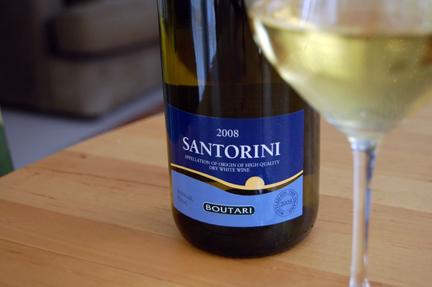
Above: The 2008 Santorini from Boutari, made from 100% Assyrtiko grapes, has a slightly oxidative thing going on. I think the gods made this wine just for me and Tracie P.

Anyone who’s been following Do Bianchi this year knows that I’ve become somewhat obsessed with the wines of Santorini. (Check out the thread here.)

I was hired this year to create content for the Boutari Social Media Project and one of the best things about the gig is how much great wine I’ve got to try for the first time: I’ve been loving Santorini by Sigalas and Gaia (both available in this country but not yet in Texas, although Sigalas is coming). But the wine Tracie P and I keep coming back to over and over again is the Boutari 2008 Santorini (also available for under $20 at The Austin Wine Merchant).

Tracie P put it best when she said it’s so mineral that “it’s like drinking seawater.” It’s salty and has a rich mouthfeel, a grainy texture that I can’t get enough of, the alcohol is well balanced in the wine, and it has that slightly oxidative note that we dig (and might even have aphrodisiacal properties where familiar matters are concerned).

Boutari’s Santorini and Santorini in general may very well be the perfect sushi wine. Remember when Aldo paired Gaia Santorini Thalassitis with raw sea urchin for me at Le Bernardin?

Santorini is such a fascinating appellation: drastically difficult grape-growing conditions, all pre-phylloxera rootstock (because the little bugs can’t jump from one Santorini’s tiny grains of volcanic sand to another), vines 80-100 years old, the whole connection to Venice and Venetian merchants in the Renaissance. Santorini, when it’s good, is just one of those wines that thrills and surprises me, stimulates my intellect, and transports me to another place.

Isn’t that what great wines are all about?

I hope everyone’s having a great summer with something great in your glass! Thanks for reading…

Sophie’s Choice: 06 Produttori del Barbaresco

This wine may be my favorite bottling yet, but not for the reason you think…

barbaresco

Above: Summertime isn’t exactly ideal for Nebbiolo but, after so much talk of this wine, I couldn’t resist opening a bottle of 2006 Barbaresco by Produttori del Barbaresco last night. Can you blame me? Dinner last night chez Parzen was cannellini dressed with extra-virgin olive oil, salt, pepper, and a kiss of red wine vinegar, wilted spinach and boiled potatoes also dressed with evoo, and some fresh feta.

Between Bruno Giacosa’s controversial decision not to bottle his 2006 vintage in Barolo and Barbaresco and Produttori del Barbaresco’s much misunderstood decision not to bottle its 2006 single-vineyard designated wines, the 2006 vintage may very well be one of the most talked-about vintages in Langa in recent years.

Let’s get one thing straight: most folks agree that 2006 was a classic, solid vintage, with a relatively balanced growing season (if not for rains in September). It wasn’t GREAT (in all caps) but it was good to very good. And while Giacosa’s decision appears outwardly based on the personal setbacks Bruno suffered that year, the decisions by Giacosa and Produttori del Barbaresco were probably based on economic reasoning: in a tough market, it’s easier to sell a more reasonably priced wine. In fact, Aldo Vacca (winemaker at Produttori del Barbaresco) said as much in a comment he left on Do Bianchi.

I tasted the 06 for the first time in New York in the spring: it was a ringer in one of the blind Greek tastings. But last night, after reading one too many blog posts about the 2006 Produttori del Barbaresco (which is now in the market), the mimetic desire kicked in and I caved and opened a bottle.

While I continue to kick myself for not cellaring more 2004 (especially) and 2005, my negligence has been rewarded by this amazing bottle of wine, which is a cuvée of all the Produttori del Barbareso crus.

barbaresco

Above: I tasted all of the 2005 single-vineyard (cru) designated wines in March at the winery with Aldo. I’ll post my notes on these, which have also just hit the market, next week.

I have always been a bigger fan of the cuvée, i.e., the classic Barbaresco blended mostly from the Ovello cru, with smaller amounts of other crus depending on the vintage. But the 2006 classic blended Barbaresco is something truly special.

Antonio Galloni, one of the top 3 palates for Nebbiolo in the world IMHO, was a fan of the otherwise “average” vintage when he tasted the first bottling of the 06 (before the decision was made not to bottle the crus): “If the regular Barbaresco holds this much power,” he wrote, “I can only wonder what the Riservas might have in store. Simply put, this is a marvelous effort.”

The wine we tasted last night was fantastic, with all the earth and all the red fruit I dream for, extremely powerful and rich, more so than other classic vintages like the winery’s 99, 01, 04, and 05.

My only misgiving about this wine is that it’s one of the few instances where I will tell you to let it age in your cellar for a few years before approaching it. I believe that with the addition of grapes from crus like Montestefano and Montefico (the most tannic), the wine has a tannic power that will only reward the patient collector.

It’s not that this wine is “better” because “better” fruit went into it, as many sales people are however earnestly but erroneously saying. The crus are not “better.” They are just different among one another.

What’s special about this wine is how it shows that terroir is also about people and where and how they decide to grow and raise things. This wine is a true collector’s item from Produttori del Barbaresco: it’s an anomaly, a rare occasion where Aldo had a better vintage than many, but decided not to bottle single-vineyard wines.

In some ways, this wine is the best bottling of my enosentient lifetime. Keep in mind that the cru system began in the late 1960s (and 1967, the year of my birth, to be exact), when Gaja, Vietti, and Produttori del Barbaresco were inspired by the French cru system to bottle single-vineyard designated wines. Ultimately, whether it’s Aldo’s cru vs. cuvée or Vajra’s Barolo Bricco delle Viole vs. Barolo Albe, or even Gaja’s Sorì-designated wines vs. its Barbaresco (to use three different stylistic examples), I always find that it’s the classic, blended wines (like Bartolo Mascarello, who has never made a cru) that keep calling me back. They don’t express a growing site: they express a vintage, an appellation, and a way of life.

So in a way, the 2006 Barbaresco by Produttori del Barbaresco is the financial crisis’s little gift to us: a wine that harks back to an era before the advent of Barbaresco’s Francophilia.

In essence, for survival’s sake (and the sake of all those who depend on him), winemaker Aldo had to make a “Sophie’s choice.” I’m glad that he chose well.

Veraison wireless in Montalcino

My friend Ale at Il Poggione (Sant’Angelo in Colle, Montalcino) is not the only one who’s been posting about the 2010 vintage on his blog.

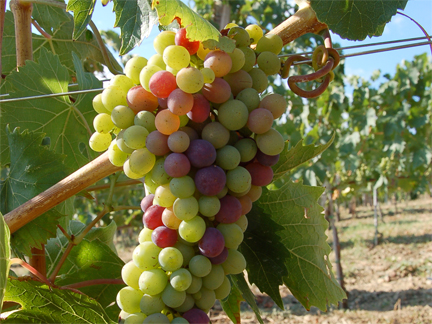
Another good friend, Laura, has been doing some amazing posts at the blog she authors for Il Palazzone. The photo above comes from a wonderful post she did showing the different ripening times in different growing zones of the winery’s estate.

One of things I’ve been enjoying about following Laura and Ale’s respective blogs is how it illustrates the subtle (and sometimes not so subtle) differences in the various subzones of the appellation.

In the case of Ale in the southwest subzone, the rate of ripening has accelerated slightly (80% of the grapes have changed color, he writes, catching up to the average) while Laura’s grapes are still about a week behind schedule. I love how she writes: “The ripening seems to be more than a week behind schedule, if it is appropriate to apply such concepts to nature.”

Check out Laura’s most recent post and Ale’s thread on the 2010 harvest in Montalcino.

In other news…

Another Brunello has been born with the 2010 vintage…

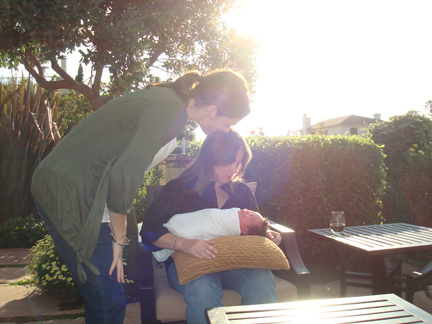
Over the weekend, Tracie P and I got to visit with our good friends Melanie and Noah, who have just welcomed Bruno into the world. Don’t they look angelic?

Noah and I grew up together (even attending Hebrew School together!) and luckily their stay in La Jolla overlapped with ours. Melanie has taken to calling the little one “Brunello.”

I still haven’t had a chance to pick up my copy but Melanie’s new book Eating for Beginners is now available.

Mazel tov, Melanie, Noah, and Bruno!

@Bruno I’ll be sure to put away some 2010 Brunello to drink with you when you turn 21!