Undisgorged Puro and Canyon Lake pulled pork

Above: While we were visiting and singing songs after a great dinner (I ate two of Mrs. B’s pulled pork sandwiches), Tracie B’s nephew Tobey found the cork from the bottle of Puro and brought it to me. He likes to bring you things he thinks you’ve lost (photos by Tracie B).

After Tracie B and I opened and disgorged a bottle of 2000 Puro Rosé by Movia the other day with our friend Josh Loving (over Tracie B’s famous fried chicken), we still had Puro on our minds. So, we decided to take a bottle with us to our visit over the weekend with her family at Canyon Lake in the Texas Hill Country (just south of Austin). But instead of disgorging it (see here), we chose instead to drink it undisgorged — sediment and all.

Above: Mrs. B’s pulled pork was tender and perfectly seasoned. She braised the pork all day in a trusty crock-pot (she must have started cooking about 8 a.m. yesterday morning).

Typically, we would store the Puro upside down in the refrigerator until all of the sediment has settled at the bottom, in the neck of the bottle. Then, as Aleš Kristančič taught me, you simply disgorge the bottle underwater, in a tub or sink (it’s really easy and not messy to do, as daunting as it may seem).

Above: Tracie B made my pulled pork sandwich special, dressing it with melted Colby Jack cheese and topping it with pickle relish. Mac ‘n’ cheese and beans on the side and a garnish of pickled jalapeño.

At the end of the figurative and literal day, I have to say that I like Puro better when undisgorged. I love the meaty mouthfeel of the wine and intense grapefruit flavor. When undisgorged, it almost has a cider-like quality and it reminds me of the homemade, slightly sparkling Malvasia I used to drink back in my dorm days at the Università di Padova.

Above: The wine was muddy, like the shallows of Canyon Lake, which — everyone remarked — was extremely low this year. It sure felt good on my skin to jump in the fresh water.

Everybody seemed to enjoy the wine: its acidity was great paired with the rich flavor of the pork and its bright fruit brought out its tang — and its twang!

Above: After dinner, I brought out the acoustic and we had an impromptu sing-along: mostly Beatles, but also some Merle Haggard highlights. Mrs. B’s and my fav was Merle’s “Daddy Frank (The Guitar Man).” I love the tableau vivant and lyrical arc of that song. Pictured above from left are Tobey’s dad and Tracie B’s brother-in-law Ricky, her cousin Alexis, her aunt Holly and uncle Terry (Mrs. B’s brother). Terry can sing him some Merle pretty good…

Thanks again family B! I had blast, the food was great, and it felt so good to jump in the lake and get some sun…

*****

Daddy Frank (The Guitar Man)
—Merle Haggard

Daddy Frank played the guitar and the french harp,
Sister played the ringing tambourine.
Mama couldn’t hear our pretty music,
She read our lips and helped the family sing.
That little band was all a part of living,
And our only means of living at the time;
And it wasn’t like no normal family combo,
Cause Daddy Frank the guitar man was blind.

Frank and mama counted on each other;
Their one and only weakness made them strong.
Mama did the driving for the family,
And Frank made a living with a song.

Home was just a camp along the highway;
A pick-up bed was where we bedded down.
Don’t ever once remember going hungry,
But I remember mama cooking on the ground.

Don’t remember how they got acquainted;
I can’t recall just how it came to be.
There had to be some special help from someone,
And blessed be the one that let it be.

Fever caused my mama’s loss of hearing.
Daddy Frank was born without his sight.
And mama needed someone she could lean on,
And I believe the guitar man was right.

Daddy Frank played the guitar and the french harp,
Sister played the ringing tambourine.
Mama couldn’t hear our pretty music,
She read our lips and helped the family sing.

I read the news today o boy: man in the mirror is gone

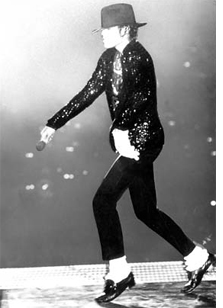
michael_jacksonWhere were you when you heard the news? I was outside San Antonio, at the end of the work day, in a traffic jam and on the phone with Tracie B, who saw the lugubrious headline flash across a feed on her computer screen.

Whatever your feelings about Michael Jackson (or lack thereof), you knew his name, you knew his songs, you knew his image, and you knew how he changed the world. He was one of the greatest songwriters and performers of all time and my generation came of age with him — whether you liked his music or not. I have always loved his music and his songwriting in particular.

Last night, Tracie B and I slowly sipped Clos Roche Blanche Cabernet Franc as we listened to MJ on our Ipod and danced and sang along to all of our favorite songs. Then we watched some of the Larry King conga line freak show.

I once had a job, back when I was a grad student back in the 90s, archiving video footage of Motown artists (for Berry Gordy’s publishing company Jobete). In one interview with the young Michael Jackson, the journalist asked him how he felt about racism he encountered while touring in the South. “Sometimes you go to a movie theater,” he said, “and someone says something mean and it just ruins your whole day.”

It’s amazing to think how the world changed in the arc of Michael Jackson’s lifetime — and ours.

RIP MJ

If they say
Why, why, tell em that is human nature
Why, why, does he do me that way
If they say
Why, why, tell em that is human nature
Why, why, does he do me that way
I like livin this way

Sunday Poetry: Love is like red, red wine

Above: I snapped this pic with my Blackberry as I drove across Arkansas, on my way back to Little Rock from Texarkana. I like the way the phone’s camera makes the trees look two-dimensional.

There were a lot of things about my recent sales trip to Arkansas that made me think about one of my favorite poets, Langston Hughes.

The beautiful trees that line Interstate 30 were one of them. They made me think of his poem “Daybreak in Alabama”:

    When I get to be a composer
    I’m gonna write me some music about
    Daybreak in Alabama
    And I’m gonna put the purtiest songs in it
    Rising out of the ground like a swamp mist
    And falling out of heaven like soft dew.
    I’m gonna put some tall tall trees in it

Above: In Arkansas, they’re very proud of their tomatoes. For lunch, I ate Tomato Aspic — tomato jello stuffed with mayonnaise.

Wine appears more than once in Hughes’s poetry. As a child I was fascinated by his poem “Lament over Love,” which I read over and over and set to music:

    I hope my child’ll
    Never love a man.
    I say I hope my child’ll
    Never love a man.
    Love can hurt you
    Mo’n anything else can.

    I’m goin’ down to the river
    An’ I ain’t goin’ there to swim.
    My true love’s left me
    And I’m goin’ there to think about him.

    Love is like whiskey,
    Love is like red, red wine.
    Love is like whiskey,
    Like sweet red wine.
    If you want to be happy
    You got to love all the time.

    I’m goin’ up in a tower
    Tall as a tree is tall,
    Up in a tower
    Tall as a tree is tall.
    Gonna think about my man
    And let my fool-self fall.

Above: Turnip greens in Arkansas were also really tasty.

Many of Hughes’s poems were adaptations of blues songs. As a teenager, I was also fascinated by his autobiography, The Big Sea, which I read over and over again. The chapters devoted to his time in Europe were heavily dogeared in my paperback copy (I wrote about his visit to Desenzano here).

Above: In North Little Rock where I spoke at a wine dinner, I slept at the Baker House, a Victorian home listed in the National Registry of Historic Places. The man who built it was not allowed to live there because of his color.

Life in Arkansas is certainly different than New York, California, or Austin. I’d never been there before this year. People were very nice to me and I had a lot of fun pouring and talking about wine. I certainly can’t complain.


    Though you may hear me holler,
    And you may see me cry
    I’ll be dogged, sweet baby,
    If you gonna see me die.

    Life is fine! Fine as wine! Life is fine!

    (from “Life is Fine”)

Above: I sold Barolo and Barbaresco to Tom’s Jug Shop in Texarkana. You can buy beer and liquor there at a drive-through window. They give you a cup of ice with your order, if you want. You wouldn’t think it from the sign and facade but they know their wine there.

Life is certainly never boring and as much as I miss Tracie B when I’m away from Austin, I love the travel and the new places I get to visit (Louisiana is next). As Langston Hughes wrote in the epigraph of The Big Sea:

Life is a big sea full of many fish. I let down my nets and pull.

My first tornado warning, the mystery of lemon peel and espresso, and air guitar nation

My yesterday evening took me from one extreme to another to another. I was traveling from an account visit in Grapevine near Dallas, Texas to downtown Dallas for dinner with colleagues when I experienced my first Texas tornado warning. The voice of an NPR announcer on the radio gave way to an ominous and long monotone followed by “we interrupt this broadcast…” No tornado has arrived but man, they don’t joke around when it comes to weather in northern Texas. The lightening I’ve seen elsewhere doesn’t even come close in spectacle to the fulminous displays you witness around these parts.

The next extreme came in the form of dinner with Italian Wine Guy (above, left) and his ride-with for the day, Andrea Lonardi (right), director of winemaking for one of the world’s largest wine conglomerates, Gruppo Italiano Vini. Veneto by birth, Andrea makes wine across peninsular and insular Italy and beyond our conversation on our shared love of the Veneto and its language and traditions, Andrea unraveled a mystery that has plagued me for many years: why is lemon zest served with espresso? When I lived Northern Italy, lemon zest or lemon juice was served with coffee to stimulate regurgitation: when you’re sick to your stomach, you drink coffee with lemon to help you “evacuate.” Evidently, Andrea’s travels have taken him to corners of rural Sicily where two “shots” of espresso — made from old-style manual espresso presses — are served in one demitasse and the passed from one patron to another: the first patron wipes the edge of the demitasse with the lemon zest for hygiene. In Italian, you say chi non beve in compagnia o è un ladro o una spia, literally, he who doesn’t drink in company is a thief or a spy. Sicilian omertà, noted Andrea, applies also to coffee.

The final extreme came in the form of an encounter with the reigning Air Guitar World Champion, Hot Lixx Hulahan (above, left). He, Stryker (center), and my Nous Non Plus bandmate Björn Türoque are on tour for the U.S. Air Guitar Championship and they happened to have a night off in Dallas. So, we caught up over beers at the end of the night before I drove back to Italian Wine Guy’s place (where he lets me crash when I work the market here) in the rain. It was great to see Björn (aka Dan Crane) and his lovely lady Kate.

Life is certainly never boring and I’m always amazed by its richness and extremities.

But I miss Tracie B and I can’t wait to get back to Austin…

Hillbilly rhythm and blues: JD Souther in Austin

JD Souther

One of the great things about living in Austin is how much great music comes through this town and how accessible it is.

Last night Tracie B and I went to see songwriting great JD Souther do an acoustic set (photo by yours truly from the fourth row). If you don’t know his music, you might be surprised at how many songs by him you do know.

He even played our favorite song, “White Rhythm and Blues,” which appeared on Linda Ronstadt’s 1978 double-platinum Living in the U.S.A. (lyrics below). We had a blast…

JD Souther

Tracie B warned me not to get the chicken fried steak but I am always a sucker for anything listed on the menu as “world famous.” She was right and I am pretty darn lucky and glad to have somebody in my life “who cares when you lose” and some “hillbilly rhythm and blues.” :-)

*****

White Rhythm and Blues
—JD Souther

I don’t want you to hold me tight
Till you’re mine to hold
And I don’t even want you to stay all night
Just until the moon turns cold

She said
All I need is black roses
White rhythm and blues
And somebody who cares when you lose
Black roses, white rhythm and blues

You say that somebody really loves you
You’d find her if you just knew how
But honey, everyone in the whole wide world
Is probably asleep by now

Wishin’ for
Black roses, white rhythm and blues
And somebody who cares when you lose
Black roses, white rhythm and blues

You can close your eyes
And sleep away all your blues
I’ve done everything but lie
Now I don’t know what else I can do

Oh, the night time sighs and I hear myself
But the words just stick in my throat
Don’t you think that a man like me
Might hurt much more than it shows

Just send me black roses
White rhythm and blues
And somebody who cares when you lose
I need some white rhythm and blues

I need Black roses, white rhythm and blues
And somebody who cares when you lose

Just play a little hillbilly rhythm and blues

Ain’t we glad that we got ’em: good times and Valpolicella

It really is the best of times and the worst of times. Across the board, wine sales are down, restaurateurs are suffering sharp declines, and many businesses are hanging on by the seats of their pants. In the same breath, I can also say that I feel lucky to have a good job and a happy life here in Texas, where I know I am truly fortunate to have such a wonderful lady in my life and such good people around me — personally, professionally, and virtually (a nod to all the friends whom I know through the blogosphere).

Just yesterday, I read a report that Italy saw a significant drop in U.S. exports in the first quarter of 2009 and anecdotally, I hear from my Italian wine colleagues, friends, and peers locally and on both coasts that things are tough all around.

Having said that, I believe wholeheartedly that Italian wine represents the greatest value for quality on the market and I was thrilled to see Eric’s article in the Times and subsequent post on Valpolicella and the value it offers the consumer.

As is often the case with Italian wine and regulations governing its production, there seems to be some confusion as to how Valpolicella is labeled — specifically with reference to the term ripasso meaning literally a passing again or refermentation. (The only instance of the term ripassa, with a feminine ending, that I have been able to find is for a Valpolicella produced by Zenato. But this seems to be an anomaly, an affected corruption of the sanctioned term.)

Basically, ripasso denotes the use of “residual grape pomace” in the refermentation or second fermentation of the wine (see below).

Some time back, Italian Wine Guy did this excellent post on three different techniques that can all be classified as ripasso.

Hoping to shed some light on the conundrum of ripasso this morning, I translated the following passage from article 5 of the appellation regulations for Valpolicella DOC.

    The use of residual grape pomace from the production of “Recioto della Valpolicella” and “Amarone della Valpolicella” is allowed in the regoverning [refermenting*] of the wine Valpolicella, in accordance with the ad hoc standards established by the Ministry for Agriculture and Forestry Policy and the territory office of the Central Inspectorate for the Repression of Fraud with respect to the standards of the European Union.

    Controlled Origin Designation (DOC) Valpolicella wines classified as “Valpolicella,” “Valpolicella” classico, “Valpolicella” superiore, “Valpolicella” classico superiore, “Valpolicella” Valpantena, and “Valpolicella” Valpantena superiore can be refermented on residual grape pomace from the production of the wines “Recioto della Valpolicella” and/or “Amarone della Valpolicella.”

    Wines obtained in this manner can utilize the added designation “ripasso.”

    * In Italian the term governo or governare retains its etymological meaning, steering or to steer, from the Greek kubernaô.

I also highly recommend that you read Franco’s Decanter article on Valpolicella and Amarone, downloadable here.

*****

I couldn’t find a good YouTube for this, but you get the idea…

Just lookin’ out of the window.
Watchin’ the asphalt grow.
Thinkin’ how it all looks hand-me-down.
Good Times, yeah, yeah Good Times

Keepin’ your head above water
Makin’ a wave when you can

Temporary lay offs. – Good Times.
Easy credit rip offs. – Good Times.
Ain’t we lucky we got ’em – Good Times.

Above: Actor Jimmie Walker in one of his most famous rolls always brings good times to the heart.

More on Maynard…

Above: From left, winemaker Eric Glomski, national sales manager Paula Woolsey, Mosaic Wine Group founder Dan Redman, winemaker (and, yes, rockstar) Maynard James Keenan, and me, myself, and I at the Enchantment Resort in Sedona, Arizona.

A lot of folks have commented and left comments asking for more info on Maynard’s wines. Check out this post by my friend Dan, whose company I work for in Austin.

Maynard was totally cool to hang out with and we nearly fell out of our chairs laughing at dinner that night. Eric is one of the coolest winemakers you’ll ever meet and I really dug his natural approach to winemaking. Paula owns and runs a fun restaurant in Jerome called The Asylum, a restaurant on the fringe, where she treated us to some great food and wine the night after our tasting and vineyard tour. Jerome, AZ is a pretty trippy hippy town with a headshop and a haunted hotel. The inhabitants of Jerome are called “Jeromans.” As I’ve always said, when in Jerome…

Check out Dan’s post for more about Maynard and Eric and their wines.

The trip to wine country Arizona and California gave me a lot to think about and I’ve received some interesting comments like this one from Seth P:

    With all due respect, I’d like to point out something about your recent entry. You say that “people who live in Napa and Sonoma […] favor big, oaky, concentrated, tannic Cabernet Sauvignon in their glass.” In my (reasonably extensive) experience in California, Napa and Sonoma are worlds apart. Granted, it would be hard to find a Sonoma Cabernet that could be mistaken for a Margaux, but then again Cabernet tends not to be the focus in Sonoma. Those wineries in Sonoma that do Cabernet or Cabernet blends tend to create wines that are restrained in alcohol and fairly authentic in fruit and spice. Yes, the Syrah, Petite Sirah and Zinfandel tend to be a little more powerful, but to my taste these are perfect matches to the food and culture of the region. If you’re looking for old-world, stop by Acorn for the “Medley” or Sunce for the Wild Hare Merlot and tell them I told you to visit :)

I’m still catching my breath from the last ten days and still wrapping my mind around what I saw and tasted. I will post more on “terroir delivered” (think “Jerusalem delivered” by Torquato Tasso) shortly… Thanks for reading!

Mommy blog: posting from a mile high!

ontheplane1

Wow, it’s amazing: wifi on a Southwest flight from San Diego (where I had a layover) from Austin, on my way to Oakland where Nous Non Plus (the faux-French band I play in) has a gig tonight at Rickshaw Stop.

I’ll take advantage of this momentous occasion to do a “mommy” blog post (as Alfonso likes to say).

Here’s what Library Journal had to say about my Brunetta translation (History of Italian Cinema): “This thoroughly detailed and seemingly experiential guide through the annals of Italian cinema conveys a lot of information but never seems less than easily gaited and conversational. Rare for a title of its scope, this is an absorbing, passionately told narrative.”

Maybe a mother will have something to be proud of this mother’s day.

My first mile-high email was to… guess who? Yup, you guessed it!

Nous Non Plus in San Francisco tonight

From the “shameless self-promotion” department…

Come see what Ménagerie is all about, tonight in San Francisco (Friday in San Jose and Saturday in Los Angeles at Spaceland, my favorite LA club).

Ramontalcinos say no to Merlot

Above: They say “no” to Merlot. Federico Marconi (left) handles marketing and Gianni Fabbri is the winemaker at the Fabbri family’s winery, Le Presi, one of my favorite Brunello producers. I tasted with them and snapped these photos at the Italian wine trade fair, Vinitaly, earlier this month.

Don’t get me wrong. I have nothing against Merlot per se. I’ve tasted great Merlot from all over the world — Bordeaux, Trentino, Friuli, Tuscany, California. I can’t say that I’m a fan of most it but that doesn’t mean there’s anything wrong with it.

The problem, as Alice pointed out in her post today, is that Merlot is a grape Zelig: “Why does everyone has to grow merlot? Because it’s a grape Zelig? Merlot, like mint, takes to most places.”

Merlot has been grown in Tuscany for centuries, but it was during the 1980s and 90s that it became increasingly popular there, as the Super Tuscan craze began to emerge and Italy began to sell more wine in the Merlotophile American market. Behind his back (and with an acute dose of disdain), many Italian winemakers call Tuscany’s leading wine wizard “Mr. Merlot” — a distinction bestowed upon him because of the ubiquitous Merlot in his award-winning Chiantis and his alleged use of Merlot in Brunello di Montalcino, where appellation regulations require the wine be made with 100% Sangiovese grapes.

Yesterday, when I wrote “just say no to Merlot,” I was addressing and appealing to producers of Vino Nobile di Montepulciano, who are considering an increase in the amount of international grape varieties allowed in their appellation.

My friend, artist, poet, musician, and marketing director for old school Brunello producer Le Presi, Federico “Ramontalcino” Marconi, had this to say:

    The Fred Man too says No to Merlot! Let’s defend a precious little thing called “heritage”… Why are they so short-sighted and unable to recall the nasty backlash of last year’s “Brunello-gate”? I don’t get it: what does these people have against a Good Ol’ Sangiovese!? And let me tell ya: I am a Sangiovese “fan to the bone”. Gabba Gabba Hey!

Above: Federico created this “Old School” t-shirt to reflect Le Presi’s traditional approach to winemaking. Even though the winemaker and his team are young, the wines are as old school as it gets — natural fermentation and aging in botti, large old, neutral oak barrels. Wolfgang was the first to post on this great marketing idea.

When I met Federico and we became friends, we decided we would start a band called the Ramontalcinos (we owe the name to Josh Loving of Vino Vino fame, an accomplished classical guitar player, who will also be part of the act).

I wish more Italian winemakers could be like Federico and Gianni: they marry a punk rock sensibility with a respect and passion for their heritage. They are wise to see that they can better market their wines not by changing their nature but rather by infusing their image and perception of their brand with youthful energy and verve.

Gabba gabba hey.

Ringo says no to Merlot, too. Check out this clip of Ringo singing the “No No Song” with the Smothers Brothers. The best part is the gag at the end (with Ben Einstein)!