Signora Bilenchi remembers Pasta alla Puttanesca

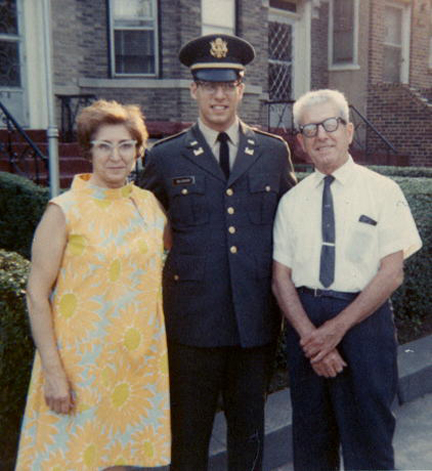
Above: Mrs. and Mr. Bilenchi with their son Robert in Brooklyn in 1969.

When it comes to the origins of many of the classic Italian dishes that we all know and love, it’s nearly impossible to identity the etymon — the origin, the fons origo, the spring from which it sprang. Such is the case with Spaghetti alla Carbonara, for example: to my knowledge, no scholar has been able to trace its history with even the remotest semblance of certainty. In fact, as gastronomic philologists, all we know with certainty is what we don’t know about many of the great recipes of the Italian culinary canon.
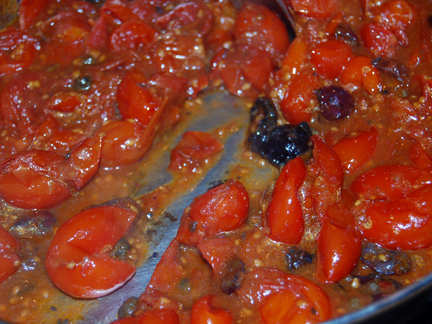
Such is the case for Pasta alla Puttanesca: you may remember my post in which I traced all the historical data I could gather on the origins of this dish we all love so much.

The fact of the matter is that we live in a time of intensified awareness of the gastronomy that surrounds us. Not since the Italian Renaissance has Western Civilization devoted so much attention (and scholarship) to the foods that we eat. During the 20th century, when dishes like Carbonara and Puttanesca became so popular, we all lived in a culinary dark ages — when scholarship ignored the workaday aspects of our nutriment. BTW, for the record, neither Artusi (whose cookbook was compiled in 1891) nor Cavalcanti (1837) mention either Puttanesca or Carbonara.

The other day, a reader from Detroit — a Brooklyn native born to a Neapolitan mother, Robert Bilenchi — left the following comment on the post. I love his idea of trying to document the dish’s origins by interviewing folks who were living in Italy in the periods between the two wars and after the second world war. In the truest spirit of philology (the love of words), I asked Robert for some photographs of his mother and permission to post them here with his mother’s observations.

My mother is 93 and is still living. She was born in 1917. She remembers this dish, Spaghetti [alla] Puttanesca as a child and a young adult in Naples Italy. My parents made the dish when I was growing up in New York in the ’50s. So how then does this dish get to be invented in the ’50s? My parents were not well connected enough to have received the recipe from any Italian chef who might have been associated with the alleged inventor. Someone needs to do a survey of older Italians born prior to the ’30s to refute the ’50s story of the invention of Spaghetti [alla] Puttanesca. The Annarita Cuomo story appears to be erroneus. Sandro Petti did not invent the dish and though a study may have found the dishes popularity to have swelled in the ’60s, this does not show it was invented just prior to that time. Let’s do a study while these people are still alive.

Click here to read my original post.

In his own words, Robert is “a retired engineer living in Dearborn Michigan. I grew up in Brooklyn NY with my parents and 2 brothers. We all were spoiled on my mother’s cooking and we each learned to cook her specialties hanging onto her apron strings.”

Thanks for reading! Buona domenica, ya’ll!
Mexican wet dream: carnitas and Riesling

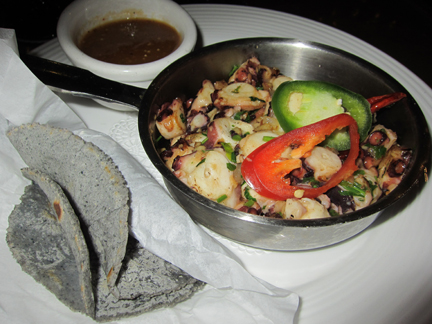
Above: Pulpo al Carbon at Hugo’s (Houston), grilled and marinated octopus with housemade salsa and three different kinds of peppers and warm pillowy blue corn tortillas. HIGHLY recommended.

The caliber and quality (and sheer fun) of Mexican food in Texas continues to blow me away (and this comes from a Southern California dude who grew up traveling in Mexico).

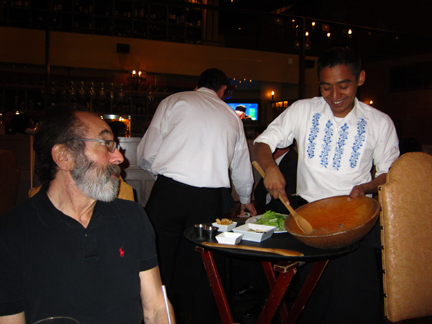
Wednesday night found me with cousins Joanne and Marty at Houston’s legendary Hugo’s, where my friend Sean Beck has put together what is IMHO the best Mexican restaurant wine list in the country. From an obscenely low-priced bottle of Taittinger La Française to cru Beaujolais (great with Mexican food, btw) and his hand-selected shortlist of German and domestic Riesling, I was like a Mississippi bullfrog on a hollow stump: I just didn’t know which way to jump! (who can name the song?)

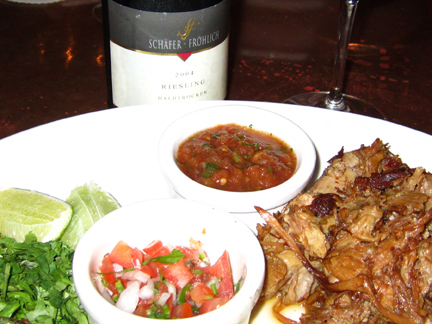
Above: Do you know of any Mexican restaurant with such an extensive and well-thought-out wine list? I had never seen anything like and Sean’s recommendation, Schäfer-Fröhlich 2004 Riesling Halbtrocken, was utterly brilliant with my carnitas. Chapeau bas, Sean. Fantastic pairing!

I’m dying to get to the famous Sunday brunch at Hugo’s and I’m sure we will soon. In the meantime, Hugo’s has now formed the triptych of what I consider to be the top high-concept Mexican restaurant in the U.S., together with Fonda San Miguel in Austin and La Serenata in LA (downtown, not westside).

(RdG+BarAnnie could be included in that list but it’s really a Southwestern as opposed to traditional Mexican cuisine restaurant.)

Even though California — from the Mission burritos of SF and the huevos rancheros of Half Moon Bay to the camaronillas of San Diego — is still the leader when it comes to down-and-dirty greasy hole-in-the-wall joints, Texas has the monopoly on the luxury, regionally themed Mexican restaurants in the U.S.

The carnitas — a litmus test for any self-respecting Mexican restaurant — were moist and perfectly seasoned, reminiscent of those I first experiences when I spent the summer of my sixteenth birthday in Mexico City so many moons ago.

Above: Flirtatious nurses tell cousin Marty (left) that he has “excellent veins.” He is in great shape and is an amazing specimen of the human variety — for his fitness of body, mind, and heart.

If there was a somber note at our excellent dinner, it was because we discussed some of the very serious (although under-control) health issues that our beloved cousin Marty is facing right now. Technically, he’s my second cousin (Zane’s first cousin) but he’s more like an uncle to me and Tracie P. I never really had much contact with Joanne and him before I moved to Texas but since I got here, he and family have welcomed us into their homes and lives with immense generosity and love (it’s thanks to Marty that I know Tony!).

I wish all of you could experience Marty’s lusty appetite for great food and wine, engaging conversation, and intellectual pursuit (he’s a constitutional law scholar, btw). Tracie P is always tickled by his “potty mouth” and I hang on to every word and insight that he shares about our family’s history and evolution (I’m named after his father, Ira Levy, Jeremy Ira Parzen). More than anything else, we love to share meals together and some of the most memorable of my life Texana have been with him and company.

We just can’t imagine a world without him and we’re sending him lots of love and good thoughts in this trying time…

Magliocco, swordfish, and Gossip Girl

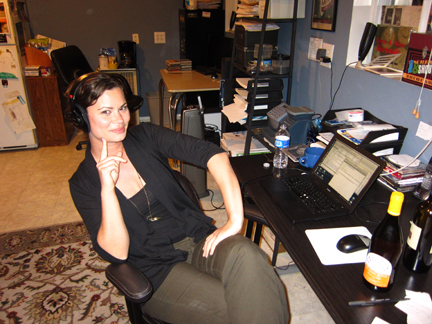
That’s the inimitable Shawnté Salabert, writer, voiceover artist, and song plugger for Sugaroo (my band NN+’s licensing agent). She’s the one who got our track “Catastrophe” (click to listen to preview) into Gossip Girl tonight. (Hey, I know it’s not Master Piece Theatre but if the teenage female American demographic digs my music, I ain’t complaining!)

“Catastrophe” is one of my favorite tracks: I wrote it in NYC with Céline Dijon back in 2007 (seems like a lifetime ago). Tonight’s episode also features another song I wrote and recorded with Céline in New York many years ago, when we played in another now unmentionable French band together. It’s called “Les Sauvages.”

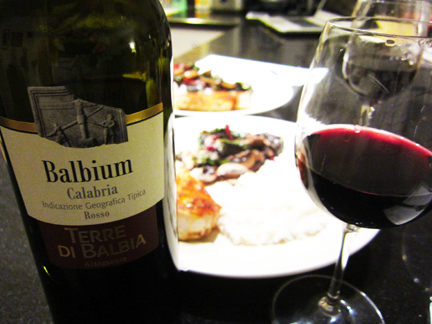
I got to meet and thank Shawnté in person on Thursday when I went to visit the mother office and have dinner with my old friend and music biz veteran Michael Nieves, who cooked up a delicious swordfish steak, which we paired with a bottle of 2009 Terre di Balbia Balbium (I had tasted it earlier that day at a trade tasting and swiped the bottle from the rep).

This 100% Magliocco from Calabria, raised by Venica & Venica, is one of the most exciting wines from Southern Italy that I’ve tasted this year (and I’ve been tasting a lot of southern Italian wines recently for a new consulting gig).

From what I understand, some (or all?) of the grapes are briefly dried in the vineyard before vinification. I was blown away by the freshness of this wine, its balanced alcohol (a little higher than I like but nicely settled in the wine), and its juicy cherry and plum flavors and bright acidity. Extremely yummy wine, excellent with Michael’s roast swordfish steak dusted with paprika.

Thanks again, Michael and Shwanté: for the placement and the rocking piece of fish!

Why does In-N-Out Burger taste so good when you’re depressed? (And please be nice to government workers.)

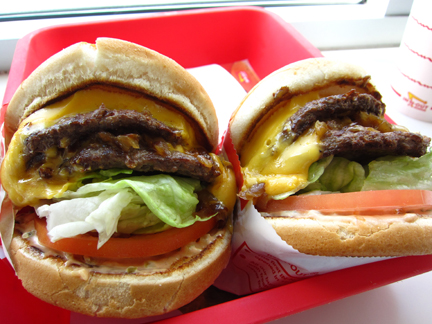
Missing Tracie P terribly and feeling down-in-the-dumps after discovering a boneheaded clerical error was going to cost me a pretty penny, I tumbled headfirst into the darkest depths of gastronomic moral nihilism and ate at one of California’s landmark In-N-Out Burgers. There’s no excuse for this aberration and abjuration of my culinary ethics. Even though folks often say that In-N-Out is the “less bad” of the fastfood franchies, it’s still junk food and it’s still bad for you. But, man, like a junkie putting that needle back into his arm, the first bite of that Double Double brought with it refuge and solace from my pain — however short-lived, false, and futile.

In the end Tracie P cheered me up with a phone call and the SUPER nice lady at above-mentioned government office emailed to say that she had managed to clear up the whole issue and that my penalty would be refunded.

We’ve all read about it in the news: government employees are under so much stress these days and who can blame them for not having a great day. In the midst of a budget crisis, California state employees are no stranger to the stresses of the current economic climate. I was very lucky to find a generous person who gave my case some extra attention and resolve my issue.

So please remember to be nice to our public servants. They deserve our support — now more than ever.

Good things I ate in San Diego

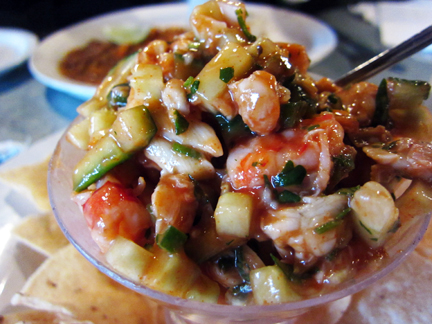
The campechana (marinated seafood salad, with octopus, squid, shrimp, et alia) was off-the-charts good at Bay Park Fish Co. in Mission Bay, San Diego.

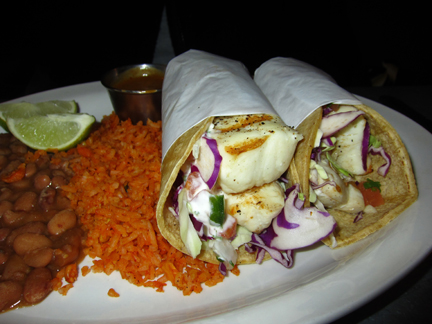
So were the grilled halibut fish tacos. Seafood in San Diego ROCKS!

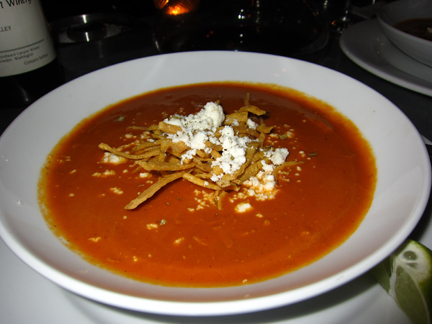
Couldn’t resist the new tortilla soup at Jaynes Gastropub, where I caught up with the crew and drank some killer wines. The crumbled queso fresco and spritz of lime took it over the top… Highly recommended…

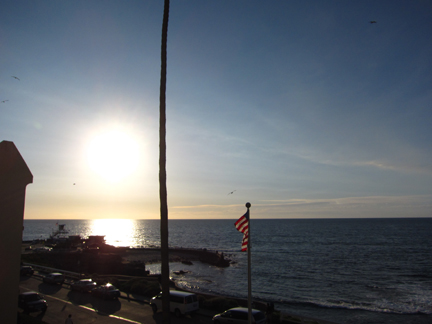
Almost sunset from mama Judy’s window, looking out toward the La Jolla Children’s Pool

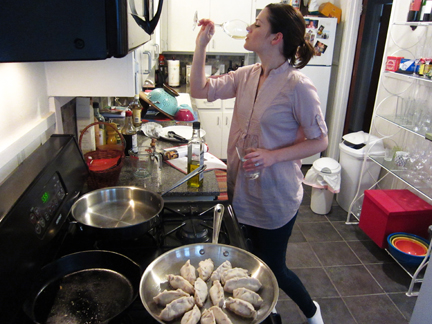
Tracie P’s amazing pot stickers

Anyone who has had the good fortune to dine in the home of Michele and Charles Scicolone has heard the ritornello before.

“I am truly blessed,” says Charles when asked what it is like to live with one of the first ladies of Italian cuisine in the U.S. today, author and Italian food authority, the lovely Michele, one of the best cooks I’ve ever met.

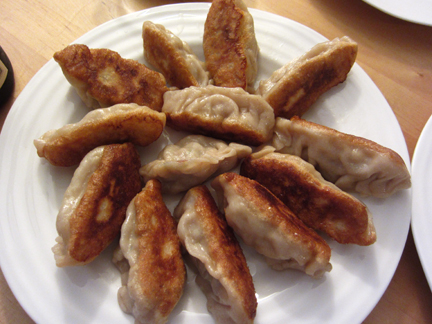
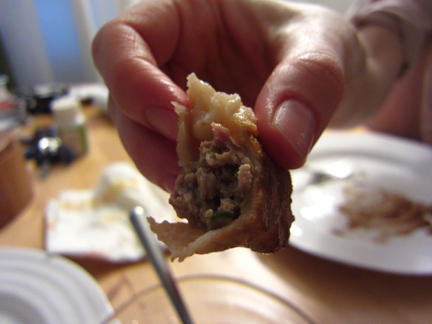
I couldn’t help but borrow Charles’s mantra last night at dinner, when I tasted Tracie P’s pot stickers, stuffed with minced pork, scallions, garlic, ginger, sesame oil, and Napa cabbage.

They were unbelievably delicious… The dough was light in body but rich in flavor (imparted from the filling) and the filling maintained its integrity and cohesive texture when you bit into the dumplings after dunking in the soy sauce, rice vinegar, and sugar dipping sauce.

It’s been so great to relax at home with my beloved Tracie P… sitting around in our PJs until noon, cooking, and eating… and just hanging out… I love her so much and she’s SO good to me…

Lot’s more to say about the last Italy trip, with many more posts to follow… but for the time being, I just want to relive those pot stickers and a bottle of Taittinger NV La Francaise one more time… aaaaaaa…

Bombe glacé and 2006 Brunello on my mind…

Just had to share this image of an incredible bombe glacé, captured last night at Tony’s in Houston where I had dinner with a colleague, newfound friend and fellow Italophile.

In other news…

Franco’s first impressions from Benvenuto Brunello, fresh off the presses and translated by yours truly…

The Ronco del Gnemiz Six-Pack is LIVE! Friulian food NOT INCLUDED

The Ronco del Gnemiz Six-Pack is officially LIVE over at 2Bianchi.com, Do Bianchi Wine Selections… if you live in California and would like to taste a little bit of the Colli Orientali del Friuli (the eastern hills of Friuli), I’ll be delivering the wines and shipping on Tuesday… Check it out here.

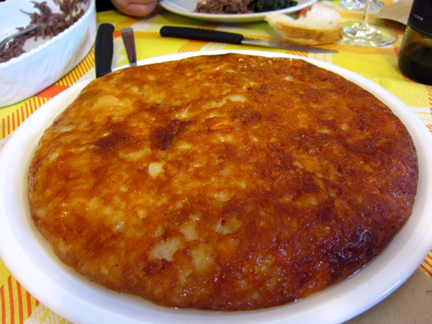
I can get you the wines but unfortunately I can’t deliver the classic Friulian meal to go along with it. That’s soft (as opposed to crunchy) frico above: aged and fresh Montasio cheese with potatoes fried in a pie.

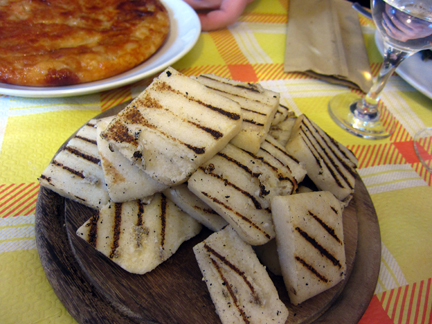
Grilled white corn polenta.

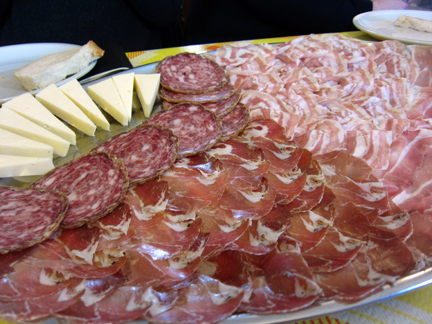
Fresh Montasio and salame, ossocollo, pancetta, and Prosciutto di San Daniele.

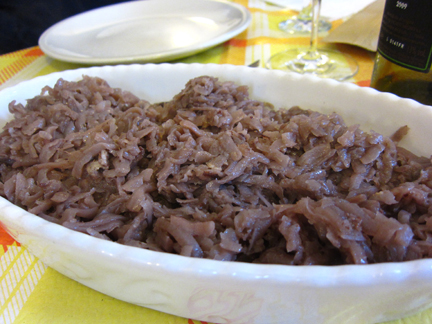
Brovada, turnips fermented and braised in red wine.

The Babbo effect and a visit to the Bastianich winery in Colli Orientali del Friuli

Above: My friend Wayne Young, whom I met in 1998 in New York when he had already been working within the then-expanding Bastianich empire for three years. In the photo, Wayne is standing atop the amphitheater growing site where the top wines for the Bastianich winery are grown in the Colli Orientali del Friuli.

Babbo changed everything. It was “a fine-dining Italian à la carte restaurant below 14th St.,” as Joe Bastianich put it when I first met him in 1998 (when I was working as an editor at La Cucina Italiana in the City).

Ruth Reichl’s watershed New York Times review of the place in April 1998, “A Radical Departure with Sure Footing,” marked a point of no return for pseudo-Italian restaurateurship in the U.S.

I remember that Wednesday in August 1998 well: it was the day that Italian gastronomic irony died and the newly minted craze of Italian regional cuisine took firm hold in North America. Whether you liked Babbo or not (and who didn’t want to get a table at Babbo?), from that day forward, if you cooked Italian food in the U.S., you had to do it earnestly: your food was only as good as the authenticity that stood behind it.

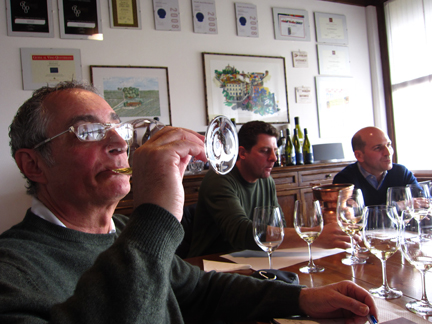
Above: Alfonso tasting with the COF2011 blogger team and winemaker Emilio del Medico and winery GM Dennis Lepore.

Wayne Young and I first met back in those heady days of New York’s Italian food scene. We all knew a revolution was taking place even though, from the eye of the storm, we didn’t realize its portent. Today, Wayne — who has worked as a sommelier at Bastianich outposts Becco and Babbo — serves as the Bastianich winery’s “special ops” man on the ground in the Colli Orientali del Friuli (the blogger project there was his idea). He is involved in every aspect of the operation, from winemaking (a wasp in his pants is what gave him the idea to call the winery’s flagship white “Vespa”!) to sales (ask him what it’s like to sell wine in Serbia!) and marketing (he is the only Friulian winemaker to author a winery blog).

Wayne is a remarkable man, with great generosity of heart and a warm gentleness. I’ve never heard him say a nasty word about anyone and I admire him for the way he lives his life perfectly integrated into Friulian society where he is welcomed and beloved by all we met. Despite his nordic locks, everyone calls him “a local” up there in northeasternmost Italy.

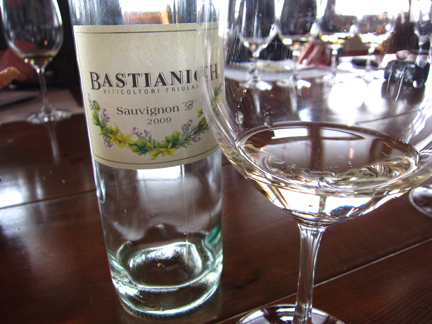
Above: In our tasting last week at the winery, my favorite wine was the 2009 Sauvignon Bianco. Fresh and clean, with balanced aromatic character and that bright acidity that I want (and need), it should retail for under $20 in the U.S. The Bastianich Sauvignon has a screw cap, a feature that allows the winemaker to add a smaller amount of sulfite to the wine, because the screw cap allows less oxidation (where a cork, an organic substance, would allow more).

Like Wayne, the Bastianich family has been welcomed in the Colli Orientali del Friuli as winemakers. President of the COF consortium Pierluigi Comelli told us the story of how Joe and mother Lidia came to him asking for advice on where to buy property and set up their facility. Ultimately, on his advice, they revived a winery that had abandoned after the owner’s untimely passing. And they bought uncultivated growing sites where they cleared the woods themselves to make way for vineyards. After a week in the COF, I had a clear sense that winemakers there appreciate the expanded exposure and bandwidth that the Bastianich brand brings with it. “Everyone rises with the tide” seemed to be the consensus.

Above: On Friday evening, the last of our trip in the COF, we took time out to celebrate with a beer in Cividale del Friuli. You can’t really help but smile when you’re around Wayne — it’s contagious. That’s Nicolas, David, and Alfonso to the right.

Spending the week tasting and comparing notes with Wayne (who, as a local winemaker, shared a lot of interesting insights with the group), I couldn’t help but think back to 1998, when we first met and none of us really understood what was about to happen. As Eric the Red recently pointed out to me, it was a time of Italian gastronomic “innocence” (it is Eric whom Mario Batali’s father Armandino credits for having “discovered” his son’s talent in 1993).

I’m glad to know that the fame and the celebrity hasn’t changed my old friend Wayne.

Don’t let the farmer know…

Don’t let the farmer know how good cheese is with pears…

So goes a bourgeois Italian expression: don’t let the proletariat know how good it is to be a member of the ruling class

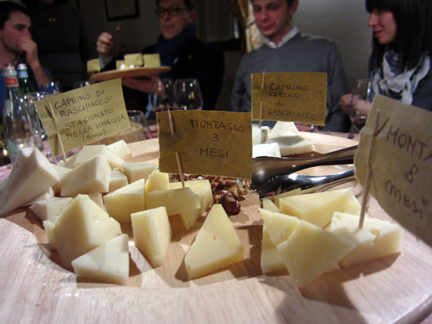
Julienned pears and shredded Montasio cheese over winter greens, served with a lightly fried pancetta rasher and drizzled with olive oil, were delicious last night in the home of Daniela and Pigi Comelli.

Montasio is Friuli’s flagship cheese.

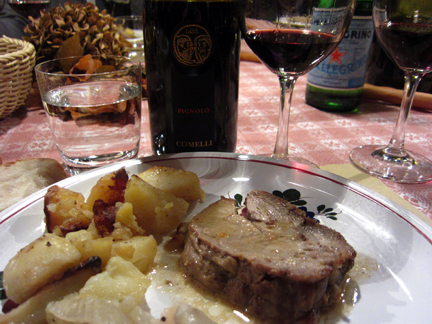
Comelli’s Pignolo (2007) was my favorite of the trip so far… Pignolo is a wildly tannic however noble grape. While most seem to vinify it in a “massive” and “muscular” style, Comelli’s was more judicious and showed nice fruit, especially when paired with roast pork loin and potatoes. Good stuff…

So much more to tell but gotta run… Follow along at COF2011.com