(Thirty) Nine and a Half Weeks (Pregnant)

39 weeks pregnant

We’ve been alternating massage and acupuncture hoping to bring on labor. But no success so far. As the old adage goes, babies come when they’re ready.

Other than that, no news to report.

Click here for Tracie P’s update on her blog.

In other news…

cutest little girl ever

Georgia P is cuter than ever.

Her nanna and baw baw (paw paw) are staying with us, giving me a hand with household chores and allowing me to get some rest as we gear up for Parzen family expansion.

We’re so lucky to have them and we all have so much fun together.

Georgia P had fun with her baw baw at the splash pad yesterday afternoon and she really loved wearing his hat (above)!

Bardolino producer Matilde Poggi (Le Fraghe) elected pres #FIVI

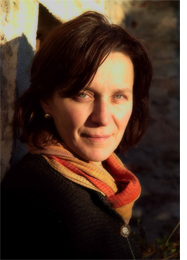
matilde poggi fivi presidentYesterday, Bardolino producer Matilde Poggi of Le Fraghe (left) was elected as the new president of the FIVI, the Federazione Italiana Vignaioli Indipendenti (Italian Federation of Independent Grape Growers).

(Image via FIVI.)

Leonildo Pieropan and Walter Massa are the new vice-presidents.

And Gianmario Cerutti is the new Councillor Delegate for Institutional Affairs.

(Source: Intravino.)

With great interest, I followed the voting yesterday in Colorno (Parma Province, Emilia-Romagna) via the Twitter (click link for the thread).

Since its founding in 2008, the number of federation members has surpassed 600. Those familiar with the world of Italian wine will immediately recognize some of the iconic winemakers who have joined the group: Les Crêtes, Grosjean, Ettore Germano, Paolo Scavino, Foradori, Maso Poli, Venica, Vie de Romans, Bucci, Pepe…

Its mission, according to its website, is “to defend the moral, technical, socio-economic, and administrative interests of its members.”

And as its power as an Italian wine industry lobby has grown, so has its influence. The major players of Italian wine can no longer ignore its push to give small producers greater representation within bottling consortia, where, in most cases, representation is based on volume of wine produced. In the FIVI, each members vote carries equal weight.

Stefano Casali (Muralia)
Giulia Cavalleri (Cavalleri)
Gianmario Cerutti (Cerruti)
Lorenzo Cesconi (Cesconi)
Costantino Charrère (Les Cretes)
Ettore Ciancico (La Salceta)
Luca Ferraro (Bele Casel)
Celestino Gaspari (Zymè)
Armin Kobler (Weinhof Kobler)
Walter Massa (Vigneti Massa)
Saverio Petrilli (Tenuta di Valgiano)
Leonildo Pieropan (Pieropan)
Matilde Poggi (Le Fraghe)
Buttafuoco Storico Vercesi Marco (Marco Vercesi)
Guido Zampaglione (Tenuta Grillo)

(Source: Luca Ferraro’s Facebook.)

In other news…

domenico zonin

Above: Gianni (left) and Domenico Zonin, two generations of one of the most powerful families in Italian wine (image via Francesco Zonin’s Flickr).

Yesterday, as I was following developments in Colorno via the Twitter and Facebook, I received an email press release from Casa Vinicola Zonin (one of the largest winery groups in Italy and the world).

The information was not included in the message body. Instead, it was contained in an attached file, 1.1 megabytes in size.

Strangely, despite its size, this is all that it reported (brackets mine):

“Domenico Zonin elected President of Unione Italiana Vini[.]”

“On July, 9th Domenico Zonin, Vicepresident of Casa Vinicola Zonin was elected President of Unione Italiana Vini (UIV) [Italian Wine Union], with a mandate valid until 2016.”

“Unione Italiana Vini is the most ancient and most representative Association of wine-growing Italian enterprises. Created in 1895, today its associated companies are about 500 and cover 70% of the value of the sector’s Italian export. Trade union, information, promotion in Italy and abroad, laboratories have always been UIV’s tools in support of the wineries since more than a century.”

Defending a diacritic in Cogno’s “Anas-Cëtta” TY @brittanieshey

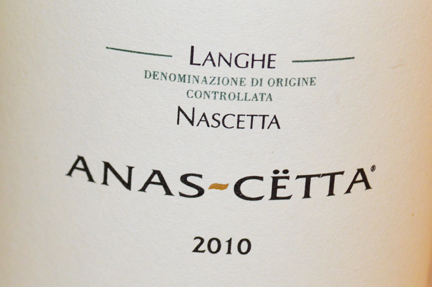
cogno anas cetta

A note of thanks to my friend and colleague Brittanie Shey (Houston-based music and lifestyle writer) who brought this New Yorker piece to my attention: “The Curse of the Diaeresis.”

It interests me for three reasons: 1) my doctoral thesis on medieval & Renaissance prosody (meter/versification) and transcription included a chapter devoted in part to diaeresis; 2) I have always been annoyed by the New Yorker’s hypergrammatical (yes, that’s a term; I didn’t coin it) use of the umlaut (aka diaeresis); and 3) Valter Fissore uses a gratuitous umlaut in the proprietary designation for his Cogno Langhe Nascetta.

Continue reading

Prosecco Colfondo for the pregnant lady!

watching tv with mommy

Most experts agree that there is no incontrovertible fact behind the many theories regarding “labor-inducing foods” and other tricks.

But they also agree that, at 39 weeks pregnant (like us; actually 39+), most mothers-to-be would do just about anything to induce labor.

We’ve been doing it all (I won’t go into the details). But Baby P 2013 still isn’t ready.

prosecco col fondo sediment

Last night, when I asked Tracie P if she’d like to drink the fondo of a Prosecco Colfondo (the lees and other sediment of the bottle-fermented, undisgorged sparkling wine), the answer was: at this point, it couldn’t hurt.

Back in April, when I met with Luigi Gregoletto (the oldest continuous producer of Prosecco Colfondo), he told me that in the “olden days,” people would drink the fondo as a tonic. It helps with digestion, he told me.

bele casel prosecco

So last night over dinner, I decanted a bottle of Bele Casel Prosecco Colfòndo (my friend and client Luca Ferraro writes the designation with an accent grave) and decanted it.

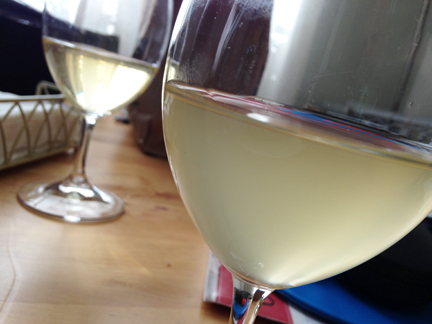
You can see the clear wine in the photo directly above and the cloudy sediment in the photo above that.

As of this morning, we still haven’t gone into labor. But we’re not giving up hope that today will be the day.

The only incontrovertible fact is that it ain’t over ’til the fat pregnant lady sings!

Thanks to everyone for all the emails and tweets of support. We’re almost there…

Dario Prinčič & WWI’s legacy in Slovenia & Friuli

dario princic katell pleven

Above: Importer Katell Pleven of Vine Collective (right), with Friulian winemaker Dario Prinčič, asked me to interpret for a conversation between Dario and a leading U.S. winemaker at Vini Veri this year. I am a huge fan of Katell, her portfolio, and her mission and I was happy to help out.

Every December, my soon-to-be eighty-year-old father sends a “circular” email memo to his “list serve” of ex-military-industrial-complex buddies and his children (my two brothers and me).

“Don’t forget Pearl Harbor!” exhorts the subject line.

Both of my parents were born in 1933 and were six years old when Germany invaded Poland. And from his midwestern perch, my father still remembers the days of the Second World War with the revisionist nostalgia of a character who could have appeared in Antonioni’s I Vinti (The Vanquished).

I’m always reminded of his vacant exhortations when I talk to winemakers — not much older than me — from Gorizia. They were born long after the conclusion of the First World War but they often speak about its legacy as if it ended yesterday.

Their need to express its impact on their land and the people who farm it is far from vacant. And it bespeaks the origins of the Natural and skin-contact (orange) wine movement that straddles the Friulian-Slovenian border.

dario princic favola

Above: “This wine is proof that I make Natural wine,” said Dario, referring to his 2008 Favola, a blend of Chardonnay, Sauvignon, Pinot Grigio, Tocai, and Ribolla Gialla. After an attack of peronospora (fungal disease), he lost roughly 90 percent of his crop because he refuses to “treat” his vineyards with chemicals. The 10 percent was delicious.

“My village was razed during the First World War,” Dario Prinčič told us over lunch at the Vini Veri fair in Cerea (Verona) this year.

The devastation was so great that “it could not be rebuilt on the original site. It had to be moved roughly 300 meters.”

Some of the last battles of the Great War took place in the Collio-Brda hills along the current Friuli-Slovenian border, where thousands perished in some of the conflict’s most brutal and fierce (however pointless) fighting. By the time the war had ended, the entire zone had been destroyed (Stanislao Radikon and I had a similar conversation when I visited his family’s winery a few years ago.)

And this forsaken, literally scorched swath of land was virtually abandoned until Italy’s reconstruction in the 1950s in the wake of the Second World War.

During our meeting at Vini Veri this year (where I interpreted for Dario and a U.S. wine writer), he talked about how this legacy informed the Natural wine movement there in the late 1980s and early 1990s when he and a small group of growers began to bottle their own fruit (instead of selling it to large commercial bottlers). The decades between the end of WWI and the end of WWII were essentially lost and the generation that came before Dario lived (if they did not flee) in a wasteland.

To this day, as Dario tells it, the morbose spectre of such incomprensible devastation (Arendt’s banality of evil) shapes his will to grow grapes without the use of chemicals (he has done so since 1988).

And while other growers have spoken to me about the advent of skin-contact whites (most Americans don’t realize that Italians and Slovenians don’t call their wine “orange”) as a means to reinterpret Ribolla Gialla as a tannic wine, Dario points to the nonni (grandparents) and their application of tannin as a natural anti-oxidant and preservative of wine.

In my view, these wines are an expression (maybe even a Proustian trace?) of the era before the wars.

To taste the freshness and bold fruit of his 2008 Favola is to touch one’s lips to a time before humankind’s inexplicable capacity for evil left its dark shadow over this beautiful landscape.

And to my lips, it tasted delicious…

More Italians self-importing to U.S. (tasting notes for Cogno 2010 Nascetta)

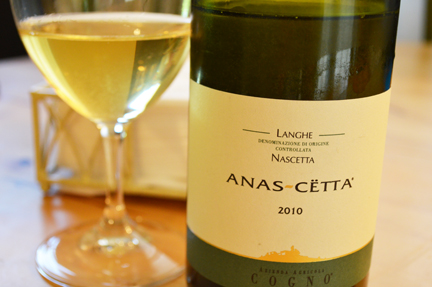
nascetta cogno

Ever since winemaker Valter Fissore treated me to vertical tasting of his Nascetta (stretching back to 2001), I’ve been obsessed with this wine. That was back in 2008 and I’ve collected the wine with each new vintage since then.

Click here for a thread of posts devoted to this wine, including the correct pronunciation of the grape name and notes on its origins (and Valter’s unique spelling).

So when my local wine merchant (in Austin, Texas) told me that he was closing out his last five bottles of the 2010, I told him I’d be happy to take them.

I was glad to pick up the wine at such a good price but I was also happy to get the last few bottles left in Texas: now that the winemaker is importing the wine to the U.S. himself, he’s lost his Texas distribution and I imagine it will take some time before he gets his foot back into the iron-clad Texas door.

Valter is part of a new wave of Italian producers, small and large, who have shunned the traditional avenues paved by the big importers and their corporate-minded distributors. Instead, as a self-importer, the wines ship from Italy, kiss a dock in the U.S., and then go directly to the distributor. And he only ships wines when the distributor places an order, thus eliminating U.S. storage costs.

“It’s based on the Dalla Terra model,” he told me when I tasted with him at Vinitaly this year, referring to industry veteran Brian Larky’s “winery direct” system.

“All of the wineries use USA Wine West,” a importing and distributing service, said Valter’s broker, Becky Vuolo, an American based in Piedmont. “They just do our clearance and doc[ument]s. Nothing is stateside (no inventory). The wines go directly into our distributors’ warehouse who ordered them.”

abbazia novacella

Above: The main church of the Abbazia di Novacella (Novacella Abbey), one of the iconic Italian wineries that has recently begun “self-importing.”

Becky currently works with three wineries — Abbazia di Novacella (Trentino-Alto Adige), Cottanera (Sicily), and Cogno (Piedmont) — as their U.S. sales manager. Those familiar with the North American Italian wine market might be surprised to learn that such iconic wineries have embraced this strategy (Valter’s is the smallest of the three). And of course, it comes with some pitfalls.

Anecdotally, I’ve been told that Valter faces some serious challenges in certain U.S. cities where he’s trying to rebuild his market presence. And I imagine he has a long and hard road ahead of him.

But after the 2008 U.S. wine trade “reset” (in the wake of the financial crisis), with wineries and importers regularly and wildly shifting alliances, his story is a common one. Many winemakers are now “parcelizing” (my term) the U.S. wine market and have begun to work more closely with small importers and distributors whose territory often covers just one state.

In California (where I’m a wine buyer), many labels are represented by different importers and distributors in the northern and southern territories. In more than one instance, I’ve had two different distributors show me the same wine (both of them claiming to have exclusive distribution rights).

Whether or not this trend will prove beneficial for wineries and consumers has yet to be seen. In states like wild-west California (one of the most liberal in the U.S. in terms of the regulation of wine sales), it seems to make more labels available and at friendlier prices. In states like business-friendly-unless-your-selling-wine Texas, the Valter Fissores of the world face seemingly insurmountable challenges.

I’m sorry to see Valter’s wines disappear from the shelves of my local wine merchant, but I’ll manage to collect the wine through other channels in the meantime.

The 2010 is stunning and it just kept getting better over the course of three nights. In the more recent vintages, Valter told me, he’s been aging the wine and stirring it on its lees. The result is a richness in mouthfeel and an intense minerality that you rarely find in an Italian white wine at this price point (under $30). The 2010 is still very youthful in its evolution and it impressed me with how electric it was (even after three days open in the refrigerator). It was brilliant with cast-iron-pan-fired pork white flour tacos topped with guacamole and salsa: its depth of personality (such a unique wine!) went head-to-head with the vibrant flavors of the dish.

As I munched down my taco and enjoyed one of the “last bottles” in Texas, I couldn’t help but think about how much the wine industry parallels the music industry these days, with more and more “producers” going independent.

Like a song, a bottle of wine doesn’t have much meaning if its author just keeps it at home locked up in the cellar. This wine really sang to me and I sure hope that its music ain’t over.

Splash pad! Texas summer living (Baby P 2013 update)

splash pad austin

Not much news to report here at Camp Parzen other than the not-so-breaking news that we are very very pregnant and ready for Baby P 2013 to arrive.

Her due date is July 15 (next Monday) and so far, the many predictions that she would come early have not panned out.

At this point, especially with temperatures reaching the mid to high 90s every day, Tracie P needs to spend as much time as she can off her feet.

I’ve been doing all the shopping, cooking, and cleaning and Georgia P and I get out as much as we can.

Yesterday, we made our first visit to an Austin “splash pad,” an invention so ingenious that I’d like to kiss the person who thought it up.

In essence, it’s a playground with colorful fountains and it’s so much better than a pool (especially for a toddler like Georgia P). The water is reclaimed after ever cycle (assuaging its environmental impact), there is no danger of drowning, and the fountains create just enough cool air to keep it pleasant on the sidelines for the parents watching over their kids.

Georgia P LOVED IT!

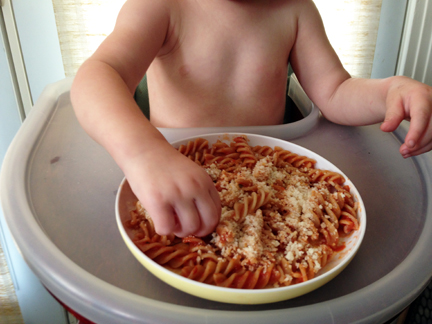
Al pomodoro please: red, white & Nebbiolo for the 4th

pasta al pomodoro

Mommy and daddy had hotdogs and burgers with all the trimmings for a quiet Fourth of July celebration at home as we continued to wait for the big day to arrive.

We’re now nine days away from Baby P 2013’s expected due date.

Georgia P came nine days early. So mutatis mutandis… Our bags are packed and ready to go.

Continue reading

harsh times for disenfranchised women but good tortillas in Texas capital

herdez salsa

Those crazy-assed Texan republicans have nearly prevailed in delivering some of the the most restrictive reproductive policies in the U.S. And when they’re done, they will have closed all but a handful of Planned Parenthood clinics through out the state (one of the richest in the U.S., home to its fourth-largest city, and the fastest growing in the nation). The few remaining will nearly all be in major urban centers. As a result, financially challenged families living in rural areas will have virtually no access to affordable women’s health services. And services in the big cities will be more limited.

But it’s hard to find a bad tortilla in this town, capital of the Lone Star State.

Continue reading

Ut pictura oenographia: a short treatise on synaesthesia in wine writing

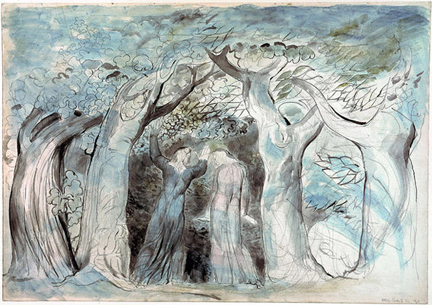
blake dante inferno

Above: William Blake’s depiction of Dante and Virgil heading toward the “dark wood” where “the sun is silent.” Image via BlakeArchive.org.

Horace, Dante, Blake, Carducci, and wine tasting? Pane per i miei denti, as the Italian says (bread for my teeth to bite into, in other words, right up my alley).

I had a lot of fun composing a short treatise on synaesthesia in wine writing this morning for my friend and client Paolo Cantele.

Click here for the post…