Sparkling in the north, whites in the south: Italy’s 2018 harvest has begun (photos and notes)

Dispatches from Italy’s 2018 harvest are just beginning to come in.

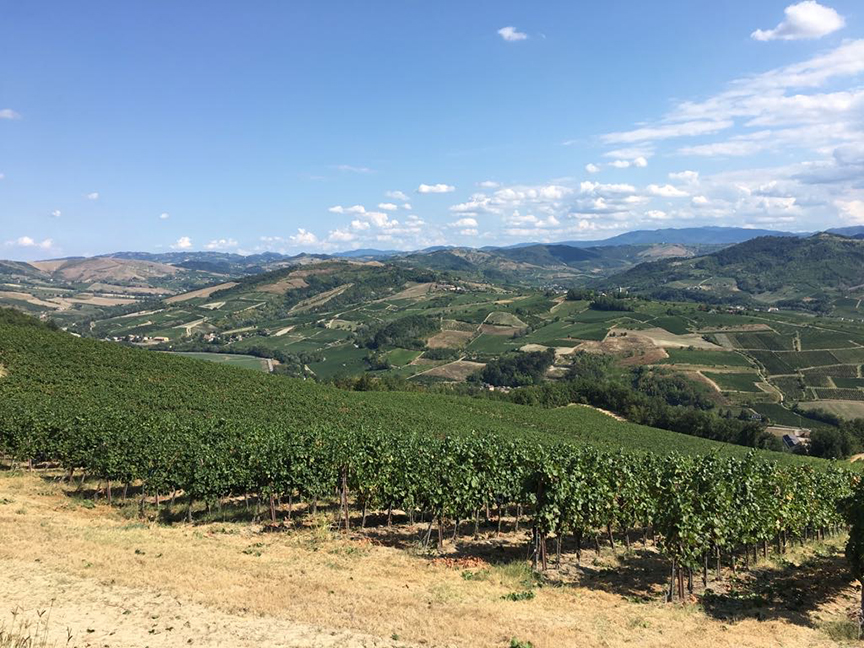
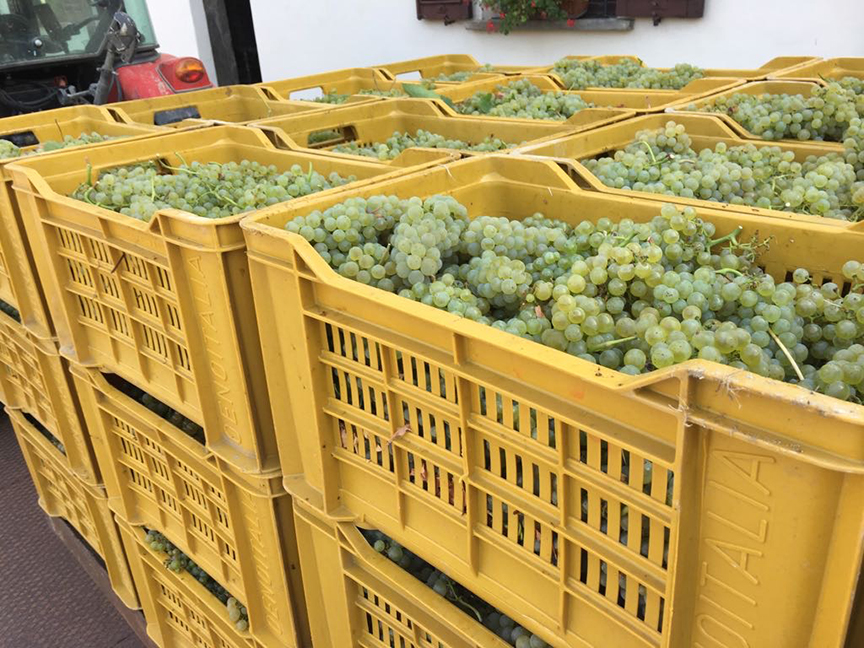
That’s a shot from Oltrepò Pavese, snapped earlier this week. They’ve started picking their Chardonnay (below) and Pinot Noir for their classic method wines.

From what I’ve been told, Oltrepò Pavese was spared a lot of the late spring and early summer rain that hopscotched across norther Italy this year.

The photos come from winery Travaglino who’s underwriting a blog that I’m writing for the next six months on the appellation. More on that later…
I’ve been told that most a lot of Franciacorta has already been harvested.

I was in Franciacorta in May and then back in June. Limited but still menacing hailstorms and late rains were keeping producers on their toes. When Tracie and I were there in June with the girls, there was a huge thunderstorm that had growers spraying a lot of copper the next day. (After heavy precipitation, copper is sprayed to prevent peronospora, otherwise known as downy mildew.)

Looking around on the internets, I found this authorization, dated June 15, for Trentino producers to increase the maximum yearly amount of copper per hectare to 9 kilos.

The request and authorization are indicators that they’ve experienced problems with peronospora during this very rainy vintage in northern Italy.

Currently, the EU allows growers to use 6 kilos per hectare per year. But the EU’s Plants, Animals, Food and Feed (PAFF) Committee is considering reducing that amount to 4 kilos per year, something that has organic growers gravely concerned (see my post from July 23 here).

Copper is a very sticky issue in Europe these days.
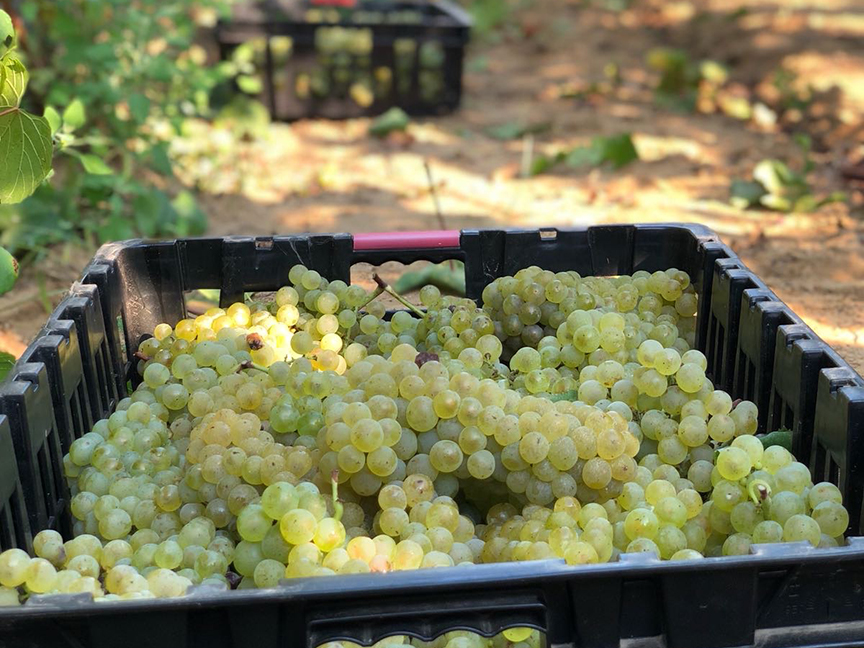
Southern Italy has also seen some patchy but limited rain late in the growing cycle this year. It didn’t impact growers to the same extent as in the north.

Those are Chardonnay grapes harvested in Salento this week, above, photo via my friend and client Paolo Cantele.

The quality of their fruit this year is excellent, he said, despite some late rainfall. He and his brother Gianni are really happy with their results. Those grapes will be used to make their flagship Teresa Manara Chardonnay, their twentieth vintage (mazel tov, Cantele family!).
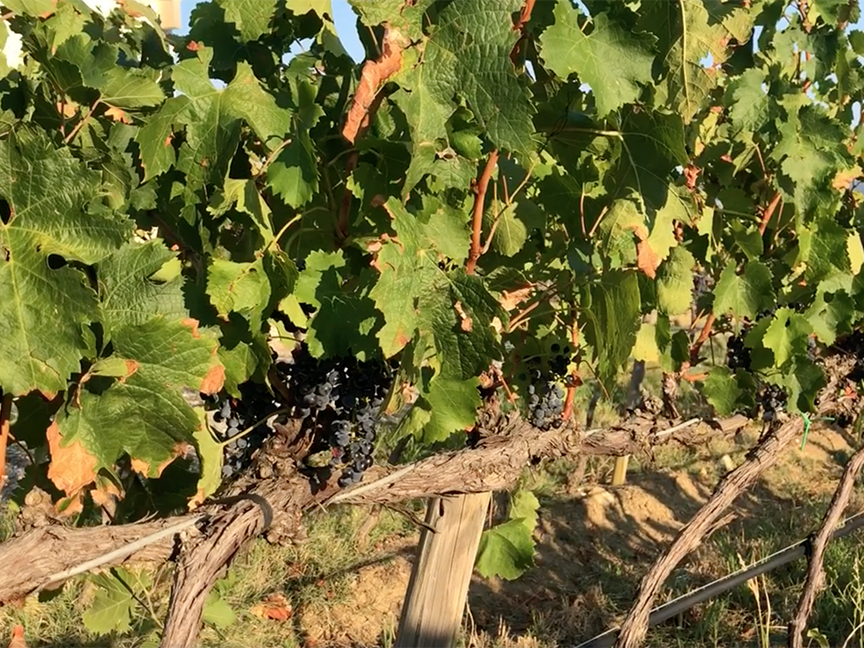
Down in Tuscany, they’ve had a “rainy and cool” season, said my friend and client Stefano Cinelli Colombini in a Facebook post (translated here, by me, for their blog).

Those are Stefano’s Merlot grapes in Maremma, along the coast.

Based on his lab samples, he’s expecting an early harvest, which is surprising considering the conditions.

“With these crazy seasons,” he wrote, “there’s no telling what the results will be.” But he’s confident that the vintage has good potential.

Between the wild fires in California wine country and the odd weather on both sides of the Atlantic, I don’t know of any winemaker — not even the rubiest red Trump supporter (and there are plenty of them in California, by the way) — who doesn’t believe that climate change is affecting and impacting their livelihood.

Earlier this year, Stefano wrote this compelling op-ed on how winemakers need to face the challenges of climate change (I translated it for his blog; it’s worth checking out).

Wishing winemakers across the world, a bountiful and healthy harvest! Buona vendemmia!
A new favorite wine list in Houston at Nobie’s and a spectacular Canary Islands wine

Travel and work have been so frenzied this year that I entirely missed a wonderful new(ish) restaurant and wine program right under my nose here in Houston.

But one of my best friends in the wine trade righted that wrong last night when he took me to Nobie’s.

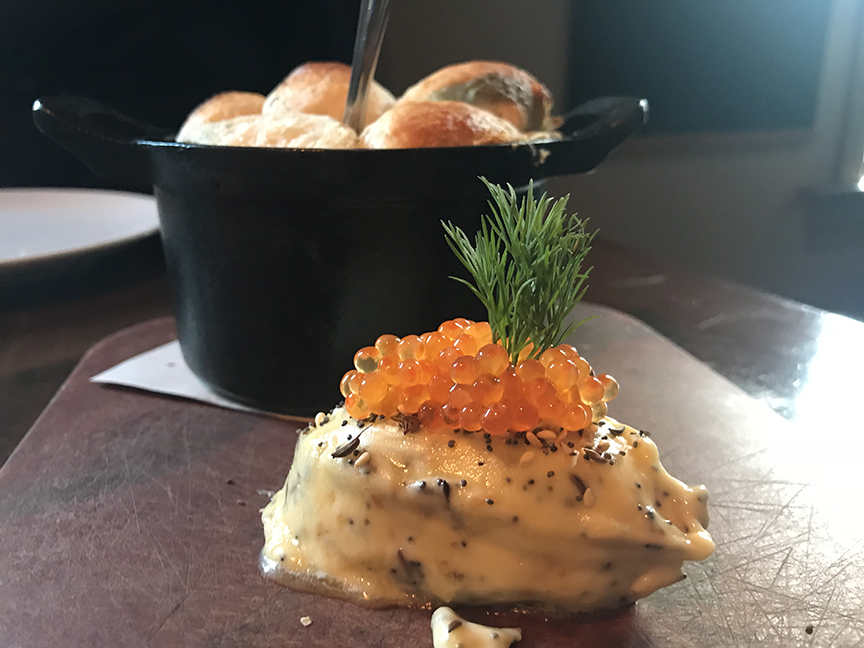
That’s the restaurant’s moreish “Dilly Bread,” above, inspired (I believe) by Japanese milk bread and served with everything-bagel-topppings-infused butter topped with roe (trout, I believe). The visit would have been worth the appetizer!

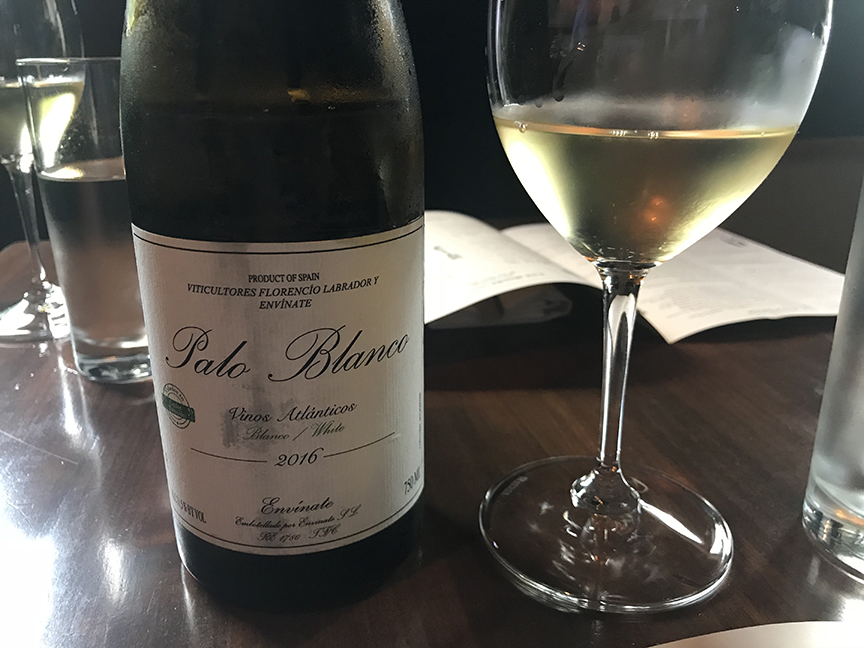
But the real show stopper at yesterday’s dinner was a bottle of Canary Islands 2016 Palo Blanco by Envínate.

Wow, what a wine! And what a great wine list… one of my new favorites in Houston.

Just slightly oxidative in character, the Vino Atlántico paired magically with raw oysters. I loved how the citrus zest notes in the wine played against its own salinity and that of the molluscs.

Owner and wine director Sara Stayer has put together such a wonderful program there, with a balanced selection of natural, classic, and just-plain-fun wines. I especially loved the groovy California wines she’s serving right now.

And I REALLY loved her self-proclaimed “sliding scale” policy.

On last night’s list, one of my favorite Friulian wines was so generously priced that we thought it was a mistake. When we asked Sara about it, she told us that she occasionally marks down wines that she’s particularly excited about.

How friggin’ cool is that?

Nobie’s is just one of the myriad new wine-focused restaurants and wine bars that have already opened or are opening later this year in this southeast Texas town. The wine scene in Houston has only continued to grow and become more colorful in the time that I’ve lived here. Now it feels like we’ve reached a new plateau, a genuine wine renaissance.

Thank you, Sara, for a wonderful evening and dinner. I thoroughly enjoyed the restaurant. And I can’t wait to take Tracie there for a date night soon.

“Your Friend Bread”: notes from Liguria, the spiritual homeland of pesto and focaccia

Over the weekend a pseudo-pesto was prepared and served over bucatini in the Parzen home.

The Parzen family pesto recipe is delicious. But it’s a mere riff on the traditional recipe, hence the qualifier “pseudo” (we don’t use pecorino and the Parmigiano-Reggiano we use isn’t aged; you could call it a “pan-Italian” pesto, typical of the pesto you’ll find in major cities beyond the Ligurian coast).

It reminded me of the mouthwatering pesto the Parzen family ate during a weekend in Liguria this summer along the Italian coast in Finale Ligure (nearly all of our Italian friends poo-poo’d our beach destination, writing it off as too “1960s,” kitschy, and passé; but we loved it).

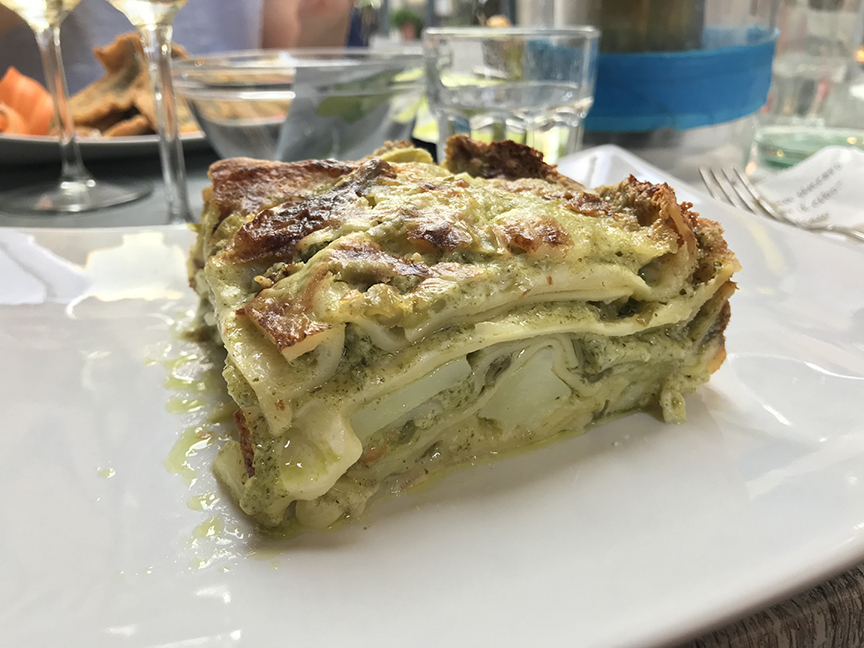
Those are lasagne al pesto in the photo above (yes, it’s plural in Italian and thus it’s appropriate to refer to it in the plural in English as well; a lasagna is a sheet of pasta, plural lasagne).

Note the potatoes among the layered pasta sheets.

Tracie had trenette that night with pesto. Both dishes were thoroughly enjoyed but neither compared to the focaccia topped with pesto that we discovered at Il Tuo Amico Pane, a bakery and gourmet shop whose name can be translated as “Your Friend Bread.”

(No website but here’s its somewhat lackluster Facebook, which focuses more on its desserts.)

Liguria is renowned for its superb, deeply golden-colored extra-virgin olive oil. Some would even contend that Italy’s best olive oil is produced there

Made primarily from Taggiasca olives (named after the township of Taggia, also known in English as Cailletier olives), the oil is famous for its almond and pine nut character. The taggiasca cultivar is smaller than most and its stones are relatively large. This makes it unappealing to commercial producers of olive oil who seek greater yield. But it remains a gold standard (excuse the pun) among top olive millers.

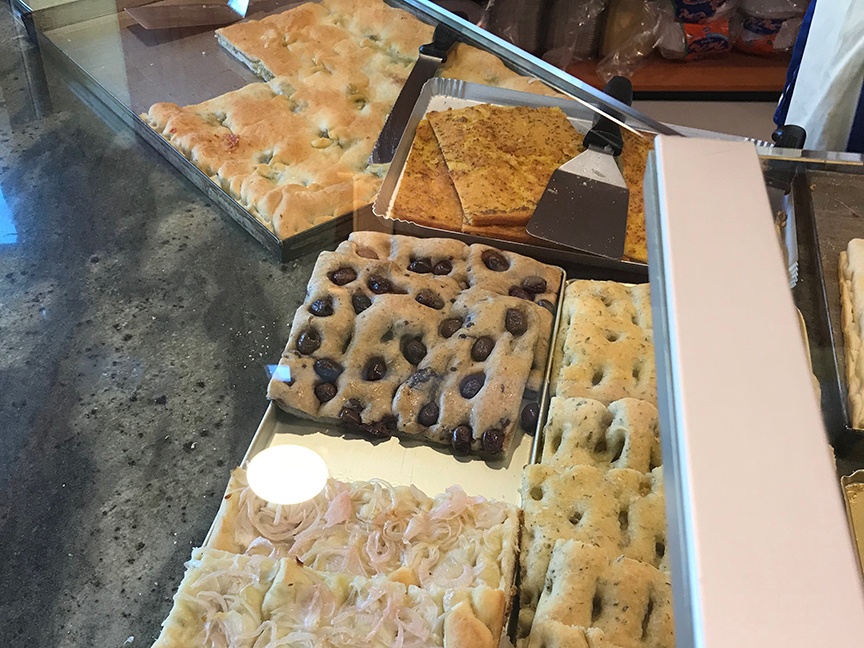
Ligurian oil is a central ingredient in pesto. And it’s also a key element in focaccia genovese, Genoa-style focaccia. In Liguria, the flatbread is basted with rich olive oil and sprinkled with sea salt. As you can imagine, it’s literally finger-licking good.

And one of the coolest things about focaccia genovese (at least for me, lover of savory as opposed to sweet breakfast) is that the Ligurians eat it in the morning for breakfast with their coffee. As a matter of fact, they seem to eat it at all times of day (which is fine by me).

No user-generated content research went into our decision to frequent Il Tuo Amico Pane. We simply scouted around until we found the focacceria with the longest line.

The focaccia slathered with pesto was sublime, hands down the best pesto we ate during our 36 hours in Liguria. I wish I would have taken a photo of it but my hands were otherwise covered in olive oil and sea sand (we used Vittoria Beach for our beach set up; it was great).

Finale Ligure may not be the sexiest beach destination among Italy’s hipster crowd. But man, it sure hit the spot.

LEGALIZE IT! Taste Bele Casel Prosecco Col Fondo with me (for the first time legally!) in Houston, Thursday 8/23 at Vinology

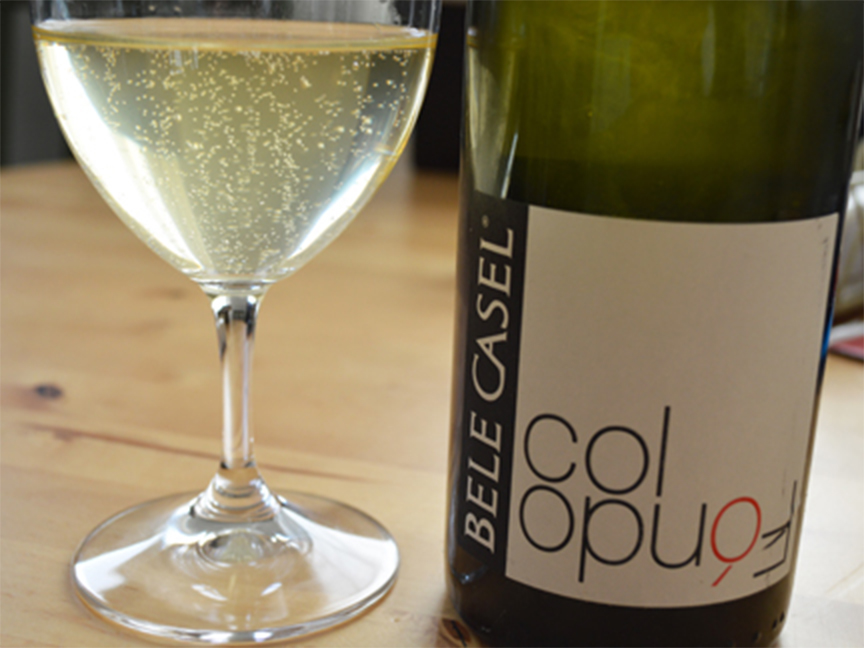
For years now, I’ve been smuggling Bele Casel Prosecco Col Fondo into the state of Texas. (I confess, TABC! You got me, Three-Tier System Crusader!).

The motivation for my illicit activity was the fact that Bele Casel wines were not legally available in my adoptive state. Without an importer or licensed distributor here, you could only find the wines on the American coasts, where they have been available for years. Sadly, Texas is one of the most restrictive no-ship states in the union (thank you, Wholesalers Lobby!). And the state’s alcoholic beverage commission aggressively enforces the no-ship rule. That means that law-abiding Texans couldn’t buy the wines at an out-of-state retailer and have them shipped here.

But as of this week, Bele Casel — one of my favorite Italian wineries and one of my longtime clients (I author their English-language blog) — is now officially and legally available in Texas.

Austin-based progressive importer Rootstock agreed to bring the wines in last year and they are finally here.

Next Thursday, my good friend Nathan Smith and I will be presenting the wines at one of my favorite Houston wine bars and shops, Vinology. Please call the shop (info below) to reserve.

A lot of my Texas wine friends have already tasted the wines at our house. Now they’ll finally be able to take the wines home with them, too — legally. I couldn’t be more happy about that.

Bele Casel Tasting and Seminar
Thursday, August 23
6:30 p.m.
Call the shop to reserve.
Vinology
2314 Bissonnet St.
Houston TX 77005
(832) 849-1687
Google map

“Shock, terror, pain, dread” (@Miti_Vigliero): the Morandi bridge tragedy in Genoa

“My connection is slowly coming back but not my strength or my will to write. Just shock, terror, pain, dread, and a sense of frustration and interminable nausea caused by rage, indignation, and contempt. It’s better if I don’t say anything, at least for the moment. Silence is better. #genoa #Morandibridge” (translation mine)

Mitì Vilgiero, one of my favorite contemporary Italian writers and a chronicler of life in Genoa, posted the above tweet yesterday following the tragic collapse of the city’s Morandi Bridge.

According to the New York Times, at least 39 people have died as a result of the disaster.

Although we didn’t pass through Genoa, Tracie and I recently drove along the A10 freeway just north of the port city and capital of Liguria in Italy’s northwest. The Morandi bridge connected Genoa to the rest of the continent along that corridor.

Not only is that road one of the country’s major arteries but it is also one of Europe’s most important transportation routes, connecting Italy and France.

The collapse of the bridge will continue to impact lives in Genoa, Italy, and Europe for the unforeseeable future.

Our hearts and prayers go out this morning to the victims and their families.

Landmark Monsanto ruling, Prosecco growers vs. Australia, and Italy’s masochistic branding problem

News stories I’m following this week…

Landmark Monsanto/Roundup/Glyphosate Ruling

From CNN on Saturday: “San Francisco jurors just ruled that Roundup, the most popular weedkiller in the world, gave a former school groundskeeper terminal cancer. So they awarded him $289 million in damages — mostly to punish the agricultural company Monsanto. Dewayne Johnson’s victory Friday could set a massive precedent for thousands of other cases claiming Monsanto’s famous herbicide causes non-Hodgkin’s lymphoma.”

The story is heartbreaking (and the CNN report includes graphic images).

Monsanto has vowed to appeal. But it’s plausible that the ruling will reshape the battle over glyphosate, the herbicide in Roundup, a weed-killer that most health experts believe is carcinogenic.

“This is a big victory for human health worldwide,” said Timothy Litzenburg, “the small-town attorney who took Monsanto for $289 million.”

Prosecco Growers Challenge Australian Labeling Practices

In the wake of a first round of trade talks between Australia and the European Union, the Brisbane Times reports this month that Italian wine growers want their Australian counterparts to stop labeling wines as “Prosecco.”

According to the Times article, Prosecco producers claim that the term “Prosecco” is a “geographic indication” (GI), inexorably linked to the place where it has been historically and traditionally produced.

“The Prosecco issue is one of the many skirmishes we could see if the EU seeks to expand the protection of GI to include a wider range of wine regions, as well as food and foodstuffs under the proposed new trade agreement,” said Lisa Chesters, member of the Australian House of Representatives.

“What’s next? It would be the equivalent of you can no longer call pizza ‘pizza.'”

Are Italians Self-Defeating in their Branding?

In an op-ed published this week on the Slow Food blog, Slow Food University law professor Michele Fino decries what he calls self-defeating branding practices that sully consumer perceptions.

In his piece (in Italian), he bemoans the many instances where leading commercial winemakers are incorporating branding language that evokes the word “Prosecco.”

Citing the use of the word “sec” in a Eastern European marketing campaign by a behemoth Piedmont sparkling wine producer, he argues that such strategies ultimately damage the reputation of Italian wine appellations by associating them with cheap, inferior mass-market products.

A sparkling wine labeled “Promosso,” bottled by a Prosecco producer, is another example, he writes. Italian sparkling wines labeled “Secco” are equally counterproductive (even for readers who don’t speak Italian, the images he includes are self-explanatory).

He calls these campaigns expressions of tafazzismo, Italian “masochism” as embodied by the popular 1990s television character Tafazzi (a mime, dressed in black and wearing an athletic supporter, constantly beating his genitals with a plastic bottle).

Prosecco, “a small village in Trieste province,” he notes, “is the most famous name in sparkling wine production throughout the world.”

“It’s only right that we raise a glass to its international success… But we should also try to understand what we want to achieve — all of us together and without vacillation. Regulation is urgently needed” (translation mine).

Top image via Mike Mozart’s Flickr (Creative Commons).

A badass wine shop in the LBC delivers a smoking Trousseau

Walking into a great wine shop for the first time is like being invited over to a new friend’s house to check out her/his record collection. It’s an honor and a privilege and it’s bound to lead to discovery.

For years, I’ve followed one of the top wine buyers in the U.S., Samantha Dugan who covers France, sparkling wine, and cheese for the Wine Country in Long Beach, California.

She’s the author of one of the all-time greatest (but currently hibernating) wine blogs, Samantha Sans Dosage. And her hopelessly devoted social media followers literally drool over her food and wine recommendations, travel notes (mostly France), and cultural observations.

Can you tell I’m one of her biggest fans?

Over the years, she, her husband, and son have become our good friends. We try to catch a meal or a drink together whenever we can, although sadly not often enough.

And I had never been to her shop until this summertime in the LBC.

Parzen family stopped by for a way-too brief visit on our way to Santa Barbara County wine country last week.

She hooked us up with a glorious bottle of Xavier Reverchon 2016 Côtes du Jura Trousseau Les Boutasses, which I smuggled into Arizona a few nights later.

There it was consumed giddily by our friends and us, paired with pizzas from New Jersey Pizza Company in Flagstaff. (Why, btw, are the so many great pizzerias in Arizona? New Jersey Pizza Company was awesome and a visit to their website gives you a sense about how damn much these folks care — rightly — about their pizza and the way they treat their customers. Right on!)

This light-bodied but richly flavored wine had that “unbearable lightness” that makes the great reds stand apart from the rest. Super fresh on the nose and the palate, zinging but well-balanced acidity, measured wild berry fruit and a hint of freshly torn herb with just enough tannin to give the wine backbone. We all remarked how much we loved it as we slurped it down.

On a technical note, the Wine Country is located just off the 405, not far from the Long Beach Airport and a half-hour drive from LAX. It’s a great place to get hooked up.

Thanks again, Samantha, for the fantastic bottle, thoroughly enjoyed by me and my crew. We love you! And we love summertime in the LBC!

Italian wine world mourns the loss of Ernesto Cattel, 54, Prosecco col fondo pioneer and organic advocate

News of his passing first began to appear on Sunday: Ernesto Cattel, Prosecco col fondo pioneer and organic and biodynamic advocate, died last week. The cause was an unspecified long-term illness. He was 54 years old according to most media reports.

“Our motto was let’s start at the bottom and rise up from the cloudy to see our way clear,” said his business partner Mauro Lorenzon in an interview with La Nuova, a daily newspaper published in Venice and Mestre.

Lorenzon, a celebrated Venetian sommelier and owner of one of the city’s most renowned wine bars, helped Cattel to launch the Costadilà winery in 2006. Today, the estate produces roughly 30,000 bottles of Prosecco col fondo per year.

Their adage refers to the sediment (fondo or bottom) of ancestral method Prosecco, otherwise known as Prosecco col fondo, bottle-fermented and undisgorged Prosecco (col fondo means with its sediment). When the wines are stored upright, they are cloudy on the bottom and clear at the top.

Together with Lorenzon, Cattel did perhaps more than any other Prosecco col fondo producer to raise awareness of the winemaking style, now ubiquitous across Italy and immensely popular in the U.S. where it has been embraced by a new generation of wine professionals.

A member of the natural wine growers association VinNatur, Cattel was also one of Italy’s most strident advocates of organic and biodynamic farming in the Prosecco DOCG.

As Prosecco became an unbridled international success and commercial powerhouse in the 2000s, Cattel was one of the leading voices for artisanal winemaking there and he was among the earliest to farm Prosecco biodynamically.

Joined by a like-minded and determined group of young growers, he and his wines were viewed as a counterpoint to the “industrialization” of the appellation. With their wines and their advocacy, he and his fellow winemakers helped to revive a waning viticultural tradition that had been eclipsed by behemoth bottlers.

News of his passing has been followed by an outpouring of remembrances on the Italian-language internet.

“Ernesto Cattel was one of us,” said the editors of a Facebook page managed by Rete Contandina (Farmers Network), a group that raises awareness of local foodways and organic growing practices in Prosecco country.

“He was among the early ‘revolutionaries’ of natural Prosecco,” they wrote. “His passion and love were boundless. Good-bye, Ernesto. Good-bye to a great and unrivaled Maestro.”

In the obituary published by La Nuova, reporter Francesca Gallo called him “a paladin of biodiversity.”

Image courtesy of Diego Carraro (Venice).

Pizzeria Bianco in Phoenix was everything they said it would be… and more.

One of the most exciting things about eating in a great restaurant for the first time is the electric anticipation you feel as you walk into the dining room. As you cross the threshold and the host greets you, you know there’s a culinary adventure ahead of you. You don’t know how that adventure will unfold but you know it’s about to happen. And it’s one of the things I love the most about a maiden voyage at a famous dining destinations.

For years, people have been telling me about pizzaiolo Chris Bianco and his Pizzeria Bianco in Phoenix, Arizona. And his brother Marc, the restaurant group’s baker and ancient grain expert, has been a virtual friend for nearly a decade.

Last week, as the Parzen family made its way back to Texas from the west (our first big road trip together), we stopped for a night in Phoenix for dinner there.

Chris and Marc were among the earliest pioneers of wood-burning pizza ovens in the U.S. By the time New York’s Pizza War broke out in the 2000s (only to be followed by the bi-coastal pizza wars), they had already been churning out wood-fired pies for more than a decade (Chris launched Pizzeria Bianco in 1988 according to the restaurant’s website).

I ordered a hybrid (above): the Rosa (red onion, Parmigiano Reggiano, rosemary, Arizona pistachios) and Sonny Boy (tomato sauce, fresh mozzarella, salami, Gaeta olives). The toppings were great — wholesome, tasty, and elegantly balanced in their saltiness. But it was the crust — the heart of the matter at any great pizzeria — that really thrilled me.

More Roman than Neapolitan in style, the dough was cooked all the way through (unlike the soggy-center Neapolitan style). The edges were toasty but not burnt. And the crust had an immensely rewarding savory character and a firm texture that retained its integrity on the palate without even a hint of redundant chewiness. We paired it with a bottle of Graci Etna Bianco (at a more-than-reasonable price, btw). It was utterly delicious and I highly recommend the restaurant to you.

But beyond the excellent food and truly groovy wine selection by manager Kari Barry, the Bianco brothers’ place has something transcendent about it: an aura of authenticity and genuine hospitality that’s increasingly rare in the U.S. restaurant scene.

Restaurants can be like rock bands: as soon as they become famous and successful, I’ve found over the years, they often lose the soulfulness that got them off the ground. But that’s not the case with Pizzeria Bianco, a Grateful Dead among Jefferson Airplanes Starships.

Chatting with Kari and some of the guests there that evening, I discovered that nearly everyone who works there has been on board for 20+ years, including the pizzaiolo who was (hu)manning the oven that night. Magically, they all seemed to share my exhilaration as a first time diner. And that’s what really took this place over the top for me.

I was reminded of a recently published piece by Tom Sietsema for the Washington Post, “Mass appeal: A taste of the nation’s most popular restaurants.”

In the article, he recounts his visits to the top-earning restaurants in the U.S.

The magic ingredient, he writes, is “hospitality of the warmest order.”

“Diners prize passion and sincerity as much as whatever’s on the menu.”

(Many American restaurateurs would be well-served by reading the column, btw.)

The food at Pizzeria Bianco was everything the critics said it would be and so much more.

I only wish I could go there for the first time… again.

Thank you, Kari, and thank you, Chris and Marc! I loved your restaurant and can’t wait until the next time.

Parzen family road trip was great, heading home today…

Today’s the last day of our family’s first major road trip.

Two weeks ago, we headed out from Houston toward the west: Ft. Stockton, Las Cruces/El Paso, Tucson, and San Diego, where we stayed with my mom for a week.

Then we headed to Santa Barbara County (for my work) and then on to Phoenix, Flagstaff, and the Grand Canyon (above).

The girls have been great in the car, even on the longer stretches of our journey. We kept them entertained with artwork, science pod casts (“Wow in the World”), and an audio book (Matilda by Roald Dahl). Of course, “Frozen” and “Hamilton” (their favorite musical) were also in regular rotation.

And there was a good swimming pool in nearly every town.

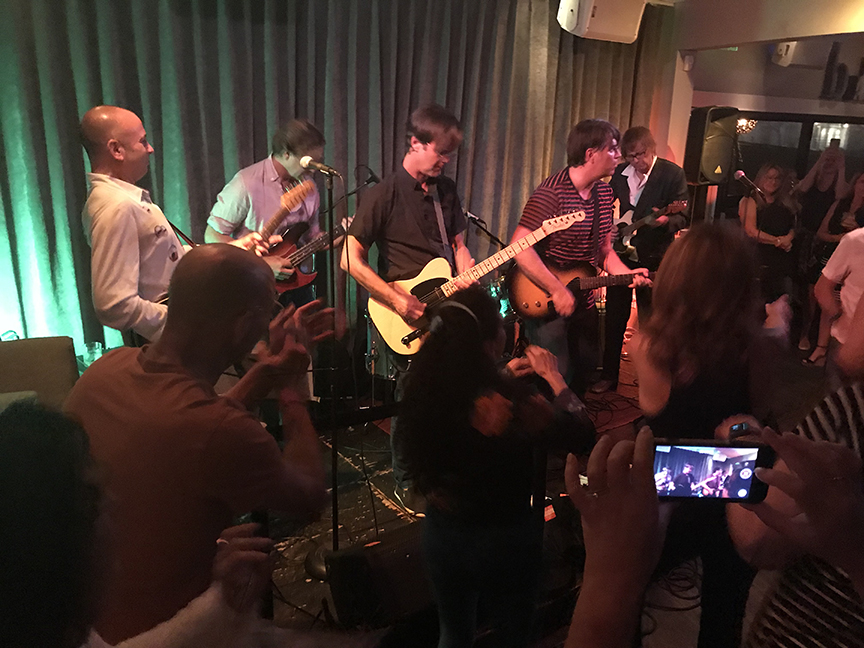
One of the highlights of the trip was playing a gig with my friends in La Jolla a week ago Friday. There was a whole lotta Telecaster on stage that night, a really magical show. I’m so lucky to have such great friends who always book a show for our summer visit.

All in all, it’s been a really fantastic experience. And the best part was that we were always together.

When fall arrives and my travel schedule starts to ratchet up, I’ll remember these days on the road with them, piling in and out of our Ford F150 and falling asleep all together in the hotel rooms along the way.

America is such a big and beautiful place. And I’m a lucky man to have such a loving family. I love them so much…

Happy summer, everyone!