Parzen family road trip was great, heading home today…

Today’s the last day of our family’s first major road trip.

Two weeks ago, we headed out from Houston toward the west: Ft. Stockton, Las Cruces/El Paso, Tucson, and San Diego, where we stayed with my mom for a week.

Then we headed to Santa Barbara County (for my work) and then on to Phoenix, Flagstaff, and the Grand Canyon (above).

The girls have been great in the car, even on the longer stretches of our journey. We kept them entertained with artwork, science pod casts (“Wow in the World”), and an audio book (Matilda by Roald Dahl). Of course, “Frozen” and “Hamilton” (their favorite musical) were also in regular rotation.

And there was a good swimming pool in nearly every town.

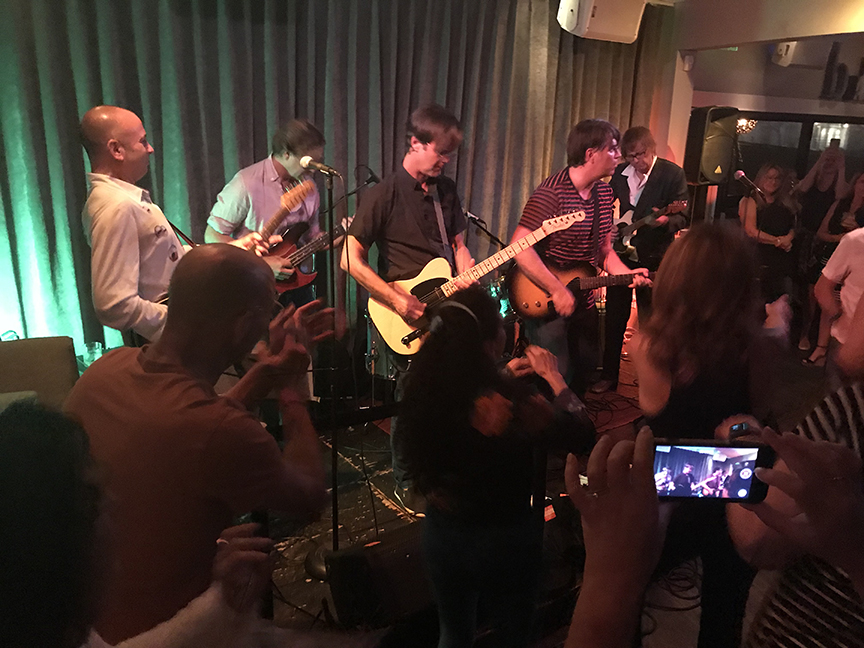
One of the highlights of the trip was playing a gig with my friends in La Jolla a week ago Friday. There was a whole lotta Telecaster on stage that night, a really magical show. I’m so lucky to have such great friends who always book a show for our summer visit.

All in all, it’s been a really fantastic experience. And the best part was that we were always together.

When fall arrives and my travel schedule starts to ratchet up, I’ll remember these days on the road with them, piling in and out of our Ford F150 and falling asleep all together in the hotel rooms along the way.

America is such a big and beautiful place. And I’m a lucky man to have such a loving family. I love them so much…

Happy summer, everyone!

2007 Barbaresco in glorious focus right now: Produttori del Barbaresco Asili

From the department of “will you take me as I am?”

Every summer when the Texas Parzens visit the California Parzens, our good friends Jon and Jayne at Jaynes Gastropub in San Diego let us bring a few bottles from my cellar to pair with their delicious food and share with our friends.

This year, the flight included two bottles of Produttori del Barbaresco 2007 Barbaresco Asili. The wines were purchased on release and delivered to my wine locker in San Diego where they have been sitting undisturbed since they arrived.

The 2007 harvest was part of a string of excellent-to-extraordinary vintages in the appellation (check out this superb article on 2007 in Piedmont by Antonio Galloni; he focuses on Barolo but he also offer some excellent overarching observations about 2007 in Langa).

Tasted last year, this wine was still very tannic. It was already showing signs of opening up but it was still “tight” in wine collector parlance.

But, man, when we opened it on Saturday early evening, every drop just sang as it flowed from glass to palate.

My dining companions and I had dropped one bottle in an ice bucket to chill it slightly. The other was served room temperature (my preference). Both bottles delivered notes of delicate rose petal and berry fruit on the nose. In the mouth, the richer berry fruit was balanced by that ethereal hint of earth and subtle mushroom, all the while wrapped in a sheen of acidity.

We followed these two with a bottle of 2008 Produttori del Barbaresco Barbaresco Rio Sordo. 08 is arguably the better vintage but that wine was “shut down”: the tannic character and earthiness seemed like a jealous new lover who doesn’t want to let its fruit dance. Still a great bottle but not nearly as expressive and nuanced as the 07 Asili. The latter is considered to be one of the appellation’s greatest crus while the former is one of its lesser growths. But given the closed character of the 08 Rio Sordo, I’m going to wait until next year to start revisiting my 08s.

In other news…

Parzen family drove our new Ford F150 to California at the end of July.

We had a great time in my hometown of San Diego: visiting with my mom, spending time my brother Tad and his family, lots of swimming and beach, a rocking show with all my buddies (I dedicated my rendition of “Back in the USSR” to Donald Trump), dinner at Jaynes, dinner at Bahia Don Bravo (my favorite fish taco joint). All in all, it’s been a great trip.

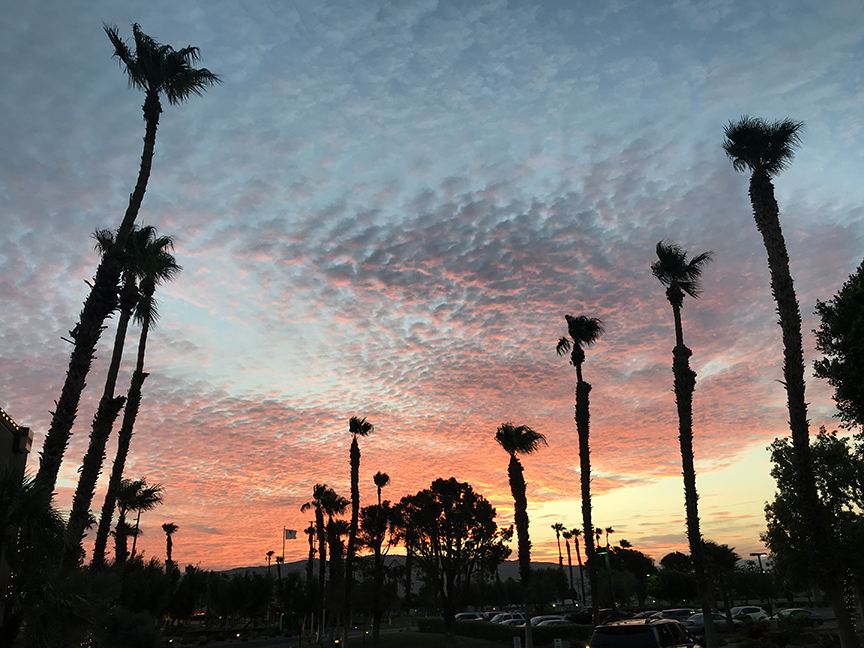
This week we’re driving back. That’s sunrise, above, at our Palm Springs hotel this morning (I always get up super early to get work done before I take the girls to the pool). Friday we’ll be at the Grand Canyon.

The girls have been so well-behaved in the car and have really picked up their parents’ love for travel (is it genetic?).

I love the long drives, especially across the desert where I have time to think and reflect. And the best part is we are all together, all the time. That’s where my true joy is.

Thanks to Parzen family west for a great visit and thanks to all my folks in southern California: I have the best friends a man could wish for. That’s the truth.

There’s so much more to tell, including some great winery visits for the Slow Wine Guide.

But that’ll have to wait. My little bunnies and the pool are calling…

NatDiego festival forges a new language for natural wine in an unlikely market

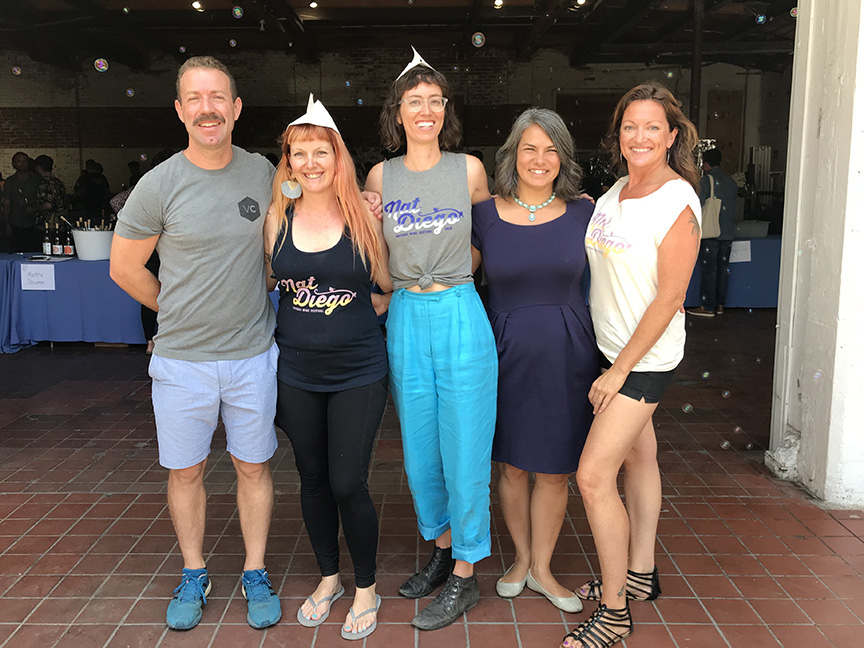
Above, from left: the organizers of NatDiego Patrick Ballow, Katie Fawkes, Chelsea Coleman, Tami Wong, and Anne Estrada.

Last weekend, roughly 20 American natural winemakers and 15 or so importers of natural wines from Europe gathered for NatDiego, San Diego’s second-annual natural wine festival.

The event included seminars, wine-themed parties, and a walk-around grand tasting. All were open to trade and public.

Above: the grand walk-around tasting on Saturday.

The festival was remarkable — at least to me — because San Diego isn’t exactly the first city that comes to mind when it comes to America’s natural wine epicenters.

New York, San Francisco, Los Angeles, Portland, and Seattle are home to bustling natural wine bars and robust natural wine lists. But San Diego (where I grew up) is still widely considered a wasteland by the fine wine world.

“Just think how far we’ve come,” said organizer and natural wine advocate Patrick Ballow (in the group photo above, far left), an old friend of mine. “This would have been unimaginable 10 years ago,” he noted, adding that his inspiration for organizing the festival was pure passion.

We both remembered fondly tasting López de Heredia 12 years ago in “America’s Finest City” and the difficulty we had back then tracking down natural wines in this southern Californian metropolis where micro-brews and “fruit-bomb” oaky red wines from northern California are still the preferred beverages of most alcohol-consuming residents.

Above: San Diego grower and natural winemaker Michael Christian of Los Pilares.

Ever since Alice Feiring (the featured speaker at last year’s NatDiego) published her natural wine manifesto in 2008 (The Battle for Wine and Love: Or How I Saved the World from Parkerization), natural wine has slowly crept into the American mainstream and away from the fringes of the wine world’s counter culture.

Where natural wine was once jealously guarded by a small group of wine importers and their followers, it’s now embraced by a much broader swath of America’s wine cognoscenti.

But San Diego has been among the last major U.S. cities where the movement had yet to take hold. NatDiego — imho — is changing that. And it’s giving San Diegans a new language to describe, understand, and enjoy natural wine (see the festival’s about page where you’ll find their mission state and definition of natural wine).

It was great to see consumers lining up out the door at the Bread and Salt event space in San Diego’s Barrio Logan. And it was also compelling to see how many San Diego-based growers were among the robust California presence.

“San Diego’s Fun-Loving Natural Wine Festival” is the title that the organizers gave to their event. And it struck me that fun is what has often been missing from so many of the natural wine events and tastings I’ve attended.

With its second year under its belt, the festival is sure to become a cornerstone of California’s natural wine scene. And that’s a good thing, no doubt.

Congratulations and thanks to the organizers for such a wonderful event!

Let’s ROCK tonight and TASTE tomorrow in San Diego…

If you happen to be in San Diego this weekend, please join me tonight for a show with my California band The Grapes, tomorrow morning at Nat Diego natural wine fair, and tomorrow afternoon at Jaynes for a Lini Lambrusco tasting I’m presenting.

Happy summer, everyone! Buona estate a tutti!

Event details follow…

THE GRAPES
FRIDAY JULY 27

9 p.m. – 12 a.m.
FREE

2 SETS OF GROOVER’S PARADISE
featuring Dave Gleason on Telecaster

Beaumont’s
5662 La Jolla Blvd.
La Jolla CA 92037
(858) 459-0474
Google map

*****

LAMBRUSCO PARTY
SATURDAY JULY 28

3-5 p.m.
$15 per person

TASTE 4 WINES
with small bites by Jaynes

Jaynes Gastropub
4677 30th St.
San Diego CA 92116
(619) 563-1011
Google map

*****

Also happening in San Diego this weekend, Friday-Saturday, July 27-28: Nat Diego, natural wine festival!

Luigi Tecce’s macerated Maman Bianco, the first white to emerge from the iconic grower

Over the last 10 years, Taurasi grower Luigi Tecce has firmly established himself as the leading voice of Campania winemaking.

A “Triple A” farmer whose compelling red wines have captivated Italy’s wine cognoscenti, he proudly lists “what I don’t put in my wine” on his back labels, making him a bright light of transparency and integrity among Italian vignaioli.

Two years ago he released his first white wine, a macerated blend of Greco (45%), Fiano (25%), Coda di Volpe (25%), and Moscato (5%).

It’s dedicated to the winemaker’s mother and his friend Vinicio Capossela, the celebrated Italian singer-songwriter who designed one of Tecce’s labels.

While the reds are available in certain (fortunate) markets in the U.S., the white hasn’t made it here yet. But a friend bravely smuggled it into Texas and poured it for me last week in Houston.

It’s inevitable that tasters will measure its character against Tecce’s reds, which have become benchmarks not only for Taurasi and Campania. While this early bottling probably won’t be remembered among his best entries, it was thoroughly delicious, with gorgeous acidity buoyed by lithe texture. Stone fruit and dried white fruit flavors were plentiful in the mouth and the wine was swiftly consumed by my “wine people” companions and me — a sign of how much we all loved it.

If it’s any indication of what’s to come from his cellar, I’ll definitely be making space in mine to accommodate what will surely become an iconic white from Irpinia.

Organic and biodynamic wine growers anxiously await EU decision on copper limits

Above: “Bordeaux Mixture” — copper sulfate and lime — has been used to prevent downy mildew in vineyards for generations.

Europe’s organic and biodynamic grape growers are anxiously waiting to hear whether or not the European Food Safety Authority (EFSA) will further limit the use of copper fungicide.

Last week, the European Union’s Plants, Animals, Food and Feed (PAFF) Committee met to discuss new restrictions on fungicides, including “the approval of the active substance copper compounds” which are allowed in organic and biodynamic grape farming.

Currently, the EU allows the use of up to 6 kg per hectare per year. The committee is considering limiting the amount to 4 kg per hectare per year.

Ever since the committee designated copper sulphate as a “candidate for substitution” (EU parlance for more restrictive limits), organic wine growers in France and Italy have lobbied to maintain the current limit.

“We are very concerned,” wrote Matilde Poggi, president of Italy’s Federation of Independent Grape Growers in May.

“For organic producers, there are no suitable alternatives to copper,” she noted in a press release issued by the group.

The federation has lobbied Italy’s agriculture ministry to oppose the proposed change.

European wine growers have used copper as a fungicide since the late 19th century.

The so-called Bordeaux Mixture — copper sulphate mixed with lime — is sprayed in vineyards primarily to prevent downy mildew (peronospora). Although there is little concern that copper affects the safety of the end product, its presence in the water table can make the land unsuitable for agricultural use.

Copper is a heavy metal and can be toxic to humans and animals. Because it has been used for so long in Europe, EFSA fears that its accumulation is affecting the environment and farmland health.

“My job is to protect the public health,” said last month EU Health Commissioner Vytenis Andriukaitis who is leading the discussion on proposed restrictions.

“Alternatives to copper remain very limited,” countered Eric Andrieu, chair of the EU Committee on pesticides. Organic winemaking could be threatened by the proposed limit, he noted.

Image via Wikipedia Creative Commons.

You look wonderful tonight: how Lambrusco led to a meeting with Beatles and Clapton muse Pattie Boyd

Above: last month, Alicia Lini and her daughters hosted Tracie, our girls, and me at her family’s winery in Correggio (Reggio Emilia province). I’ll be pouring her family’s wines a week from Saturday at Jaynes Gastropub in San Diego. Please join me. I’ll also be playing a show the night before (Friday) and attending the Nat Diego Grand Tasting Saturday morning. Click here for details.

The first iPhone had just been released two months prior.

And in just a few weeks the Financial Crisis would officially begin with the collapse of Lehman Brothers.

Earlier that year, a food and wine media consultant in the last year of his 30s had traveled to Italy in search of a classic method Lambrusco.

It seems like a lifetime ago.

It was back in 2007 that I first met and tasted with Alicia Lini (above) at her family’s winery in Correggio in the heart of Lambrusco country. A tip from the owner of a wonderful restaurant an hour’s drive to the east had led me to her doorstep.

New York City had been my home for nearly 10 years and my 9-to-5 was a gig as marketing director for a high-profile restaurant and wine imports group.

In August of that year, Alicia flew to New York where I had organized a series of tastings and meetings with top wine media. The highlight was her appearance on a WNYC talk show. The other guest that morning was Pattie Boyd, who had just published her memoir. When we met her in the green room, I discreetly whispered to Alicia (in Italian, hoping that the famous model wouldn’t pick up on how starstruck our handshake had left me).

“Do you realize who that is, Alicia???!!! It’s Pattie Boyd! George Harrison wrote ‘Something’ for her… Eric Clapton wrote ‘Wonderful Tonight’ for her.”

Alicia did great on the show and she and the wines ended up appearing in some of the top wine columns of the day.

I decided to leave New York later that year and return to California where I grew up. By the end of the following year, I had moved to Texas to be with Tracie.

The Financial Crisis devastated and decimated the New York restaurant scene. The upscale Italian where the above photo was taken closed not long after the bubble had burst.

But Alicia’s family’s wines had already been woven into the fabric of the city’s wine community. And Alicia and I stayed in touch, thanks in part to our fond memories of our work together.

When we met at Vinitaly this year, the Lini family asked me to come back into the fold. And we’ve set out to expand their presence in Texas and California, where the wines are now imported directly.

Back in 2007 when we first met, the wine blogging world had just begun to take shape. I had launched my own blog just a few months earlier.

It seems like a lifetime ago and it seems like yesterday.

Please join me as I pour four of Alicia’s family’s wines a week from Saturday at Jaynes Gastropub in San Diego.

Look out world: here comes Alta Langa! Tasting notes from my visit with appellation president Giulio Bava

In May of this year, Alta Langa consortium president Giulio Bava graciously sat down with me at the Cocchi winery and distillery in Piedmont where we tasted 16 wines from the appellation.

Many American wine and spirits insiders know his brother Roberto, marketing and export director for Cocchi, a frequent traveler to the U.S. where the Cocchi Americano vermouth has become wildly popular in recent years.

Giulio and the third brother Paolo are the winery’s enologists. And Giulio is now in his second term as president for the Alta Langa consortium.

What a fantastic flight of wines he poured for me!

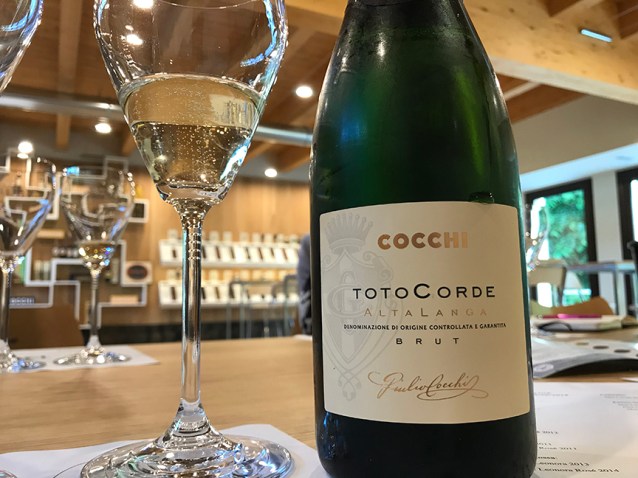
That’s Cocchi’s Alta Langa Brut Toto Corde 2012 in the photo above, a blend of 70 percent Pinot Noir and 30 percent Chardonnay. The Latin expression toto corde, btw, means with all my [one’s] heart.

The wine, one of my favorites in the all-around great flight, really impressed me with its freshness on the nose and its glowing citrus in the mouth.

It was indicative of the fresh, fruit-driven style that Alta Langa has embraced. Of the 16 wines in the flight that day, there was just one label that veered off into the oxidative style that continues to prevail in Champagne.
As the world’s thirst for high-quality sparkling wine continues to grow, the Alta Langa consortium and its producer members are gearing up to expand their presence in Italy and abroad.

And they have a lot going for them.

There are 146 townships in Alessandra, Asti, and Cuneo provinces that can produce Alta Langa. Compare that with 19 townships in Franciacorta, Alta Langa’s main domestic competitor in the high-end sparkling market.

All of those villages lie to the east of the Tanaro river. In other words, they share the same soils, climate, and legacy of Barolo and Barbaresco growers. Many of the current and soon-to-be members of the consortium are already established producers of top Nebbiolo and many of them already have distribution networks in the U.S.

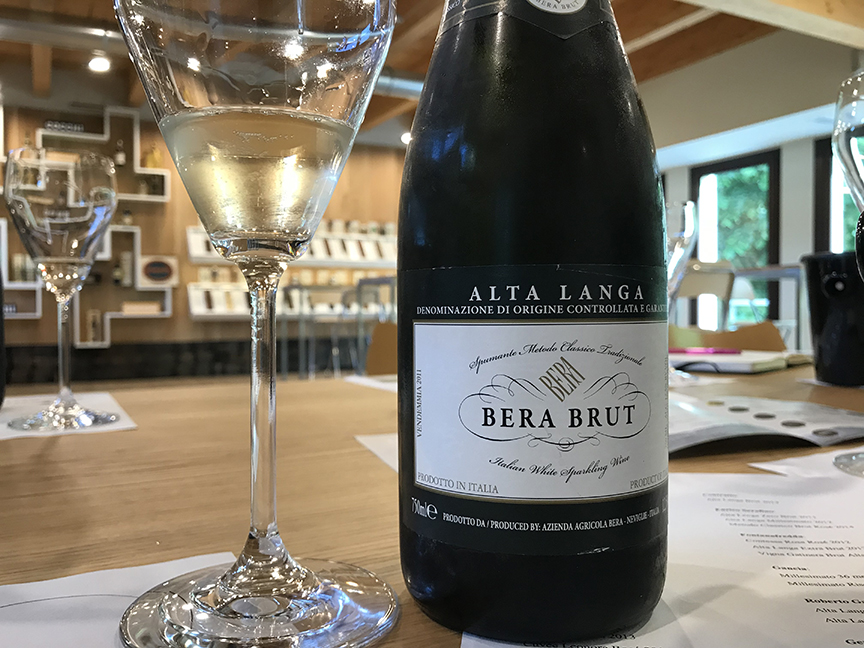
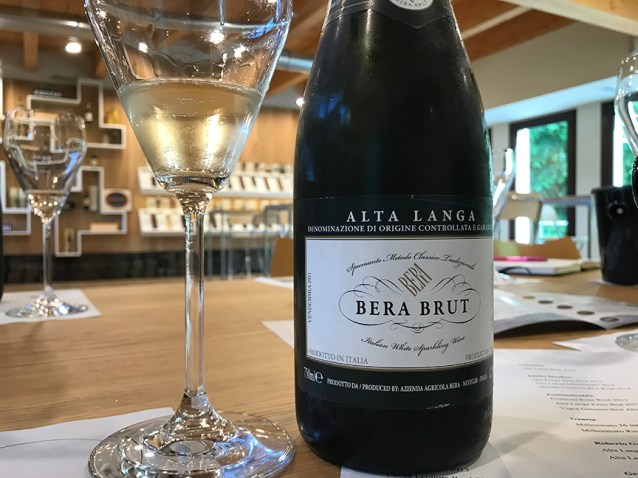
The Bera Alta Langa Brut 2011, also a Pinot Noir and Chardonnay blend, was another favorite of mine. Very fresh and clean on the nose with white floral and fruit notes that reappeared in the mouth. This wine also stood out for its gorgeous mineral character on the palate. Another great example of how Pinot Noir can perform in Alta Langa.
Another thing that struck me about the flight was the Alta Langa growers’ love of Pinot Noir.

Some of my all-time favorite classic method wines are made from Chardonnay (Satèn from Franciacorta and blanc de blanc Champagne, for example). In Alta Langa, producers have focused on Pinot Noir (at least gauging from the tasting Giulio put together for me that day).

There were a couple of great expressions of 100 percent Chardonnay in the flight but the real standouts were the vintage-dated Pinot Noir wines. They seemed to achieve the greatest complexity and depth of fruit.

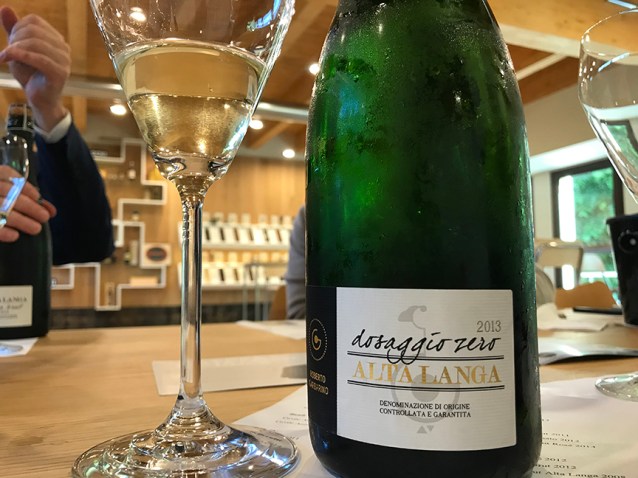
But leave it to me to stay true to my heart: my top wine that day was the 2013 Roberto Garbarino Alta Langa Dosaggio Zero, which — if I’m not mistaken — is a 100 percent Chardonnay (I couldn’t find the wine on the winery’s website).

All Alta Langa must be made with hillside fruit (no valley floor allowed) and according to the estate’s site, its top Alta Langa is grown at 480 meters a.s.l. in vineyards planted 50 years ago (hey, wait a minute, wasn’t Gaja the first to plant Chardonnay in Langa?).

This wine had everything that I look for in classic method: freshness, focused fruit notes on the nose and richly vibrant fruit notes in the mouth, buoyed all the while by an elegant savory quality. I loved this wine. I also liked the estate’s 2015 Extra Brut.

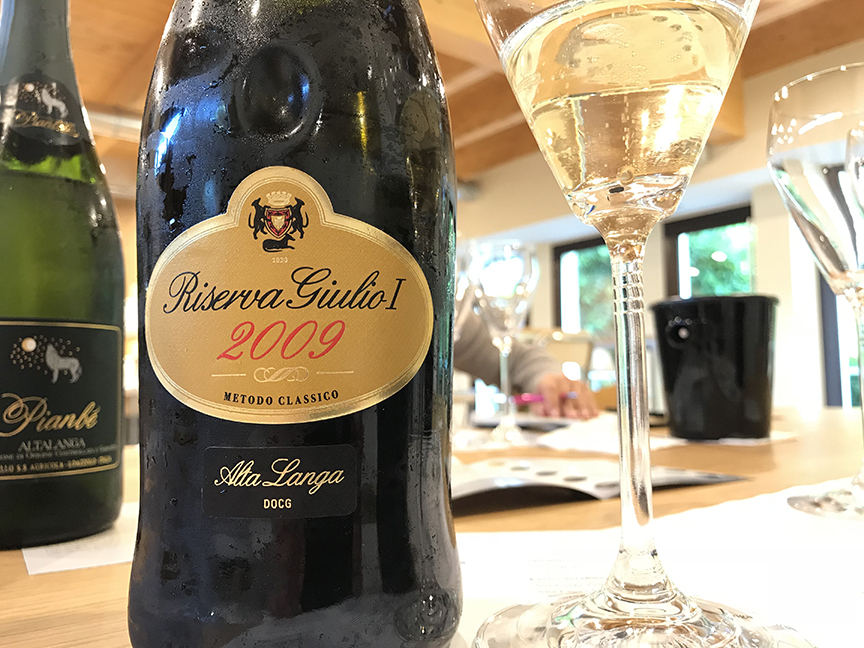
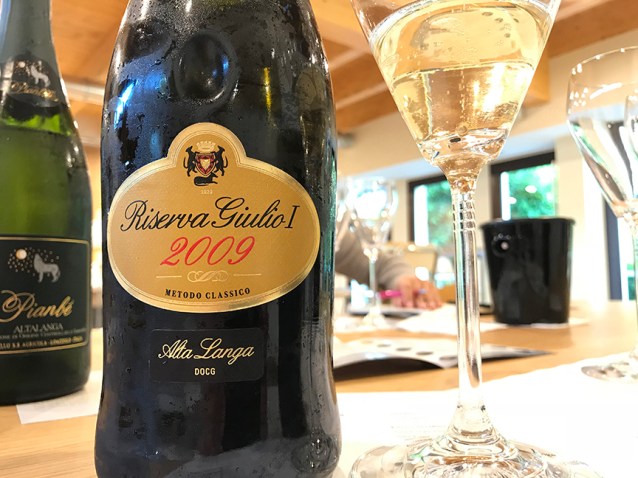
I also have to give a shout-out to the Tosti Alta Langa Giulio I Riserva (below), 100 percent Pinot Noir. It had a touch of the pastry notes that you find in the French style of classic method wines but its glorious fruit had me coming back to the glass for another taste.

All things considered, I believe we are going to be hearing (and tasting) a lot more from Alta Langa in the near future.

After all, it has “Langa” in its name: how would you like to taste a classic method Pinot Noir from the land of Barolo and Barbaresco? The answer is yes, with all my heart.

Thanks again to Giulio for a truly fantastic tasting. And thanks also to consortium media relations director Mariana Natale who put it together.
Can a cloudy Barolo from the 70s still be good? Bartolo Mascarello 1974 tasting (and decanting) notes

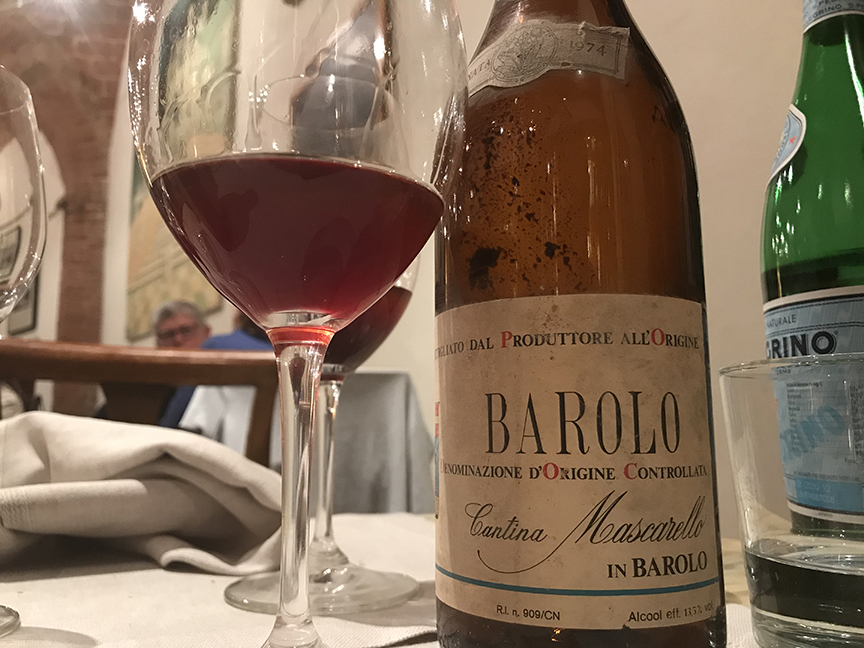
Above: you can see the sediment on the side of the bottle. Despite Francesco’s expert care in decanting, the wine was still cloudy.

One of the most stunning wines I drank this year was a 1974 Barolo by Bartolo Mascarello.

It was generously shared with me back in May by my good friend Francesco Bonfio (below), a leading Italian wine retailer, former winemaker, and co-founder of the newly launched Association of Italian Wine Shop Professionals, known as AEPI (Associazione Enotecari Professionisti Italiani).

The bottle’s provenance was nearly impeccable: it came from the cellar of Gianni Bortolotti, the famous Aosta Valley cheese expert and wine collector who passed away — I believe — in 2010.

Francesco decanted the bottle directly into our glasses: like me, he prefers not to decant old wine into decanters because he feels (as I do) that the less intervention the better.

As he poured the last glasses, you could clearly see the sediment in the bottle’s neck (and that’s when he stopped pouring).

Despite his expert care in pouring, the wine — from the first glass he poured — was still cloudy. And that was a bad sign. Clearly, the wine had begun to “disassociate,” in other words, some of the wine had returned to solid form.

We were doubtful but still hopeful when we first tasted. And then, wow, a miracle: the wine’s fruit was rich and vibrant and the acidity was still very much alive. In spite of the obvious defect, we enjoyed it thoroughly with our meal. Its rich red fruit flavors eclipsed the classic Barolo earthiness that you expect in a wine like this (especially from Bartolo Mascarello) but it drank beautifully. The fact that we drank the whole bottle was evidence of this!

Moral of the story: an old wine like this doesn’t have to be perfect to be great.

Thanks again, Francesco, for sharing this extraordinary bottle with me!

“There’s a Chianti Classico that’s just right for you.” Jeffrey Porter’s excellent Chianti Classico seminar and tasting.

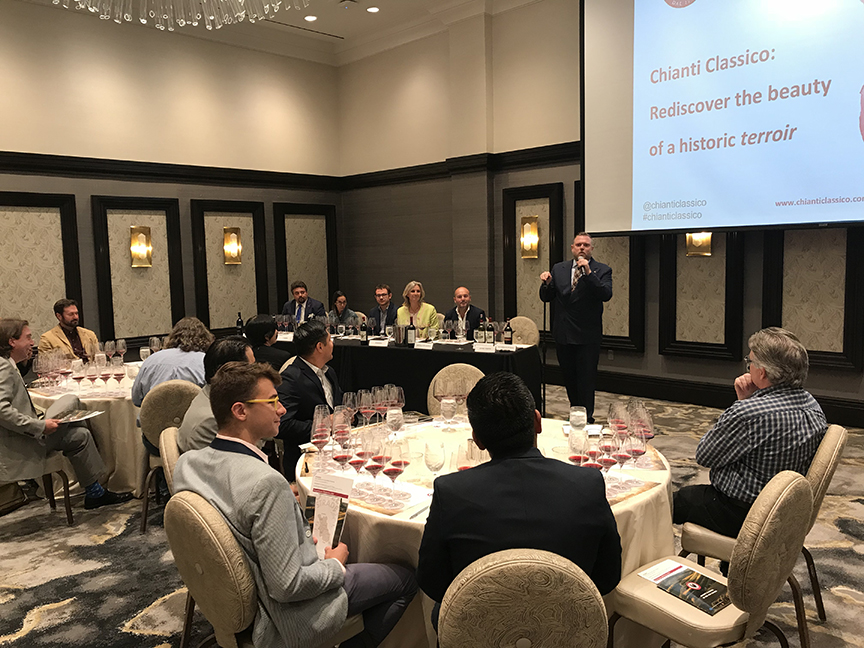
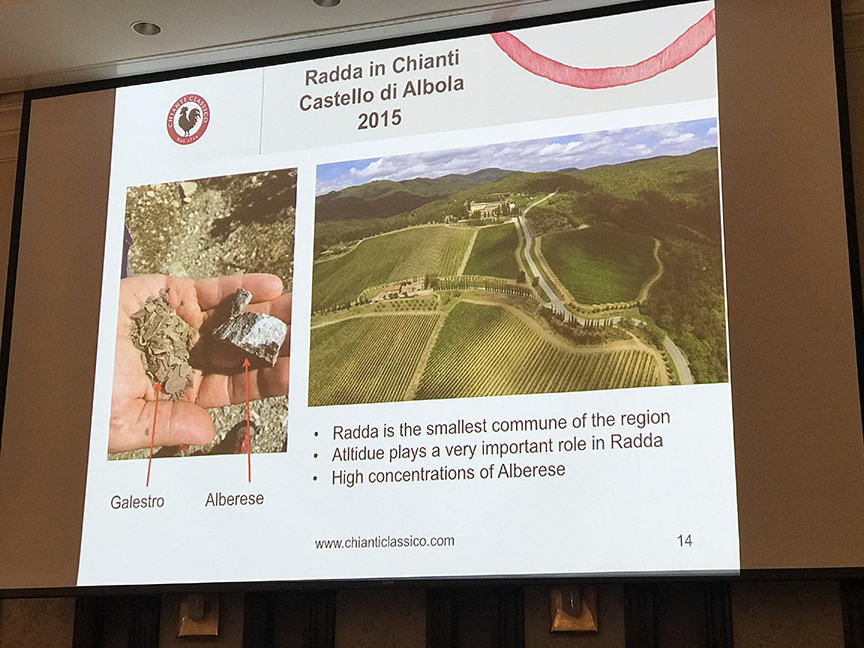
Some of Houston’s best and brightest wine professionals came out yesterday morning to taste a superb flight of Chianti Classico with celeb sommelier Jeffrey Porter (standing) at the city’s swank Post Oak Hotel.

Seminars and tastings like this can be so long-winded, boring, and redundant. But Jeffrey, who seemed to enjoy the opportunity to speak in his native Texan, kept the discussion lively and fun.

And the wines, well, they spoke for themselves.

I was really impressed with the Fabbri 2015 Chianti Classico Lamole from Greve. What a stunning wine! Great balance and varietal expression, with that distinctive mineral note that you get from higher-elevation Chianti. A real discovery for me.

But all the wines were fantastic, something that’s unusual in consortium tastings like this.

And as Jeffrey put it, at once so plainly and so elegantly, when you look at the spectacular range of growing conditions throughout the Chianti Classico DOCG, you soon come to realize that “there’s a Chianti Classico that’s just right for you.”

It was also really fascinating to hear some of the producers discuss soil texture as opposed to soil composition (something I believe is too often overlooked in discussing Chianti).

And toward the end of our time together, one of the city’s top Italian buyers brought up the thorny question of single-vineyard designation and the Gran Selezione program. Not all of the producers agreed on the benefits or drawbacks of the appellation’s recently created pyramid hierarchy.

If you only bolster the tip, said one of the more outspoken panelists, you weaken the base. It’s the base that needs to be reinforced, she suggested — not just to the audience but to her fellow panelists.

The frankness and openness of the dialogue was compelling. It was clear that Jeffrey has developed a relationship with each of the producers participating in the tour. And that camaraderie seemed to create the right conditions for an honest — as opposed to marketing-minded — discussion.

Jeffrey will be leading the same tasting and seminar tomorrow in Washington D.C.

He’ll be doing it again in October in Portland. And he also told me they’re looking at doing it again in five or six American cities next year.

Subscribers can check out his Chianti Classico webinar for the Wine Scholars Guild here.

Thank you, Jeffrey and Chianti Classico, for bringing such a great group of winemakers and such a wonderful flight of wines to our city!