 “Everything living dies from causes within itself, and returns to the inorganic [and thus] we can only say ‘The goal of all life is death’, and, casting back, ‘The inanimate was there before the animate.’”
Sigmund Freud
Beyond the Pleasure Principle (1922)
[italics his]
Wine is the one agricultural product that can outlive us. It’s also the one form of nourishment that can live before us.
It’s true, as Eric Asimov wrote recently for the Times, that “no wine is meant to last for a century. If it does, it’s by accident.”
But many wines are conceived to have lifespans longer than those of their producers. And the longevity of those wines often ensures that the winemaker won’t live long enough to experience the wines when they “peak,” in other words, when they achieve their true greatness in complexity and nuance.
There is no other agricultural product that we allow to age so long. Can you imagine slathering your sandwich with 30-year-old mayonnaise? Would you stuff your warm tortillas with huitlacoche harvested years earlier?
Cheese can rival wine in terms of its ageworthiness. But it still comes in at a distant second when it comes to wine’s ability to age with spectacular results.
For many wine lovers and professionals, one of the most memorable experiences is drinking wine that is older than the persons consuming it (as Eric did when he attended a dinner at the storied Bordeaux estate Lafite and drank a wine that was harvest in 1868).
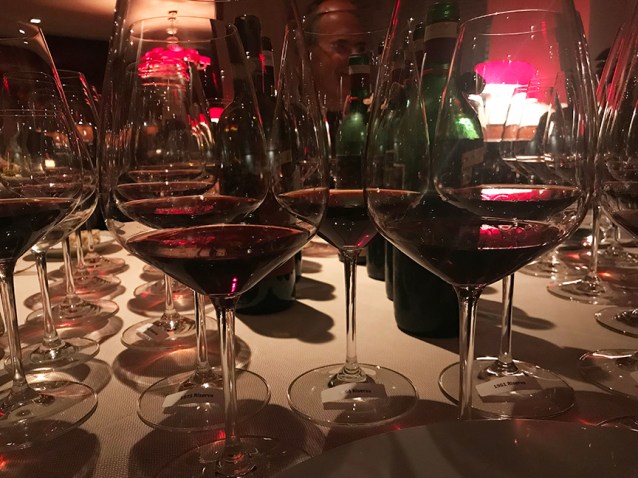
Last week I had the immense fortune to attend a dinner where three of the wines in the flight were older than me (I was born in 1967). A fourth wine was harvested the year my wife Tracie was born (she’s younger than me). The wines were all very fresh on the nose and very vibrant in the mouth. They were very much “alive”: the color was rich, the acidity was bright, and the flavors nuanced. We drank them with our meal, not as a curiosity or a lab experiment. It was an unforgettable and thoroughly enjoyable experience, as you can imagine.
Wine is the grape’s last dying gasp. Once picked, the fruit begins to decompose. Oxygen and yeast team up to transform its sugar (its life blood) into alcohol. And as the process unfolds, the winemaker (through a rational distortion of nature, as Lévi-Strauss might have said) captures the essence of the fruit and its flavors.
The winemaker then protects the wine from oxygen by sealing it up in a tank or cask and then in a glass bottle. Later she or he lets a tiny bit of oxygen come into contact with the wine (through the pores of the wood staves in the cask or the pores of the cork in the bottle) over a long period, so that the “dying” process continues very slowly.
Some people cite a romantic notion of history or narrative through wine when they taste wines older than they are (or the same age). It’s always an emotional experience to taste a “birth year wine” or a wine that was grown in a historically significant year (the 1945 vintage is among the most coveted among wine collectors, for example).
But I believe that the powerful allure of drinking wines older than you goes much deeper than that.
When you taste a wine that was grown before you were born, you experience its “death”: its ultimate degradation as the fruit decomposes into an inorganic state. True, you experience that with all wine, even young wine. But when the wine is older than you, it represents a life longer than yours and as such, its decomposition is — I believe — more profound and compelling on the palate of the drinker.
Freud held that there is “a tendency innate in living organic matter impelling it towards the reinstatement of an earlier condition” (Beyond the Pleasure Principle). In other words, we have an intrinsic drive to return to an inorganic state as Freudian scholars put it.
Since he first published his ideas on the “death drive,” scholars and clinicians have argued heatedly about the validity of his theory.
But there’s no doubt that the idea has a deep resonance within the human experience.
As G-d says to Adam in Genesis,
By the sweat of your face
You will eat bread,
Till you return to the ground,
Because from it you were taken;
For you are dust,
And to dust you shall return.
Ashes to ashes, as they say, dust to dust. We all know that we will all return one day to the ground. We will all return to an inorganic state.
As I sipped the 1957, 1961, and 1964 the other night, I thought of those lines from Moses’ books. I was consuming grapes that were grown before I was born and I was tasting them as they finally began the last leg of their trip back to the ground. They weren’t allowed to drop to the ground naturally. No, they were picked and then vinified, their essence captured in a bottle for someone to experience many years later. The person who made those wines is no longer alive today, I thought.
I also thought about my oldest brother who died in a car accident when he was 15 and I was five. He was born in 1957, too.
Thanks to its unique nature and unrivaled longevity among foods, wine has a remarkable ability to evoke intense feelings and thoughts in the drinker.
It can taste pretty good, too.
Everything dies baby that’s a fact.
But maybe everything that dies someday comes back.
Bruce Springsteen
“Atlantic City” (1982)

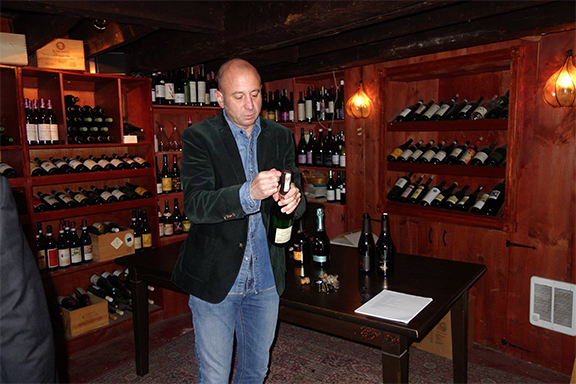 Please join me this Friday evening at Sud Italia on University Blvd. in Houston (Google map) for an evening of great Italian wine and conversation.
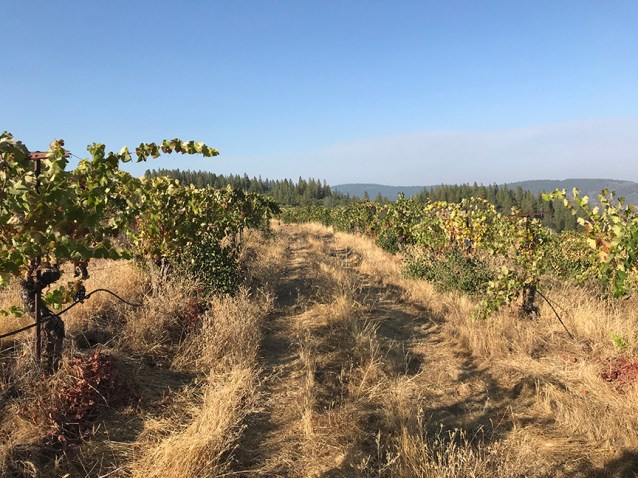 Our thoughts and prayers go out this morning to our sisters and brothers affected by California wildfires.
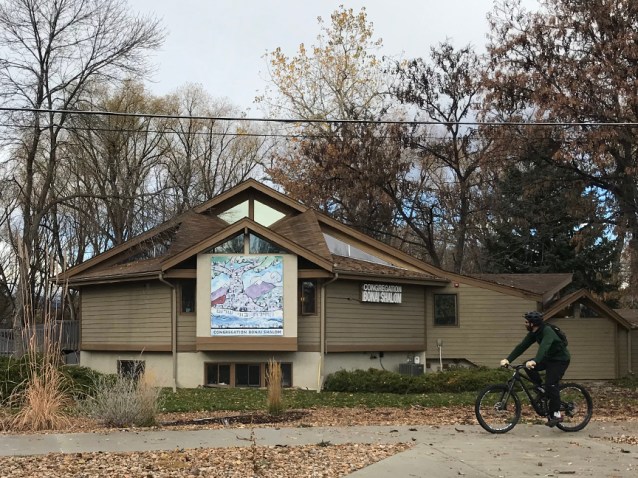 As the cloudy sky looked on, the sheriff’s patrol car that idled outside
 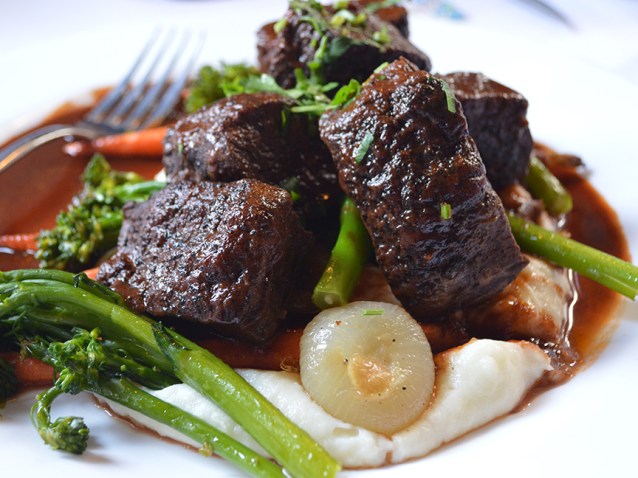 Of all of the events at
 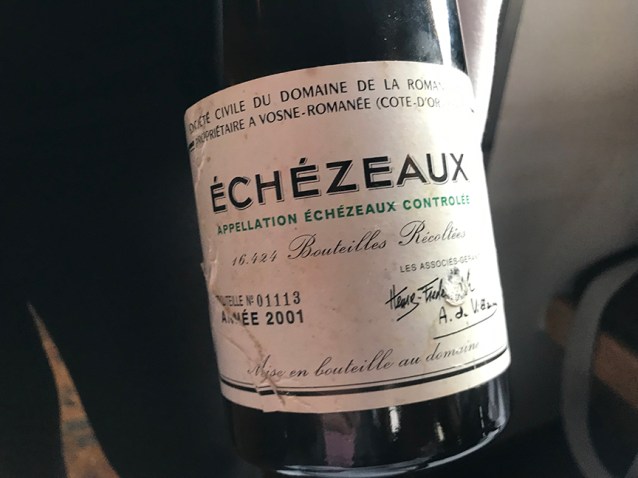 Yesterday’s meal happened to find me seated with a high-profile distributor who sells, among other fine wines, the highly coveted Domaine de la Romanée-Conti. And as it so happened, one of the guests (a very generous collector) sent over a glass of 2001 Échezeaux Grand Cru by the storied estate.
 I would have been happy with the fat glass of 1997 Latour Corton-Charlemagne Grand Cru (one of my favorite appellations of all time), poured for me by a friend at yesterday’s event. It came from her father’s cellar and still had the price tag affixed: $125 per bottle, presumably purchased in the early 2000s before Burgundy’s prices began to skyrocket.
 It was just the week before last that someone shared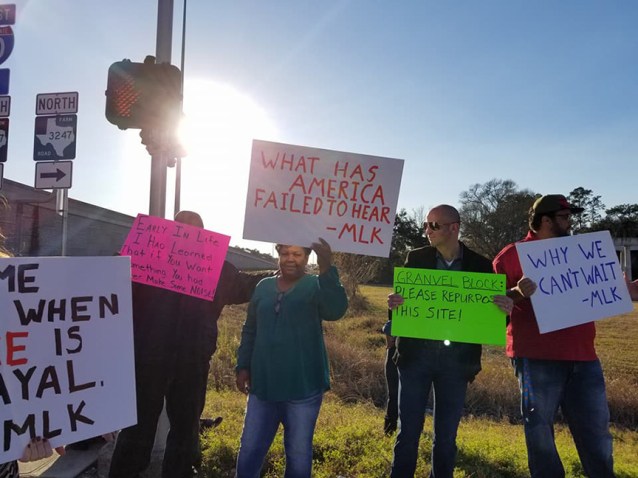
 My parents were both born in 1933 in South Bend, Indiana. They were the children of Jewish refugees who had fled Eastern Europe in the first decade of the last century, before the Russian Revolution. Both were raised as conservative Jews. After they finished college in their home state, they moved to Chicago, Illinois where they reared their four sons as conservative, progressive Jews. Although not observant at home, they regularly attended a typical midwest conservative synagogue, not unlike the typical midwest shul in Pittsburgh where a mass shooting occurred on Saturday.
 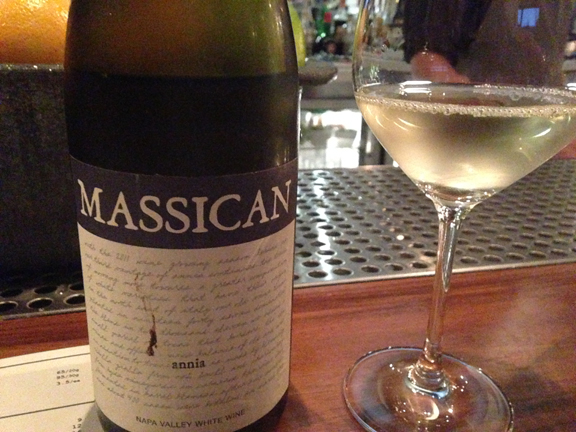 Above: Massican’s Annia, a blend of Ribolla Gialla, Tocai Friulano and Chardonnay from Napa. Los Angeles-based sommelier and consultant Taylor Parsons poured me the wine back in 2014 when he was running one of California’s hippest wine programs at the time.
