Cork porn: Bollinger 1999 Aÿ Rouge

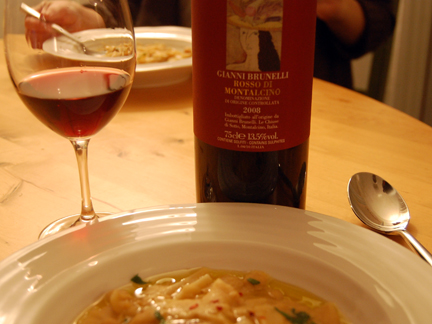
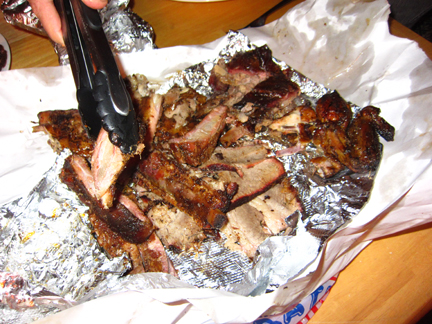
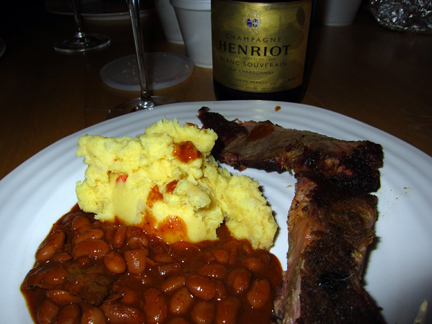
Just had to share these photos snapped by Tracie P the other night when we opened a bottle of 1999 Bollinger Aÿ Rouge Coteaux Champenois La Côte aux Enfants with Coalminer Mark and Annie Oakley the other night at Trio in Austin.

Earlier this year, BrooklynGuy did a fantastic post on an amazing tasting of still red wines from Champagne organized by him and Peter Liem in NYC.

The bottle had an immensely powerful aura about it. After all, how often do you get to taste a still red wine from Champagne? By our favorite house no less!

The wine was excellent, a rich and tannic expression of Pinot Noir that seemed to have mellowed at 12 years out from harvest. But the most thrilling part of the experience was the bottle itself, the mushroom cork, and the metal seal. Note the old-school lip of the bottle (no crown cap here!).

Garganega: Italian grape name pronunciation project

In the course of just a week, I’ve received roughly twenty new audio files to post in the Italian Grape Name Pronunciation Project. Rest assured: I’m going to post them all (next week’s post will feature a “family” of grape names). THANK YOU to everyone for supporting this project and for the words of encouragement. :-)

In the meantime, it seemed appropriate to move forward with a grape name that represents a true tongue-twister… not just for non-Italophones, btw… even Italian folks have trouble with this one.

That’s Gambellara producer Angiolino Maule’s youngest son Tommaso in the vineyards. Tracie P, Alfonso, and I tasted with Angiolino and met Tommaso on our recent visit to Gambellara and Valpolicella. I’ll post my notes from the tasting tomorrow. So stay tuned!

Click here for last week’s post: Teroldego.

Signora Bilenchi remembers Pasta alla Puttanesca

Above: Mrs. and Mr. Bilenchi with their son Robert in Brooklyn in 1969.

When it comes to the origins of many of the classic Italian dishes that we all know and love, it’s nearly impossible to identity the etymon — the origin, the fons origo, the spring from which it sprang. Such is the case with Spaghetti alla Carbonara, for example: to my knowledge, no scholar has been able to trace its history with even the remotest semblance of certainty. In fact, as gastronomic philologists, all we know with certainty is what we don’t know about many of the great recipes of the Italian culinary canon.

Such is the case for Pasta alla Puttanesca: you may remember my post in which I traced all the historical data I could gather on the origins of this dish we all love so much.

The fact of the matter is that we live in a time of intensified awareness of the gastronomy that surrounds us. Not since the Italian Renaissance has Western Civilization devoted so much attention (and scholarship) to the foods that we eat. During the 20th century, when dishes like Carbonara and Puttanesca became so popular, we all lived in a culinary dark ages — when scholarship ignored the workaday aspects of our nutriment. BTW, for the record, neither Artusi (whose cookbook was compiled in 1891) nor Cavalcanti (1837) mention either Puttanesca or Carbonara.

The other day, a reader from Detroit — a Brooklyn native born to a Neapolitan mother, Robert Bilenchi — left the following comment on the post. I love his idea of trying to document the dish’s origins by interviewing folks who were living in Italy in the periods between the two wars and after the second world war. In the truest spirit of philology (the love of words), I asked Robert for some photographs of his mother and permission to post them here with his mother’s observations.

My mother is 93 and is still living. She was born in 1917. She remembers this dish, Spaghetti [alla] Puttanesca as a child and a young adult in Naples Italy. My parents made the dish when I was growing up in New York in the ’50s. So how then does this dish get to be invented in the ’50s? My parents were not well connected enough to have received the recipe from any Italian chef who might have been associated with the alleged inventor. Someone needs to do a survey of older Italians born prior to the ’30s to refute the ’50s story of the invention of Spaghetti [alla] Puttanesca. The Annarita Cuomo story appears to be erroneus. Sandro Petti did not invent the dish and though a study may have found the dishes popularity to have swelled in the ’60s, this does not show it was invented just prior to that time. Let’s do a study while these people are still alive.

Click here to read my original post.

In his own words, Robert is “a retired engineer living in Dearborn Michigan. I grew up in Brooklyn NY with my parents and 2 brothers. We all were spoiled on my mother’s cooking and we each learned to cook her specialties hanging onto her apron strings.”

Thanks for reading! Buona domenica, ya’ll!

Mexican wet dream: carnitas and Riesling

Above: Pulpo al Carbon at Hugo’s (Houston), grilled and marinated octopus with housemade salsa and three different kinds of peppers and warm pillowy blue corn tortillas. HIGHLY recommended.

The caliber and quality (and sheer fun) of Mexican food in Texas continues to blow me away (and this comes from a Southern California dude who grew up traveling in Mexico).

Wednesday night found me with cousins Joanne and Marty at Houston’s legendary Hugo’s, where my friend Sean Beck has put together what is IMHO the best Mexican restaurant wine list in the country. From an obscenely low-priced bottle of Taittinger La Française to cru Beaujolais (great with Mexican food, btw) and his hand-selected shortlist of German and domestic Riesling, I was like a Mississippi bullfrog on a hollow stump: I just didn’t know which way to jump! (who can name the song?)

Above: Do you know of any Mexican restaurant with such an extensive and well-thought-out wine list? I had never seen anything like and Sean’s recommendation, Schäfer-Fröhlich 2004 Riesling Halbtrocken, was utterly brilliant with my carnitas. Chapeau bas, Sean. Fantastic pairing!

I’m dying to get to the famous Sunday brunch at Hugo’s and I’m sure we will soon. In the meantime, Hugo’s has now formed the triptych of what I consider to be the top high-concept Mexican restaurant in the U.S., together with Fonda San Miguel in Austin and La Serenata in LA (downtown, not westside).

(RdG+BarAnnie could be included in that list but it’s really a Southwestern as opposed to traditional Mexican cuisine restaurant.)

Even though California — from the Mission burritos of SF and the huevos rancheros of Half Moon Bay to the camaronillas of San Diego — is still the leader when it comes to down-and-dirty greasy hole-in-the-wall joints, Texas has the monopoly on the luxury, regionally themed Mexican restaurants in the U.S.

The carnitas — a litmus test for any self-respecting Mexican restaurant — were moist and perfectly seasoned, reminiscent of those I first experiences when I spent the summer of my sixteenth birthday in Mexico City so many moons ago.

Above: Flirtatious nurses tell cousin Marty (left) that he has “excellent veins.” He is in great shape and is an amazing specimen of the human variety — for his fitness of body, mind, and heart.

If there was a somber note at our excellent dinner, it was because we discussed some of the very serious (although under-control) health issues that our beloved cousin Marty is facing right now. Technically, he’s my second cousin (Zane’s first cousin) but he’s more like an uncle to me and Tracie P. I never really had much contact with Joanne and him before I moved to Texas but since I got here, he and family have welcomed us into their homes and lives with immense generosity and love (it’s thanks to Marty that I know Tony!).

I wish all of you could experience Marty’s lusty appetite for great food and wine, engaging conversation, and intellectual pursuit (he’s a constitutional law scholar, btw). Tracie P is always tickled by his “potty mouth” and I hang on to every word and insight that he shares about our family’s history and evolution (I’m named after his father, Ira Levy, Jeremy Ira Parzen). More than anything else, we love to share meals together and some of the most memorable of my life Texana have been with him and company.

We just can’t imagine a world without him and we’re sending him lots of love and good thoughts in this trying time…

Does Rosso di Montalcino need more personality?

In the wake of an aborted vote to change the Rosso di Montalcino appellation, Brunello producers association president Ezio Rivella (above) has broken the silence and explained the reason for wanting to add international grape varieties (Merlotization) to the currently monovarietal (100% Sangiovese) wine.

Speaking to his new public relations mouthpiece (ItaliaTV, which calls itself the “channel for internationlization”! HA!), he recently recounted how the producers association is “preparing a marketing plan [UGH] that will help us to relaunch Rosso di Montalcino as an independent wine — a wine that has its own personality.”

(I watched the video and translated some excerpts sans ironie over at VinoWire.)

Although I will commend ItaliaTV for its production value (decidedly better than Carlo Macchi Productions, who managed to capture Rivella saying that 80% of Brunello was illicitly blended with unauthorized grape varieties), I am repulsed by the fact Rivella continues to promote his personal agenda and program for internationalization and Merlotization in spite of the growing chorus of opposition voices (who succeeded at least in forcing the gerrymandering Rivella to postpone the vote to change the appellation).

I’ve been drinking Rosso di Montalcino since 1989 and I am here to tell you that honest producers never made it as a “leftover from Brunello.” They made it from younger vines grown in good (as opposed to top) growing sites; they made it as a more approachable expression of Sangiovese and their land, not intended for long-term aging; they made it to drink everyday (as opposed to special occasions); and they made it so folks like you and me could enjoy fresh, food-friendly, utterly delicious Sangiovese for around $20.

If that’s not personality, grits ain’t groceries and the Mona Lisa was Ezio Rivella

Prosecco colfòndo!

Above: Until the 1970s, before pressurized “autoclave” tanks were introduced into the appellation, most Prosecco was double-fermented in bottle “on its lees.” The resulting wine was gently sparkling, cloudy, and still had the “fondo” (sediment) in the bottom of the bottle. Even when I lived and worked in the Veneto in the 1990s, it was a lot easier to find Prosecco “col fondo” (with sediment) than it is today. The traditional glass for Prosecco is the one pictured above.

Tracie P and I got to experience so many great tastings on our recent trip to Italy but none was more thrilling than our appointment with the Colfondisti, a loosely gathered group of Prosecco producers who have returned to the fondo (i.e., the bottom, pun intended) of their tradition, producing bottle-fermented, lees-aged Prosecco — the way their grandfathers did it and the salty, crunchy, utterly delicious way that Tracie P and I like it. The event was organized by an old friend of mine and colfondo bottler, Riccardo Zanotto (who knows me from my coverband days, when I spent three summers playing 6 nights a week in a zone that some call the “Sinistra Piave,” the left bank of the Piave river).

Above: The village of Rolle (not Passo Rolle, the mountain pass, btw) lies at the epicenter of the Prosecco appellation. Nearly equidistant from Conegliano and Valdobbiadene. Most locals would argue that Conegliano is where Prosecco was born as an appellation, even though Valdobbiadene has eclipsed its sister village. Our tasting was held in a home in the center of the village.

We tasted five bottlings of sparkling Prosecco, from different vintages. And then we tasted the new Prosecco (still), by one of the producers, from the 2010 vintage — in other words, wine that had yet to be double-fermented.

Bele Casel 2009 Prosecco

Luca Ferraro’s wine is made in Asolo (a more recently authorized Prosecco appellation, not far from the Conegliano-Valdobbiadene series of valleys). Among the colfondisti, some serve their wines torbido (literally, turbid or cloudy), while others serve theirs limpido (limpid or clear). Luca is a torbidista, who prefers the sediment in the wine. Very fresh nose, clean, and with some savory notes. Some yeasty notes in the mouth, dominated by good white fruit. Balanced acidity. (Luca is extremely active in social media, he speaks English well, and his wines are present in the U.S. market.)

Cantina Gatti 2009 Prosecco

Carolina Gatti’s wine was the one that reminded me the most of the Prosecco I used to drink in the late 80s and early 90s: it was super salty and crunchy. Some citrus notes and lots of savory on the rich nose. Lighter in the mouth with salty and strong citrus notes. Bright, bright acidity the way I like it! Carolina is also very active in social media and she authors a wonderful blog called Rabosando.

Above: “Zuel” denotes “sella” or “saddle” in local dialectal inflection and it is a topographic designation that applies to the many “saddles” or gentle hills that shape the appellation. In case you were confused, there’s a saddle “di qua” (over here) and another saddle “di là” (over there).

Costadilà 2008 Prosecco

Ernesto Cattel is perhaps the most savvy marketer of the colfondisti and his wine has good representation in some of the bigger U.S. markets. He is of the limpido persuasion (although we always mix up his wines when we drink them at home). If you follow along here, you’ve seen his wine on my blog before. His wine was perhaps the most balanced, very clean on the nose and the mouth, good acidity and good saltiness balanced by honest fruit. He’s done a lot to document the origins of Prosecco Colfòndo but unfortunately his work is not available online. According to Ernesto, it was the legendary Venetian oste (tavern-keeper) Mauro Lorenzon who popularized the term colfòndo (with sediment), giving producers their battle cry in the face of the industrial and commercial autoclave production that now dominates the appellation and brand. Ernesto will be releasing an orange-wine, skin-contact Prosecco from the 2009 vintage.

La Basseta Casa Belfi 2009 Prosecco

Maurizio Donadi is a locally based enologist who makes Prosecco Colfòndo as a labor amoris. He currently experimenting with Effective Microorganism ceramic chips (above) as a means of controlling unwanted aromas and flavors in unsulfured wines. I liked his wine a lot but it may not be for everyone (you have to be careful not to ingest the chip!). Very nice citrus and white fruit nose and mouth. Very clean and with good acidity. Very interesting to talk to Maurizio and taste his wines with him. As you can see above, he is of the torbido persuasion.

Zanotto 2009 Prosecco

I’m so glad to have reconnected with Riccardo and I love his wines. A highly successful businessman (in the furniture business), he makes this wine out of passion and he’s just one of those folks whose generosity of heart and happy spirit can’t help but rub off on you. He bottles wine that his uncle grows in family-owned vineyards and his wine — served limpido — was probably the most elegant of all the wines we tasted. Beautiful nose, very fresh and very clean, fantastic balance of white fruit and savory notes. I could drink this wine every day.

And the still 2010 Prosecco, you ask?

You’ll just have to be like Tracie P and me and go to Rolle to taste it!

Special thanks to Enrico who hosted the tasting in his home in Rolle.

Teroldego: Italian grape name pronunciation project

CLICK HERE FOR ALL EPISODES TO DATE.

After I read a — how can I put this gently? — not flawless transliteration of the ampelonym (grape name) Teroldego in Eric the Red’s recent article devoted to the grape variety, I felt that something needed to be done (and because Eric is a friend and a blogging colleague, I knew he wouldn’t mind).

My first thought was to record my own voice speaking the grape name and post shortly videos on YouTube. After all, I do possess a Ph.D. in Italian, I lived for many years in Italy, I travel there 3 or 4 times a year, and my Italian colleagues acknowledge that I speak Italian with native-speaker proficiency (however with a Padua accent).

But then it occurred to me: wouldn’t it be cool if I could get native Italian grape growers and winemakers to record themselves pronouncing the names of native grapes?

My first call was to Elisabetta Foradori, arguably the most famous producer of Teroldego and the subject of Eric’s article. I have never met her but she was kind enough to take my call and she laughed warmly when I described my idea to her. A few weeks later, she sent me a recording of her enunciating the ampelonym. The video above is the first in a series of the “Italian Grape Name Pronunciation Project” that I will post on YouTube and archive here at Do Bianchi.

I hope that this project will serve as a useful tool to wine professionals and wine lovers all over the world.

IF YOU ARE AN ITALIAN GRAPE GROWER OR WINEMAKER AND WOULD LIKE TO APPEAR IN THIS SERIES, PLEASE FEEL FREE TO EMAIL ME AN MP3 OR ANY OTHER KIND OF AUDIO FILE (OR VIDEO) OF YOU PRONOUNCING THE NAME(S) OF NATIVE GRAPE VARIETIES.

Diana Ross (!) at the new Austin City Limits theater

Tracie P and I went with Aunt Holly and Uncle Terry to see Diana Ross at the brand-spanking new Austin City Limits theater last night.

Great venue, GREAT show… Austin just keeps getting cooler and cooler by the day…

Thanks again, Holly and Terry, for dialing that in! Super FUN… :-)

Magliocco, swordfish, and Gossip Girl

That’s the inimitable Shawnté Salabert, writer, voiceover artist, and song plugger for Sugaroo (my band NN+’s licensing agent). She’s the one who got our track “Catastrophe” (click to listen to preview) into Gossip Girl tonight. (Hey, I know it’s not Master Piece Theatre but if the teenage female American demographic digs my music, I ain’t complaining!)

“Catastrophe” is one of my favorite tracks: I wrote it in NYC with Céline Dijon back in 2007 (seems like a lifetime ago). Tonight’s episode also features another song I wrote and recorded with Céline in New York many years ago, when we played in another now unmentionable French band together. It’s called “Les Sauvages.”

I got to meet and thank Shawnté in person on Thursday when I went to visit the mother office and have dinner with my old friend and music biz veteran Michael Nieves, who cooked up a delicious swordfish steak, which we paired with a bottle of 2009 Terre di Balbia Balbium (I had tasted it earlier that day at a trade tasting and swiped the bottle from the rep).

This 100% Magliocco from Calabria, raised by Venica & Venica, is one of the most exciting wines from Southern Italy that I’ve tasted this year (and I’ve been tasting a lot of southern Italian wines recently for a new consulting gig).

From what I understand, some (or all?) of the grapes are briefly dried in the vineyard before vinification. I was blown away by the freshness of this wine, its balanced alcohol (a little higher than I like but nicely settled in the wine), and its juicy cherry and plum flavors and bright acidity. Extremely yummy wine, excellent with Michael’s roast swordfish steak dusted with paprika.

Thanks again, Michael and Shwanté: for the placement and the rocking piece of fish!

Natural wine and (good) pooping

Above: The wines of Angiolino Maule (La Biancara) are impeccably Natural. We tasted with him in early February at the winery in Gambellara. Note how his label reports the amount of “anidride solferosa” (anhydrous sulfur dioxide or SO2) and note how the label reports “NON CONTIENE SULFITI” (“does not contain sulfites”). Not all of his wines are unsulfured (I’ll devote an upcoming post to how he obtains his unsulfured wine).

Invariably, when a group of food and wine professionals gets together, they will talk about food, wine… and poop. Naturally, the three phenomena go — how can I say this? — hand in hand.

Such was the case on Wednesday night at Lou on Vine when Zach (whose new restaurant will be opening shortly in Los Angeles) described his pooping issues while working at a restaurant in Italy and subsisting on a diet of boiled salame, polenta, and potatoes. He only managed to “liberate” himself (so to speak) once a week, he said.

Above: I really dug this 2009 Manzoni Bianco by Foradori that I tasted at a trade tasting yesterday at the top (and coolest) wine shop in Los Angeles (in my book), Domaine LA. (The label is smudged because it had been in-and-out of the rep’s wine bag all day.)

When I told him that I thought that Natural wine could have helped him, even Natural wine fanatic (and in my opinion, authority) AW was incredulous.

On the Twitter, he wrote: “stop the presses! @dobianchi officially claims: natural wine good for eliminative function’.”

Maybe because of my ethnicity (you know why it’s called IBS don’t you? Isaac Bashevis Singer syndrome), good pooping is very important to me (come on, it’s important to everyone, isn’t it?). One of the first things Tracie P asks me when we message each morning while I’m on the road is: “how’s your pancia today?” (pancia means belly in Italian and is our euphemism for life’s daily miracle).

Above: Some might argue that Villa Bucci is not a Natural wine producer. And, in fact, sig. Bucci probably wouldn’t use the term “natural” to describe his wines. But the wines are grown using chemical-free healthy farming and vinified using native yeasts. Either way, I can tell you that it’s a good wine for pooping. Also tasted yesterday at a trade tasting. One of my all-time favorite wines.

The bottom line is this: I have no hard data (aren’t you glad for that?) but I can report anecdotally that when I drink Natural wines — even when accompanied by heavy foods, as they often are — I nearly always poop well the next day.

Why is this? Probably because the wines aren’t packed with chemicals and the alcohol tends to be more balanced. The generally higher acidity certainly helps with digestion (the same way acidity in wine can tenderize meat when used to marinate). And everyone who has tasted wine while still active (i.e., with active yeast, still fermenting) knows that if you drink to much (even a healthy glassful), the wine acts as a purgative.

If you don’t believe me, take it from the 2,000-year-old man, another correligionary of mine. To what does he attribute his longevity? He never touches fried food, he never runs for a bus… and he drinks natural wine.