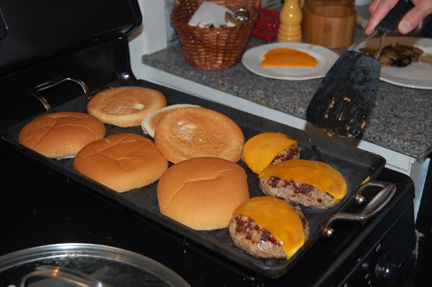
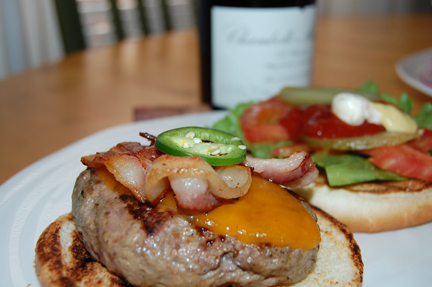
Bacon cheeseburgers and Chambolle-Musigny for my birthday and Tracie P is showing!

In years past, my birthday has been marked with a bistecca alla fiorentina. (Last year’s Florentine-style porterhouse was particularly memorable because it coincided with James Suckling’s announcement that he was leaving Wine Spectator.)

But this year, with Baby P on the way and the implementation of new austerity measures, bacon cheeseburgers (another guilty pleasure of mine) seemed more idoneous.

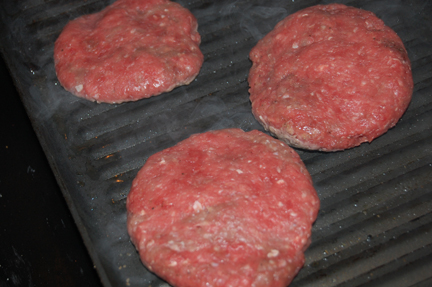
I always use ground sirloin for my burgers, seasoned with salt, pepper, and Tabasco.

We sacrilegiously paired with a bottle of 2001 Chambolle-Musigny Les Charmes by Leroy (!!!). I know what you’re thinking: austerity measures and a $300+ bottle of wine? It was given to me by a friend at a famous auction house after I helped her out by researching a lot of famous Tuscan wine for her.

I wrote about the wine this morning over at the Houston Press blog, where I’ve been having a lot of fun with the “Odd Pair” rubric that I author. It’s been great to get out of my comfort zone and write about a wider variety of wines (and even some wines I wouldn’t reach for normally).

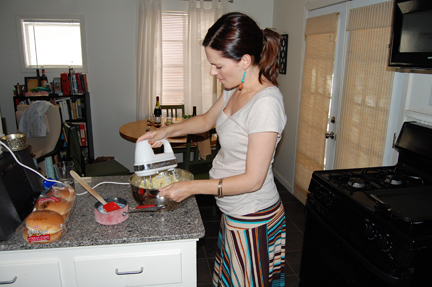
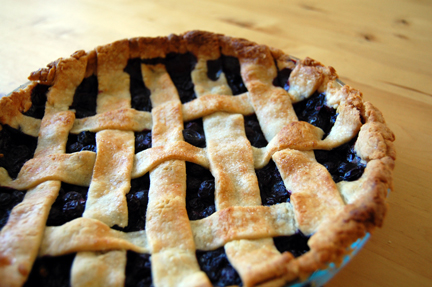
I made the burgers and Tracie P made the mashed potatoes (as my birthday request) and the traditional blueberry pie (this year with lattice-top crust!). She’s really beginning to show!

Baby P and she are doing great and we’re looking forward to finding out Baby P’s sex in a few weeks. :)

Thanks, so much, for all the birthday wishes! They mean so much to me… What a special birthday this year and what an amazing year this has been and will be… We can’t tell you how much your support means to us…

European Wine Bloggers Conference: PSYCHED for October!

It was pretty much a foregone conclusion that Ryan Opaz and I were going to become fast friends when we meet last month for the first time at the Radici Wines festival in Apulia. Ryan is simply one of the coolest dudes in wine blogging today and I completely dig, his style, his energy, his mission, and his vibe… My kinda people…

I am entirely geeked and psyched to share the news that Ryan and his partner in marriage, life, and business Gabriella have asked me to speak at a couple of events at this year’s European Wine Bloggers Conference in October in Italy… YES ITALY! In Franciacorta to be exact… How friggin’ cool is that?

In coming months, I’ll be posting on the panels and seminars in which I’ll be participating and I am thrilled to get to meet so many bloggers and winemakers whom I only know virtually and through their wines. The super cool Evan Dawson is going to be the keynote speaker! That’s way rad and I’m stoked to finally get to connect and taste with him. Stay tuned!

In other news…

I’m taking the rest of the day off because a little bird just landed on my shoulder and told me that today is my birthday! Tracie P baked me a blueberry pie with lattice-top crust and we have a special secret menu planned for tonight… See you tomorrow! And thanks for all the birthday wishes! This birthday is a really special one for me. :)

Recioto della Valpolicella, an ancient pitch by Cassiodorus

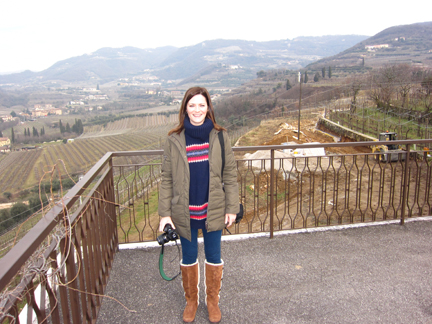
Above: I snapped this photo of Tracie P when we visited the Valpolicella together with Alfonso in early 2011.

In every book about Italian wine and every promotional text you read about the Valpolicella and Soave, there is always an obligatory mention of the wine produced in antiquity there, Acinaticum. But none of them — to my knowledge — ever reproduces or reprints the primary texts where the wine is mentioned.

In the course of my research of the origins of the enonyms Vin Santo (Italian) and Vinsanto (Greek), I came across a wonderful tome entitled Verona Illustrata (Verona Illustrated, originally published in 1731-32 in Verona) by the Marquis Francesco Scipione Maffei. Not only was Maffei an archeologist and chronicler of Verona’s history, he was also a philologist. And one of his most important contribution to classical studies was his translation and study of a manuscript containing the letters of late-Roman-era statesman Cassiodorus (some believe that Maffei was the first to discover the vellum-bound handwritten book).

Over the weekend, as I was working on a short piece on the Veneto that will be published later this year in Italy, I revisited the text and have rendered a translation of — what I consider — a salient passage below on Acinaticum.

The most remarkable thing I discovered was that Cassiodorus was writing to the Canonicarius Venetiarum — the treasurer of the Veneto region under Rome — imploring him to buy Acinaticum for the royal table. In essence, it was a sales pitch for the unusual wine of Valpolicella. I have translated it from the Latin using Maffei’s Italian translation as a guide. It is one of the most inspiring pieces of wine writing I have ever read… and a wonderful pitch!

I love when he writes, “On the palate, it swells up in such a way that you would say it was a meaty liquid, a beverage to be eaten rather than drunk” (“tactus eius densitate pinguescit, ut dicas esse aut carneum liquorem aut edibilem potionem”).

Buona lettura!

Italy rightly boasts of its truly worthy types of wines. And for however much we praise the ingenious Greeks for their wide variety of wines and their skill in dressing their wines with aromas and sea mixtures to give them flavor, they have nothing as exquisite as this…. The wine called Acinaticum, which takes its name from the acino or [grape] berry.

It is pure, singular in flavor and regal in color, so much so that you would say that it has been used to dye crimson [fabric] or that it is the liquid pressed from crimson. The sweetness in it is incredibly delicate and its density is formed by a firmness [in texture] unknown to me. On the palate, it swells up in such a way that you would say it was a meaty liquid, a beverage to be eaten rather than drunk.

The grapes are selected from vines [trained] on locally managed pergolas, they are hung upside down, and [then] they are stored in their amphoras, the regular vessels used [for their vinification]. With time the grapes become hard but do not turn into liquid. They sweat out their insipid fluid and become delicately sweet. This continues until December when the winter begins to make their juice run, and, wondrously, the wine becomes new [fresh] even as you find wine already mature in all the other cellars. The winter must — the cold blood of the grapes, the bloody fluid — [becomes] potable crimson, violet nectar. It stops boiling [fermenting] in its youth and when it is able to become an adult, it once again becomes new [fresh] wine.

The grapes are not tread with injurious shoes! Nor is any filth allowed to mix with them. They are stimulated [i.e., vinified] in accordance with their nobility. [During the time of the year when] the water hardens [freezes], the liquid flows. When all fruit has disappeared from the fields, this wine is fertile and its noble fluid oozes from its buds. I am unable to describe the goodness of its tears. And beyond the pleasure of its sweetness, its beauty is singular to behold.

Latin (unabridged):

Et ideo procuranda sunt vina, quae singulariter fecunda nutrit Italia, ne qui externa debemus appetere, videamur propria non quaesisse. comitis itaque patrimonii relatione declaratum est acinaticium, cui nomen ex acino est, enthecis aulicis fuisse tenuatum. [3] Et quia cunctae dignitates invicem sibi debent necessaria ministrare, quae probantur ad rerum dominos pertinere, ad possessores Veronenses, ubi eius rei cura praecipua est, vos iubemus accedere, quatenus accepto pretio competenti nullus tardet vendere quod principali gratiae deberet offerre. digna plane species, de qua se iactet Italia. nam licet ingeniosa Graecia multifaria se diligentiae subtilitate commendet et vina sua aut odoribus condiat aut marinis permixtionibus insaporet, sub tanta tamen exquisitione reperitur simile nil habere. Hoc est enim merum et colore regium et sapore praecipuum, ut blattam aut ipsius putes fontibus tingi aut liquores eius a purpura credantur expressi. dulcedo illic ineffabili suavitate sentitur: stipsis nescio qua firmitate roboratur: tactus eius densitate pinguescit, ut dicas esse aut carneum liquorem aut edibilem potionem. libet referre quam singularis eius videatur esse collectio. autumno lecta de vineis in pergulis domesticis uva resupina suspenditur, servatur in vasis suis, thecis naturalibus custoditur. rugescit, non liquescit ex senio: tunc fatuos humores exsudans magna suavitate dulcescit. Trahitur ad mensem Decembrem, donec fluxum eius hiemis tempus aperiat, miroque modo incipit esse novum, quando cellis omnibus reperitur antiquum. hiemale mustum, uvarum frigidus sanguis, in rigore vindemia, cruentus liquor, purpura potabilis, violeum nectar defervet primum in origine sua et cum potuerit adulescere, perpetuam incipit habere novitatem. non calcibus iniuriose tunditur nec aliqua sordium ammixtione fuscatur, sed, quemadmodum decet, nobilitas tanta provocatur. defluit, dum aqua durescit: fecunda est, cum omnis agrorum fructus abscedit. distillat gemmis comparem liquorem: iucundum nescio quid illacrimat et praeter quod eius delectat dulcedo, in aspectu singularis eius est pulchritudo.

If any of you Latinists want to help me refine the translation, please do so by leaving alternative translations or suggestions in the comments! Thanks in advance!

The Italian DOC/G system is dying

Whenever my students, readers, or colleagues ask me about the Italian DOC and DOCG systems and what is the difference between the two, I always tell them: It’s important to keep in mind that the Italian appellation system was created not to protect the consumer or to enhance Italian producers’s capabilities in marketing their wines. It was created — as the dearly missed Teobaldo (Baldo) Cappellano pointed out in the Brunello Debate of October 2008 — to protect the territories where the wines are produced.

There is a widespread misconception of the system — for which Italian producers and North American educators are to blame — that the DOCG denoted a higher level of quality “controlled and guaranteed” by authorities for the protection of consumers. In fact, the DOCG represents more rigorous “monitoring” (as we would say in UN-speak) of practices “on the ground,” intended to protect the appellations themselves. In other words, these more stringent regulations were created and implemented to ensure that once a winemaking tradition was officially established, it would enjoy the support of the state when threatened by outside forces or internally unscrupulous producers.

Today, over at VinoWire, Italy’s A-number-1 wine blogger Franco Ziliani and I have posted his observations and commentary on the creation of Italy’s first-ever DOCG for rosé.

Salice Salentino Rosato, you wonder? Or a rosé from Nebbiolo or perhaps Sangiovese? No, Italy’s first rosé DOCG is Castel del Monte Bombino Nero, an appellation that allows for the following grape varieties:

Bombino Nero and/or Aglianico and/or Uva di Troia from 65-100%. Other grapes allowed in the production of this wine, by themselves or blended, include non-aromatic grape varieties recommended and/or authorized by the Province of Bari, provided they are grown locally, [for] up to 35% of the blend.

As they say in Italian, siamo arrivati alla frutta, in other words, it’s time for the [poison-laced] fruit at the end of the meal, a common technique for assassination in the Middle Ages.

The Italian DOCG system has been co-opted, colonized, and raped (there is no better word) by misguided and misinformed, greedy robber-baron Italian producers and money-grubbing politicians who have used lobbying and gerrymandering to create a false “luxury brand” for the sole purpose of lining their pockets with dollars of innocent North American consumers. How many times have you visited a wine store where some young and well-intentioned sales person has told you: See the DOCG label on the Chianti Classico? That means it’s a better wine than the DOC.

Today, the Italian DOCG system is the saddest form of wine writing (vinography) that I have ever encountered. It makes me want to heave.

For the most up-to-date and ever-growing list of Italian DOCGs, see Alfonso’s post here.

Gaglioppo, one of the most exciting categories in Italy today

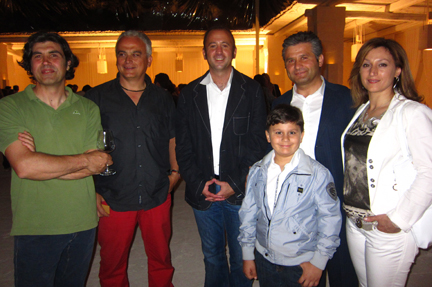
Above, from left: Gaglioppo producers Francesco De Franco, Giuseppe Ippolito, yours truly, Giuseppe and Marinella Parrilla with their son Gianluca (Radici Wines Festival, Apulia, June 2011).

Reflecting on my recent experience in Apulia at the Radici Wines Festival, celebrating the indigenous grapes of Southern Italy, the grape that I can’t stop thinking about is Gaglioppo — the light-skinned, tannic red grape grown and raised as a noble wine in the appellation of Cirò, Calabria.

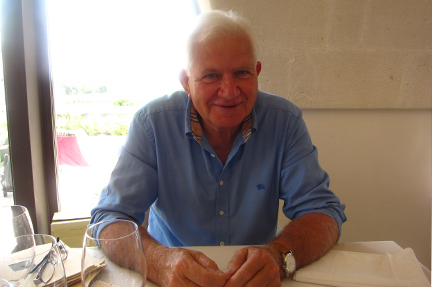
Above: What a thrill to get to taste with Nicodemo Librandi, one of the Gaglioppo greats and a softly spoken, gentle, knowing man.

Over the course of a week in Apulia, I got to taste a wide array of Gaglioppo bottlings, including richer and more tannic expressions (read longer maceration times) and lighter, yet equally powerful wines.

And although Aglianico del Vulture and Campania Aglianico were the true stars of the event, the wine that kept me going back for more was Galgioppo. From Librandi (the classic) to ‘A Vita by Francesco De Franco (the wine that captivated me the most), I discovered something entirely unique in the world of Italian wine today: a loosely banded however coherent group of heterogeneous winemakers who share a vision of wines that speak of and to the places where they are made and the people who make and drink them.

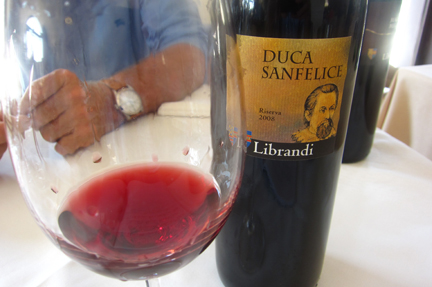
Above: Look at the beautiful light color in Librandi’s flagship Duca Sanfelice Gaglioppo! Man, that wine was awesome! I’ve been pouring both their Cirò rosato and bianco at Sotto in Los Angeles and I showed their classic Cirò in Atlanta at a conference where I spoke earlier this year. Fantastic wines, great value.

I would never compare apples to oranges or Nebbiolo to Gaglioppo but Gaglioppo does share a fundamental attribute with its more famous counterpart in the north: when vinified in a traditional manner, it can create that ineffable balance of lightness and power in the wine, the “unbearable lightness” I like to call it, the paradox of wine that puzzles and thrills my palate and makes me return my nose to the glass and my tongue to the wine over and over again…

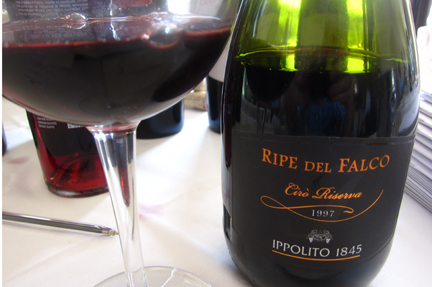
Above: The 1997 Ripe del Falco by Ippolito 1845 was one of the most stunning wines I tasted all week. Still in its youth, this wine blew me away with its power balanced by subtle nuance. The nose alone was enough to inebriate my sensibility with sensuous fruit and salty earth. I loved this wine.

Of course, the festival entries represented the best of the best and those winemakers whose devotion to the authenticity of their appellation is first and foremost in their approach to winemaking and marketing of their products. But you could definitely sense a solidarity among the winemakers, who all seemed to share the same joy and smile when I sat down to taste with them… as if to say, we know how your eyes and your palate are about to light up as we share that joy with you…

For folks like me, who can no longer afford the prices of Nebbiolo bottlings that remained in our reach even 10 years ago, Galioppo represents an excellent ground-floor opportunity for modest collectors who want to cellar affordable wines.

It’s one of the categories Tracie P and I will be cellaring for Baby P’s birth-year wine. :)

Wondering how to pronounce Gaglioppo? Click here.

The best meal in Greece, the most beautiful Greek woman, and the CORRECT pronunciation of Xinomavro

Many great meals were thoroughly relished by a wine blogger last week in Greece but the one that he cannot stop thinking and dreaming about was a dinner prepared by Maria Constandakis, who — together with her husband and agronomist Yannis — oversee the Boutari winery in Crete.

The meal began with a Cretan dakos, a wholewheat rusk, a bit larger but similar to the frisa of Apulia, where they top it with diced mozzarella, tomatoes, and tuna. Here, tradition calls for fresh tomato purée and crumbled feta. And while the Apulians gently soak their frisa before dressing it, the Cretans use the water naturally purged by the tomato when it is tossed with the salty cheese.

Next came the classic Greek zucchini “meatballs,” the kolokithokeftedes. The wine blogger had experienced this dish before but in his own words, “to have Maria’s, made from zucchini she grew herself in the winery’s garden, is a game-changer.”

The next morning, said wine blogger photographed Maria’s zucchini.

When you travel in Greece during summer, horiatiki — the classic village or summer salad — is served at nearly every meal. But there was something different about Maria’s. Upon further inquiry, the blogger discovered that Maria included freshly torn glistrida or purlane in her salad, also grown in her garden.

Still used as an effective folk remedy for certain ailments of the mouth, purlane grows wild in Greece (the blogger even found it along the sidewalks of one of the small towns he visited in Northern Greece). Like nettles, it slightly stings the tongue and according to legend, those who consume it are prone to loquaciousness. (Said blogger has never been accused of being long-winded! But true to legend, he stayed up late into the night discussing philosophy and politics with his companions over many glasses of raki.)

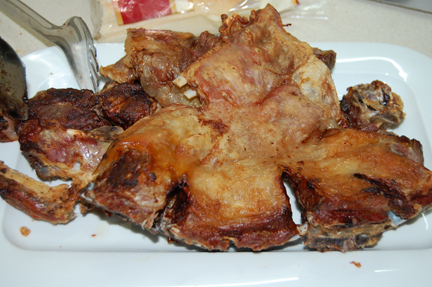
The pièce de résistance, however, was Maria’s slow-roasted lamb. Even though, technically, the meat had not been smoked, the effect was the same: the bones were so tender that that crumbled gently in the blogger’s mouth, rewarding him with their sweet marrow.

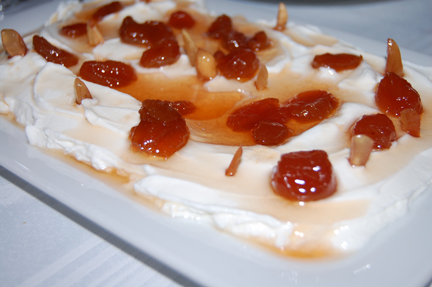
Said blogger is rarely said to eat dessert but there was no way for him to resist Maria’s yogurt topped with cherries she had stewed herself.

Said blogger enjoyed many great meals in Greece but none came close to that prepared by Maria.

In other news…

In the days that followed, said blogger, an accomplished linguist, learned that he had been incorrectly pronouncing the name of the most noble red grape variety in Greece, Xinomavro.

Click here to listen to the correct pronunciation.

Ciliegiolo: Italian grape name pronunciation project (and a fun post about Lambrusco)

CLICK HERE FOR ALL EPISODES

Before I left for Greece, Wine Parkour requested an episode of the Italian Grape Name and Appellation Pronunciation Project devoted to the ampelonym Ciliegiolo.

So I reached out to my friend and excellent producer of Morellino di Scansano Gianpaolo Paglia, who graciously agreed to video himself pronouncing the grape name. (You may remember Gianapolo for the excellent meal he and I shared last year in Maremma and for my posts about his decision to sell his barriques and his declaration that he would no longer age his wines in new small French oak cask; click here for the thread.)

I wouldn’t exactly call Gianpaolo the “Dustin Hoffman” of Italian wine but you will definitely walk away from this video knowing how to pronounce Ciliegiolo (not an easy one for Anglophones)!

In other news…

However jetlagged today, I managed to churn out a fun post this morning for the Houston Press on Lambrusco. My editor there has been very generous in letting me create my “wine as exegetic tool” posts (read “wine as a pretext and excuse to study culture”). Have you ever visited Emilia-Romagna? Then you’ll know what I’m talking about!

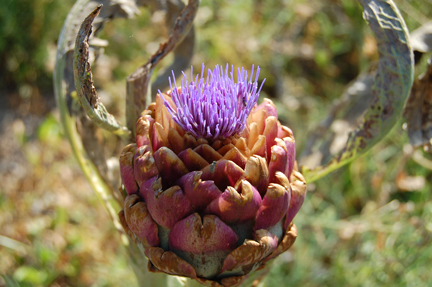
Greek grape name pronunciation project and my Greek artichoke flower

Fortune smiled on me today when it delivered me at the doorstep of Roxani Matsa (above), the most super cool lady and winemaker in the Attica appellation just outside of Athens. She took me on a tour of her garden and her vineyards, insisting that I stop to smell the artichoke flowers…

We chatted about winemaking and films as we sat outside her home and winery, sipping frappè coffees (ubiquitous here in Greece), munching on pastries, and leafing through photo albums.

Before I headed out to Mantinia in the Peloponnese, she graciously recited some Greek grape and appellations for the fresh-off-the-presses Greek Grape Name and Appellation Pronunciation Project, which I launched yesterday at the Boutari Social Media Project blog.

There’s so much more to tell and so many more photos and videos to post from my trip. But now it’s time to relax and get some sight-seeing in before I head back home with the armadillo.

I’ll be taking the next few days off from blogging but will pick up again early next week where I left off…

Thanks so much, to everyone, for the kind words here, on the Twitter, and on the Facebook about the review of Sotto and my wine list there in Los Angeles. They mean the world to me. :)

See you next week!

My first wine list gets the thumbs up from LA Times

Photo by Ricardo DeAratanha, Los Angeles Times.

You can imagine that it gave me great joy to read that restaurant reviewer S. Irene Virbila gave my first wine list the thumbs up in today’s LA Times review of Sotto in Los Angeles.

Click here to read the review.