Ut pictura oenographia: a short treatise on synaesthesia in wine writing

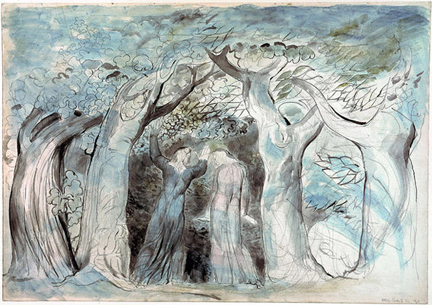
blake dante inferno

Above: William Blake’s depiction of Dante and Virgil heading toward the “dark wood” where “the sun is silent.” Image via BlakeArchive.org.

Horace, Dante, Blake, Carducci, and wine tasting? Pane per i miei denti, as the Italian says (bread for my teeth to bite into, in other words, right up my alley).

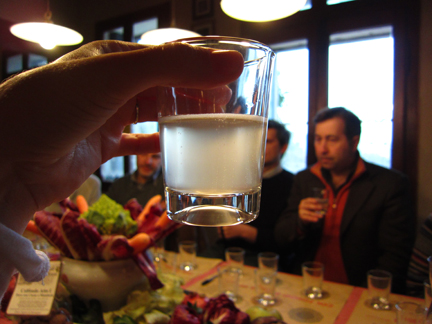
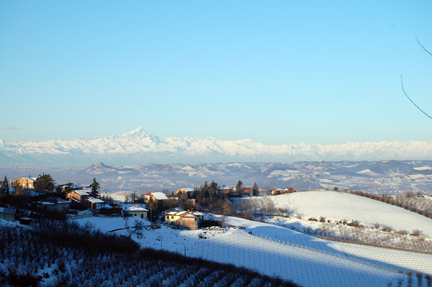
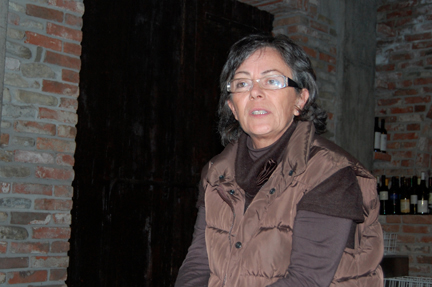
I had a lot of fun composing a short treatise on synaesthesia in wine writing this morning for my friend and client Paolo Cantele.

Click here for the post…

Prosecco police? Yes, it’s true, and Croatia-Prosecco showdown ratchets up

prosecco col fondo colfondo

Honestly, I couldn’t believe it either: the Prosecco DOCG growers association has appointed a “Prosecco policeman” who will fine bar and restaurant owners who improperly serve Prosecco on draft or in a caraffe.

It’s serious business. The fines are stiff (up to €20,000!).

I’ve reported on the development today for the Bele Casel blog.

In other Prosecco news…

Now that Croatia has officially become an EU member, the Italian media have been ratcheting up their coverage of the Prosecco-Prošek showdown.

The AP reported on this story back in April, 2013, back when negotiations for Croatia’s EU entry were still underway.

At the time, the Croatian agriculture minister Tihomir Jakovina suggested publicly that Croatia cease to produce Prošek.

His call to end production and avoid a showdown was met with zealous protests by Prošek producers, notably Andro Tomić, the “bard” of Prošek.

At Vinitaly this year, President of the Veneto, Luca Zaia, a former agriculture minister, stated unequivocally that Croatia must stop production of Prošek as a condition of its EU membership.

Many speculate that Croatia has a legal precedent for a claim to Prošek because the category was commercially successful long before Prosecco became a commercially viable category in Italy.

Prosecco, as a “brand,” was first sold successfully in Italy in the late 1800s by Count Marco Giulio Balbi Valier, who probably used a train station in the village of Prosecco (Carso, Friuli) as a hub for the shipment of the wines to Vienna.

Prošek, on the other hand, has been used as a commercial trademark in Croatia for many centuries.

Of course, the Hungary-Italy showdown over Tocai Friuliano and Tokay (Tokaji) looms large. Hungary ultimately won the right to the homonymous trademark and Friuli can no longer export wines labeled Tocai (as of January 2008).

Why the Marches matter more than ever (hippies & humans please read on)

Baby P 2013 update: the astronomic cost of self-employed couples having a child (via My Little Sugarpie). If we had better government regulation of health care, our family wouldn’t be going into debt to bring another healthy child into this world.
maiolati spontini

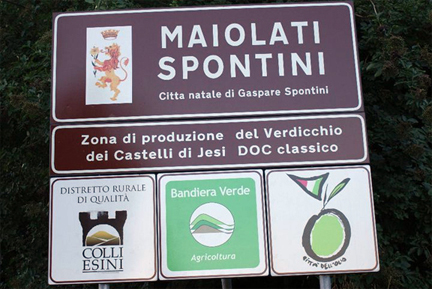
The village of Maiolati Spontini (Ancona province) is one of the 24 communes that produce Verdicchio di Castelli di Jesi. The vineyards there are part of nearly 3,200 hecatares planted to Verdicchio, 90% of which are destined to become “classico” wines. Why doesn’t the appellation command more attention in the U.S. marketplace?

At our house, we drink more white wine than red wine. And we drink more Castelli di Jesi than any other white. That’s partly because the price-quality ratio for these wines is excellent. But it’s mostly because we like to drink acidity-driven white wine in which minerality delineates the tasting profile.

When you travel to the Marches (le Marche in Italian), your senses are rewarded by one of the few remaining high-profile wine producing areas where Italy’s negrarizzazione has spared the landscape (Negrarization, the unbridled commercial and industrial development of once pristine farmland, named after the village Negrar in Valpolicella, where the corollary blight of consumerism has spread like a pox).

Life there is relatively simple (reminiscent of what Tuscany must have been like in the 1970s). The people are friendly and earnest. And the food simple, wholesome, and delicious.

As ideal as this sounds, the Marches still don’t play much of a role in Americans’ eno-universe. Just ask a wine buyer in any major U.S. market (aside from the Italophiliacs) if they can name five producers of Verdicchio dei Castelli di Jesi. Surely, they can rattle off five names from Barolo, Prosecco, or Brunello. But Jesi? And let’s not even get into Ascoli Piceno or Matelica…

But the reason why I’m writing about the Marches today goes beyond my passion for this beautiful and untouched region and my nearly daily consumption of the wines (I’m not kidding about that, either).

I’ve begun to follow the Marches carefully because I have a client there. And said client recently became a member of a new group called Terroir Marche.

The self-financed (not EU subsidized) group of organic and biodyanmic farmers believes that “the farmer is the primary source of our daily nourishment and is a pillar among those who safeguard the environmental landscape, the true but neglected patrimony of Italy.”

And its mission is to “promote awareness of organic farming in the Marches, to defend the territory and its resources, and to share the culture and practices of a sustainable and humane economy.”

I have been an avid supporter and an ardent fan of Vini Veri, VinNatur, and the Natural wholesome farming movement in general.

But I have never seen a group whose devotion to their shared cause is based so deeply and strongly in ideology.

I believe that grape growing and winemaking — like all human endeavor — is inherently and intrinsically ideological (and political) in nature. And as I have followed my client and the birth of this group, I realize that I have never encountered winemakers so passionate about the ideological and political impact of chemical-free farming.

More than any others I know, they see their mission as one of safeguarding Italy’s greatest resource, one vineyard and one field at a time. They’re not doing it to market their products. They’re not doing it because it’s trendy. They’re doing because they need to do it. Otherwise, their children and our children may not ever know this Italy — one of G-d’s great gifts to humankind, the “garden of Europe.”

I wish I had time to translate their entire mission statement. But I think I’ve conveyed their ethos here (however clumsily).

I applaud them for what they are doing and am hopeful that my daughters, thanks to them, may very well get a chance to see and taste the beautiful Marches the way that I have seen and tasted them.

Happy days, sad days…

mommy makes everything better

As our pregnancy “comes to term” and we finish preparing for the arrival of Baby P 2013 (any day now), I can’t help but feel a little bit sad about how Georgia P’s life is going to change.

She has no idea that our cozy little family of three is about to become a family of four.

She is such a sweet little girl, always ready to share a smile, a laugh, a kiss, and a hug. And I know she’s going to be a wonderful big sister (the two girls will be nineteen months apart in age).

But I also know it’s going to be hard for her at first, as she gets accustomed to the new and different rhythms that a newborn brings to a household.

We’re all ready for the baby to get here and it’s a very special and happy time for us. But I can’t help but feel a little pang knowing that Georgia P will have to settle into a new life where she’s not always the center of everyone’s attention…

Thanks for reading and thanks for sharing our family’s joy.

Room with a view (and a toilet) remembering our honeymoon

BABY P 2013 UPDATE: No news to report but chances are that she’ll arrive this week.

Tasting Giovanna Rizzolio’s Cascina delle Rose Barbera d’Alba on Friday night brought back a flood of memories from our stay with her on our honeymoon.

One of my favorites was waking up in the morning and seeing Asili and Rabajà from our bathroom window (when seated).

In the photo above, the gaze is actually facing north-northwest. Asili and Rabajà are out of frame to the right. Here’s a Google map link with directions from Asili to Tre Stelle (where Giovanna’s estate is located) to give you some context and to illustrate the unique terrain of Langa.

When you click on the map, zoom out and note the Tanaro river and the way the Alps seems to suddenly melt away into valley… Barbaresco is simply one of the most magical places on earth for me.

Buona domenica, yall!

Cascina delle Rose in Texas! YES!

cascina delle rose

Yesterday evening, during a meeting and tasting with an Austin client and a local editor, I asked my client — Jeff Courington owner of Vino Vino — if he’d open one of the wines he plans to have on his list at his new Italian, slated to open later this summer, Al Fico.

When he produced a bottle of Cascina delle Rose 2009 Barbera d’Alba Donna Elena (above), I couldn’t believe my eyes. Cascina delle Rose is one of those wonderful but tiny producers that never seem able to break into the extremely-hard-to-crack Texas wine market.

giovanna rizzolio

The mature wine, from one of Giovanna Rizzolio’s top growing sites, was gorgeous, its acidity zinging and dancing around the Barbera’s meaty flavors.

The wine still had a strip label from a previous Louisiana importer/distributor who had tried, unsuccessfully, to bring the wine to Texas.

Jeff told me that they’re being brought in now by a new company called Rootstock (if I’m not mistaken).

I love Giovanna’s wines (and she such a super cool lady) and am thrilled that that there here.

Giovanna, welcome to Texas!

Click here for a post on our visit to Giovanna’s estate and some pretty amazing images of the underground river that gives the Barbaresco cru “Rio Sordo” its name.

Gov. Perry stay out of my daughter’s vagina: Pasolinian thoughts on the abortion debate

sweetest daughter

Above: Georgia P and I let mommy sleep in these days. Our new baby will be here any day now and so mommy needs all the rest she can get. Part of our morning fun (after breakfast) is self-portraits. Georgia P has no idea that a battle over women’s rights is being played out just 10 minutes down the street from our house in Austin, Texas.

Some will remember that twentieth-century Italian critical theorist and leftist Pier Paolo Pasolini took a stand against abortion. He saw abortion as one of the ugliest corollaries of the sexual revolution of the 1960s (when he was highly active as an essayist, poet, and filmmaker). I believe that he was right. But I also believe that a rational application of abortion does greater good for our society than its unbridled restriction.

This morning on the Twitter and the Facebook, I wrote, “Rick Perry, stay out of my daughter’s vagina.”

To that, my aunt Dianne — Tracie P’s biological aunt, whom I love because of our relation and because of the fact that she’s a really fun and warm lady — commented as follows:

How about those daughters that are murdered before even being given a chance at life? They are not banning abortion just not after 20 weeks. Why the outrage?

Here’s what I wrote back:

Continue reading

Lasagne from Corleone, mimetic desire, & @TonyVallone

lasagna corleone

Above: One side of my friend Tony Vallone’s family is from Corleone, Sicily. All of last night’s dishes were “alla corleonese”.

Last night, I made one last trip to Houston before the arrival of Baby P 2013 (I drove in and back the same day).

How could I not?

My good friend and client Tony Vallone was hosting a sold-out dinner featuring cucina casereccia siciliana (homestyle Sicilian cooking) at his casual restaurant Ciao Bello. And I should be more precise: the official theme was cucina casereccia corleonese, the cuisine of his mother’s family’s hometown, Corleone. And he had asked me to speak to the guests about the Sicilian wines chosen for the meal.

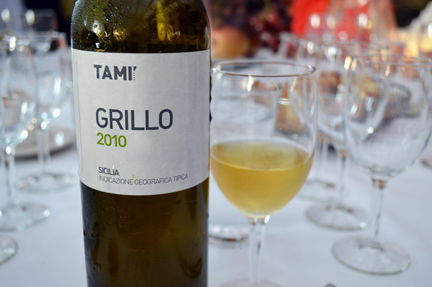
In case the mimetic desire has not yet taken hold, here’s a photo of the wine we paired with the lasagna casalinga (homemade lasagne, with mini meatballs and peas) above:

tami grillo

That’s négociant Arianna Occhipinti’s Grillo: salty and jumping with acidity, the wine tasted SO good on a sultry Houstonian evening.

As I left the dinner, everyone wished me and Tracie P well for the arrival of Baby P 2013.

Tony handed me a couple of boxes of his gallina mollicata (chicken baked with mollicata, Sicilian Corleonese-style seasoned breadcrumbs).

Mi raccomando… I’m serious,” he said. “I want you to call me when the baby arrives.”

Man, I love this guy… We’re so lucky to have him in our lives.

And here’s a little video (below) I put together this morning with scenes from the event (does anyone recognize the song I’m playing?).

From sharecropper to landowner, an Italian parable

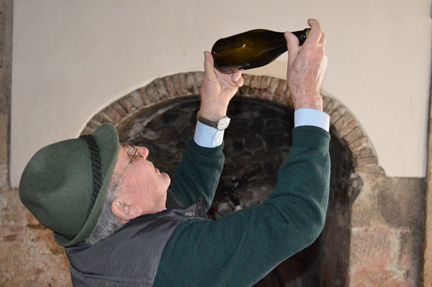
gregoletto prosecco

Looking back on my April 2013 visit to Prosecco legacy winemaker Luigi Gregoletto (above), I realized that I’m going to need to devote a series of posts to our fascinating conversation about pre-autoclave Prosecco, Prosecco Colfòndo, and his recent embrace of biodynamic farming practices.

But first, I’d like to share this video, shot the day of our visit.

In the film, he and I make a Dantean ascent to the villa where his parents — Proseccoland sharecroppers — were born.

Luigi was born a sharecropper in 1927, five years after Mussolini’s March on Rome.

As he explains in the video, he began to purchase land from the owners about twenty-five years ago.

Today, the hilltop that overlooks the owner’s villa is planted to his prized Verdiso, from which he makes his top wine. It’s a powerful metaphor for the arc of his life.

As we began our climb up the hill that leads to the villa, I was struck by how his family’s story is an Italian parable that spans Italy’s industrialization in the twentieth century to the rise of the proletariat in the years that followed the Second World War.

Sharecropping — a form of indentured servitude — was not officially abolished in Italy until the 1960s. Its prohibition was not implemented until the 1970s. And only in the 1980s did the Italian legislature set out parameters for the redistribution of land.

His truly inspirational story reveals so much about the evolution of Prosecco and the renaissance of Italian wine. And it tells us even more about Italy’s twentieth-century history.

I have a lot more to share about our visit, but in the meantime please have a look at the video. I hope you find the experience as moving as I did.

Gaja on “leftist hipsters” & the delicious peculiarity of Italian wine

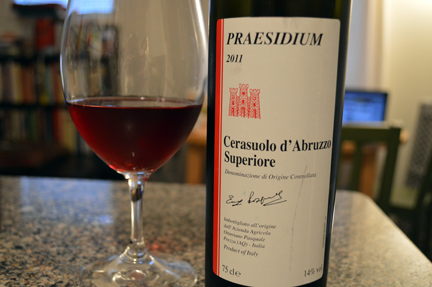
cerasuolo abruzzo

Above: Praesidium, a Vini Veri producer, is a winery that seamlessly aligns natural winemaking and elegance with a genuine expression of its appellation.

Italian wine needs “more marketing and fewer leftist hipsters,” said Angelo Gaja in a post published today by Luciano Ferraro, wine editor for Corriere della Sera.

While I don’t agree with the part about “leftists” (being a card-carrying member myself), I do believe that the Italians — as Gaja points out in the post — could learn a thing or two from the French, who are brilliant wine marketers (just think of the 1855 classification and how it reshaped and continues to dominate wine sales around the world).

Gaja had just returned, together with roughly 400 Italian producers, from Vinexpo in France, where his transalpine counterparts impressed him with their proactive attitude toward a market in crisis.

Francophilia aside, Luciano’s post and Gaja’s notes made me think of a wine I tasted this spring, a stunning Cerasuolo d’Abruzzo by Praesidium that impressed me with its delicate equilibrium between brilliant originality and faith in tradition.

I loved the wine and immediately Googled it to find out more (it had been sent to me by Katell Pleven of Vine Collective; check out a podcast interview with Katell, posted earlier this month by Levi Dalton on I’ll Drink to That).

Even though the estate produces some of the most expensive wine available from Abruzzo, it doesn’t even have a website (Gaja doesn’t have a website either but I’ve heard that one is in the works).

At least from this side of the Atlantic, it would appear that Praesidium engages in little or no marketing at all beyond its participation in Vini Veri and efforts by its U.S. importer (this post was the most informative I could find).

As someone who makes his living primarily in wine marketing, I’m all for an Italian embrace of more aggressive and ambitious marketing. I love Italian wine and beyond my professional life, I feel personally invested in its success because I enjoy drinking it.

But Gaja — a genius marketer, supreme in Italy and rivaled by few beyond Italy’s borders — and his observations made me remember that part of what makes Italian wine so great is its own self-imposed challenges and obstacles.

It’s an element of Italian culture that dates back to the centuries of foreign occupation between the Renaissance and the modern era. During that period, Italians developed a sense of provincialism that, to this day, often leads them to see little beyond the mura of their villages.

But in my experience, their chasmophilia and topophilia can impart a uniqueness — a delicious peculiarity — to their wines that defies the homologation demanded by consumerism and its marketers.

So as much as I admire Angelo Gaja for his role as an architect in the renaissance of Italian wine, I also cherish the backward-looking producer like Praesidium who sees little purpose in marketing their high-end wines.

Sometimes, as in the case of the Praesidium Cerasuolo, that backwardness allows us to pass through the portone of a tiny village in the province of Aquila by way of the bottle and glass…