Food porn: cod cheeks, rabbit loin, and tannic Gamay in San Antonio

Above: “If a French cook and an Italian cook met at the border on the coast what would they cook? Cod cheeks with arugula, fingerlings, house-cured pancetta, and saffron aioli.” That’s how Josh Cross describes one of his favorite dishes at Oloroso in San Antonio.

If you read Do Bianchi, then you’ve heard me say it before: of all the cities I’ve visited in Texas, San Antonio is by far the most gastronomically exciting, as in the case of Oloroso, where I hung out the other day and paired some cru Beaujolais — Côte de Brouilly by Château Thivin — with my friend, chef, and owner Josh Cross.

Above: Josh’s signature rabbit includes all the innards, the rabbit “fajitas” (in the foreground), and the loin, extra rare.

Although I’ve always been a lover of French wine and I’ve sold a lot of French wine on the floor of Jaynes Gastropub in San Diego, I’ve never had the opportunity to spend so much time professionally with French wine and I’m loving it (the company I work for represents the Kermit Lynch portfolio in Texas). I snagged a bottle of the Thivin (which I sell) the other day and popped it with Josh at the end of a work day. It’s amazing how tannic Gamay can be in its single-vineyard expressions and the wine had just the right lightness to go with Josh’s cod and enough structure to pair perfectly with his rabbit. (Eric did a series of posts and a column on cru Beaujolais last year, definitely worth checking out.)

Life could be worse…

Showdown in Tuscany? Franco and James to face-off this summer

From the “after all, we write about wine not politics” department…

Above: Franco (pictured last September when we tasted together at Ca’ del Bosco) and James haven’t always been on the best of terms but collegiality has happily prevailed in their most recent exchange.

Addendum: if you missed the first part of the exchange, click here for the initial dialog between these two giants of wine writing…

In case you don’t subscribe to the Wine Spectator Online (as I do), I’ve cut and pasted the most recent exchange between Franco Ziliani and James Suckling below. It seems that collegiality has prevailed in an otherwise rocky relationship. (And here’s the link to the original post.)

Their shared insight and opinions regarding the 2006 Langa vintage are definitely worth checking out…

    User Name: James Suckling, Posted: 05:33 PM ET, May 29, 2009

    Your English is perfect Franco! I have always found Mascarello’s Barberas and Doclettos a little unclean. But the Barolos are generally fine, although lighter in style.

    User Name: Franco Ziliani, Italy Posted: 06:56 AM ET, May 30, 2009

    James, I agree (and I’m very surprise for this) with your perplexities about Barbaresco (and Barolo?) 2006. And I said this after a tasting, at Alba Wines Exhibition (why don’t you attend to this tasting with many Italian and international wine writers?) of 60-70 Barbaresco 2006, many among the most important wines of this Docg. The choice of Bruno Giacosa who decided not to bottle his Barolo and Barbaresco 2006 is very significant about the difficulties and the problems of this vintage, but in my tasting I have find at least 15-20 Barbaresco 2006 well made with great personality, richness, elegance and complexity. A question: why we debate about Giuseppe (Mauro) Mascarello wines and an hypothetical “volatile acidity” in his wines in a post you dedicate to Barbaresco 2006? I hope to have sometimes the possibility to meet you and taste with you so to confront our different point of view about Piedmont (Nebbiolo) wines. What do you think? Franco

    User Name: James Suckling, Posted: 09:43 AM ET, May 30, 2009

    Franco. That would be nice one day. May be this summer? As for trade tastings like the Alba Wines Exhibition, I prefer to taste the wines blind in my office in Tuscany. I too found numerous 2006 Barbarescos with elegance and complexity — ie 90 points or so — but I was just a little underwhelmed because I thought there would be more top wines.

    User Name: Franco Ziliani, Italy Posted: 11:29 AM ET, May 30, 2009

    OK for this summer James, in your office or, better, in Langhe region. When you decide that we can meet for discute about Barolo & Barbaresco and taste together, you can contact me at cannubi@gmail.com but don’t forget your promise…

In other news…

There’s another — and in this case, very real — showdown brewing in San Antonio.

Poetry for Sunday: Petrarch’s musical rivers

People seemed to enjoy last week’s Poetry for Sunday so I thought I’d try another one this week…

A quick search online revealed this wonderful gallery at the Beinecke Library (Yale) site. Petrarch’s script inspired a generation of Northern Italian amanuenses and calligraphers who developed what would later be called “humanist script.” The inscription at the top of the folio reads: “Here happily begin the songs in verse in elegy of Laura by the illustrious poet Francis Petrarch.”

When I lived in Italy in the 1990s as a graduate student, I had the great fortune to meet a number of twentieth-century Italian poets, including Giovanna Sandri, whose poetry I translated for a collection of modern poetry published by my dissertation adviser. One day, when I was doing research for my dissertation at the Vatican library, she invited me over for a lunch of rice and baby shrimp — “translation and risotto di gamberetti” she wrote playfully in a dedication she signed in a copy of one of her books that she gave to me. Her primary literary interest was the group of Roman poets and the Gruppo 63 poets among whom she had come of age literarily and literally. But when she asked me about my studies devoted to Petrarch (Francesco Petrarca, fourteenth-century Italian poet and humanist) she fondly remembered her favorite sonnet. She loved the way that Petrarch ingeniously listed the great rivers of the world in meter (in this case, rhymed hendecasyllables — eleven-syllable lines, the classic meter of Italian medieval lyric).

The following is Robert Durling’s translation of the sonnet and the original Italian. Even if you don’t read Italian, try reading the lines out loud to hear the music of Petrarch’s verse.

The tree in the poem is central to the body of poetry and the new poetical language that Petrarch created for his beloved Laura: the laurel tree (do you hear the paronomasia between Laura and lauro or laurel?), the tree so dear to Apollo the god of music and poetry (among other things) because his beloved Daphne had been transformed into a laurel tree so she could escape his amorous advances.

    Not Tesino, Po, Varo, Arno, Adige, or Tiber, Euphrates, Tigris, Nile, Hermus, Indus or Ganges, Don, Danube, Alpheus, Garonne, the sea-breaker Timavus, Rhône, Ebro, Rhine, Seine, Elbe, Loire, or Hebrus —

    not ivy, fir, pine, beech, or juniper — could lessen the fire that wearies my sad heart as much as a lovely stream that from time to time weeps along with me, and the slender tree that in my rhymes I beautify and celebrate.

    I find this a help amid the assaults of Love, where I must live out in armor my life that goes by with such great leaps.

    Then let this lovely laurel grow on the fresh bank; and he who planted it, let him — in its sweet shade, to the sound of the waters — write high and happy thoughts!

    Non Tesin, Po, Varo, Arno, Adige e Tebro
    Eufrate, Tigre, Nilo, Ermo, Indo et Gange,
    Tana, Istro, Alfeo, Garona, e’l mar che frange,
    Rodano, Ibero, Ren, Sena, Albia, Era, Ebro —

    non edra, abete, pin, faggio o genebro —
    poria ‘l foco allentar che’l cor tristo ange
    quant’un bel rio ch’ad ogni or meco piange
    co l’arboscel che’in rime orno e celebro

    Questo un soccorso trovo fra gli assalti
    d’Amore, ove conven ch’armato viva
    la vita che trapassa a sì gran salti.

    Così cresca il bel lauro in fresca riva,
    e chi’l piantò pensier leggiadri et alti
    ne la dolce ombra al suon de l’acque scriva!

What does wine have to do with any of this? In his prose, Petrarch wrote famously about wine and in particular about the wines of Burgundy, but that will have to wait for another post. Today, let’s just enjoy his musical rivers.

Thanks for reading…

Another clarification on ripasso/ripassa

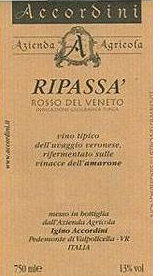
accordiniYesterday, I messaged the VinoWire group on Facebook, asking if anyone knew of a Valpolicella producer besides Zenato who used the term ripassa on its Valpolicella label. (Btw, if you’re not a member of the VinoWire FB group, please join!). Colleague, friend, and fellow blogger Tom Hyland weighed in with Accordini’s Ripassà (or Ripassa’ depending on whether your looking at the label or the winery’s website. Ripassa’ is a Veneto dialectal form of the Italian ripassato, literally passed again or refermented in this case. (I am reminded of Giacomo Leopardi’s famous observation that French is a language of terms while Italian is a language of paroles: like so many lemmae in the Italian lexicon, passare can assume a wide varieties of meanings depending on the context.) Thanks, Tom, for sharing the info and thanks also to Devon Broglie and Angelo Peretti who pointed out that Zenato’s “Ripassa” — without the accent grave or inverted comma — is indeed a trademarked proprietary name.

Has anyone tried the Accordini? Is it good?

In other news…

Just in the from the “unbelievable but true” department: Franco and James Suckling are in the midst of a cordial, collegial, and amiable exchange in a comment thread at James’s blog on the Wine Spectator site.

Here’s the link to the post and thread but since you have to subscribe (as I do) to view the blog, I’ve copied and pasted the exchange below.

User Name: James Suckling, Posted: 03:36 AM ET, May 28, 2009

    Guiseppe Mascarello & Figlio doesn’t send but we buy bottles normally for review. I find the wines very up and down. Some are amazing but others have flaws like volatile acidity.

User Name: Franco Ziliani, Italy Posted: 12:13 PM ET, May 29, 2009

    I know very well, and I’m a great fan, of Giuseppe (Mauro) Mascarello wines, but I confess that I don’t find any traces of “volatile acidity” that Mr. Suckling find…

User Name: James Suckling, Posted: 12:26 PM ET, May 29, 2009

    Franco. Some people have a high tolerance for VA. Have you ever been to their cellars? Anyway, it’s only been with a few wines. I generally like the wines as you do. Thanks for the comment.

User Name: Franco Ziliani, Italy Posted: 04:21 PM ET, May 29, 2009

    Mr. Suckling, apologies in advance for my poor English. I know very well the Giuseppe Mascarello cellars and I don’t think that is this kind of old, and very fresh in every season, cellar that create the problem of “volatile acidity” that you find in Giuseppe Mascarello wines. And I don’t think that a case of “high tolerance for VA” don’t allow me to find in Mascarello wines the “VA problem” that you find in few wines. Can you tell in what wines, Barolo, Barbera, Dolcetto (what vintages?) have you find VA “flaws like volatile acidity”? Thanks for your kind answer f.z.

We’ll have to wait for James’s next move!

Just some of the reasons I’m so smitten…

From the “it’s Friday so just indulge me” department…

1. She just gets so giddy when you get some good Basque cheese in front of her and some stinky wine (and she’s knock-out gorgeous; to gaze at her makes me feel like Antonioni with Monica Vitti in his camera’s frame). That’s her last week at Terroir Natural Wine Merchant in San Francisco.

2. Her palate is as good as any I’ve ever tasted with and to hear her describe wine is like Petrarch to my ears (that’s her tasting barrel samples of Cabernet Franc and Petit Verdot in Yountville, CA).

3. She is a pro taster and nothing gets by her. She’s never afraid to ask the tough questions (that’s her tasting with Tadeo at Neyers).

4. She is just the coolest blogger and she will travel to the other side of the world for a wine that she loves (like this post she did about tasting in Savennières).

5. I just can’t imagine my life without her (that’s us in Sausalito).

Tell me, what is my life without your love
Tell me, who am I without you, by my side
Oh tell me, what is my life without your love
Tell me, who am I without you, by my side

What is Life, George Harrison

What Brunello does Dick Cheney drink?

From the “just for fun” department…

One of my guilty pleasures is reading Maureen Dowd’s op-eds. Yes, it’s true. I’m a sucker for her gossipy Cheney bashing and I find her over-the-top satire thoroughly entertaining. It seemed only appropriate that I check in with Maureen last night, on a drive home from Houston, where Dan and I worked in the market and he pointed out both the Enron and Haliburton buildings… or rather, the Enron and Haliburton industrial military complices (pun intended for the Latinate among us). (Dan drove, btw, and he and our ride-with were chatting in the front while I blog-surfed on my blackberry in the back seat.)

In her column published yesterday online, Ms. Dowd imagined Dick and Rummy having dinner at what must be one of our nation’s capital’s top insider dining spots, Cafè Milano.

“Rummy grins,” she writes, “taking a gulp of his brunello. Dick grunts, raising a fork of his Risotto Gucci with roasted free-range quail.” (It’s always bugged me, btw, how the Times style-sheet does not require grape varieties to be capitalized. In the case of Brunello, I feel capitalization is doubly important but we can get into that later and don’t get me started on montepulciano d’abruzzo, where there is no questioning that Abruzzo is a place name! [Addendum: Eric the Red pointed out rightly that the Times renders the grape name “montepulciano d’Abruzzo”; what I meant to write was Montepulciano is a place name and should be capitalized; see Eric the Red’s comment below].)

I couldn’t help but wonder, what Brunello would they drink? So, I went online (duh, I practically live online!) and looked up the wine list (there is actually a dish called Risotto Gucci: “roasted free range quail over a lemon and spumante wine risotto.” Free range quail? Those quail are about as free as the orange-jump-suited detainees in my antfarm!).

The obvious choice would be the Valdicava Brunello 2004, 95 points according to the Wine Spectator, at a meager $450:

    Displays complex aromas of blackberry and cherry, with a hint of licorice. Full-bodied, with silky tannins and a delicious finish of wonderful yet subtle fruit. Well-integrated and beautiful. Everything is in the right place. Best after 2011. 5,000 cases made. –JS

There are a handful of wines on Cafè Milano’s dick-wagging list that I could actually drink — Conti Costanti, Poggio Antico, Biondi Santi — but I can’t really afford them. (If Tracie B and I were forced to eat there, the virtual sommelier would recommend having the white label 2004 Carema by Ferrando, for $95, over-priced but within reach, although incorrectly listed with Barbaresco.)

But then it came to me in a flash. Cheney and Rummy would drink the 2003 Brunello by Argiano — on the list at a spit-take price of $185!!!

After all, it’s already declassified…

Sublime: tuna tartare, avocado, and Soave

From the “life could be worse” department…

The acidity and minerality in the 2007 Soave Classico by Suavia and the rich flavors of raw tuna and fresh avocado made for a sublime pairing the other night at the happy hour at Trio, the steakhouse at the Four Season in Austin. When I’m not on the road hawking wine (mostly in San Antonio and Dallas these days), you’ll often find me there, hanging with my buddies chef Todd Duplechan and wine director Mark Sayre (Mark just passed the third level of his Master Sommelier. Right on man!).

Believe me, the wine trade isn’t always as glamorous and fun as it sounds but it’s kinda cool when you get to rep a wine like the Suavia (which I do).

Above: That’s where the grapes are grown. I visited Suavia in Soave Classico in April after Vinitaly.

Today, I’m heading to an “undisclosed location” in Arizona for reasons I am not at liberty to discuss.

Tracie B will be meeting up with me tomorrow in San Francisco and then we’ll head to Napa where we’ll be tasting at some of the wineries the company I work for represents in Texas. I am exhausted after three days on the road hawking some excellent wines from Friuli but, honestly, life sure could could be worse.

The highlight of our trip will be the Kermit Lynch portfolio tasting in San Francisco and the winemakers dinner the night before.

I’m posting from the Austin airport and I gotta run to make my plane. Stay tuned…

Mommy blog: posting from a mile high!

ontheplane1

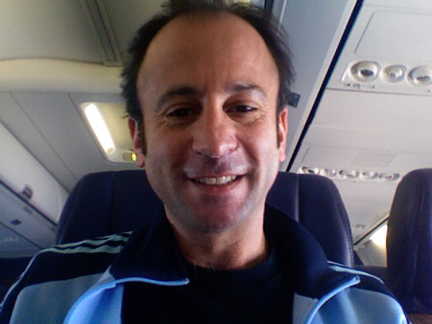
Wow, it’s amazing: wifi on a Southwest flight from San Diego (where I had a layover) from Austin, on my way to Oakland where Nous Non Plus (the faux-French band I play in) has a gig tonight at Rickshaw Stop.

I’ll take advantage of this momentous occasion to do a “mommy” blog post (as Alfonso likes to say).

Here’s what Library Journal had to say about my Brunetta translation (History of Italian Cinema): “This thoroughly detailed and seemingly experiential guide through the annals of Italian cinema conveys a lot of information but never seems less than easily gaited and conversational. Rare for a title of its scope, this is an absorbing, passionately told narrative.”

Maybe a mother will have something to be proud of this mother’s day.

My first mile-high email was to… guess who? Yup, you guessed it!

The best Mexican restaurant in the world?

Above: Fonda San Miguel’s owner Miguel Ravago told me that the restaurant’s name was inspired by a Mexican fonda or inn and the fact that he and his family used to own a house in San Miguel Allende.

California friends Robin Stark and David Schacter were in town for the weekend for a visit and so it was finally time for me to check out the legendary brunch at Fonda San Miguel in Austin. We went today, joined by Robin’s friend John Balistreri who also lives nearby.

Tracie B and I will often go there for a nice dinner on a weekday night, if we have something to celebrate or just want to do something special. We always eat at the bar and we LOVE the antojitos: the sopes topped with salpicon de pescado and cochinita pibil are our favorites. But I had still never been for brunch. The night before, Robin and David had paid a visit to a celebrity west Texas gourmet Hill Rylander who, when asked about the restaurant, responded by saying, “Fonda San Miguel is not the best Mexican restaurant in Austin… It’s the best Mexican restaurant in the world!” He might just be right.

Above: Corn pudding and chilaquiles, migas, marinated green chiles stuffed with cheese, and beans. Miguel told me that the corn pudding is used to sooth the tastebuds after you’ve eaten something too spicy. I tried it and he was right.

I’ve eaten great Mexican food throughout California and Mexico: from my family’s home in La Jolla (San Diego, CA), it takes only 30 minutes to reach the border and I have traveled extensively through Baja California and lived a summer in Mexico City when I was a teenager. In my experience, the moles (green and brown) at Fonda San Miguel are among the best I’ve ever had.

Above: The salad section of the buffet includes guacamole, ceviche, and Tracie B’s favorite, the spinach salad.

David — one of the most demanding palates and gourmets I’ve ever met — agreed, noting that the guacamole, a deceptively simple dish, was outstanding. Tracie B needed no convincing: she’s known all along! She always says that the cochinita pibil was one of the things she missed most (after her family, of course) when she lived in Ischia.

Above: Miguel told me that George W. Bush proposed to Laura at this table. The European travelers at the table were gracious enough to let me photograph it (I didn’t tell them why!).

The brunch is an all-you-can eat buffet and although not cheap, is a great value for the quality of the food (and all the chefs are very knowledgeable and talkative about the dishes; Miguel spends his time between Spain and Texas and we were lucky to find him there). I highly recommend it but be sure to make reservations because it is always packed and people understandably linger.

From left to right, counter clockwise: John Balistreri, Robin Stark, David Schacter, and Tracie B.

I hold these tagliatelle to be self-evident

Dear Tracie B: after you, Mrs. Judy P, and Mrs. Martha Jane B, there is another woman whose food I love. Yes, it’s true. And as much as I relish your fried chicken and your southern ragù (and the huevos rancheros you made me on Valentine’s), and as much as I love my mom’s Caesar salad and her meatloaf (and her Yorkshire puddin’), and as much as I love your mom’s chili dogs and breakfast loaf (and her tuna fish salad with hard-boiled eggs), and as much as I miss the Jaynes Burger back in sunny San Diego, there is another lady who holds a top spot in my heart. Her name is Signora Corrado and she lives in Bologna. And every week she makes fresh pasta for her husband and her son (one of my dearest and oldest friends, Corradino “Dindo” Corrado). Yes, it’s true: I fell in love with a Southern Belle and guagliona named Tracie B but my Yankee heart still hankers for the tagliatelle of my university days when I would hop a train from Padua and head to Bologna to play music at the legendary Casalone, and hang out with my buds Puddu and Dindo.

Here’s a step-by-step “how to make fresh pasta” by Mrs. Corrado herself. I hold these tagliatelle to be self-evident!

Make a well with flour and break the eggs into the well. (A lot of folks might add salt here, but Signora Corrado says to season the pasta only with the generous salt added to the cooking water; see Tracie B’s post on seasoning the cooking water.)

Mix the eggs into the flour using two forks.

Work the dough well with your hands (this is the most labor intensive part but it’s the most important). Most people say that you know its ready when its surface feels like a baby’s bottom.

Cover and let the pasta rest in a cool, dry place for at least 30 minutes.

Work the dough again with your hands, adding a little more flour.

Roll the dough out to the desired thickness.

Note above the length of her rolling pin. The length is important to achieve even consistency.

Fold the pasta over itself, making a “book” about 3 inches in widgth

Slice the tagliatelle with the desired width. The name taglatelle comes from the Italian tagliare, to cut.

Gently separate the tagliatelle.

Gather them into little bunches and let them dry all morning or afternoon on a floured pasta board.

Serve with your favorite sauce. Those are garganelli to the left, but you’ll have to check out my guest post at My Life Italian for those.

Thanks, Dindo, for sending these photos!