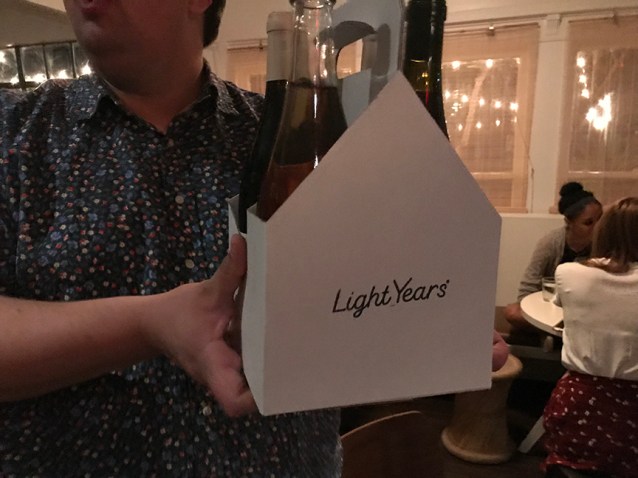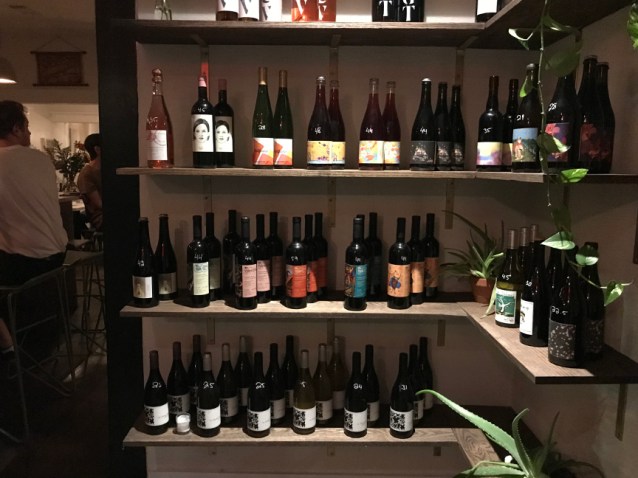
The ultra-rare 1990 Giacosa red label sans vineyard designation was opened last night…

Manhattan was abuzz with ministerial week at the UN when my taxi brought me to the city yesterday.
But the back room at Morrell Wine Bar in Rockefeller Center was peaceful as a group of Nebbiolo collectors sat down for an extraordinary flight of wines stretching back to the 1960s.

Moved by their generosity, they had asked a lonesome Texas wine blogger to join them.

It’s hard to say that any one wine was better than the other last night. Aside from one bottle that had clearly peaked some years ago, all the wines were extraordinary and each would have been a joy to drink in its own right.

They were served blind and every guest offered impressions and speculations as the group tasted.

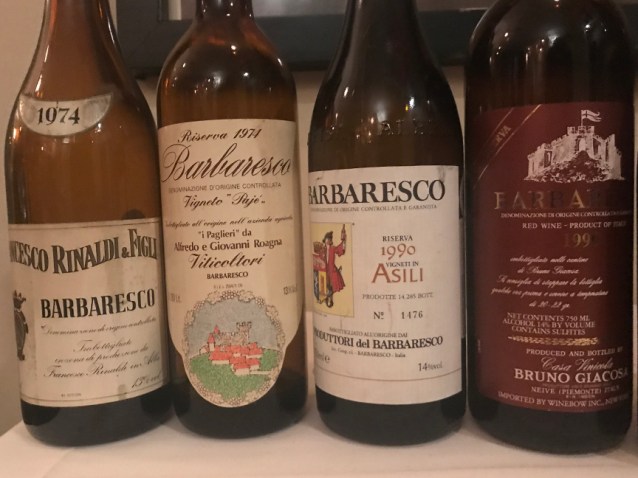
Most agreed that the standouts in the three indisputably illustrious flights were the Produttori del Barbaresco 1990 Barbaresco Asili and the Bruno Giacosa 1990 Barbaresco Riserva (Red Label). According to at least a couple of the tasters, the 1990 vintage was the only Giacosa Barbaresco riserva that he ever released without vineyard designation.
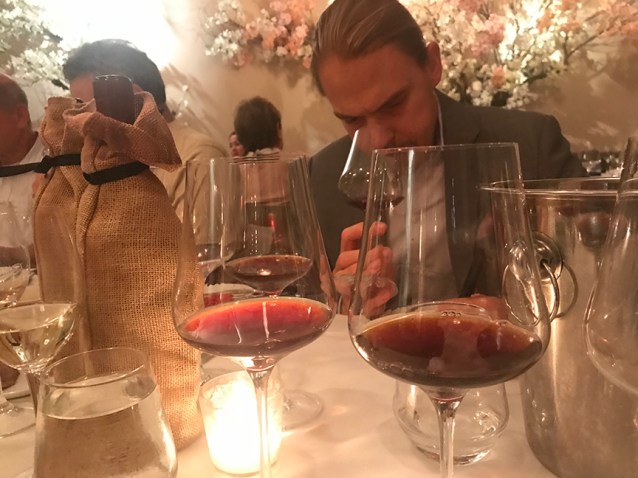
Both were vibrant, fresh on the nose, and rich with fruit. The Produttori del Barbaresco was in a state of grace, perfectly ready to drink. The Giacosa would have had many years ahead of it had it not been opened.

It was also a treat to see the old Roagna label from an era before the estate developed its distinctive black and white lettering.

The Gaja 2001 Sorì San Lorenzo was also remarkable, still very young in its evolution but a pleasure to drink as it was beginning to reveal its fruit.

Heartfelt thanks to my dear friends Ken Vastola who “sponsored” my participation and Eric Guido (above) who organized the excellent dinner and superb wine service.
Ken is the author of the immensely useful Nebbiolo-focused online portal Fine Wine Geek. He is particularly dear to me because he knew my Uncle Manny Parzen. And he is the sweetest man, a genuine mensch.

Eric runs Morrell’s online program and holiday catalog and he is also an executive buyer for the operation. He is one of the most remarkably productive and talented people I know in the biz.

I only had a moment to look at the wine bar list, now run by Anna-Christina Cabrales. In another era, wine insiders wouldn’t expect much from a midtown list like this. But Anna has transformed it into a fantastic program that offers something for everyone, from the New Yorker executive and tourist to the wine überhipster (Lieu Dit Santa Ynez Sauvignon Blanc by the glass, anyone?).

Wow, what a night! Thanks to all the folks who made me part of it. A wonderful time and a great way for a lapsed New Yorker and lonesome Texan to come home.

Now it’s time to get my butt on a plane to Pittsburgh and play some blues…

Flight 1
1974 Francesco Rinaldi & Figli Barbaresco
1974 Roagna Pajè Riserva
1990 Produttori Asili
1990 Bruno Giacosa Barbaresco Riserva

Flight 2
1961 Vietti Barolo
1986 Bruno Giacosa Barolo Villero
1990 Bruno Giacosa Barolo Villero
1996 Bruno Giacosa Barolo Villero

Flight 3
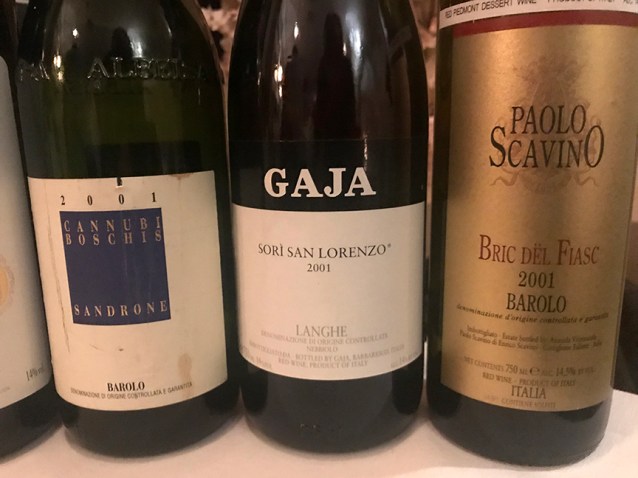
2001 Sandrone Cannubi Boschis
2001 Gaja Sorì San Lorenzo
2001 Paolo Scavino Bric del Fiasc

A new (old) Pelaverga clone finds its way to the U.S.

It was way back in 2006 that then New York Times dining editor Frank Bruni brought a bottle of Pelaverga to Eric Asimov’s Thanksgiving tasting panel.

“Among the reds,” wrote Eric at the time, “Frank, naturally, brought the most arcane wine of the meal, a 2004 Verduno Basadone from Castello di Verduno, made from the Pelaverga Piccolo grape, which is obscure even in its home territory in the Piedmont region of Italy.”

In the wake of that piece, Pelaverga seemed to explode in the Italian wine scene in the U.S.

American wine cognoscenti have a quenchless thirst for “arcane,” highly localized Italian grape varieties. And Pelaverga, with its distinctive white pepper note and purported aphrodisiacal properties, really hit the spot (and paired exceedingly well with Thanksgiving turkey!).

Today, Pelaverga from legacy estates like Castello di Verduno and Burlotto are sine qua non for any self-respecting Italian wine lover.

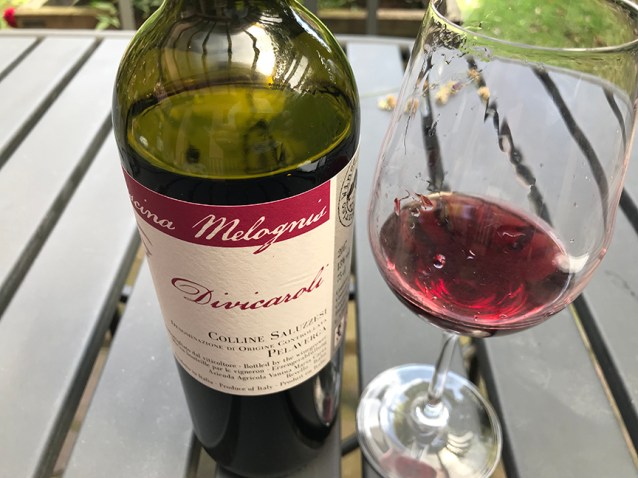
In the light of this, there’s no doubt in my mind that American wine professionals are going to be eager to taste a new-old Pelaverga clone that just found its way to our shores. The wine comes from a farm called Cascina Melognis in Saluzzo township in far-western Piedmont at the source of the Po River.

Full disclosure: the wife and husband, Vanina and Michele, who grow and vinify these wines are our good friends. And Michele is also technically my boss: he is the director of the master’s programs in food and wine communication at the Slow Food University of Gastronomic Sciences in Bra (Piedmont) where I have been teaching for the last three years and where I’ll be returning again for the 2018-19 session.

When Michele told me that Kevin Pike of Schatzi Wines had decided to import their organically farmed and spontaneously fermented wines, I couldn’t have been more thrilled for their family. Arguably one of the most scholarly among wine purveyors in the U.S., Kevin is one of the brightest rising stars in our industry imho.

The Schatzi producer page devoted to Cascina Melognis is some of the finest wine writing on the internets today. And I’ll leave it to Kevin to tell the story of the clones, soils, and unique climatic conditions of Revello hamlet where Vanina and Michele farm.

“Pelaverga Grosso (distinct from the Pelaverga Piccolo variety of Verduno),” writes Kevin, “is characteristic of the area around Saluzzo. Here it was long a staple in blends, but its importance shrank over time, until it nearly vanished in the 1970s. Today, careful site selection and pruning are bringing about a small and welcome renaissance for the grape. Its peppery, high-toned freshness, and delicate floral and herbaceous notes are quintessentially Alpine. It is still rare to find monovarietal Pelaverga from anywhere in the Piedmont, let alone the Colline Saluzzesi.”

I know this wine is going to be a big hit among Italian wine lovers. It has everything going for it.

But my favorite wine in their lineup is the Ardy, a lip-smacking blend of Barbera and Chatus grapes.

Chatus, you ask? Click the link to read Kevin’s excellent write-up.

Vanina and Michele’s wines are vibrant, electric, wholesome, and delicious. They are the children of their deep knowledge of grape growing, winemaking, and aesthetics.

Mazel tov, Vanina and Michele, for your new relationship with Schatzi! And chapeau bas, Kevin, for bringing these extraordinary wine to our country and our dinner tables!

“THAT FLAG HAS, in fact, now become synonymous with hate, bigotry, ‘white supremacy’ and pro-slavery.”

Please join our protest of the newly constructed confederate memorial in Orange, Texas tomorrow morning.

Two weeks ago, I posted about our ongoing protest of the newly constructed confederate memorial in Orange, Texas where Tracie grew up. I also wrote about the Sons of Confederates Veterans member behind the memorial. I believe that he is also behind the anonymous letter he sent to Tracie’s 97-year-old grandmother in order to terrorize her and harm our family.

A week after I shared my posts on Facebook, the following comment was posted on the Facebook page that I’ve devoted to our efforts to stop construction of the site. I don’t personally know the woman who wrote them. I do know is that she is white and, gauging from the news stories she shares on her personal Facebook, she is very conservative. When I thanked her for sharing her insights and for her support, she responded with the second set of comments below. They speak for themselves.
Continue reading

In Italy, debate over copper fungicide grows increasingly ugly

As European Union organic grape growers anxiously await a Brussels decision on new and more stringent restrictions on copper fungicide use, the highly controversial issue continues to be a focus of media, industry observers, and winemakers in Italy. In many instances, organic and conventional producers — together with their supporters and detractors — are pitted against one another in an increasingly bitter fight. And the exchanges are growing ugly.

My colleague and fellow Slow Wine editor Fabrizio Giavedoni summed it up best in a post published earlier this week on the Slow Wine and Slow Food blogs (translation mine):

    The debate over copper fungicide in grape growing resurfaces frequently these days — in conversation, in print, and online. And the discussion focuses on organic wine.
    For the most part, there are two principal positions.
    On the one hand, many organic grape growers are racking their brains as they try to limit or find alternatives to the use of this metal in their vineyards. They are clearly worried about the accumulation of copper in their soils. There’s no doubt that it’s not a healthy or acceptable situation. And we wholeheartedly share their concern over this serious issue.
    On the other hand, conventional grape growers have also been raising their voices, often with the support of writers (including some leading journalists) and bloggers who have little knowledge of viticulture. They point their fingers at organic growers and accuse them of poisoning their vineyards. In many cases, these winemakers and/or journalists have no idea — because they are ill-informed or even ill-intentioned — that commercial products normally used in conventional farming contain substantial levels of copper. Obviously, they aren’t concerned about this because it’s challenging to calculate the exact amount. But more importantly, they aren’t worried about copper levels because there are no legal limits on the use of this metal [for conventional farmers].

(For background on the question of copper fungicide and its risks in organic grape growing, see this post.)

Fabio’s position seems to be at odds with a statement issued by agronomist Francesco Sottile, a member of Slow Food’s technical advisory committee and a professor at the Slow Food University in Bra, Piedmont (UniSG).

“We are in favor,” wrote Sottile in a post published in late August, “of the reduction in the quantity of copper allowable per hectare that the EU is currently discussing. We hope it will lead to broader efforts in research on alternative and supplemental products.”

In this week’s post, Fabio previews the findings of a Slow Wine report on copper levels found in organically farmed vineyards. According the still unpublished study of farms where grape growers are converting or have completed a conversion to organic growing practices, copper levels have actually decreased, he claims. Despite increased spraying of copper sulfate, he writes, the amount of copper present is lower thanks to the fact that synthetic products have been eliminated.

Like many of my colleagues, I’m eager to read the study’s conclusions. In the meantime, I know the sparks will continue to fly.

As one Italian organic grower put it in a cryptic but powerful Facebook post, the question is “a sad truth.”

A California Chardonnay that widened my horizons, a Cerasuolo d’Abruzzo that knocked my socks off, and a not-to-miss tasting in Houston

More than once, a mea culpa has been published on this blog: I was wrong about California wine.

My experience writing and editing for the Slow Wine Guide to the Wine of California has really reshaped my perceptions of the wines from my home state.

Like many people in my generation coming up in wine, I toed the party lines: California Chardonnay is overly oaky and lacks acidity; California Cabernet Sauvignon and Merlot are overly oaky, excessively extracted and fruit-forward, etc.

But over the course of my tastings and winery visits for Slow Food publishing, it became abundantly clear to me how abundantly wrong my thinking was.

One of the wines that really turned me around was the 2015 Santa Cruz Mountains Chardonnay Trout Gulch Vineyards by Ceritas, one of the wineries included in the 2018 and forthcoming 2019 editions.

Our family budget doesn’t allow us to drink it liberally. But a generous friend recently gave us a bottle that Tracie and I shared on Monday night for Rosh Hashanah dinner.

Man, what a wine! A nearly Platonic expression of laser-focused stone and tropical fruit dancing atop a seascape of saliva-inducing minerality and electric acidity.

There are a handful of wines from the ancient seabed soils of Skyline Ridge in the Santa Cruz Mountains that have truly thrilled me. And this one is a stand-out among them. (I just wish we could afford it! Thanks again to our generous friend who shared it with us!)

Now that all of our editors tastings and winery visits have been completed. I’m working diligently on putting the guide together. It will include Oregon this year as well. Stay tuned…

In other news…

SO MUCH great wine was poured this week in Houston at the Abruzzo wine growers association tasting.

One of my stand-outs was this pergola-trained Cerasuolo d’Abruzzo Baldovino by Valentina Di Camillo at I Fauri. Like Valentina, this wine is authentic as they come, with the brilliant fruit but also the classic notes of earth that I consider a sine qua non of great Abruzzo wines.

I loved it and I also love that her father is an enlightened Marxist like me (we also tasted her family’s “Red October” Montepulciano d’Abruzzo).

Tracie and I probably drink more wine from Abruzzo than any other Italian region (no joke). The price-quality ratio in Abruzzo wines is hard to beat. And the pristine, undeveloped countryside there, combined with its mountain-meets-sea topography, makes it easier to grow grapes using wholesome farming practices.

Hopefully, her wines will make it back to our market soon!

In other other news…

When was the last time that Maurizio Zanella (above), Chiara Lungarotti, Alois Lageder, Piero Mastroberardino, Alberto Chiarlo, Giovanni Gaja, and Francesco Marone Cinzano were in Houston? When was the last time they were all here at the same time, at the same tasting pouring their wines?
They and a bunch of other marquee producers will be here on Monday, October 15 for the Grandi Marchi (Top Estates) trade tasting.

I’ll be presenting them and leading a guided tasting of their wines. (I’m actually kinda nervous about it!)

Click here for more info and registration. I hope to see you there! It’s going to be an amazing tasting.

Scenes from a week of Slow Wine California…

Images from a week of tastings and winery visits for the Slow Wine guide to the wines of California 2019. Thanks to everyone for taking time out to meet with me!

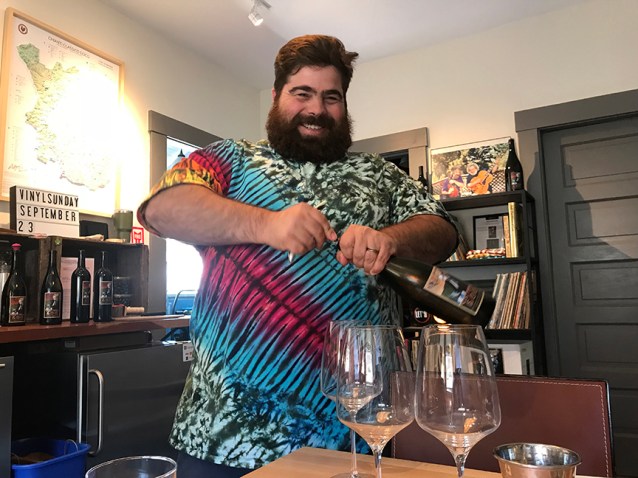
Sam Coturri of Sixteen600. Love that guy and love the wines. Favorite “new old school” Zinfandel. His family has grown organically since the 1970s. Great wines, all around.

Meeting and tasting with Hank Beckmeyer at his house in Fair Play was a genuine dream come true. I love everything he releases at La Clarine Farm.
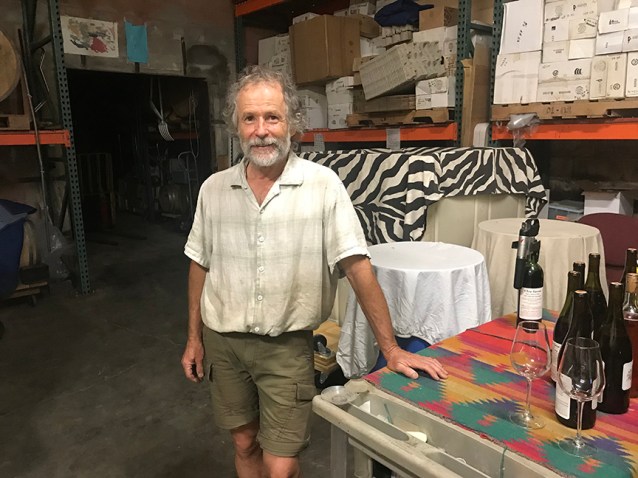
“Winemaking is all about timing,” said Gideon Beinstock of Clos Saron. Tasting and chatting with him was one of the most inspiring winery visits of my whole career. “It’s actually very simple,” he told me. “The grapes tell you when to pick them. The wine tells you when it’s done fermenting. The wine tells you when to bottle it.” His wines are simply astounding.
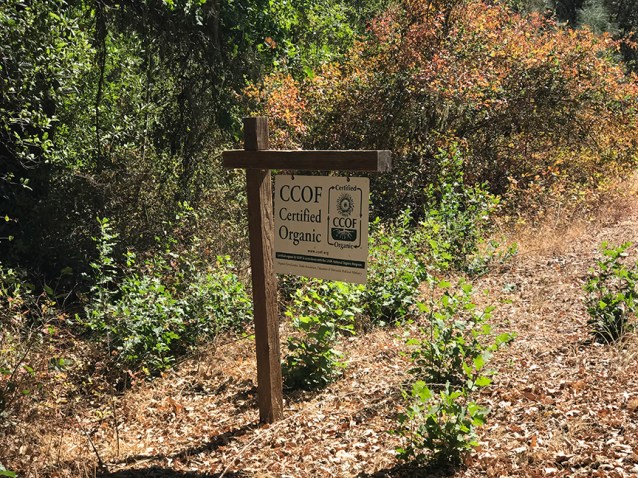
The vineyards at Volker Eisele, producer of my favorite Napa Valley Cabernet Sauvignon, have been organically farmed since the 1970s. It’s one of the most beautiful growing sites I’ve visited in California and I love Alex and Catherine, the owners and winemakers. Such cool people, such gorgeous wines.
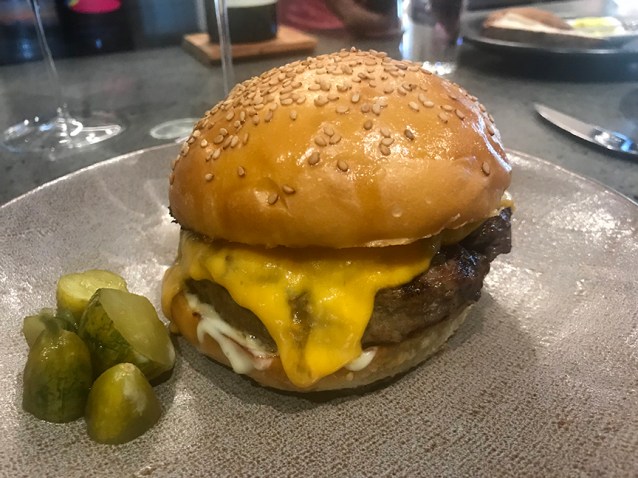
The delicious burger at Compline, the super cool newish wine bar in downtown Napa.

The “hard press” Pinot Gris from Donkey & Goat, tasted yesterday at their wine club release party in Berkeley where they make their wines. Jared Brandt’s wines have always been great and we’ve always enjoyed drinking and sharing them. But man, he is on fire right now. His new Linda Vista Vineyard Chardonnay was one of my favorite wines from this trip.

It’s hard to describe how cool Ordinaire natural wine bar in Oakland is. By the end of my night, I had made all kinds of new friends and tasted a ton of compelling wines. Isabelle Legeron just happened to stop by! I was completely starstruck. She is super cool. I loved this place. I hugged all of the sommeliers before I left. It was such an awesome experience.

Just had to drink Gideon’s 2011 Texas Hill Vineyard Pinot Noir. What a wine and what a great coda to my trip.

No trip to California is complete without a Double-Double. I am a native Californian, after all!

Thank you, California, for an unforgettable experience. And thanks yall for tagging along. I’m on a plane back to Texas where I belong. Can’t wait to get back to Tra and the girls. L’shanah tovah, yall!

A white supremacist sent Tracie’s 97-year-old grandmother this letter. Warning (serious): graphic sexual content.

Above: Granvel Block recently began working again on construction of the new confederate memorial he is building in Orange, Texas where my wife grew up and where her extended family still lives. We have been actively protesting the monument since late last year.

Earlier this year, Tracie’s 97-year-old grandmother (“memaw”) received the below letter.

We believe it was sent to her by Granvel Block, the Sons of Confederate Veterans member behind the new confederate memorial in Orange, Texas where Tracie, her parents, and her grandparents grew up.

The memorial stands within view of motorists on westbound Interstate 10 (see this flyer circulated by Block). The property and memorial lie on Martin Luther King, Jr. Blvd., a main thoroughfare and one the city’s main arteries.

Nearly half the residents of Orange are black.

The city, religious leaders, and business leaders have all asked Block to reconsider. The city has even offered to buy the property. Because the memorial stands on private property owned by the Sons of Confederate Veterans, the city’s hands are tied (although it has taken significant steps in limiting the site’s visibility).

Tracie and I are among the organizers of the Repurpose protest movement: we are asking Block and the Sons to convert the site into a memorial that reflect community values. He refuses to engage in dialog.

He has threatened me with violence, telling me: “I’m a Texas boy and I’m going to kick your ass.”

He regularly uses the “n” word.
Continue reading

Gideon Beinstock of Clos Saron, a mensch among growers and winemakers (Slow Wine Guide 2019)

Posting on the fly this morning as I head out to Napa and Sonoma to taste tomorrow and Friday for the Slow Wine guide 2019.

But I just had to share the above photo, snapped yesterday.

That’s grape grower and winemaker Gideon Beinstock of Clos Saron in the North Yuba AVA, a sub-AVA of the Sierra Foothills AVA.

In the image, he’s walking me through his “Home Vineyard,” a parcel planted to Pinot Noir and the source for some of his best wines.

Many have written about his astoundingly good, utterly compelling wines. I was left nearly speechless by our tasting (this year, for example, he’s releasing a 1995 Cabernet Sauvignon that he farmed and vinified there; the 2013 Pinot Noir Home Vineyard Lower Block was also a standout among many truly superb wines).

Others have written about how he arrived in North Yuba and his years there since.

It was a thrill for me to get to taste and interact with this sweet, thoughtful, and inspiring man. But the thing that really touched my heartstrings was talking with some of the young people he’s mentored. They speak of him in such glowing tones and with such affectionate reverence. And the reason is simple: he so generously shares his knowledge and experience with them.

Where I grew up, they call that a mitzvah.

Gideon, thank you for your time yesterday. Tasting your wines with you was a truly moving experience. You are a mensch among grape growers and winemakers.

Wish me luck and wish me speed! A lot of ground to cover between now and Saturday! Thanks for being here.

Slow Wine California 2019 dispatch: an unforgettable day in the Sierra Foothills AVA

For oenophile couples like us, there are certain wines that feel like family members.

La Clarine Farm first came into our lives back in 2009 in New York when Tracie was traveling with me and the French band. An open bottle of Hank Beckmeyer’s Syrah had been sitting in a good friend’s lower Manhattan apartment for nearly two weeks. When we all tasted it together, it blew our minds and our palates with its freshness and its vibrant, electric fruit.

Ever since that day, La Clarine Farm has been one of our favorites (and we played a packed show at the Mercury Lounge that night, the one time Tracie saw us play in the city).

It was a thrill for me to finally meet and taste yesterday with Hank (in the top photo) at his winery in California’s Fair Play AVA, a stone’s throw from the El Dorado Trail.

His wines and winery will be one of those profiled in the 2019 edition of the Slow Wine Guide to the Wines of California (I’m the guide’s coordinating editor for North America).

Great wines and the lovely guy you’d imagine is behind them.

My itinerary yesterday also took me up to the North Yuba AVA where growers pointed me to one of the most remarkable vineyards I’ve ever seen: 300 acres planted to now abandoned vine in the heart of weed country.

Cannabis is the main industry here, I’ve been told. Dinner at a smokehouse bar in Auburn last night led to a conversation with a dude who told me he works “up the hill,” a euphemism, he said, used by employees of the massive cannabis crop here.

But the strange, otherworldly vines I toured seem to have an endless supply of delicious fruit for a handful of thoughtful winemakers. They, a bear, and a cadre of deer are the only ones left in this forgotten wine country.

The story of this now derelict but still bountiful estate has yet to be properly told.

Those are Pinot Noir grapes in the photo above, btw, ready to be foot-crushed.

Writing in a hurry this early morning as another day of touring and tastings unfolds.

But I also have to give a shout-out to Grass Valley, one of the many tourist spots here in Gold Country.

The village was bustling with locals and tourists and nearly every store front was occupied by a shop, café, or restaurant. At least two vinyl records were also spotted.

Yesterday was the first day of my trip. Following another day here in the Sierra Foothils, I’ll be heading to Napa and Sonoma for more tastings and discovery.

Thanks for following along… more good stuff to come.

Beppe Rinaldi, iconic Barolo grower and natural wine advocate, has died.

Beppe Rinaldi, iconic Barolo grower and outspoken natural wine advocate, has died.

According to mainstream media reports, he was 69 years old and was battling an unspecified illness. He would have been 70 in just a few days.

Known to his myriad admirers as “il citrico” (literally, the “citric [one],” a nickname attributed to his unmistakable white locks as well as his acerbic wit), he was widely revered as one of the world’s greatest winemakers and an unrivaled interpreter of Nebbiolo’s greatness.

An iconoclast proudcer who often spoke out stridently against the unstoppable commercialization of his appellation, he was also a founding member of the Vini Veri consortium of natural wine producers.

“An artisanal winemaker,” he said in an interview published by Vini Veri in 2010, “shouldn’t just watch over his little garden. He needs to have a collective vision of his appellation because the appellation belongs to everyone. Wine and land are cultural resources that we need to treat with care. First and foremost, we must prevent violence against the hills and the vines. Wine needs to be a manifestation and an expression of the appellation, a voice in the world that carries an overarching cultural message from the place that produced it… A wine needs to reflect the distinctive, unique characteristics of the appellation. This is why we need to take care of our appellation and never overwhelm it.”

In recent years, he had railed against the unbridled growth of the tourist industry in the Langhe Hills of Piedmont where Barolo is grown and vinified. It was the latest cause embraced in a lifetime spent advocating for organic farming practices, traditional winemaking, and more measured development of the Barolo appellation.

His single-vineyard bottlings of Barolo are among the most collected wines in the world today, benchmarks not just for the appellation and Italy but for fine wine across the globe.

He is survived by his wife Annalista and daughters, Marta and Carlotta.