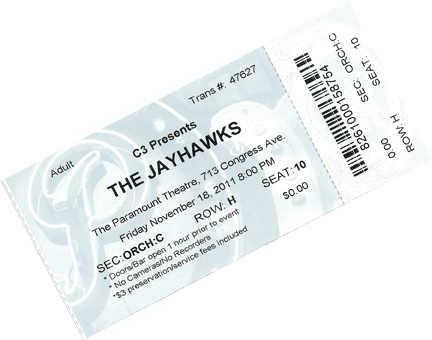
My super good friend Michael Nieves was in town last night for the epic Jayhawks show and he generously let me be a plus one (he’s Mark Olson’s manager, not to mention my band Nous Non Plus’s licensing agent).
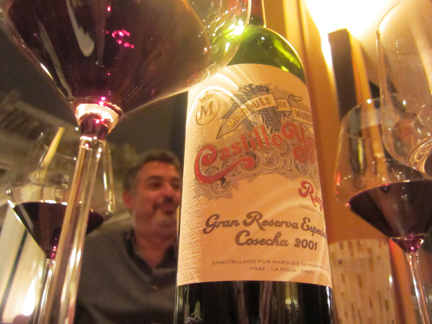
Before we hit the Paramount theater for the show, we shared an awesome bottle of Marqués de Murrieta 2001 Rioja Castillo Ygay Gran Reserva Especial at Trio, still very young in its evolution but generous with its ripe red fruit and beautiful acidity “supporting” all the elements in the wine, as they Italians say… Great stuff…
Over dinner, Michael and I fondly remembered the night before I left Los Angeles to come visit Tracie P (then still B!)…
And amazing show… one of those shows that reminds you how powerful great songwriting can be, especially when paired with one of the greatest duet singers on the Alt Country scene (up there with Gram and Emmylou imho).
Thank you, Michael! You are one of my oldest and most cherished friends…
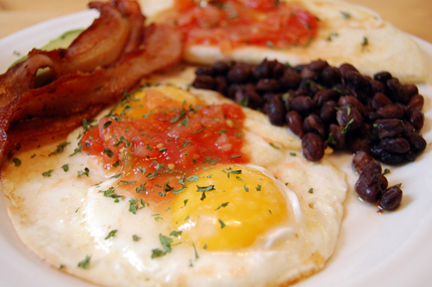
I had fun this morning with my Houston Press post, writing about my favorite breakfast — my take on California-style huevos rancheros — and wine for breakfast (in this case, Moscato d’Asti). Here’s the link…
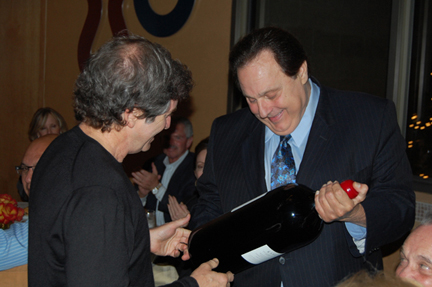
And, hey, it’s a tough job but someone’s got to do it… Here are a few recent posts I did for my friend Tony (above with screenwriter and winemaker Robert Kamen): an interview with Maximilian Riedel (where he discusses the art of decanting Champagne) and notes from the Kamen dinner at Tony’s this weekend.
Who’d have ever thought that you could make a living as a wine blogger?
Yesterday I called one of my favorite Campania producers, Paola Mustilli, and asked her if she’d contribute a few videos. Thanks, again, Paola, for the videos! They’re awesome!
Her Coda di Volpe entry is just the first in a series of Campania grape names she sent me and I decided to post it as the first because I’m still thinking about Coda di Volpe after reading Fringe Wine’s excellent post on the variety.
There’ll be others to come before the Christmas holiday. So please stay tuned and thanks again for speaking Italian grapes!
Yes, folks, it’s that predictable time of year when everyone posts their Thanksgiving wine recommendations. Among the literally hundreds of blogs and feeds that I follow, one of my favorites this year was Eric Asimov’s [Eric the Red’s]“What Can I Drink at Thanksgiving Besides Wine?” There are a gazillion interesting posts out there: Just search for Thanksgiving wine (not in quotes) in Google Blog Search and you’ll find a trésor of inspired suggestions.
One of the common themes is the challenge that the Thanksgiving meal poses for the would-be sommelier: With so many dishes, with such a wide variety of ingredients, aromas, and flavors, and with so many cooks in the kitchen, what one wine can you recommend?
But there’s another relevant (and in my view, equally important) question we should ask: With such a heterogenous group of people gathered for the all-American holiday, what wine will pair well with both the food and the guests?
My brothers (one in his fifties, the other in his forties) are both high-powered attorneys, and they like highly alcoholic Zinfandel and oaky, tannic Napa Valley Cabernet Sauvignon. My mother [Mamma Judy], who remains forever young in my heart, likes wines that are lighter in body, with gentler alcohol and tannin. The extreme concentration (or extraction, as we call it in wine parlance) of a classic “Zin” or “Napa Cab” would not only overwhelm mom’s palate, it would also overpower her digestion, especially on a day when we all tend to overindulge.
The following 10 wines are available in the Houston market. They are not samples sent to me by a publicist or distributor. They are wines that my wife Tracie P and I drink and serve in our home. They are wines that we can afford, and they are wines that we share with people we love. Happy Thanksgiving, y’all!
Tracie P and I won’t be heading to Orange, Texas for Thanksgiving this year because we’re about 5 weeks away from our due date! We’ll miss Thanksgiving with Mrs. and Rev. B but I made sure that they have some good wines for their holiday meal. Back here in Austin, this is what we’ll be drinking…
Earlier this year, when my friend, publisher, and wine industry insider Maurizio Gily suggested that we visit the village of Carema before heading to the European Wine Bloggers Conference, it was hard to contain my excitement. As a devout lover of Nebbiolo, I have sought out and drunk Carema whenever and wherever I could: known for its intensely tannic nature, the bottlings of 100% Nebbiolo grown in the hillsides of this pre-alpine village, with its morainic mountains that pop up in the landscape with a beautiful violence as you drive north from the freeway (moraine: “A mound, ridge, or other feature consisting of debris that has been carried and deposited by a glacier or ice sheet, usually at its sides or extremity; the till or similar material forming such a deposit.”—Oxford English Dictionary)
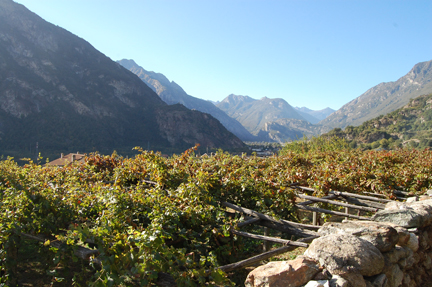
Before we headed to the Cantina dei Produttori Nebbiolo di Carema vinification facility and tasting room in the middle of the village, Maurizio, his colleague Monica, and Italian wine marketer Wineup and I hiked the trail that leads from the town up through the pergola-trained vineyards — yes, pergola-trained! (Check out Wineup’s excellent photos here.)
Pergola training has thrived here for a number of reasons, explained Maurizio. Because of the appellation’s unique geographic and topographic elements (i.e., elevation combined with violently steep slopes, extreme temperature variation, and healthy ventilation thanks to the morainic valley), the pergolas help to keep the fruit cool (thanks to shading) under the warm sun of summer and to keep the grapes warm in the case of early frost.
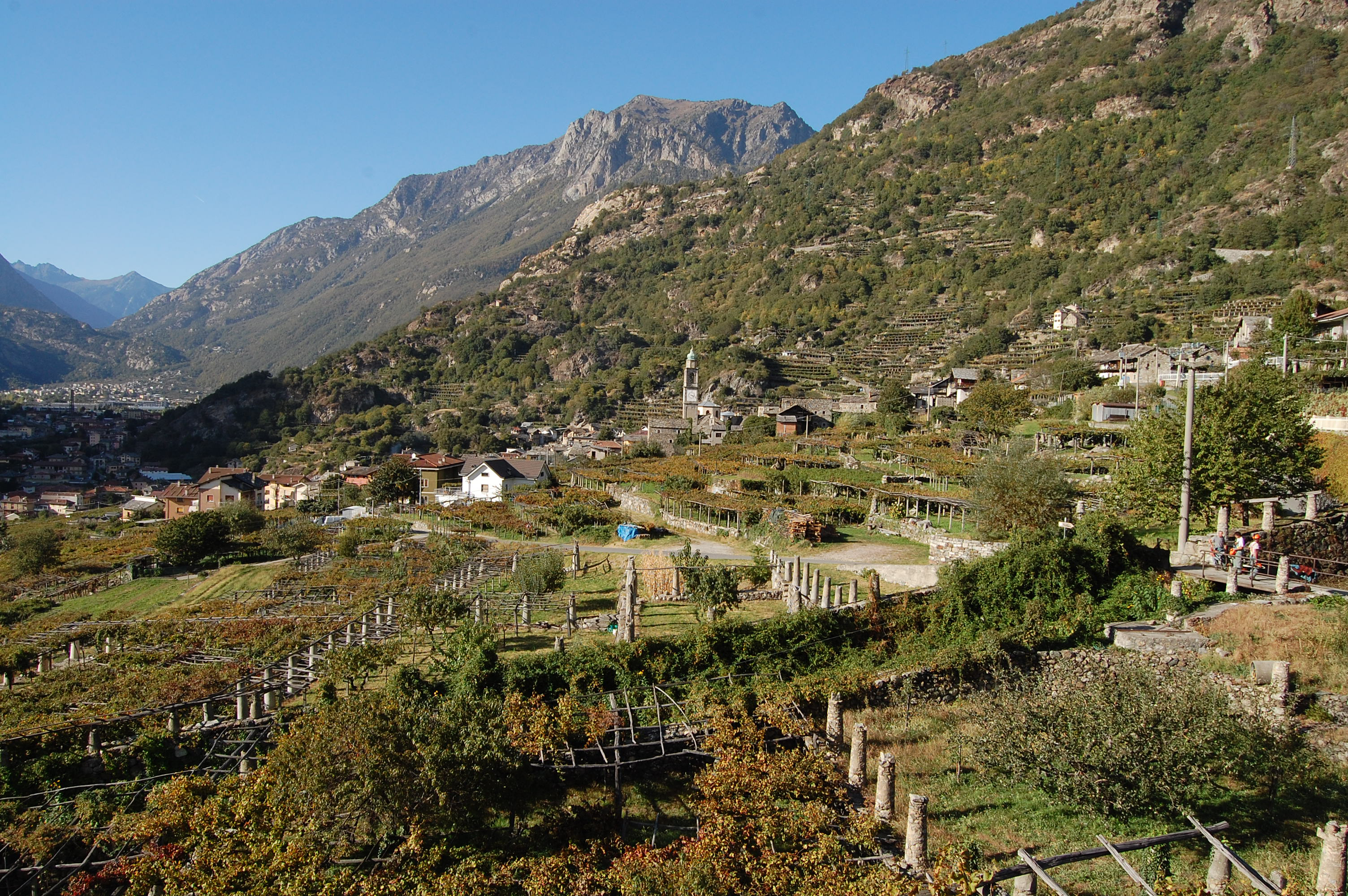
You really have to see the village and its vineyards to understand how it works…
You can click on the image above for a larger version: as you can see, the terraced, pergola-trained vineyards (planted exclusively to Nebbiolo) are situated on the eastern side of the valley, where the sun beats down in the late afternoon. This combination of the nutrient poor morainic soil, excellent exposure, good ventilation, and the local grape growing tradition is what delivers these incredible, age-worthy wines. (That’s the village of Donnas, Val d’Aosta, in the distance, btw.)
The other reason that pergola training has endured here is the fact that the terrain itself restricts the use of machinery: the vineyards are literally sculpted into the side of the mountains and the only way to work them is by hand. The pergola also allows the growers to employ integrated farming and it wasn’t uncommon to see other crops planted beneath the canopy. Italy’s top wine blogger Franco Ziliani calls the viticulture of Carema “heroic.” This is land where, until the advent of modernity (in the 1960s), life survival was extremely difficult and the terrain challenging. Every grower needs to exploit his vineyards, explained Maurizio, to the greatest extent possible.
Once we made it back to the village and the winery, I wasn’t surprised to find large-format, Slavonian oak casks (like this 1,550 liter beauty). Although the winery does age some wine in barriques (say it ain’t so!), the greater part of ever vintage is destined for large-cask and stainless steel aging.
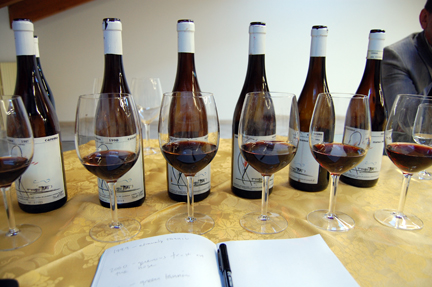
Growers association president Viviano Gassino had double-decanted an amazing flight of wines for us to taste: 87, 90, 95, 99, 00, 03, 06, and 07.
The 1987 was beautiful: A bit of disassociation, slightly browning (I wrote in my notes), but very alive and tannic; rich fruit but still very tight.
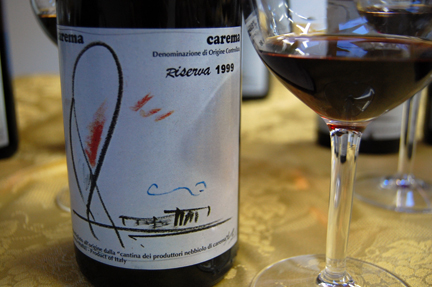
The 1999 stunning: Gorgeous acidity, really bright, with an amazing balance of body and tannin united around rich berry fruit. Maurizio and I both noted more focus in the winemaking style from 1999 onward.
The 2006 was another highlight for me and reminded me of the 1999 in a younger expression. This is what we’ll drink for Thanksgiving this year, at Aunt Holly and Uncle Terry’s house here in Austin.
Simply put, Carema is one of the most amazing appellations I’ve ever visited: for its violent beauty, for its unique confluence of geographic and topographic elements, for its perfectly viable anachronism, and for the outstanding wines it produces.
But the most incredible thing is that you can find the 2006 Carema by Produttori Nebbiolo di Carema in the U.S. for under $30 (2007 is the current release but there is still some 2006 in the market).
I love love LOVE these wines and they are my Thanksgiving pick for 2011 (even though they’re not available in Texas, I’ve managed to evade the authorities and sneak a few bottles in).
Thanks for reading! To get a better sense of the topography of Carema, here’s the slide show that I hurriedly created the week of my visit just over a month ago…
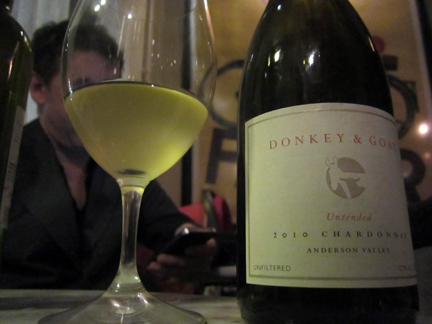
When my buddies Yelenosky, Erickson, and I tasted this wine together last week at Jaynes Gastropub, the three of us were simply floored by how friggin’ delicious it is.
As you can see from the image, the wine — the product of spontaneous fermentation — is unfiltered. Beautiful, bright acidity, 12.7% alcohol (YES!), brilliant citrus notes, and a freshness and drinkability (as the Italians say) that made this wine disappear with extreme celerity.
But the thing I loved the most about this wine was how pure it is — ideologically and sensorially.
In a world where “California Chard” is a brand created through aggressive manipulation of the grape variety, this wine’s purity spoke to the true nature of Chardonnay as a relatively neutral medium for expressing the place where it is grown and the winemaker’s interpretation. In this case, the winemaker’s transparency — literal and figurative — allows the wine to express everything that has gone into it: just place and grapes. I can’t recommend it highly enough (especially for wine lovers and trade who are trying to wrap their mind around what Chardonnay really is).
Thank you Donkey & Goat for this wine and thank you Amy Atwood for turning me on to it. Love it…
The folks at Jaynes had flown me in for one night last week (my last plane ride of the year! yeah!) to lead a guided tasting of Italian wines for a corporate client. (I’ll post about an interesting experiment I conducted during the nearly 4-hour long tasting next week.)
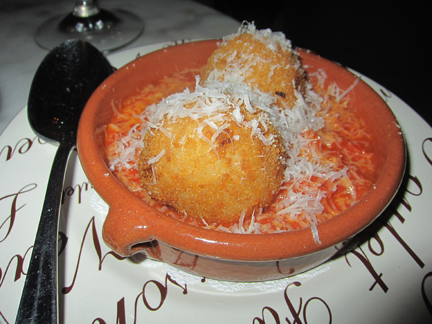
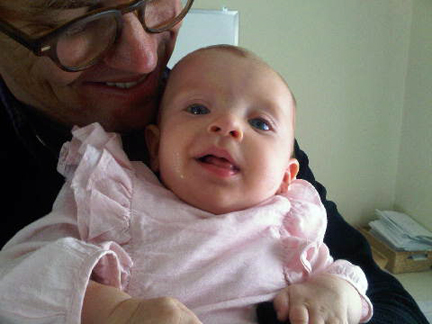
Jayne shared her excellent mozzarella-stuffed arancini with me. And their newborn daughter Romy shared her contagious smile…
Tracie P and I are in the final weeks of our pregnancy and I’m very happily grounded, with no more travel scheduled until 2012.
We’re so lucky to have so many friends and relatives who have recently had kids: the hand-me-downs are great and more than anything else, it’s wonderfully reassuring to share the experience with our friends as we deal with the discomforts and the anxiety that the last weeks of pregnancy can bring.
I’m so proud of my beautiful Mamma P: she’s such a great mother to Baby P and she’s so courageous (in our birthing classes, they give us a taste of what’s in store).
It’s so true what people say: having a child will change your perspectives in ways that you cannot imagine until it happens to you. We’re living that every day.
And just when I thought I couldn’t love Tracie (Mamma) P anymore, I find that my love continues to grow as she bravely and so graciously carries our little girl.
I wish yall could see her… she’s just so beautiful…
Writing for the Houston Press has been super fun for me: it has given me the opportunity to write about a wider range of wine topics for a broader audience.
In the second panel, organizer and curator Ryan Opaz asked me and the other participants to talk about “stories that haven’t been told” in wine blogging.
The different panelists had widely divergent approaches to the subject but wine writer and blogger Elisabetta Tosi made a point that resonated with me.
In Italy, she said, wine marketers continue to tell wine stories in terms of family and tradition, focusing on the generational continuity and historical significance of the wines and the wineries. Most, she observed, neglect to talk about the quality of the wine itself, concentrating solely on the cultural value of the wine.
Her point aligned with mine: I believe that, although there are some notable exceptions, English-language wine writers favor technical descriptions of the wines they cover, from how they are produced to how they taste; in Europe, where wine writing is not as rigidly codified as it is on this side of the pond, I find that wine (and culture desk) writers tend to discuss wines in terms of their cultural value and context.
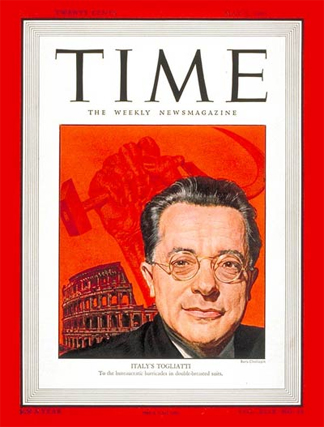
To her point, I added that while English-language writers tend to limit their descriptions and assessments to the technical merits and flaws of the wines, European writers view wines as ideological and even ethical expressions of their respective nations. In other words, where Antonio Galloni — a writer and Italian wine expert whom I admire greatly — will provide tasting and vintage notes for a wine by Bartolo Mascarello, an Italian writer will attempt to delineate the epistemological implications of the winery, the winemaker, and his wines (as in this post, where a blogger lists the authors he finds on Bartolo’s shelves: “Togliatti, Longo, Marx, Liberovici, Marcuse”; can you imagine James Suckling even contemplating such authors?).
A great illustration of this divide came up in the feed today, when leading Italian wine writer and top Italian wine blogger Franco Ziliani published a post entitled “Americans are the only ones capable of believing in the fairytale of a ‘Chiantified’ Merlot.”
Nonplussed, Franco decries Gray’s claim that the wine is “a positive example of internationalization.”
“How the devil can you take people like this seriously?” asks Franco. The lunacy of Gray’s assessment and Ricasoli’s approach to internationalized wines for the American market is self-evident in Franco’s view and that of his readers.
In America, wine writers and wine shoppers and winemakers think of wine solely as a luxury product. In Europe, they think of wine as an indispensable nutrient, even when proposed in its most elitist expressions. In America we describe how it was made and how it tastes. In Europe, wine writers address a given wine’s technical achievement and its inherent quality but they do not shy from its ideological and ethical implications.
There’s nothing wrong in asking whether a wine is good or bad, in my view. In fact, I believe that mundane assessment of wine is a wonderfully rich pretext for a deeper understanding of humanity and our humanness. But I also believe that we must approach wines metaphysically, in other words, beyond their physical limitations. Beyond asking whether a wine is good or bad, I told the audience who attended the panel, we should be asking whether or not a wine is good or evil.
Although it’s not the only story that has yet to be told, I believe it is the most urgent one that awaits our attention, our utterance, and our articulation.
Thanks for reading…
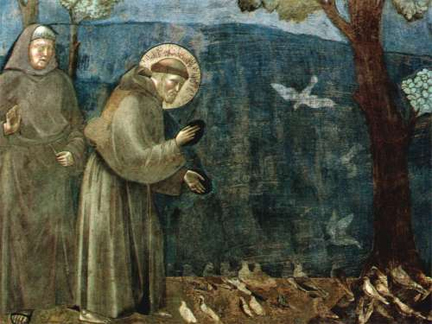
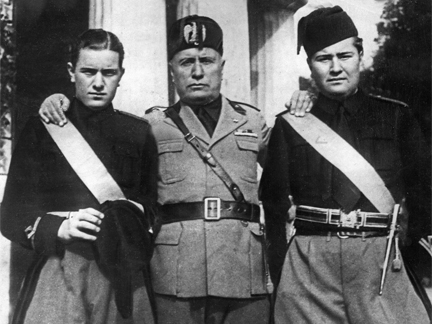
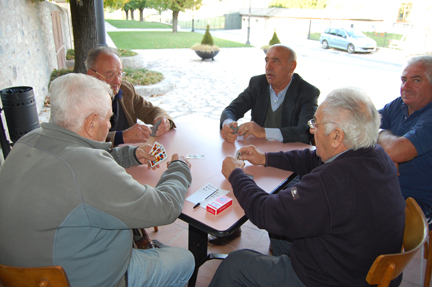
(In the photos above: St. Francis of Assisi, Mussolini, Palmiro Togliatti, and a group of old men playing cards in Borgonato in Franciacorta, province of Brescia.)
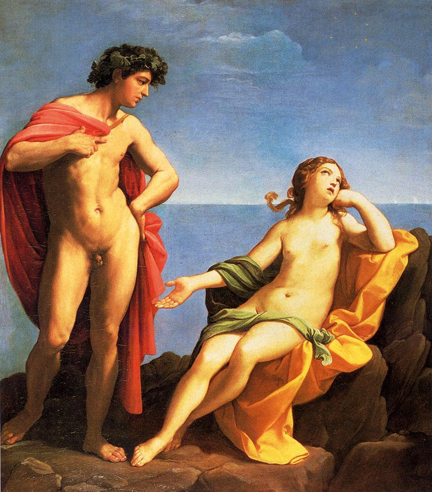
My post over at the Houston Press today is devoted to wine and sex, with references to Shakespeare, the symposia of ancient Greece, William James, and “Bacchus and Ariadne” by the Italian Baroque master painter Guido Reni, above.
What’s your favorite wine to drink before a roll (or role-play) in the hay?