 Above: dried Corvinone grapes that were to become Recioto at La Dama.
It’s sad but true: one of my most lasting memories of my recent visit to Valpolicella with a group of wine writers is a sour one.
“When I saw this list of producers we were visiting,” said one colleague from Canada, “I said ‘fuck this’ and went to Valdobbiadene.”
When I asked him whom he visited there, he said, “o, just a few wineries that the Prosecco consortium took me to see.”
“I don’t even like Amarone,” he explained, seemingly attempting to justify his condescension.
As they say in Veneto dialect, no go paroe… I don’t know what to say. What can you say in the face of such misinformed, misguided, and pointless [x]enophobia?
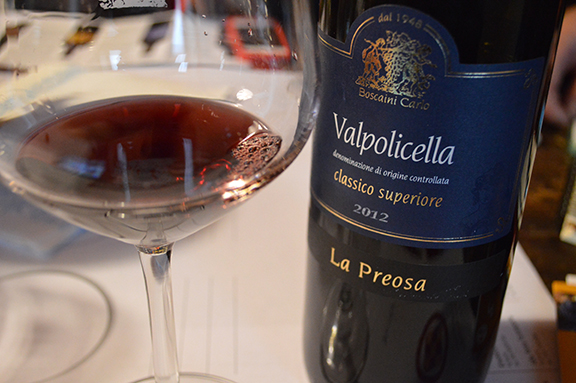 Above: Carlo Boscaini’s wines were among my favorites. These are old-school wines from one of the best growing zones in the appellation. Classic but also clean and fresh. They reminded me of the wines I drank when I attended university in the Veneto in the early 90s. But they were more focused and polished. Utterly delicious. Importers, heads up!
The good news is that, snobby wine writers aside, there is a lot of great wine being made in Valpolicella.
Today, Valpolicella Classico, Amarone della Valpolicella, and Recioto della Valpolicella aren’t popular in North America and have been penalized by marketing blunders, missteps taken by commercial producers and their importers during my parents’ generation.
But Europe’s nordic wine lovers have continued to provide a steady stream of revenue for Valpolicella bottlers, thus keeping the overarching quality of grape growing and winemaking relatively high.
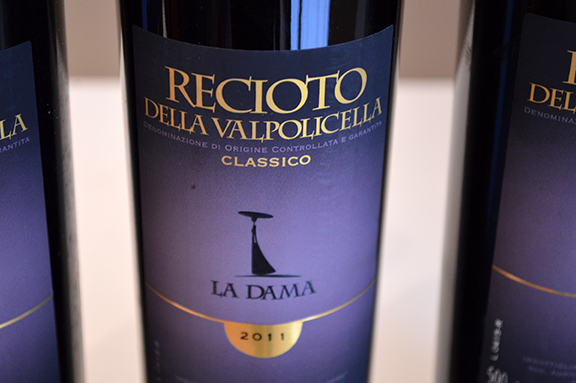 Above: Gabriele Dalcanale farms organically at La Dama, where he owns one of the top growing sites in Negrar, the historic heart and soul of Valpolicella. In the cellar, he leans modern. Not my cup of tea but the brilliance and vibrancy of the fruit in his wines are extraordinary. Please bring his 2011 Recioto to my house for dinner any time. I was really impressed by the wines.
It was really interesting to hear vineyard managers, like Giannantonio Marconi of Bolla, talk about how many growers now favor the traditional pergola training over Guyot, the latter a system that was introduced in the 1990s when Valpolicella began to modernize.
The canopy of pergola-trained vineyards, explained Giannantonio, helps to protect the berries from sunlight and it aids in moderating temperatures in the vineyard. Whether or not you believe that global warming exists or is influenced or impacted by humankind, there’s no doubt that grape growers in Europe have experienced a string of warmer vintages. The pergola helps them, said Giannantonio, to maintain quality and freshness during hot, dry summers.
 Above: if I had to pick one favorite from all the wineries I visited last week, it would be Accordini Stefano. Across the board, I found the wines to be compelling, elegant, and focused. Stefano’s 1999 Amarone was astounding. And a visit to his winery is worth the trip (to the highest growing area in Valpolicella’s classic zone) if only for the educational media he’s created, like these samples of soil types. Click the image for a full-size jpg.
From a behemoth like Bolla that needs to maintain substantial output to a small organic farm like Gabriele Dalcanale’s La Dama, pergola training seems to be the favored system these days. At least that’s what I gathered during my two days touring vineyards and talking to growers last week.
My only disappointment in Valpolicella was the fact that many of the producers heavily oak their wines using new barriques.
Even the most traditional among the producers I visited have at least one oaky wine in their lineup.
Repeatedly, I tasted wines that were beautiful grown, crafted, and raised. But the oakiness dominated the fruit in the wine.
 Above: Valentina Cubi, a biodynamic grower, is one of the most talked-about winemakers in Valpolicella these days among the wine hipster crowd. I was thrilled by her wines and I am non-plussed that no one is bringing these into the U.S. They have everything going for them.
That’s a turn-off for me personally. But I recognize that there are also a lot of people who are into that kind of thing. And hey, whatever gets you through the night, it’s alright with me.
Looking back on the experience, I can’t stop thinking about how Valpolicella and Amarone have the right stuff for the American market and the American palate: they can be big and bold in their tannic structure, they generally have higher alcohol levels than conventionally produced red wines, and it’s easy to find oakiness in top labels by top producers.
And somewhere in between there are old-school producers like Boscaini and Accordini and progressive producers like Cubi and La Dama that appeal to the north American wine cognoscenti.
 Above: Angelo Lavarini’s family’s wines at San Benedetto are as “real” as they come. His 2004 Amarone was fantastic and I loved the old-school red thread that ran through each of his labels. Another highlight for me. Importers, double heads up! These wines are ripe for the picking.
My very last winery visit was Angelo Lavarini’s San Benedetto.
As soon as we arrived there and were given the wifi password, the Amarone-hating Canadian writer logged on to his Facebook and internetted away as the rest of us tasted in earnest.
Angelo recounted how in leaner times, in order to make ends meet, his family used to make salame on the table where we were now sitting. The bathroom of his family’s house was once a stall for pigs.
His wines were as wholesome as he was. I loved them and came way scratching my head and wondering why no one is importing them into the U.S.
We stepped outside and the Canadian writer lit a cigarette. If only he’d had left his [x]enophobia back in north America, I wouldn’t have had left Valpolicella with a bitter taste in my mouth.
There’s a cure for that… it’s called Recioto.
Thanks for reading…

 It’s funny how the rhythms of the internets work: this week, as I was doing research for a post intended to debunk the often repeated and wholly erroneous Oudart myth, whereby a Frenchman invented modern Barolo, my Italian counterpart Alessandro Morichetti was hard at work on a post in which he offers three fundamental reasons behind the success of Barolo and Barbaresco (in Italian).
 So lots of fun stuff coming up, people!
 I snapped this photo of Giulietta’s balcony on a Saturday morning when I visited Verona a few weeks ago (for the Amarone Anteprima event).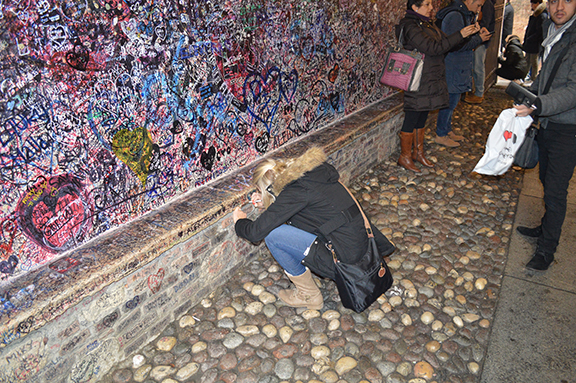
 The two most useful things I’ve learned over my lifetime are how to type and how to navigate the New York City subway.
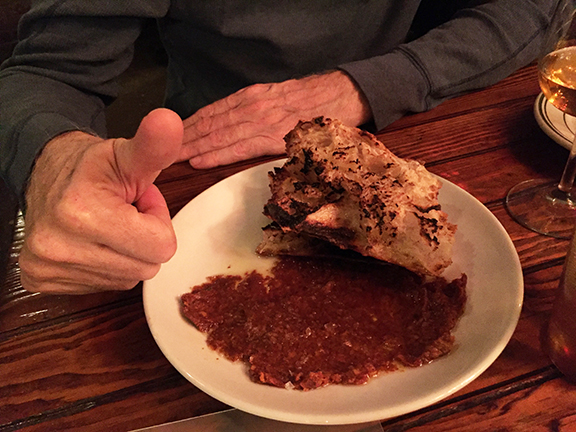 Beyond my duties appearing on a panel and making a few politesse appearances at the Vino 2016 Italian Wine Week event, I was free to roam the vinous landscape.
 As soon as the staff sensed that we were “wine” people, a sommelier was sent to our table.
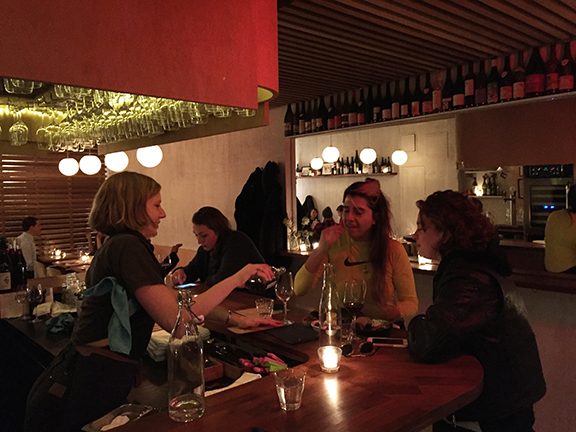 Another dream place for me, Four Horsemen in Williamsburg was just the place to connect with
 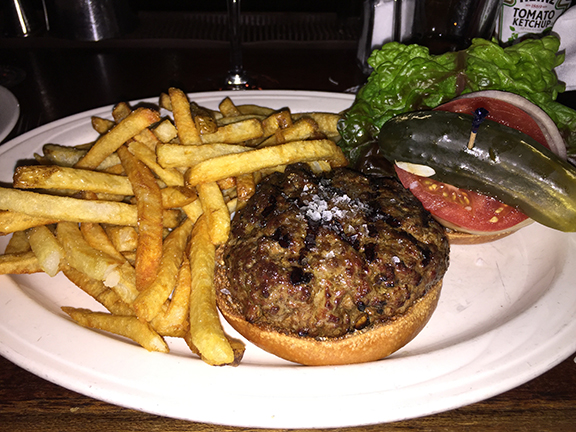 No trip to NYC is complete for me without a burger at my favorite steakhouse in America, Keens.
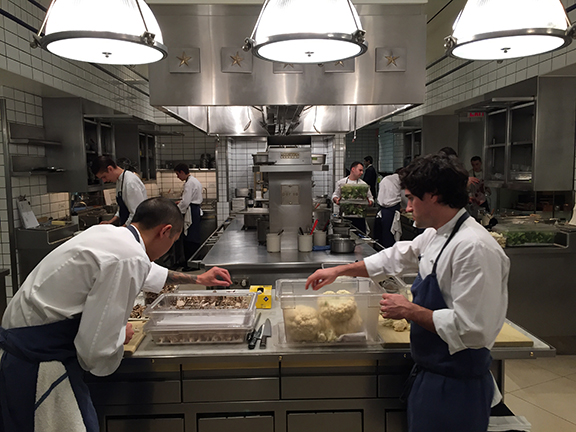 Dinner there is above my pay grade, but I did pay a visit to Per Se to see an old friend from San Diego who’s been working there for some time.
 Dulcis in fundo, my friend and fellow Texan Jeff Porter gave me a short tour of La Sirena, Batali and Bastianich’s new gig on the west side.
 And only because it had to live up to its reputation as the city where I never sleep, Jeff and I made a very late-night visit to Lupa, where he hipped me to this Lecinaro (a native and recently revived grape from Latium) by organic grower Palazzo Tronconi. You can’t see its beautiful, delicate color in the photo but I loved the hue and its lightness and freshness in the mouth. Thanks again, Jeff!
 Above: performing with my band Nous Non Plus in Germany in 2008. That was what I looked like when I met Tracie B now P.
 Remember the Super Tramp song, “Breakfast in America”?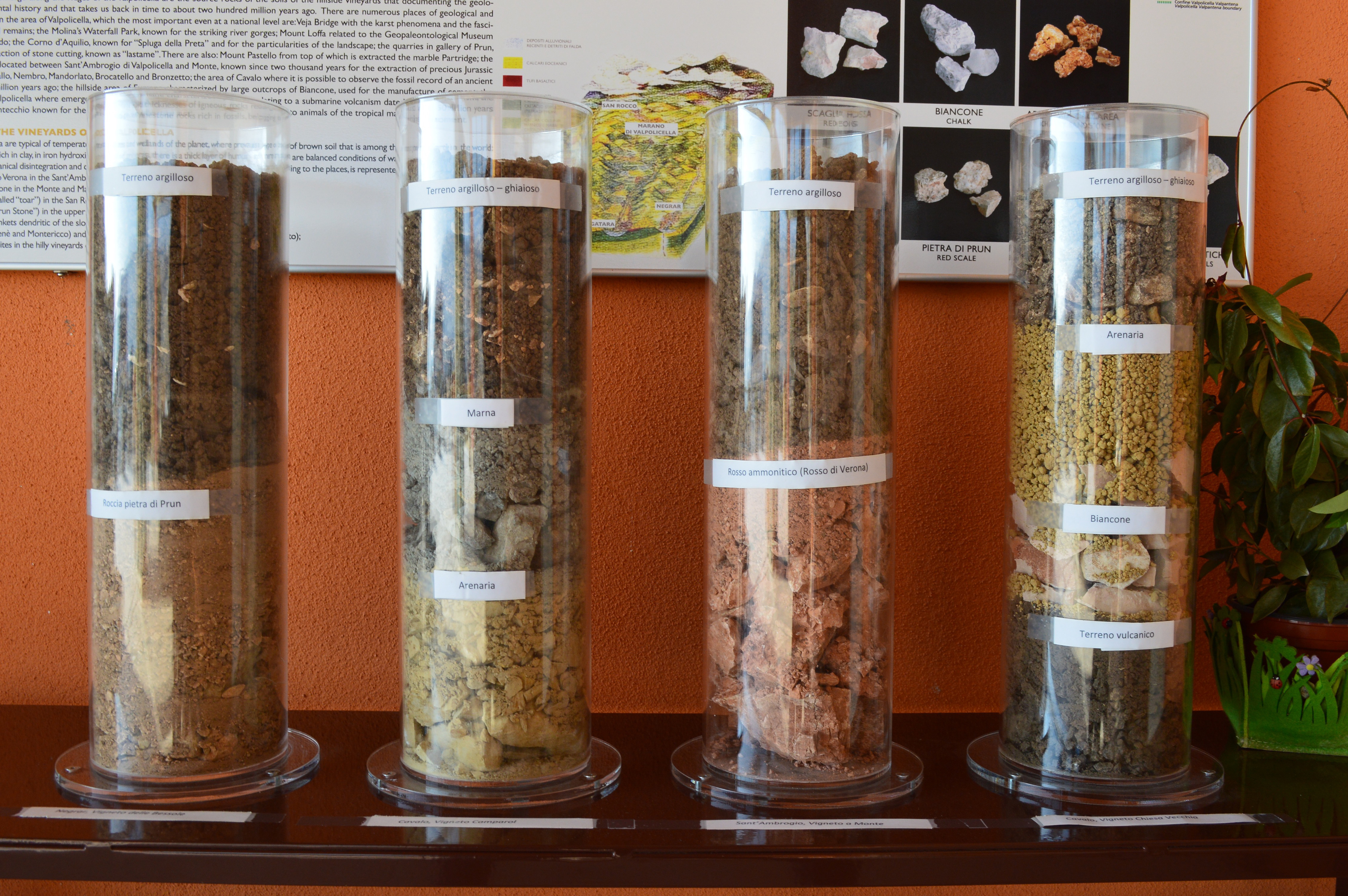
 Above: three restaurant professionals who attended the Slow Wine Guide 2016 tasting yesterday in downtown Austin. It was the first time that the tour had come to Texas.
 Catching my breath this morning after a long day of travel back from Italy yesterday.
 Do Bianchi