Confessions of a Natural wine addict (all is fair in love)

“A writer takes his pen and writes the words again/all is fair in love.”
—Stevie Wonder

dettori bianco

Above: Four of six bottles of Dettori 2010 Romangia Bianco have been fizzy and slightly sweet.

Dettori Romangia Bianco, a skin-contact wine from Sardinia made from 100% Vermentino grapes, is one of our all-time favorite wines.

Tracie P and I have a mini-vertical of the wine in our cellar and we buy a case of every new vintage to put down each year.

That’s just one of the reasons that I was so thrilled to see the wine finally make it to the Texas market (until now, I’ve bought the wine in California where I keep my cellar).

But the number-one reason was that we love drinking it.
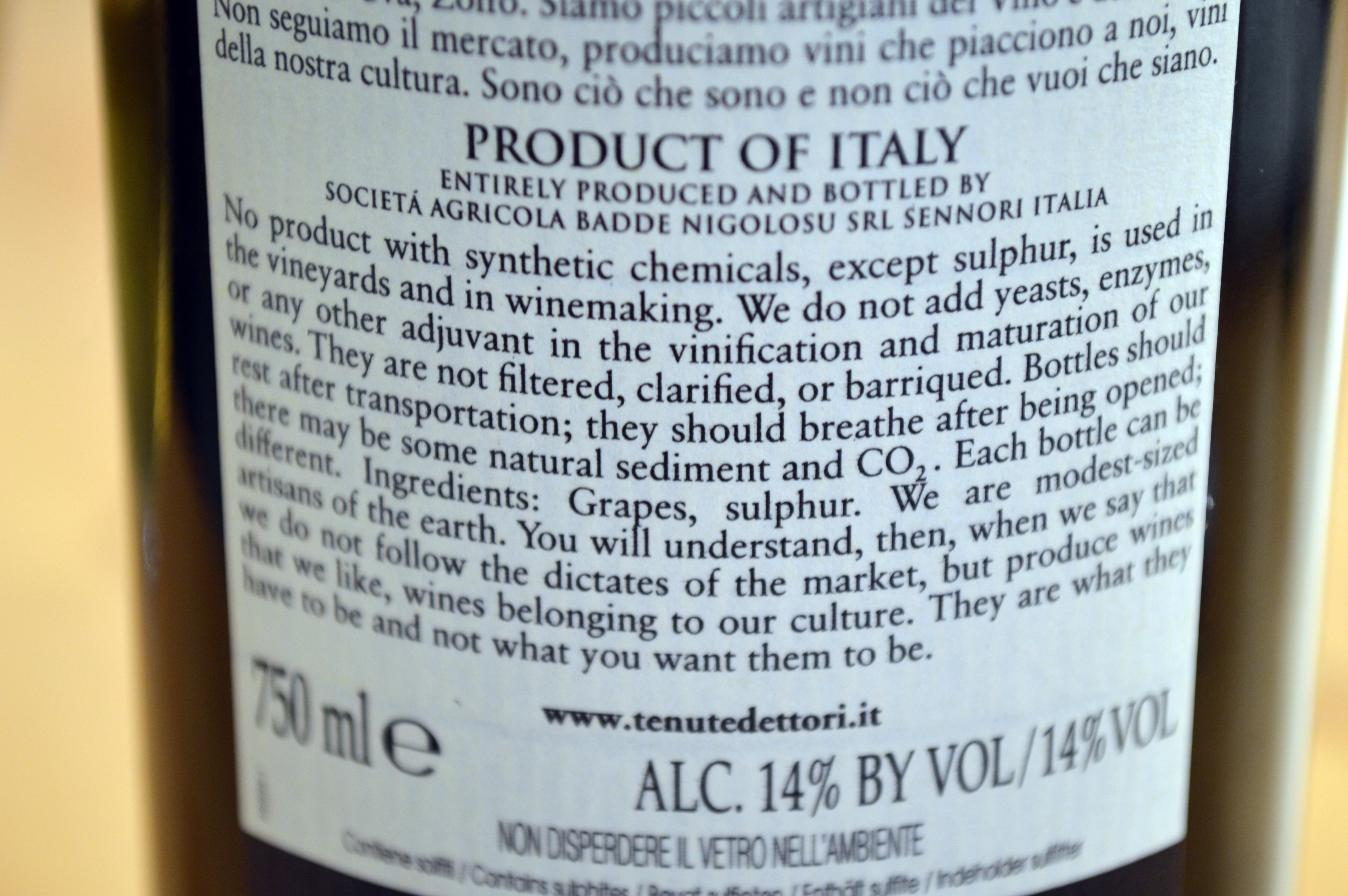
dettori back label

Above: The Dettori back label with a note on the winery’s approach to vinfication. Click image for high-resolution version.

I can’t imagine that anyone, even the greatest Natural wine skeptic or detractor, would deny that Dettori’s wines are Natural wines.

As Alessandro Dettori writes on the back of each bottle, the only ingredients are grapes and sulfur. And no enzymes or additives (he calls them adjuvants) are used in vinification.

In my experience, the wines can be radically different from vintage to vintage. But their intense tannic component seems to keep the wines relatively stable although never homogenous.
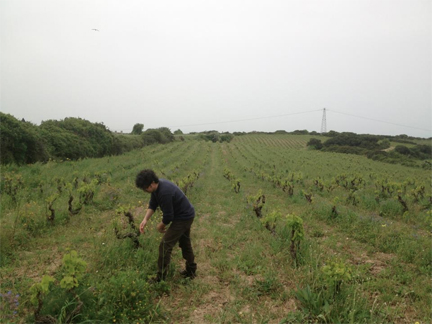
dettori vineyard

Above: Alessandro Dettori in his “oldest vineyard.” I’ve never been to the winery but my friend Georgios Hadjistylianou graciously let me use these photos from his recent visit there. Here’s the photo album. Thanks again Georgios!

I won’t conceal my disappointment when four (so far) of six bottles turned out to be fizzy and slightly sweet.

When the importer came through town and tasted the wine with me earlier this month, the 2010 seemed to align with my previous experience. It was tannic and rich, very youthful in its evolution. I couldn’t wait to buy some.

And when my local wine merchant told me he was holding the last six bottles for me, I hurried to the shop to pick them up.

But I’m sad to report that somewhere along the way — probably due to the extreme and often capricious Texas heat — the wine underwent a secondary fermentation in bottle.
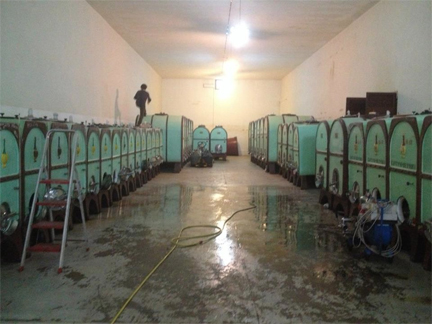
dettori cellar

Above: Cement vats at Dettori.

As Tracie P noted, they taste like vino paesano, the “country wine” that is often sold in demijohns in proletarian Italian wine shops. It’s fresh and bright, the alcohol and tannin are tame, the acidity is zinging, and the gentle spritz makes it even more food-friendly.

I’m a wine professional and am well aware that a flawed or corked bottle here and there are variables in the vinous equation. But four out of six bottles and counting could be grounds to ask for my money back.

But, no, I would never do that.

I’m a Natural wine addict and if nature — including the moody temperatures of my adoptive state — has delivered the wine in this condition, it’s my bitter sweet pill to swallow.

“We are artisans of the earth,” writes Alessandro on the back of his bottles. The wines are “what they have to be and not what you want them to be.”

We’ve been drinking the flawed but wholesome wine as an apertif and pairing it with early summer pesto and pasta al pomodoro. Not as cheap as a vino paesano but equally enjoyable.

It’s a wine that reminds us that all is fair in nature and in love…
Baking Benefit for West, Texas @AustinBakes @ATXGastronomist and @atxfoodblogs

west texas explosion

Please check out details for next Saturday’s Bake Sale for West, Texas.

It’s being organized by Kathryn Hutchison, president of the Austin Food Bloggers Alliance (of which I am a card-carrying member) and its “goal is to raise $15,000 for West at or before Saturday’s bake sales.”

Please find details here and please retweet and post!

From the Wiki:

On April 17, 2013, an explosion occurred at the West Fertilizer Company storage and distribution facility in WestTexas, 18 miles (29 km) north of Waco while emergency services personnel were responding to a fire at the facility. At least 15 people were killed, more than 160 were injured and more than 150 buildings were damaged or destroyed. The cause of the blast is as yet unknown.

[just a little] girl with a pearl earring

girl with a pearl earring

It’s been a week filled with terrible news.

Boston, the explosion in Texas, and children going hungry in Greece.

Our hearts and prayers go out to all of our sisters and brothers in pain and in grief.

May G-d bless them.

Someday, Georgia P will learn about how hard life can be, how cruel the world.

But this spring morning in central Texas, she’s just a little girl with a pearl earring.

Buona domenica, yall…

Heated response to the Gambero Rosso (Red Lobster) controversy

gambero rosso

Above: Gamberoni in Castiglioncello, Tuscany, at Nonna Isola.

Few remember that the Gambero Rosso monthly magazine and publishing brand take its name from the “Osteria del Gambero Rosso” or the “Inn of the Red Lobster” in The Adventures of Pinocchio, which originally appeared in the Italian in the early 1880s.

Here’s a transcription of the scene in the book where the Cat and the Fox first take Pinocchio to eat there (from a 1904 English translation):

    They walked and walked and walked until they arrived at the Red Lobster Inn, tired to death.

    “Let us stop a little here,” said the Fox, “just long enough to get something to eat and rest ourselves. At midnight we can start again and to-morrow morning we shall arrive at the Field of Miracles.”

    They entered the Inn and seated themselves at the table, but none of them were hungry. The poor Cat felt very much indisposed and could only thirty-five mullets with tomato sauce and four portions of tripe; and because the trip did not taste just right he called three times for butter and cheese to put on it.

    The Fox would willingly have ordered something, but as the doctor had told him to diet, he had to be contented with a nice fresh rabbit dressed with the biglets of chicken. After the rabbit he ordered, as a finish to his meal, some partridges, some pheasants, some frogs, some lizards, and some bird of paradise eggs; and then he did not wish any more. He had such nausea for food, he said, that he could not eat another mouthful.

    Pinocchio ate the least of all. He asked for a piece of meat and some bread, but he left everything on his plate. He could think of nothing but the Field of Miracles.

Some believe that the fictional osteria is based on the Trattoria da Burde near Florence where author Carlo Collodi (Lorenzini) dined regularly.

italian crawfish emilia

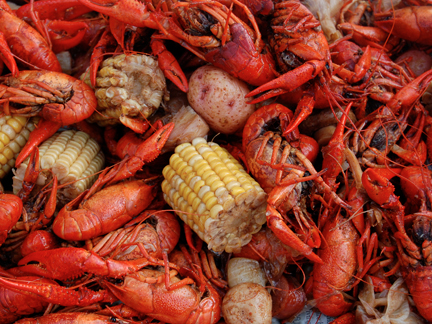
Above: An image from my first “crawfish boll,” which took place not long after I moved to Texas to be with Tracie P.

Gambero rosso is also a designation used by Italians for the common American crayfish, the “Gambero Rosso della Louisiana.” Its introduction to Italy in the mid-1800s led to a series of crayfish plagues in Europe.

Collodi was certainly aware of the crayfish calamity of his era and the very name — gambero rosso — surely instilled biblical fear in the minds of his readers.

In the light of this, the choice of gambero rosso for the title of a magazine devoted to Italian gastronomy may seem infelicitous to some.

gambero rosso trash

Above: The Gambero Rosso brand has often been the center of controversy and its editors have often been accused (however informally) of conflict of interest. I’ve written about the brand on many occasions.

On Monday, when I posted my translation of an open letter by a confederation of Italian winemakers to the editors of the magazine, I didn’t imagine the heated reactions that the post would generate (just look at the comment thread and you will find the comments and links to other bloggers who posted view points often diametrically opposed to one another).

For my part, I was just trying to provide a public service by rendering the text of the letter into English.

O, and one last thing…

Down here in Texas, you know what they call the gambero rosso?

They call the little critters mud bugs.

Tomorrow, I’ll get back to the business of posting about the wines we’ve been tasting and some of the interesting wine professionals I’ve had the chance to interview recently. Thanks for reading…

A Michelin guide for Houston? @TonyVallone @TerraUomoCielo

Photo via Spread Some Awesome.

When I took Giovanni to eat at Tony’s last week, he turned to me mid-meal and asked discreetly, “how many stars does Tony have in the Michelin guide?”

When I explained to him that Michelin doesn’t have a guide for Houston (or Texas for that matter), he was genuinely surprised.

Today I posted my translation of his post on our lunch at Tony’s on Tony’s website (for the original in Italian click here).

In it, he makes his case for why Michelin should come to Texas and it’s a lot of fun to read his impressions of fine dining in the U.S.

Here’s the link.

Nothing like lunch at Tony’s, a Napa Cab I actually liked and Aldo Sohm and Levi Dalton

From the department of “Jar, you’re just bragging now” says Jon Erickson

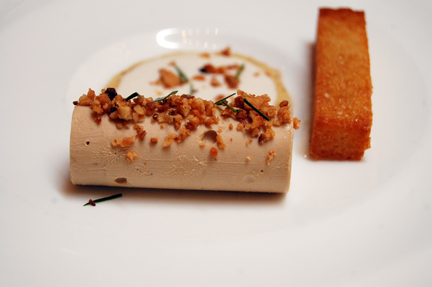
Above: Tony’s foie gras au torchon is one of his signatures and one of the dishes where simplicity and purity of flavor is offset by detail in the presentation.

How could Giovanni’s visit to Texas be complete without a meal at Tony’s in Houston?

Tony is my client (I curate his website and his media relations) but he’s also become one of my best friends in Texas and he is the architect and author of some of the most stunning meals I’ve ever had. Yesterday, Giovanni and I drove to Houston to meet Cousin Marty for lunch and a confabulatio that centered around… yes, of course… food and wine

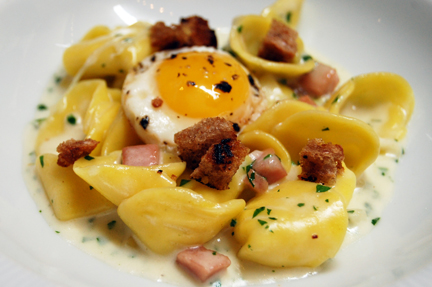
Above: Orecchiette with seared mortadella cubes and runny quail egg.

The secret to the rich yellow color of his pasta, said Tony, is locally sourced, organically farmed eggs. “But it’s also the fact that I use only flour and mineral water imported from Italy,” he added. Some would argue that sparkling mineral water is key to super pasta like this. But Tony insists that still water (acqua naturale) is a sine qua non.

Above: Halbut and seafood medley “al Mare Chiaro,” named after the neighborhood in Naples.

Tony’s is the only place in Texas where we eat fine seafood (a category we reserve otherwise for our trips to California). This dish was simply stunning in its simplicity and presentation (and my camera didn’t do it justice, frankly).

Above: Lamb chops.

Tony likes to tease me, calling me the chiodo (the nail) because I’m so careful about what and how much I eat. Lamb chops would have been a bit much for me for a Tuesday lunch but Giovanni dove in with gusto.

Above: General Manager and wine director Scott Sulma’s selection was right on.

And the wine? A tall order considering the fact that one of Italy’s top winemakers was seated at our table. And let’s face it, my general disdain for the Californian style is well known to my colleagues at Tony’s. But it also seemed right to have Giovanni taste something from my home state. GM Scott’s selection, Palmaz Vineyards 2007 Cabernet Sauvignon, delivered acidity, earth and gorgeous dark fruit, and balanced alcohol and wood. It was superb with the Bucatini all’Amatriciana that I had as my second course, playing beautifully against the savory guanciale in the dish. Chapeau bas, Scott!

Above: Nobody does it better than Tony.

I can’t conceal my pride in sharing the Tony’s experience with my good friend Giovanni, who made the trans-Atlantic crossing to see, hear, taste, and feel what life is like in Texas, California, and America.

Above: Two of my favorite fressers.

Thanks, again, Tony for yet another fantastic meal and an unforgettable experience. Ti ringrazio di cuore…

In other news…

Question: What could be better than a conversation with one of my favorite New York City sommeliers?

Answer: An interview with one of my favorite NYC sommeliers conducted by one of my favorite NYC sommeliers.

Click here to listen to Levi Dalton’s conversation with Aldo Sohm (pictured above).

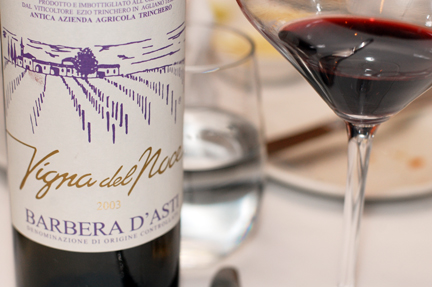
03 Barbera d’Asti Vigna del Noce was insanely good (and the best Malbec I’ve ever had)

The Trinchero winery first came to my attention many years ago while living and working in New York and I have followed the wines ever since, tasting them whenever I get the chance.

Of all the Barbera that floods the U.S. market these days, Trinchero — a Barbera d’Asti producer and Natural winemaker — is one of the least likely to reach a city like Houston, Texas, where the “100-point burning embers” (thank you, Robert Parker!) of Colgin Cellars are considered a benchmark for the finer things in life.

But for reasons not wholly unknown to me, a small Houston-based importer called Dionysus brings in a number of Piedmont wines that I love.

When my friend and colleague Scott Sulma included the 2003 Vigna del Noce in a tasting menu flight the other night at Tony’s, I was skeptical. The last time I tasted this wine, a few years ago, it seemed to be succumbing to the overly ripe vintage. And while it still had healthy acidity, a jammy note had begun to emerge.

But when we tasted it a week ago Tuesday and then again last Tuesday, it showed brilliant acidity, meaty but balanced fruit, and the focused tannin that Asti-grown Barbera often develops when vinified in the traditional Astigiano and Monferrato style.

Revisting the wine made me think that the previous bottle I had purchased at a wine store in Houston had been slightly cooked.

I thought the wine was fantastic…

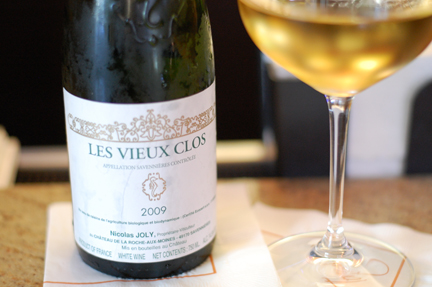
I was surprised to find a bottle of entry-tier Joly labeled Vieux Clos (the way it is labeled in France) as opposed to the Americanized Clos Sacres (when we visited Coulée de Serrant, Virginie Joly told us that a previous U.S. importer had advised her father that Americans would never buy anything labeled vieux).

The 2009 had more body in the mouth than recent vintages I’ve tasted but it was fresh and clean on the nose. Another huge winner for me (although at $25 a glass at Tony’s it’s not exactly recession friendly).

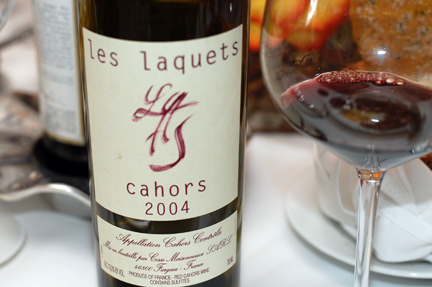
But the biggest surprise of dinner on Tuesday was an AMAZING Cahors by (Natural?) winemaker Domaine Cosse Maisonneuve. (The winery doesn’t have a website but I did find this page.)

Most of the Cahors that makes the Atlantic crossing is so tricked out and oaked that it tastes like sawdust (at least in my experience).

This wine had acidity and fruit and an ethereal earthiness that really thrilled me… I have no idea how this wine made it to Houston (another crazy importer?) but I’m looking forward to putting a few bottles down in our cellar.

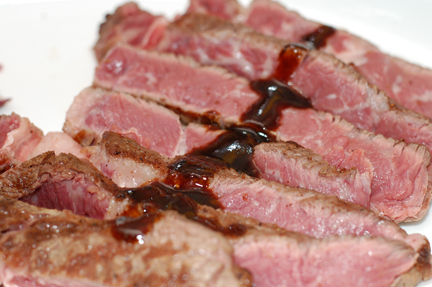
It paired brilliantly with the rib-eye with balsamic reduction at Tony’s.

In other news…

I was dismayed to read 1 Wine Dude’s post on Robert Parker’s nastiness and wholly unwarranted rant against our dear friend Alice Feiring in a recent Sommelier Journal interview.

IMHO, 1 Wine Dude (aka Joe) is the top wine blogger in the enoblogosphere right now: he knows how to balance the tannin of truth with the fruit of joy, adding just enough acidity to keep it all bouncing. I liked the way that he approached this sticky subject and how he moderated the comments that followed.

Here’s the post.

Chapeau bas, Joe.

Breakfast tacos back in the Groover’s Paradise

Had a to take a few days off to decompress, beat the nasty jetlag, catch up on my sleep, and “love on” Tracie and Georgia P this weekend.

When I travel to Europe for the trade fair, only to stay on to lead a blogger project, I hit the ground running and the pace never slows down… And then, back in Texas, where Tracie P is now a stay-at-home mom and we are a one-income household, my plate is piled high with new clients and editorial responsibilities as we try to make our business grow.

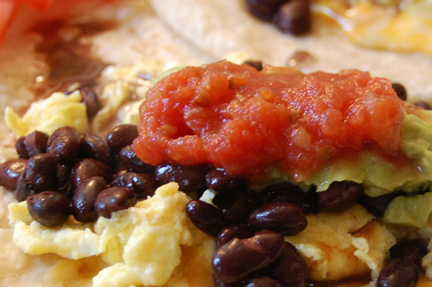
And so early Sunday morning, as baby and mamma still slumbered, I warmed some handmade flour tortillas, melted some colby jack, hard scrambled some eggs with Parmigiano Reggiano, milk, and nutmeg, and topped it all with a dollop of creamy guacamole, a tablespoon of frijoles negros (Goya, of course), and a generous splash of Herdez salsa casera.

There’s a whole wide world of enogastronomic adventure out there… but there’s no place like home…

Happy Monday, yall…

Frito pie, meditations and contemplation…

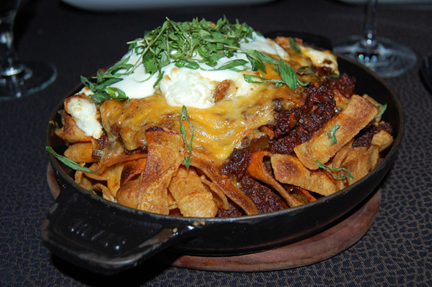
There is perhaps no dish that inspires connoisseurship among Texans as much as Frito Pie.

Shrouded in mystique and lore, this mighty staple of rigorously authentic Texas gastronomy, speaks to the citizens of our state like no other in our culinary canon. By combining indigenous ingredients and formulas — Fritos, invented in San Antonio, and chili con carne, actually known simply as chili in our state, as one adoptive Texan learned dutifully when he made the mistake of calling “turkey chili” chili — this supremely Texan of victuals marries all the things we love best: Fat and spice.

Click to continue reading my post for the Houston Press today…

My chat @IsleWine @EatingOurWords @HoustonPress

Photo via Grub Street.

Beyond writing about wines under $25, my mission as wine writer at the Houston Press is to offer coverage of fine wine in Houston and Texas.

So what could be better than an interview with my friend Ray Isle, Houston native, who’s on his way to Texas next month for the Austin Food & Wine Festival?

You can read the interview here.

And here are his thoughts on Italian wine (topic of one his seminars) that didn’t make it into the Houston Press post:

    Cesanese was a discovery for me not too long ago (particularly the wines from Damiano Ciolli, who’s a very talented young guy). In fact, in general Central Italy fascinates me — it seems like it’s been a little bit bypassed, attention-wise. Marco Carpineti’s wine in the Lazio are great; a lot of Abruzzese wines are terrific (I think La Valentina’s Binomio bottling is a standout); and there’s been a crazy wave of good Lambrusco coming in, which has been a godsend for dinner parties, as far as I’m concerned. But what’s great about Italy overall at the moment is it seems as though you can’t go to an importer tasting and not run across a producer you’ve never heard of before who’s doing something ambitious and interesting.

Ray is such a cool guy… I’ve promised him a night of honkytonking while he’s out here. Ginny’s Little Long Horn Saloon, anyone?