Italy vs. Google

Above: The night we stayed in Bologna on our recent trip to Italy, my friends (some of whom I’ve known for more than 20 years), shared this Youtube video of Italian politician Francesco Rutelli butchering the English language. The video has been the subject of much ridicule and parody in Italy, a country with a rich history of biting satire that stretches back to the Renaissance and beyond. My friends said it was an example of their culturally and morally bankrupt government.

Between our re-entry into civilian life, our move into our new home, a ride-with with a rockstar winemaker in northern and eastern Texas, and the mountain of thank you cards that Tracie P and I have just begun to chip away at, an interesting news story slipped through my cracks this week: according to a story published on Wednesday by The New York Times, an Italian court convicted three Google executives for “violating Italian privacy laws.” (For more detailed background on the case, see also this Reuters post.) Many see the ruling as part of the Berlusconi government’s attempt to curb freedom on the internet and part of an over-arching plan to maintain control of public opinion through the cultural hegemony of television (as head of state and thus chief executive of public television and owner of the major privately-owned television channels, Berlusconi has a virtual monopoly on what is televised in Italy).

Above: To appreciate this parody of the Rutelli clip, you need hear the “interpreter’s” markedly Roman accent. The short film is indicative of Italians’s embrace of the internet as a viral medium for satire. And again, I can’t underline enough the centrality of satire in Italian culture. Just think of the pasquinades of 16th-century Rome — same idea, different medium.

If you’ve visited Italy in recent years, you know that connecting to the internet can be a daunting challenge there. At least one restaurateur explained I spoke to in 2008 said that this is because the Italian government holds the internet providers responsible for what their users and customers post on the internet. It’s simply not worth the hassle for restaurateurs, for example, to provide internet access to their customers (and this guy was an entirely hip and successful winemaker in German-speaking Italy, who has a sleek, contemporary restaurant in the Alps). When you can get online in Italy, some businesses (like hotels) ask you to sign a written document stating that you are fully liable for what you publish on the internet.

Above: A quick search on YouTube quickly rendered an example of the type of virally circulated clip that might bother Berlusconi.

Does any of this have any bearing on the world of wine? Yes, in my opinion, it does. Now, more than ever, Italian wineries need to use the internet as a medium for viral marketing of their products to English-speaking consumers. This is especially true right now when the enosphere is shifting radically to the internet as its preferred medium of communication.

Okay, time to get down off my soap box… If you made it this far into the post, thanks for reading!

Buona domenica a tutti…

Vini Veri Tasting details, April 8-10, 2010 in Cerea

giampiero bea

Above: Giampiero Bea, owner of the Paolo Bea winery and one of the founders of Vini Veri. I took this picture when tasted with him last April at the Vini Veri fair.

A lot of folks have been writing me asking me what other events they should attend during the week of Vinitaly, the Italian wine industry’s annual trade fair.

Every year, one of my top destinations is the Vini Veri tasting. I finally got my hands on event details for the tasting, which will be held in Cerea (and not in Isola della Scala) this year.

My good friend (and fellow San Diegan and UCLA alumna) Marisa Huff, who’s working on event organization and media relations, told me that convention-center space at Cerea will help to accommodate the fair’s growth and that the entire tasting will take place in the same hall, making it easier to navigate and negotiate. Some of the charm of Villa Boschis (where the event was held in the past) will be lost, she said, but the new venue will make it a lot easier for attendees to make the rounds. Thanks, Marisa, for sending me the info (below)! :-)

Hope to see you there!

    Vini Veri 2010

    The Dates: Thursday, April 8th to Saturday, April 10th

    The Time: 10 AM to 6 PM

    The Place: AreaExp Events Center, in Cerea (Province of Verona), about a half-hour drive/train ride from Vinitaly.

    The Producers: over 130 natural wine producers, from Italy and beyond.

    The Organizers: Vini Veri Consortium and Renaissance Des Appellations.

    A complete list of the participating winemakers will soon be available on our website, www.viniveri.net.

One last note on Giacosa Asili 07 from Antonio Galloni (and the complete wedding album online)

From the department of “wine geekery”…

Above: I wish words could convey Bruno’s bright smile that day and the pleasure he seemed to take in tasting and talking about his wines with Franco, Tracie P, and me. Photo by my better half.

One last note that I wanted to share, for the record, culled from emails I traded yesterday with one of the wine writers I admire most and one of the greatest English-language authorities on the wines and winemakers of Piedmont, Antonio Galloni (who also happens to be an extremely nice guy).

His comments speak to Bruno’s observation that you could “smell Asili” in the 2007 Asili white label bottling (even in the light of the fact that the wine was made predominantly from grapes sourced from a parcel previously classified as Rabajà).

“Because of the freakish growing season in 2007 that you describe,” i.e., with an extremely mild winter and consequently anticipated vegetative cycle, wrote Antonio, “the 2007 Asili white label does actually reflect a lot of that vineyard’s characteristics, even if it is 80% juice from Rabajà.”

He also pointed me to this passage, lifted from his October 2009 tasting notes: “Curiously, the 2007 Asili is a very soft wine, considering it is made mostly from vines that informed such majestic Rabajas as the 2001 and 2004.”

All of us present at the tasting a week ago Sunday were impressed with how approachable the wine was. And Bruno’s observation, “you can smell Asili in this wine,” was significant, indeed, especially in the light of the unusual vintage and the reclassification of the Barbaresco cru system. Antonio noted that in the wake of the reclassification, “you will soon see a host of new, single-vineyard bottlings from places you probably never knew existed.”

Food — or grapes, as the case may be — for thought.

Thanks again to Ken for asking me to look more carefully at Bruno’s observation and thanks to Antonio for his truly invaluable insights.

In other news…

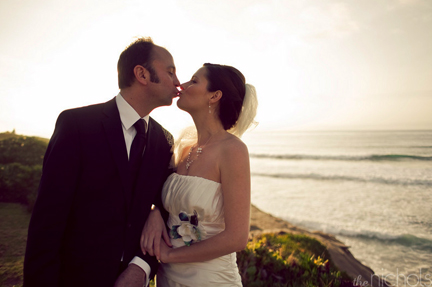
It will remain one of the great mysteries in the history of humankind: how did a schlub like me end up with a beauty like Tracie P née B?

The complete wedding album is online here. Thanks again to Jennifer and CJ for an amazing job!

And thanks to my gorgeous bride Tracie P: words could never express the happiness and joy that you have brought into my life, an endless Valentine, every night when I kiss your sweet lips good night and when they greet me in the morning. I love you so very much… What a miracle you are!

Giacosa tasting, clarifications

Asili

Photos by Tracie P.

Wow, heartfelt thanks to everyone for all the comments and messages in the wake of the Bruno Giacosa tasting post Friday! It was an unforgettable experience.

Ken Vastola, author of an excellent “bibliography” of Giacosa’s wines, asked me to clarify a few points. So, yesterday, I called Giacosa’s enologist Giorgio Lavagna to get some answers.

Ken wrote:

    Antonio Galloni wrote in his review: “In 2007, the white label Asili is roughly 80% juice from the old ‘Rabaja’ parcel and 20% Asili from the vines Giacosa has always used for his [Barbaresco] Asili.”

    That doesn’t seem to fit with Bruno’s comment in your article about this wine “You can smell Asili in this wine.”

    You wrote “The only difference between the white and red (reserve) labels is the additional cask aging.” Does this imply (seemingly contrary to Antonio’s comment) that all the juice from the 2 parcels was blended, then separated for aging? I have to say this is the type of question that Bruno and the winery have been either coy or forgetful about over the years.

Asili

Giorgio confirmed the percentages that Antonio reported in his previously published notes on the wines. As has been widely reported, Giacosa did not bottle his 2006 (because of a hail storm that damaged the vineyards, said Giorgio yesterday [!!!]). 2006 was also the year that certain adjacent rows of Rabajà were reclassified as Asili, including the rows that Giacosa had used historically to make his Barbaresco Rabajà bottling.

The fruit for the 2007 Barbaresco Asili “white label,” said Giorgio, is sourced primarily from the parcel previously called Rabajà, roughly 80%, and roughly 20% from Asili. In the light of this information, Bruno’s comment that “you can smell Asili in this wine” is significant. It seems to suggest that he agrees with the reclassification.

The fruit sourced from the Rabajà parcel and Asili were vinified together in 2007, said Giorgio.

But he was quick to point out that the fruit for the 2007 Barbaresco Asili Riserva (“red label”), which will be released in 2012, was sourced exclusively from the top part of Asili, the sorì as the best parcel is called in the wine parlance and dialect of Langa.

Barolo

    Is Bruno really making a 2007 Rocche white label? I assumed (or read?) he would make a red label in 07. So far he has not made both a red and white label in the same vintage from Rocche. Though I guess if it’s still in barrel then red or white label is still only a guess. He can change his mind.

Giorgio confirmed that the 2007 Barolo Rocche del Falletto will be a “red label” riserva and that there will be no “white label” 2007 Barolo Rocche del Falletto (and, indeed, as Ken points out rightly, this keeps with tradition at Giacosa: when a red label Barolo Rocche del Falletto is produced, no white label is produced). The 2007 Barolo Rocche del Falletto has not been bottled yet and we tasted a barrel sample (in the unlabeled 375ml bottle above).

    You mention a Bruno Giacosa 2004 Barolo Rocche del Falletto (white label). In 2004, I’m pretty sure he made a white label Falletto and a red label Rocche, but no white label Rocche. Was this from a finished bottle with a label on it or could it be the red label? I have not seen a white label Rocche on the market, only a red label on futures.

We did taste a 2005 “white label” Barolo Rocche del Falletto in the tasting room and we drank a 2004 white label Barolo Falletto at lunch at Enoclub in Alba. In our conversation, Giorgio reiterated that in 2005 no red label Barolo Rocche was bottled as such. He said that he “nearly regretted” this and when we asked him if they had bottled the parcel as white label in response to the economic crisis, he didn’t answer. The bottom line is that 2005 Rocche del Falletto probably could have bottled as red label and that the white label bottling represents all the more value for the price point. The winery did, indeed, produce a 2004 Barolo Rocche del Falletto red label (and consequently no white label for that parcel for that vintage).

N.B.: Historically, Giacosa has made Barolo Falletto (sourced from his Falletto estate in Serralunga d’Alba) and Barolo Rocche del Falletto (sourced from the top parcels on the Falletto estate). In excellent years, Barolo Rocche del Falletto is aged longer in cask and released as “red label” riserva. In superlative years, Barolo Falletto has also been released as a “red label” riserva. 1996 was the last occurrence, according to Ken’s bibliography.

To learn more about the history of Giacosa’s labeling and bottling, be sure to check out Ken’s site.

Thanks, Ken, for such great questions and thanks, everyone, for reading!

Now, ENOUGH with this wine geekery! I promise something sappy and romantic for tomorrow… ;-)

On deck: tasting current releases of G. (Mauro) Mascarello: a man “you cannot help but love.”

Endless Valentine (and more notes from Giacosa on their way)

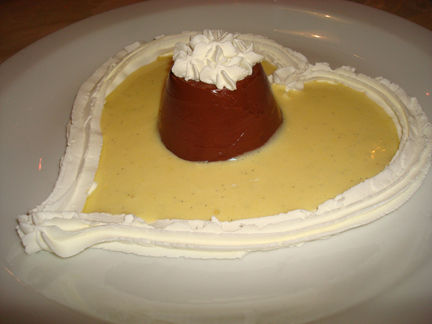
The Endless Valentine: Tracie P (née B) and I still feel like we’re in a dream. Ever since our wedding day, it seems like everywhere we go, someone wishes us well for our marriage or makes something special just for us, like this heart-shaped desert that Francarlo Negro served us just last week at his Cantina del Rondò in Neive (a stone’s throw from Barbaresco). Remember him? He was the author of “The Smell of Money Guides the Evolution of Taste,” which I translated here before leaving for Italy a few weeks ago.

For Valentine’s Day yesterday (our first as a married couple!), we decided to go to one of our favorite spots here in Austin, Ginny’s Little Longhorn Saloon.

Man, Dale Watson and the Lone Stars were on fire yesterday. Sunday is chicken shit bingo day at Ginny’s and the place was packed!

It was our first time going out since we’ve returned from our honeymoon and our first time “on the town” as a married couple. Ginny was so sweet and insisted that our money was no good at Ginny’s. Lonestar beer never tasted so good…

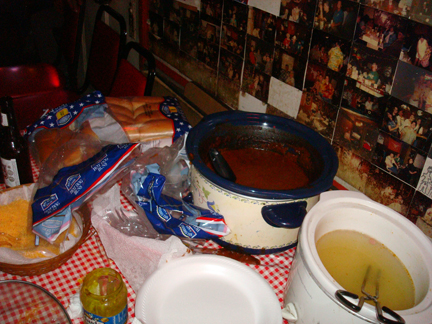
An Austin honkytonk, chicken shit bingo, and chili dogs (above) are a far cry from the sunsets of Tuscany, the Langa hills of Piedmont, and the Vatican museum in Rome where we were just a few days ago. But, man, it sure feels good to be home with my beautiful bride. The endless Valentine makes it feel like the honeymoon hasn’t ended…

In other news…

It’s been a busy Monday morning over here at Do Bianchi Editorial: I just spoke to Giacosa enologist Giorgio Lavagna and I’ll be posting answers to Ken Vastola’s questions regarding my previous Giacosa post tomorrow.

Stay tuned (and thanks for reading!)…

Bruno Giacosa 2007 (complete tasting notes, including some 05s and 04s)

barbaresco

Above: On Sunday, Tracie P, Franco, and I tasted seven wines with the great maestro of Barbaresco and Barolo, Bruno Giacosa (above), and his enologist Giorgio Lavagna. Photo by Tracie P.

How can I begin to describe the emotion that ran through our veins when we sat down on a beautiful snow-covered Sunday morning in Langa with Bruno Giacosa in the Bruno Giacosa tasting room in Neive to taste through the winery’s soon-to-be-released 2007s? Even the uninformed semiotician would have appreciated the myriad strata of meaning, many of them overlapping, as Tracie P, Franco, and I drew that first drop of Asili “white label” 2007 to our lips.

barbaresco

Above: Giorgio Lavagna, right, began to work with Bruno Giacosa in 2008 after the previous enologist, Dante Scaglione, stepped down — a move that surprised many observers of Langa wines. That’s Franco, seated to my left.

The legendary Giacosa winery has been the subject of much controversy over the last two years. In 2008, long-time enologist and Giacosa protégé Dante Scaglione was replaced by Giorgio Lavagna, who had served as enologist at Batasiolo (whose wines are made in a modern style, as opposed to Giacosa’s historically and rigorously traditional style). In 2009, Giacosa shocked the wine world when his British agent announced (in a matter-of-fact press release) that he would not be bottling his 2006 vintage because of the inferior quality of the harvest. I know of no other Langa winemaker who opted for such a drastic declassification and we spoke to many winemakers during our stay about the virtues of the 2006 vintage. (Franco and I have both written, at length, about Giacosa’s decision and how it has affected perceptions of the vintage as produced by other winemakers.)

barbaresco

Above: The 2007 Asili “red label” reserve (“riserva”) by Giacosa is one of the greatest expressions of Nebbiolo I have ever tasted.

But however fraught with anticipation, our encounter revealed that the truth was in the wines, in vino veritas, and what wines they were! In the words of Bruno Giacosa, the 2007 is destined to be one of the great vintages of our times.

The fact of the matter is that Bruno Giacosa does not release mediocre wines and the 2007s are no exception to the rule. Lavagna explained that the extremely mild winter of early 2007 anticipated the vegetative cycle and that, while harvest may have come early, the otherwise classic nature of the vintage gave the wines the tannic structure, profound acidity, and balanced fruit that make for the greatest expressions of Nebbiolo.

Here are my notes and observations from this truly unforgettable tasting.

barbaresco

Above from left, Barbaresco Asili “white label” 2007, Barbaresco Santo Stefano “white label” 2007, Barbaresco Asili “red label” 2007, and Barolo Rocche 2007 “white label.”

Bruno Giacosa 2007 Barbaresco Asili (white label)

The nose was already very evolved, offering surprisingly bright and seductive fruit. The tannin is very powerful but not aggressive and it sits in glorious balance with the fruit and resplendent acidity. The thing that impressed us all about this wine was how purely enjoyable it was — so early in its development — with notes of berry fruit accented by gentle, delicate spice.

“You can smell Asili” in this wine, said Bruno.

Bruno Giacosa 2007 Barbaresco Santo Stefano (white label)

Very powerful and aggressively tannic, mineral notes dominate the fruit in this wine at this early point in its evolution. It’s an “arrogant” expression of Nebbiolo.

“It’s more Barolo than Barbaresco,” said Bruno.

It’s got the tannic structure that Italians like to call “nervoso” or “nervy.” Often when I taste Giacosa’s wines, equine metaphors come to mind: this wine is a powerful young stallion, nervous in the corral, waiting to show its stuff.

Bruno Giacosa 2007 Barbaresco Asili (red label)

The only difference between the white and red (reserve) labels is the additional cask aging. Here the nose was still very closed and the tannin very rich. The fruit was darker in character but I would attribute that to the youth of this powerful wine, which will take longer to reveal the gorgeous fruit that we found in the white label Asili.

What an emotional and inspirational moment to taste this superb wine with Bruno! As we swirled, smelled, tasted, swished, and spit, Tracie P asked Bruno if he preferred Asili or Santo Stefano. “Asili,” he said without hestitation, “is my favorite. They can say what they want, but the best Barbaresco comes from Asili.

One important note: the rows that Giacosa has used historically to make his Rabajà have been reclassified as Asili and so, for the first time, with this vintage, the Giacosa previously bottled as Rabajà went into the Asili. Bruno noted that none of his wines will be labeled using the “menzione aggiuntiva” (“added mention”) Rabajà anymore.

Bruno Giacosa 2007 Barolo Rocche del Falletto (white label)

Of all the wines that we tasted that day, this was the only one that hasn’t spent any time in bottle (it was a barrel sample). The tannin is majestic and muscular at this early stage of its development. The fruit has not yet begun to emerge and its earthy, savory flavors dominated the palate. In Langa, it’s not uncommon to open wine and revisit it later in the day and the next day as well. My only disappointment at the tasting was not being able to spend some more time with this wine.

Bruno Giacosa 2005 Barbaresco Asili
(white label, no red label produced)

Anyone who’s ever tasted Giacosa’s wines knows that it’s difficult not to use superlatives when describing them. Where other bottlings of 2005 Barbaresco have impressed me with how ready they are to drink, this wine was aggressively tannic, a wonderful example of how Asili is a king among crus. By the end of our visit, it had begun to open up slowly to reveal rich red fruit. But aggressive as the tannin was, it still had that distinctive Giacosa signature: never harsh, always elegant, and however powerful at first, the tannin expanded evenly on the back of the tongue, seducing you softly with its muscle while never letting you forget that it was in command of your palate.

Bruno Giacosa 2005 Barolo Rocche del Falletto
(white label, no red label produced)

We all agreed that this regal expression of the Serralunga township (from one of its top growing sites) is destined to go down in history as game-changing bottling of Barolo. Giacosa did not make a “red label” reserve from this storied vineyard in 2005 and Giorgio said it he was “nearly” regretful that they hadn’t. Whether the decision was based on market conditions or on quality of the vintage, this wine will represent a great value for the superior quality in the bottle — whatever the color of the label, Bruno and Giorgio both agreed.

Bruno Giacosa 2004 Barolo Rocche del Falletto (white red label [barrel sample])

Nearly everyone agrees that 2004 was a superlative vintage in Barbaresco and Barolo and this Barolo Rocche del Falletto is a great example of what many consider a “classic vintage” in Langa. It is already very evolved but with many, many glorious years ahead of it. Tracie P and I certainly can’t afford to buy wines in the price point but, man, if I had the dough, this is one of the wines where I’d place my bet. (This wine is already in the market and the red label, they told us, will be released shortly.)

barolo

Bruno Giacosa 2004 Barolo Falletto (white label)

Following the tasting, Giorgio accompanied us to lunch at Enoclub in downtown Alba, where we opened a bottle of the 04 Barolo Falletto. The wine is also still very young in its evolution, richly tannic, but with wonderfully bright acidity. It was so great to enjoy this wine with food (tajarin with sausage ragù in my case). Especially in America, we tend to fetishize Giacosa’s wines to the point that we forget to serve them the way they were intended: with food.

Here are some observations and quotes I culled from our visit (some of them might surprise you).

barbaresco

Above: One of the most moving moments came for me when Giorgio excused himself to return to the winery to draw off a barrel sample. He asked us to continue with the tasting and so I employed my skill as sommelier. What an incredible feeling it was to pour Bruno Giacosa a glass of his wine!

Giacosa was born in 1929 and started making wine when he was 14 years old with the 1944 vintage.

Giacosa uses large-format French Allier casks and he changes them every 8-10 years.

When I asked him what he thought of winemaking in Langa today, he said that “The wines aren’t as good as they used to be.” Today, he told us, growers are using too many chemicals in the vineyard. In his day, only copper and sulfur (“and that’s all!”) were used. He also pointed out that the region has been over-planted and that it lacks the diversity of grape varieties because people have planted Nebbiolo where only Dolcetto and Barbera were planted formerly and even in sites not suited for grape-growing. When I asked Bruno what he thought of the Barolo and Barbaresco growers association, he replied: “The consortium is a waste of time.”

When enologist Giorgio Lavagna asked us what we thought of “biologic [i.e., “organic”] wine,” Bruno chimed in: “Biologic wine is a sham. There is no such thing.”

When I asked Lavagna if Giacosa used cultured yeasts, he said that indeed they do — regularly. Cultured yeasts, he said, were commonly (and have been historically) used at Giacosa to initiate fermentation. But the yeasts, strains developed especially for Langa, do not “dominate the natural yeast.”

When I asked Bruno when he thought these wines would be ready to drink, he said 8-10 years and in 4 years for some of them. As Giorgio pointed, it’s a matter of “cultural taste.” Where Americans and Brits tend to like these wines more when they have aged 20 and even 30 years, Italians prefer to consume them in “middle age,” as it were.

Worth checking out: Ken Vastola maintains an excellent “bibliography” of Giacosa’s wines here.

Post scriptum. Bruno suffered a stroke in 2006 and he still hasn’t fully recovered. He was perfectly lucent and conversant during our tasting but it was also clear that he’s in a lot of pain. I wish that everyone could have seen the smile on his face, when he held Tracie P’s hand and told her, “sei una bellissima sposa,” “you are a very beautiful bride.”

Chips and pints at Terminal 5 (and the Gaiorny)

Huxley's

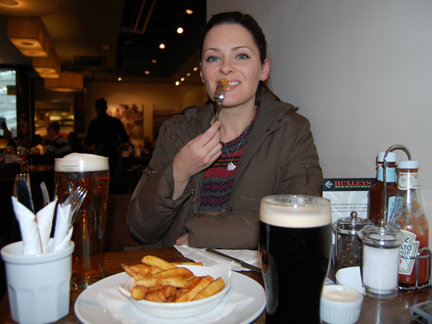
After breakfast in Rome and chips and pints for lunch at Heathrow’s Terminal 5, we got back to Texas last night safe and sound.

I know that Terminal 5 has had its problems but I’m happy to report that our passage there was seamless and the beer had a great head on it.

Enoclub

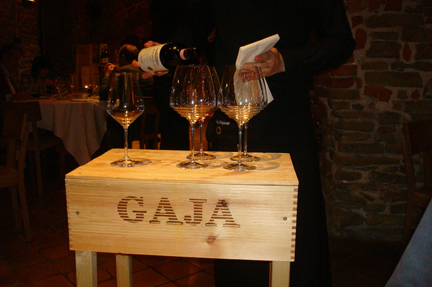
The “Gaiorny” of it: our server at Enoclub in Alba used a cart made out of a Gaja “original wooden case” to open the bottle of Bruno Giacosa 2004 Barolo Falletto that we drank with Giacosa enologist Giorgio Lavagna and Franco on Sunday at lunch. Tracie P and I couldn’t help but note the “gairony” of the modern vs. traditional dialectic going on there. It’s fun to walk into Enoclub, Alba’s most chic wine destination, and hear your lunch companion say to the hostess, “we have a reservation under Giacosa.” It raises an eyebrow or two, even in this jaded Hollywood of Italian fine wine.

I began compiling my notes from the Giacosa tasting yesterday on the plane and will post them tomorrow after I catch my breath. Thanks, everyone, for the notes and messages: we have so many tales to tell from our trip but the Giacosa tasting was the “money shot,” as we say in show biz. You might just be surprised to read what Bruno had to say about cultured yeasts, reclassification of Rabajà, and how often he changes his casks.

Stay tuned!

The smell of money guides the evolution of taste, part 2

barolo

Above: A collection of old large-format bottles at the Bartolo Mascarello winery. I took the photo when I visited and tasted with Maria Teresa Mascarello, Bartolo’s daughter, in April 2008. Those are aging casks in the winery’s cellar, below left.

I received a lot of positive feedback in the wake of my post the other day Bruno Giacosa and Bartolo Mascarello meet for the first time. Thank you to everyone who commented and wrote in for the encouragement and the kind words. And special thanks, again, to Franco, for bringing this wonderful piece of writing to our attention.

One of the most fascinating elements — among many — about the first installment was the note about the weather: 95° at the end of July. How did that heat spike affect the 1964 vintage?

Here’s the second and final installment of the translation of Francarlo Negro’s newsletter, “The Smell of Money Guides the Evolution of Taste.”

Buona lettura!

*****

barolo… The same was true of the Barbaresco [I’ve never heard of a B. Mascarello Barbaresco but evidently he was making Barbaresco at that time; thoughts?]

In the glass, the wine was clear, not dark red, but rather light red with gradations of garnet and an orange-rose rim.

In the mouth, the light flower gave way to the tannic freshness that enveloped the elegance of the wine, an austere but inviting sensation, cleansing the mouth and prompting you to take another sip. The elegance of the nose opened with a velvety impression, dry but never bitter in taste.

The 1961 Barbaresco that Bruno Giacosa had brought for the tasting was more evolved. But it showed characteristics similar to those of the Barolo, although with slightly different tonalities. Light impressions of field flowers, rounder on the palate, definitely more velvety and approachable.

Bruno and Bartolo discussed the fundamental roll of the land, of the surì [i.e., the best rows in top growing sites], the vines, and approaches to growing grapes — without abusing the vine, with asking too much of it.

Quality depended on the harvest. During those years, clear-cut differences were evident between one vintage and another. In more than 40 years since the birth of the Barolo and Barbaresco appellations, the wines have been declassified only once to rosso da tavola [red table wine], and that was no haphazard decision. The year was 1972, when excessive rain and incessant fog caused the grapes to rot.

Thirty years later, the 2002 harvest should have met the same fate. But technology and the interests of the large exporters weren’t about to let that happen. Millions of bottles containing low-quality wines were released on to the market bearing the name Barbaresco and Barolo DOCG.

barolo

Above: Historic aging casks for Nebbiolo, no longer in use, at the Fontanfredda winery, one of the original high-volume producers of Barolo, founded in the 19th-century by the first king of Italy, Victor Emmanuel II.

Subordination to “international” tastes clouds the identity of our wine.

The advent of international demand, which began in the early 1980s, has offered a historic opportunity to the great wines of Langa: to reach the tables of the greater western world, from Europe, to America, to Japan.

This demand is guided by American buyers who want Barolo and Barbaresco to change in order to adapt to the tastes and style of the market in that great country — that gluttonous, powerful, ignorant country.

The greater part of winemakers have adapted their cellars, as sales increase and profits soar. For the most part, the historic enologic culture of our land has been snubbed to make way for new technology in grape-growing, vinification, and aging. The score awarded by U.S. magazines determines the success or failure of sales.

A complex network of relationships has been created between large international merchants, consenting journalists, and willing enologists. A new genre of wine has been born. There are a few exceptions but most wineries have chosen to reshape the identity of the great wines of Langa. These changes have not come about through an exchange of ideas between the old and the new but rather between traditional and modern enology: the wines are the result of an irrational adaptation of enological standards, dominated by the major buying groups and by the multi-national network of the wine industry.

Vanilla, fruity Barolo and Barbaresco.

The “ideal” wine destined for export has changed completely. The color must be darker, as darkly colored as blood, the symbol of power, modeled after Cabernet Sauvignon, the benchmark grape variety for the international market.

Vanilla is desirable in the nose, as are extraneous spicy notes, the fruit of aging in small toasted casks, French barriques, used only if rigorously new, so that they will impart their own aromas and tannins as they corrupt the classic, original traits of our wines.

The taste should be marked by “fruitiness,” notes of ripe red fruit, with intense flavors, enticing and coating, sometimes jammy. When the harvest isn’t the best and the natural alcohol content is only 13%, winemakers resort to the Salasso method: when fermentation begins and the skins form the cap, a certain quantity of must is racked off from the bottom of the cask in order to achieve the desired intensity in color and flavor. The technology behind temperature-controlled concentrators allows the winemaker to avoid cooked-fruit flavors as they reduce the water content and increase the sugar content of the wine.

Fermentation and vinification techniques have undergone a transformation under the aegis of enologic innovation. It’s no secret that the consultation of a certain enologist with ties to the new network of international media and commercial interests is a prerequisite for a good score in the wine guides and the subsequently increased facility to sell the wine at a higher price. The end result is an atypical wine, in cahoots with grape varieties considered “international” because they are the preference of Americans and others unfamiliar with the culture of wine. The uniqueness of the monovarietal wine, made from Nebbiolo, has lost its distinct personality.

Certain media have embraced and supported this production-and-marketing operation: for many years the Gambero Rosso/Slow Food Guide to the Wines of Italy has punished traditional producers by denying them recognition among the Tre Bicchieri winners. Giacosa and Bartolo Mascarello are among those who have penalized. Their wines were considered to “rustic.”

—Francarlo Negro

Postscript

In recent years, regional authorities have allowed growers to plan new vines in growing sites where grape growing [for fine wine production] has never been suitable. Many of these sites have never been deforested nor used for cultivation of any kind since they face northward. These are sites where our elders wouldn’t have even thought of planting hazelnut trees: in 2008, production of Barolo and Barbaresco increased 50% with respect to production levels in 1999.

(translation by Do Bianchi, January, 2010)

Giacosa and Mauro Mascarello spar over 2006

Above: A recent photo of iconic Langa producer Bruno Giacosa.

Over at VinoWire, Franco and I have posted a preview of Franco’s article on Bruno Giacosa’s controversial decision not to bottle his 2006 Barbaresco and Barolo (to appear in the February issue of Decanter Magazine). But you’ll have to click over to VinoWire to get it. It marks the first time that Giacosa has spoken directly to the English-speaking world on the polemic move. You might be surprised by what some of his peers and interlocutors have to say about the vintage.

In other news… from the “just for gastronomic fun” department…

It’s that time of year again when we spacciatori di vino (wine pushers) hit the streets and start showing our wares again. It’s been good to reconnect with a lot of folks I only see when I’m on the road, like my good friend Josh Cross, who always has something fun on the menu at his awesome restaurant Oloroso in San Antonio. Josh and I both worked in the New York restaurant scene during the better part of the last decade and so we have a lot of friends in common.

He’s open for lunch now and so he treated me to one of his lunch specials, a take on “pigs in a blanket” (above): housemade venison sausage, cased in a runza dough kolache bun, served with a fig mustard and piquillo pepper relish.

I really like his sous chef Ernesto Martinez’s take on the German and Czech historical presence in Central Texas. How’s that for fusion?

Today, I’m on my way from Dallas to Houston, where I’ll be speaking at a wine tasting tonight. In less than a week, my beautiful Tracie B and I will be leaving for San Diego and the final preparations for our wedding. I wish ya’ll could see the grin on my face as I write this from a Starbucks in Ennis, Texas! :-)

Bruno Giacosa and Bartolo Mascarello meet for the first time

Every once in a while you come across one of those amazing pieces of writing that makes you stop in your tracks, put down your coffee during breakfast, and focus all of your thought and imagination on the words on the page (or, as the case may be, screen) before you. A text where the experiential and the aesthetic sensibility combine to transfigure the words’s meaning and sound, revealing unexpected and welcomed clues to the mystery of life that surrounds us.

That’s what happened to me this morning during our daily breakfast ritual chez Tracie B, as I scanned The New York Times online and my Google reader feed.

I think the same thing happened to Franco, when the same text appeared in his inbox earlier today.

The below translation has been culled from an e-letter authored by Francarlo Negro, restaurateur, Nebbiolo and Langa afficionado, and owner of the Cantina del Rondò in Neive (Cuneo, Piedmont). Franco re-posted it earlier today on his excellent blog Vino al Vino.

It’s entitled, “The Smell of Money Guides the Evolution of Taste,” and in the first part, Francarlo recalls a meeting organized by his father between Bartolo Mascarello and Bruno Giacosa (their first!) in late July, 1967 (not long after I was born!).

After I read it to Tracie B this morning over coffee, she said, “You have to translate that!” By the time the words left her delicate lips, I had already begun… Buona lettura!

1967: Bruno Giacosa meets Bartolo Mascarello

At the end of July, 1967, with the hills inundated by a delicate, sultry fog, my father, who was a friend of Bartolo Mascarello from Barolo, organized a visit with Bruno Giacosa from Neive. I was 17 years old and I was excited: I didn’t want to miss a word of the conversation that I was about to witness.

Back then, there was no demand from the international market. It was difficult to sell fine wine, which, at the time, was only opened on special occasions. Adulteration was rampant: large wineries like Marchesi di Barolo inundated the market unchecked and dishonest farmers cut our wines with concentrated must that arrived from the South. Manduria in Apulia was the principal source of the supply.

Everyone knew of the case of a Fiat worker, originally from Neive, who would obtain this hodge-podge from a large local cellar and would proceed to fill his casks every spring and sell his “authentic wine” to his fellow factory workers.

Together with a few others, Giacosa and Mascarello waived the flag of authenticity high. With confidence, they identified the words authentic and local character with the purity and identity of the two great wines of Langa, the fruit of Piedmontese enological culture.

The cool air of Bartolo’s cellar greeted us when we arrived: we had traveled over 12 kilometers of asphalt at 35° [Celsius, 95° F.] in our Fiat 600 with the windows rolled down. The tall casks [botti] bulged around the waist, made from Slavonian oak. Some held 50 brinte (2,500 liters), others 100 brinte. In all, there was just over 15,000 liters of Barolo, from different vintages and different vineyards, all from hills in the township of Barolo.

Bartolo climbed up the ladder leaning against the casks, he drew off a little bit of wine, and handed us the glasses. And so the ritual of tasting began.

Despite Bartolo Mascarello’s repeated pleas that Bruno address him using [the familiar] tu, Bruno Giacosa addressed Bartolo using Voi, a sign of ancient respect for the authority of his interlocutor. The air was filled with great respect, between the men and for the wine. In silence, we delicately sipped the wine, as we aerated the small tastes in our mouths.

I remember that the 1964 Barolo leapt from the glass, the elegant, regal wine already releasing its full magnificence. The nose revealed subtle notes of violet and white spring flowers. In the mouth, you perceived the tart sensation of the small buds of the vine during blossoming. You could not taste any wood, as wood was not meant to be apparent. The cask — the botte — was intended to play one role alone: it was meant to accompany the Nebbiolo, sharp and brusque at birth, on its slow journey as it aged and became austere and elegant.

That’s all I had time for today, but, wow, what power in these 450 words! How much information — so many clues to the history and story of Barolo — in this dense text! I’ll translate more in the days that follow. But, wow, just ponder this passage for a few days. Stay tuned…