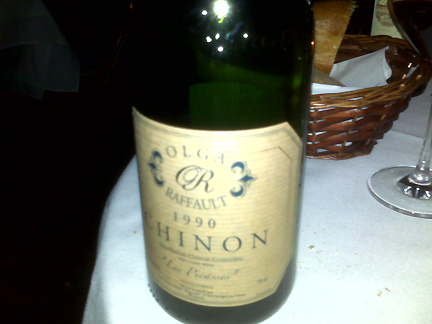
Summer 07 Ends, Eating Raoul’s and Drinking 1990 Chinon

raffault_1990.jpg

The summer of 2007 will be remembered — in my mind at least — as the summer that I quit my full-time day gig (September 7 was my last day as Marketing Director at the group that runs Centovini, I Trulli, and Vino), the summer that Nous Non Plus went back to France for the second glorious time, the summer that I turned 40, the summer of my official mid-life crisis, and the summer that I fell in love with Cabernet Franc and Chinon.

The seemingly endless and at-times-painful summer of 07 (for there was a promise that unraveled sadly, as well) came to an end on Sunday, September 23 at 5:51 a.m. (or so they say), the day after Yom Kippur and the day after my mother’s birthday.

The night before I left for California (to spend Yom Kippur and my mom’s birthday with the family) was a summery evening in New York and the city was bustling with the last notes of warm-weather partying. I found myself downtown with a wine biz bud and we couldn’t get a table anywhere: Blue Ribbon was packed to the gills, Balthazar was as bustling as Belshazzar’s Babylonia, and a Bellini sludge sparkled and shimmered as it oozed over the sidewalk at Cipriani into the gutter.

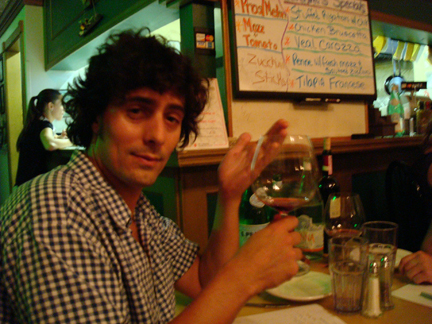
The solution? Raoul’s… where the colorful characters and the Negronis (with maraschino garnish) took the edge off a thirty-minute wait for a table. Our reward? The best seat in the house — the deuce in the corner of the dimly lit garden — and a wine list that included a 1999 Lopez de Heredia Viña Bosconia (“the best Burgundy in Rioja,” our skilled and sharp-witted sommelier noted), and a 1990 Domaine Olga Raffault Chinon Les Picasses, both at very reasonable prices.

I had never been to Raoul’s, a true downtown New York experience where locals with thick eastcoast accents and full heads of hair (some real, some faux) gather, an authentic 1970s scene, too upscale for Scorsese’s Mean Streets but not mundane enough for Allen’s Manhattan.

The Viña Bosconia was light and fresh and went well with my frisée salad (laden with lardoons and topped with a runny egg).

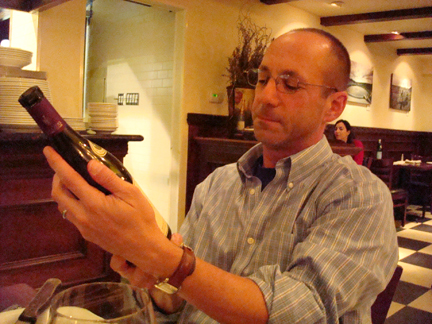
The 1990 Chinon was simply sublime. I’d been drinking Chinon all summer (in Paris and New York) but had never had the chance to drink any older vintages. The 1990 single-vineyard Raffault teemed with the wonderful vegetal flavors that Robert Parker seems to despise — he once wrote infamously, “I have found the majority of these wines (made from 100% Cabernet Franc) to be entirely too vegetal and compact for my tastes” — and it paired beautifully with my steak au poivre, the house specialty at Raoul’s. The wine had a delightful freshness — impressive for a seventeen-year-old wine — and we enjoyed every drop.

By June of 1990, I had finished my first year of post-grad studies at the Università di Padova (where I met my friend, cineaste and novelist Mauro Gasparini, whose excellent blog, I recently discovered). I spent the rest of the summer in San Diego living at home and working as a bike messenger, preparing for the doctoral program at the UCLA Italian Department where, in September, I began teaching Italian language.

I never could have imagined that the summer of 2007 would find me working as a writer and a copywriter on the New York food and wine scene. But stranger things have happened. Hopefully, even stranger things will happen yet.
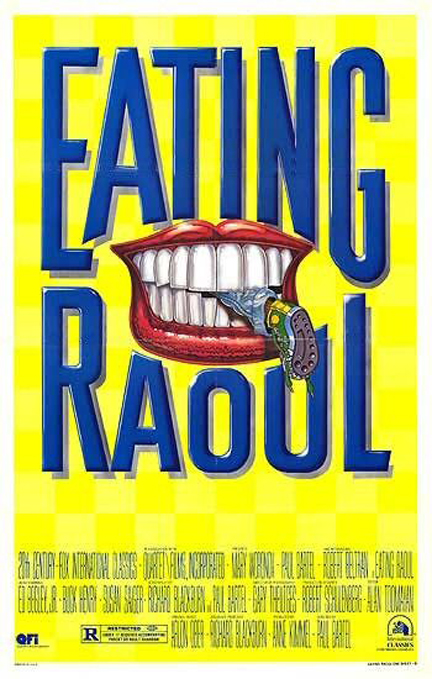
eating_raoul.jpg

Above: Eating Raoul, 1982. Isn’t funny that the male lead works in a wine store? Well, it seems funny now.
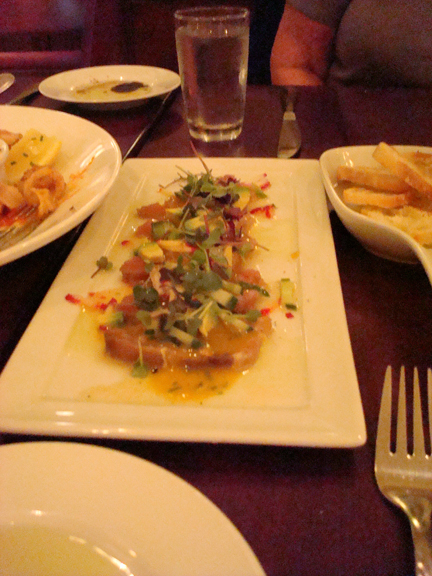
Mexican Nebbiolo? A night with family at Restaurante Romesco in Bonita, CA

Above: the smoked Sea of Cortez marlin, thickly sliced, was a show stopper at Restaurante Romesco in Bonita, CA.

The Parzen family traveled southward from La Jolla yesterday evening toward the Mexican border to beautiful Bonita (about 10 minutes from the Otay Mesa border crossing) where we celebrated Judy Parzen’s birthday at Restaurante Romesco, a wonderful, elegant strip-mall restaurant that bills itself as a “Baja Med Bistro.”

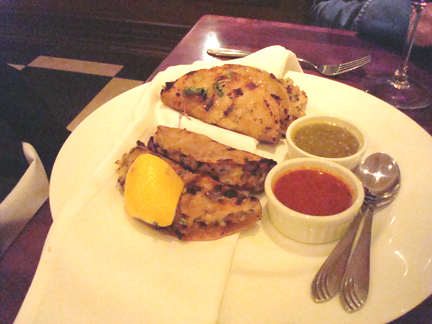
Above: grilled tacos stuffed with shrimp and mozzarella.

Micah and Marguerite, Tad and Diane, and yours truly raised a glass to celebrate Judy’s birthday (actually the day before, September 22, which happened to fall on Yom Kippur this year). It had been so long since we’d all been together as a family for a holiday and although we’re all sad about how my life has been changing, it was great to be together as a family for the holiday and our mother’s birthday (the last time was four years ago… but things were a lot different then…).

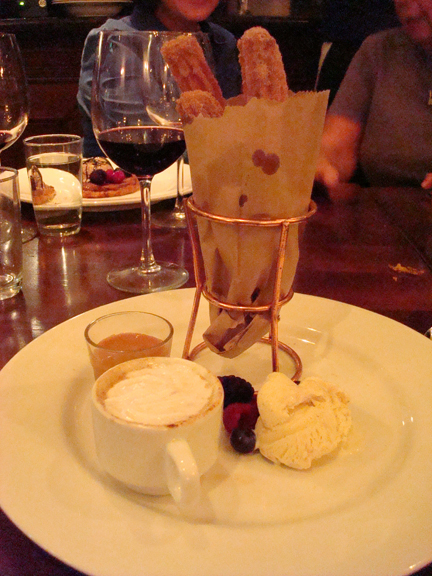
Menu highlights: excellent smoked Sea of Cortez marlin, thickly sliced and drizzled with vinaigrette (made in Ensenada, our waiter, Omar, told me); tacos stuffed with sliced tongue that had been braised in a tomato-chili sauce, very tasty; grilled tacos stuffed with shrimp and mozzarella (I didn’t think I’d like the combination of seafood and plastic cheese, partly, I must admit, because the dairy-seafood combination is a taboo in some parts of Europe, but this taco was fantastic); and piping hot churros, just firm on the outside, their dough creamy on the inside, rolled in cinnamon sugar.

Above: the dough inside the churros was creamy and the dish came with a demitasse of Mexican hot chocolate and a caramel dipping sauce.

The wine list is nothing to write home about. We drank a very forgettable Albariño and commercial and regrettably barriqued Tempranillo, both from Spain. But the cellar at Romesco also features some Baja California wines and when the waiter told me that his favorite was a Nebbiolo, I had to try it.

The 2002 Nebbiolo by winery L.A. Cetto is proudly aged “14 meses en barrica de roble francés” according to the website (14 months in French oak barriques). For those who know me and read my blog, you know that I’d rather drink mayonnaise soda* than barriqued (oaked) Nebbiolo. The wine was concentrated and alcoholic and didn’t taste anything like Nebbiolo. Only a handful of Californian winemakers have grown Nebbiolo (mostly in Central Coast) and I was truly surprised to see that someone was doing it in Baja California. I can’t say I liked the wine but was impressed by its novelty. I wonder how it would have shown if it hadn’t been barriqued. One of the unique things about Italy and its wines is that while international grapes (Cabernet Sauvignon, Cabernet Franc, and Merlot in particular) have been cultivated and vinified in Italy with great success, native Italian grape varieties have yielded disastrously disappointing results abroad. You can take the grape out of Italy but you can’t take Italy out of the grape… I guess.

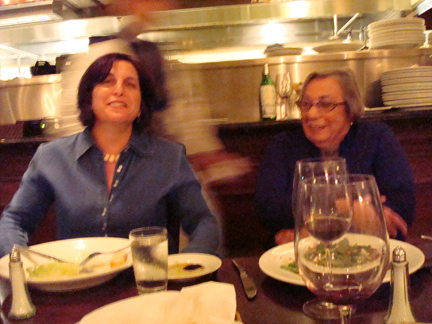
Above: my sister-in-law Diane, left, and Judy share a laugh.

But I believe in drinking wines appropriate to the occasion and the place, and, ideally, wines made by and for the people who prepare your food. It was exciting to drink “locally” and to discover what Baja winemakers are doing. Our waiter, Omar, whose wine service was very good, was proud of this bottle and I was proud to taste it at this excellent restaurant.

Above: brother Micah and my sister-in-law Marguerite.

And… you know… to quote a phrase, sometimes it’s not the wine you drink but whom you drink it with and where that matters.

You may have known that all the time, but I’m learning it these days.**

Above: brother Tad contemplates Mexican Nebbiolo.

*Life’s like a mayonnaise soda
And life’s like space without room
And life’s like bacon and ice cream
That’s what life’s like without you

— Lou Reed

**Love is so simple
To quote a phrase
You’ve known it all the time
I’m learnin’ it these days.

— Bob Dylan

No Place Like Home

After all the recent (and drastic) changes in my life, I didn’t have anywhere to attend High Holy Day services in NYC and so I decided to come home, where I spent Yom Kippur with my brother Tad, his wife Diane, their kids, and my mom Judy at Temple Beth El in La Jolla, where I had my Bar Mitzvah some twenty-seven years ago (when this now thriving congregation worshipped in the living room of a house on La Jolla Scenic Dr.).

The services were good, my fast was easy, and it was great to be with my immediate family (hadn’t spent the holidays with them in way too many a moon). Rabbi Graubart, who plays a pretty mean Havdalah service on 6-string (Yom Kippur fell on the Sabbath this year), gave a good sermon on forgiveness (citing the story of Joseph and his brothers), something the world — and my life — is in need of (both to give and to receive). We broke the fast at Tad and Diane’s, where, after dinner, I played guitar with my nephew Cole, who’s getting really really good.

view_bahia.jpg

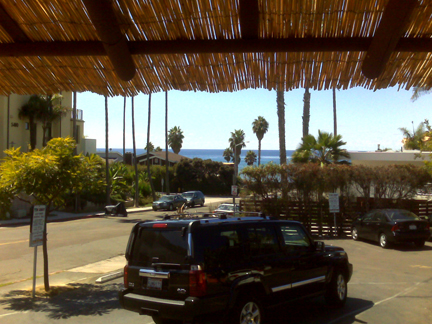
Above: the view from Bahia where I grinded down on a Carne Asada Burrito with Guacamole and drank a beer with my bro Micah.

Today (Sunday), I went to one of my all-time favorite taco stands, Bahia Don Bravo on La Jolla Blvd., with my brother Micah, who, like brother Tad, is a super successful lawyer based in San Diego (he also has a Ph.D. in anthropology from Case Western).

I found this crazy site called Burritophile that lists the address and phone number etc. And I thought that I had too much time on my hands!

The weather is beautiful today (we’re about to go down to the La Jolla Cove and jump in the water) and we sat outside where we both ate Carne Asada Burritos with Guacamole and drank a Negra Modelo.

The burrito’s chopped onions, cilantro, tomatoes, and guacamole were fresh and the beef tasty. And, man, that beer tasted good as we gazed out at the water (which was looking particularly beautiful today, with different layers of blues and greens).

Life sure has been crazy lately and it’s been a really, really hard time for me. It’s good to know that some of the good things in life don’t change… like a Carne Asada Burrito and a beer on La Jolla Blvd. a few blocks from my old elementary school, Bird Rock Elementary.

Style Wins over Substance: Downtown Cocktails

pdt1.jpg

Last Thursday I joined a wine-and-cocktail-savvy crew (including my new friend Jordan Mackay, who is possibly the funniest wine writer I know) for a crawl through the East Village and the Lower East Side.

First stop was PDT (Please Don’t Tell), a speakeasy style, super-affected, reservations-only bar connected and related to Crif Dogs on St. Marks (Crif Dogs’ website doesn’t seem to be working but maybe they’ll get that together one of these days). You have to go through the hot dog joint to a faux phone both where you then call and they let you in.

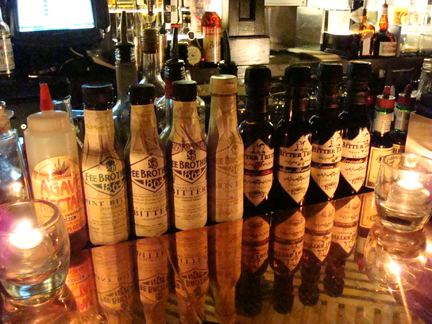
The bartenders at PDT are very creative and the shelves are stocked with unusual bottlings, like the bitters collection above. Our bartender poured us a taste of Lucid, which is purported to be the first legal American-made absinthe.

pdt2.jpg

Frankly, the drinks weren’t that good (mostly sugary to my palate) and the chili dog tasted like a whatever NYC street vendor dog with bland tomato sauce on it.

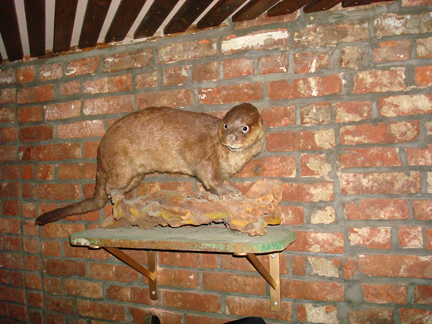
Flash photography is not allowed and I got kicked out after I took the above photo of the weasel (?). Evidently, PDT’s decorator is really into taxidermy.

death_co.jpg

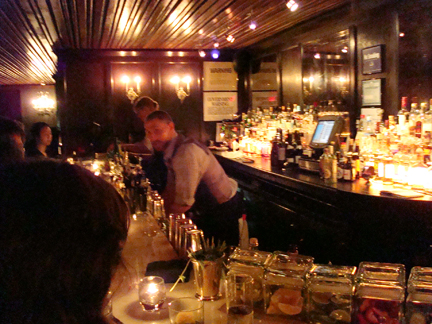
Next stop was Death & Co. (above), which is also a super-stylized and affected place. I really liked the look and feel of this 1920s tavern and its quasi-Edward-Gorey feel. I genuinely enjoyed my cocktail, a Company Buck, which is made with dark rum and housemade ginger beer. Our waiter was glib and professional and really knew her stuff.

little_giant.jpg

The end of the night found us at Little Giant where I was very impressed by the wine list but underwhelmed by the yes-I-hate-to-say-it way too affected food (panzanella with steak in it? oy…).

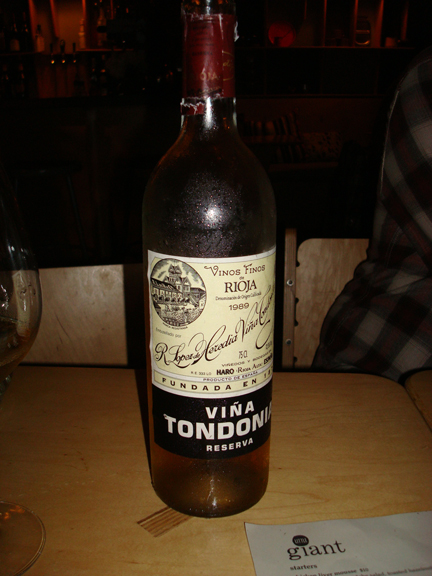
I made the mistake of ordering a 2003 Sassella by Sandro Fay, which was too modern (for me and my dining companions). I had never tasted the wine and, hey, you win some and you lose some. But the 1989 white Rioja by Lopez de Heredia (above), which we ordered upon being seated, was stellar. I had only tasted the winery’s whites back to 1994 and this was, by far, the best I’d experienced.

After so many cocktails and bottles of wines, our crew had achieved a certain brio and the confluence of a lot of style and some substance seemed to have blurred the lines between aesthetic experience and downright, pure-and-simple fun.

Tommaso’s: “No good wines… just good bottles…”

sign.jpg

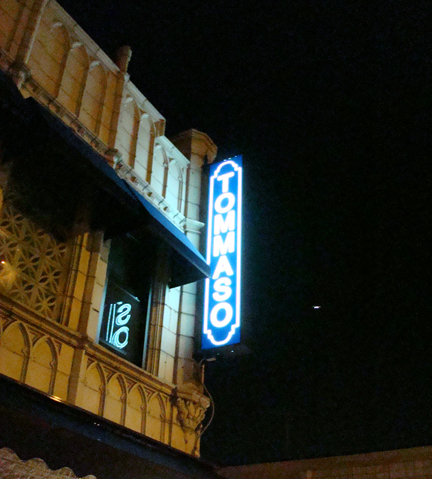
Above: Tommaso Restaurant is located in Bensonhurst, Brooklyn, one of New York City’s thriving Little Italys.

Words of wisdom were imparted to us last night by restaurateur Tommaso Verdillo of Tommaso Restaurant in Brooklyn where I joined Alice Feiring, Elizabeth Spiers, and Lawrence Osborne for some old wine, great food, and a truly enjoyable and stimulating confabulatio.

Tommaso and his restaurant may be counted among NYC’s best-kept secrets and so be it. Perhaps because Bensonhurst, Brooklyn (one of New York’s true Little Italys) seems so exotic to the uninitiated, perhaps because Tommaso hasn’t received the attention his food and his wine list deserve, his excellent cooking and thrilling-if-ecclectic cellar (a true trésor of old wine) just aren’t on the culinary radar of Manhattanite would-be gourmets.

When it became clear to Signor Tommaso that we were there to raid his cave, he warned, “You never know how these bottles will drink. There’s a wise, old saying: ‘there are no good wines… just good bottles.'” And he’s right: when it comes to old wine, even when provenance is unquestionable and a given bottle has been cellared properly, age invariably increases the chance that a bottling will have gone bad.

The menu and pairings:

Polpettine di Riso and Mozzarella in Carozza

St Joseph Offerus 1999 Chave

Porcini-Filled Tortellini dressed with melted Castelmagno Cheese

Corton Bressan Grand Cru 1983 Chandon de Briailles

Spiedini alla siciliana (breaded and skewered veal served with roast potatoes)

Barolo Le Rocche di Castiglione Falletto 1986 Bruno Giacosa

While the mozzarella in carozza was superb, the tortellini were by far the stand-out dish (I couldn’t resist sopping up the melted Castelmagno in my dish).

The St Joseph lacked the depth that I expected from such a highly touted producer but was good (granted, this is the winery’s “entry-level” wine). The 1983 Burgundy was very tired and had lost most of its body and acidity but its astoundingly low price made it well worth the experience (there are some great bargains on Tommaso’s list).

When we asked Tommaso about the Giacosa Barolo on the list, he told us he would go down in the cellar to see what was actually there. He returned with three bottles and proposed that we open the 1986 Barolo Le Rocche di Castiglione Falletto.

The 1986 harvest was a sleeper vintage, he explained, probably because it was overshadowed by the more famous and much warmer 1985. He and Bruno Giacosa were old friends, he said, and the winemaker had often spoken to him about the underrated and underappreciated ’86. The fact of the matter was that none of us had could remember having tasted ’86 Giacosa. And while I’ve tasted many excellent bottlings of Barolo Falletto by Giacosa, I’d never tasted the cru “Le Rocche di Castiglione Falletto.” (I’ve just discovered this excellent Table of Bruno Giacosa Barolo by nebbiolophile Ken Vastola. It reveals that 1987 was Giacosa’s last bottling of this cru.)

Now in the autumn of his life and career, Bruno Giacosa is one of Italy’s most revered winemakers and many would argue that his wines are among the best Italian ever (the 1990 Red Label Barolo Falletto is certainly one of the best wines I’ve ever tasted in my life). According to legend, Giacosa never studied winemaking. Tommaso told us that during the 1960s, before Italy’s economic miracle reached the Langhe hills (where Barolo and Barbaresco are made), many winemakers were forced to abandon their vineyards and travel abroad to find work to support their families. Giacosa, he told us, generously offerred to make their wines for them while they were gone, thus ensuring that their land would not be snatched up by unscrupulous speculators in their absence. This experience, he said, allowed Giacosa to refine his skill and knowledge and helped to shape his legacy as one of Italy’s greatest vintners.

Although it showed admirably for its age, the 1986 Le Rocche di Castiglione Falletto was tired (it had some good fruit left in it but the tannin had faded). It would have been better a few years ago and I wished we had opened the 1990 Villero (another cru I’ve never tasted from Giacosa). But the price was reasonable and the experience truly memorable. And after all, our simpatico host had gently warned us beforehand, “there are no good wines… just good bottles.”

giacosa.jpg

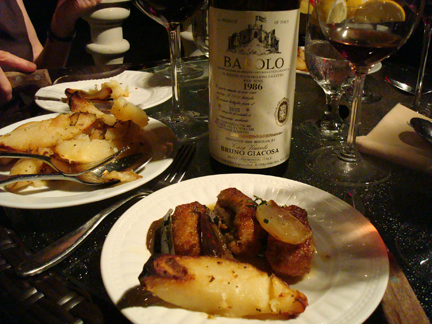
Above: Barolo Le Rocche di Castiglione Falletto 1986 Bruno Giacosa paired with Spiedini alla siciliana and roast potatoes at Tommaso’s. The bottle of 1986 Giacosa didn’t have the government warning “front label” on the back of the bottle (yes, it’s called a “front label” by the TTB, the Alcohol and Tobacco Tax and Trade Bureau, even though it appears on the back of the bottle). But it did have a strip label that reported the following text: “Experience, love and passion allows [sic] us to obtain this product of the highest quality coming from grapes chosen and selected exclusively by us.”

Under the Bridge Downtown

eels.jpg

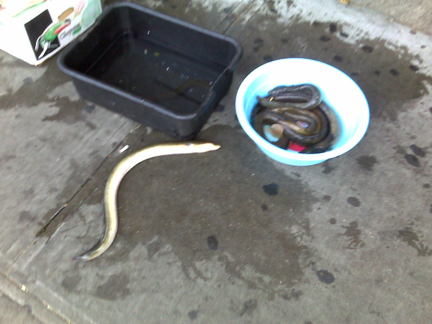
Above: live eels at the daily market under the Manhattan Bridge (on the Manhattan side) in Chinatown. One had slithered its way out of the tub. Most of the vendors sell produce but there are also a number of seafood mongers (sea snails, fishes, and seemingly any sort of sea creature). There are also a seamster and a cobbler. Sometimes I feel just like that eel.

Under the bridge downtown
Is where I drew some blood
Under the bridge downtown
I could not get enough
Under the bridge downtown
Forgot about my love
Under the bridge downtown
I gave my life away.

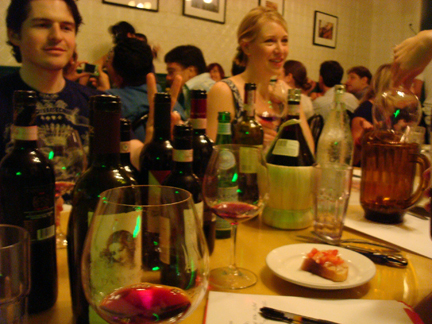
Tasting 05 Chianti with friends at Michelina (Hoboken)

miro_marisa.jpg

Above: Miro and Marisa at Cafè Michelina.

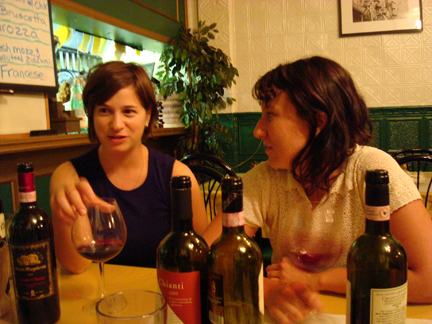
One of my closest and oldest friends in the wine biz, Mary Anne Sullivan (head of PR for Terlato Wines, one of the biggest importers of Italian brands), called me last week asking if I’d like to take part in an “under-$25 2005 Chianti tasting” at Cafè Michelina, a wonderful old-school family-owned BYOB Italian restuarant in Hoboken where we often gather (Mary Anne, her husband Miro, and their daughter Mara live nearby in Jersey City Hts.).

We were also joined by Slowfood friends Amy Thompson and Cecily Upton (click her name to check out her blog), Marisa Huff (who works in the food writing biz) and her friend Veronique Colaprete (Marisa and Veronique, it turns out, went to highschool together at Bishops in La Jolla where I grew up), and my friend and fellow French rocker Dan Crane aka Jean-Luc Retard aka Bjorn Turoque.

tasting_notes.jpg

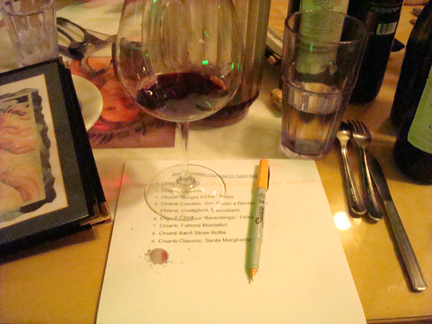
We tasted nine 2005 Chiantis, all under $25, including the soon-to-be-released-in-this-country Santa Margherita Chianti Classico, which Mary Anne’s company will be launching shortly. Mary Anne wanted to see how the wine would show compared with other brands on the market. Earlier in the week, we had purchased the other wines from Astor Wines & Spirits where they currently carry eight 2005 Chiantis.

amy_cecily.jpg

Above: Amy and Cecily.

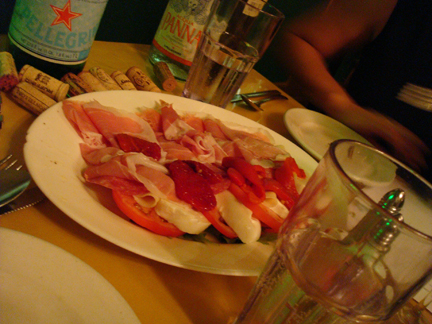
Cafè Michelina is a small and delightfully classic checkered-tablecloth Italian restaurant run by a very nice Palermitan family who lives across the street. Highlights from our meal were the sine qua non “antipast” (perfectly sliced prosciutto, salame, and mozzarella with freshly sliced tomatoes), Penne served with Sautéed Zucchini and Fresh Mozzarella, and a beautiful Veal Carozza (breaded veal scaloppine layered with eggplant rounds that had been dipped in egg and then fried, topped with a tomato sauce).

prosciutto.jpg

Above: the “antipast” would surely have made Hoboken-hometown-hero Frank Sinatra proud.

The informal winners in this very casual and super fun tasting?

At a disadvantage because it was the first wine tasted, the Ruffino Chianti Classico was a bit anonymous but showed the “sour”, “tart mouth” notes that — to my palate — are indicative of honest Chianti when the Sangiovese is allowed to muster its bright acidity. “Smooths out once it hits all the points in my mouth,” wrote one taster.

The Chianti Borghi d’Elsa by Melini (which, I believe, comes from vineyards in the province of Florence) surprised some of us, receiving comments like “very smooth + easy going. me likey” and “very classic Chianti.”

Fèlsina’s Chianti Classico was arguably the most traditional-style wine in the flight: “complex nose… well-balanced”, “good acid”, and “most complex” (my personal favorite).

For some of us, the Chianti Classico by Santa Margherita was the favorite: “big nose. chocolate. black cherry… yummy!”, “earthy”, and “hangover in a glass!” (this last observation intended to express the taster’s delight).

I was very curious to try the Santa Margherita, which is a 100% Sangiovese aged in new wood. I genuinely liked it but found it more of a Super Tuscan (i.e., more modern) than a Chianti Classico: it was very tannic (to drink in a few years?) and concentrated, very big in the mouth. It is a well made wine (although too modern for me). In a blind tasting I would have placed it in a price point higher than $25.

The losers?

A straw-flasked Banfi earned comments like “cough syrup”, “jam!”, and “awful”.

Gallo’s Da Vinci: “Something unpleasant about it”, “too jammy”, and “too alcohol-ly”. It’s a travesty, really, that they’ve named this wine after Leonardo.

The wind-up? There’s a lot of Chianti out there… some good… some — not surprisingly — bad… I have always been impressed by the Italian wine program at Astor Wines & Spirits and I applaud the buyer there for offering a wide selection of wines at good prices, some of them true bargains. Although the better Chiantis tend to be a little too fruit-driven for my palate, there are some well-priced options that show balanced acidity and fruit, perfect for pairing with wholesome, tasty Italian American cuisine prepared by a nice Palermitan gent whose lives across the street from his neighborhood-favorite Cafè Michelina in picturesque Hoboken with his wife and two daughters (all of whom work in the restaurant with him, the mother in the kitchen, the daughters on the floor).

snackboy.jpg

Above: Dan Crane aka Jean-Luc Retard aka Bjorn Toroque is also known affectionately as “Snackboy Jr.” for his inimitable ability to snack out. We have shared many an excellent meal and bottle together, whether on the road with Nous Non Plus or at our favorite NYC steakhouse Keens.

In other news, I was Bar Mitzvah 27 years ago today.

Last night I ate my fork.

Braving the sweltering heat and collective grouchiness that pervade NYC streets this time of year, I had a quick bite and beer last night after work with a colleague at what instantly became my new favorite burger joint, Stand, on East 12 St.

Miniburgers, onion rings, fries, potato salad and house-cured pickles and beets on the side, microbrews (man, that beer tasted good after a long hot week in Manhattan!), and a colorful cocktail list. Didn’t get to peruse the wines but was told that they are selected by natural-wine aesthete and NYC wine über-hipster Byron Bates, wine director at Bette. Each table at Stand also sports a plastic jar of Bertman’s Original Ball Park Mustard, imported expressly from Cleveland, OH.

But what completely blew me away was the bio-degradable packaging the restaurant uses for its take-out. The straws were made from corn, the sandwich boxes from sugar, and the utensils fashioned from potatoes. I put the fork in my mouth and started to chew. While the fork was more than firm enough, I could feel it give way to the pressure of my teeth when I bit down. “It probably doesn’t taste so good,” said manager and co-owner Ray Pirkle, “but if you drop it in hot water, it turns into a noodle.”

For the Benjamin Braddocks out there contemplating a career in reduce-your-carbon-footprint take-out packaging… I want to say one word to you. Just one word: potatoes.

In other news, I really liked Dr. Vino’s recent post on billionaires.

A Mishap Eclipsed by a Tuna Fish Sandwich and De Vinis Illustribus

The day could have started better: woke up early after a late night at the Flèche d’Or and headed out to Microbe Studios, a recording studio in St. Cloud (in the western suburbs of Paris, about 30 minutes toward Versailles) only to find that the young engineer was nowhere to be found. I decided to eat lunch while waiting and went up the street (in this upper middle-class neighborhood) to the neighborhood bar/brasserie (where a lot of people play Loto). I asked for a thon and crudités sandwich and was rewarded with an indulgent combination of rich flavors: besides tuna in olive oil, lettuce, tomato, and a generous slathering of mayonnaise, the kitchen had poached an egg (and then they must have shocked it in an ice bath because the white was firm but chilled, while the yolk was tepid and wonderfuly runny), sliced, and distributed it evenly along the long roll.

It almost made up for the morning’s mishap (the engineer never showed and I had to lug my gear back to Paris via light rail with a few changes… oh well… a lost morning but great sandwich).

CAFÉ-TABAC
LE BEAU SITE
• Bar • Brasserie • Tabac • Presse
• Loto • RATP
Ouvert du lundi au vendredi
de 7h à 20h.
Le samedi de 8h à 20h.
140, boulevard de la République, St. Cloud
Fax et tél. : 01 47 71 05 23

A good place to visit if you enjoy Loto and gaming.

De Vinis Illustribus – a truly superb wine shop

vinisillustribus.jpg

I went back to the 6th where the band is staying (at Céline Dijon’s parents’ house on the Left Bank), freshened up, and headed up to the Panthéon to visit a fantastic wine store specialized in old wine, De Vinis Illustribus, recommended to me by my friend Frank Butler.

The owner Lionel and his colleague Ghislaine were exceedingly gracious and I chatted at length with both of them about their shop, perceptions about old wine, and the changing landscape of winemaking today. Ghislaine gave me a tour of the cave where she showed me bottles of 1893 and 1921 Château d’Yquem, among many other remarkable lots. “When the sediment in old bottles of Sauternes is light in color,” Ghislaine explained, “you know the wine will not be oxidized, even if the wine has begun to turn brown.” It was fascinating to see the original capsules on these bottles: they didn’t stretch down as far as modern-day capsules and so you could read the information on the corks. This proves extremely useful when the labels have been damaged or destroyed by (desired) humidity in the cellar.

Bordeaux figures predominantly in their library but the Burgundy selection was also impressive. Lionel remarked that many of his clients are moving toward Burgundy from Bordeaux as they find that Bordeaux winemaking practices are changing.

Truly remarkable shop and lovely people.

Yesterday, François Hardonne (David Griffin, keyboard and trumpet player in Nous Non Plus) and I walked all the way to the Tour d’Eiffel from the Quai des Grands Augustins where we are staying. We visited the hardly remarkable and easily forgettable Musée du Vin, which is more of an events space and cheesy tourist trap than a museum.

tastevins.jpg

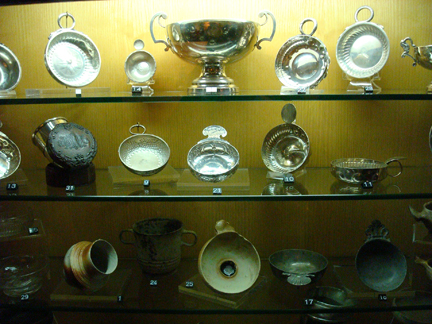
Above: The collection of old tastevins at the truly forgettable Musée du Vin near the Tour d’Eiffel.

The collection of pre-revolutionary vine tenders’ tools was interesting, as were some of the pieces among the old stemware and bottles. Overall, the museum was a not entirely unexpected disappointment but it was nice to take such a long walk through Paris.

old_bottles.jpg

A snapshot of the Tour d’Eiffel as I walked from the studio to the light rail station in St. Cloud:

view_from_stcloude1.jpg

Catering at Francofolies

jar_driving.jpg

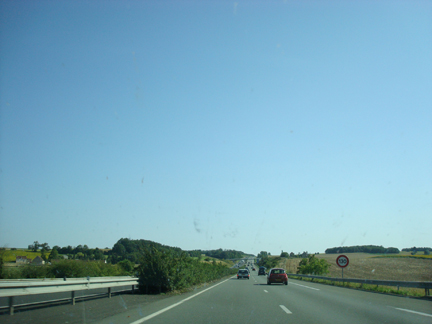
We drove this morning from Vosne-Romanée to La Rochelle, a journey that took us back up toward Paris on the A6, then over to Orléans, and then on the A10 to Tours and down to La Rochelle (not far from Bordeaux).

cross_country.jpg

The trip took us through the “heartland” of French agriculture and then through the Loire Valley, where we could see signs for (but could not stop at) Chinon, Saumur, etc.

Just outside of Tours we stopped for gas at a rest stop and by chance we happened upon the other members of Nous Non Plus.

We were met in La Rochelle by our handlers Pierre and Pascal from Scène et Public, our agent for France and Europe, who had booked us at the Francofolies festival. After a long day of traveling, everyone was hungry and Pascal was raving about the catering tent behind the mainstage. We checked into our hotel and made our way through La Rochelle, which was in full party mode, with musicians (buskers and festival performers) everywhere.

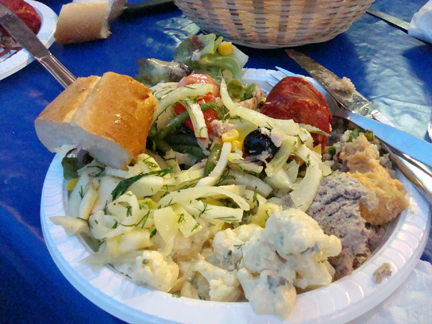
When we arrived at the tent, even the French among us (including Patrick Woodcock of Mellow, Céline Dijon’s boyfriend) agreed that the spread was the best “catering” they had ever seen at a music festival: summer salads, freshly shucked oysters, fish loaf (which I loved), couscous, saffron rice, a cheese board… amazing… (N.B.: the French use the American word “catering” which they pronounce KAH-tehr-eeng.)

catering.jpg

I was happy to eat a meal lighter than my typical Burgundian repast!

rose_rochelle.jpg

It was also nice to drink something a little less demanding on the palate, like the Provençal rosé they served.

I had a great time talking about wine with Pierre and Pascal. Nearly everyone I meet here knows and appreciates wine, although Pascal is not a fan of Italian wine. The French seem to know only Sicilian wine (and occasionally they’ll tell you that they like Lambrusco).

everyone_chewing2.jpg

Above, from left, Céline Dijon (Verena Wiesendanger), Bonnie Day (Emily Welsch), François (our sound guy), Pascal (our handler), François Hardonne (David Griffin), Prof. Harry Covert (Greg Wawro).

Halfway through dinner, a huge storm exploded over La Rochelle and everyone poured into the main tent to escape the rain. The tent was transformed into a fantastic party (you can imagine). At a certain point, an African group started up a contagious rhythm by banging empty wine bottles on the tables and the whole tent broke out in song led by the group’s lead singer… A smoke-filled tent of happy happy people, their bellies full of wine.

Despite the rain, the festival went on, and I caught the tail-end of the closing set by ex-tennis star Yannick Noah, who closed the penultimate night of the festival on the main stage. Man, that guy can work a crowd…