Arneis rising: unfiltered, skin-contact, groovy and crunchy. The next big thing?

best roero arneisTraveling and tasting across the U.S. since the beginning of the year, I’ve been impressed by the number of restaurant wine professionals who have offered me a glass of unconventional Roero Arneis.

In Austin, while visiting my client Vino Vino on Saturday, manager Kelly Voelkel poured me this super groovy “unfiltered” Arneis from Negro.

I was really glad to see this wine in the U.S. because when I visited the winery in 2010, Emanuela Negro talked about the challenges of marketing a wine called “Negro,” their family name, in the U.S.

When I brought that up with Kelly and his team, they said the issue hadn’t even occurred to them.

Already a fan of this historic family and winery in Roero, I loved this wine, its texture and saltiness in the mouth. Evidently, it’s bottled especially for the Piedmont Guy. Bravo, Piedmont guy!
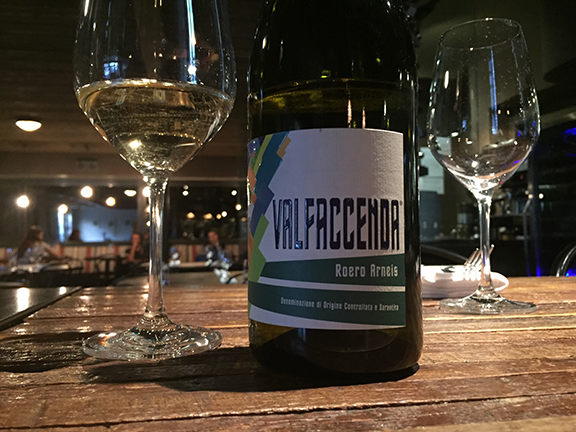
luca faccenda roero arneisYesterday, one of the leading wine professionals in Los Angeles, Giuseppe Cossu, tasted us on this skin-contact Arneis from Luca Faccenda.

Wow, what a great wine! I won’t say it’s the “best” Roero I’ve ever tasted because there are so many great ones. But this one spoke to me and my palate in a way that few have over the course of my wine trade days.

Here, in the 2014 expression, the minerality of the wine was truly electric and its flavors layered and complex. I remember tasting the 2013 last year and being equally impressed. Wholly different vintages: the 2013 a more classic harvest; the 2014 an unusually challenging crop but with remarkably surprising results for whites.

The way Luca’s site is set up, you have to click a couple of times to get to the fact sheet. But you’ll make it and it’s worth it for the reward of reading up on how it’s vinified.

I’ve never met Luca but I can see why Giuseppe was so geeked to talk about Luca’s vision for Arneis with depth and aging potential. I’ve tasted a lot of old Arneis, some of it good but none of it truly compelling. This one has the goods imho.

I’m also excited to learn more about Luca’s nascent #SoloRoero group and their mission to raise quality and encourage innovation in the appellation.

Could groovy, crunchy, unfiltered, skin-contact Roero Arneis be the next big thing? From Austin to Los Angeles, it seems to be happening already.

In other news…

Thanks for the many shares and notes about my post this week on Matt Kramer’s Jeremiad on wine education in the U.S. today.

That one was for all those average punters out there like me who are trying to find their way in the professional world of wine today.

Thanks for reading, clicking, and sharing, and thanks for all the DMs and the support.

Taste on… Game on…
Matt Kramer’s ivory tower and the “credentialization” of wine culture in America

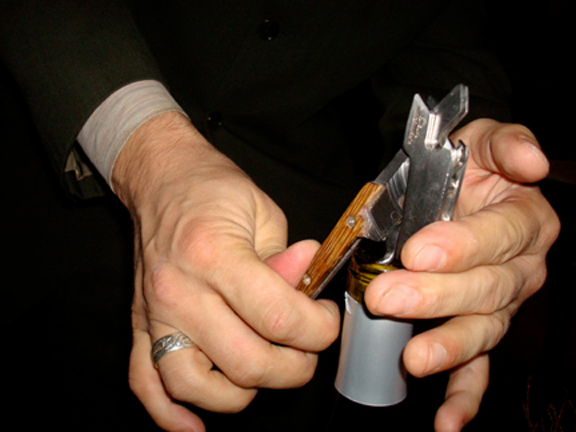
best cork screw boulder coloradoI went to a public university that had a scientific bent. As I was one of its less brainy students, I’ll save the school from embarrassment by leaving it nameless.

This memory surfaced as I thought recently about how wine has changed.

In case you’re not getting the reference, the above is a parody of an article by the illustrious, ivory-tower-educated and senior wine writer Matt Kramer, whose recent op-ed for Wine Spectator, entitled “Not a Trivial Pursuit,” has been the subject of lively discussion among wine professionals on social media this weekend.

In Kramer’s Jeremiad, he bemoans the “credentialization” of the wine trade. O the lamentization of wine writing these days!

“It seems that everyone is seeking to be a ‘master’ of this or that,” he observes. “Does wine, of all subjects need such credentializing?” he asks rhetorically.

“Documentaries depicting young, ambitious sommeliers intensely pursuing such a diploma embarrassingly reveal just what a literally trivial pursuit this credentializing really is.”

The “modern demand for a credential,” he writes, “is larger and more substantive than mere careerism… We now insist on a kind of professionalization that has less that has less to do with the benefits of an education and more to do with jumping through hoops held by others in order to acquire a diploma of some kind.”

“Now, you could say that it was ever thus, and you’d have a fair point,” he concedes. “But our current pursuit of credentials creates an undesirable class differentiation for a subject that neither needs nor deserves one.”

O Kramer! Say it ain’t thus!
Continue reading

Franciacorta in Santa Barbara, Houston, and Boston (just added)

From the department of “the hardest working man in the wine blogging business”…

boston harborSo many groovy opportunities to taste Franciacorta coming up…

On Monday, February 22, I’ll be leading a Franciacorta Real Story seminar and pouring 11 Franciacorta wines at Les Marchands in Santa Barbara.

On Thursday, March 3, I’ll be tasting Franciacorta by Fratelli Berlucchi and Ca’ del Bosco in Houston at the Italy-America Chamber of Commerce “Taste of Italy” festival. The event is free and open to all and it also features scores of Italian food producers. I’ve just started working with the Chamber and am really excited about our year ahead. So please come out to support us on March 3 (more on what I’ll be doing with the Chamber next week).

And on Wednesday, March 16, I’ll be leading a Franciacorta Real Story seminar/tasting at Wine Bottega in Boston, another one of my favorite wine shops in the U.S.

Please come out and taste with me if you can!

And Houston wine professionals, please don’t forget that I am hosting a happy hour today from 5-7 p.m. at Camerata for wine blogger extraordinaire Hawk Wakawaka. Rumor has it that some Franciacorta will be poured tonight as well!

Buon weekend, yall!

Italy’s Big Chill and a generation’s great mistake (“We All Loved Each Other So Much”)

vittorio gassman scolaWhen Alfonso and I visited in Italy in late January, only a few days had passed since the great Italian film director Ettore Scola had died. It was only natural that his name and his films would come up in conversation over dinner on a very chilly evening in Montalcino. In remembering his 1974 masterpiece, “We All Loved Each Other So Much,” my good friend and high respected Italian wine trade veteran Raffaella spoke about her father’s reaction to the film and how in some ways, he represented a generation of Italians who had lost their sense of idealistic purpose to the consumerism of post-war Italy. They had resisted and fought Fascism and Nazism only to find themselves swallowed up by the cultural hegemony that emerged in years that followed reconstruction. For today’s post, I’ve translated this wonderful and powerful piece by her. This, too, is Italian wine. Buona lettura.

Only twice did I ever see my father cry.

The first time was at my his* mother’s funeral. He barely covered his eyes as he sobbed openly. I was standing behind him, petrified by the outburst and amazed that a fully-grown man could be so overwhelmed by his emotions.

The second time was a few years later. This time, he didn’t lose his composure as he sat in his armchair and cried didn’t really cry. But he sat there motionless in his armchair as if petrified.* He batted his eyes thinking that no one would notice.

I was on the couch and we were watching Ettore Scola’s “We All Loved Each Other So Much.” In case you’ve never seen it, it’s a wonderful and important film.

It’s one of the best movies from the era of classic Italian film. The story and script are seamless. The performances aren’t overacted. And the outwardly banal dialog deftly masks the tragic human condition with ironic, brutal style. It’s an important film because it tells the story of the failures of a generation of Italians in the post-war era.
Continue reading

No, it wasn’t a Frenchman who invented Barolo (and other reasons why Langhe wines are great)

Meet Hawk Wakawaka in Houston on Friday, taste Franciacorta in Santa Barbara on Monday, and save-the-date March 3 for Taste of Italy Houston. Click here for details.

asili martinenga barbaresco rabajaIt’s funny how the rhythms of the internets work: this week, as I was doing research for a post intended to debunk the often repeated and wholly erroneous Oudart myth, whereby a Frenchman invented modern Barolo, my Italian counterpart Alessandro Morichetti was hard at work on a post in which he offers three fundamental reasons behind the success of Barolo and Barbaresco (in Italian).
I wish I had time to translate Alessandro’s post in its entirety.

I don’t, unfortunately, because it’s one of Ale’s most inspired pieces on the popular Intravino wine blog. But his three main points are as follow…

Unified Italy’s first prime minister Count Camillo Cavour (1810-1861), he writes, was a pillar of historic Italian liberalism and progressivism, not to mention one of the first grape growers in Italy’s modern era to recognize the immense potential of Nebbiolo.

Cavour’s Grinzane estate in the Barolo appellation is still an icon and a cultural epicenter for the wine and for the UNESCO-designated Langhe Hills (where Barolo and Barbaresco are grown and produced).

The Royal School of Enology in Alba, which was founded by King Umberto I (1844-1900), was one of Italy’s first academies for professional grape growers and winemakers and it has forged and shaped generations of Piedmontese wine professionals.

There’s a unique camaraderie and “self-awareness” in the Piedmontese winemaking community, notes Alessandro. They are owed in part to the fact that the school is something that nearly everyone there has in common.

Lastly, he writes, the Ferrero chocolate dynasty brought extreme prosperity to the region and that helped to create the infrastructure and economy needed to build a world-class wine industry.

Michele Ferrero, who died last year at age 89, also inspired a generation of Langa entrepreneurs.

When you ask most outsiders what Langa is famous for, they will say Alba truffles, Nebbiolo, and then possibly, as an afterthought, chocolate (read: Nutella).

But “signor Michele,” as he was known to locals, was Italy’s wealthiest man. Did you know that he invented Tic Tacs? Who knew?

One person that you will not find mentioned in Alessandro’s piece is Louis Oudart, the French grape broker who many erroneously believe was the “inventor” of modern Barolo.

In fact, he wasn’t.

Today, I posted a note on Oudart and recent research that indicates that he wasn’t the person behind Barolo’s modern era .

Check it out here on the Tenuta Carretta blog (my client).

And so I’m sorry to break the news: it wasn’t a Frenchman who made it Barolo and Barbaresco great. It was the Langhetti themselves.

Thanks for reading…

Hawk Wakawaka in Houston on Friday, Franciacorta in Santa Barbara on Monday

This just in… Houston wine and restaurant pros, please mark your calendars for Taste of Italy Houston, Thursday, March 3 at the Hilton Post Oak. I’ll be there supporting the Italy-America Chamber of Commerce. Admission is free and late registration is welcomed. Please come out and taste with us. Stay tuned for more on this.

elaine brown hawk wakawaka wine bloggerSo lots of fun stuff coming up, people!

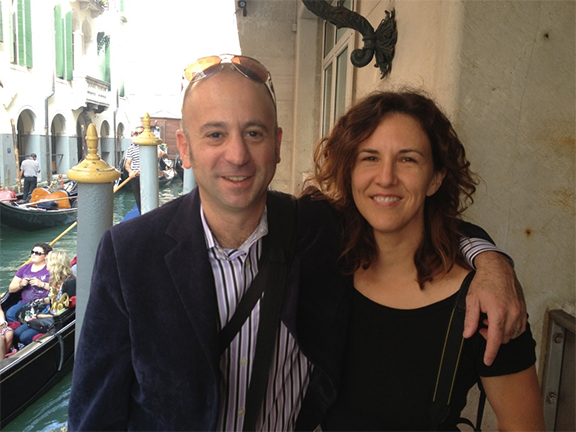
First off, on Friday, February 19, I’m hosting a happy hour for my good friend Elaine Brown, aka Hawk Wakawaka, at Camerata in Houston from 5-7 p.m.

Elaine is one of the top wine writers and bloggers working in the world today, including her regular column for Jancis Robinson’s Purple Pages and her contributions to the Oxford Companion to Wine (she wrote the new entry for social media, among others), the World of Fine Wine (where her byline recently appeared on the cover), and her own blog Hawk Wakawaka Wine Reviews, which I highly recommend to you as my number-one resource on the new wave of California wine.

That’s Elaine and me (above) in Venice back in 2013.

She’s super fun to interact and taste with and my own personal agenda is to show her what a cool and groovy place Texas can be for its wine scene.

We’ll be wine hopping in Houston on Friday night and in Austin on Saturday night before she heads up to Dallas to judge the Texsom wine competition.

And on Monday of next week, February 22, I’ll be hosting the next Franciacorta Real Story tasting at Les Marchands in Santa Barbara.

The tasting is free and gauging from the response so far, it should be a great time for all. I hope to see you there!

Franciacorta Real Story Tasting
11 wines from 11 producers
with Jeremy Parzen, Ph.D.
Franciacorta Consortium Ambassador for 2016

Monday, February 22
5:30-7:30 p.m.

Les Marchands
131 Anacapa St.
Suite B
Santa Barbara CA 93101
(805) 284-0380
Google map

Image via Hawk Wakawaka Wine Reviews.

Buon San Valentino from Giulietta’s balcony (happy love day)

juliet balcony verona romeoI snapped this photo of Giulietta’s balcony on a Saturday morning when I visited Verona a few weeks ago (for the Amarone Anteprima event).
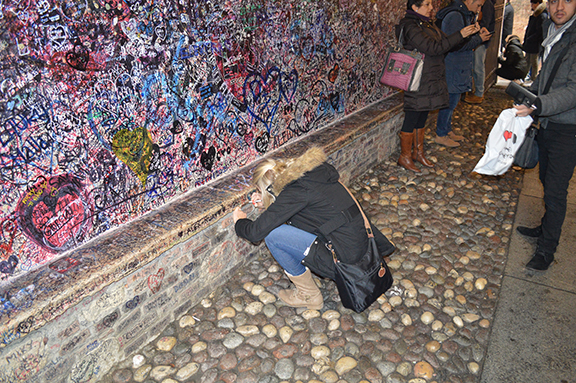
The courtyard brimmed with visitors and there were dozens of people inscribing their dedications on the walls that line the andito, the passageway that leads from the street to the courtyard (below).

Such a powerful mythology! I hadn’t visited her casa for nearly 30 years but the scene remains unchanged.

Wishing everyone a buon San Valentino and a happy love day (as our girls like to call it)!

juliet wall verona

The Parzen Window: remembering Emanuel Parzen, who died last weekend

manny parzenAbove, from left: Sam Greenhouse, Sir Ronald A. Fisher, unknown, Carol Parzen, Ingram Olkin, and Emanuel Parzen (my great uncle) in 1961 at the meeting of the International Statistical Institute in Paris (image via ProjectEuclid.org).

My father’s father died when my father was very young.

My paternal grandmother, née Levy, was remarried soon thereafter to Rabbi Maurice Parzen, whose family had immigrated from Łódź in what is now Poland (I believe that the family name comes from the village of Parzeń in current-day Poland).

The Rabbi’s brothers included Ben Parzen, who would become one of the world’s leading electrical engineers and inventor of an oscillator that could withstand the electromagnetic pulse of a nuclear fallout (his greatest invention, among many others). He died in 2005.

The Rabbi’s youngest brother was Emanuel “Manny” Parzen, a world-renowned statistician and pioneer in kernel density estimation, a field which is often referred to as “the Parzen Window” in his honor.

Uncle Manny died on Saturday, February 6 in Florida where he lived with his wife and my aunt Carol.
Continue reading

Cool stuff I ate, drank, and saw in New York City

new york city skylineThe two most useful things I’ve learned over my lifetime are how to type and how to navigate the New York City subway.
I lived in the city from 1997 until 2008 and when I go back now, eight years later, it’s kinda like going home home except I sleep in a hotel and someone makes my bed for me every day.

nduja recipe robertas pizza brooklynBeyond my duties appearing on a panel and making a few politesse appearances at the Vino 2016 Italian Wine Week event, I was free to roam the vinous landscape.

Hands down, New York remains the best wine destination in the U.S., where you can find nearly anything you want, from the arcane to the obscure, from the tried-and-true to the hip and chic.

First on my list was Roberta’s in Bushwick, where homey digs and Neapolitan-style pizza meet Natural wine.

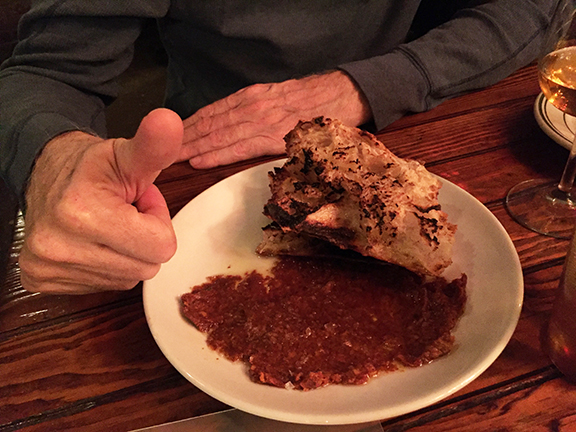
I’m generally not a fan of housemade charcuterie but I loved the ‘nduja that our server recommended.

That’s the thumb of famed New York arthouse filmmaker Ben Shapiro photobombing me, btw.

puffeney savagninAs soon as the staff sensed that we were “wine” people, a sommelier was sent to our table.
Keara D. was awesome: she knew her lists inside-and-out, had great recommendations based on our palates, and her wine service was impeccable.

She hooked us up with the Puffeney 2011 Savignin, one of those wines that are super hard to find in the U.S., at a great price.

Roberta’s is a dream destination for me. Solid pizza, cool people, and superb and reasonably priced list with lots of gems for folks like me. Thanks again, Keara!

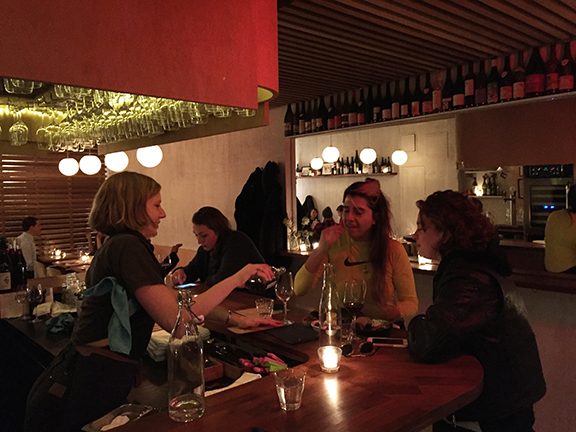
four horsemen wine bar brooklynAnother dream place for me, Four Horsemen in Williamsburg was just the place to connect with Jameson Fink, one of my all-time favorite wine bloggers and now senior editor at Wine Enthusiast (and a super cool guy).
Where else in the world do you get splashed with Texier pet nat Chasselas? Thanks again, Will!

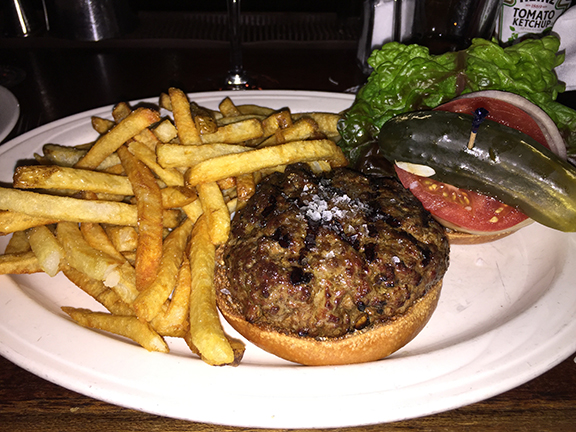
keens steakhouse barNo trip to NYC is complete for me without a burger at my favorite steakhouse in America, Keens.
They really don’t offer a lot of wines by-the-glass that speak to me. But man, theirs is the apotheosis of the American burger in my book. Love that place. Great to see you, Bonnie!

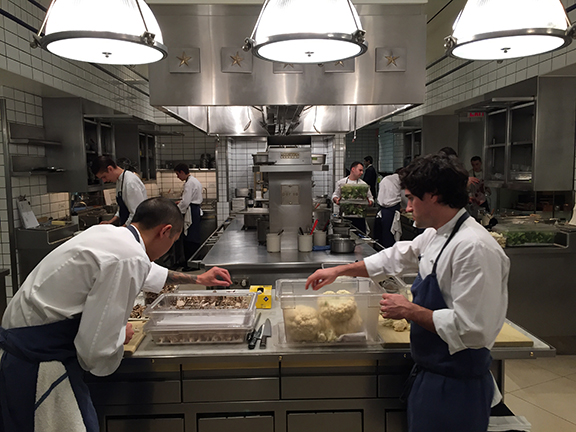
per seDinner there is above my pay grade, but I did pay a visit to Per Se to see an old friend from San Diego who’s been working there for some time.

Super fun to see him and get the tour of the wine cellar, kitchen, and dining room. I had no idea that there was a bar there with open seating where they serve a limited menu. Next time I take Tracie P to NYC, we’ll hit it up — worth it for the view alone. Thanks again, Nicholas!

la sirena mario bataliDulcis in fundo, my friend and fellow Texan Jeff Porter gave me a short tour of La Sirena, Batali and Bastianich’s new gig on the west side.

It’s their answer to Balthazar, said the staff I met there after they had just finished up friends and family.

lecinaro lazio wineAnd only because it had to live up to its reputation as the city where I never sleep, Jeff and I made a very late-night visit to Lupa, where he hipped me to this Lecinaro (a native and recently revived grape from Latium) by organic grower Palazzo Tronconi. You can’t see its beautiful, delicate color in the photo but I loved the hue and its lightness and freshness in the mouth. Thanks again, Jeff!
Isn’t it kinda crazy and kinda cool that that the wine directors of two of Manahattan’s most important outlets for Italian wine — Marta (Jack Mason) and Batali & Bastianich group — are Texans? Both of them worked in Houston before moving to the city.

It made me think about how Houston has become a new epicenter for producing top-flight wine professionals in our country. Wine for thought…

That’s all the news that’s fit to blog about. Thanks for being here!

Giacomo Tachis, 82, giant of Italian wine and creator of Sassicaia, has died

Today, the Italian wine world mourns the loss of Giacomo Tachis, a winemaker who had a hand in creating some of Italy’s most iconic wines and who is widely credited as one of the chief architects of the Italian wine renaissance.

Tachis died this weekend in San Casciano in Val di Pesa (Tuscany) where he lived. His daughter Ilaria, also a winemaker, and leading Italian enologist Alessandro Cellai, one of his disciples, were at his side when he passed away.

“RIP Giacomo Tachis,” wrote Wine Advocate Italian reviewer Monica Larner on her Instagram yesterday. He was the “creator of San Leonardo, Sassicaia and modern Sicilian wines. If Giuseppe Garibaldi was Italy’s ‘Father of the Fatherland,’ Giacomo Tachis was the father of a united Italian wine identity. We have lost one of our founding fathers.”

When Tachis was named Decanter magazine’s “man of the year,” in 2011, Master of Wine David Gleave wrote that he “changed the style of Italian wine, dragging it — kicking and screaming — into the 20th century. And by changing the style of the wines, he changed the way in which they are perceived. Without him, Italian wine would not be as successful as it is today.”

In 1992, New York Times wine writer Frank Prial wrote about the emerging revival of Tuscan winemaking at the time, noting that “Sassicaia became one of the most sought-after wines in the world, and it was a precursor of a trend that has changed the history of Tuscany.”

Nearly a quarter of a century since the publication of Prial’s clairvoyant observation, Tachis’ legacy as a winemaker continues to loom over the Italian wine world. And many of the labels that he created — Sassicaia and Tignanello (Tuscany) and Turriga and Terre Brune (Sardinia), to name just a handful — are still widely considered to be among Italy’s best.

See this profile of Tachis published by Decanter on the occasion of his “man of the year” award.

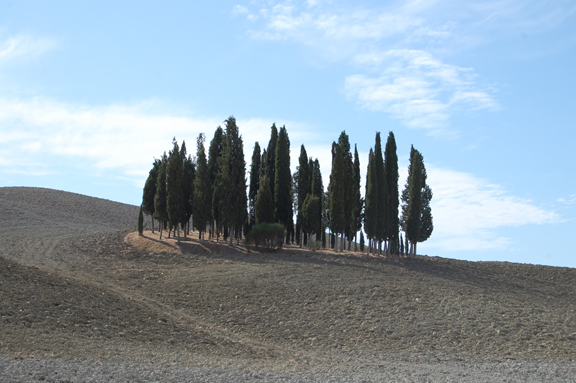
tuscan cypress trees montalcino