The Summer Winter of Our Disconnect: 12.5% Cabernet? And other good stuff we ate and drank in California

chino farms

Above: Both my buddy John Rikkers and I ordered the “Market Salad” at Market in Rancho Santa Fe. It’s no longer on the menu but they’ll make it for you on request. All the lightly blanched ingredients are sourced from San Diego’s legendary Chino Farms farmers market.

Everywhere you go in California, people are complaining about the cool summer weather. By most accounts, it’s the coolest summer we’ve had here for more than 70 years.

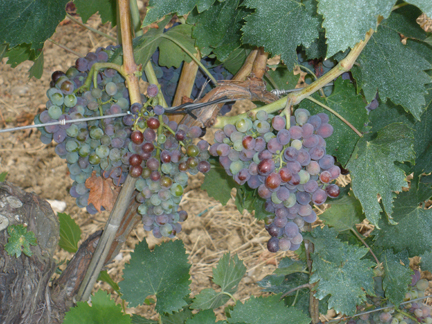
On Sunday, Vinogirl (who authors my all-time favorite California wine blog, Vinsanity) didn’t mince words: “Actually, I am very surprised that [veraison, i.e., ripening] is happening at all as it only managed a whopping high of 70F today,” she wrote plaintfully. “So far, the weather in 2010 has been pathetic!”

mea culpa

Above: I’d never had the Bouvier grape, known as Ranina in Slovenia, until last night at Market, where sommelier Brian Donegan always has something by the glass that will surprise and delight the adventurous wine lover, like this 2007 Mea Culpa by Kogl. I would have guessed it was a dry Muscat but it had some gentle orchard fruit notes seemed to speak a Slavic as opposed to Romance language.

Yesterday, in a fantastic post, one of America’s wine industry social media pioneers Tom Wark (and all-around nice dude) wrote and asked rhetorically, is this a bad thing?

    If this weather keeps up, it’s entirely likely that some winemakers are going to have to learn how to make good Napa or Sonoma Cabernet with an alcohol content of (brace yourself)…12.5%. […]

    Clearly 2010 is looking to be a better vintage for early ripening grapes like Pinot Noir. But even the Pinots are likely to suffer a diminishing alcohol content. The question is this: is that a bad thing? I think it might be for many winemakers, particularly those that tend to produce big, fat, huge unctuous Pinots with high alcohol content.

ettore germano

Above: The acidity in Ettore Germano’s Chardonnay was, as Tracie P likes to say, “tongue-splitting.” It’s not like me to order Chardonnay from Italy (outside of Friuli) but I must say that I dug this wine completely. Very mineral, very bright acidity. Always something good by the glass at Market.

Of course, the mystery of California’s unusually cool summer begs the question among its “red state” populace: with summer temperatures like these, how can the pinkos still cling to their claims of global warming?

seaweed salad

Above: Seaweed salad at Zenbu in La Jolla.

I’m sure I imagine that Tom would agree with me: anyone who works in the wine industry and spends times with grape growers will tell you that European winemakers — even the most conservative among them — believe that global warming is indeed taking place. In Tuscany, where the grapes used to ripen in October, grape growers will tell you that they now ripen as early as late August (although this year, at least in Sant’Angelo, grapes are ripening about a week behind schedule).

California roll

Above: One of the thing I love about Zenbu is the playful California creativity in the menu, with items like the “Jackie Chan” roll and the “Mexicali” roll. That’s the gorgeous sashimi roll (a contradiction in terms?). There’s nothing worse than boring sushi!

Once, when I interviewed a famous winemaker in Piedmont for a commercial writing gig of mine, he unabashedly told me, referring to the remarkable string of great vintages in Piedmont spanning 1996-2001, “global warming has made me a very rich man.”

Above: French Toast at Jaynes Gastropub in North Park (San Diego).

To those who claim and believe global warming is part of a secret left-wing conspiracy, I say: who cares whether it’s true or not? At 43 years of age, I’m old enough to remember the first “energy crisis” in the 70s: whether or not you believe in global warming, there’s no denying that it’s high-time to “clean up our act.”

bellyup tavern

Above: My childhood and a best friend Charlie George created this “White Trash” gift basket raffle item for a benefit for local musician Michael Muldoon last night at the Belly Up Tavern in Solana Beach, where Charlie and a bunch of other friends of mine performed.

So whether (weather) you’re sweating your nuts off in the rest of the country, wearing a sweater in Sonoma, or getting ready to pick grapes in Tuscany, don’t forget to turn off the lights! And be sure to eat your California leafy greens…

Thanks for reading!

Scenes from a Boda Mexicana and the best breakfast in Tijuana

boda mexicana

Above: Sandro and Julia were wed in a Saturday evening mass at the Iglesia de la Divina Providencia in Tijuana this weekend. What a beautiful wedding, what a gorgeous couple! When Julia knelt before the image of the Virgin Mary in the cathedral’s chapel and the soprano sang Schubert’s “Ave Maria,” both Tracie P and I had tears in our eyes.

The Castro and Parzen families have been closely related and intertwined for nearly four decades. The marriage of Julia this weekend to her beloved Sandro marked a milestone that none of us will ever forget. They were married in the same cathedral where brother Micah and I were ring-bearers (he nine years old, I eleven) in 1978 at the wedding of Teresa and Felix, Julia’s parents.

boda mexicana

And so mama Judy, brother Micah and sister-in-law Marguerite, Tracie P, and I drove to Tijuana on Saturday afternoon for the night.

boda mexicana

The reception was held in the Salón de Eventos of what many consider to be the best restaurant in Tijuana these days, Cien Años, in the Zona Río shopping district (my favorite part of the city).

The main course of our dinner was a wonderful mole blanco (a mole sauce made with white as opposed to dark chocolate) with a roast potato au gratin and a julienne of fresh squash.

boda mexicana

Before heading to the wedding, we had a cocktail at our hotel next door to the event space (the Hotel Real del Río, a moderately priced, full-service hotel, highly recommended).

cien anos

The next morning, we had a fantastic breakfast at Cien Años, which opens every day at 8 a.m., btw. The main dining salon there is one of those magical rooms.

cien anos

I envied Tracie P’s crepas (crêpes) drowning in a mango and habanero sauce…

cien anos

…and stuffed with zucchini blossoms, mushrooms, and serrano peppers. Amazingly good… We used to dine regularly in Tijuana when during my college and grad years at UCLA. There are so many great places to eat there.

cien anos

Chelsea Clinton may have had the wedding of the year, but Julia and Sandro had the wedding of a lifetime! :-)

Muchisimas felicidades!

One more from California (WARNING: CONTAINS EXTREME FIG CONTENT)

wedding cakes

Just had to add these photos quickly before we head out for the next adventure: we had a great lunch at Michele Coulon Dessertier, who created our wedding cake earlier this year. Most people think of her café purely for dessert, but her savory menu is FANTASTIC. All of her ingredients sourced for local growers, like the salad above, most of which came from San Diego’s famed Chino Farms.

wedding cakes

We try to eat at Michele’s every time we’re in La Jolla.

wedding cakes

Every time we visit Michele, it brings back such a great memory of our wedding cake! :-)

Now it’s time to get dressed up and head south…

Eating our way through California

california tomatoes

Above: Top Italian wine writer Mr. Franco Ziliani (possessor of a palate I admire immensely) likes to tease me (rightly) about how I’m so crazy for the wines of Piedmont, I’ll even drink Barolo in the middle of the “scorching hot” Texas summer (and believe me, it’s been a hot one in Texas this year!). Well, yesterday I quit the California dreaming and did me some serious California eating! Those are tomatoes from Chrissa and Dan’s garden.

grilled marlin

Grilled marlin, scallops, and shrimp for lunch with client and new friend Mike K at the classic ol’ San Diego downtown eatery Dobson’s. (Thanks again for lunch, man!)

baker and olive

Savory San Diego Bread and Cie bun with locally sourced olive oil from Baker and Olive, and Fra’ Mani salame at epicurean Chrissa and Dan’s place (a truly yummy locus amoenus their house is!).

california produce

Dan’s excellent heirloom tomato salad, sourced from their garden (what’s the name of the Polish cultivar?).

california sushi

Late-night sushi at Miso Harney sushi in Old Town (they serve until 12 a.m.!) after Tracie P got in from Austin (I got in the day before). Geared for a young crowd, Miso Harney is a great place for later-in-the-night super fresh San Diego sushi and an SD-restaurant-industry fav.

california traffic

Of course, there’s also the California summer traffic to contend with. Ugh… Not so bad though, considering the view!

I bet you’re gonna like where we’re headed today… Stay tuned… It’s a special one…

Bartolo Mascarello: an academic look at “collective identity, contention, and authenticity”

Above: I met with Franca and Maria Teresa Mascarello back in 2008 in their home. Our mission was to unravel the mystery of the Bartolo Mascarello beret.

Yesterday, I received an email from my good friend Josh Kranz who lives and works in New York City: “Thought of you last night – walked by a French place on 39th b/t 5th and 6th called Barrique. ‘Jeremy would never go in there on principle.'” (Check out this great story Josh recently published about an adolescent’s fear of dropping the Torah, a sentiment that I certainly shared in my pre-teen and teen years.)

As it so happens, I also received an email from fellow Nebbiolophile Ken Vastola, who sent me a link to a wonderful research paper, published at Stanford, devoted to Bartolo Mascarello and the Mascarello’s famous campaign against barrique and Berlusconi. (The file is large so be patient when downloading.)

Here’s the title and abstract:

    NO BARRIQUE, NO BERLUSCONI: COLLECTIVE IDENTITY, CONTENTION, AND AUTHENTICITY IN THE MAKING OF BAROLO AND BARBARESCO WINES

    Abstract

    How does contention over authenticity unfold through social movement processes of mobilization and counter-mobilization? We address this issue by studying how the rise of “modern” winemaking practices embodied authenticity as creativity, how the success of the modernists triggered a countermovement seeking to preserve “traditional” wine-making practices, and how the emergent “traditional” category was premised on authenticity as conformity to a genre. This countermovement succeeded in a situation in which market forces seemed destined to displace tradition with modernity.

Photo via Spume.

“A modern winemaker is like Berlusconi,” said Maria Teresa to the researchers. “He is the model. He embodies this way of looking at the market, at the economy.”

Have a look at the paper: it’s a great read. I’m glad to report that the “counter-movement” opposing modernization is alive and well and living in Palo Alto!

Rivella, barbarian at the gate: the Brunello debate goes mainstream (WARNING: POST CONTAINS POETRY)

Above: The grapes are ripening about a week late in Montalcino but conditions are excellent, says Alessandro Bindocci (Fabrizio Bindocci’s son) in his blog Montalcino Report. Alessandro has been updating the blog regularly with harvest and weather reports.

Yesterday a friend emailed me this article in Reuters online, “Battle of Brunello exposes row over purity vs blends,” by top wine writer Robert Whitley, my fellow San Diegan. In it he summarized the events that led up to Ezio Rivella’s controversial election as Brunello producers association president and Fabrizio Bindocci’s passionate if unsuccessful bid to stop Rivella’s march of progress. (For a more detailed account of what happened in recent months in Montalcino, you can scroll and leaf through this thread here at Do Bianchi.)

    The controversy over the election has put the spotlight on growing divisions in the wine world as some producers take a more global approach to their craft while others stick to tradition.

    Opponents such as Bindocci are passionate defenders of the status quo and are convinced that the 77-year-old Rivella as the modern face of Brunello could put the soul of Brunello at stake.

Has Montalcino become the frontline in the global battle (“growing divisions of the wine world”) of modernism vs. traditionalism?

In a “why didn’t I think of that” moment, I thoroughly enjoyed Robert’s superb allusion to the great poem “Waiting for the Barbarians” by Greek poet Cavafy wherein he implied that Rivella is a “barbarian at the gate.” It’s probably more a propos than Robert bargained for, especially in the light of the uncanny parallels. Poetry lovers read on…

    What are we waiting for, assembled in the forum?

    The barbarians are due here today.

    Why isn’t anything happening in the senate?
    Why do the senators sit there without legislating?

    Because the barbarians are coming today.
    What laws can the senators make now?
    Once the barbarians are here, they’ll do the legislating.

    Why did our emperor get up so early,
    and why is he sitting at the city’s main gate
    on his throne, in state, wearing the crown?

    Because the barbarians are coming today
    and the emperor is waiting to receive their leader.
    He has even prepared a scroll to give him,
    replete with titles, with imposing names.

    Why have our two consuls and praetors come out today
    wearing their embroidered, their scarlet togas?
    Why have they put on bracelets with so many amethysts,
    and rings sparkling with magnificent emeralds?
    Why are they carrying elegant canes
    beautifully worked in silver and gold?

    Because the barbarians are coming today
    and things like that dazzle the barbarians.

    Why don’t our distinguished orators come forward as usual
    to make their speeches, say what they have to say?

    Because the barbarians are coming today
    and they’re bored by rhetoric and public speaking.

    Why this sudden restlessness, this confusion?
    (How serious people’s faces have become.)
    Why are the streets and squares emptying so rapidly,
    everyone going home so lost in thought?

    Because night has fallen and the barbarians have not come.
    And some who have just returned from the border say
    there are no barbarians any longer.

    And now, what’s going to happen to us without barbarians?
    They were, those people, a kind of solution.

And some who have just returned from the border say/there are no barbarians any longer.

I’ll be visiting Montalcino in September and will try to catch up with Fabrizio (a friend) then (although I know he’ll be very busy with the harvest). Who knows? Maybe Rivella will grant me an appointment, too… Stay tuned and thanks for reading!

Sognando Piemonte (Piedmont Dreamin’)

bricco boschis

Above: We got to drink a bottle of 2005 Barolo Bricco Boschis by Cavallotto last night. Photo by Tracie P.

As Tony Coturri told me the other day (and as Mama Judy mentions when we talk on the phone each week), California is having the coolest summer it’s had in anyone’s memory. Out here in Texas it’s H-O-T hot — not exactly what I would call “Barolo weather.”

But when our friend (and my client) Julio messaged and said he had a bottle of 2005 Barolo Bricco Boschis by Cavallotto that he wanted to share with us, we couldn’t resist.

And, man, what a treasure in this bottle. Here’s Tracie P’s tasting note: “bright cherry acidity with graphite minerality and a balance of earthiness, so balanced and savory and fruity; it just had everything in the right place…”

The wine is young and the curious thing was how generous it was with its fruit right when we opened and decanted it. But by the time we finished the bottle, it had begun to close up.

On a hot Texas summer eve, it made me dream of Piedmont and a few new-to-me destinations I can’t wait to visit when I return. Like the Museo dei Cavatappi, the Corkscrew Musuem in the town of Barolo.

paolo annoni

I was actually scrounging the interwebs for something else (for a consulting job) when I came across Paolo Annoni (above) and his amazing museum, which preserves more than 500 corkscrews from the eighteenth century to the present. As they say in Italian, this type of stuff is pane per i miei denti, literally, bread for my teeth, in other words, I can’t wait to sink my teeth into it.

serralunga

Another destination at the top of my list is the Vinoteca Centro Storico in Serralunga. I literally drooled over my keyboard when I read about it in the excellent blog authored by McDuff, who possesses one of the palates I admire the most.

Check out his post for details. Just the thought of grower Champagne and carne cruda is enough to make the mimetic desire kick in (at 9 a.m. in the morning, I can literally feel my saliva glands working as I type). Auerbach anyone?

aaaaaaaa… Sognando Piemonte…

“Rock is no longer a dirty word in Austin”: The Armadillo at 40

Above: “On August 7, 1970, a new music venue opened at 525 1/2 Barton Springs Road in Austin. The city would never be the same. The Armadillo World Headquarters.” (“The Armadillo at 40,” KUT.org).

An article published by TIME Magzine on September 9, 1974, entitled “Groover’s Paradise,” recently came to my attention. Here’s the opening paragraph:

    Back in the good old days in Austin, Texas, say 1970, a guy could risk trouble for deriding country-and-western music, or merely hollering the words “rock ‘n’ roll.” This was, after all, the ancestral home of Texas Swing, where the Light Crust Doughboys had helped elect a flour salesman, W. Lee O’Danile, Governor in 1938. Even such talented native Texas as Singers Janis Joplin and Johnny Winter, blues rockers both, had been forced to head as far away from Austin as possible to make the big time.

That was just four years after the Armadillo World Headquarters opened in the Texas state capital, about a ten-minute drive from where Tracie P and I live now.

This week, KUT.org, the University of Texas at Austin radio station is playing every artist that ever played at the ‘Dillo (as it is affectionately known). And I’m here to tell you, people, that I’m glued to my radio, whether in the car or at home working on my computer.

You can find the stream by visiting KUT.org (9 a.m. – 3 p.m. local time).

My highlights for today were Jerry Jeff Walker’s version of “Mr. Bojangles” and his “London Homesick Blues” (and for guitar geeks out there, Eric Johnson’s early band The Electromagnets).

The title of the TIME Magazine article is culled from one of my favorite songs by one of my favorite Cosmic Cowboys, Doug Sahm, and it ends with a quote from him:

    The Armadillo is filled each night night with a curious amalgam of teenagers, aging hippe women in gingham, braless coeds, and booted goat ropers swigging Pearl beer and swinging Stetsons in time to the music. Doug Sahm, a 32-year-old fugitive of San Franciso psychedelia, who sings there regularly, says that “leaving Austin now is like climbing off a spaceship from a magic place.” As he put it in a song, the whole town is a groover’s paradise.

O, man, I can almost smell the doobage wafting up Lamar Blvd.!

Frittata di pasta porn (and recipes)

After I made Spaghetti al Pomodoro the other night for dinner (in this case bucatini), Tracie P used the leftover noodles to make a Neapolitan-style Frittata di Pasta. The dish was so stunning, visually and otherwise sensorially, that I was compelled to document it. After all, this is my “web log” after all, isn’t it? Enjoy… and thanks for reading!

frittata di pasta

Spaghetti al Pomodoro

As my good friend Renato dal Piva taught me (when I used to play in his clubs in the Bellunese), you should be able to get the tomato sauce simmering by the time the water boils. By the time the pasta is done cooking, the sauce will be ready.

Finely chop ¼ medium size white or yellow onion and sautée with a handful of flat-leaf parsley together and one lightly crushed garlic clove in extra-virgin olive oil. When the onion becomes translucent , add 1½ cup puréed, crushed, or whole canned cherry tomato (if using whole Roma tomatoes, crush the tomatoes using a spatula). Add ¼ cup room-temperature white wine. Season with kosher salt, pepper, and crushed chili flakes. Simmer until the pasta is not quite cooked through (about 1-2 minutes under the suggested cooking time).

frittata di pasta

In the meantime, bring a large pot of water to boil. After it begins to boil, season with a generous handful of kosher salt. Cook the spaghetti until not quite cooked through (as above). About 3 minutes before the pasta is done, add ½ ladleful of its cooking water to the sauce. When the pasta done, fold the noodles into the sauce and toss over low heat. Serve hot, drizzled with a drop or two of extra-virgin olive oil and with freshly grated Parmigiano Reggiano on the side (ironically, I prefer not to sprinkle with the cheese, despite my northern tastes, while Tracie P, with her southern tastes, opts for cheese).

For the tomato sauce, our favorite brand is La Valle, in particular its cherry tomatoes (pomodorini). We also like Muir tomatoes from California and Progresso is good, too. The important thing is to find tomatoes to which nothing but salt has been added (Del Monte, Hunt’s etc. will all work fine). In summer months when fresh basil is available, omit the flat-leaf parsley and add torn basil leaves after the tomato sauce has begun to simmer.)

For the pasta, we used La Valle bucatini that Alfonso had brought us from Jimmy’s Food Market in Dallas. As far as commercial, easy-to-find brands are concerned, Tracie P likes DeCecco (her southern tastes), while I like Barilla (my northern tastes).

frittata di pasta

Frittata di Pasta

Beat two eggs with a handful of freshly grated Parmigiano Reggiano, add the beaten eggs to the leftover pasta in a mixing bowl, and toss gently. Cover the bottom of a small pan with extra-virgin olive (about 2 tablespoons depending on the size of the pan) and heat over medium-flame. As soon as the oil begins to smoke, add the pasta and cover. Cook for 2-3 minutes and then reduce heat to low. Cook for 20 minutes and flip (to flip, quickly remove cover and then recover with a ceramic plate; hold the plate in place, swiftly turn the frying pan over and then slide the frittata back in the pan). Cook for another ten minutes and serve hot.

Once cooled, wrap the frittata in plastic wrap and conserve in the fridge. It will be great, sliced on bread or re-warmed. With the quantities above, Tracie P and I obtain 3 meals!

Buon appetito, ya’ll!

Bellissima: an Italian cinema great has left us

Comrade H brought the news to my attention over the weekend.

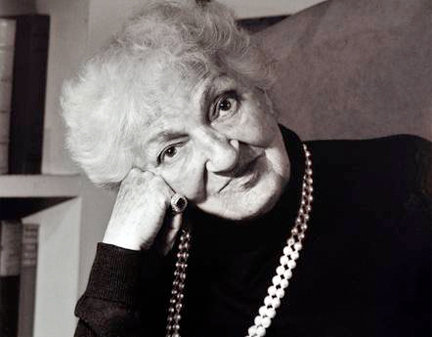
Italian screenwriter Suso Cecchi d’Amico left this world last Saturday. Here’s the obituary in The New York Times. And see this post by ANSA.

She contributed to some of the greatest movies of all times and she did so in at a time when few women worked as writers in the Italian film industry.

The number of classic films on which she collaborated are too many to list here but you know her work the way you remember your Sunday prayers: Bicycle Thieves, Miracle in Milan, Rome Open City, Big Deal on Madonna Street, The Leopard, and the list goes on and on, nearly every one of them a sine qua non of the twentieth century.

One film that you may not remember, but one of my all-time favorites, was her first film with Visconti, Bellissima, the story of an over zealous stage mother in Rome (played by Anna Magnani) who is driven out of desperate poverty to make her daughter a star. It’s a comic-tragedy that simultaneously makes us laugh and cry as we sit on the edge of our chairs rooting for the girl, knowing all the while that poverty has driven the mother to forget that true riches lie not in wealth but humanity. Watch this scene where Maddalena (Magnani) quarrels with her husband Spartaco (played by Walter Chiari). I’m not sure but I imagine that Cecchi wrote this sequence. One thing I know for certain: even if you don’t speak Italian, it will move you to tears…

Man, they don’t write ’em like that anymore, do they, Comrade H?