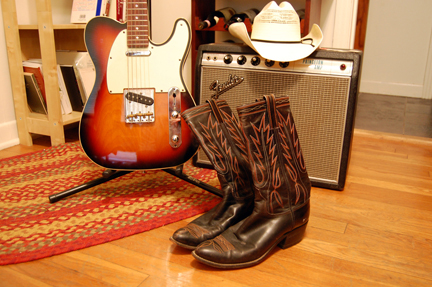
Texas tones pair well with La Jolla sushi!

HEARTFELT THANKS TO EVERYONE WHO CAME OUT TO SUPPORT THE GRAPES!

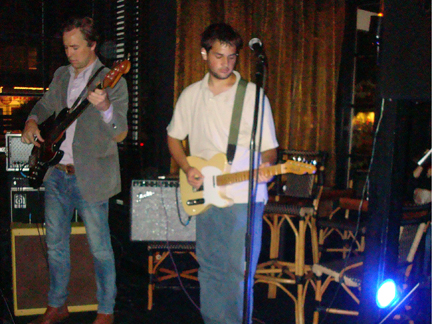
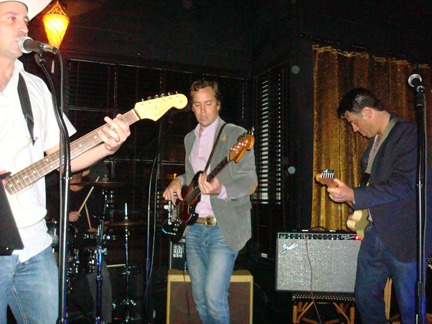
The Grapes had a blast last night playing our first gig at Zenbu Sushi in La Jolla. Nearly half of the graduating classes of La Jolla High 1985 and 1986 were there… What a night…

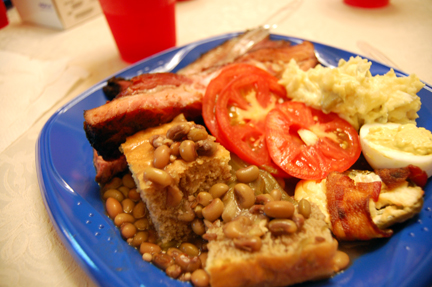
Who knew that Texas tones would pair so well with sushi? Well, then again, it makes sense that a little Tex Mex would jive with the Mexican- and Californian-cuisine influenced Japanese at Zenbu. That’s the “Mexicali Roll” above.

And the icing on the cake was Nephew Cole who sat in on 2 numbers and played like a pro! How cool is that?

Even Mama Judy got a dedication: “Mama Tried” by Merle Haggard… ;-)

The first I remember knowin’ was the lonesome whistle blowin’
And a youngun’s dream of growin’ up to ride.
On a freight train leavin’ town, not knowin’ where I was bound
No one changed my mind, but mama tried…

Mama tried to raise me better, but her pleadin’ I denied
That leaves only me to blame cause mama tried.

Thanks again to everyone, family, friends, and La Jolla High School, for coming out to tap your toes to some Texas twang!

In other news…

Tracie P and I are headed to Dan and Kate’s wedding in Santa Barbara County, staying in Solvang tonight. Stay tuned…

Earthquake (!), pre-Prohibition cocktails and the Grapes perform tonight

Above: The pre-Prohibition cocktails at the newly opened Cosmopolitan Hotel in Old Town, San Diego calmed my nerves after a 5.4 magnitude quake!

The San Diego Kid (that’s me) arrived in San Diego from Austin, Texas yesterday only to be greeted by a magnitude 5.4 earthquake. Having grown up here, I’m relatively accustomed to such natural occurrences but the young man helping me at the rental car desk nearly pooped in his pants. Luckily, pre-Prohibition cocktails awaited me at the Cosmopolitan Hotel in Old Town, San Diego (where my friend and colleague @ChezSheila had just launched her newest project).

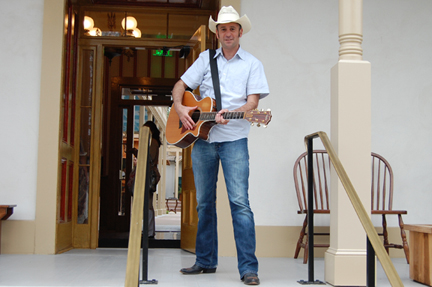
Above: The San Diego Kid fit right in with the Old Town 19th-century reenactors (no joke!). Note the first appearance of my Nudie boots.

If you happen to find yourself north of the border tonight, come check out the debut performance of The Grapes at one my favorite sushi destinations, Zenbu, tonight at 9. It should be quite a scene…

In other news…

The Do Bianchi Wine Selections Hard-to-Find Friuli Six-Pack is now available, featuring the wines of Scarpetta (Bobby Stuckey’s winery in northeastern Italy). Click here to read about why Tracie P and I like these wines, made by an American in Italy, so much…

Bumping into (the) stars of (the) Austin (wine scene at the airport)

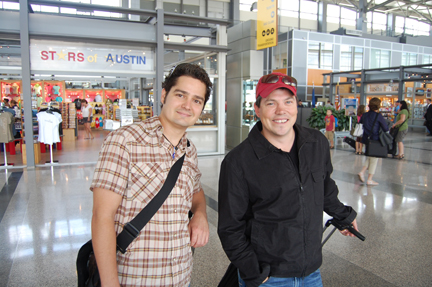
At the Austin airport, me on the way to San Diego, these two dudes on their way to San Francisco where they’ll be tasting with top sommeliers in preparation for the Master Sommelier exams in August. Two of the coolest “buds” I have in the biz here in the ATX, Devon Broglie (left) and Craig Collins.

I know your exams are still a ways off but as the Italians say, in culo alla balena!

Bricco, bric: origins of the word and why literature is so important to understanding Italian wine

bricco boschis

Above: A vineyard that produces one of my favorite wines, the Barolo Bricco Boschis by Cavallotto (photo taken in February on our honeymoon). Bricco Boschis means literally the “crag in/of the woods.” Note how the snow has melted at the very top of the crag. As the old (and young) folks in Langa will tell you, the best places to grow Nebbiolo for Barolo and Barbaresco are where the “snow melts first,” an indicator of ideal exposure to sun light.

While I haven’t had much time to work on my Italian Winery Designation Glossary, I did want to post my research on the vineyard designation term bricco and its origins (since so many people have written me asking me about its meaning and usage).

The best translation for the term bricco or bric is crag (“a steep or precipitous rugged rock,” Oxford English Dictionary, online edition), equivalent to the Italian dirupo.
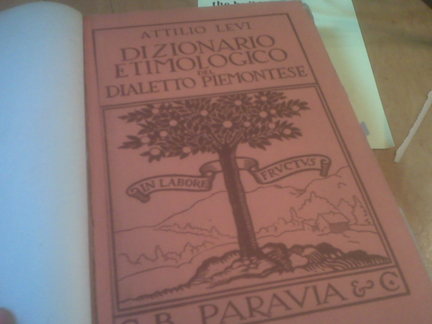
Above: I found this wonderful book at the New York Public Library.

Most etymologic dictionaries point to an unknown origin of the word but, while in NYC, I did find a wonderful (yet forgotten) fascist-era dictionary of Piedmontese dialect that reported the Provençal brich as the etymon.

But my most fascinating discovery was the eureka moment when I found one of the earliest known appearances of the term in print.

According to the Grande Dizionario della Lingua Italiana (the unabridged dictionary of the Italian language), the great 20th-century Piedmontese novelist and poet Cesare Pavese was probably the first to use it in a narrative, his masterwork no less, La luna e i falò (The Moon and the Bonfires), written in 1949 and first published a few months before his suicide in 1950.
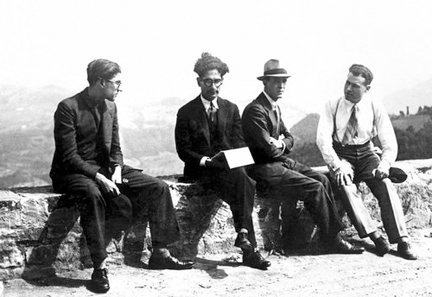
Above, from left: Cesare Pavese, Leone Ginzburg, Franco Antonicelli, and Augusto Frassinelli “in the 40s in the Langa hills.” (Source: Panorama.)

Here’s the passage (p. 30):

    fa un sole su questi bricchi, un riverbero di grillaia e di tufi che mi ero dimenticato.

As translated and published by R.W. Flint (a translator I admire greatly) in 2002:

    There’s a sun on these hills, a reflection from the dry soil and volcanic stone, that I’d forgotten.

It’s difficult for me to convey just how pregnant with signficance this line is, especially within the context of Pavese’s masterpiece. (See this synopsis of the novel and translation and profile of Pavese in The New York Review of Books.)

Flint renders an excellent translation of the line, perfectly aligned with the tone of the original and the translation as a whole. I like the way he has delivered grillaia into English: a grillaia is an ironic term that means literally a place where you’ll find only crickets (grilli), in other words, a barren or infertile place.

When the main character of the novel, Anguilla, returns from America after Italy’s Liberation from Fascism (but before the end of the Second World War), he is reminded of the barren nature of these hills — these infertile crags.

Let me offer an alternative, annotated translation:

    A sun beats down on these crags, reflecting off rocks fit only for crickets and the [nutrient-poor] volcanic soil — something I’d forgotten [while I was away in America, an Italian immigrant who fled fascism].

Is it not all the more remarkable that those very crags (bricchi) would ultimately deliver one of the greatest winemaking traditions of post-war Europe — Barolo and Barbaresco?

Post script: When I visited Langa in March 2010 with the Barbera 7, one of the wines that impressed me the most was the Lurëi by Il Falchetto in Santo Stefano Belbo, where Pavese was born in 1908.

Scenes from an East Texas 4th of July

Watermelon lady Maria gets her melons from Pitkin, Louisiana, where the sandy subsoil and high potassium content are ideal for the cultivation of tasty watermelons, she said.

This sweet lady made her patriotic vest herself.

We saw this license plate on our way over to Port Arthur. Translation: “Oklahoma University girl.”

Tracie P and I went bowling with nephew Brady to celebrate his birthday (4th of July).

Purple hull peas, cooked with okra and served over crumbled cast-iron-skillet-fired corn bread was the highlight of dinner at Uncle Tim and aunt Ida Jean’s house on Cow Bayou. I had two servings of Tim’s award-winning potato salad.

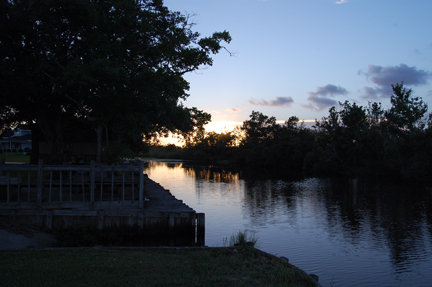
Sunset on Cow Bayou. I hope everyone had a fun and safe 4th!

On deck for tomorrow: the origins of the word “bric” and “bricco.” Stay tuned…

Rev. B’s birthday and the BEST chocolate cake

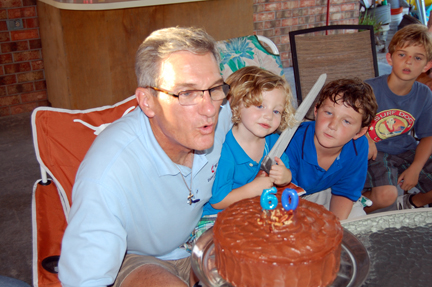
Yesterday, we celebrated Rev. B’s 60th birthday in Orange, Texas, where Tracie P grew up, on the Lusiana [sic] border. All the Johnson and Branch families were there, all the children, the Croakers and even the Manascos were there, too.

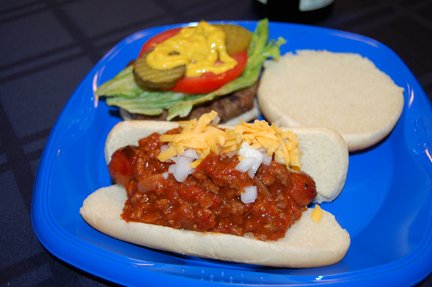
Mrs. B made homemade chili for DELICIOUS chili dogs and all the fixings for perfectly sized hamburger patties.

Tracie P made what everyone said was the BEST chocolate cake ever (and it was), now our official family chocolate cake recipe (if you’re real nice, maybe I could be convinced to share the recipe).

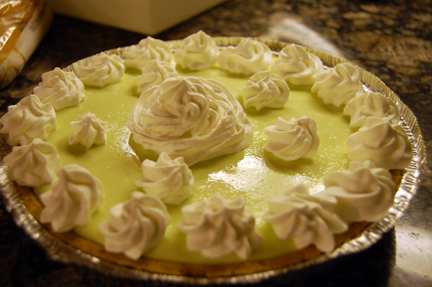
Jason M’s key lime pie — made with 20 key limes — was pretty spectacular, too. He made it fresh, just for us. It was rich in flavor but wonderfully light in mouthfeel. If you saw all those tattoos on Jason, the thought of him holding a pastry syringe doesn’t immediately come to mind. But man, that dude has a way with whipped cream!

Happy, happy birthday Rev. B! Know that we love you a lot and that I couldn’t have asked for a better father-in-law… :-)

Did you know that Rev. B is a blogger, too?

Happy fourth of July, ya’ll!

My Nudie boots, phase 2 of my TexMexamorphosis

You may remember the story about how I got my cowboy hat. Well, yesterday I received another sartorial gift from a Texan, equally cherished and most definitely destined for good use.

Yessiree, you got that right, those are genuine, original, vintage Nudie Cohn boots in that thar photeau above.

In case you don’t know Nudie, he was one of the great designers of the 20th century: he designed “Elvis Presley’s $10,000 gold lamé suit, worn by the singer on the cover of his ‘50,000,000 Elvis Fans Can’t Be Wrong album'” (see the Wiki) and he also created Gram Parsons’s “Gilded Palace of Sin” suit, now in the Country Music Hall of Fame in Nashville.

They were given to me by one of the most beloved folks in the Texas wine biz, Joe Pat Clayton (do you remember how Tracie P and I met Joe Pat, thanks to Cousin Marty, at a James Burton show in Austin?).

He bought them on Ebay but they didn’t fit him. “I just wanted to make sure they’d go to someone who’d know what they were and would appreciate ’em,” he said when he surprised me yesterday. Well, I’m here to tell you that he found the right guy!

Man, Joe Pat, I cannot thank you enough. I’ll wear them for sure next week at my show with The Grapes.

In other news…

I am hoping that the Prince of Puns, Thor, will appreciate a paranomasia I concocted yesterday for a new client in Austin:

Corn porn: the best kind of smut (huitlacoche)

fonda san miguel

Above: The huitlacoche (corn smut tamales) at Fonda San Miguel are UNBELIEVABLY good. Pair that with 1998 Tondonia Rosado by López de Heredia (at a more than reasonable price) and you’ll see why I love living in Austin, Texas.

Tracie P and I love eating at the bar. We love talking to bartenders and sharing wines with our neighbors.

Lately, our guilty pleasure has been the bar at one of our favorite restaurants in the world: Fonda San Miguel in Austin. Especially because they’ve recently added López de Heredia to their wine list (at more-than reasonable prices, one of the weird anomalies of living in Texas where most wine is more expensive than elsewhere but certain otherwise-unknown-to-Texans wines are sold for less).

Believe me when I tell you that the huitlacoche corn smut tamales alone would be worth the trip to Austin.

fonda san miguel

Above: To our palate, López de Heredia wines are among the greatest food-friendly wines on the planet. They’re not for everyone (with their highly oxidative style and to-some off-putting nose). To us, they are near perfection in a glass. Paired above with the excellent tortilla soup at Fonda.

Thanks again, bartender James (below) and wine director Brad for keeping those wines in stock! WE LOVE IT!

fonda san miguel

In other news…

I had a really crummy day yesterday but my Facebook friends and family got me through it with a flood of thoughtful messages. I can’t say how much I appreciate it. THANKS SO MUCH TO EVERYONE FOR YOUR SUPPORT. IT MEANS THE WORLD TO ME.

Jason, you know what’s playing on my jukebox today as I type away? Yep, you got it: DOUG SAHM.

I really cannot begin to explain how addicted I’ve become to the music of Doug Sahm. At first listen, the music may seem a little rough around the edges but once you scratch through its surface, you’ll find some real Texas soul and groove (“where the Cosmic Cowgirls play”).

My band The Grapes will be performing his ode to Austin, “Groover’s Paradise,” next Wednesday in La Jolla.