Manufacturing consent (again) in Montalcino

Above: Could the results of elections in Montalcino yesterday lead to changes in appellation regulations for Brunello? For many years, the now elected advisory council member and front-runner for association president has advocated a change that would allow up to 15% of grapes other than Sangiovese (above).

The results of much-talked-about Brunello advisory council election came my way early this morning via my friend Ale’s feed. But as soon as they hit the Brunello producers association website, they were immediately blasted across the internets by observers of the Italian wine industry. I have posted the results at VinoWire together with the newly elected members’s professional affiliations (I cannot but applaud the Brunello producers association for posting the highly anticipated news promptly… for once!).

Above: Has a metaphorical hail storm crippled the sacred primacy of Sangiovese? Many, like top Italian wine blogger Mr. Franco Ziliani fear it has.
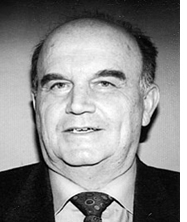
ezio rivellaMany believe that ex-director and eno-architect of behemoth Banfi, Ezio Rivella (left), will be the next president of the body (to be announced in the next three weeks).

For years, Rivella has advocated a change in appellation regulations that would allow up to 15% of grapes other than Sangiovese in Brunello di Montalcino.

In a genuine act of sixteenth-century “self fashioning,” ex-director of behemoth producer Banfi and the self-proclaimed architect of the Montalcino renaissance is about to publish an English translation of his memoir: Montalcino, Brunello, and I: the Prince of Wines’ True Story [sic and sick].
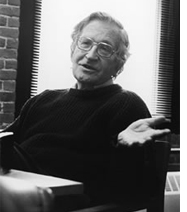
noam chomskyI’ll take the lead from my colleague Mr. Ziliani (who posted “no comment” this morning on his blog) and will leave you instead with the words of one of my linguistic and ideologic heroes, Noam Chomsky (left):

“The most effective way to restrict democracy is to transfer decision-making from the public arena to unaccountable institutions: kings and princes, priestly castes, military juntas, party dictatorships, or modern corporations.”
Indictments arrive in Montalcino

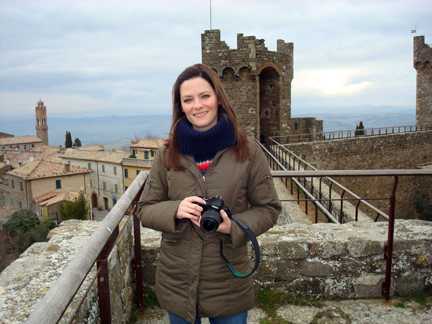
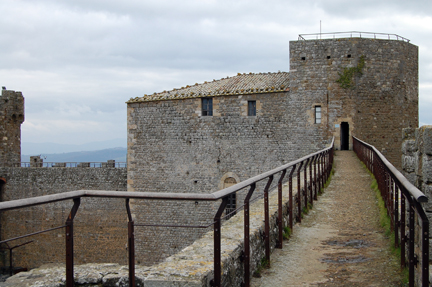
Above: A view from atop the Fortezza in Montalcino (taken in February 2010). Spring may have arrived there but skies are still dark. But bluer skies are on the horizon.

It’s been more than a week since the Italian media reported that six persons had been indicted in the Brunello controversy that gripped the appellation in 2008 and 2009. The news initially appeared in the Siena edition of national daily La Nazione but the names of those indicted were not published.

About a week ago, the names were revealed in a small article in the Florence edition of La Repubblica although they didn’t hit the mainstream feed until yesterday when Mr. Franco Ziliani broke the story on his blog.

Seventeen persons were ultimately indicted by Italian authorities for having made false statements to public officials and for having sold “adulterated” products that did not meet appellation regulations for Brunello (the wines had been allegedly with grapes not authorized for the appellation; Brunello must be made with 100% Sangiovese grapes). Of those, eleven took a plea bargain and were never officially named in the investigation. The six named in reports widely circulated today have chosen to fight the charges. Their court date is scheduled for September 17.

It’s the most unhappy form of wine writing and you can read it in English here.

The good news is that the Brunello controversy is behind us: authorities in the U.S. have lifted the requirement for Italian government certification and a string of fair-to-good-to-excellent vintages since the horrific 2002 (too rainy) and 2003 (too hot) have delivered some great wines from Montalcino — wines that most certainly deserve our attention, regardless of the style that we prefer.

TTB lifts certification requirement for Brunello

The U.S. Alcohol, Tobacco, Tax, and Trade Bureau (TTB) has officially lifted its requirement that importers of Brunello obtain an Italian government declaration stating that the wine has been made in accordance with appellation regulations.

You can read the statement by the TTB here.

As a self-anointed semiotician, I can’t help but note what an interesting instance of wine writing this document represents. A close reading of the text reveals that that the TTB will ultimately be remembered as the author who “wrote the book,” so to speak, on the Brunello controversy. A winery, as of this week not yet implicated, also emerges in the document.

It’s at once the grimmest form of wine writing and the happiest: I hope it truly marks the end of the controversy known as Brunellopoli (Brunellogate).

I believe that Mr. Franco Ziliani was the first to publish the news in Italian and my friend Ale, author of Montalcino Report, was the first to publish the story in English.

Tuscan mountain food (WARNING: EXTREME OFFAL CONTENT)

The second night and second dinner of our stay in Tuscany, we had the great pleasure of being invited into the home Stefania and Fabrizio Bindocci in Sant’Angelo in Colle. I’ve known Fabrizio, the winemaker at Tenuta Il Poggione, for many years now and Tracie P and I were thrilled to get to taste his wife’s cooking.

“We’re not having ‘Tuscan’ food,” joked Fabrizio when he invited us. “We’re having ‘mountain’ food,” he said. He met his wife, he told us, when he attended a dance as a young man on Mt. Amiata (to the south of Montalcino and Sant’Angelo in Colle). There were no women in the valley back then, he joked.

tuscany

Dinner began with a nice light chickpea soup, accompanied by Sbrancato, a Sangiovese rosé produced by Il Poggione.

tuscany

Next came a dish I’d never had before: chestnut flour polenta, a classic dish of the Tuscan mountains, said Fabrizio and wife Stefania. She used a string to slice the individual portions.

tuscany

Fabrizio’s son Alessandro authors a blog about Brunello and life in Sant’Angelo, where he has posted about the pigs they raise at Il Poggione. We dressed the chestnut flour polenta with facial glands (above), butchered from the estate-raised pigs.

tuscany

Next came the true “stick to your ribs” dish: pig liver wrapped in caul fat.

tuscany

The liver was followed by sausage made from other organs, the darker of the two was spicy.

tuscany

To my knowledge, Il Poggione was the only producer to make a “riserva” Brunello in 2003, an extremely difficult vintage throughout Europe because of the heat and lack of rain. Brunello di Montalcino does not allow irrigation (not even emergency irrigation). But the elevation of the vineyards and their age (and thus the depth of the roots, which allows the vine to find the water table even in drought years) made it possible for Il Poggione to make a superb expression of Sangiovese despite the growing conditions. This was my first taste of the 03 Riserva, which is the first vintage that the winery has labeled as its “cru” Paganelli (the oldest vineyard on the estate, with vines more than 40 years old, and the source of the clones that inform the estate’s identity). The 03 Paganelli was superb: its fruit was bolder than most vintages I’ve tasted from Il Poggione, but the surprisingly powerful tannin and acidity kept the fruit in check. Very impressive. The 2001? To my palate, that’s one of the greatest vintages for Brunello in recent memory. The wine was unbelievably good, nearly perfect I’d say, a glorious balance of fruit, tannin, and acidity, with many years ahead of it but already showing gorgeously — and what a wonderful opportunity to taste it a stone’s throw from the estate, with the winemaker, paired with his wife’s traditional cuisine!

tuscany

Winter means fresh chicory as a side dish in Tuscany, red and green chicory, dressed with the estate’s olive oil.

tuscany

What Tuscan meal would be complete without castagnaccio, a short bread made with chestnut flour, topped with pine nuts and rosemary, for dessert?

Oops, I didn’t mean “Tuscan” food. I meant “mountain” food! ;-)

Thanks, again, Stefania and Fabrizio, for an unforgettable meal…

Terroir in Brunello (Castelnuovo dell’Abate, the Ramones, and James Brown)

I have a lot of posts lined up from our trip to Italy: this is the next in chronological order… A lot of folks have written me about our visits to Rinaldi and G. Mascarello (organized thanks to our extraordinary guide Franco) and as soon as I “move” through Tuscany and Emilia, I’ll post those tasting notes as well… but first some Montalcino terroir… thanks, everyone, for reading!

brunello di montalcino

Above: On our last night in Italy, in Rome, where we ate at an excellent if cantankerous Roman trattoria, we treated ourselves to a 2000 Brunello di Montalcino by one of my favorite producers, Poggio di Sotto, which lies in the southeastern sub-zone of the appellation, where the wines have an earthier and more pronounced mineral character in my opinion.

Our second day in Italy, we spent the morning in the farmhouse where we were staying (more on that later), sipping stove-top coffee and munching on cookies. After a quick visit to Montalcino proper, we headed south to Castelnuovo dell’Abate to visit one of my favorite people in Montalcino, Federico Marconi. As Fabrizio Bindocci said to me later that evening, when Federico walks into a room, you just can’t help but smile and be in a good mood. It’s really true.

brunello di montalcino

Above: Federico is one of the coolest dudes I know in Montalcino. We have a dream of creating a rock band called the Ramontalcinos (for our shared love of the Ramones; I think that we might also need to recruit McDuff for the project).

Le Presi, where Federico works, is a tiny winery and estate, founded in Castlenuovo dell’Abate by Bruno Fabbri in 1970. Bruno learned about winemaking and developed a passion for Brunello because he worked as an electrician in the legendary Biondi-Santi winery in the “Croce” subzone of Montalcino (just south of Montalcino proper).

brunello di montalcino

Above: One of the things that makes the Castelnuovo subzone unique is the presence alternating layers of sandstone and volcanic subsoils, as illustrated by this cross-section. Le Presi lies on the edge of Castelnuovo (literally newcastle) and one of its walls coincides with the ancient wall of the hilltop town. The volcanic deposits come from the nearby Mt. Amiata, to the south, once an active volcano.

I love the wines of Le Presi, which I first tasted at Vinitaly in 2009: they’re old-school Brunello, sourced from two small growing sites, just south of the town, vinified in a traditional style and aged in large cask. Like Federico, Bruno Fabbri (below) and his son Gianni (who now runs the winery and makes the wine) will tell you that the high concentration of volcanic subsoil (as you can see in the image above) gives their wines their distinctive minerality (and earthiness in my opinion). They call their top growing site “Muro Forte” (literally, strong wall, named after the wall in their cellar that coincides with the ancient town wall).

brunello di montalcino

Above: Tracie P and I really enjoyed talking to Bruno, who seemed happy to share tales of his earlier years, working at Biondi Santi, and making wine in Castelnuovo.

When I mentioned to Bruno that we were staying at the Il Poggione estate in Sant’Angelo in Colle (one of the southwest growing zones), he pointed out that Castelnuovo doesn’t have the same “maritime” influence (i.e., ventilation arriving via sea breeze) that Sant’Angelo has. Some would argue that the one or the other is better (can you guess which subzone Bruno favors?) but one this is for certain: the wines from Castelnuovo (at least those made in a traditional style) have different flavors from those produced in other subzones.

In the words of James Brown:

    Some like’em fat, some like’em tall
    Some like’em short, skinny legs and all
    I like’em all, huh, I like’em proud
    And when they walk
    You know they draw a crowd
    See, you got to have a mother for me

Let me just put it this way, the wines of Le Presi have a mother for me.

Next on deck, the terroir of the southwestern subzone and the fantastic farmhouse where we stayed.

Thanks for reading!

Brunello, you were always on my mind

It’s hard to believe that we were in Montalcino just a few short weeks ago! That’s Tracie P, above, atop the Fortezza in the historical center of the town, where Benvenuto Brunello begins today — the appellation’s annual grand tasting, where producers present their new vintages, this year, the 2004 2005 Brunello di Montalcino, the 2003 Brunello di Montalcino riserva, the 2008 Rosso di Montalcino, and the Moscadello di Montalcino (which I’ve never seen in the U.S.).

Tracie P and I tasted some great 2004 Brunello (not an easy vintage and certainly not a spectacular vintage for those not blessed with superior growing sites) and one phenomenal 2003 riserva.

I don’t have time to pen a decent post today: we’re busy moving into a little house we rented, our first home together! But I will post on the wines we tasted and the different terroirs of Montalcino next week.

Even though I love wines from many different regions of Italy, Brunello will always be my first romance: my enophilia grew out of my first visit to Bagno Vignoni, just south of Montalcino, when a friend and student of mine lent me the keys to his apartment there in 1989.

Brunello, you were always on my mind…

My writing partner Franco Ziliani is attending Benvenuto Brunello (where, unfortunately, it’s next-to-impossible to get online!) and we’ll be posting his impressions next week over at VinoWire.

Pici with tomato, sausage, and mushrooms

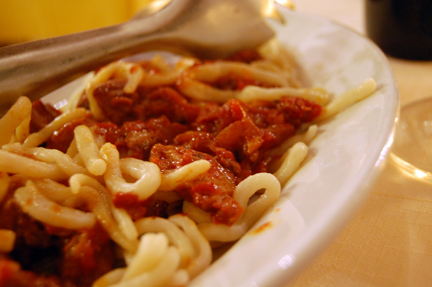
@ trattoria il pozzo in sant’angelo in colle (montalcino) last night. The star of an amazing menu. Pici or pinci are hand-rolled long noodles made using only flour and water. The magic lies in how they absorb the savory components of the sauce.

Looking back at Brunello

On Friday, Franco and I posted the news that the U.S. Alcohol, Tobacco, Tax, and Trade Bureau (TTB) has lifted the requirement of Italian government certification for Brunello di Montalcino imported to the U.S. The lift was agreed after Italian agricultural minister Luca Zaia met with bureau administrator John Manfreda last week.

I am happy to observe that despite the hail of the controversy (like the early-fall hail of 2008, that damaged but did not destroy the harvest; see above), Brunello and its producers — large and small — have emerged intact and healthy.

Looking back at the Brunello affair, in the glow of the Montalcino sunset, I am convinced of two things: that the controversy was a healthy wake-up call for producers (and that, ironically, it helped to raise positive awareness of the appellation abroad); and that, in many ways, it shed light on the importance and strength of the Italian appellation system.

At the same time, I believe the TTB’s response to the controversy was a trans-Atlantic misunderstanding: as the dearly departed Teobaldo Cappellano pointed out in the Brunello debate a year ago, the DOC/G system was created to protect the producers and the territory, not the consumer. And as much as I loath the thought of a Brunello producer “cutting” his Sangiovese with another grape variety, the transgression is a victimless crime as it relates to the consumer. If the consumer likes the wine and is satisfied with the perceived price-quality ratio, s/he is not molested by this misdeed.

The real victims were those producers who remained and continue to remain true to the territory and the territory itself. If unscrupulous enologists and calculating landowners did indeed adulterate their wines, and in doing so, co-opted and misappropriated an appellation tied to the land and the people who created it, therein lies the injury inflicted on their compatriots.

The saddest legacy of the Brunello controversy is the ill will it has created in the microcosm of Italian wine. On the same day that the Italian agricultural ministry issued a statement announcing the requirement for certification had been lifted, Franco (above, right; mentor, friend, and my partner in VinoWire) posted about a “cease and desist” letter he received from a lawyer representing a commercial winery. (For the record, Franco expunged any reference to the winery and wine in his post and I am merely speculating that the winery in question produces Brunello.) But the letter did not refer to something Franco had written: it referred to comments made by his readers! In one of the comments in question, a reader had made a remark about the unusual dark color of the wine by said winery. Has it really come to this? Do behemoth, commercial producers of Brunello really feel so threatened by a comment thread on a blog? Has it really come to this? Must a blogger feel threatened for merely allowing his readers to express their opinions in the comment thread of a blog?

Today, few who reside beyond Montalcino remember that Montalcino and its environs were one of the Germans’s last battlegrounds as they retreated in the face of the Allied advance in the last year of the Second World War. Even before the war, Montalcino and Tuscany were centers of the “red” resistance to fascist rule. Looking back on the whole Brunello affair, I was reminded of a little red book given to me by the mother of three brothers in Montalcino, whom I’ve known well since 1989. The locally published tome is by political activist, later partisan, and then local politician Carlo Sorbellini (above): Le mie memorie (My Memories). His descriptions of the years leading up to the war and the sacrifices made by him and his compatriot partisans during the German occupation are among the most humbly written and most moving narratives I have ever read. Many people shed their blood and gave their lives to protect this unique place: the same mountainous geography that made it a German stronghold also made it a great place to make fine wine after the war. And this Unesco-protected valley is among the most beautiful places in the world.

One thing I know to be true: I heart Brunello and I heart the people that lived, loved, and died to make it what it is today.

Vin Santo: an overlooked “orange” wine? (and a more likely explanation of its name)

vin santo

Above: Ale posted photos of grapes (Trebbiano and Malvasia) being laid out to dry on reed mats for the Vin Santo that he and his father are making this year.

Scanning my Google Reader feed this morning, I came across these posts by my friend Ale in Sant’Angelo in Colle. He and his father grow Sangiovese and make Brunello di Montalcino for one of the oldest — and one of my favorite — producers in the appellation, Il Poggione.

vin santo

Above: The mats are then hung in the vinsantaia, an attic used especially for the drying of the grapes. Windows on either side of the space allow for ventilation that helps to limit humidity during drying.

Reading his descriptions of harvesting and drying grapes for the production of Vin Santo, it occurred to me that Vin Santo is an “orange” wine. There is no canonical definition of “orange wine,” even though a new “orange wine” movement has clearly emerged among European winemakers, mainstream wine writers, fringe wine bloggers (like me), enthusiasts, and lovers. Vin Santo is generally not made using skin contact during fermentation (one of the fundamental techniques employed in the production of orange wine). But there is no denying that Vin Santo is orange in color.

The rich orange color of Vin Santo is created by the drying of the grapes and by intentional oxidation of the wine.

vin santo

Above: Specially sized caratelli (literally, “small casks”) are used for aging. Many believe that the size of the barrels is one of the keys to the unique flavors and aromas of Vin Santo.

The earliest documented printed reference to Vin Santo is found in Giovanni Cosimo Villifranchi’s Oenologia Toscana (1773). In 1605, Sir Robert Dallington mentions a wine called Zibibbo, which was “dried for Lent” and could possibly be a reference to Vin Santo (see his entire description of grape growing and winemaking in Tuscany here).

Many claim that the name Vin Santo (literally, “holy wine”) was coined in the 15th century when Greek humanist Basilios Bessarion tasted the wine and compared it to the wines of Xantos (see also this entry on Bessarion in the New Advent Catholic Encyclopedia). Supporters of the theory maintain that he liked it so much, he exclaimed “Xantos!” and those present understood him to say “Santo!” But I doubt this is the case.

I’ve heard some say that the name is inspired by the fact that Vin Santo can go through a second fermentation in the spring when temperatures rise in the vinsantaia. Like Christ, the wine “rises again.” I doubt this is the case but Dallington’s reference to Lent leads me to believe that dried grape wines were associated directly or indirectly with Easter in his time.

In 1773, Villifranchi writes: “The name that is given by us today to this ‘Vino di Santo’ is believed by some to be owed to Ancoret saints* and the Monks of Soria [Spain] who originally made wine in this manner.” He adds that “others believe that this name derives from the fact that the grapes are typically pressed during the period of the Christmas holidays.”

Whether you call Vin Santo an orange wine or not, it would seem to pass muster with the natural wine dogmatists. Using a “mother” yeast to start fermentation is a sine qua non of Vin Santo production: after pressing, sediment is scraped from a cask from a previous vintage and then added to the newly pressed juice to initiate fermentation. That’s how they’ve been making Vin Santo for centuries (or at least since Villifranchi first described methods of vinification employed in his day).

The only difference is that in Italy, they don’t call it “natural wine.” They just call it wine.

Look for more on Sir Robert in upcoming posts and check out this cool video posted by Ale on his blog today:

* “The recluses of the East in the early Christian centuries” (OED).

Banfi 2004 Brunello, I cannot tell a lie (and other notes and posts on 04 Brunello)

Tracie B snapped the above pic of me using my Blackberry the other night, when she came home with an open bottle of Banfi 2004 Brunello di Montalcino in her wine bag (when not otherwise occupied being knock-out gorgeous, Tracie B works as a sale representative for a behemoth mid-west and southeastern U.S. wine and spirits distributor).

The moment of truth had arrived: it was time for me to taste the wine with my dinner of Central Market rotisserie chicken, salad, and potatoes that Tracie B had roasted in her grandmother’s iron skillet.

The wine was clear and bright in the glass and had bright acidity and honest fruit flavor. The tannin, while present, was not out of balance and the wine had a slightly herbaceous note in the finish that might not please lovers of modern-style wines but that I enjoy. If ever there were a wine made with 100% Sangiovese grapes, I would say this were one — tasted covertly or overtly.

According to WineSearcher.com, the average retail price for this wine in the U.S. is $65. I can’t honestly say that I recommend the wine: it’s not a wine that I personally look for at that price point. I did not find this to be a great or original or terroir-driven wine but I will say that it is an honest expression of Sangiovese from Montalcino.

Anyone who reads my blog (or follows news from the world of Italian wine), knows that Banfi has been the subject of much controversy over the last year and a half. But fair is fair and rules are rules and I cannot conceal that I enjoyed the 04 Brunello by Banfi. (Btw, Italian Wine Guy, who is Glazer’s Italian Wine Director, recently posted on 04 Brunello, including a YouTube of Banfi media director Lars Leight speaking on the winery’s current releases at a wine dinner in Dallas.)

Above: Facing south from Il Poggione’s vineyards below Sant’Angelo in Colle, looking toward Mt. Amiata.

Despite the will of some marketers to make us think otherwise, 2004 was not an across-the-board great vintage in Montalcino. In my experience with the wines so far, only those with the best growing sites were able to make great wines in the classic style of Montalcino and wines that really taste like Montalcino.

Btw, in all fairness, it’s important to note that the Banfi vineyards lie — to my knowledge — primarily in the southwest subzone of the appellation, one of the historic growing areas for great Sangiovese. When you drive south from Sant’Angelo in Colle, you see signs for the Banfi vineyards on the right. Earlier this year, my friend Ale over at Montalcino Report posted this excellent series on understanding the terroir of Montalcino using Google Earth. It’s one of the best illustrations of why the wines from that part of the appellation are always among the best, even in difficult years. (Ale’s killer Il Poggione 04 Brunello, which I tasted for the first time at Vinitaly in April, received such glowing praise from one of the world’s greatest wine writers that it caused near pandemonium in the market, prompting wine sales guru Jon Rimmerman to write that it “may be the most offered/reacted to wine I’ve ever witnessed post-Wine Advocate review.”)

Above: Facing north in Il Poggione’s vineyards, looking at the village of Sant’Angelo in Colle (literally, Sant’Angelo “on the hill”).

Franco recently tasted 93 bottlings of 04 Brunello at the offices of The World of Fine Wine in London and wrote of his disappointment with the wines delivered by even some of the top producers. Here are Franco’s top picks and straight-from-the-hip notes, posted at VinoWire.

In other news…

One of the greatest moments of personal fulfillment in my life was when my band NN+’s debut album reached #6 in the college radio charts so I guess that stranger things have happened: a colleague in Italy emailed me last week to let me know that my blog Do Bianchi was ranked #9 in the official (?) list of “top wine blogs.” Who knew?

Thanks, everyone, for taking the time to read Do Bianchi. The blog has been such a rewarding experience for me and it means so much to me that there are people out there who enjoy it.