Showdown in Tuscany? Franco and James to face-off this summer

From the “after all, we write about wine not politics” department…

Above: Franco (pictured last September when we tasted together at Ca’ del Bosco) and James haven’t always been on the best of terms but collegiality has happily prevailed in their most recent exchange.

Addendum: if you missed the first part of the exchange, click here for the initial dialog between these two giants of wine writing…

In case you don’t subscribe to the Wine Spectator Online (as I do), I’ve cut and pasted the most recent exchange between Franco Ziliani and James Suckling below. It seems that collegiality has prevailed in an otherwise rocky relationship. (And here’s the link to the original post.)

Their shared insight and opinions regarding the 2006 Langa vintage are definitely worth checking out…

    User Name: James Suckling, Posted: 05:33 PM ET, May 29, 2009

    Your English is perfect Franco! I have always found Mascarello’s Barberas and Doclettos a little unclean. But the Barolos are generally fine, although lighter in style.

    User Name: Franco Ziliani, Italy Posted: 06:56 AM ET, May 30, 2009

    James, I agree (and I’m very surprise for this) with your perplexities about Barbaresco (and Barolo?) 2006. And I said this after a tasting, at Alba Wines Exhibition (why don’t you attend to this tasting with many Italian and international wine writers?) of 60-70 Barbaresco 2006, many among the most important wines of this Docg. The choice of Bruno Giacosa who decided not to bottle his Barolo and Barbaresco 2006 is very significant about the difficulties and the problems of this vintage, but in my tasting I have find at least 15-20 Barbaresco 2006 well made with great personality, richness, elegance and complexity. A question: why we debate about Giuseppe (Mauro) Mascarello wines and an hypothetical “volatile acidity” in his wines in a post you dedicate to Barbaresco 2006? I hope to have sometimes the possibility to meet you and taste with you so to confront our different point of view about Piedmont (Nebbiolo) wines. What do you think? Franco

    User Name: James Suckling, Posted: 09:43 AM ET, May 30, 2009

    Franco. That would be nice one day. May be this summer? As for trade tastings like the Alba Wines Exhibition, I prefer to taste the wines blind in my office in Tuscany. I too found numerous 2006 Barbarescos with elegance and complexity — ie 90 points or so — but I was just a little underwhelmed because I thought there would be more top wines.

    User Name: Franco Ziliani, Italy Posted: 11:29 AM ET, May 30, 2009

    OK for this summer James, in your office or, better, in Langhe region. When you decide that we can meet for discute about Barolo & Barbaresco and taste together, you can contact me at cannubi@gmail.com but don’t forget your promise…

In other news…

There’s another — and in this case, very real — showdown brewing in San Antonio.
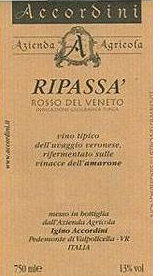
Another clarification on ripasso/ripassa

accordiniYesterday, I messaged the VinoWire group on Facebook, asking if anyone knew of a Valpolicella producer besides Zenato who used the term ripassa on its Valpolicella label. (Btw, if you’re not a member of the VinoWire FB group, please join!). Colleague, friend, and fellow blogger Tom Hyland weighed in with Accordini’s Ripassà (or Ripassa’ depending on whether your looking at the label or the winery’s website. Ripassa’ is a Veneto dialectal form of the Italian ripassato, literally passed again or refermented in this case. (I am reminded of Giacomo Leopardi’s famous observation that French is a language of terms while Italian is a language of paroles: like so many lemmae in the Italian lexicon, passare can assume a wide varieties of meanings depending on the context.) Thanks, Tom, for sharing the info and thanks also to Devon Broglie and Angelo Peretti who pointed out that Zenato’s “Ripassa” — without the accent grave or inverted comma — is indeed a trademarked proprietary name.

Has anyone tried the Accordini? Is it good?

In other news…

Just in the from the “unbelievable but true” department: Franco and James Suckling are in the midst of a cordial, collegial, and amiable exchange in a comment thread at James’s blog on the Wine Spectator site.

Here’s the link to the post and thread but since you have to subscribe (as I do) to view the blog, I’ve copied and pasted the exchange below.

User Name: James Suckling, Posted: 03:36 AM ET, May 28, 2009

    Guiseppe Mascarello & Figlio doesn’t send but we buy bottles normally for review. I find the wines very up and down. Some are amazing but others have flaws like volatile acidity.

User Name: Franco Ziliani, Italy Posted: 12:13 PM ET, May 29, 2009

    I know very well, and I’m a great fan, of Giuseppe (Mauro) Mascarello wines, but I confess that I don’t find any traces of “volatile acidity” that Mr. Suckling find…

User Name: James Suckling, Posted: 12:26 PM ET, May 29, 2009

    Franco. Some people have a high tolerance for VA. Have you ever been to their cellars? Anyway, it’s only been with a few wines. I generally like the wines as you do. Thanks for the comment.

User Name: Franco Ziliani, Italy Posted: 04:21 PM ET, May 29, 2009

    Mr. Suckling, apologies in advance for my poor English. I know very well the Giuseppe Mascarello cellars and I don’t think that is this kind of old, and very fresh in every season, cellar that create the problem of “volatile acidity” that you find in Giuseppe Mascarello wines. And I don’t think that a case of “high tolerance for VA” don’t allow me to find in Mascarello wines the “VA problem” that you find in few wines. Can you tell in what wines, Barolo, Barbera, Dolcetto (what vintages?) have you find VA “flaws like volatile acidity”? Thanks for your kind answer f.z.

We’ll have to wait for James’s next move!

I have seen Franciacorta future and its name is…

…Giovanni Arcari.

Above: Giovanni Arcari, the Bruce Springsteen of Italian sparkling wine. This man is crazy and I thank goodness for him.

We first met in September of 2008, when he, Franco, and I visited Ca’ del Bosco together, where we tasted 1979 Franciacorta by Ca’ del Bosco (owner of Ca’ del Bosco, Maurizio Zanella, was just elected president of the Franciacorta consortium, btw).

We connected again at Vinitaly, where we got thrown out of the fair for hanging around his booth after hours, drinking Franciacorta and eating salame.

Above: In March, Giovanni led a tasting of artisanal “grower-producer” Franciacorta bottlings at Ceri Smith’s excellent wine shop in San Francisco, Biondivino.

The last time I saw him, he still hadn’t launched his new blog, Terra, Uomo, Cielo (Earth, Man, Sky), “a small man, on a small plot of land, under a small sky.” The blog is now live and so I felt it time to share my vision of the future with you: Giovanni has spearheaded an innovative winemaking program and agenda in Franciacorta, consulting with grape-growers who previously sold their fruit to the large commercial producers of Franciacorta. In doing so, he has helped to create a new genre of grower-producers who make excellent hand-crafted, artisanal expressions of Franciacorta.

Above: Ceri Smith (left) with Giovanni at their March tasting in San Francisco. One of the things I like the most about Giovanni is that he doesn’t just help the growers to make great wines. He also helps them to market the wines. There’s no point in writing a song that no one will ever hear and while there are plenty of reasons to make wines that will never make their way to the market, Giovanni’s wines are too good not to share with the world.

That day in Verona, we tasted a number of bottlings by Andrea Arici’s Colline della Stella and the Dario and Claudio Camossi’s Camossi di Camossi, each tasting better than the last. When sampling these terroir-driven wines, you cannot help but be impressed by their freshness and their structure. The secret, Giovanni will tell you, lies in when the wine is disgorged.

Chapeau bas, Giovanni!

The wines are not currently available in the U.S. but you can find them at Vittorio Fusari’s excellent restaurant and food and wine shop, Dispensa Pani e Vini in Torbiato di Adro in the province of Brescia (Lombardy). Even if you don’t read Italian, check out the photos is this review of legendary chef Vittorio’s new enterprise.

Human, all too human: remembering Josko Gravner’s son

One of the owners of Terroir Natural Wine Merchant and Bar in San Francisco, Guilhaume Gerard, recently reminded me that that the wines come first, before the people who import them. Guilhaume pointed out rightly that while there are a lot of people in the wine trade whom we admire and care about and others whose scruples give us pause, the wines are what is really important. I agree with him.

To Guilhaume’s observation, I would add only that the wines and the people who make them come before the people who import and sell them.

miha_gravnerToday, after Franco and I posted on VinoWire about the tragic and senseless passing of the young Miha Gravner (left, photo by Alfonso), I was blown away by how many people linked back to our post, on Facebook and on their blogs, writing about how they never met the young man but how, nonetheless, they felt a personal connection to him and his family through their wines. As Franco wrote in his post at Vino al Vino, Miha had begun working closely with his father Josko and would have continued his father’s legacy.

Josko Gravner was part of a small group of radical “extreme” winemakers, who, as Eric wrote today in an unrelated post, vinified and aged their wine in clay amphorae. I’ve tasted Gravner’s wines on many different occasions, from many different vintages, and no one can deny that these are benchmark, original wines, wines that push the envelope of contemporary winemaking by reaching back to the secrets of the ancients. Josko is also one of the fathers of the natural wine movement in Italy and was inspired by the teachings of Rudolf Steiner.

Cory at Saignée put it best when he wrote:

    If you’ve never had one of Josko’s wine, now is the perfect time to grab a bottle and raise a glass to him. They are some of the most individualistic, interesting, and unforgettable wines in the world from a man who has dedicated his life to exploring the possibilities of what wine can be. i, of course, have never met the man and am only familiar with his wines, but i’d like to think that personality can come across in wine making and that you can know someone just a little through their wines, and i wish him the best through this tragedy.

I imagine that Cory, Guilhaume, and I will open a bottle of Gravner at Terroir on Thursday night before I head over to do our set with Nous Non Plus at Rickshaw Stop.

Stop by if you have the time and we’ll remember a young man who would have made the wines we would have drunk for a lifetime.

Just Say NO to Merlot!

In case you haven’t read Franco’s editorial at VinoWire, “Vino Nobile producers: just say no to Merlotization,” please check it out (translation by yours truly). Vino Nobile di Montepulciano is one of the greatest terroir-driven expressions of Sangiovese and it would be a pity to see it dumbed down by higher percentages of international grape varieties. Please comment if you feel so inclined.

Patrizia Castiglioni and Dora Forsoni make my favorite Vino Nobile at Sanguineto. Tracie B always notes that “if Willie Nelson had an Italian sister, it would be Dora.” They are truly lovely folks and when I took this photo of them, Dora smiled sweetly at Patrizia and said, “no one has ever taken our picture together before.” Their wines are natural and stinky, just the way I like them. You won’t find any Merlot here.

Double-take: Italy, Texas

From the “double-take” department…

Given my chronic case of Italophilia, “my new life Texana,” and my philological (and toponomastic) leanings, it was inevitable that sooner or later I would have to investigate and address the origins of the toponym Italy, Texas (the “two boots” of Italy and Texas, left, reside side-by-side on a shop-window on main street, right next to the Uptown Café in Italy, Texas). Tracie B and I stopped there yesterday on our way back from Dallas (where our dear friend Alfonso hosted us for dinner and opened a few truly unforgettable bottles — but you’ll have to wait for Tracie B’s post for more detail). Italy lies about 40 minutes south of Dallas along I-35 (which leads south from Dallas to Waco, Waco to Austin).

In his lectures and essays on memory, the contemporary Italian philosopher Remo Bodei loves to cite another noted homonymous place name in Texas — Paris, Texas, celebrated in film by the great director Wim Wenders. Why, he asks in his lecture “The Traumas of Memory,” have European emigrants named their settlements in the New World after their place of origin? “To create a transitional object? A soft landing in the flight from the known to the unknown? I believe that something analogous happens even in traumas connected to loss. In effect, monuments and burial rituals are carried out to remember and forget simultaneously. When objectified, pain hurts less.”

Above: The water tower in Italy, Texas.

As it turns out, Italy — locally pronounced IT-lee — was not named after its settlers’s country of origin but rather — at least, according to local legend — by a late-nineteenth-century post master who believed the climate of Texas was similar to Italy’s.

Above: The picturesque main street of Italy, Texas has remained virtually unchanged since the 1930s.

One of the reasons we wanted to stop there was to eat at the Uptown Café, an eatery called one of the “best small town Texas cafés” by Texas Monthly Magazine. But when we got there the proprietor, a very nice lady, told us “Ever’ Tom, Dick, and Harry dun’ came in here and ate everythang.” So we ended up eating at the Texas Best Smokehouse, the flagship restaurant and novelty store of a small, locally owned chain. They smoke their own jerky there (for all of their locations, I was told) and they also make pistachio pudding. The Texas Best Smokehouse is located on Dale Evans Dr., in turn named after one of Italy’s most famous daughters.

Above: I couldn’t resist the pistachio pudding, which is made — I believe — with Cool Whip, Jello mix, and pistachios. Metabolically, it was probably a bad decision, as was the bbq sausage sandwich. But, what the hay? You only live twice, right?

Double-meanings, paronomasia, puns, and — in this case — a homonymous place name, are the source of endless fascination for me. (One of these days, I’ll do a post on the origins of the place name California. I know of at least two towns in Italy named California.)

The other day, Franco sent a wonderful photo, snapped in the Alps, of the Italian and Texan flags flying together. As it turns out, there’s a little bit of Italy in Texas, too.

Angelo Gaja, please call me!

From the “just for fun” department…

I like to call him the Giuseppe Baretti of Italian wine writing: my friend and colleague Franco Ziliani (pictured above holding two bottles of would-be [wood-be] Nebbiolo by Giorgio Rivetti) is one of the Italian wine writers I admire most and the feathers he ruffles with his excellent blog, Vino al Vino, often belong to the princes and princesses of Italian wine.

He reminds me of yet another great Italian writer, a Renaissance master of satire, Pietro Aretino: if anyone deserved to borrow Aretino’s motto flagellum principum (flagellator or flogger of princes) it would be my dear friend Franco.

Franco recently posted the above photo together with a post in which he lampoons a Nebbiolo producer (well, should we call him that? his wines don’t really taste like Nebbiolo at all) who — for Franco and for me — represents everything that is wrong with the world of Italian wine today: Giorgio Rivetti is a “wine wizard” and master of marketing who created wines expressly for the American market with little consideration for the great tradition and great people of the place where he makes wine. (You may remember my post on the Spinetta Affair.)

Not long after he posted the photo and satire, he received a phone call from the “bishop of Barbaresco” (who, incidentally, had recently anointed his disciple Rivetti as a member of a putative “national team” of winemakers who will lead Italy into the world cup of the future). Evidently, messer Gaja has forgotten the meaning of irony and satire — notions and literary figures cherished by the ancients and rediscovered during the renewal of learning and then again in the age of enlightenment.

This week, my partner Alfonso Cevola (aka Starsky) and I had some fun with it: Angelo, please call me!

In other news…

Yesterday, Franco sent me this photo, snapped in Maroggia, at the foot of the alps in the Valtellina, where Nebbiolo finds one of its finest expressions.

I moved to Texas for one very special lady only to discover there’s a little bit of Texas in everyone… Thanks, Franco!

The red, white, and sparkling carpet at Vini Veri 2009

Posting hastily this morning as I head out for another day at the fair and then tasting later today at Dal Forno in Valpolicella… Here are some quick highlights from the “red, white, and sparkling carpet” at the 2009 gathering of Vini Veri, the “real wine” movement, “wines made how nature intended them,” as the group’s motto goes.

If ever there were a winemaker who looked like a movie star, it’s got to be Giampiero Bea of Paolo Bea. I finally got to taste his 2006 Arboreus, an Etruscan-trained 100% Trebbiano vinified with extended skin contact. In a later post, I’ll write more about the wine and what Giampiero had to tell me about the 2005 vs. 2006 vintages of his Santa Chiara. The 2004 Sagrantino was the best I’ve ever tasted.

Last year, I tasted Maria Teresa Mascarello’s 2005 Bartolo Mascarello Barolo out of barrel (literally, when the cellar master brought it up for her to taste for the first time). I was excited to taste it again a year later in bottle. She’s carrying on her father’s tradition of artist labels with polemical messages. Her “Langa Valley” label (left) is pretty hilarious.

I really dig Adelchi Follador’s natural Prosecco, which he ages on its lees and bottles in magnum. His winery, Coste Piane, also makes a still Prosecco. The wine is great, probably the best Prosecco you can find in America (imported by Dressner).

Franco turned me on to the Barbaresco Montestefano by Teobaldo Rivella. I tasted the 2004 and 2005 and was entirely blown away by how good this wine showed. It reminded me of Giacosa in style and caliber and its power and elegance made me think of an Arabian filly in a bottle.

Marco Arturi is a truly gifted writer who marries wine and literature. He posts often at Porthos. He is a steadfast defender and promoter of natural wine. We had never met before but we write to each and check in from time to time on Facebook: when we met in person it felt like we knew each other well. The whole Facebook thing is pretty cool.

Getting to taste with Franco Ziliani is one of the highlights of any trip to Italy for me. I admire him greatly for his writing, his integrity as a wine writer, and his palate, and I am proud to consider him my friend and colleague. When Franco point me in the direction of a wine, I know I’m not going to be disappointed.

Vini Veri without its co-founder Teobaldo Cappellano reminded me of the Lou Reed song “What’s Good”:

Life’s like a mayonnaise soda
And life’s like space without room
And life’s like bacon and ice cream
That’s what life’s like without you

Baldo was a wonderful man and even though the fair was great this year (and expanded to include the Triple A and Renaissance du Terroir tastings), it just didn’t feel the same without him.

The image of Baldo with his son Augusto (above) hovered over the room where he would have presented his wines.

I’ll write more on my experience at Vini Veri when I get home. Off to Valpolicella and then Alto Adige… Stay tuned…

*****

Life’s like a mayonnaise soda
And life’s like space without room
And life’s like bacon and ice cream
That’s what life’s like without you

Life’s like forever becoming
But life’s forever dealing in hurt
Now life’s like death without living
That’s what life’s like without you

Life’s like Sanskrit read to a pony
I see you in my mind’s eye strangling on your tongue
What good is knowing such devotion
I’ve been around, I know what makes things run

What good is seeing eye chocolate
What good’s a computerized nose
And what good was cancer in April
Why no good, no good at all

What good’s a war without killing
What good is rain that falls up
What good’s a disease that won’t hurt you
Why no good, I guess, no good at all

What good are these thoughts that I’m thinking
It must be better not to be thinking at all
A styrofoam lover with emotions of concrete
No not much, not much at all

What’s good is life without living
What good’s this lion that barks
You loved a life others throw away nightly
It’s not fair, not fair at all

What’s good?
Not much at all

What’s good?
Life’s good
But not fair at all

— Lou Reed

Nebbiolo Super Freak: gulf oysters and Produttori del Barbaresco

WARNING: EXTREME PAIRING AHEAD, PROCEED WITH CAUTION

It’s a very kinky pairing/the kind you don’t bring home to mother…

In Italian you say, ti tolgo il saluto, literally, I withdraw my greetings from you.

I imagine that’s what Franco will say to me tomorrow at the Vini Veri tasting when he learns that Tracie B and I paired Nebbiolo with oven-fired gulf oysters last night.

Since I moved to Texas last year, gulf oysters have become something of an obsession. I’ve always been a fan of the mollusk but I never thought the shucked shellfish of New York and Long Island could be beat. That lasted until I tasted my first gulf oyster in New Orleans last month.

Above: Coalminer Mark, aka Mark Sayre, aka “the best sommelier in Austin” serves 2007 Langhe Nebbiolo by Produttori del Barbaresco by the glass at happy hour at Trio, the excellent steakhouse in the Four Seasons Hotel in Austin. The wine list is killer, the comfort food appetizers menu is yummy, the prices are right, and the valet parking is FREE! Run, don’t walk.

The 2007 harvest in Langa was a classic vintage and will potentially be a great one, probably similar to 96, 01, and 04 in its profile. The 2007 Langhe Nebbiolo by Produttori del Barbaresco was showing handsomely last night and I cannot conceal that I am ENTIRELY geeked someone in Austin is doing it by-the-glass at a happy hour price. Wine director Coalminer Mark of the Four Seasons and the San Diego Kid might just have to bury the hatchet.

Above: Tracie B’s boss Jon Gerber served raw gulf oysters at his annual “Shuck and Suck Crawfish Boil,” a yearly blow-out party, benefiting Habitat for Humanity.

Nebbiolo and spicy, oven-fired gulf oysters? An unconventional pairing to say the least, but the freshness of the Langhe Nebbiolo and its lighter body and acidity was delightful with savory oyster and chorizo that adorned its silky surface. Hey, Franco, call me a Super Freak… ;-) I’ll see you tomorrow in Isola della Scala.

In other news…

The Italian wine trade fairs start today and I’m about to get on a plane for Venice. Stay tuned: next post from Italia…

On the eve of Vinitaly, a push to create a Montalcino DOC (and reflections on a year past)

Above: Franco Ziliani (left), my friend and co-editor of VinoWire, and Mauro Mascarello, winemaker and producer of one of the greatest expressions of Nebbiolo, Giuseppe Mascarello Barolo. We tasted at Vinitaly last year together. This year, Franco and I will be tasting together at Vini Veri.

Passover and Easter will shortly be upon us and the who’s who of Italian wine is preparing to descend on the province of Verona for our industry’s annual trade fairs: Vinitaly (the largest and most commercial), Vini Veri (a gathering of natural winemakers and the most interesting in my opinion), and VinNatur (an assembly of winemakers who broke away from Vini Veri some years back). I’m particularly excited for Vini Veri because this year’s tasting sees the unification of Vini Veri with the Nicolas Joly biodynamic and quasi-biodynamic tastings, Triple A and Renaissance du Terroir (Return to Terroir).

Above: The Banfi Castle at last year’s Vinitaly. There were rumors — unfounded and untrue — that Banfi’s wines were seized on the floor of the fair last year. I am looking forward to tasting the 2004 Brunello di Montalcino by Banfi. Charles Scicolone and Tom Hyland — whose palates I respect greatly — have both told me that it’s classic Brunello, 100% Sangiovese, and one of the best wines Banfi has ever produced.

It’s remarkable to think that at this time last year, the world of Italian wine was gripped by the breaking news of the Brunello scandal: at least five major producers were accused of adulterating their wines from the 2003 vintage. A year has passed, a large quantity of wine has reportedly been declassified, and no indictments have been issued by the Siena prosecutor who supposedly launched the investigation in September of 2007.

It’s not surprising, however, that there has been a new push — albeit weak — within the association of Brunello producers to create a Montalcino DOC. Last week, a proposal to create such an appellation was put to the floor at the consortium’s assembly. (I haven’t been able to find out the results of the vote but according to most observers, it was unlikely that it would be ratified.)

Above: I am always geeked to taste Paolo Bea Sagrantino with Giampiero Bea at Vini Veri (I snapped this photo at last year’s fair). Tracie B and I have been enjoying his Santa Chiara 2006. It’s radically different than his 2005 and I hope to ask him about the vintage variation. (Is it the result of climatic differences or differences in the cellar? I imagine — knowing Giampiero and his radical belief in natural winemaking — that the former is the case.)

Currently, Montalcino producers must label their wines as Toscana IGT or Sant’Antimo DOC if they contain grapes other than Sangiovese. If approved, a Montalcino DOC would allow them to exploit the Montalcino “brand” in their labeling of so-called Super Tuscan wines. The proposed DOC is part of a greater push to create new Italian appellations before OCM reforms take effect in August 2009 and the power to issue new DOCs shifts from Rome to Brussels.

Above: This year, the world of Italian wine mourns the loss of Teobaldo Cappellano (photo courtesy of Polaner). Baldo, as he was known fondly, was one of the founders of the Vini Veri movement and one of Italy’s most zealous defenders and promoters of terroir-driven wines and natural winemaking. He was a truly delightful man and is sorely missed.

There’s a reason why the fairs are held at this time of year: historically and traditionally, the spring marks the moment when winemakers unveil their cellared wines. Long before the hegemony of the Judeo-Christian canon, spring was observed as Mother Nature’s moment of renewal and rebirth.

The ancient allegory — and it is an allegory, not a metaphor — could not be more apt this year.