The James Suckling era ends (and what we ate and drank for my birthday)

poggione

Above: We treated ourselves to a bottle of 2004 Il Poggione Brunello di Montalcino and porterhouse steak last night in celebration of my birthday. When we planned this classic Tuscan meal, I had no idea that my birthday would also deliver the news that James Suckling had left the Wine Spectator.

Yesterday, as we were preparing for birthday and Bastille Day celebrations chez Parzen, the following news arrived via email from a colleague and friend:

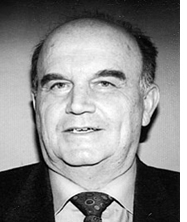
    James Suckling, who joined Wine Spectator in 1981 and has served as European bureau chief since 1988, has retired from the company.

    Suckling’s tasting responsibilities have been reassigned. The wines will be reviewed in our standard blind-tastings in the company’s New York office.

    Senior editor and tasting director Bruce Sanderson will oversee coverage of Italy. Sanderson, who has been with the magazine for 18 years, currently reviews the wines of Burgundy, Champagne and Germany.

fiorentina

Above: To make a proper “bistecca alla fiorentina” at our house, we season the porterhouse generously with kosher salt, rubbing the salt into the meat, and then we char the T-bone, with the steak upright.

Neither Tracie P nor I could ignore the uncanny coincidence that we had decided to open a bottle of 2004 Brunello di Montalcino by Il Poggione, a traditional-style wine made by a family who has vehemently and vociferously opposed the modernization of its appellation. There’s no two ways about it: during James Suckling’s tenure at the Wine Spectator, the scores he gave to modern-style Brunello — with Casanova di Neri as its poster child — helped to eclipse the sale of traditional-style wines, like those made by Il Poggione. (In all fairness, Suckling also gave good scores to Il Poggione but his historic preference for dark, concentrated, oaky Brunello with higher alcohol levels, indisputably skewed his evaluations toward modernism.)

fiorentina

Above: Then you cook the steak on either side, very quickly at high heat. By cooking the steak upright first, the meat “heats through” entirely.

Another layer of irony was cast upon the news and our Brunello by the fact that Mr. Franco Ziliani — at times Mr. Suckling’s detractor — had suspended publication on his wine blog Vino al Vino, the leading Italian-language wine blog, a few days earlier. (Mr. Ziliani’s relationship with Mr. Suckling is even referenced by the author of the Wiki entry on the Italian wine writer.) “A pause for reflection,” wrote Mr. Ziliani on Monday, a search for “clarity” in his life and for a sense of purpose for the blog, he explained. “To blog or not to blog,” he asked rhetorically.

fiorentina

Above: High heat is the key to searing and caramelizing the fat on the outside of the steak while leaving the meat in the center tender and nearly raw.

The two events are certainly unrelated but their confluence is rich with meaning. We often forget that that the current economic crisis has affected both the wine industry and the publishing industry. Hawking wine is no easy tasks these days (especially when it comes to high-end, luxury wine like Brunello) and hawking newspapers and magazine is even harder.

fiorentina

Above: Traditional style Brunello and steak, one of the great gastronomic pairings in the Western Canon. (Honestly, I wish I would have used a slightly shorter cooking time. I prefer my steak “black and blue,” charred on the outside, blood rare on the inside. But it was delicious nonetheless!)

While I’ve been a devoted fan of Mr. Ziliani’s blog since I first discovered his writing more than 5 years ago, I can’t say that I’ve been such an admirer of Mr. Suckling’s take on Italian wine. In fact, I think that Suckling historically ignored and omitted the great icons of Italian wine from the canon of the Spectator’s “top wines of the world” because he was looking for wines that appealed to his idiosyncratic sensibility without viewing them in a broader scope and without consideration for the wines that Italians consider to be indicative of their winemaking tradition. At the same rate, looking back on Suckling’s legacy (however skewed) as an arbiter of Italian wine, I feel compelled to acknowledge his contribution to the world’s awareness of the overarching greatness of Italian wines.

fiorentina

Above: Potatoes, spinach, grilled onions, and steak, all dressed simply with kosher salt and extra-virgin olive oil.

And so we raised a glass of 2004 Brunello di Montalcino by Il Poggione last night, to both Mr. Suckling and Mr. Ziliani, polar opposites in their approach to Italian wine, leading voices of antithetically positioned vinous philosophies. I hope and trust that both will continue to share their impressions and palates, using whatever media they see fit, with a world ever-thirsty for Italy’s unique wines.
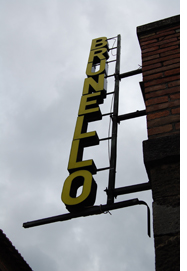
Jancis Robinson: “Syrah di Montalcino”

From Jancis Robinson’s blog, yesterday, “Montalcino votes for modernism”:

“After dramatic last-minute machinations, it has just been revealed that the secret ballot to elect the new president of the Brunello di Montalcino consortium revealed that arch-modernist Ezio Rivella of Banfi garnered most votes and will now direct the fortunes of this controversial wine.

Until very recently it looked as though the most prominent woman in Montalcino, Donatello Cinelli Colombini, would win, but at the eleventh hour, in a move that took many by surprise, she withdrew her candidacy and threw her weight behind Rivella. Concerned that this would be the final nail in the Brunello coffin, and that Piemonte-born Rivella would encourage the use of grape varieties other than Brunello (Sangiovese), veteran winemaker Fabrizio Bindocci of the respected estate Il Poggione declared his own bid for the presidency yesterday. …

It seems as though the juggernaut rolling towards the likes of Syrah di Montalcino is unstoppable.”

Maginot lines in Montalcino

Above: Tracie P and I took this photo, facing southeast toward Mt. Amiata, in February on Strada Statale 64 (State Hwy 64) heading north from the village of Paganico toward Sant’Angelo in Colle on the south side of the Montalcino appellation. It’s just a matter of time before Asti-born Ezio Rivella will be making “Brunello” just northeast of there, in a partnership launched with Veneto behemoth Masi in 2007.

And so, just as the Germans flanked the Maginot Line, invaded Belgium and then France, Ezio Rivella — the self-proclaimed “prince of wine” — has been elected as the new president of the Brunello consortium. He has vowed not to change appellation regulations so that they would allow for international grapes, as he previously advocated. But the thought of an Piedmont-born enotechnician at the helm of an appellation situated in the heart of a UNESCO-protected territory sends shivers down the spines of many — myself included. It’s a dark, dark day in Montalcino.

Above: “Hunting forbidden.” Facing southeast, gazing out on Masi’s Bello Ovile vineyards. Taken in February 2010. Today the sun shines in the early summer heat but it’s a dark, dark day in Montalcino.

Chatting with a friend, a wine professional I admire very much, late last night, he pointed out that this battle was lost a long time ago: anyone familiar with European history and iconography is acquainted with the metaphor allegory of the Maginot Lines.

If you’re not tired of my posts on Montalcino and what has transpired there, please revisit this post on the Brunello debates where Rivella and the sorely missed Teobaldo “Baldo” Cappellano sparred over the future of Montalcino and the Brunello appellation.

I promise to write something fun and entertaining (to cheer myself up) tomorrow but today — the day after the commemoration of the founding of the Italian republic, freed from fascist tyranny — I plan to mourn. Sorry to be a bummer…

Nightmare in Montalcino: Fabrizio is our only hope!

I just saw a retweet in my Twitter feed and am literally feeling ill after what I just read over at Montalcino Report: Donatella Cinelli Colombini has “stepped aside” and is giving her support to Ezio Rivella in his bid to become president of the Brunello producers association (if you haven’t been following events there, just scroll down on my blog to my most recent posts).
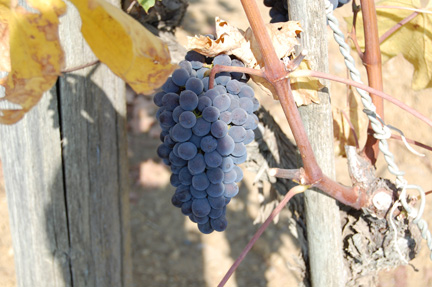
A nightmare is unfolding in Montalcino and Fabrizio Bindocci (left, in a photo I took probably 6 years ago) is our only hope. Fabrizio had not officially announced his candidacy for the presidency but Cinelli’s “abdication” has led him to speak out finally. He did so today in an open letter he wrote to Italy’s top wine blogger Mr. Franco Ziliani. Fabrizio’s son Alessandro has published an English translation at Montalcino Report.

In it, his father writes:

    It is, however, with a certain dismay that I have learned — in a meeting that we held yesterday with some of the councillors — that Donatella Cinelli Colombini wishes to give way (and to give the presidency) to the very person, in my opinion (and in accordance with my own sense of propriety), who is the farthest from my land and the wine that we steadfastly wish to continue to produce (perhaps by improving our tradition but certainly not by bastardizing it). He is the farthest from it in his actions, his feelings, and his interests.

    I am referring to Cavalier Rivella, whom I have known since his earliest days in Montalcino and whose bluntness I appreciate.

    Therefore, I believe that it is my duty, on the eve of this most delicate of appointments, to ask all of my fellow councillors and all of those who hold dear the reputation (and success) of this wine to banish from our behaviour any interest that does not correspond to that of the producer Consortium members.

    This — and only this — is what I would wish to do if I were to be President!

However distant this election may appear, it is the front line in the battle to save traditionalism and indigenous winemaking in Italy. I know Fabrizio well and as outspoken as he is (in the true Tuscan tradition), he is also a very humble man who would not have taken such a brazen stance if the situation were not grave.

Keeping my fingers crossed (and hoping you are, too)… thanks for reading…

A ray of hope in Montalcino (election results expected tomorrow)

Above: I photographed this pristine bunch of Sangiovese grapes in the southwestern subzone of the Brunello appellation in September 2008, just a few days before harvest began.

So many amazing bottles of wine (Italian and otherwise) have been opened for me and Tracie P over the last few weeks and I have a lot to post about, but today Montalcino is on my mind: tomorrow Thursday, if all goes as expected, the Brunello producers association will announce the name of its new president.

The good news is that presidential front-runner Ezio Rivella, who previously proposed a change in appellation regulations that would allow for grapes other than Sangiovese to be used, has publicly pledged NOT to change the rules.

My colleague Mr. Franco Ziliani, author of Italy’s most popular wine blog, Vino al Vino, reported the story last week, and this morning, he and I have posted my translation of Rivella’s interview with the Corriere di Siena over at VinoWire.

Above: Neither my friend Ben Shapiro (in the photo), who accompanied me on the trip, nor I will forget that beautiful fall day in Montalcino, our last in the appellation before we headed over to Maremma.

His words come as a relief, to me and to many observers of Montalcino and actors on the ground. The thought of Brunello with even just 5% of Syrah in it… well… makes me want to heave…

I imagine that the backroom compromise went something like this: after being elected to the consortium’s advisory council (who in turn will elect a president, to be announced tomorrow), Rivella vowed not to change appellation regulations to allow grapes other than Sangiovese in exchange for support for his presidency and a willingness to revise the Rosso di Montalcino and Sant’Antimo appellations to allow higher percentages of international grape varieties.

The fact is that most producers — at least from what I hear directly — want Brunello to continue to be produced using 100% Sangiovese grapes.

Fyi, Rivella has teamed with viticultural giant Masi to produce Brunello on the Pian di Rota estate in Castiglione d’Orcia (not far from the estate where Masi is growing grapes for its Bello Ovile project). To my knowledge, no Brunello has been produced there yet…

Stay tuned…

Manufacturing consent (again) in Montalcino

Above: Could the results of elections in Montalcino yesterday lead to changes in appellation regulations for Brunello? For many years, the now elected advisory council member and front-runner for association president has advocated a change that would allow up to 15% of grapes other than Sangiovese (above).

The results of much-talked-about Brunello advisory council election came my way early this morning via my friend Ale’s feed. But as soon as they hit the Brunello producers association website, they were immediately blasted across the internets by observers of the Italian wine industry. I have posted the results at VinoWire together with the newly elected members’s professional affiliations (I cannot but applaud the Brunello producers association for posting the highly anticipated news promptly… for once!).

Above: Has a metaphorical hail storm crippled the sacred primacy of Sangiovese? Many, like top Italian wine blogger Mr. Franco Ziliani fear it has.

ezio rivellaMany believe that ex-director and eno-architect of behemoth Banfi, Ezio Rivella (left), will be the next president of the body (to be announced in the next three weeks).
For years, Rivella has advocated a change in appellation regulations that would allow up to 15% of grapes other than Sangiovese in Brunello di Montalcino.

In a genuine act of sixteenth-century “self fashioning,” ex-director of behemoth producer Banfi and the self-proclaimed architect of the Montalcino renaissance is about to publish an English translation of his memoir: Montalcino, Brunello, and I: the Prince of Wines’ True Story [sic and sick].

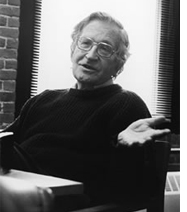
noam chomskyI’ll take the lead from my colleague Mr. Ziliani (who posted “no comment” this morning on his blog) and will leave you instead with the words of one of my linguistic and ideologic heroes, Noam Chomsky (left):

“The most effective way to restrict democracy is to transfer decision-making from the public arena to unaccountable institutions: kings and princes, priestly castes, military juntas, party dictatorships, or modern corporations.”

More chestnut-flour polenta and pork facial glands

polenta

Wow, thanks, everyone, for all the wonderful comments and emails about yesterday’s post on dinner in the home of the lovely Bindocci family in Sant’Angelo in Colle (Montalcino, Siena). I thought I’d post a few more photos from the dinner. And thanks, especially, to Stefania and Fabrizio, who so graciously welcomed us into their home. That’s Stefania, above, slicing the chestnut-flour polenta with a string.

polenta

The incredible sensual experience of the chestnut-flour polenta is its combination of its sweet, chestnut flavor combined with its inimitable texture. The night we were invited, Fabrizio’s niece was there with her husband. They had just returned from Libya, where they had been living (they’re agricultural engineers and they work to create sustainable farming in the third world). To celebrate their return, Stefania had created this traditional Mt. Amiata menu (she was born in the mountains, while Fabrizio was born on the Orcia River Valley floor).

polenta

@BrooklynGuy the delicate but firm-to-the-bite texture of the pork facial glands (almost like candy), which have imparted their flavor to their cooking liquid, combined with the pillowy softness of the polenta was an unforgettable sensorial event in our mouths. The porousness of the polenta proved an ideal receptacle and medium for the rich jus of the offal. The two worked in concert, in a dynamic dialectic that rewarded the senses with its seamless ingenuity.

polenta

In another era, the slaughter of a pig was an important event in the familial and societal rhythm of life. While most of the pork was “put up,” as they say here in Texas, in the form of cured thigh and sausage, the offal was consumed in celebration of the good fortune of avere le bestie, as they say in Italian, of having beasts (i.e., livestock) on your estate. One of the coolest things about Il Poggione is that it is a working, integrated farm, where livestock is raised and sent to pasture in fields adjacent to the vineyards and olive groves. The integrated approach, says Fabrizio, is an important element in creating the terroir-driven wines for which their winery is so famous. We paired the 2006 “owner-selection” Rosso di Montalcino with the chesnut-flour polenta and pork facial glands (we served the 07 Rosso di Montalcino by Il Poggione at our wedding reception).

polenta

Some of the most memorable meals I’ve had in Tuscany have been centered around pig and boar liver. It’s so important to experience the wines of Montalcino (and Sangiovese in general) in the context of food and pairing. The 2001 Brunello by Il Poggione was such a fantastic wine — a great vintage from a great producer. But the greatest treat was to taste it in the context and flavor “economy” of traditional pairings. The tannin, red fruit, and acidity of Il Poggione’s Brunello, paired with nearly impenetrable richness and deep flavor of the liver, assumed a new ontographical significance, by which, I mean our ability to describe the nature and essence of things.

We ate liver again on the next day of our trip in Bologna… and there was an important reason for that. More on that later…

Please stay tuned and thanks, again, for reading and for the thoughtful comments… :-)

Tuscan mountain food (WARNING: EXTREME OFFAL CONTENT)

The second night and second dinner of our stay in Tuscany, we had the great pleasure of being invited into the home Stefania and Fabrizio Bindocci in Sant’Angelo in Colle. I’ve known Fabrizio, the winemaker at Tenuta Il Poggione, for many years now and Tracie P and I were thrilled to get to taste his wife’s cooking.

“We’re not having ‘Tuscan’ food,” joked Fabrizio when he invited us. “We’re having ‘mountain’ food,” he said. He met his wife, he told us, when he attended a dance as a young man on Mt. Amiata (to the south of Montalcino and Sant’Angelo in Colle). There were no women in the valley back then, he joked.

tuscany

Dinner began with a nice light chickpea soup, accompanied by Sbrancato, a Sangiovese rosé produced by Il Poggione.

tuscany

Next came a dish I’d never had before: chestnut flour polenta, a classic dish of the Tuscan mountains, said Fabrizio and wife Stefania. She used a string to slice the individual portions.

tuscany

Fabrizio’s son Alessandro authors a blog about Brunello and life in Sant’Angelo, where he has posted about the pigs they raise at Il Poggione. We dressed the chestnut flour polenta with facial glands (above), butchered from the estate-raised pigs.

tuscany

Next came the true “stick to your ribs” dish: pig liver wrapped in caul fat.

tuscany

The liver was followed by sausage made from other organs, the darker of the two was spicy.

tuscany

To my knowledge, Il Poggione was the only producer to make a “riserva” Brunello in 2003, an extremely difficult vintage throughout Europe because of the heat and lack of rain. Brunello di Montalcino does not allow irrigation (not even emergency irrigation). But the elevation of the vineyards and their age (and thus the depth of the roots, which allows the vine to find the water table even in drought years) made it possible for Il Poggione to make a superb expression of Sangiovese despite the growing conditions. This was my first taste of the 03 Riserva, which is the first vintage that the winery has labeled as its “cru” Paganelli (the oldest vineyard on the estate, with vines more than 40 years old, and the source of the clones that inform the estate’s identity). The 03 Paganelli was superb: its fruit was bolder than most vintages I’ve tasted from Il Poggione, but the surprisingly powerful tannin and acidity kept the fruit in check. Very impressive. The 2001? To my palate, that’s one of the greatest vintages for Brunello in recent memory. The wine was unbelievably good, nearly perfect I’d say, a glorious balance of fruit, tannin, and acidity, with many years ahead of it but already showing gorgeously — and what a wonderful opportunity to taste it a stone’s throw from the estate, with the winemaker, paired with his wife’s traditional cuisine!

tuscany

Winter means fresh chicory as a side dish in Tuscany, red and green chicory, dressed with the estate’s olive oil.

tuscany

What Tuscan meal would be complete without castagnaccio, a short bread made with chestnut flour, topped with pine nuts and rosemary, for dessert?

Oops, I didn’t mean “Tuscan” food. I meant “mountain” food! ;-)

Thanks, again, Stefania and Fabrizio, for an unforgettable meal…

Tuscan Rooms with Views

One of the highlights of our honeymoon was the Tenuta Il Poggione farm house where we stayed on our first two nights of our trip. The old farm house, located in the middle of the estate, surrounded by olive groves and vineyards, has seven guest rooms, all with air conditioning, heating, and kitchen. We stayed in the room called “Pero,” the pear tree.

farm house

This amazing olive tree is about 50 yards from the farm house. Il Poggione is one of my favorite wineries and I’ve been friends with the Bindocci family, who runs the estate, for many years now. Winemaker Fabrizio Bindocci told me that some of the trees in this grove are nearly 200 years old.

farm house

Can you see why I love her so much? :-)

farm house

This is the view from the farm house, looking northward. That’s Sant’Angelo in Colle (where we ate at Trattoria Il Pozzo).

farm house

That’s the view from the farm house looking south. There are few signs of modernity here. Just looking at this photo, the mimetic desire kicks in and I can still smell the dolce aere tosco, the sweet Tuscan air that Petrarch reminisced about and longed for in his Rerum vulgarium fragmenta, his Fragments of Vernacular Things (194.6).

farm house

The farm house seen from the south. The property also includes an Olympic-sized swimming pool (that was covered, of course, when we were there). The rooms are cozy and each one has a kitchen. I’m hoping that one of these days we can make a family trip there.

farm house

Even an amateur photographer like me feels like a Rembrandt in this immensely photogenic land. To get to the farmhouse, you have to drive about 10 minutes from the town of Sant’Angelo on a dirt road through woods, vineyards, and olive groves. And when you get there, you feel like you’re in a 19-century grand tour landscape… that’s some room with a view… I highly recommend it!

For more information and booking, email the estate at agriturismo@ilpoggione.it.

tracie parzen

Happy Friday, ya’ll!

Terroir in Brunello (Castelnuovo dell’Abate, the Ramones, and James Brown)

I have a lot of posts lined up from our trip to Italy: this is the next in chronological order… A lot of folks have written me about our visits to Rinaldi and G. Mascarello (organized thanks to our extraordinary guide Franco) and as soon as I “move” through Tuscany and Emilia, I’ll post those tasting notes as well… but first some Montalcino terroir… thanks, everyone, for reading!

brunello di montalcino

Above: On our last night in Italy, in Rome, where we ate at an excellent if cantankerous Roman trattoria, we treated ourselves to a 2000 Brunello di Montalcino by one of my favorite producers, Poggio di Sotto, which lies in the southeastern sub-zone of the appellation, where the wines have an earthier and more pronounced mineral character in my opinion.

Our second day in Italy, we spent the morning in the farmhouse where we were staying (more on that later), sipping stove-top coffee and munching on cookies. After a quick visit to Montalcino proper, we headed south to Castelnuovo dell’Abate to visit one of my favorite people in Montalcino, Federico Marconi. As Fabrizio Bindocci said to me later that evening, when Federico walks into a room, you just can’t help but smile and be in a good mood. It’s really true.

brunello di montalcino

Above: Federico is one of the coolest dudes I know in Montalcino. We have a dream of creating a rock band called the Ramontalcinos (for our shared love of the Ramones; I think that we might also need to recruit McDuff for the project).

Le Presi, where Federico works, is a tiny winery and estate, founded in Castlenuovo dell’Abate by Bruno Fabbri in 1970. Bruno learned about winemaking and developed a passion for Brunello because he worked as an electrician in the legendary Biondi-Santi winery in the “Croce” subzone of Montalcino (just south of Montalcino proper).

brunello di montalcino

Above: One of the things that makes the Castelnuovo subzone unique is the presence alternating layers of sandstone and volcanic subsoils, as illustrated by this cross-section. Le Presi lies on the edge of Castelnuovo (literally newcastle) and one of its walls coincides with the ancient wall of the hilltop town. The volcanic deposits come from the nearby Mt. Amiata, to the south, once an active volcano.

I love the wines of Le Presi, which I first tasted at Vinitaly in 2009: they’re old-school Brunello, sourced from two small growing sites, just south of the town, vinified in a traditional style and aged in large cask. Like Federico, Bruno Fabbri (below) and his son Gianni (who now runs the winery and makes the wine) will tell you that the high concentration of volcanic subsoil (as you can see in the image above) gives their wines their distinctive minerality (and earthiness in my opinion). They call their top growing site “Muro Forte” (literally, strong wall, named after the wall in their cellar that coincides with the ancient town wall).

brunello di montalcino

Above: Tracie P and I really enjoyed talking to Bruno, who seemed happy to share tales of his earlier years, working at Biondi Santi, and making wine in Castelnuovo.

When I mentioned to Bruno that we were staying at the Il Poggione estate in Sant’Angelo in Colle (one of the southwest growing zones), he pointed out that Castelnuovo doesn’t have the same “maritime” influence (i.e., ventilation arriving via sea breeze) that Sant’Angelo has. Some would argue that the one or the other is better (can you guess which subzone Bruno favors?) but one this is for certain: the wines from Castelnuovo (at least those made in a traditional style) have different flavors from those produced in other subzones.

In the words of James Brown:

    Some like’em fat, some like’em tall
    Some like’em short, skinny legs and all
    I like’em all, huh, I like’em proud
    And when they walk
    You know they draw a crowd
    See, you got to have a mother for me

Let me just put it this way, the wines of Le Presi have a mother for me.

Next on deck, the terroir of the southwestern subzone and the fantastic farmhouse where we stayed.

Thanks for reading!