J. Brix Chardonnay from Santa Barbara Calaveras County blew me away and other great wines (and guitars)

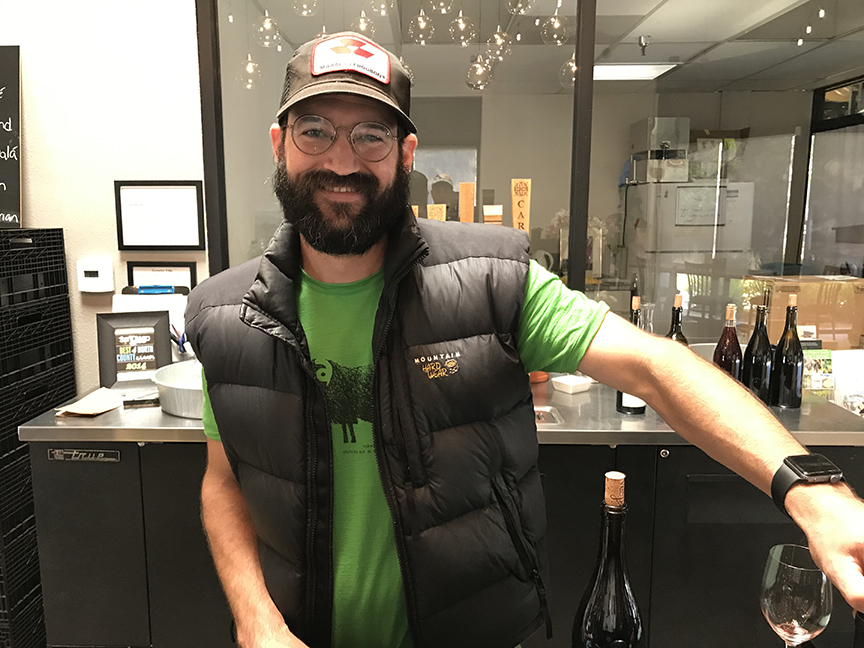
That’s Chris Broomell above, co-owner Vesper Vineyards in north county San Diego, one of the most compelling winemakers working in the state imho.

Writing on the fly I am this long holiday weekend in San Diego where I’ve been tasting with winemakers like Chris for the Slow Wine Guide 2020 (and playing some guitar).

I’m always impressed by the way he talks about his wines and the nascent revolution in San Diego viticulture. The fruit has always been here, he points out. But the hegemonic winemaking style never reflected — never translated — the quality that San Diego can produce.
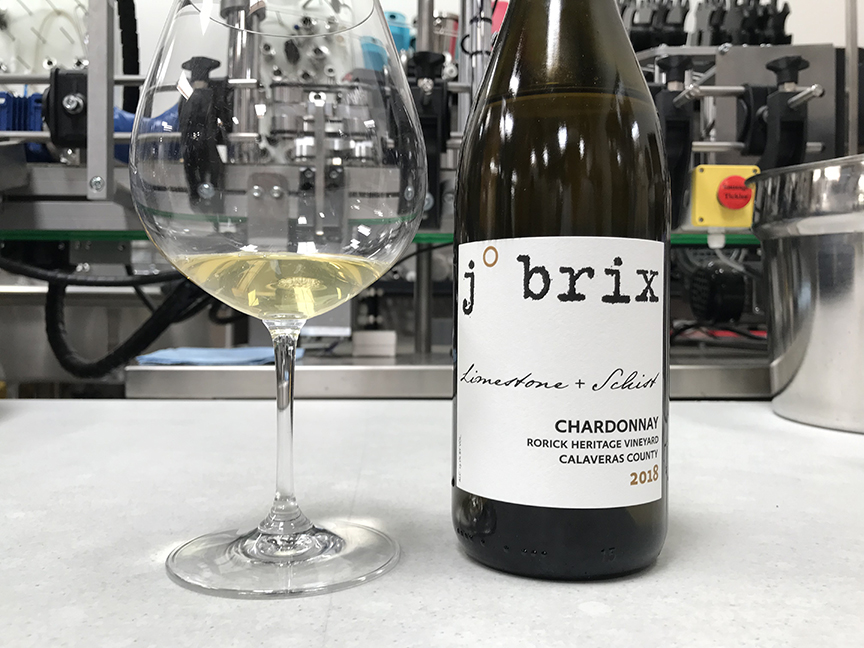
But the wine I can’t stop thinking about is the J. Brix Santa Barbara Calaveras County Chardonnay I tasted this week.

I had tasted Emily and Jody Towe’s wines on many occasions over the years and have always enjoyed them immensely (I had them on my list at the now defunct Sotto in Los Angeles where I ran the wine program for nearly eight years).

But this wine really takes it over the top in terms of the depth and nuance. It opens with primary Chardonnay flavors (tropical fruit and banana) but then unfolds its layers-upon-layers of savory herbs, minerality, and ripe and dried stone fruit.

I can’t wait to taste Tracie on this wine. She is going to flip out (I’m planning smuggle a couple of bottles back to Texas where they are still illegal).
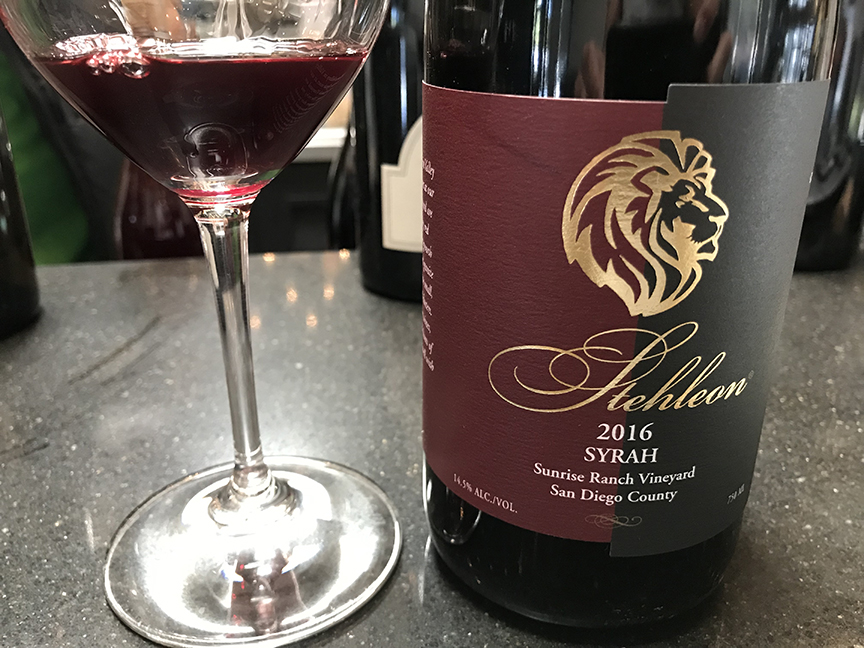
Another wine that surprised me with its depth was this Syrah by Chris’ wife and partner Alysha Stehly, another winemaker to watch imho. I’ll be visiting and tasting with her tomorrow before I head back to Houston.

I’ve only been here a few days but have tasted some truly spectacular wines — all of which land with affordable pricing btw.

But the biggest treat of my sojourn was getting to sit in with the magical Dave Gleason (below).
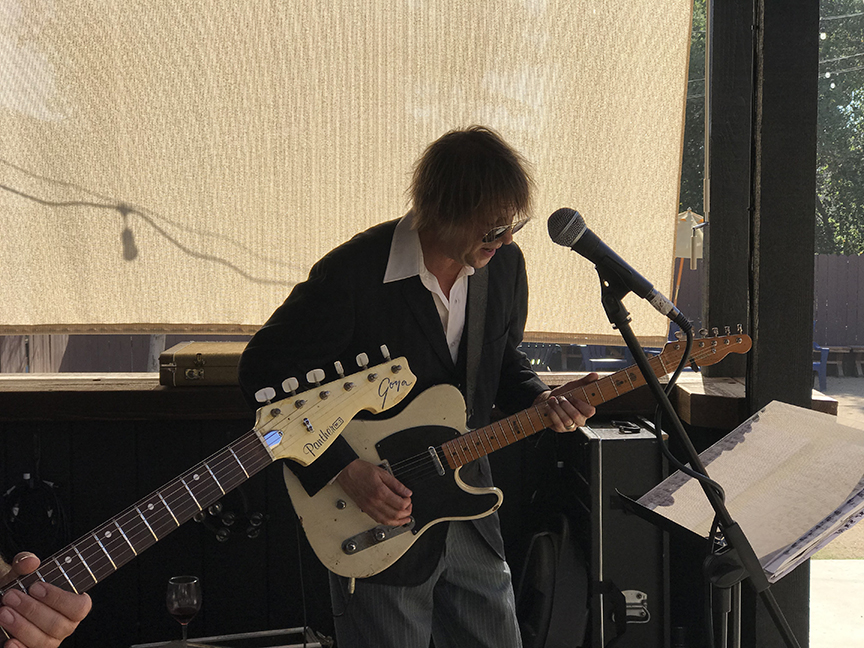
He’s a true virtuoso of the Telecaster. I’m nowhere in his league but he generously lets me sit in with his band when I’m in town.

We played blues and country yesterday out at the Grand Ole BBQ Flinn Springs in El Cajon (where, btw, the Texas-style brisket was completely legit, melt-in-your-mouth liquid delicious).

Dave is a Doug Sahm of our generation, a musical polymath and one of the sweetest people you could ever meet.

Tonight I’ll be playing the whole evening with one of his bands, the Born Fighters, at Beaumont’s in La Jolla (where I grew up). All the stars from the La Jolla music scene are coming out for this one.

If you’re in town, we’ll take the stage around 9 and play until midnight or so. Beaumont’s is pretty rowdy and things can get a little out of hand there. So come ready to rock!

Bastille Day-Birthday Bash July 14 at Mongoose vs. Cobra in Houston

Our new band has a new name (BioDynamic) and a gig on my birthday: Sunday, July 14 at Mongoose vs. Cobra in Houston’s Midtown!

Please come and rock out with me and the family!

BioDynamic
70s and 80s covers
@ Mongoose vs. Cobra
Sunday, July 14
4-8 p.m.
NO COVER CHARGE
CASH BAR
KID FRIENDLY
1011 McGowen St.
Houston TX 77002
(713) 650-6872
Google map

Top image via Wikipedia Creative Commons.

The best vitello tonnato ever…

Vitello tonnato is one of my gastronomic obsessions.

In part because of how good it is when done right. In part because it agrees with me metabolically. (Ascribe it to the famous “Jewish boy stomach” syndrome for those weened on tuna fish sandwiches and white fish salad.)

My latest trip to Italy included a convivial encounter with what — everyone at the table agreed — was probably the best vitello tonnato ever.

It came from a newish wine bar in the village of Barbaresco called Koki (Facebook; website).

My hosts, who had already experienced this apotheosis of vitello tonnato, had asked the owner/chef for a take-out vitello tonnato.

He instructed them to come to the venue just a few hours before the luncheon they were hosting. Not before, he said. And he also told them to bring their own dishes, which they did.

He plated it for them and sent them home with plastic-wrapped veal and sauce.

The Koki vitello tonnato was pinker than most. It resembled what the Italians call rosbif, a calque of the English roast beef, always served cold and generally dressed with extra-virgin olive oil and freshly squeezed lemon juice.

My hosts speculated that it had been cooked sous vide and then finished in a hot oven to make the edges well done.

The quality of the veal was spectacular, not surprising for Piedmont where bovine protein is a supreme victual.

But the thing that really took it over the top was the tuna sauce, which had a hint of eastern spice. My hosts speculated that it had been made with hazelnuts, an admissible and canonical ingredient, although sometimes omitted in my personal experience.

I never had a chance to visit Koki Wine Bar in person but it’s on my list for my next visit to Langa. I can’t recommend the vitello tonnato highly enough.

Last year I published this photography retrospective of some of my favorite expressions of vitello tonnato.

And I have to give a shout-out here to the vitello tonnato I ate, also on this last trip, at Local, the Slow Food University of Gastronomic Sciences food shop and casual restaurant in downtown Bra (below). As you can see, there is barely any pink in the meat, typical of most recipes.

What did we drink with our vitello tonnato? A 1996 Barberesco Riserva was the highlight of the flight. But more on that later…

The wine world’s culture wars have left millennials behind

Above: students in the Master’s in Wine Culture and Master’s in Food Culture at the Slow Food University of Gastronomic Sciences in Piedmont, Italy.

More than any other, three posts captured and commanded the attention of wine trade members, observers, and enthusiasts this month.

Master of Wine Jancis Robinson’s “Naturally Divisive” on “natural vs. conventional” wine culture for the Financial Times (republished and available to all on her tasting note portal); Cathy Huyghe’s interview with natural wine advocate Alice Feiring, “Alice Feiring on Satire and Misogyny in the Wine Industry,” a response and reaction to a predictably misogynic parody of Alice’s work; and New York Times wine columnist Eric Asimov’s “It’s Time to Rethink Wine Criticism” on the dismal state of winespeak today.

At the center of each of these pieces, one character looms ominous above all others: Robert Parker, Jr., the twentieth-century creator and disseminator of the hegemonic 100-point-scale score and tasting note model for wine criticism.

Jancis is the only one who doesn’t mention him by name but he’s in there. A genie in a bottle, he arrives via a pair of top-rated Bordeaux wines from the 1982 harvest — the same “near-mythical” vintage, as Jancis calls it, that launched his name, brand, and career as America’s most famous wine writer.

“His influence grew in the mid-1980s,” writes Eric for the Times, “particularly with his unconditional, flamboyant praise for the 1982 Bordeaux vintage…”

Parker more than any other writer, perhaps unjustly so, represents the realm of what has been inaptly called “conventional wine.” It’s a category that exists only inasmuch as it is the polar and polarizing opposite of “natural wine.”

“A very significant proportion of the wine establishment,” writes Jancis, “roll their eyes at the very mention of natural wine. On the other hand, there is no shortage of converts to natural wine who… will not sully their or their customers’ palates with wine they do not consider natural. They have a tendency to lecture the world on the iniquities of conventional wine.”

The terms of that dialectic were forged once and for all in 2008 when Alice published her now landmark book, The Battle for Wine and Love: or How I Saved the World from Parkerization (Harcourt).
Continue reading

Horse meat burgers? Yes, that’s right…

A lot of folks have asked about a photo of horse meat hamburgers (above) posted to my social media.

Yes, that’s ground horse meat, a delicacy that you can commonly find in the Italian regions of Lombardy and Veneto.

People in Italy and France began eating horse meat in the 1960s. As Europe was still rebuilding after World War II, it was an excellent and amply available source of protein for young people. Meat was scarce then. And horse meat was cheap.

Today, it’s not unusual for people to eat horse meat on special occasions, like the party my friends in Lombardy threw on Saturday night. They regularly visit a specialized “equine” butcher where they buy the meat ground or butchered into steaks.

We also ate air-dried, shredded horse meat, known as sfilacci (threads).

During my university days in Padua (Veneto), we used to go to horse meat restaurants in the country on Saturday nights. Nearly every dish — from the antipasti and primi to the secondi — were made using horse meat.

Horse meat is very lean and rich in flavor. The savory burgers, which we dressed like regular burgers, tasted almost like cooked salame.

We paired with a 1998 Bordeaux blend in magnum from Franciacorta. It was delicious.

Wait ’til the folks back in Texas hear about this!

Today is my last day teaching at the Slow Food University of Gastronomic Sciences. All in all, it’s been a great experience. But I can’t wait to get home tomorrow to Houston, where I belong and where our precious daughters, our stinky Chihuahuas, and my beautiful wife Tracie are waiting for me. I miss them all so much. There’s no place like home. And I’m glad to have one. Wish me luck and wish me speed…

Rock out with me on Bastille Day (and my birthday) July 14 in Houston…

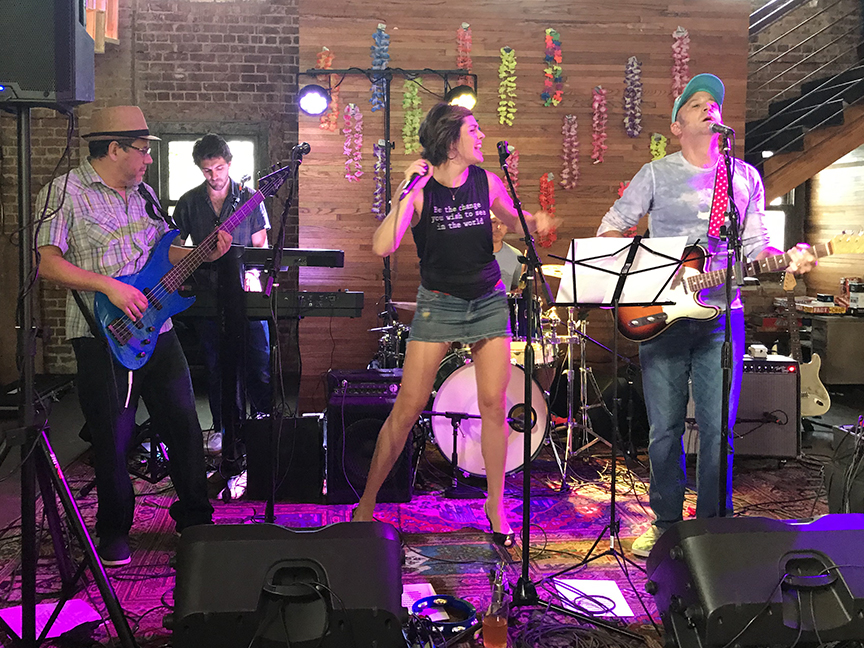
Above: my new band, still nameless, will be playing at Mongoose vs. Cobra in Houston on Sunday, July 14. Two sets from 5-7 p.m. That’s me with the Telecaster, stage left.

Back when my French band Nous Non Plus was touring and playing regularly in New York City, I used to have a gig on my birthday every year — sometimes two!

I was born on July 14, 1967, during the summer of love, on Bastille Day, the day the French revolutionaries, Les Sans Culottes, stormed the famous prison in Paris (the other French band I used to belong to was called Les Sans Culottes, loosely translated as those who don’t have pants).

To this day, my parents both tell the same story of the day I was born: “La Marseillaise,” the French national anthem, was playing on the radio the morning they drove to the hospital.

Nous Non Plus played its last live shows in 2013. And I still pine for those wonderful years of playing great music and making records with my bandmates, whom I’ll love until my dying day.

I’m super geeked to share the news that I’ll be playing a gig this year on my birthday at a Bastille Day celebration hosted by Mongoose vs. Cobra, one of Houston’s many super cool hipster beer gardens (in Midtown).

Our new band in Houston doesn’t have an official name yet. But we have two sets of great covers from the 70s and the 80s. It’s a super tight, rocking band and really fun.

So come out and rock with me on my birthday this year, July 14, 2019!

You can hear the Les Sans Culottes live version of the “Marseillaise” from our only live album here. And yes, that’s me playing guitar. That show was recorded at the Bowery Ballroom in lower Manhattan where we used to headline regularly. Thanks for listening!

Alba has a new progressive wine bar (FINALLY!): Petricore…

petrichor, n.

A pleasant, distinctive smell frequently accompanying the first rain after a long period of warm, dry weather in certain regions. Also: an oily liquid mixture of organic compounds which collects in the ground and is believed to be responsible for this smell.

From the Oxford English Dictionary (online edition).

It’s been a long time coming but I’m happy to share the news that Alba — one of the world’s greatest wine capitals — finally has a progressive wine bar. FINALLY!

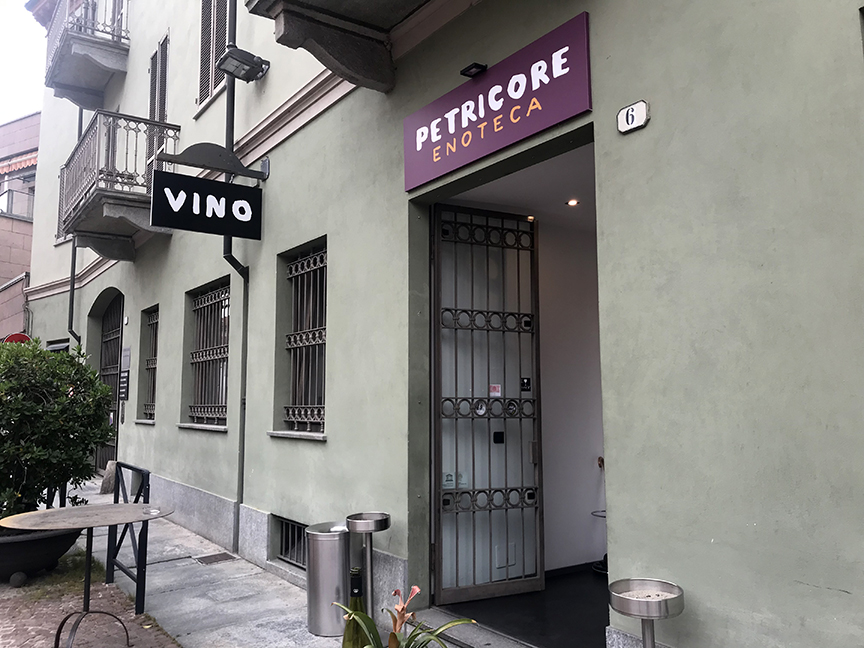
The joint is called Petricore Enoteca (as in petrichor).

It’s run by a lovely couple of wine professionals, Rebecca Ruatasio and Carmine Pessolani, whom I had the distinct pleasure to meet and taste with the other night.

The town of Alba lies smack-dab in the heart of Barolo and Barbaresco country and it receives a tide of wine lovers and tradesfolk each year.

But as surprising as it may be, it isn’t exactly the most welcoming destintation in Italy when it comes to people looking to connect with the more playful, experimental, and funky side of wine life.

A friend treated me there to a reclassified bottle of white Burgundy the other night. Think of that! Hipster Chardonnay in Alba! If I hadn’t tasted it myself, I still wouldn’t believe it.

Humans cannot live by Nebbiolo alone. And from what I’ve heard through the grapevines, Petricore has been a warmly welcomed addition to the Langa and Roero wine scene.

I can’t recommend it enough.

Just four more days of teaching at the Slow Food University of Gastronomic Sciences in Bra. On Monday, my last night, Natale Baricchi and I will be playing a couple of acoustic sets at L’Alfieri here in town. Come on by!

Old(est) school dining in Piedmont? Ostu di Djun… look no further!

Last night found me, guitar in hand, at the Ostu di Djun in the hilltop village of Castagnito in the heart of Roero country (on the west bank of the Tanaro river, which divides southern Nebbiololand).

Some believe its Piedmontese name comically ironic: Ostu di Djun means literally osteria di digiuno or fasting tavern. But it’s hard to tell. Nothing can be taken for granted in this crazy, enchanted, and enchanting restaurant.

What’s for certain is the food is all old(est) school, all the way.

When my friend Natale and I sat down for dinner last night, the owner Luciano asked us if we wouldn’t mind sharing our table with two other dudes. One turned out to be the legacy owner, the son, of one of Piedmont’s hottest Michelin-style restaurants (I won’t reveal the name so as not to humblebrag).

He and his buddy told me that they eat there at least three times a month and whenever they can.

For our first course, we all shared family-style tajarin with ragù and agnolotti, the classic ravioli from Piedmont. And for our second course, they ordered heart and sweetbreads. Me and Natale ordered liver.

All three of them remarked that they like the food there so much because it reminds them of what they’re grandparents used to feed them when mom and dad were at work each day.

I can already hear Tracie P rolling her eyes and hoping that I was able to drink natural wine last night.

No, we drank classic Pelaverga and then Barbaresco, strictly from magnum, the only bottle format that Luciano serves.

(All is good, Tra… well, kinda… but it was worth it!)

It was a wild and raucous night that culminated in a rollicking set of covers performed by me, Natale, and the resident piano player Giorgio.

I regret that between the banter and the Bacchanal, I didn’t have much a chance to photograph the food in the dimly-lit room, which brimmed with Italians and foreigners.

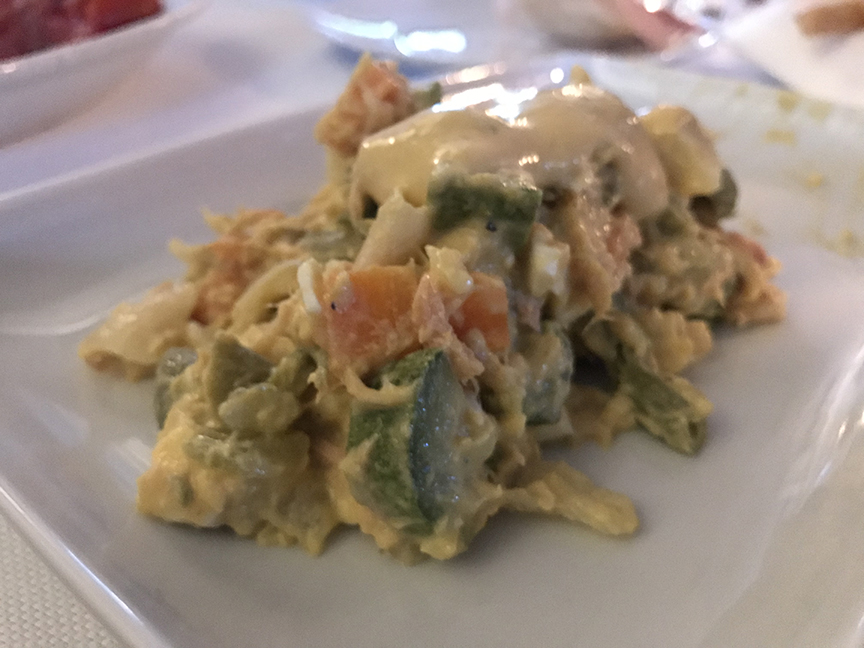
That’s the raw beef they serve when you arrive (above, top) and the Piedmontese standby insalata russa (second photo). Both were utterly delicious. So were the pastas and the offal.

Old(est) school, all the way.

Luciano says he wants me and Natale back to do another set soon. I’d be back in a heartbeat if I weren’t so busy teaching and keeping up with work back home in America.

It was one of those magical nights that only seem to happen in Italy… Haven’t had one of those in a while and man, it felt pretty friggin’ good.

Ostu di Djun has no website, it seems.

But you can find it on the Google here.

Slarina, the next Piedmont grape you’ve never heard of, is coming to a town near you…

No one knows for certain where the name Slarina comes from but Torino university researchers believe it might come from the Piedmontese word sinréna and related Italian cenerina, a reference to the bloom that commonly appears on this red grape’s skin (ceneri means ashes in Italian, hence the association with bloom, the powdery deposit sometimes found on the berries).

I finally had the chance to taste a couple of bottlings of Slarina when I visited my friends at the lovely Cascina Iuli in Montaldo di Cerrina in Piedmont’s Alessandria province over the weekend.

One was from a nearby farm where the owners have only recently begun growing and vinifying the grape. The other was from my hosts’ estate, where grower Fabrizio Iuli, known for his deft hand at lo-input winemaking, has already produced a handful of vintages from this erstwhile forgotten Piedmont variety.

Italian agriculture officials probably removed Slarina from the registry of authorized varieties during the country’s post-war viticultural renaissance because of its inconsistent productivity, a fate shared by countless highly localized grapes like this.

Because it was illegal to grow, it was all but abandoned by farmers in Monferrato where Fabrizio was born and lives with his family. Thanks to the work of University of Torino’s department of agriculture, it’s been redeemed from oblivion.

Like many of his progressive sisters-and-brothers-in-arms, Fabrizio is keenly interested in reviving its fortunes — a homage to an underexploited but rich heritage.

The slightly underripe red fruit and berry flavors in the brightly colored wines were by no means overwhelmed by their surprisingly tannic character. They were particularly delicious and well paired with juicy red steak our hosts served that night.

Young American wine professionals are always excited to learn about grapes like Slarina,
a variety plucked from the boundless treasure box of Italy’s evanished vines and winemaking traditions. There’s no doubt in my mind that it will be well received in my home country. There was even talk of Fabrizio’s planned visit to the states to present a micro-vertical tasting of the three vintages he’s produced.

Slarina, the next Piedmont grape you’ve never heard of, may be coming to a town near you soon.

The color of Dolcetto…

Posting on the fly this Friday afternoon from Bra in Piedmont where I’ve been teaching this week for the Master’s program at the Slow Food University of Gastronomic Sciences.

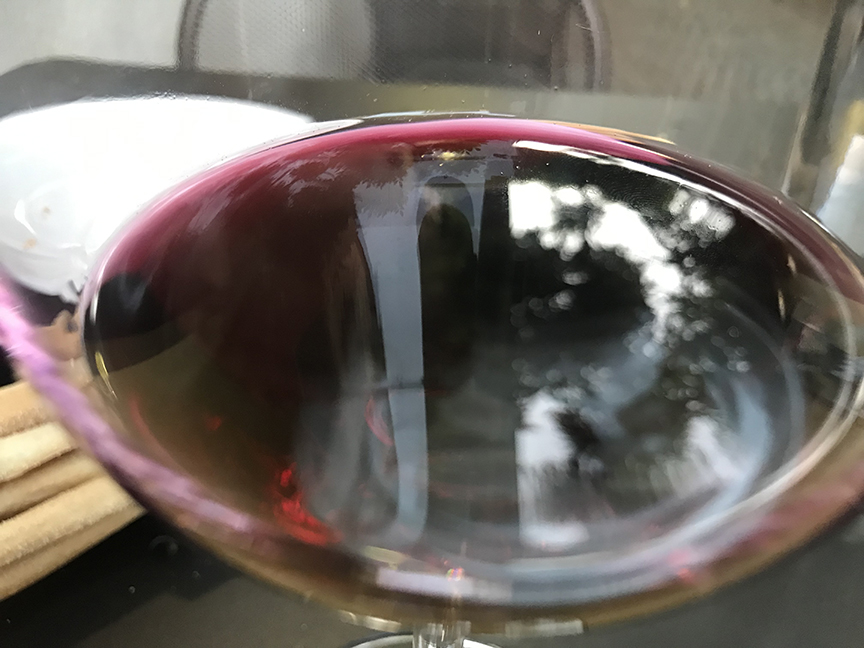
So little to tell and so much time… but I just had to share the above photo that I snapped the other night when I got here: that’s Chionetti 2017 Dolcetto di Dogliani in my glass, one of the greatest expressions of the appellation and one of my faves.

See that purple rim on the wine? That’s CLASSIC Dolcetto by one of its greatest OG masters. 100 percent DELICIOUS.

And of course, what would a proper dinner in Piedmont be without cheese and cognà (below)?

I have some killer winery visits scheduled for tonight at tomorrow (one of the perks of the teaching gig is simply being here in wine country). Gotta run. Thanks for being here. Buon weekend a tutti.