
 Above: Colline Teramane (Abruzzo) grower Bruno Nicodemi built an artificial pond on his family’s property in the 1970s. At the time, it was intended to foster biodiversity. Today, it’s a lifeline.
As Italian grape growers faced extreme heat and prolonged drought in what could have been an existential threat for many of them in the 2022 vintage, there was ample talk across the peninsula about the need to build artificial ponds and loosen restrictions on so-called “emergency irrigation.”
In fact, emergency irrigation has become the norm, not the exception, in central and northern Italy as the wine industry comes to terms with the impact of climate change.
In the second half of the 1990s, a string of warmer and less rainy than usual vintages seemed to herald a time of more regularity and increased prosperity for Italian winemakers.
But today, the unrelenting heat of recent summers, drought that persists through the growing season, late spring frosts, and intense weather events that can wreak havoc on ripening fruit have created a “new normal” in terms of the challenges that growers face.
 Above: Lake Garda as seen from the vineyards of Ca’ dei Frati in Lugana.
In northern Italy, many farms have already outfitted their vineyards with permanent irrigation systems — where they are allowed — because the authorization for emergency irrigation is no longer an exceptional event. It’s not a question of if anymore. Now, it’s a question of when the call will be made.
In central Italy, one winemaker told me that they would have irrigated if they had the means to do so. They had never irrigated before, they told me, and so they had no infrastructure in place to water their wines once the authorization arrived.
Another grower in central Italy told me that the authorization is something they have come to expect. But this year, something unexpected happened as well: there simply wasn’t enough water to go around. Authorities, they told me, only turned on the taps for a few hours each morning and grape farmers essentially had to compete with their neighbors for their allocation.
In appellations like Lugana in Italy’s Veneto region, water allocation is not an issue thanks to nearby Lake Garda (see above).
But in places like Abruzzo or Tuscany, the ongoing drought conditions are prompting winemakers to build artificial lakes, an approach that has been publicly advocated by prolific Italian winemaker Andrea Lonardi.
Even with the creation of these reservoirs (invasi, as they are called in Italian), there will still be a question of water management: who will get the water and when.
During my recent trip to Italian wine country, a number of growers told me they are planning to build such ponds and some of the country’s top consortia are working with their members to plan and authorize their construction.
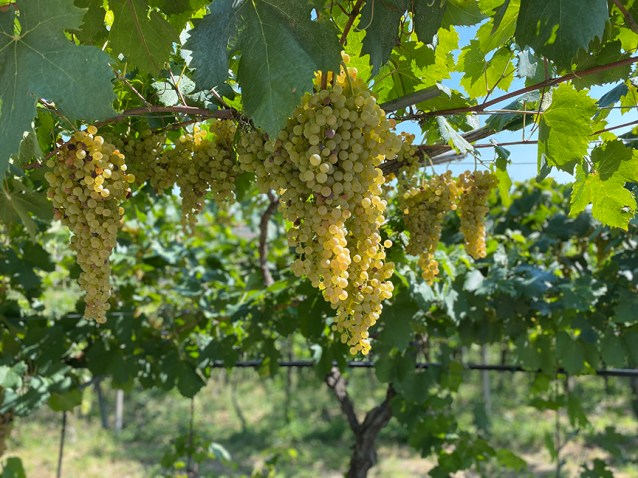 Above: Pergola-trained Garganega clusters in the heart of Soave. Note permanently mounted irrigation hose.
One of the most telling moments of my trip came when I asked Roberto Anselmi when the Soave consortium had authorized emergency irrigation this year.
He laughed and reminded me that he had famously left the appellation more than 20 years ago.
Not only are his vineyards equipped with irrigation systems. He also recently hired a rhabdomancer to help him find a water source atop one of most important vineyards, thus ensuring an independent source for challenging vintages like 2022.
Thanks to this foresight, his yield will be in line with normal years and new vines that he planted have ample water to make it through their delicate early years of growth.
“Emergency irrigation is one of the few smart things they actually did in the [Soave] consortium,” he said.
But the problem now, he pointed out, is that some have natural water resources while others don’t.
Irrigation has been a dirty word in Italian viticulture for a generation. Dry farming, it has long been held, was a key element in true “terroir expression” and “sense of place.”
But as wine growers in Italy have come to discover, if they don’t loosen the regulations on irrigation — and abandon the taboo — there might no longer be a terroir to express or a place to taste.
 The above figures come via vineyard consultant, publisher, and writer Maurizio Gily’s excellent online and print journal
 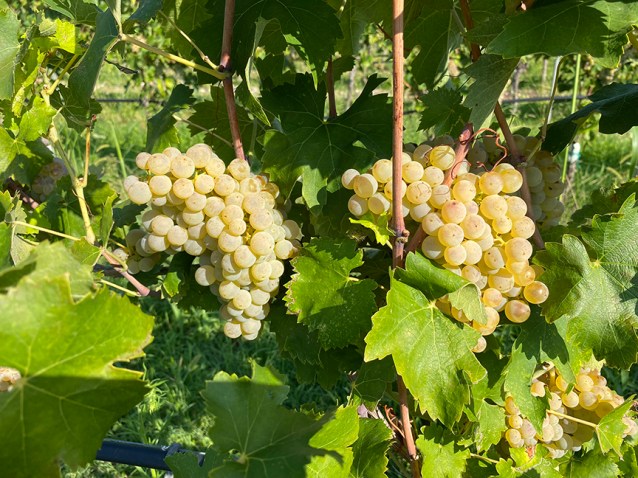 Above: Turbiana grapes photographed last week (September 14) in the Lugana appellation south of Lake Garda. Note the permanently mounted irrigation hose in the bottom of the image. “Emergency irrigation” was allowed across Italy in efforts to counter a drought that began in winter and persisted throughout the summer. Combined with prolonged, extremely high temperatures, it could have represented an existential threat to this year’s crop.
 Please join me next Tuesday at Vinology in Houston as we open three wines from Montalcino and discuss Montalcino subzones, including the classic and the new, and I share notes from my harvest 2022 trip.
 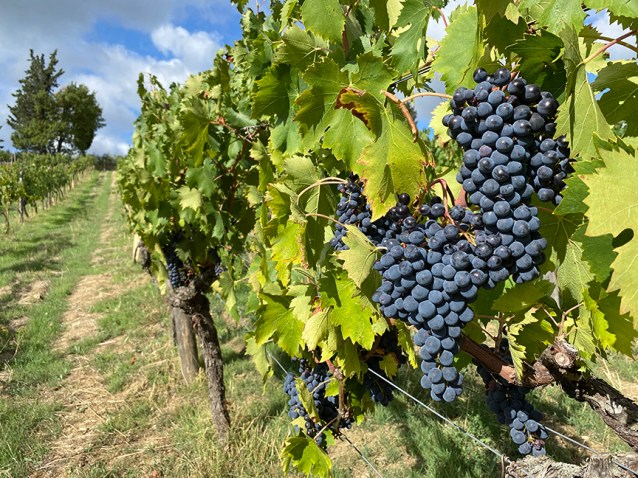 Posting on the fly this early Monday morning in Brescia where I’m staying. Two more days and many more meetings and tastings before I head back to Texas on Wednesday.
 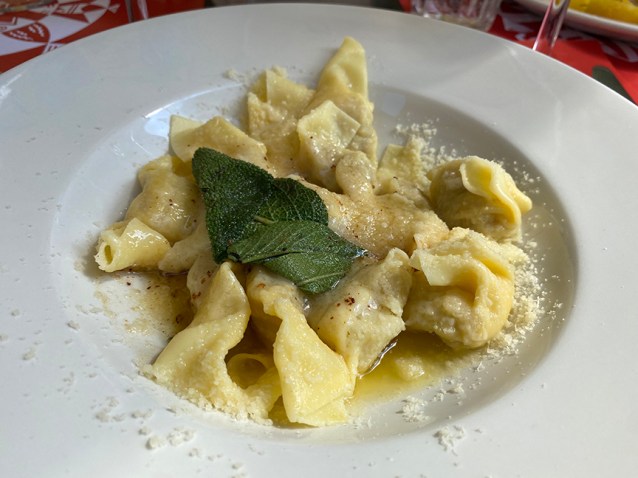 Anyone who’s ever been a working wine trip like this knows what a slog it can be. I’ve been going non-stop.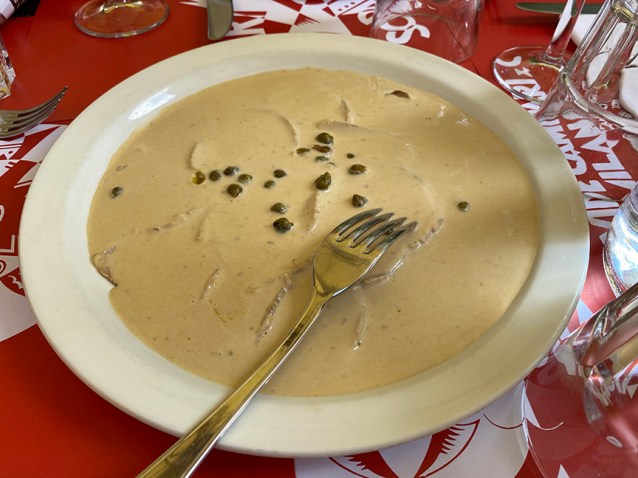
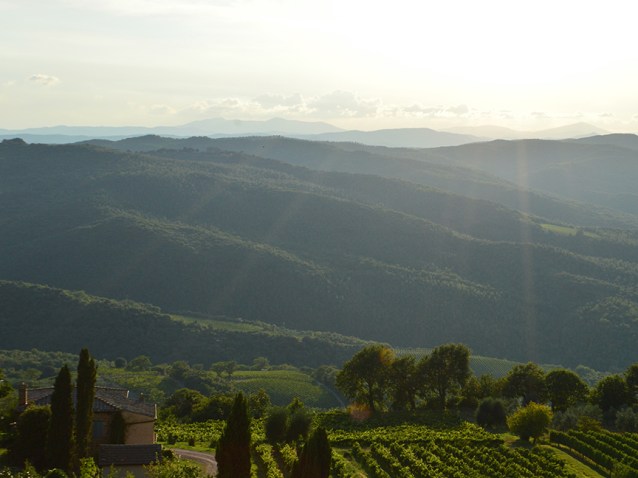 Above: a photo of mine from Montalcino, taken seven years ago (nearly to the day). Wine lovers and not, italophiles will tell you that the Orcia River Valley is — how to say this? — irresistibly delicious to the eyes.
 Above: a bas relief at the Basilica of Sant’Ambrogio in Milan.
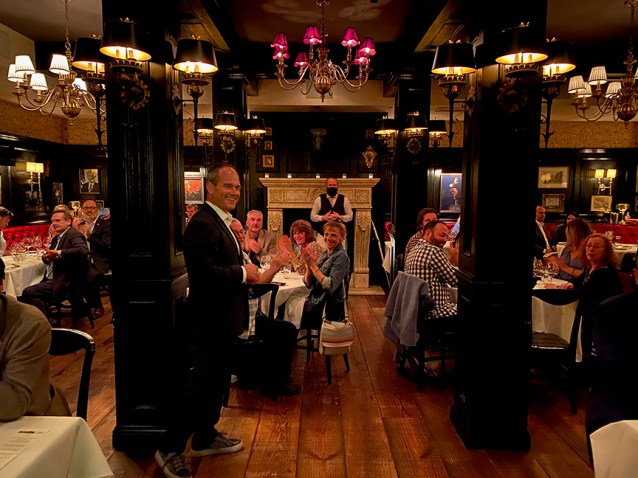 Above: Brett Zimmerman, founder of the Boulder Burgundy Festival, presents the Friday night dinner at last year’s gathering.
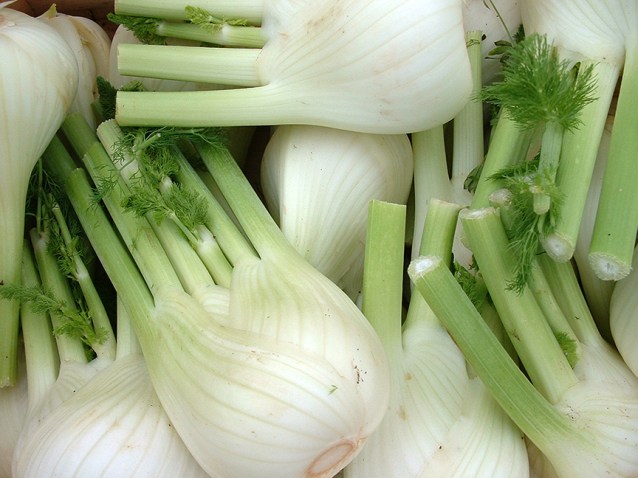 Image via
  Image via
 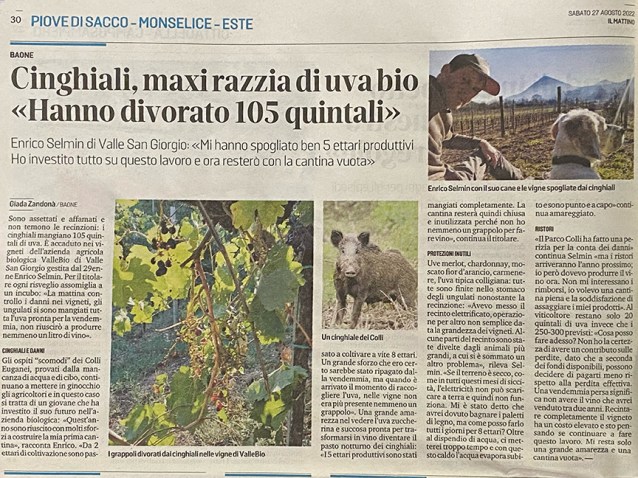 Enrico Selmin had used electric fences to protect his five hectares of organically farmed grapes — his first commercially viable crop.

