Caption for photograph of texas hill country in men’s room austin airport.
Texas is my home now.


Caption for photograph of texas hill country in men’s room austin airport.
Texas is my home now.
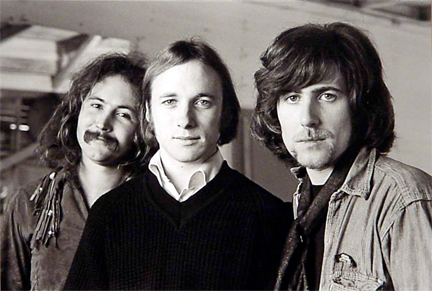
Going through security I held her for so long. She finally looked at me in love, And she was gone.
Damn, I miss her.
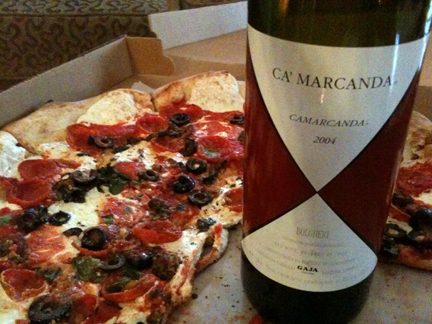
I guess I’m not the only one who dares to pair pizza and fine wine: my friend Rob sent me the above photo yesterday, a pairing of one of his favorite wines and his favorite pizzas, olives and pepperoni (from the legendary Grimaldi’s, originally of Brooklyn).
Rob was celebrating the opening of his new movie, Hot Tub Time Machine.
Congrats, Rob! Mazel and more mazel on ya brotha…
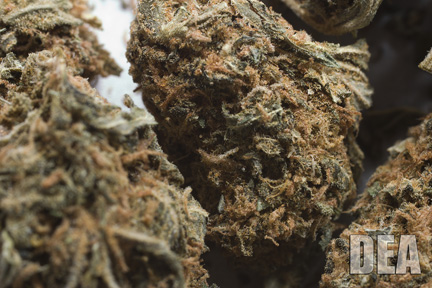
Above: A little marijuana porn, anyone? Click here for the big kahuna over at the U.S. DEA website.
It’s hard to believe that this is happening in my lifetime but it’s true. I had to pull over to the side of the road the other as I was driving home and heard a radio story on American Public Media Marketplace: the spokesperson for NORMAL was talking about the recent initiative to legalize recreational marijuana use in California and — get this! — turn Humboldt and Mendocino into Napa Valley-inspired marijuana tourism destinations.
I’m certainly not the only or the first to write about this is in the enoblogosphere: check out this post by Wolfgang, who asks wryly, “have I smoked too much Cabernet?”
As I head out (tomorrow) to my homestate of California, to speak about Piedmontese wines at Jaynes Gastropub on Saturday Sunday and to celebrate the Passover with my family on Monday night, I have to admit that I never thought legalized pot would happen in my lifetime (even though pot is woven deeply into the cultural fabric of my beloved California). But is weed the new wine? Humboldt County tasting rooms? Unbelievable!
In other news…

Above: I love the raw pork sausage that you typically eat as an appetizer in Piedmont. You eat it just like that, completely raw. We were served this excellent victual when we dined in the home of Giovanna Rizzolio.
I been showered by numerous requests to hurry up and post about the amazing private tastings that were organized for Tracie P and me by venerable Italian wine pundit Mr. Franzo Ziliani in Barolo and Barbaresco during our February trip there. One zealous fan of my blog writes of his “burning disappointment” that I still haven’t posted on our tastings at Vajra, G. Rinaldi, G. Mascarello, and Cascina delle Rose, “our lady of the deaf river,” as I will call the inimitable Giovanna Rizzolio, producer of one of Mr. Ziliani’s favorite Barbarescos and his close friend.
Frankly, I’m flattered by all the messages I’ve received and I promise to devote next week’s posts to my notes and impressions of these amazing wines and the truly amazing people who make them. And I can only reiterate my heartfelt thanks to Mr. Ziliani, as I wrote on Valentine’s day, in a post published not long after Tracie P and I returned from Italy: noble is the host… (the line comes from a stanza of an ode by 18th-century Italian poet Parini that I translated and dedicated to Mr. Ziliani).

Above: Ignazio Giovine (center), owner and winemaker at L’armangia (Canelli), was one of the most interesting and nicest persons I met (and spoke to at length) in Asti earlier this month. As the interpreter that day, I wasn’t able to take photos and so I lifted this photo from the website of a Danish wine seller (left), Carsten Rex, who reports detailed tasting notes in English for Ignazio’s wines.
One of the disadvantages I faced on my recent trip to Asti for Barbera Meeting was that I simultaneously juggled the roles of meta-blogger, wrangler, and interpreter. As a result, there were many instances I wasn’t able to take photos and notes for my own blog. Another odd — surreal in certain cases — was that as interpreter for the group and for many of the winemakers we visited, I was not only gagged but also forced to be the literal mouthpiece verbatim for nearly all of the winemakers and enologists we visited. At one point, after a exhausting session of translating a heated debate during one of the conferences, Jon said to me, “wow, man, that was surreal: there you were, speaking to the crowd, saying things I know that you completely disagree with.”
My job there was to convey, transmit, relay the message, without any editorializing (for the record, I was trained formally as an interpreter when I worked for the Italian Mission to the United Nations back in 2003 and served as the Italian foreign minister’s personal interpreter; during that time, I translated for Kofi Annan and Colin Powell, just to name a few).
I wish I would have been able to spend more time with winemaker Ignazio Giovine (above) of L’armangia. I can’t say that I’m the biggest fan of his wines but I can say that I’m a personal fan of the man. Following our visit, he and I had a chance to chat at the evening tasting, where we had a fascinating conversation about wine, partisans (both his and his wife’s parents opposed the fascists), and the current state of Italian politics today. His wines are very well made, although they do not appeal to me personally. But I am a big believer that the objective quality of a wine is also derived from the people who make it (above and beyond my personal tastes). Ignazio’s radical opposition to the use of native yeast stirred some controversy between him and the group. (And my now good friend Thor, whose writing I admire greatly, wrote an interesting and polemical piece on our visit with Ignazio.) I think I did a fine job of translating for Ignazio but I wish I could have been a participant and observer that day instead of interpreter.
According to a report that I recently synopiszed over at VinoWire, the German and Swiss markets grew or remained stable for the sale of Italian wines in 2009, while Britain and the U.S. dropped significantly (not in volume but in gross sales).
Ignazio makes his wines almost exclusively for the “Nordic” market, as it were, like the Dane above, who is a big fan of Ignazio’s wines. Wasn’t it Sheryl Crow who said, “if it makes you happy, it can’t be that bad…”
If Ignazio makes wines that his customers like, is that so wrong? Let me play the devil’s advocate and say: de gustibus non est disputandum. In other words, if it makes you happy…
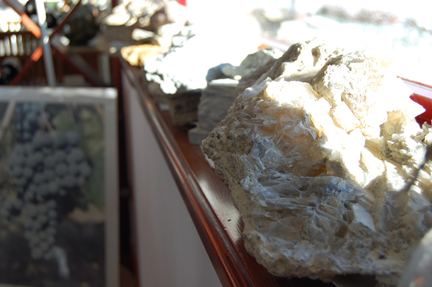
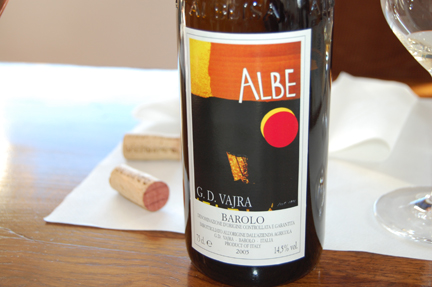
The first winery distinguished Italian wine writer Franco Ziliani took me and Tracie P to visit on our February trip to Piedmont was GD Vajra in Barolo. Winemaker Aldo Vajra (below) keeps these rocks (calcareous marl, above) on the windowsill of his tasting room to illustrate what gives great Barolo its structure and minerality.

On Sunday, I’ll be speaking about the wines of Piedmont at Jaynes Gastropub in San Diego, where we’ll be tasting Aldo’s excellent 2005 Barolo Albe.
Jaynes Gastropub
4677 30th Street
San Diego, CA
Sunday March 28
5-7pm
$25/person
Call 619-563-1011 or Email Jaynes for reservations
Tickets will also be available at the door.

Piazza Colbert is the largest square in the tiny town of Barolo. “It’s kinda like the Oscars,” said Tracie P, as we waited there for the illustrious Mr. Ziliani to arrive in the piazza, scanning the names of the winemakers plastered to the homes and cellars around the square. “All the stars are here…” I’ll be giving my “Colbert report” on Sunday…
In the meantime, for a great profile of Vajra, check out McDuff’s posts (Vajra is to McDuff what Produttori del Barbaresco is to me). McDuff is a true friend…

Above: The best vitello tonnato of 2010 was prepared for Tracie P and me by our friend Giovanna Rizzolio of Cascina delle Rose in Tre Stelle (between Neive and Barbaresco). I’ve eaten a helluvalotta vitello tonnato over the last two months, with TWO (yes, TWO! COUNT ‘EM!) trips to Piedmont in as many months.
I love vitello tonnato. I could eat vitello tonnato every day. I’m not kidding. In fact, while I was in Piedmont with the Barbera 7, I literally ate vitello tonnato four times in four consecutive seatings, over three days. That’s 1.33333 servings of vitello tonnato per day.

Above: Getting to have dinner in someone’s home in Piedmont was a real treat for me. I’ve traveled to Piedmont so many times for wine but you always end up in Michelin-star this or Michelin-star that… Always great but nothing beats exceptional homecooking like Giovanna’s. Supper began with traditional Piedmont salame.
I am fascinated by vitello tonnato — culinarily and intellectually. And, gauging from all the comments here and on Facebook in the wake of the recent vitello tonnato pornography, you’re fascinated by vitello tonnato as well.

Above: And no Piedmontese meal is complete (lunch or dinner) without raw beef, in this case, homestyle.
That’s why I’ve decided to give up all the petty politics and ego-driven parochial bullshit of wine blogging to devote my blog exclusively to vitello tonnato and its epistemological implications. Veal with tuna and anchovies and capers. The basic ingredients alone and their highly unusual but thoroughly delicious combination will occupy volumes and volumes… The dissertation I delivered in 1997 was about Petrarch and Bembo, apostrophes (no shit!) and dipthongs (no double shit!) and episynaloepha (no triple shit! look that one up, Thor!). But this, ladies and gents, I assure you, will be a mother of all dissertations.
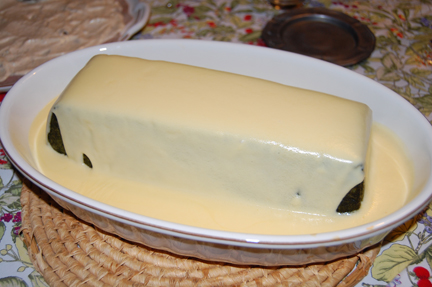
Above: But the true pièce de résistance of Giovanna’s superb repertoire was this sformato di spinaci, a spinach casserole topped with a fondue of Fontina and Parmigiano-Reggiano. I couldn’t resist a second helping. Simona, you would have LOVED this.
Seriously, back from Mars now, I don’t have time to blog today because I’m on my way to San Antonio to make a living. It won’t be long before I pick up the narration of our February trip to Piedmont again — the meals, the wines, the tastings, and most importantly the people. Giovanna runs a wonderful bed and breakfast in Barbaresco country and her wines are killer.
And all joking aside, I have a great deal to say about vitello tonnato (no kidding!).
Stay tuned…

Above: Pope Sixtus IV appoints Bartolomeo Platina prefect of the Vatican Library, fresco by Melozzo da Forlì, c. 1477 (Vatican Museums). That’s Platina kneeling. Click the image for the entire fresco.
The title of today’s post is a play-on-words, a riff on the canonical translation of Bartolomeo Platina’s De honesta voluptate et valetudine, On Right Pleasure and Good Health (as translated, superbly, by Mary Milham in 1998). Italian humanist, gastronome, and literary consultant to some of the most important cultural and political figures of his time, Platina authored a treatise considered by many the earliest printed work on gastronomy. It was overwhelmingly popular in Europe from the time of its initial publication in the late 15th century through the 17th century, by which time it appeared in myriad translations from the Latin. (I know a little about Platina and his book since I translated the 15th-century Italian recipe collection by Maestro Martino from which Platina drew heavily).
In the mind of the Renaissance humanist, good health and right pleasure were inexorably linked. As food historian Ken Albala illustrated so eloquently in his 2002 Eating Right in the Renaissance, inhabitants of 15th-century Italy believed — rightly — that everything you put into your body affected your health, emotionally, intellectually, and physically.
Sumus quales edamus: we are what we produce (äfere), we are what we eat (lèdere).
I’m no Renaissance man but I do believe that right pleasure and good health go hand in hand, so to speak.
That’s why I’m thinking today about “right health”: President Obama’s signing of the new health care legislation (however flawed, however riddled by political posturing) marks for me the fulfillment of a dream (both personal and civic). As David Leonhardt wrote in The New York Times today, “The bill that President Obama signed on Tuesday is the federal government’s biggest attack on economic inequality since inequality began rising more than three decades ago… Speaking to an ebullient audience of Democratic legislators and White House aides at the bill-signing ceremony on Tuesday, Mr. Obama claimed that health reform would ‘mark a new season in America.’ He added, ‘We have now just enshrined, as soon as I sign this bill, the core principle that everybody should have some basic security when it comes to their health care.'”
As a long-time self-employed translator, writer, copywriter, and musician/songwriter, health care has always been a primary issue for me. To my mind and in my heart as a member of American society, the inequality of health care in our country has always represented a tragedy in our affluent nation.
So today I ask you to consider a step forward in our country, toward an inalienable right that is guaranteed, however imperfectly, to citizens in most Western countries.
What’s next? Will we outlaw the death penalty? I’d certainly drink to that.
In other news…
Please read BrooklynGuy’s excellent post today, with its oxymoronic title, How to Buy Excellent Cheap Wine.

When in Piedmont, do as the Piedmontese do and drink Piedmontese wine. But when I saw the 2004 Trebež by Dario Prinčič (from Oslavia, Friuli) on the list at La Libera (probably the hippest, best see-and-be-seen place to dine in Langa), I couldn’t resist. After all, it was my turn to pick the wines the Barbera 7 was going to be drinking at dinner that night. I know it’s a shame to drink a Friulian wine in Piedmont (and for our red, we drank an a killer 2006 Dolcetto di Dogliani by one of my favorite producers, Cascina Corte), but the mimetic desire created by my browsing of the list simply overwhelmed me. I had to have it.
According to Divino Scrivere, the wine is a blend of Chardonnay, Pinot Grigio, and Sauvignon Blanc, obviously vinified with skin contact. (I believe that Trebež is a toponym that refers to a river by the same name, but I’m not sure.) Cloudy and practically brown in color, this is as real, natural, and orange as it gets… not for the refined palate but rather the folks who did real, groovy wines… Acid and gently astringent tannin, apricot and prune flavors, balanced by dirt and rocks. The man, Dario Prinčič, is dry and sour in person, perfectly polite, but never a smile on his face when I taste with him at Vini Veri. His wines, on the other hand, are full of joy and glorious flavor and they are among my all-time favorites.
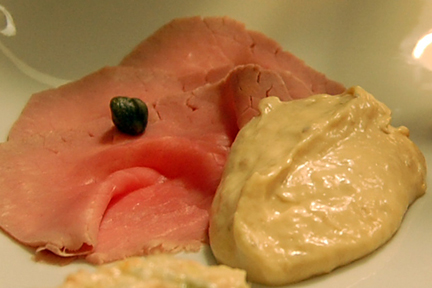
The night we ate at La Libera, I asked owner/chef Marco to feed us whatever he wanted (which is always the best way to go in any great restaurant, btw). Among other victuals, he made us a tetralogy of classic Piedmontese antipasti, including the sine qua non vitello tonnato (the photo above borders on the pornographic, no?). I love vitello tonnato and eat it whenever and wherever I know it’s good. Today, vitello tonnato is regularly made with mayonnaise but the addition of mayonnaise is a relatively recent adjustment to this recipe. In fact, the sauce prescribed by Artusi (1891) calls for tuna in olive oil, anchovies, lemon juice, and capers in vinegar.
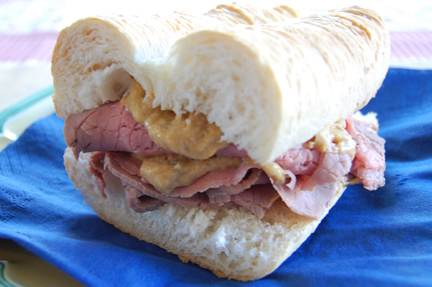
I enjoyed another excellent vitello tonnato, while Tracie P and I were in Barolo in February, at the Osteria Barolando, served on a roll of crusty bread (above).
I love vitello tonnato so much I could most certainly write a dissertation on it — its variants, its history, its epistemological implications… but, alas, I need to make a living…

If you reside in California and/or know someone who does and you’d like to taste the wines I’ve selected this month for the Do Bianchi Wine Selections email list, please click here.
Thanks for your support!
 Do Bianchi
