Lunch at Perbellini (Verona): some guys have all the luck

Some colleagues very graciously and generously bought me lunch today at the Perbellini installation at the design fair in Verona. What can I say? Some guys have all the luck… ;-)

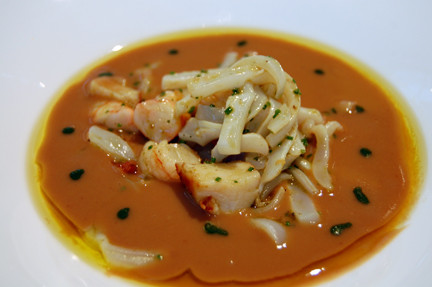
There is bean soup and then there is BEAN SOUP. In this instance, topped with a ragù adriatica

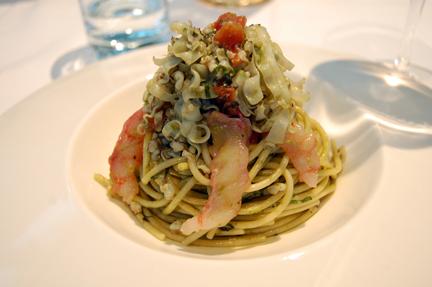
I would have never believed that I’d enjoy spaghetti freddi (cold spaghetti), but when in Perbellini… with cuttlefish, marinated prawns, basil, and lime.

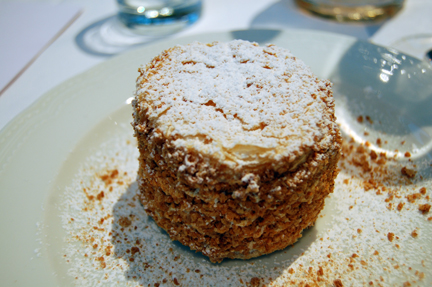
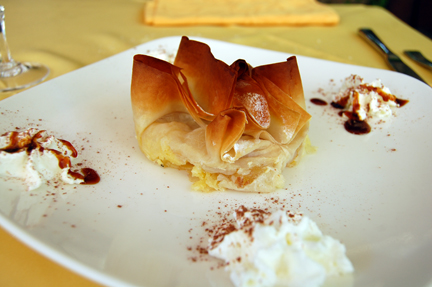
Perbellini’s famous millefoglie.

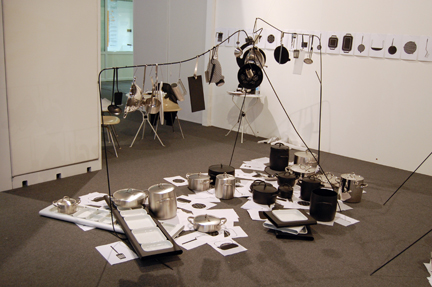
Duclis in fundo: I also had a peak at the design fair.

How do you say “happy as a clam” in Italian?

In Italian, when someone is as happy as a clam, you say that someone va in brodo di giuggiole, in other words, that she or he swims in jujube soup.

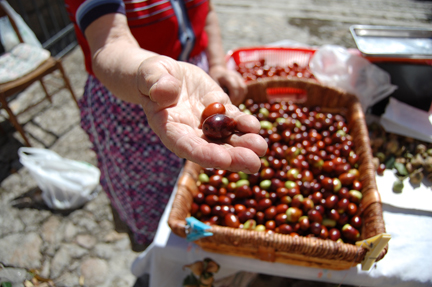
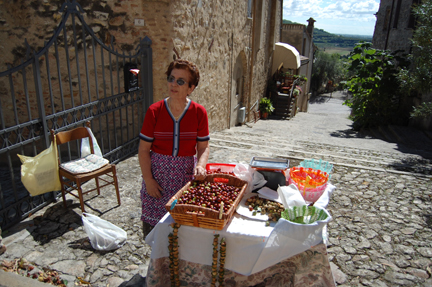
This sweet lady let me try one of her giuggiole in Arquà Petrarca. No Italian spoken here, just the sweet cadence of my beloved Veneto. Just to breath the fresh air of the Euganean Hills where Petrarch spent his last years of life fills my heart with joy.

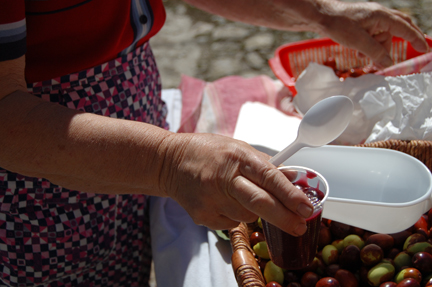
She also let me try her sugolo, grape must pudding (made by boiling sweet grape must with flour). So yummy.

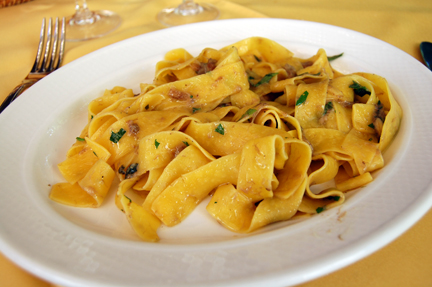
Lunch was served sotto una pergola (under a pergola), homemade pappardelle with fresh porcini (in season).

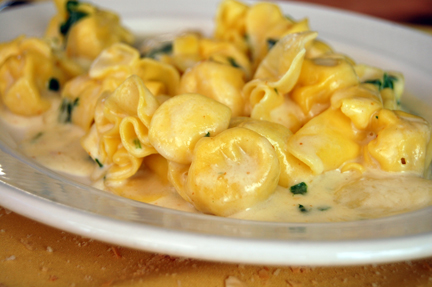
Fagottini stuffed with ricotta and pears.

I couldn’t resist the crostata di mele (apple pie).

Lunch with a wide selection of locally cured charcuterie, a pasta course, dessert, and wine (a Collli Euganei Pinot Bianco at a wonderful 12.5% alcohol!) was Euro 22 per person.

Have you ever taken a swim in jujube soup?

Zidarich Vitovska and horse meat dinner

Tonight I’ll be in Friuli (more on that later) but the weekend between the two working legs of this trip was spent in Padua, as a guest in the lovely home of my wonderful friends Sita and Steve, whom I’ve known since I was a junior at the Università di Padova (remember them [click and scroll down]?).

Sita knows how much I love and miss the horse meat of my beloved Veneto (more on that later) from my days as a grad student in Italy and so she prepared a wonderful dinner of horse meat for us on Friday night.

Steve knows how much I love the tannic white wines of Carso and so he grabbed a bottle of 2007 Zidarich Vitovska from his Eurocave. As it turns out, Sita’s uncle was the architect who designed the Zidarich winery!

The first course was horse meat salamino, ripe olives cured in olive oil, and taralli.

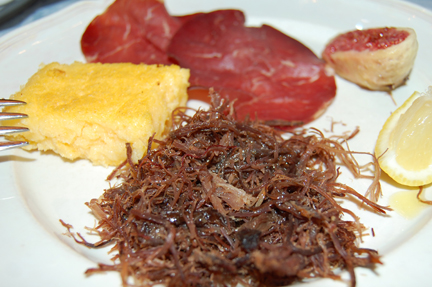
Next came my FAVORITE: sfilacci di cavallo, cured and shredded horse meat, dressed with olive oil and lemon and served with griddle-fried polenta. The horse meat bresaola and raw figs were equally delicious.

As the Vitovska came to room temperature and gently aerated in the glass, its tannic structure began to reveal itself. The floral notes on the nose and the mineral character of this wine blew my mind, so unbelievably good.

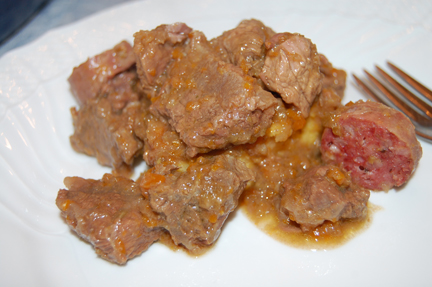
Sita really outdid herself with this spezzateino di puledro, pony and horse meat sausage stew, served over polenta (of course).

Horse meat became popular in Italy and France in the 1960s as an affordable source of protein for young families. Today, the Veneto is the only place I know of where it’s common to find horse meat butchers.

By the end of the meal, the Vitovska had opened up gloriously, the white fruit (apple and pear) singing to the rhythm of the wine’s acidity and tannin.

An acoustic guitar was produced and dutifully tuned and a chorus of John Lennon’s “Imagine” and some ubriaco brushed with Prosecco must made for the ideal coda to a meal of happy memories shared with good friends.

Tough times in Piedmont

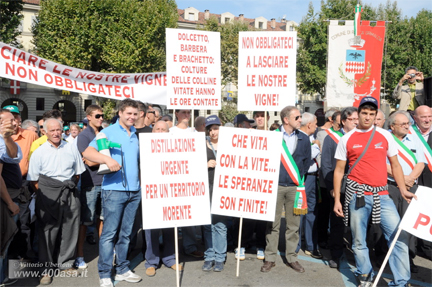
Above: In a protest mounted earlier this month in Asti, besieged Piedmont grape growers and winemakers pleaded for government aid (photo by 400AsaFoto.it).

I managed to carve out some time this morning to post over at VinoWire on recent developments in Piedmont for grape growers and winemakers affected by the global wine crisis.

On his excellent blog Sapori del Piemonte, Filippo Larganà has been providing some solid coverage of what’s happening on the ground there.

Congratulations Marisa and Giorgio! The most beautiful couple!

How and why I got here is a story too long to tell right now, a tale that stretches over more than two decades! What’s important is that Marisa and Giorgio, some of the nicest folks I know, were married yesterday at the Abbazia di Praglia at the foot of the Euganean Hills (near Padua).

The setting was the famous Benedictine abbey.

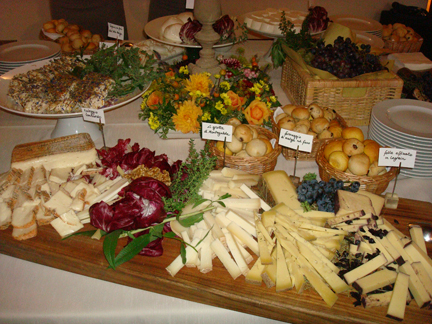
Guests were greeted by an amazing spread at a nearby agriturismo.

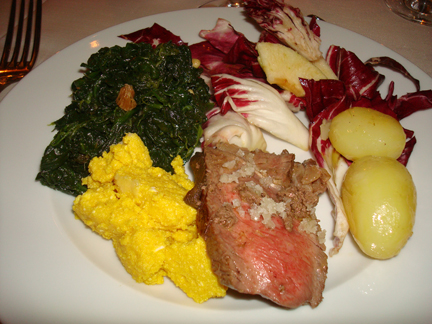
Risotto ai funghi e al tartufo nero, carnaroli cooked perfectly al dente.

Feast your eyes! One of the best catered events I’ve ever attended (seriously).

Congratulations Marisa and Giorgio! I’m so glad I could be there to celebrate your happy, happy union!

Our good friends Winnie and Amy were there too, in from New York!

Running out now to taste some dry Moscato in the Euganean Hills… stay tuned…

A pizza revolution in Rome?

Above: Pizza (?) with mortadella (mortazza in Roman) and pistachios at Pizzeria La Fucina is all the rage in Rome.

Since I had to return my rental car to Rome before heading north today, I decided to treat myself to an evening in the Eternal City (one of my fav places on earth), where I connected for dinner with my go-to-ex-pat-blogger when it comes to where to eat and drink in the City on the Tiber, Katie Parla. (I owe my connection to Katie to our mutual friend and fellow Italian enogastronomic journeyman Michael Housewright.)

Katie suggested that we hit Pizzeria La Fucina, one of the more controversial pizza destinations in the pizzaiolo universe.

Italy, after all, is where the true “pizza wars” are being waged.

Above: The margherita at Fucina isn’t exactly what you would call a “traditional” expression of the hallowed pizzaiolo legacy.

Fucina and its owner Edoardo Papa have been pushing the envelope of pizza and its cultural significance in Italy in all sorts of ways. I guess it really comes down to your definition of what pizza is is. The toppings are decidedly not traditional (like the pizza with mortazza and pistachios, above, the venue’s signature dish), the artisanal beer list is impressively lengthy and entirely awesome, and Edoardo encourages pairing wine and pizza with a beefy wine list that includes some unusual selections (for any pizzeria let alone a pizzeria in Rome), like Cappellano Dolcetto (!) and Etna Rosso by Terre Nere.

Above: Whether or not there’s a true pizza revolution happening in Rome has yet to be seen but there’s no doubt that an artisanal beer movement has taken flight. The beer was super delicious, salty, and crunchy.

“Pizza and beer is not the ideal pairing,” said Edoardo, noting that “it’s not good for the stomach to pair yeast with yeast.”

I didn’t bother pointing out that the yeast isn’t active in the beer nor in the pizza, nor did I bring to his attention the fact that yeast is also employed (whether by nature or by humankind) in the vinification of grape must. (He is a papa, after all, in the papal city.)

Above: Katie’s blog is a great resource for anyone traveling to Rome. I highly recommend it. Between the two of us taking photos of our pizza, it was like a scene out of the movie Man Bites Dog (remember that one?). Her lens is bigger than mine though.

I’m not really sure how I feel about Fucina: the dishes were more like savory flatbread than pizza. They were tasty and I really loved the feel of the restaurant and the good vibes of the waitstaff (not always easy to find in Rome). But I’d definitely recommend checking it out for the culinarily adventurous (it’s a hike to get out there from downtown Rome but well worth experiencing a real slice of Roman life, pun intended).

I’m on a train making my way to Padua now to visit with friends and will be taking a few days off. The next leg of my trip will take me even farther north…

See you on the other side and happy new year everyone!

The salumi bar phenom: Roscioli, Rome

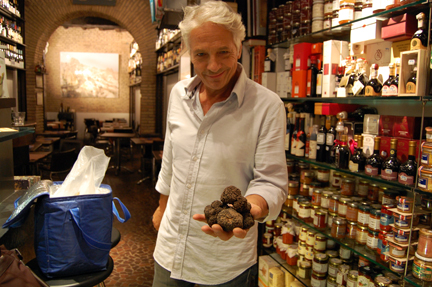
Dino Paolini, truffle “pusher,” stopped by the famous Forno Roscioli while I was there for a late lunch yesterday in Rome.

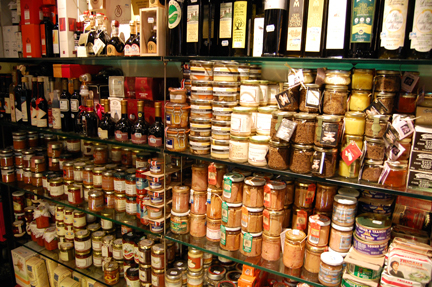
Although an ancient Roman instituion, Roscioli is part of a new and growing trend of “salumi bars” in major Italian cities, where a wine bar experience is enhanced by a focus on extreme cheese and charcuterie selections.

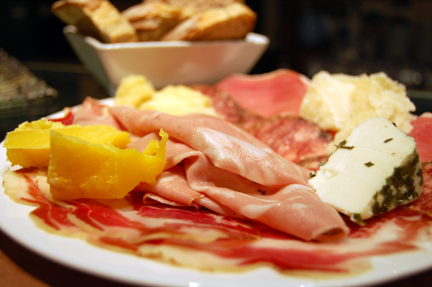
The cheese and salumi sampler featured pecorino from Etna infused with saffron and mortadella studded with black truffles. See what I mean by extreme? (More on the Roman love affair with mortadella later today if I have time.)

The prices were extreme, too, and the attitude precious.

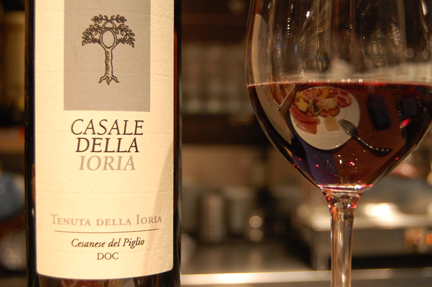
I was happy to get to drink at least one locally produced wine on its by-the-glass list (the only one), Cesanese del Piglio by Casale della Ioria, one of my favorite producers. In the hour or so that I was there, I heard retail customers ask for “heavily barriqued Merlot” (a Friulian man), “Ca’ Marcanda” (German tourists), and “Hofstätter” (a Venetian or otherwise Veneta lady, couldn’t quite place the exact cadence).

In other news…

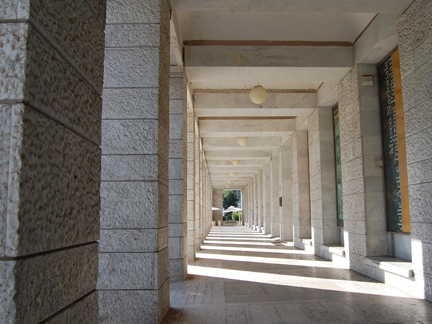
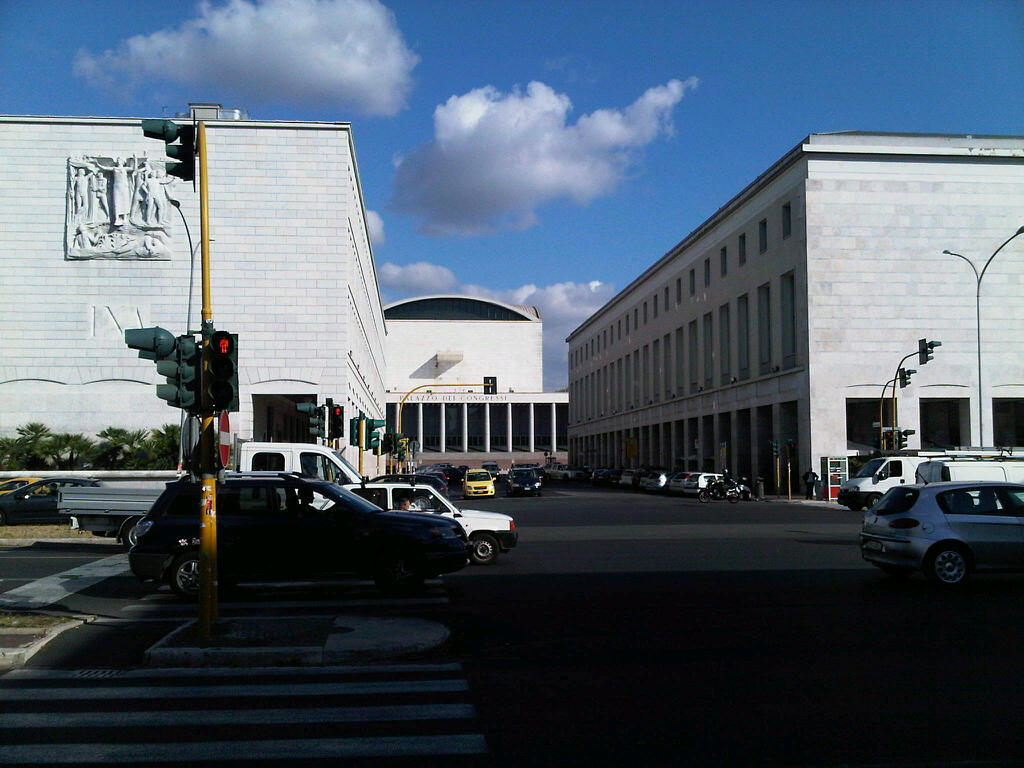
Please indulge me by checking out this photo, of which I am extremely proud, snapped yesterday at the amazing E.U.R. of Rome.

I thoroughly enjoyed my walking tour of the neighborhood (my first time there). James Taylor takes the prize for best pun, Sounds like EUR having a good time…

Thanks for reading, everyone, and for all the great comments… Please stay tuned… The next leg of the trip is going to be a whopper…

Strange hues of the Middle Ages

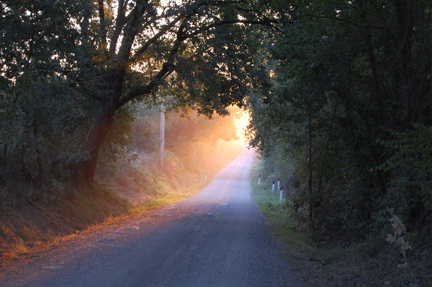
This morning, my last in Montalcino, I enjoyed a daybreak drive through the vineyards of Il Poggione with winemaker Fabrizio Bindocci as my guide (I’ve been staying at the estate’s farmhouse).

The vision above made me think of Dante, Inferno, 34, 132-33:

    Into that hidden passage my guide and I
    entered, to find again the world of light

I remembered my years as a grad student, often spent imagining the quality of light as perceived by humankind in the Middle Ages.

I remembered the famous passage from Burckhardt:

    In the Middle Ages both sides of human consciousness—that which was turned within as that which was turned without—lay dreaming or half awake beneath a common veil. The veil was woven of faith, illusion, and childish prepossession, through which the world and history were seen clad in strange hues.

And I realized that those strange hues often reveal truths lost on those inebriated by the glow of rationalism.