
 Image via Wikipedia Creative Commons.
By the time a wide-eyed U.C.L.A. undergrad made their way to Italy in 1987, the country’s socialist government was thriving, the economy was booming, a year of university studies, even at a top school, cost around $300, and “there was a Benetton on every corner in Manhattan,” as one of their professor’s put it.
But by the early 1990s, that had all collapsed as the government led by socialist leader Bettino Craxi went down in flames and scandal.
That power vacuum led to the rise of the first post-modern politician, as many have called him, Silvio Berlusconi. As he himself openly put it, he got into politics so that he could change laws in order to make himself richer, pay fewer taxes, and avoid legal jeopardy. As he achieved all three of those personal goals, he drove the country’s economy into the toilet with bloated borrowing and destroyed Italy’s image as a progressive nation who protected its vulnerable and cherished its cultural legacy.
He also became the first, in his own words, to legitimize the far and fringe right. Today, the roots of Italy’s first post-fascist (in other words, its first post-war bona fide fascist) government can be traced to his tenure.
Back in the early 2000s, when Italy was the president of the European Union, I was recruited to be an interpreter at the Italian Mission to the United Nations. Because Berlusconi, prime minister at the time, was tasked to address the General Assembly as the president of the EU, the mission needed an extra full-time interpreter. I was assigned to foreign minister Franco Frattini, who represented Italy at the gathering, while the senior interpreter was assigned to Berlusconi.
I never met him but I did attend a meeting where he spoke — and I held my nose.
After his notorious sexual predation parties became well documented by the media, my bandmates and I wrote and produced a song about his bunga bunga. We recorded it in Austin, Texas for our 2011 album “Freudian Slip” (Aeronaut Records). You may have heard it on season 1 (episode 2) of “Emily in Paris” (listen below).
Many have said that Berlusconi created the paradigm, the road map for our country’s own post-fascist, post-supremacist political monster.
But let us not mention the name of that Devil… lest he appear.
Read the Times obit here.
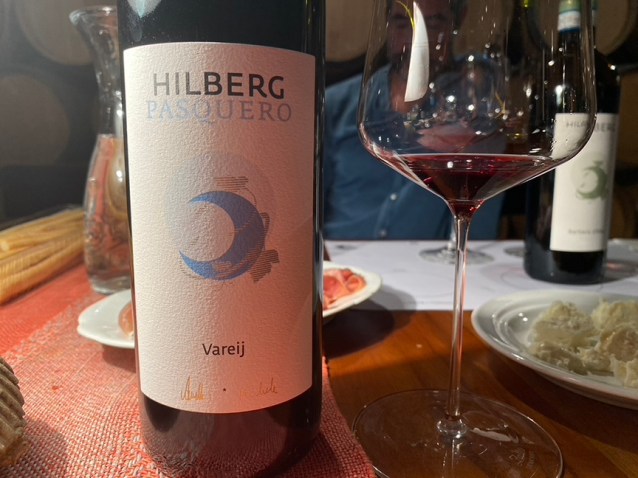 The mantra that I share with my students at the Slow Food University of Gastronomic Sciences in Piedmont where I’m teaching this week:
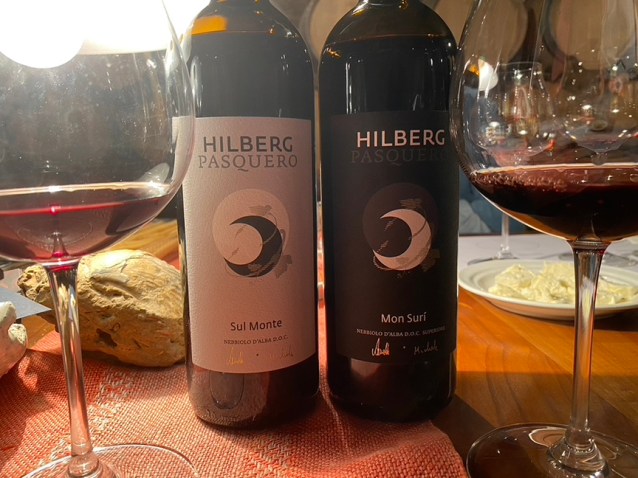 Whenever we talk about Roero in generalities, we tend to emphasize that Roero’s subsoils are mostly sandy. That’s why, the conventional wisdom goes, Roero’s Nebbiolo doesn’t have the depth of its neighbor in Barolo with its mix of limestone, clay, and marl soils.
  Nicola was keen to show me a vineyard they had recently re-planted (below). Do you notice the color and texture of the soil? That’s the classic limestone terreno bianco (the “white soil”) that you also find in Barbaresco and Barolo!
 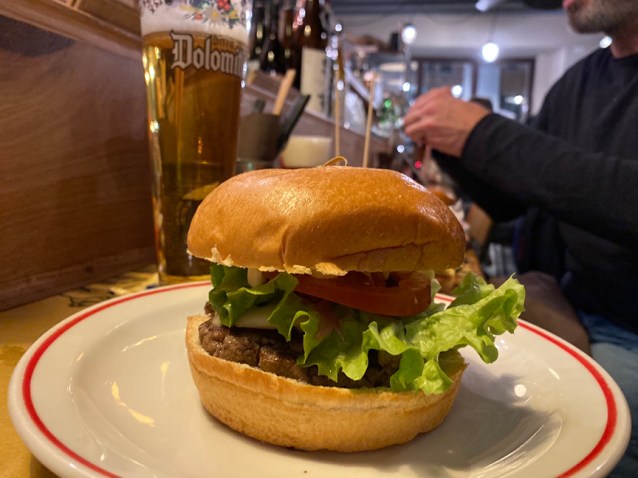 If memory serves correctly, it all began with hamburgers in the 2010s.
 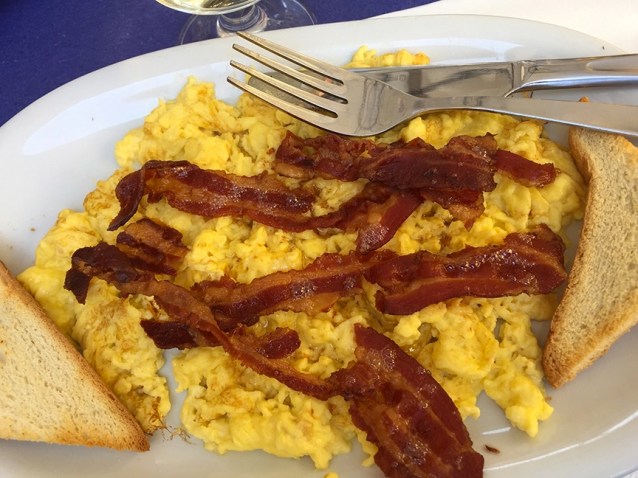 That was followed by bacon and (scrambled) eggs.
 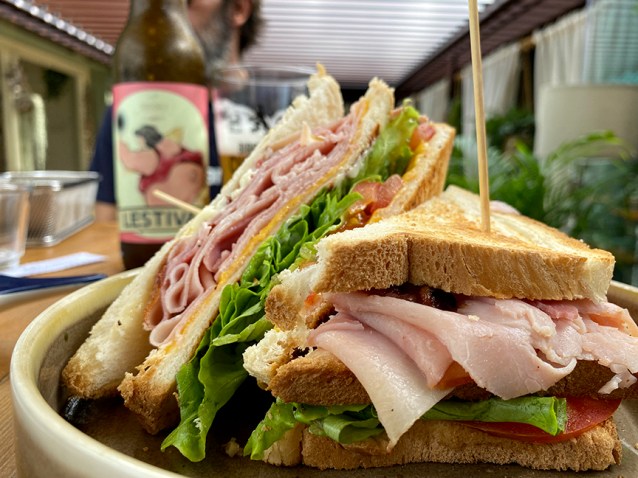 It didn’t take long before club sandwiches started to appear everywhere as well.
 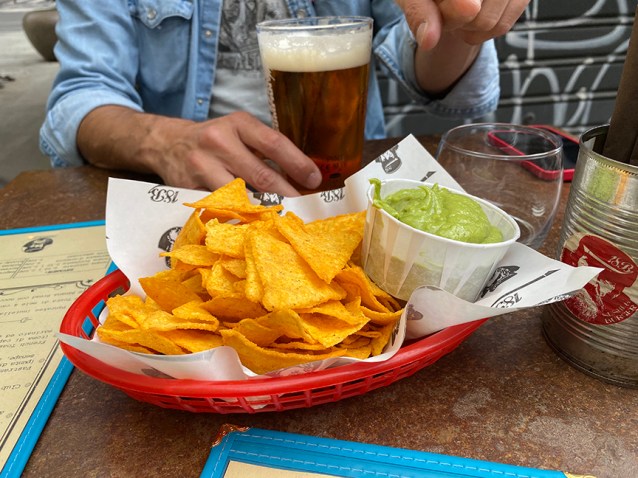 Over on the Facebook, there was a lot of chatter after I posted
 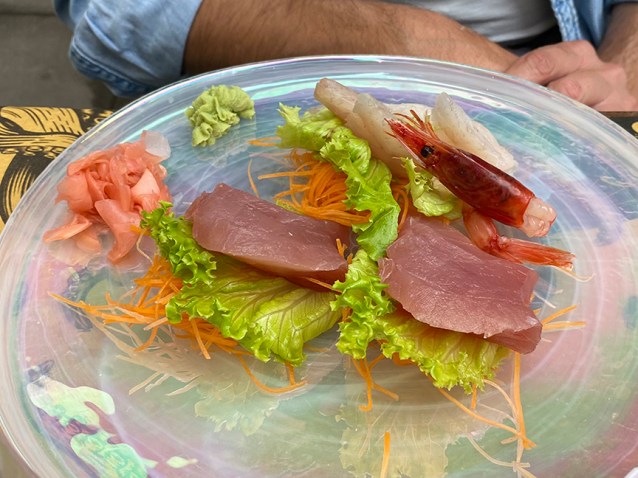 And let’s not forget the preponderance and ubiquity of “sushi” in Italy today! That cuisine is from Japan, of course, but nearly everywhere I see it here, it’s served in the American style that we grew up with.
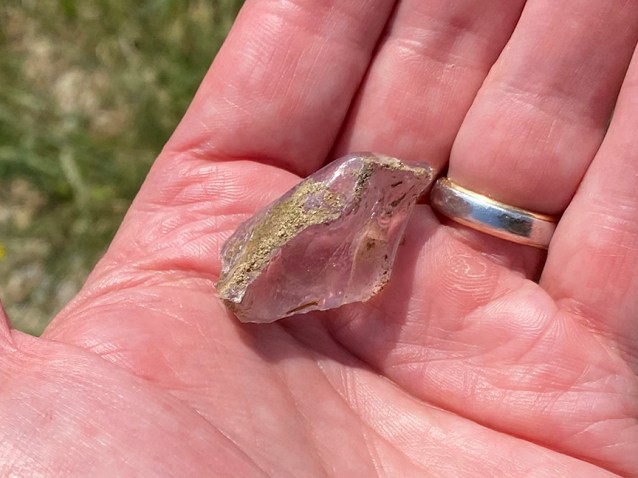 Italy’s seemingly unending chamber of wonders never ceases to amaze me.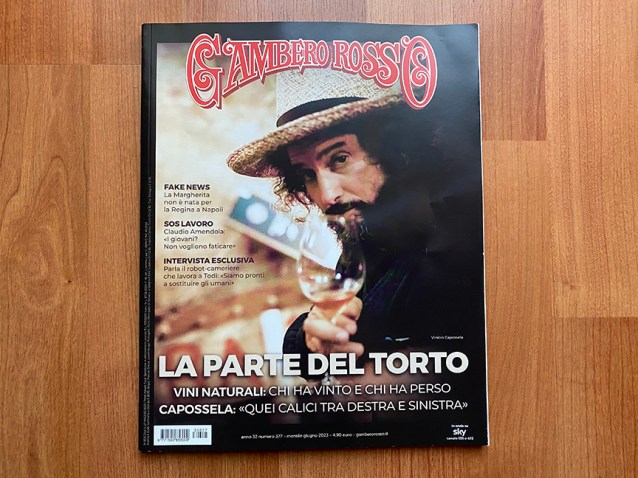
 Above: Silvia Angelozzi, winner of the “best wine shop professional” for the category “wine shop with restaurant service.”
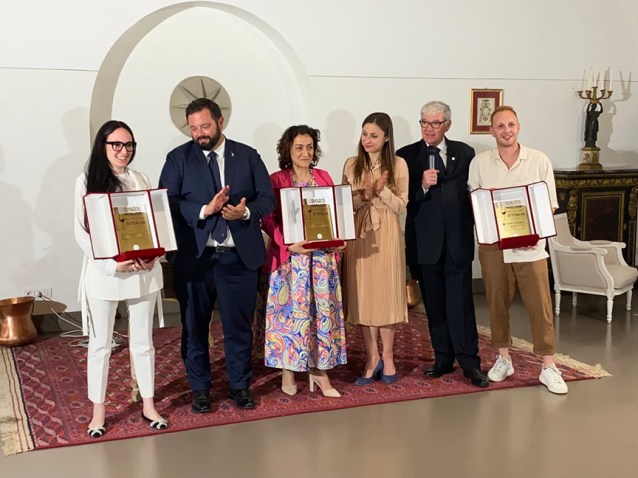 The three winners were Silvia Angelozzi (above, far left, for “wine shop with restaurant service”), Loredana Santagati (center, for “bottle shop”), and Matteo Bertelà (right, for “best wine shop professional under 30”).
 Today was my first full day on the ground in Italy.
 Both were visiting Houston for the first time and both are on what will surely be an epic journey to “build” their families’ brands in the U.S.
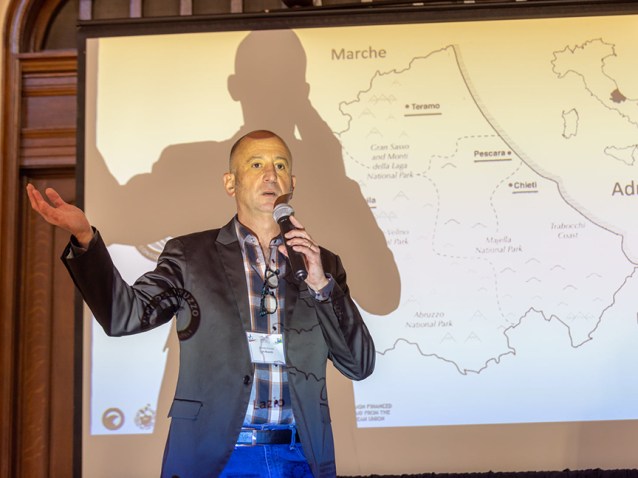 Labor ipse voluptas.
 After searching in vain for a decent translation of the Nizza DOCG appellation regulations, I finally rolled up my sleeves and rendered the text into English myself.
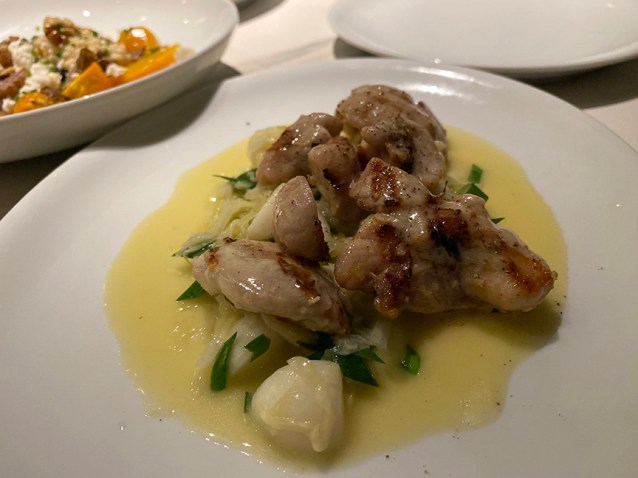
  As my buddy Doug and I enjoyed one of the best meals of my 2023 at Chambers in lower Manhattan earlier this month, I couldn’t help but be reminded of what Susan Sontag once wrote of the 20th-century critical theorist and activist
  As at least one critic has written, Sontag “yearned to be identical to her ideas, to display the punishing consistency of Weil, but her ideas jostled and sparked, exploding her sense of what she was, or wanted to be.”
 If there were one person in the wine trade who has made a career of being identical to her ideas, it must be
  Over the course of a career where she has created an entirely new and profoundly impactful role in the world of wine, she is at once a sommelier and activist, a restaurateur and a philosopher. But she hasn’t achieved this through high-browed essays, articles, books, or speeches. No, she has accomplished this feat through her sheer indomitable will to be identical to her ideas.
 I could feel it in the way that the servers interacted with our party.
 Do Bianchi
