
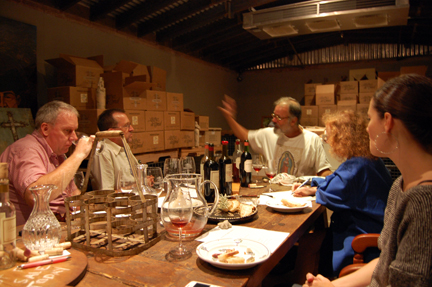
Vineyard walk and tasting with Alice Feiring, Russ Kane, Jeff Courington, and winemaker Lewis Dickson at the Cruz de Comal winery, Texas Hill Country.
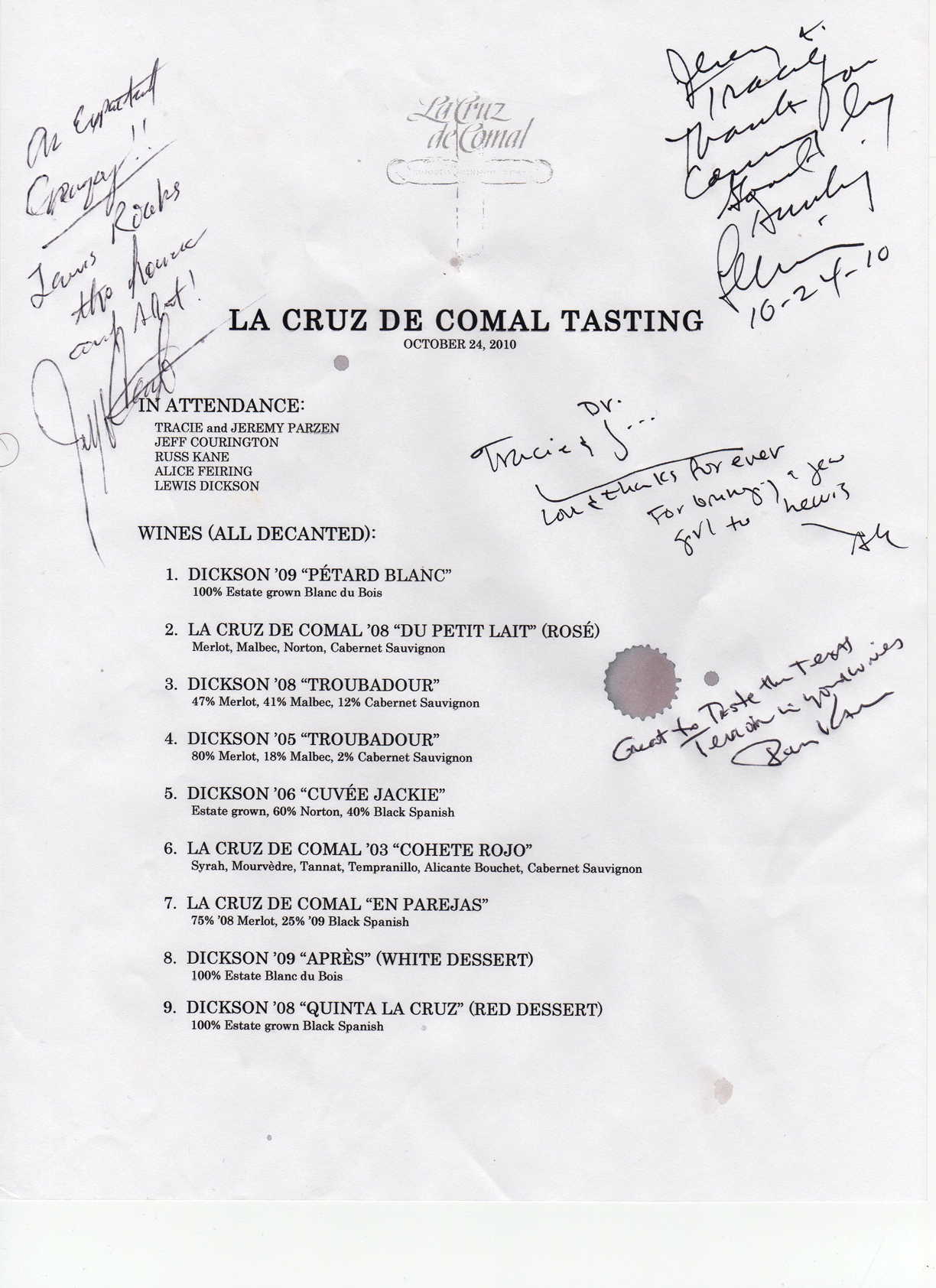
Click image for flight tasted.

Vineyard walk and tasting with Alice Feiring, Russ Kane, Jeff Courington, and winemaker Lewis Dickson at the Cruz de Comal winery, Texas Hill Country.
Click image for flight tasted.
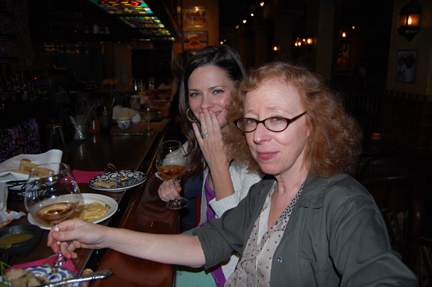
A schlub from Southern California had the very distinct pleasure and honor of escorting two very fine ladies out on the town in Austin, Texas last night.
After a quick stop at Vino Vino (where Alice will be speaking tomorrow night at a dinner in her honor, featuring unsulfured Spanish wines imported by José Pastor), we just had to head over to another one of me and Tracie P’s favorite restaurants, Fonda San Miguel, for some 1998 Tondonia Rosada by López de Heredia (hell yeah!). After all, didn’t Alice write the book on this winery and the wines that have meant so much to so many of us no matter where we eat, love, and pray?

Guacamole, queso fundido, corn tortilla chips fried in vegetable shortening, and huitlacoche tamales made for superb pairings…
Next came an intermezzo at an excellent Kentucky Bourbon and Virginia Ham party hosted by Boots in the Oven in the home of Erin and Nat (Alice didn’t eat any ham, for the record, in case you were wondering).
And what first visit to the Groover’s Paradise would be complete without some two-stepping at the Broken Spoke and honkytonking at Ginny’s Little Longhorn Saloon?
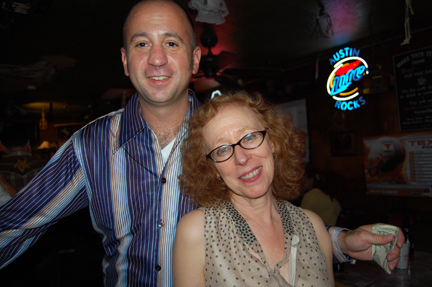
Didn’t I read once in the New York Times that Austin is the type of town where “everyone gets home safe”?
Happily somehow, the schlub managed to ferry his precious wards back to tranquility and a roof over their heads.
We’re heading out early this morning for some Texas Hill Country wine tastings…
This just in from David and Katie Pitre (below), owners of Tecolote Farm and 2010 Texas delegates to the Salone del Gusto in Turin.
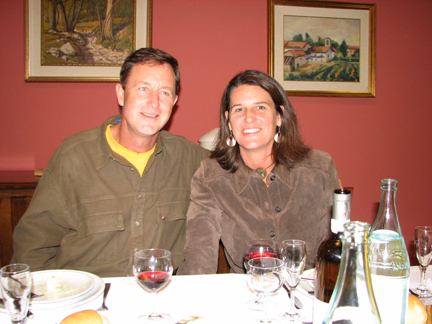
First photo from a dinner with the farmers cooperative group from
Cuneo, Piedmont last night…
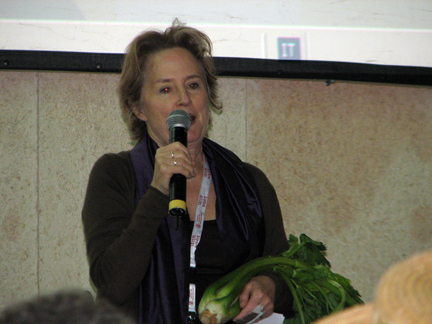
And the second photo of Alice Waters addressing the American delegates today at Terra Madre. Carlo Petrini says we’ll have a Terra Madre gathering in the US next year. All is going well.

Third photo taken at Eataly today, we’ll have to try this Treviso variety next year!
Best, Katie

Posting in a hurry this morning but just had to transmit the joy contained in a bottle of 1980 Vallana Spanna shared with me last night by my friend and colleague Rob Forman, a dude who really knows his Italian wine.
1980 was not a great vintage in Piedmont and as a matter of fact, I cannot remember tasting anything from Langa nor Novara from that year (if you have any notes on the vintage, please share!).
Slightly shaken by the trip and somewhat cloudy, this wine was no worse for the wear: it was entirely brilliant, alive and fresh, with bright acidity and delicious wild berry fruit and mud. So unbelievably good.

When time permits, I’ll post about some of the fascinating wines that Rob opened with me and a group of Austin wine professionals (the other Pomino, anyone?).
And I’ll also tell the captivating story of how he came into possession of this amazing bottle.

Click on the photo of the back label to view more closely.
That’s all for now, folks. Me? I’m keeping it between the ditches…
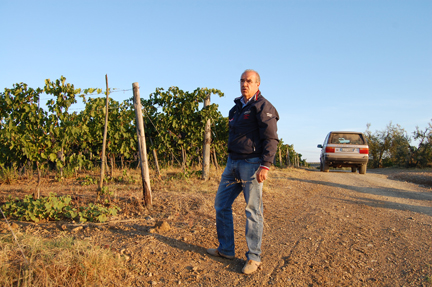
One of the most thrilling experiences of my recent sojourn in Tuscany was a sunrise ride through the vineyards of Il Poggione with the estate’s winemaker Fabrizio Bindocci (above). I’ve known Fabrizio for seven years now and I consider him a friend and a teacher. Born and bred in Montalcino, he is one of its top winemakers and one of the appellation’s greatest defenders and protectors. In recent years, he has spoken — passionately, eloquently, and very publicly — in favor of not changing Brunello appellation regulations to allow for grapes other than Sangivoese.
And I don’t think that Fabrizio would mind me calling him a toscanaccio: he has the sharp wit and the sometimes acerbic tongue for which Tuscan men have been famous since their countryman Dante’s time and beyond. I try to visit and taste with him every year and I’ve never known him to mince words.
I love the wines he bottles, for their integrity and for their purity, for what they represent and the people who make them, and for their honest and utterly delicious aromas and flavor.
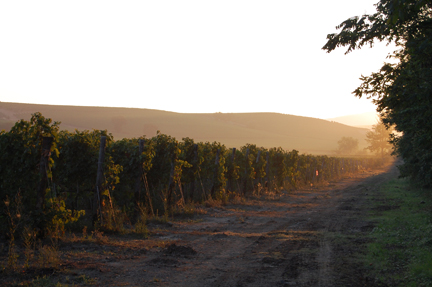
Of course, my $48K question to Fabrizio was will the modernizers of Brunello succeed in changing the appellation regulations and obtain their desired allowance of international grape varieties in the wine?
Brunello as a monovarietal wine, i.e., 100% Sangiovese, is safe, he told me. And he doesn’t fear that the new and decidedly modern-leaning regime in the Brunello producers association will attempt to change the Brunello DOCG to allow other grapes. The body, he said, is currently studying verbiage for the soon-to-be unveiled “new” appellations under the EU’s Common Market Organisation reforms. (This summer, authority to create new European wine appellations passed from the individual states to the European Commission in Brussels.)
The bottler-members of the association are evidently considering a new appellation, putatively called “Montalcino Rosso,” that would allow for more liberality in creating blends raised in Montalcino. This would seem to represent a palatable compromise — my words, not his — between traditionalists who want to preserve Brunello and Rosso di Montalcino as monovarietal wines and modernists who what to cash in on the de facto Montalcino brand (again, my words, not his).
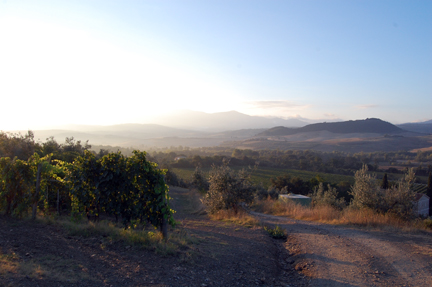
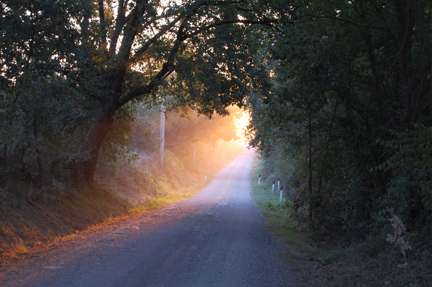
Daybreak in the vineyards of Montalcino during harvest is a sight that everyone should see before leaving this earth. There is a light that brings a transcendent clarity to the mind and the soul.
As the sun rose over this immensely beautiful place, I couldn’t help but think of Dante and the roles that light plays in his Comedìa as metaphor of knowledge and love.
I was relieved on that morning to discover that (it seems) Brunello has emerged from its selva oscura, its dark wood. (Observers of Italian wine will appreciate my paronomasia.)
Midway in the journey of our life
I came to myself in a dark wood,
for the straight way was lost.
Ah, how hard it is to tell
the nature of that wood, savage, dense and harsh
the very thought of it renews my fear!
It is so bitter death is hardly more so.
But to set forth the good I found
I will recount the other things I saw.
N.B.: Jaynes Gastropub does allow corkage, for a reasonable fee, for wines not offered on their wine list.
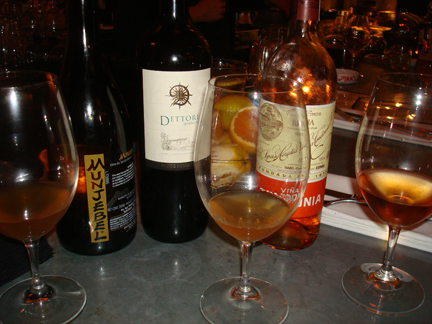
Chrissa, her husband Dan, Rikkers, and I opened a memorable flight of indisputably Natural wines last night at Jaynes Gastropub in San Diego. I write “indisputably Natural” with a capital N because any mention of Natural wine these days seems to spark the ire of some of the more cranky among us here in the enoblogsphere. But there’s no doubt in my mind that the community of wine bloggers who have laid claim to this precious and widely coveted epithet would agree that the three wines in question fulfill the criteria prescribed by even the most rigorous enforcers of Natural wine doctrine and dogma.
Perhaps nowhere has more been written about the wines of Frank Cornelissen than at Saignee and, ubi major minor cessat, I will defer to Cory’s excellent blog for a treatment of Cornelissen and the cult that has taken shape around him.
The wines, raised on the slopes of Mt. Etna, are not easy to come by in this country and I was thrilled to finally get my hands on some. Together, we tasted the 2007 Munjebel Bianco (native yeast, skin contact, no SO2, no filtration). Munjebel is dialectal toponym for Mt. Etna, btw (akin the Sicilian Muncibeddu or the Italian Mongibello, meaning monte bello or beautiful mountain).
The synthetic cork bulged out slightly from the lip of the bottle’s neck and the shoulder was very high. I believe this was due to a second fermentation in the bottle and the wine had a slight spritz to it.
I don’t have time today to go into the epistemological implications of this wine, which I find fascinating (the wine and the implications). But I can report that I thoroughly enjoyed it (bright acidity, bright citrus fruit, balanced alcohol). I believe the wine has not yet stabilized (it had rested for about a week in my wine locker in San Diego before we opened it last night). I’m looking forward to opening the other bottles in my allocation: this wine is alive, IT’S ALIVE, as Dr. Frankenstein might say.
The 2006 Bianco by Dettori? This was simply one of the best wines I’ve ever had in my life. Not a great vintage for Dettori but sure to be a 20+ in its cellar life. Tannic and rich, bright bright acidity and a crunchy mouthfeel. It took some time for this wine to open up but it was purely sublime.
We also ordered the 1998 López de Heridia Tondonia Rosado from Jayne’s list. The oxidative wine was a perfect closer after the thought-provoking, intense whites (orange wines, really), and was a fantastic pairing for my schnitzel and spaetzle (recommended by Jayne). Anyone who visits Do Bianchi regularly knows just how much Tracie P and I love LdH — anytime, anywhere.

After dinner we went to a new club on El Cajon Blvd. to see Jon’s band the Fairmounts play their blend of 60s soul.
That’s A.J. Croce (yes, Jim Croce’s son!) on keyboards… how cool is that? They completely rocked the house…
Wrapping up this quick San Diego trip (to ship and deliver wine for my wine club 2Bianchi.com), I just had to share this photo of my awesome nephews Abner and Oscar (brother Micah and sister-in-law Marguerite’s children).

Abner is holding a photo of his great-great-grandparents, mama Judy’s grandparents. It’s so remarkable to think about how far we’ve come from Russia, Poland, and Austria. And how radically the world has changed since then.
Would they have ever imagined that their progeny would be drinking unyeasted wines from the slopes of Mt. Etna on the far-flung shores of California?
Who said it never rains in so cal?

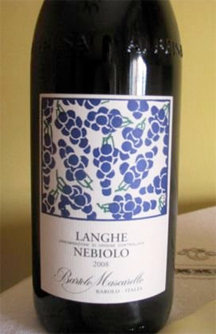 Talk about mimetic desire! You can imagine my envy when I read Mr. Franco Ziliani’s post this morning on tasting the 2008 Langhe Nebiolo [sic] by Maria Teresa Mascarello of the Bartolo Mascarello winery in Barolo.
For those of you who don’t read Italian, I’ve translated Mr. Ziliani’s tasting notes at VinoWire (here).
Maria Teresa made only 2,000 bottles of this reclassified Barolo (for a vintage, 2008, not ideal in Piedmont because of excessive rainfall).
Man, I hope someone will save a bottle to open with me!
In the meantime, read about it here…
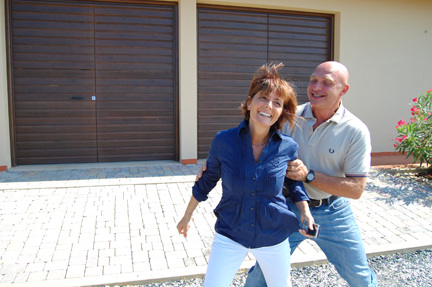
Above: Cinzia Merli, owner Le Macchiole, with her enologist, former rugby player Luca D’Attoma, September 14, 2010.
There are few winemakers I know who possess the moral fortitude and spiritual clarity of Cinzia Merli, owner of Le Macchiole (Bolgheri), whom I met for the first time a few years ago when I was asked to interpret for her at a series of wine events.
And there are few human beings on this earth who possess such genuine and pure humanity. And she’s just a lot of fun to be around.
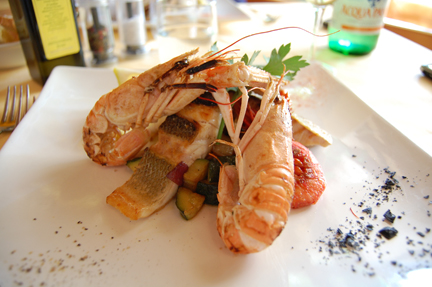
Above: Seafood in Bolgheri (in the upper Maremma) is fresh and plentiful. Cinzia and I had lunch at Nonna Isola (literally, Grandma Island) in Castiglioncello, a wonderful small seaside community, deliciously forgotten in the 1960s.
You certainly don’t need me to tell you about her famous wines, the astronomic scores they’ve garnered, and the regal prices they command. Ubi major minor cessat: Tom Hyland has written perhaps most amply on this winery and it wines. (Check out this post but also see this thread and the many tasting notes.)
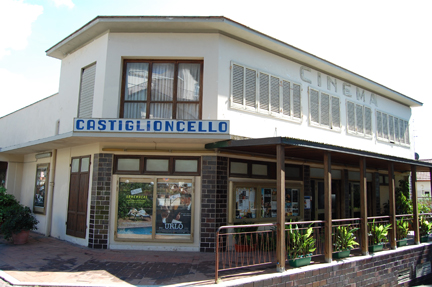
Above: I was captivated by the sight of this 60s-era cinémathèque in Castiglioncello. Just imagine all the stories that have played out on and off the screen there!
There are many before me who have told the incredible story of Cinzia’s family: how she and her dynamic husband Eugenio transformed a small family vineyard, jug wines, and a tavola fredda (cold table) restaurant/café into one of the most coveted and collected labels in the world and how he then suddenly, unexpectedly, and tragically left this world for another.
The story not often retold is how the community around her expected her to sell or to fail after the loss nearly ten years ago. In the chauvinist world of Italian wine, few imagined that she would succeed as she has, raising her brand to the highest levels of American and Asian connossieurship and collectability.
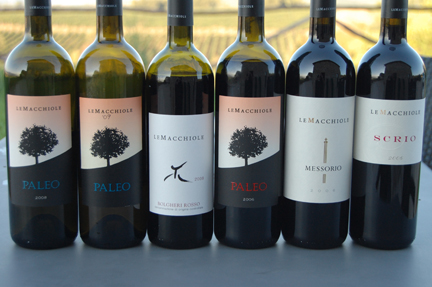
Above: Cinzia often calls her wines her “children.” I got to taste through her current vintages and I am convinced that 2006 was a great vintage for Cinzia and her family. The Paleo (100% Cabernet Franc) was stunning in this vintage. I was impressed also by the acidity and (what seemed to me a) greater amount of Cabernet Franc in the 08 Bolgheri DOC and I wonder if she’s reclassified some of her 08 Paleo (not an easy vintage in Tuscany). This wine might represent the greatest value in a world of wines that I simply cannot afford. Tuscan Syrah is not what I personally or typically reach for but I know collectors will be rewarded by the unusually bright acidity and generous fruit in her sure-to-be-show-stopping 06 Scrio.
The story rarely retold is that Cinzia has achieved indisputable greatness in the world of wine while raising two boys on her own. The loss of her husband left her not only with their wines to look after but also two preteen youngsters, who have both now grown into happy, healthy, handsome young men (the elder has decided to pursue a career in wine).
The gorgeous fall day we had lunch (following a tremendous downpour the previous evening, not a good sign for 2010), Cinzia excused herself from the table to take a phone call. “It would seem that I need to get NASA involved,” said Cinzia, complaining about how long it was taking to fix a broken water heater in her home where she lives with her boys.
If only l’acqua calda (as the Italians like to say) was as easy to obtain as James Suckling’s 100-point score for her 2004 Messorio (100% Merlot).
In other news…
On the subject of Tuscan Syrah, be sure to taste Alfonso’s recent reflections on Tuscany.
And be sure to leaf through his Prosciutto Porn (where have I heard that before?), if only for the interview.
 Do Bianchi