The “sheep poop theory”: Cesanese del Piglio and cacio e pepe

When it comes to food and wine pairing, one of my favorite motti is owed to New York restaurant legend Danny Meyer: if it grows with it, it goes with it…

It’s what I call the “sheep poop theory”: you want to pair the wine with the cheese made by the sheep that poop in the field next to the vineyard where the wine is raised. Now, that’s what I call terroir!

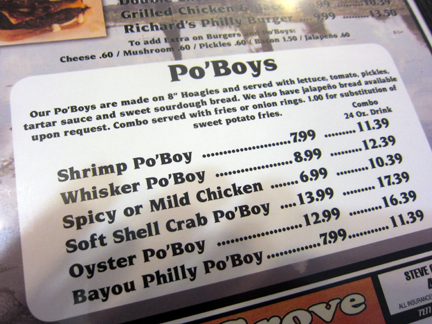
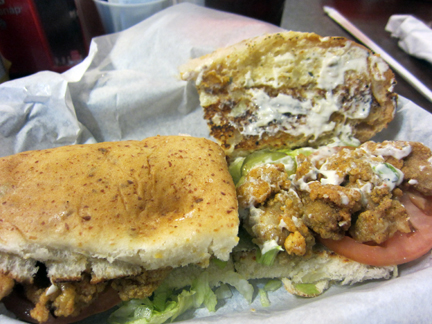
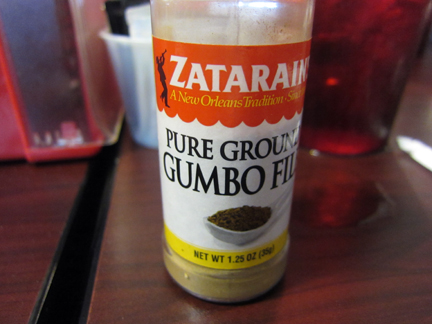
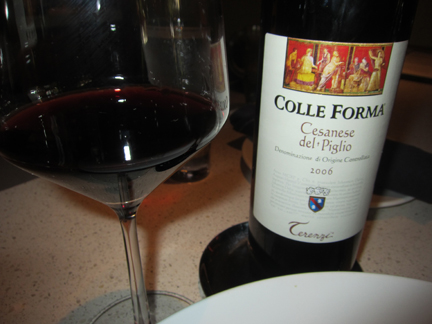
The other night, when some friends brought an excellent bottle of 2006 Terenzi Cesanese del Piglio from Latium to our favorite BYOB joint in Austin (the name of which I cannot reveal lest it cease to be our best-kept secret), we asked the chef to whip up one of the simplest and most delicious dishes in the world, classic Roman cacio e pepe, long noodles tossed with Pecorino Romano and freshly cracked pepper.

So little Cesanese makes it to the U.S. these days and sadly, none — save for that which is smuggled in — makes it to Texas.

With its classic black pepper notes, it’s as if this wine were created expressly to pair with cacio e pepe. I thought the wine showed brilliantly: red fruit on the nose and in the mouth, zinging acidity (despite its age), and pepper, pepper, pepper combined with a gently chewy mouthfeel… Delicious…

Does anyone know of a Cesanese available here? It’s such a great summer red and I drink it any chance I get!

What’s your favorite Cesanese?

Ligurian wine and pasta aglio olio peperoncino, perfect summer supper

It’s pure coincidence that we happened to open a bottle of Bisson Ü Pastine last night with some penne aglio, olio, e peperoncino for a light supper — one of the most simple things and one of my most favorite dishes to prepare. This afternoon, Facebook friend Evan R sent me a link to Alan Tardi’s article on the Bisson winery, its owner Piero Lugano and his underwater-aged sparkling wines, which appeared today in The New York Times. (The article is great, btw.)

I always crave wines from Liguria during the summer. From the light-colored, nearly rosé Rossese to bright Pigato and Vermentino, the wines tend to be light and low in alcohol, fresh and spicey- and fish-friendly.

Frankly, before last night, I’d never had a wine made from 100% Bianchetta grapes from Liguria. In fact, Bianchetta is more famously grown in the Veneto and South Tyrol, where it is used to make an easy-drinking, food-friendly light white wine.

The Bisson was delicious, more unctuous than any other Bianchetta I’ve ever had, very salty and with nice white stone fruit. I was worried that the 2009 would be a little tired but it wasn’t. The acidity was kicking and happy (like little Baby P inside Mamma P’s belly!) and I saved a glass to taste tonight at dinner.

Of course, my philological curiosity got the better of me this morning, and so I did a little research on the name of this wine, ü pastine.

Regrettably, the importer’s website reports that the name is “local dialect indicating a very special product.”

And equally lamentable, a major U.S. retailer reports “‘U Pastine’ in the Ligurian dialect means, essentially ‘a gift that is specially crafted by someone for someone in particular in order to be an extra special present.'”

With all due respect, where do these people get this information? Beats me.

In fact, ü pastine is a Ligurian dialectal term that denotes the [a] field reserved for grape-growing. Used also in Tuscany and even as far south as Latium, pastine or pastene comes from the Latin pastinum, denoting a kind of two-pronged dibble, for preparing the ground and for setting plants with. In Ligurian dialect, pastinare means to till. In other words, ü pastine denotes the parcel of land chosen for grape growing because of its ideal conditions for raising wine.

I’m glad that we cleared this up!

And I plan to add pastene and pastine to my Italian winery and vineyard designation project, which I will revisit this fall.

Alfonso is coming over for dinner tonight and I’m not sure what we’re opening to pair with Tracie P’s pasta con i porri e la pancetta but I’m sure it will be good! Stay tuned… and thanks for reading!

Nuns and wine (Coenobium) and a report from Montalcino

Above: “Decameron” by Waterhouse (1916). The countryside outside the city of Fiesole served as diegetic backdrop in Boccaccio’s Decameron. Fiesole lies in the hills above Florence.

If you’ve visited my blog before, you probably have already tasted Coenobium, a wine raised by Cistercian sisters in the Province of Viterbo and vinified by natural winemaker and co-founder of Vini Veri, one of Italy’s leading natural wine movements, Giampiero Bea. Most Italophile wine lovers have heard the tale of this wine many times before.

But when I posted about it today over at the Houston Press food and wine blog, I couldn’t resist making an allusion to Boccaccio’s Decameron, Third Day, Novella 1, “Masetto da Lamporecchio [who] feigns to be dumb, and obtains a gardener’s place at a convent of women, who with one accord make haste to lie with him.”

The funny, sexy tale is one of those depicted by Pasolini in his 1971 filmic version of the Decameron (which we watched the other night) and I’m always looking for excuses to talk about literature when writing about wine.

    Fairest ladies, not a few there are both of men and of women, who are so foolish as blindly to believe that, so soon as a young woman has been veiled in white and cowled in black, she ceases to be a woman, and is no more subject to the cravings proper to her sex, than if, in assuming the garb and profession of a nun, she had put on the nature of a stone: and if, perchance, they hear of aught that is counter to this their faith, they are no less vehement in their censure than if some most heinous and unnatural crime had been committed; neither bethinking them of themselves, whom unrestricted liberty avails not to satisfy, nor making due allowance for the prepotent forces of idleness and solitude. And likewise not a few there are that blindly believe that, what with the hoe and the spade and coarse fare and hardship, the carnal propensities are utterly eradicated from the tillers of the soil, and therewith all nimbleness of wit and understanding. But how gross is the error of such as so suppose, I, on whom the queen has laid her commands, am minded, without deviating from the theme prescribed by her, to make manifest to you by a little story…

Here’s the link to my post.

And here’s the link to the tale. Buona lettura!

In other news…

Above: My friends have begun harvesting their Pinot Grigio in Montalcino. As you can see in the image, Pinot Grigio is not a white grape.

I’ve been following my friends father and son Fabrizio and Alessandro Bindocci’s posts on the vegetative cycle and harvest 2011 over at their blog Montalcino Report.

They’ve been doing an amazing job of documenting the 2011 vintage and to my knowledge, they are the only Italian winemakers who have attempted a project like this.

Today they posted the above photo of Pinot Grigio grapes and reported “Heat Spikes But Grapes Are Healthy and Correctly Ripened.”

It takes a lot of courage to be so honest about the vintage but it also gives Italian wine enthusiasts an entirely new perspective into the vegetative cycle. It will be fascinating to taste the wines when they are released and compare our tasting notes with their documentation of the vintage.

Chapeau bas, gentlemen!

Blogger malfeasance: a unique solution?

Above: The cinnamon roll this morning at a favorite Sunday morning Austin breakfast joint, the Kerbey Lane Cafe.

One of the more appalling bits of information to emerge from the Alfonso and Jeremy wine bloggers seminar at the Texas Sommelier Conference last Saturday was the fact that food bloggers often try to extort money from restaurants and other gastronomic destinations.

According a publicist from the Dallas/Ft. Worth offices of Whole Foods Market and a publicist from Annies Cafe in Austin (who both attended the seminar), there have been numerous instances when bloggers have demanded that they be paid to attend marketing events and/or to review the venues.

Above: The cheese omelette with ham and ranchero sauce at Kerbey’s.

The problem is so widespread and nasty that in Austin a group of food bloggers have created the Austin Food Blogger Alliance (see its code of ethics, including an entry on “negativity”).

Evidently, they ask restaurateurs not to deal with local food bloggers who have not become members of the alliance.

    Any member of the alliance or of the community may contact the membership chair or President to register a violation of the Code of Ethics. The membership committee will investigate the claim and recommend to the board if action should be taken. Members will receive two warnings from the board before revocation of their membership can be considered.

Above: Tracie P says this ham was better than most. Serve with maple syrup.

Also, in a dialectic with my follow-up post to the seminar, Should wine bloggers write about wines they don’t like? (And Tracie P is looking great!), there were a couple of fascinating posts and threads by two different European bloggers.

In Britain, Juel Mahoney of Wine Woman & Song writes about “How to be a blogger as a journalist.”

And Wojciech Bońkowski of the Polish Wine Guide writes about “The $ issue.”

I recommend both posts and threads to you.

I’m not sure I know all the answers and am still working through these issues on my blog.

But I do know one thing for sure: we wine bloggers are here to stay!

Thanks for reading and buona domenica yall…

A Montecucco I LOVED and a Peruvian wine that made me gag

Anyone who has traveled the road that leads from Sant’Angelo in Colle (Montalcino) to Bolgheri (at the top of the Maremma) has passed through the little-known yet increasingly popular appellation of Montecucco, where wines are raised in the townships of Cinigiano (where the village of Monte Cucco is located; n.b. the town is written as Monte Cucco while the appellation is Montecucco), Civitella Paganico, Campagnatico, Castel del Piano, Roccalbegna, Arcidosso, and Seggiano.

Because of its proximity to Montalcino, a lot of marketers and sales people have been touting its kinship to Brunello di Montalcino, where elevation is key in producing long-lived Sangiovese. In fact, Montecucco is mostly low-lying plains where often delicious however plump and sometimes flabby Sangiovese is grown. I’ve tasted a lot of Montecucco (including a pan-appellation tasting a few years ago in the offices of the Montecucco appellation) and frankly, not many of the wines have wowed me. But that changed when I tasted the Montecucco La Querciolina 2007 by the famous Brunello producer Livio Sassetti, whose flagship wines can be excellent despite their slightly slutty, tarted-up character.

The winery’s Montecucco is 100% Sangiovese (the appellation requires a minimum of 60%) and according to the back label the clone Sangiovese Grosso della Maremma. I’ve never heard of this clone and I imagine its one of the myriad clones of Sangiovese found in Tuscany (numbering in the thousands, some developed through massal selection, some developed in nurseries).

Although its called Sangiovese Grosso or large Sangiovese, the berries of Sangiovese Grosso are actually smaller than for most clones and the resulting ratio of pulp to skin makes for darker and more tannic wines. And that was the thing that struck me about this wine: while it had the awesome zinging acidity of Sangiovese, it also had some tannin and a richness of color and mouthfeel that I’d never found in Montecucco.

This wine is friggin’ delicious on the Do Bianchi scale of deliciousness and at less than $20 a bottle, I cannot recommend it highly enough. It’s one of those wines that reminded me of the Sangiovese that old man Augusto Marcucci used to grow and vinify at his house in nearby Bagno Vignoni where I used to spend summers in my university days. Just pure, honest, lip-smackingly delicious Sangiovese… Where’s the deep-fried wild boar liver, people???!!!

In other news…

From the department of “critical thinking” here at Do Bianchi…

As I continue to contribute to the Houston Press food and wine blog Eating Our Words, I have been expanding my tasting habits to include New World wines that cost less than $25 (for the record, I buy nearly all the wine that I review for the “Wine of the Week” and nearly all of the wine I review in general; I rarely accept samples but I do taste all of the unsolicited samples that somehow make it to our doorstep).

And as much as I respect the friend and top wine professional who sold me the above Peruvian Petit Verdot he sold me, a wine called Quantum by the Tacama winery, I continue to be nonplussed by wineries who make concentrated, oaky, highly alcohol wines especially for the American market.

According to the winery’s website, “Tacama uses both [sic] French technology and receives advice from French experts.” My question to them is: have the French tasted your wine?

This wine was so overwhelmed with spicy (American?) oak that it literally stung my tongue. And in the mouth, not only did it taste like jam that had been left out on the counter top exposed to air for a week, but it was so viscous that it felt like jamn in my mouth.

My recommended pairing? Well-done porterhouse drizzled with stale truffled-oil (my second-most-dreaded food product after jammy, oaky, spoofed wine).

Hey, it’s a tough job, but somebody’s got to do it.

Thanks for reading and buon weekend yall!

Harvest on Santorini!

Posting in a hurry today but just had to share the above photo of Aidani grapes sent to me by winemaker Ioanna Vamvakouri of the Boutari winery on Santorini.

A gun blogger for hire, I continue to curate the Boutari blog (a project dear to my heart) and I am thrilled to post the first images of harvest on the island. (And I posted another one over on the Boutari blog.)

In September, I’ll be expanding the Greek Grape and Appellation Name Pronunciation Project and I’ll also be posting more images and stories from my June trip to Greece.

Stay tuned and thanks for reading!

Wine blogging: a balance of negative and positive reviews

There’s been a lot of lively conversation in the thread that followed yesterday’s post asking whether or not bloggers should write about wines they don’t like.

From an Italian winemaker to a wine buyer in a high-end Southern California store, from a Polish and an Italian wine blogger, to a wine blogger in Tennessee, there isn’t a whole lot of consensus but there are some interesting view points gathered in one place.

I agree with my blogging colleagues that we need to embrace critical thinking and while I won’t start posting negative reviews, I will continue to write about trends and styles of winemaking that counter what I believe good wine to be.

It’s worth noting that some of the greatest wine critics avoid negative reviews. Just look at Eric the Red’s tasting and review of a handful of bottlings of Barbera yesterday in The New York Times. He only includes the wines that he and the other panelists liked.

Or take for example, Antonio Galloni: he only publishes reviews for wines that achieve at minimum a threshold on the Parker point scale (I believe it is 80 but am not sure).

Antonio and Eric are both super nice guys, btw.

I also wanted to share a comment that I received via email from my friend Leslie Brenner who is the incognita restaurant reviewer for the Dallas Morning News.

She took (friendly) issue with my proposition that blogging is proudly subjective while journalism is ostensibly objective (by which I intended that blogging is written from the first person while journalism is third person).

“There is, in fact,” wrote Leslie, “a whole category of journalism called opinion journalism, and criticism — which is by definition subjective.” And she’s right: institutional food and wine writing tends to be told using the first person. It’s one of the reasons that food and wine lend themselves so readily to blogging. After all, the magic of a great wine blog or a great newspaper (institutional) wine review happens when we feel like we’re tasting what the reviewer is tasting.

Man, I can almost taste that 2008 Barbera d’Alba San Lorenzo now! At $45 a bottle, I just can’t afford it…

Thanks for reading and commenting, everyone.