She’s been sitting up for a few days now…
We’re going to start feeding her solid foods this evening… just a test run, probably with avocado…
And it’s nearly time to start baby proofing our house!
We love her sooooo much…
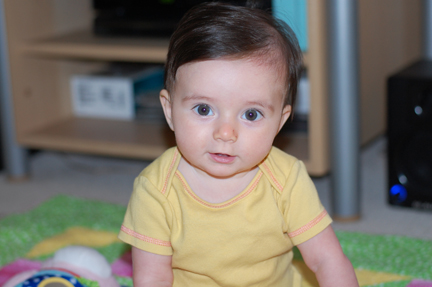


She’s been sitting up for a few days now…
We’re going to start feeding her solid foods this evening… just a test run, probably with avocado…
And it’s nearly time to start baby proofing our house!
We love her sooooo much…
From the department of “I read the news today o boy”…
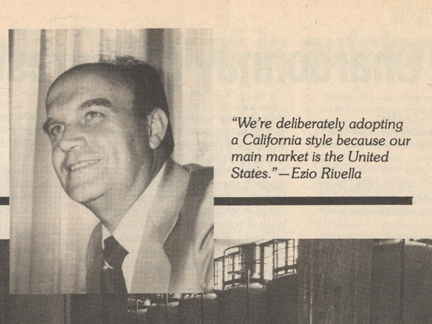
Above: Rivella in a 1982 profile by Wine Spectator.
Not a bad PR move, eh? Announce your long-awaited resignation on a Friday at the beginning of summer.
On Friday, the controversial and much loathed toad of Montalcino, Ezio Rivella, resigned from his position as president of the Brunello producers association. The news was announced by WineNews.it, in its weekly PDF (the fact that it still sends out PDFs is indicative of the great minds behind this pseudo-journal, an advertorial affair produced by a PR machine that serves as Montalcino’s in-house media outlet).
According to the press release — and yes, let’s call it what it is and stop pretending that WineNews.it represents any form of serious, self-respecting editorial coverage — Rivella resigned solely because of personal reasons pertaining to family.
In the end, Rivella did not succeed in gerrymandering changes in Brunello appellation regulations. At every step, he campaigned tirelessly in his quest to allow international grape varieties. And at every turn, even when he called votes at the peak of harvest when he knew the hardship it would cause for producers, the popular voice of Brunello growers managed to drown his.
In reading the news, I couldn’t help but think of Rivella’s Dantean contrapasso: I can see him cast in the fourth circle (greed), forced to drink endless amounts of chemical tannin and tartaric acid.
But in the end, it wasn’t the Commedia that came to mind but rather another cycle of Italian poems written in terza rima, Petrarch’s Trionfi (Triumphs). In it, Petrarch envisions triumphal processions of the forces that inform and ultimately vanquish the human condition: Love, Chastity, Death, Fame, Time, Eternity.
From what I’ve been told by industry insiders, Rivella sought to lay claim to Brunello’s throne (the regal metaphor is his not mine) in an attempt to refashion a legacy that was sullied when Banfi dismissed him (against his wishes) in 1999 after a career that spanned more than three decades. Rivella may have curated Brunello’s meteoric rise in fame but the spoils of the battle were denied him. And in a last flourish, he had hoped to beat time by once again redefining (literally) what Brunello was and could be.
But fame and time were greater forces than he.
Historically (as we have seen in recent weeks here), winemaking in Brunello has always been shaped by big business interests. And it will continue to be so (now more than ever, sadly).
Over the last two decades, those interests have moved farther and farther away from the ideals that informed Brunello’s pioneers (massal selection of a Sangiovese clone, excellent growing sites, and easy railway access). Instead, they have shifted their approach to appeal to globalized tastes and they have over-cropped their farms to deliver the quantities demanded by a globalized market.
We can only hope that Brunello’s new captain will guide its ship back to Tuscan shores and hear the ancient cadence of Tuscany’s great poets.
In other (sadder) news…
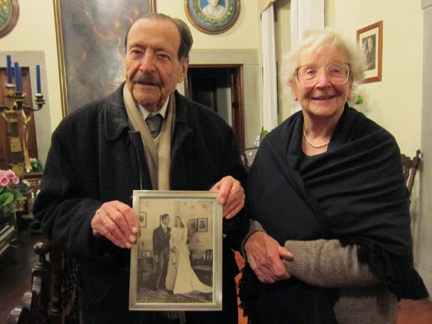
In an uncanny twist of fate, Rivella’s retirement eclipsed the sad news that Count Bonacossi, historic producer of Carmignano (above with his wife Lisa), transpired on May 24, 2012. Bonacossi’s farm produced superb Cabernet Sauvignon long before Tenuta San Guido ever released its Sassicaia. He and his wines were Super Tuscans ante litteram. A press release, issued by the winery, follows…
There’s no two ways about it: New York is simply the greatest “wine” destination in our country. On any given night, whether its old Nebbiolo or funky skin-contact Natural wines you crave, Ask, and it shall be given you; seek, and ye shall find; knock, and it shall be opened unto you.
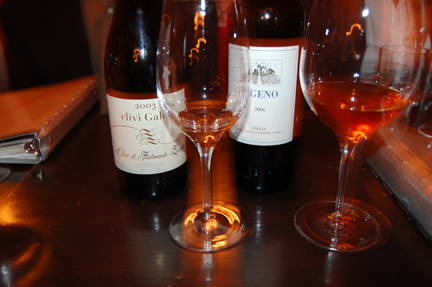
Last night I connected with good friends at Terroir in Tribeca where I got to taste two of my all-time favorite wines, the Galea (2003!) by I Clivi (Colli Orientali del Friuli) and Ageno by La Stoppa (Piacenza), one of those life-changers.
And there were so many other cool wines, at reasonable prices, that would have quenched my thirst for wine that could speak to me in lyrical tones.
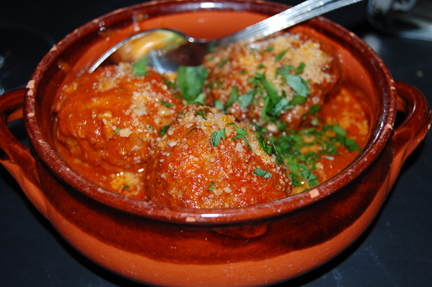
Marco Canora’s meatballs are as good as when I first tasted them at the original location on East 12th in 2008.
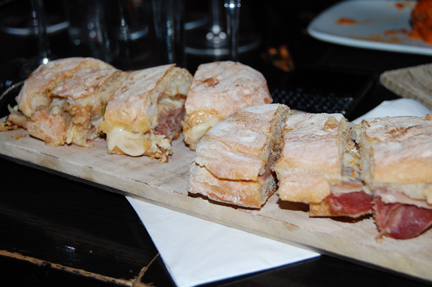
Speck and fontina sandwich rocked.

And a special thanks to sommelier Will Piper, who was always one step ahead of our table, offering just the right wine in perfect synch with the rhythm of our evening. The dude really knows his stuff and he was right on at every turn… loved it…
In other news…
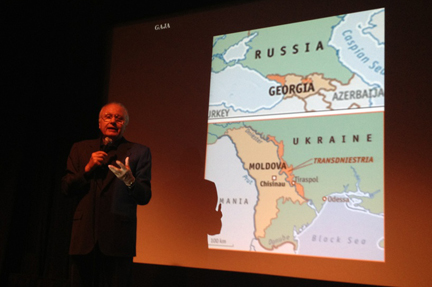
Why is Angelo Gaja lecturing on Russia? Stay tuned to find out…
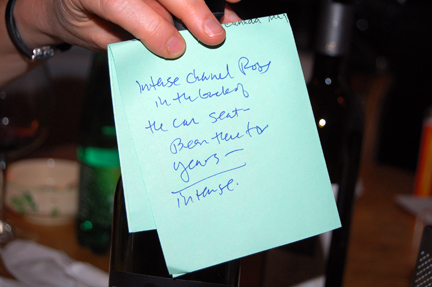
Bringing a wine to the home of Alice Feiring is like bringing owls to Athens or coal to Newcastle.
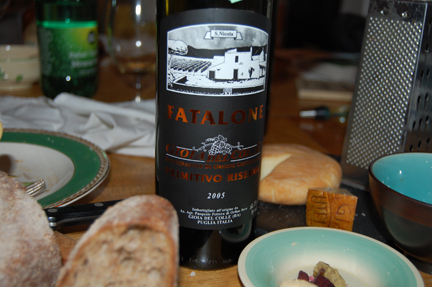
But when I spied a bottle of 2005 Fatalone Primitivo Riserva yesterday afternoon at Astor Wines, I just couldn’t resist… and I lived to tell my tale!
Ever since I tasted the wines of Pasquale Petrera, I grab them wherever I can (they’re not available in Texas, sadly, but we offer three of his labels on our list at Sotto, where they are among the staff’s favorites).
Hanging in Alice’s kitchen is one of the things I miss most about living in NYC…
And, of course, who can pass up a chance to use New York City’s most famous toilet?
Stay tuned for more New York stories…
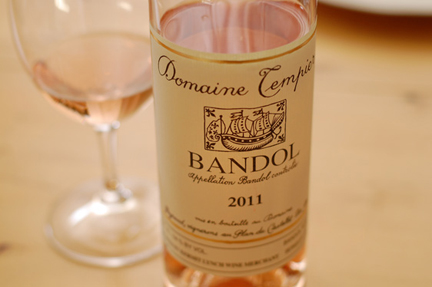
Alfonso came for dinner last night and to visit with Georgia P.
He generously brought a bottle of the 2011 Domaine Tempier Bandol Rosé, our first taste of the new vintage, still very tight honestly…
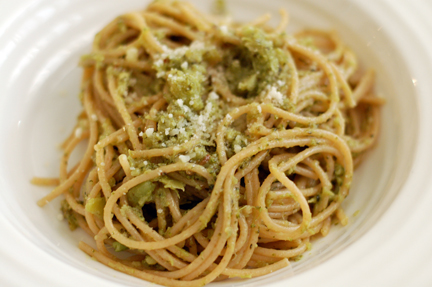
But as it opened up, it paired nicely with Tracie P’s whole wheat spaghetti tossed with broccoli and Parmigiano Reggiano.
Posting in a hurry this morning from the Austin airport on my way to New York for meetings and to hear Angelo Gaja speak at the 92Y downtown tomorrow night. See you on the other side!

If you follow along here, Lou Amdur (above) needs no introduction. He’s one of the most beloved and respected professionals working in the wine world today. After closing Lou, his now legendary Natural wine bar in Los Angeles, he’s been taking time off to travel and do research before opening Lou 2.0. He’s currently visiting Sicily, including many of the wineries featured on our all-Southern Italian wine list at Sotto.
On June 21 (details below), he’ll be joining wine captain Rory and me for a guided tasting of Natural Southern Italian wines.
Seating is limited but it should be a super fun event…
Sicily, Italy’s Wild Frontier
a tasting with Lou Amdur
(formerly of Lou on Vine)
Sotto Wine Director Jeremy Parzen
& Sotto Wine Captain Rory Harrington
Thursday, June 21
7 p.m.
$40 per person (plus tax and gratuity)
limited availability
To reserve, please email General Manager Nastassia Johnson: Nastassia@SottoRestaurant.com
Please note that tickets are transferable but non-refundable.
Join Natural wine trailblazer Lou Amdur (formerly of Lou on Vine), Italian wine expert and Sotto wine director Jeremy Parzen, Ph.D., and Los Angeles restaurant veteran and Sotto wine captain Rory Harrington as they taste a flight of Natural wines from Sicily — including COS, Occhipinti, and Cornelissen — and discuss Lou’s recent trip to the island.
Lou Admur is one of the most beloved and celebrated figures on the Los Angeles wine scene today. He literally changed the way Angelenos understood wine when he opened the city’s first and only Natural wine bar six years ago. After closing the doors of his restaurant earlier this year, he has devoted his time to research and travel and will have recently returned from Sicily where he plans to visit Vittoria and Etna.
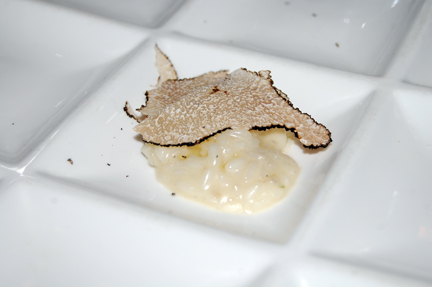
Above: Dinner in the wine library at Tony’s last night began with a simple risotto alla parmigiana topped with a few black truffle shavings.
The Levys gathered last night in Houston to celebrate Joanne and Marty’s fortieth wedding anniversary.
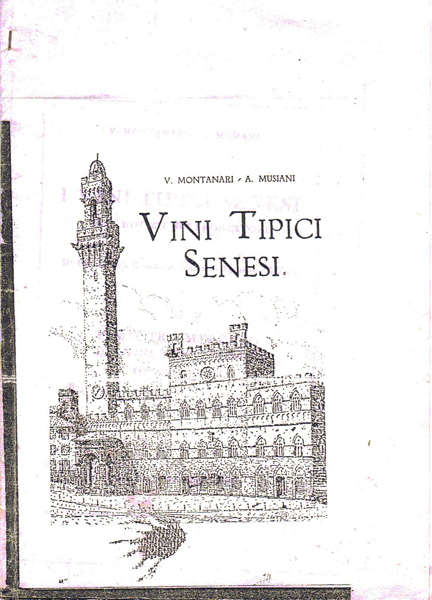
Alfonso weighed in yesterday with another earth-scorching post devoted to wines made “Under the Tuscan Scum” (and I highly recommend it to you, especially if you’re a sommelier working with Italian wine).
But the post I can’t stop thinking about this morning is another fantastic document culled from the archives of Il Poggione’s library. In this case, the entry for the “Cooperative Cellars of Biondi-Santi & Co.” in the 1933 handbook of wines from the province of Siena, published by the department of the agriculture at the university of Siena (frontispiece, above).
Many will be surprised to learn that the early modern incarnation of the Biondi Santi winery was as a cooperative cellar. But the document is rich with clues from and traces of another era in Italian and Tuscan winemaking that help us to understand better the origins of Italy’s wine industry today. I’ve taken the liberty of reproducing Alessandro Bindocci’s translation here so that I can comment each paragraph. You’ll find the original text in Italian on Ale’s blog.
*****
The cooperative winery Biondi Santi & Co. was established in Montalcino in 1926 thanks to the praiseworthy efforts of a group of [land] owners who were wine producers. They understood the necessity and importance of promoting two of Tuscany’s classic wines: Brunello and Moscadello from Montalcino.
Today, few remember that Moscadello was nearly as important as Brunello in those early years. When the Mariani family (Banfi) went to Montalcino in the 90s, it’s great hope was to produce sparkling wines from Moscadello that could rival Moscato d’Asti (that’s why they brought down Ezio Rivella from Asti).
1926 is the same year that Luigi Pirandello published one of his most popular novels (Uno, nessuno e centomila). He would win the Nobel prize for literature in 1934, the year after the wines of Siena handbook was published (can you name any contemporary Italian writer today?)
The farming companies who lead the cooperative winery are the following: Biondi-Santi, Cocchi Brothers, Padelletti, and Tamanti. Together, these farms have 1,200 hectares [planted to vine].
I was able to find this information about the Padelletti family, one of Montalcino’s oldest clans. And I discovered this document on the Tamanti legacy. As per my previous post on Brunello, the founding fathers of Brunello weren’t farmers who had raised wine for generations. They were rich land owners who saw business opportunity in the production of fine wine. I wasn’t able to find anything on Cocchi (in the short time I could devote to this).
Thanks to the topographic position and the geological nature of its soils, the hill of Montalcino produces grapes with exquisite flavor from which delicious wines are made — wines that have been known as such for centuries. The cooperative winery is located in Montalcino, 40 kilometers from Siena. The nearly railway station is in Torrenieri (on the Siena-Grosseto line), 9 kilometers from Siena.
In 1933, eleven years into Mussolini’s rule, the notion of italianità was in vogue in Italy: national pride in Italy’s natural, industrial, and commercial resources.
Today, many cite 1888 as the year that Brunello was “invented” and bottled as such. But this document reveals that it was famous even before Biondi Santi’s 1888 bottling. Today, Torrenieri is covered with vineyards planted to Sangiovese. In 1933, it was a railroad stop: shipping posed great challenges for wineries in that era (can you imagine a wine guide noting the location of the nearest port or railway station today?).
The cooperative winery produces more than 1,000 quintals of wine annually and it places its coveted products easily and lucratively in Italy and abroad.
The winery is endowed with highly modern equipment and well suited facilities. The technical director of the winery is Dr. Tancredi Biondi-Santi.
Perhaps the most interesting thing here is how Biondi Santi provided a new working model for Montalcino (and Tuscany in general): modern equipment, easy access to a supply chain, and a cooperative system that allowed grape growers to combine their resources.
Think how different things would be had Mussolini not come to power in Italy. Of course, Germany would have devastated Italy regardless. But, either way, the renaissance in wine described here wouldn’t have been interrupted by the conflict that followed the rise of fascism.
Ale, thank you for this fantastic document and wonderful post!
you’re everything I hoped for
you’re everything I need
you are so beautiful to me…
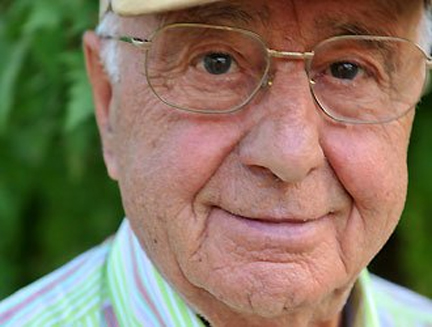
Above: One of Barolo’s most beloved winemakers and last defenders of its historic identity Aldo Conterno has died at 81 (photo via La Stampa).
Myriad English-language tributes to the great Barolista Aldo Conterno have appeared in the enoblogosphere between yesterday and today since news of his passing first broke: Walter Speller, Monica Larner, and — one of the most touching — by S. Irene Virbila.
Franco Ziliani reminds us (in Italian) that together with great winemakers like Giovanni Conterno (Aldo’s borther), Bartolo Mascarello, Teobaldo Cappellano, Beppe Rinaldi, and Mauro Mascarello, Aldo was a “steadfast defender in a battle for the respect of Barolo’s personality in the heady years when some were trying to make the wine become something different.”
And La Stampa wine writer Sergio Miravalle remembers fondly that “for decades, he signed some of the most stunning wines of Italy but his fame never distanced him from the concrete, simple way of life of farmers in Langa.”
I had the great fortune of meeting him once at his home and winery in the village of Bussia (in the township of Monforte d’Alba).
The year was 2000 and I had met his son Franco Conterno earlier in the year at the presentation of the A. Conterno 1996 crus in New York and Franco had invited me to visit their cellars in Langa.
The release of the 1996 vintage from Langa was a pivotal moment in the new wave of Nebbiolo mania in the U.S. Then rising wine star Joe Bastianich, owner and founder of the retail crew at Italian Wine Merchants, had decided to throw his weight behind the vintage and the producer and the hype that 1996 would be “the vintage of the century” was thick. (Of course, even though there’s no doubt in my mind that 96 was the superior vintage, it was eclipsed by the American wine media’s love affair with 1997.)
When I was received by Aldo, we spoke in Italian only because I was accompanied by an Italian friend of mine but he greeted me in perfect English (see S. Irene Virbila’s wonderful remembrance for Aldo’s years in California and his service in the U.S. military).
I was just starting my career as a wine writer then and our meeting had a profound effect on me. I realized, for the first time, that certain women and men — persons of truly great character — make wines that will outlive them. In other words, he grew, bottled, and raised a wine — in this case the epic 1996 vintage — whose ultimate expression would occur only after his passing. My personal realization was even more powerful given that so many winemakers in Langa at that time were trying to make wines more approachable in their youth.
I’ll never forget his gentle voice, nor will I forget the taste of bittersweet Barolo Chinato at the end of the flight.
Carissime Alde, sit tibi terra alba levis…

