Picking a wine for Alice…

Bringing a wine to the home of Alice Feiring is like bringing owls to Athens or coal to Newcastle.

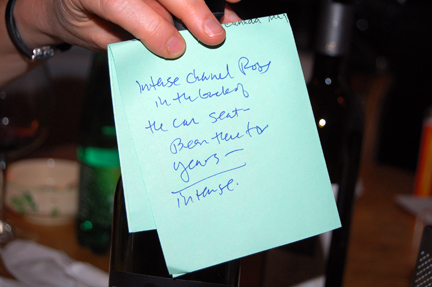
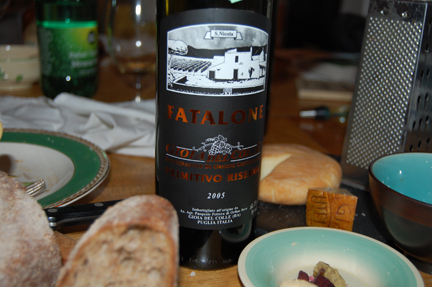
But when I spied a bottle of 2005 Fatalone Primitivo Riserva yesterday afternoon at Astor Wines, I just couldn’t resist… and I lived to tell my tale!

Ever since I tasted the wines of Pasquale Petrera, I grab them wherever I can (they’re not available in Texas, sadly, but we offer three of his labels on our list at Sotto, where they are among the staff’s favorites).

Hanging in Alice’s kitchen is one of the things I miss most about living in NYC…

And, of course, who can pass up a chance to use New York City’s most famous toilet?

Stay tuned for more New York stories…

Bandol on the run (and heading to NYC)

Alfonso came for dinner last night and to visit with Georgia P.

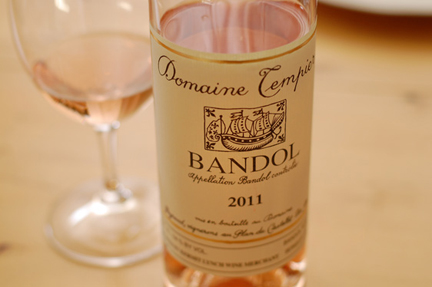
He generously brought a bottle of the 2011 Domaine Tempier Bandol Rosé, our first taste of the new vintage, still very tight honestly…

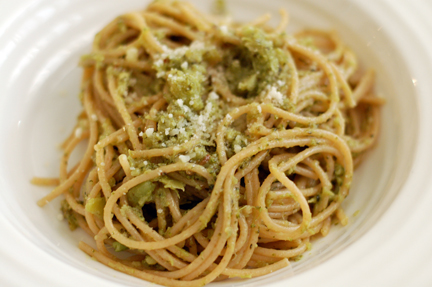
But as it opened up, it paired nicely with Tracie P’s whole wheat spaghetti tossed with broccoli and Parmigiano Reggiano.

Posting in a hurry this morning from the Austin airport on my way to New York for meetings and to hear Angelo Gaja speak at the 92Y downtown tomorrow night. See you on the other side!

Un naso straordinario (a date with Lou Amdur @SottoLA)

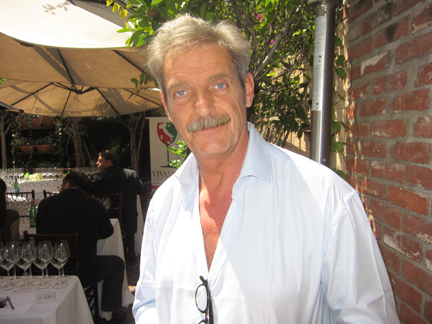
If you follow along here, Lou Amdur (above) needs no introduction. He’s one of the most beloved and respected professionals working in the wine world today. After closing Lou, his now legendary Natural wine bar in Los Angeles, he’s been taking time off to travel and do research before opening Lou 2.0. He’s currently visiting Sicily, including many of the wineries featured on our all-Southern Italian wine list at Sotto.

On June 21 (details below), he’ll be joining wine captain Rory and me for a guided tasting of Natural Southern Italian wines.

Seating is limited but it should be a super fun event…

Sicily, Italy’s Wild Frontier
a tasting with Lou Amdur
(formerly of Lou on Vine)
Sotto Wine Director Jeremy Parzen
& Sotto Wine Captain Rory Harrington
Thursday, June 21
7 p.m.
$40 per person (plus tax and gratuity)
limited availability

To reserve, please email General Manager Nastassia Johnson: Nastassia@SottoRestaurant.com

Please note that tickets are transferable but non-refundable.

Join Natural wine trailblazer Lou Amdur (formerly of Lou on Vine), Italian wine expert and Sotto wine director Jeremy Parzen, Ph.D., and Los Angeles restaurant veteran and Sotto wine captain Rory Harrington as they taste a flight of Natural wines from Sicily — including COS, Occhipinti, and Cornelissen — and discuss Lou’s recent trip to the island.

Lou Admur is one of the most beloved and celebrated figures on the Los Angeles wine scene today. He literally changed the way Angelenos understood wine when he opened the city’s first and only Natural wine bar six years ago. After closing the doors of his restaurant earlier this year, he has devoted his time to research and travel and will have recently returned from Sicily where he plans to visit Vittoria and Etna.

Happy anniversary Joanne and Marty! @TonyVallone

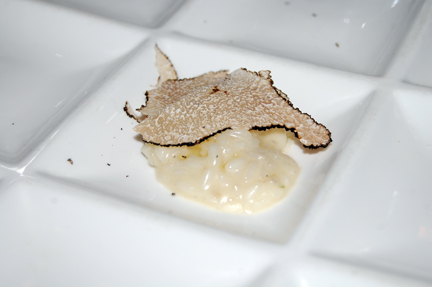
Above: Dinner in the wine library at Tony’s last night began with a simple risotto alla parmigiana topped with a few black truffle shavings.

The Levys gathered last night in Houston to celebrate Joanne and Marty’s fortieth wedding anniversary.

Continue reading

Biondi Santi a cooperative winery?

biondi santi

Alfonso weighed in yesterday with another earth-scorching post devoted to wines made “Under the Tuscan Scum” (and I highly recommend it to you, especially if you’re a sommelier working with Italian wine).

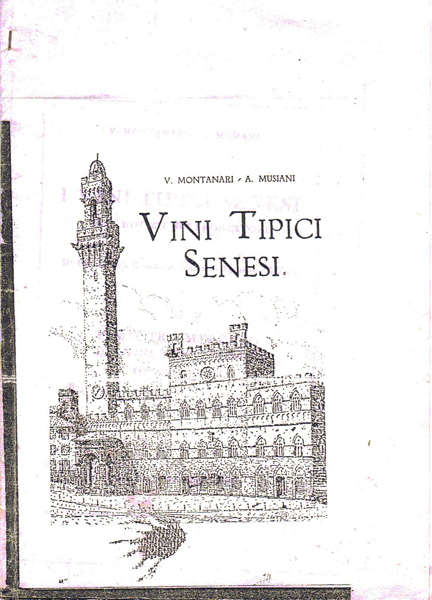
But the post I can’t stop thinking about this morning is another fantastic document culled from the archives of Il Poggione’s library. In this case, the entry for the “Cooperative Cellars of Biondi-Santi & Co.” in the 1933 handbook of wines from the province of Siena, published by the department of the agriculture at the university of Siena (frontispiece, above).

Many will be surprised to learn that the early modern incarnation of the Biondi Santi winery was as a cooperative cellar. But the document is rich with clues from and traces of another era in Italian and Tuscan winemaking that help us to understand better the origins of Italy’s wine industry today. I’ve taken the liberty of reproducing Alessandro Bindocci’s translation here so that I can comment each paragraph. You’ll find the original text in Italian on Ale’s blog.

*****

The cooperative winery Biondi Santi & Co. was established in Montalcino in 1926 thanks to the praiseworthy efforts of a group of [land] owners who were wine producers. They understood the necessity and importance of promoting two of Tuscany’s classic wines: Brunello and Moscadello from Montalcino.

Today, few remember that Moscadello was nearly as important as Brunello in those early years. When the Mariani family (Banfi) went to Montalcino in the 90s, it’s great hope was to produce sparkling wines from Moscadello that could rival Moscato d’Asti (that’s why they brought down Ezio Rivella from Asti).

1926 is the same year that Luigi Pirandello published one of his most popular novels (Uno, nessuno e centomila). He would win the Nobel prize for literature in 1934, the year after the wines of Siena handbook was published (can you name any contemporary Italian writer today?) 

The farming companies who lead the cooperative winery are the following: Biondi-Santi, Cocchi Brothers, Padelletti, and Tamanti. Together, these farms have 1,200 hectares [planted to vine].

I was able to find this information about the Padelletti family, one of Montalcino’s oldest clans. And I discovered this document on the Tamanti legacy. As per my previous post on Brunello, the founding fathers of Brunello weren’t farmers who had raised wine for generations. They were rich land owners who saw business opportunity in the production of fine wine. I wasn’t able to find anything on Cocchi (in the short time I could devote to this).

Thanks to the topographic position and the geological nature of its soils, the hill of Montalcino produces grapes with exquisite flavor from which delicious wines are made — wines that have been known as such for centuries. The cooperative winery is located in Montalcino, 40 kilometers from Siena. The nearly railway station is in Torrenieri (on the Siena-Grosseto line), 9 kilometers from Siena.

In 1933, eleven years into Mussolini’s rule, the notion of italianità was in vogue in Italy: national pride in Italy’s natural, industrial, and commercial resources.

Today, many cite 1888 as the year that Brunello was “invented” and bottled as such. But this document reveals that it was famous even before Biondi Santi’s 1888 bottling. Today, Torrenieri is covered with vineyards planted to Sangiovese. In 1933, it was a railroad stop: shipping posed great challenges for wineries in that era (can you imagine a wine guide noting the location of the nearest port or railway station today?).

The cooperative winery produces more than 1,000 quintals of wine annually and it places its coveted products easily and lucratively in Italy and abroad.

The winery is endowed with highly modern equipment and well suited facilities. The technical director of the winery is Dr. Tancredi Biondi-Santi.

Perhaps the most interesting thing here is how Biondi Santi provided a new working model for Montalcino (and Tuscany in general): modern equipment, easy access to a supply chain, and a cooperative system that allowed grape growers to combine their resources.

Think how different things would be had Mussolini not come to power in Italy. Of course, Germany would have devastated Italy regardless. But, either way, the renaissance in wine described here wouldn’t have been interrupted by the conflict that followed the rise of fascism.

Ale, thank you for this fantastic document and wonderful post!

Aldo Conterno, remembrances and my visit to Bussia

Above: One of Barolo’s most beloved winemakers and last defenders of its historic identity Aldo Conterno has died at 81 (photo via La Stampa).

Myriad English-language tributes to the great Barolista Aldo Conterno have appeared in the enoblogosphere between yesterday and today since news of his passing first broke: Walter Speller, Monica Larner, and — one of the most touching — by S. Irene Virbila.

Franco Ziliani reminds us (in Italian) that together with great winemakers like Giovanni Conterno (Aldo’s borther), Bartolo Mascarello, Teobaldo Cappellano, Beppe Rinaldi, and Mauro Mascarello, Aldo was a “steadfast defender in a battle for the respect of Barolo’s personality in the heady years when some were trying to make the wine become something different.”

And La Stampa wine writer Sergio Miravalle remembers fondly that “for decades, he signed some of the most stunning wines of Italy but his fame never distanced him from the concrete, simple way of life of farmers in Langa.”

I had the great fortune of meeting him once at his home and winery in the village of Bussia (in the township of Monforte d’Alba).

The year was 2000 and I had met his son Franco Conterno earlier in the year at the presentation of the A. Conterno 1996 crus in New York and Franco had invited me to visit their cellars in Langa.

The release of the 1996 vintage from Langa was a pivotal moment in the new wave of Nebbiolo mania in the U.S. Then rising wine star Joe Bastianich, owner and founder of the retail crew at Italian Wine Merchants, had decided to throw his weight behind the vintage and the producer and the hype that 1996 would be “the vintage of the century” was thick. (Of course, even though there’s no doubt in my mind that 96 was the superior vintage, it was eclipsed by the American wine media’s love affair with 1997.)

When I was received by Aldo, we spoke in Italian only because I was accompanied by an Italian friend of mine but he greeted me in perfect English (see S. Irene Virbila’s wonderful remembrance for Aldo’s years in California and his service in the U.S. military).

I was just starting my career as a wine writer then and our meeting had a profound effect on me. I realized, for the first time, that certain women and men — persons of truly great character — make wines that will outlive them. In other words, he grew, bottled, and raised a wine — in this case the epic 1996 vintage — whose ultimate expression would occur only after his passing. My personal realization was even more powerful given that so many winemakers in Langa at that time were trying to make wines more approachable in their youth.

I’ll never forget his gentle voice, nor will I forget the taste of bittersweet Barolo Chinato at the end of the flight.

Carissime Alde, sit tibi terra alba levis…

Brunello, for better or worse (or how I learned to love the fruit bomb)

Above: I recently asked legendary Tuscan enologist Carlo Ferrini (and historic consultant at Casanova di Neri) what he considered his great contribution to Italian wine. “I took the traditional role of the Tuscan enologist from the cellar to the vineyard,” he told me.

My brother-in-arms and close friend flying winemaker Giovanni Arcari often asks rhetorically: “How many of the winemakers in Franciacorta actually make their living — their main source of income — from growing grapes and making wine?”

I’ve been thinking about Giovanni and his bleeding heart this morning after reading Alfonso’s superb post on Brunello di Montalcino wherein the latter applies his more than three decades of experience, observation, and wisdom to the situation on the ground in the ilcinese.

Even spanning back to Brunello’s ante litteram era, we discover that even for its founding father Biondi Santi, winemaking was not the primary source of income. In fact, Ferruccio Biondi Santi — Brunello’s nineteenth-century “inventor” — was the scion of a noble family with vast land holdings and immense financial resources. His ground-breaking experimentation in massal selection redefined the appellation. But, in turn, that appellation was defined by a handful of landowners who began to produce a “fine” as opposed to “table” wine following in his footsteps.

It wasn’t until the late 1970s that wealthy northern Italians began to buy property there (and they probably wouldn’t have seen Montalcino as such a choice spot had the British not planted roots there and “manicured” the Tuscan countryside, giving it its idyllic patina that we know today; just ask anyone old enough to remember the second world war what it was like in Montalcino from 1945 through the 1960s when the British began to arrive).
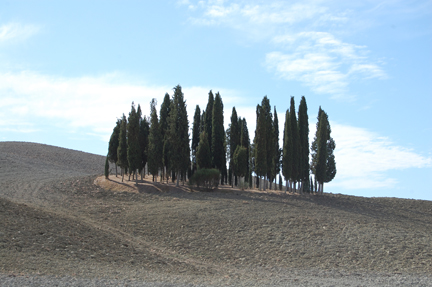
Above: Ask any ilcinese over 50 and they will tell you that it was the British who planted the cypress trees in Tuscany in the 1960s.

Today, just scan the names that define the arc of contemporary Montalcino winemaking: Soldera, an insurance magnate originally from the Veneto via Milan; Illy (Mastrojanni), a coffee mogul from Friuli; Parsons (Il Palazzone), U.S. CEO extraordinaire… and of course, Mariani (Banfi), one of the leading importers of fine wine in the U.S. who went to Montalcino in the hope of creating a sparkling wine legacy and ultimately turned Brunello di Montalcino into a super market brand.

Where there were less than 20 bottlers of Brunello in the 1960s, today there are more than 250 members of the Brunello bottlers association.

To Giacomo Neri’s credit — whether you like the style of wine or not — his family started out with humble farm that Giacomo took over when he returned from his mandatory military service. I know this because I met Giacomo for the first time in 1989 on my second visit to Montalcino, when his wines tasted a lot different from the way they do today. Since his collaboration with enologist Carlo Ferrini began in 1993, his Casanova di Neri label has become one of the most sought-after wines in the world, winning impossibly perfect scores from some of our country’s greatest wine writers (what do Nadia Comăneci, Bo Derek, Ann Colgin, and Giacomo Neri have in common? Hint: it’s not their good looks).

I recently met Carlo Ferrini for the first time in Los Angeles, where he and I spoke on a panel together. I asked him what he felt, over the arc of his career, was his greatest contribution to winemaking in Tuscany.

“Before I began working as a consulting enologist,” he said, “enologists were traditionally tasters.”

“Like Gambelli?” I asked.

“Yes,” he answered. “I was among the first to convince growers to replant their vineyards and to adopt more contemporary farming practices.”

And on the subject of Brunellogate?

“I’ve never believed that Merlot or any other grape should be added to Brunello,” he told me. “In Chianti, I’ve followed a Bordeaux model, using different grapes, grown in different sites, to create blends in line with modern tastes. In Montalcino, the wines have always been 100% Sangiovese. It’s my work in the vineyard that has made the difference. Not in the cellar.”

Whatever Ferrini claims and whatever we believe (and for the record, looking Ferrini in the eye, I believed him), the predominate and guiding style of Brunello has changed in Alfonso’s lifetime and my lifetime.

In the beginning, was the style of Brunello guided by a handful of wealthy families who saw big business opportunities in producing wines that could rival their French counterparts? Is it guided today by a small group of wealthy families who see financial opportunity (and tax-shelter vacation homes) in America’s thirst for wines in the global style?

The answer to these questions lies somewhere in between an alpha, an omega, and a brief window (1975-1993?) when Italy’s cultural prosperity delivered an optimism and fostered a belief that even luxury products should be the expression of the land where they were grown and the people who made them. It just so happens that that’s when Alfonso and I had our first contact with the wines.

If you following along here at Do Bianchi, you already know the Brunello that I like to drink (Il Poggione, Brunelli, Soldera are my top three, whether I can afford them or not). And there will be plenty of time to write and discuss the wines that we love at our house…

Instead, please read Alfonso’s post: The Battle for Brunello. I’m just adding my two cents here…

In other news…
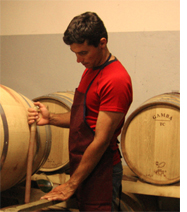
Today, Italian wine blogger Andrea Petrini, author of Percorsi di Vino, reposted this offer from Albana di Romagna producer Gabriele Succi (left): if you make a donation to one of the officially sanctioned channels for donations for Emilia-Romagna earthquake victims, you can send him a scan of the receipt via email and he will ship you the same value’s worth of his wine. He sweetens the deal by discounting each of his labels by Euro 1 ex cantina. He’s not giving a portion of proceeds to earthquake victims; he’s giving you the wine for donating.

Click here for the offer (in Italian) and links to official donation sites.

A treatise on tannins @EatingOurWords

This 1974 Produttori del Barbaresco classic Barbaresco came from the personal cellar of my friend Levi Dalton, one of the sommeliers I admire most.

Have you ever been to a wine tasting or dinner party and heard some blowhard try to befuddle and belittle an enthusiastic however neophyte wine lover by asking can you taste how smooth the tannins are in this [red] wine?

One of the most common misperceptions in the wine world is that you can taste tannin. In fact, tannins are expressed through the mouthfeel of wine. In other words, you perceive tannin through a tactile sensation.

Click here to continue reading my post today for the Houston Press and to learn my trick for teaching wine lovers how to understand what tannins are and how they affect the flavor and mouthfeel of wine…

A second earthquake devastates Emilia (remembering the Emilian Renaissance)

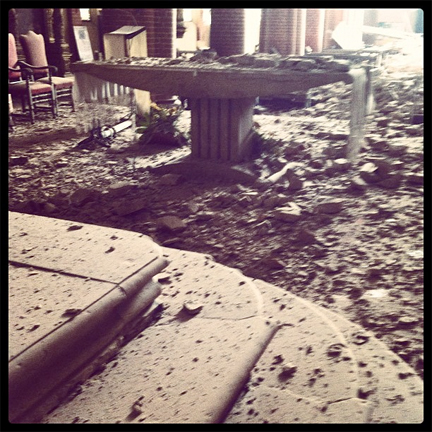
Above: The Duomo in Mirandola had withstood the earthquake of May 20 but crumbled this morning in a 5.8 magnitude earthquake. Photo by Cris Provenzano via Instagram.

According to the reports I’ve been seeing this morning in the Italian news feed, there were at least 39 tremors in the region of Emilia this morning beginning at around 9 a.m. At 11:24 a.m., a 5.8 magnitude earthquake struck in the town of Mirandola (which lies at the center of a triangle formed by Ferrara, Modena, and Mantua).

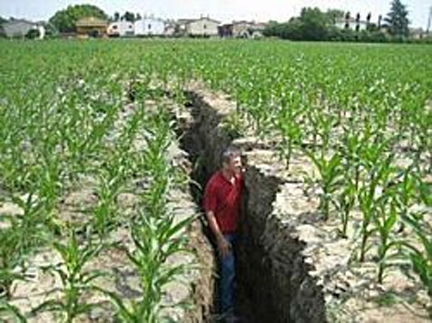
The New York Times reports that at least eight persons died this morning. Thousands of people have been left homeless and scores of factories have collapsed or been closed because of structural damage.

Photo via AGI.it.

In an uncanny twist of fate, the township of Mirandola had planned a town hall meeting this evening with earthquake experts who had hoped to calm local residents (the Mirandola township has a great website, btw, an indication of the industriousness and uprightness of the people who live there).

Of all of Italy’s regions, Emilia and its beauty are perhaps the most challenging for foreigners to understand. Emilia is a land of intellectual and sensual pleasures and partly because it is not a producer of fine wine (aside from a few exceptions like La Stoppa in the province of Piacenza), most enogastronomic travelers tend to gloss over its cultural patrimony after they’ve dined at one of the regions many culinary meccas. (My favorites are Trattoria Bianca in Modena and Ristorante Canossa in Reggio Emilia.)

Whereas the Venetian and Florentine Renaissances produced iconic works of figurative art that continue to attract tides of tourists each year, the Emilia Renaissance delivered the great epic poems of the sixteenth century (think Ariosto and Tasso), wildly popular intellectual hits of their day but sadly forgotten in comparative literature curricula today in Anglophone countries.

To contemplate [historic] Humanism without one of its greatest voices, Giovanni Pico della Mirandola (whose family hailed from the town where the epicenter of today’s earthquake occurred) would be to disregard one of the greatest chapters in humankind’s intellectual development.

Our thoughts and prayers go out to the people of Emilia…