
 Today Barolo mourns the loss of one of its greatest grape growers and winemakers, Domenico Clerico, 67, who died yesterday in his home in Monforte d’Alba. According to reports published in mainstream Italian media, the cause was cancer.
Clerico was among the pioneers who reshaped the Barolo landscape when, in the 1980s, he began aging his wines in barriques — new wood, small French oak casks as opposed to the traditional large-format botti made with Slavonian oak.
Not only did his wines appeal to a newly emerged generation of monied American wine enthusiasts, but they also set a new standard for high-quality collectible wines from Italy. At the peak of his “modernist” period in the 1990s, his widely coveted labels fetched previously unprecedented sums for Italian wines at New York’s top Italian restaurants and retailers.
Although most American collectors will remember him as a visionary of the new wave of Barolo producers, he was also one of the first grape growers there to embrace organic growing practices. Even at the height of his popularity among top America wine buyers and critics, he always pointed to his obsessive approach to grape farming — not his winemaking style — as the secret behind his wines’ extraordinary aromatic character and nuanced flavors.
Many among the current generation of Piedmont winemakers and vignerons looked to him as role model and inspiration for their own work in the vineyard.
“A master and a great man,” posted Barbera d’Asti winemaker Gianluca Morino on his Facebook yesterday (translation mine).
“Thank you for everything, Domenico. We grew up with your Arte,” wrote Morino, referring to Clerico’s groundbreaking blend of barrique-aged Nebbiolo and Barbera “Arte” (art), first released in the 1980s and considered to be one of the first “Super-Piedmont” wines.
No matter where he will be remembered in the modernist vs. traditionalist spectrum, there is no doubt that Clerico produced some of the world’s greatest and most memorable wines over the last three decades.
In a quote reposted on Clerico’s American importer’s web site, leading Italian wine critic and authority Antonio Galloni wrote that “few producers’ wines have given me as much pleasure over the years as those of Domenico Clerico.”
My wife Tracie P and I had the great fortune to dine with Domenico last July in Piedmont. Over the course of our meal, he spoke openly about his decision to abandon small-cask aging and to return to the traditional botti instead. As we tasted some of his top single-vineyard designated wines from the 2000s, he insisted however that their greatness — and man, they were great! — was owed to the quality of the fruit rather than the modernist approach of the winemaker.
A man known for his colorful character and trailblazing work in setting new benchmarks for Italian wine, it was clear to both me and Tracie that it was substance, not style, that had defined the career and life of one of the world’s greatest winemakers.
Sit tibi terra levis Dominice.
 After nearly 50 years on this planet, I’m allowed to take a little vacation, right?
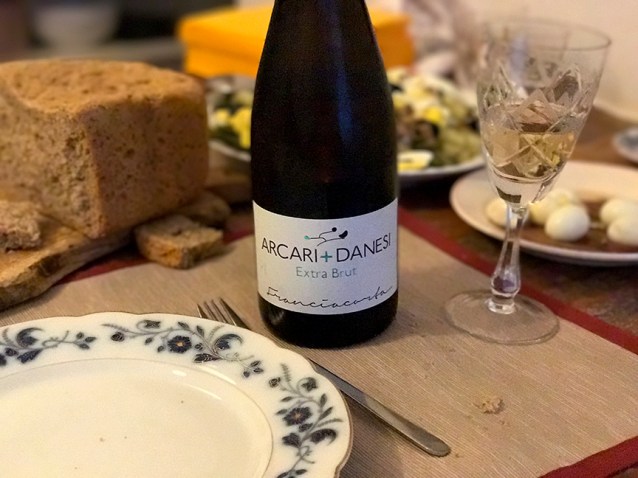 Just had to share a tasting note for this wine by my bromance Giovanni Arcari and his partner, another one of my best friends in Italy, Nico Danesi.
 Giovanni generously hooked me up with a bottle of their 2011 Franciacorta Extra Brut for me to take to dinner on my last night in Italy. I was heading to Milan to meet one of my best friends from my University of Padua days, Stefano Spigariol, who’s also celebrating a milestone birthday this weekend. Our mutual friend Gavino Falchi,
  Giovanni and Nico have shared so many memorable bottles of their wine with me and my friends. But this was one of the most remarkable in terms of its glowing, brilliant fruit character. What a wine!
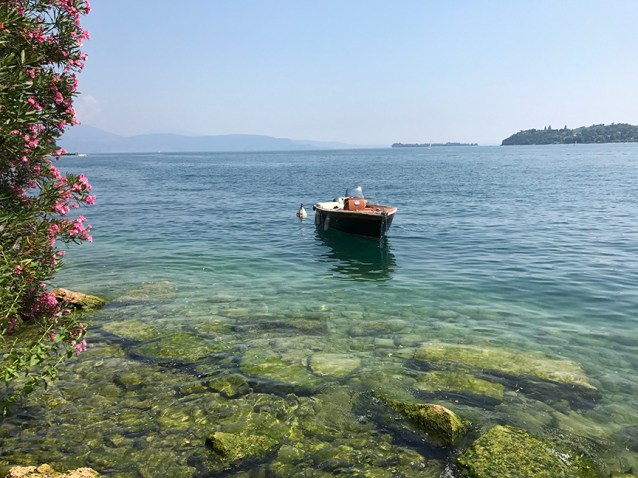 I rarely indulge in what Tracie P and I call “day drinking.”
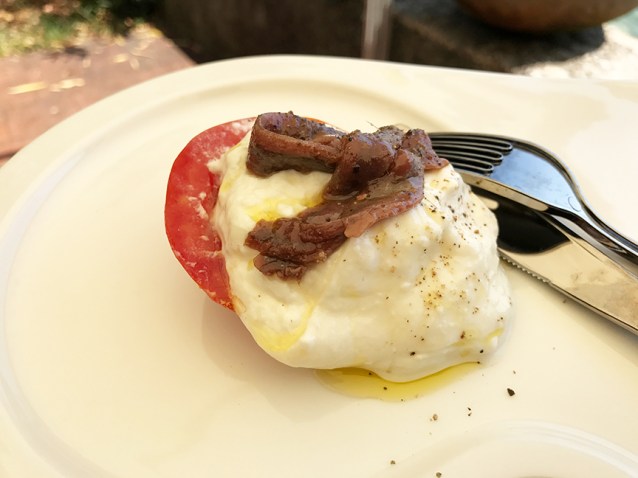 A lot of Facebook folks have been asking me where I was partying on the lake yesterday: we were at Tony’s private rental house just outside the village of Salò, not far from the Palazzo Martinengo, where Mussolini’s secretary once ran the Italian Socialist Republic — the Fascist state established after the Armistice of Cassibile in 1943.
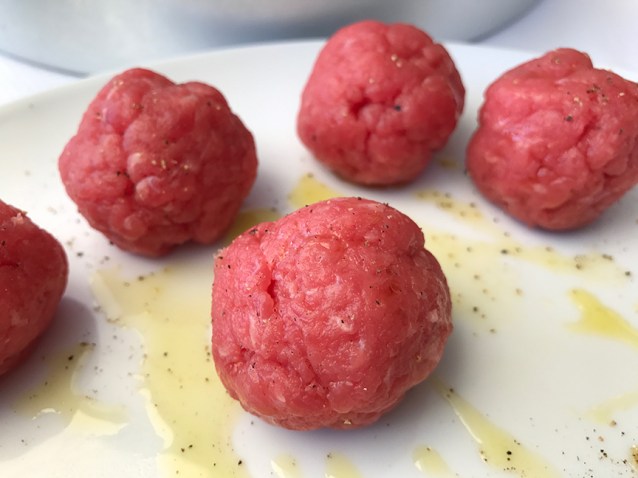 Those are his battuto di fassona (Fassone [or Fassona] beef tartare) “meatballs.” Ridiculous, right?
 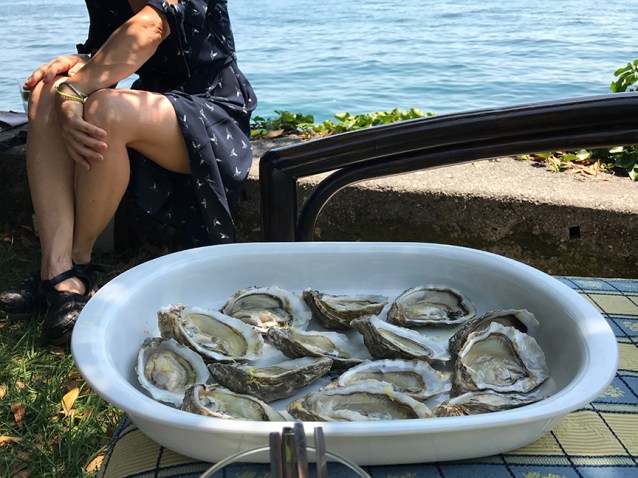 Brittany oysters paired brilliantly with Pasini Lugana metodo classico (“Trebbiano with a small amount of Chardonnay,” said the consulting enologist, who happened to be on hand).
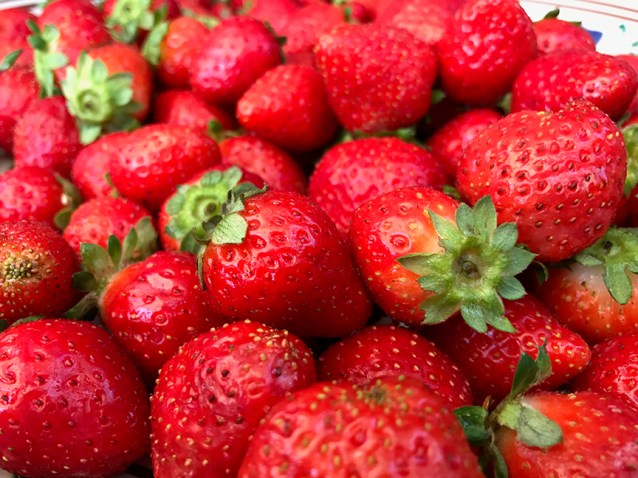 Locally harvested strawberries for dessert, among many other delights (I only wish I would have taken more photos, Gianni, but the party was too good!).
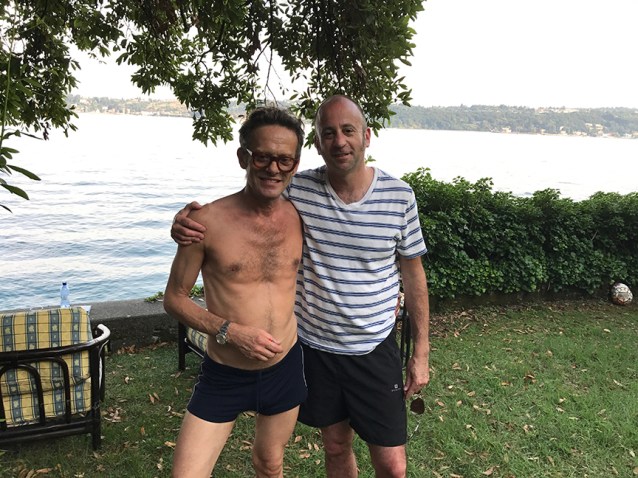 Tony, my friend, thanks for letting me tag along for your excellent birthday party. I can’t think of better way to get my own birthday week kicked off right. That gin & tonic was the best I ever had and I’m now heading home with the perfect tan…
 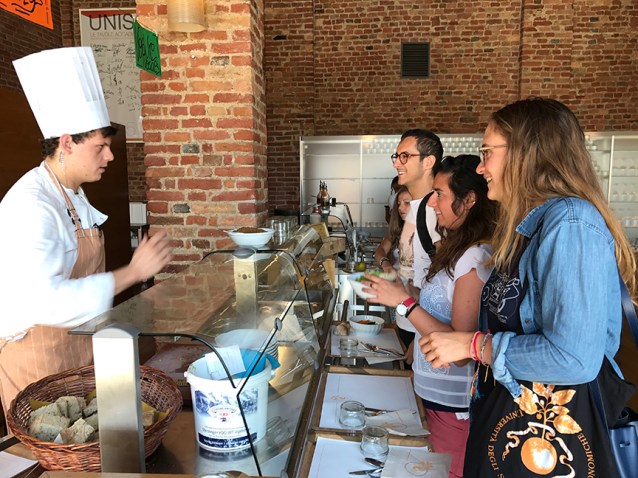 As much I as cherish my memories from my university days in California and Italy, I realize now that the cafeteria food really sucked back then.
 That’s tartrà on the right, a savory pudding made with eggs, onions, and herbs, a classic dish of Piedmontese country cooking.
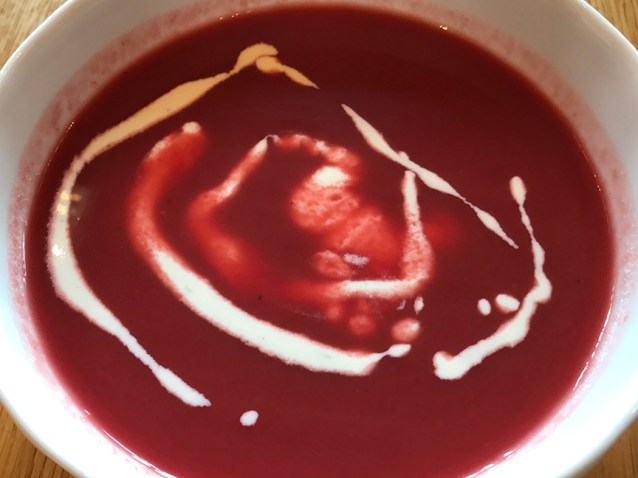 Our one Russian classmate and I bonded over the beet soup that was also on the menu yesterday.
  We are halfway through our culinary writing class and this afternoon, following our morning session on food blogging and social media trends, I’ll lead my first seminar on “Wine in Boccaccio’s Decameron.”
 That’s Italian wine legend Giorgio Grai (above, right) with leading Italian wine retailer and former winemaker Francesco Bonfio, co-founder of the newly launched
  The other new wine (and Italian wine) resource I’m really excited about is Alice Feiring’s newly released book
  And lastly, from the department of “all the news that’s fit to blog about,” I was catching up on my Feedly this week when I read that



 Do Bianchi
