Roman-Jewish artichokes and other cool stuff tasted this week in Houston

After the Israeli daily Haaretz reported that carciofi alla giudia, the famous fried artichokes of Rome’s ancient Jewish ghetto, had been ruled traif by Israeli chief Rabbinate, the owners of Houston’s Mascalzone swiftly added the dish to their menu.

She’s Israeli and he’s a famous Italian boxer. And I help out with their online media.

100 percent delicious and I’m extremely proud of the photo above, which I took with my phone.

Gambero Rosso was back in town this week with their traveling road show.

I really loved the Tollo Pecorino (above), a first kiss for me.

Pecorino can be a one-trick pony but when it’s handled thoughtfully, it can really deliver nuanced flavor. Great wine, one of the best expressions of Pecorino I’ve ever tasted.
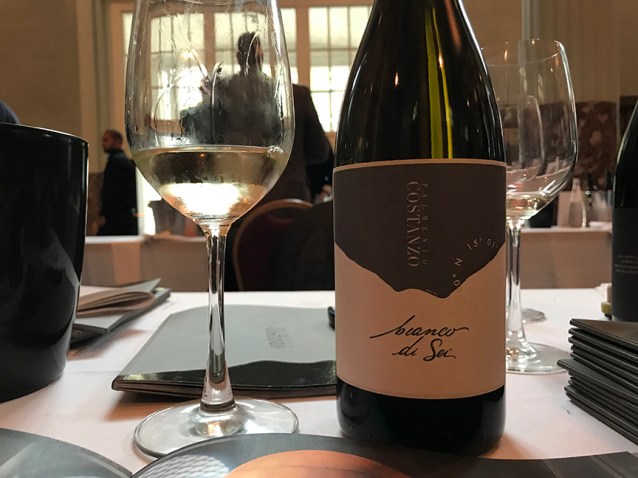
Another stand-out discovery for me was the Costanzo Etna Bianco di Sei (above).

Everyone’s so crazy about Etna red and rightly so. But Tracie and I are mad for Etna white.

This wine delivered the spectrum of flavor and minerality I’ve come to expect from the top producers in the appellation. What a fantastic wine.
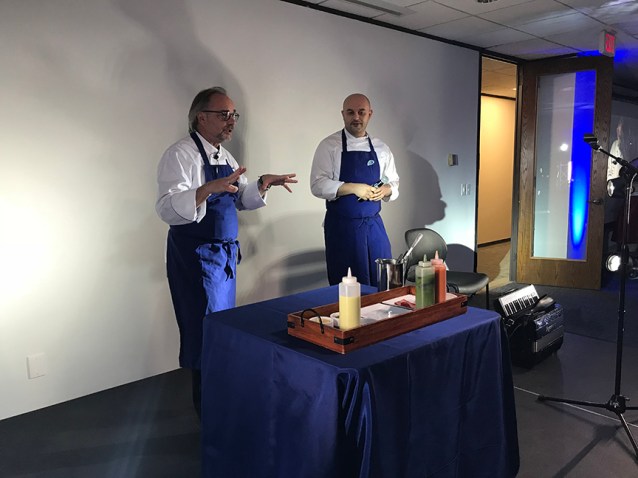
And just in case you were worried that we weren’t eating and drinking well in our adoptive city, Tracie and I attended a dinner last night hosted by Chef Marco Sacco (from restaurant Piccolo Lago in the Lake District, 2 Michelin stars) at a new event space launched by an Italian gazillionaire here.

Chef Marco (above, left) and his sous chef Silvestro had been flown in especially for the dinner. I was the night’s emcee.

Not a bad gig… but not as good as Sergio Scappani’s. He had also been flown in from Italy to dazzle the guests with his midified Roland V-Accordion FR-7X (stage left).

And just in case you still haven’t been tuned in to our groovy food and wine scene, check out this profile of one of my favorite wine programs in the city, Matt Pridgen’s wine list at One Fifth (by my friend Megan Krigbaum, one of my fave wine writers, for PUNCH).

Still not convinced? Hit me up and I’ll hip you to my fave spots.. Seriously. And thanks for reading!

Matteo Ascheri elected new president of Barolo, Barbaresco, Alba, Langhe, and Dogliani consortium

Last week, the Barolo, Barbaresco, Alba, Langhe, and Dogliani consortium elected Matteo Ascheri (above) as its new president (source: Millevigne). He will replace outgoing president Orlando Pecchenino.
From Millevigne (translation mine):

“Matteo Ascheri, a wine industry business leader from Bra, born in 1962, with a degree in economics and commerce, will lead the consortium, including its more than 500 wine grower members, representing 10,000 hectares of vineyards in Langa and Roero and 65 million bottles produced annually.

“Ascheri was consortium’s vice president from 1992-1994 and has also served in numerous institutional roles in the Piedmont wine industry…”

“‘The invaluable contribution of the producers I have met with over the last few days,’ said the newly elected president, ‘is a sign of our appellations’ and consortium’s shared vitality and positive energy. We will begin by re-activating the committee roles. With their mandate to oversee appellation management, they represent an important tool for producer participation. Our first order of business will be the marketing of our appellations with a focus on specific campaigns. They will based on a wide variety of needs that will emerge over time.”

Image via MatteoAscheri.it.

How do you translate “scheletro” (soil type) into English? Italian wine glossary updated.

Please click here for the updated glossary (March 21, 2019).

Over the weekend, reader Enzo commented on my Italian-English wine glossary:

“Please add ‘scheletro’ in there. The most sensible translation I found is ‘rock fragments.’ Thank you for your work.”

Thank you, Enzo, for the nudge!

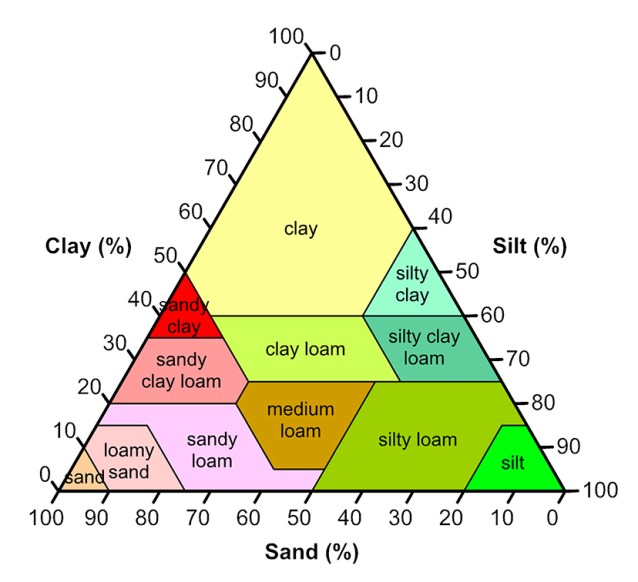
The Italian term scheletro (akin to the English skeleton) denotes soil texture composed of grains that are greater than 2 mm in diameter.

According to the Wentworth scale (the standard in modern granulometry), soil texture with grains between 2-4 mm in diameter is classified as “very fine gravel.”

For Italian readers, see the Italian Wikipedia entry for Tessitura (terreno) here.

Readers may wonder why it’s called scheletro or skeleton in Italian.

The word skeleton comes from the Greek σκελετός (skeletos) meaning dried up or arid. Fine gravel is a great soil type for fine wine growing because it doesn’t retain water.

Here’s the complete glossary, updated. I hope you find it useful. Thanks, as always, to wine writer and vineyard consultant Maurizio Gily for his invaluable contributions.

ITALIAN ENGLISH
a giropoggio vines planted across a slope (along the contour of the slope; compare with a ritocchino)
a ritocchino vines planted up and down a slope (from peak to valley, as it were; compare with a giropoggio)
acciaio [inossidabile] stainless-steel [vat/tank]
acinellatura millerandage [alt.: shot berrieshens and chicks, or pumpkins and peas]
affinamento aging
alberello head-trained bush vines
allegagione fruit set
allevamento training
argilla clay
arresto di fermentazione stuck fermentation
assemblaggio blend
azoto nitrogen
barbatella rooted cutting
barrique barrique [small French oak cask]
bâtonnage stirring on the lees
biodinamica biodynamics/biodynamic
biologico organic
botte traditional large cask
bucce skins
Cabernet [Sauvignon] Cabernet Sauvignon
Cabernet Franc Cabernet Franc
calcare/calcareo limestone/calcareous [limestone-rich]
capo a frutto fruit cane
cappello sommerso submerged cap maceration
chioma canopy
cordone cordon
cordone speronato cordon-trained spur-pruned [vines]
cru vineyard designation/single vineyard
cuvée blend
délestage rack and return
diraspare/diraspatrice de-stem/de-stemmer
diradamento pruning/thinning grapes/dropping fruit
diserbante termico weed torch/weed flamer
DOC DOC [designation of controlled origin]
DOCG DOCG [designation of controlled and guaranteed origin]
DOP PDO [Protected Designation of Origin]
doppio capovolto double-arched cane [training]
drenaggio drainage
esca esca [alt.: black dead arm or black measles]
escursione termica [diurnal] temperature variation
fermentazione arrestata stuck fermentation
femminella lateral shoot
flavescenza dorata grapevine yellows (flavescence dorée)
follatura punching down
galestro galestro [a marl- and limestone-rich subsoil unique to Tuscany]
giropoggio vines planted across a slope (along the contour of the slope; compare with a ritocchino)
grappa grappa
grappolo cluster/bunch
grappolo spargolo loosely clustered grape bunch
Guyot Guyot
IGP PGI [Protected Geographical Indication]
IGT IGT [typical geographical indication]
leccio holm oak
lievito naturale native/ambient/indigenous/wild yeast
lievito selezionato cultured yeast
limo silt
macchia mediterranea Mediterranean maquis [shrubland]
maestrale (vento di maestrale) north-westerly wind
malolattica malolactic fermentation
marna/marne marl
monovitigno single-grape variety [wine]
mosto must
oidio oidium [powdery mildew]
pedicello pedicel
peduncolo stem (peduncle)
peronospora peronospora [downy mildew]
pied de cuve pied de cuve [native yeast starter]
pigiatura crush/crushing
pirodiserbatore weed torch/weed flamer
pirodiserbo weed torching
portinnesto rootstock
pressa press
pressare to press
quercia oak
rachide rachis
raspo stem
rimontaggio pumping over
ritocchino vines planted up and down a slope (from peak to valley, as it were; compare with a giropoggio)
sabbia/sabbioso sand/sandy [sandy soil]
Sauvignon [Blanc] Sauvignon Blanc
scacchiatura shoot-thinning and disbudding
scheletro very fine gravel
siccità drought/drought conditions
sistema di allevamento training/trellis system
sottosuolo subsoil
sovescio cover crop/green manure
spargolo (grappolo spargolo) loosely clustered (grape bunch)
sperone spur
spollonatura disbudding and suckering
stralciatura shoot-thinning
stress idrico hydric stress
sulle bucce skin contact [macerated on the skins]
sulle fecce nobili lees aged [aged on its lees]
sur lie lees aged [aged on its lees]
svinatura racking (devatting, drawing off)
terreno/terreni soil
tignola della vite vine moth [Eupoecilia ambiguella]
tralcio shoot/cane
tramoggia hopper/feeder
tufo tufaceous subsoil [porous limestone]
vasca vat/tank
vento di maestrale north-westerly wind
vigna/vigne vine/vineyards
vigneto vineyard
vinaccia/vinacce pomace
vite vine
vitigno grape variety

Image via Wikipedia.

Protest: Confederate Memorial of the Wind in Orange, Texas, Sunday, April 8, 2-4 p.m.

We will be protesting the Confederate Memorial of the Wind in Orange, Texas this Sunday.

Tracie and I have spots available in our cars for anyone who needs a ride from and back to Houston.

We are advocating that the owners of the site repurpose it to reflect community values (we don’t want to tear it down).

Click here to read more about our campaign and how it got started.

Please join us (shoot me an email if you need a ride from Houston or need more info).

Please note: Due to a forecast of rain, we have changed the date for this weekend’s protest from Saturday, April 7 to Sunday, April 8.

Join us in PROTEST of the Confederate Memorial in Orange, Texas (at Martin Luther King, Jr. Dr. and Interstate 10, north access road):

Sunday, APRIL 8
location: Confederate Memorial of the Wind (Google map)
time: 2-4 p.m.

CLICK HERE TO JOIN THE REPURPOSE EMAIL NEWSLETTER
to receive event details and updates.

Roman artichokes declared unkosher by Israeli Rabbinate prompt global crisis

According to a report published by the Israeli daily Haaretz on Wednesday, Israel’s Chief Rabbinate has declared that carciofi alla giudia, “Jewish-style” artichokes, are traif or unkosher.

“A few months ago,” writes reporter Davide Lerner, “Israel’s Rabbinate banned imports of a ready-made version of the dish, ordering its immediate removal from shelves.”

The issue, according to the report, is that artichoke leaves may contain insects that are impossible to remove before cooking.

The consumption of insects is strictly forbidden by Jewish law.

A “common problem with vegetables,” write the editors of Chabad.org (a leading English-language resource for explanations of Jewish traditions and law, including dietary laws), “involves possible insect infestation. The prohibition against consuming insects, even very tiny ones — as long as they are visible to the naked eye — is mentioned five times in the Torah and is very strict.”

“Some particularly severe problem vegetables are artichokes, asparagus, brussel [sic] sprouts, cauliflower, and leafy vegetables.”

Here’s what the Rabbinate’s Import Division head, Rabbi Yitzhak Arazi, had to say, as quoted by Haaretz: “The heart of the artichoke is full of worms, there is no way you can clean it. It cannot be kosher… This is not our policy, this is Jewish religious law.”

It’s not clear what prompted the Rabbinate to reconsider this dish (above), which traces its roots to the Renaissance and beyond.

One of the most popular foods served in Rome’s historic ghetto, carciofi alla giudia are made by flattening the artichoke buds and then frying them in olive oil until tender. The artichoke was prized by ancient Romans and modern Romans still flock to the Jewish quarter to enjoy Jewish-style artichokes (not to be confused with Roman-style carciofi alla romana).

I have eaten the dish in Rome many times but have never seen the “ready-made” kind. I was able to find this version in a jar online. But canning or jarring the dish would seem to defeat the recipe’s essence: the delight is delivered by the delicate crunch of the gently bitter leaves balanced by the sweetness and tingling sensation produced by the thistle’s heart.

The Rabbinate’s ruling seems to apply to pre-packaged carciofi alla romana and it remains unclear whether or not the made-to-order version will also be deemed traif.

Lerner writes:

    Removing the signature dish from a restaurant renowned for its Roman-Jewish cuisine led to some awkward conversations between customers puzzled at not finding it on the menu and embarrassed hosts. When the restaurant manager negotiated a revised version of carciofi alla giudia being on the menu, disappointed restaurant patrons commented that it was not the same.

Read the Haaretz article here (accessible for free if you register with the site).

Jews across the world are known for their love of wordplay. And the piece in the English-language Haaretz inspired some true nuggets:

“Artichoke on this” (the title of the article).
“It breaks one’s [artichoke] heart” (a comment).

Special thanks to the inimitable Francesco Bonfio for bringing this story to my attention.

Image via seventyoneplace’s Flickr (Creative Commons).

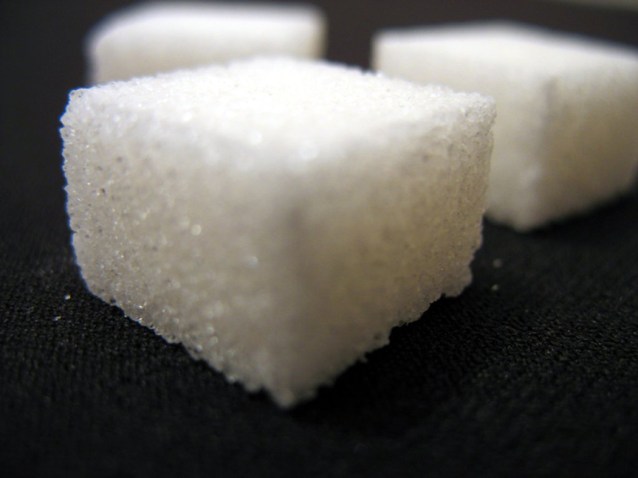
Chaptalization: new labeling norms could force European winemakers to list sugar as an ingredient

“Sugar War Reignites in Europe” read the title of an article published last month by Il Sole 24 Ore, Italy’s leading financial daily.

The paper was among the first to report on negotiations that took place in March between the European alcoholic beverage lobby and the European Commission.

According to a post published the following week by Reuters, “Europe’s drinks sector announced plans [in March] to inform consumers more about the energy content and ingredients in beer, wine and spirits in a self-policing move, but critics said much of this information would only be available online.”

But the inclusion of sugar as an ingredient and how ingredients will be listed remain a contentious issue. According to the Italian report, northern European wine growers (German, Austria, France) insist that sugar, even when added to boost alcohol content (a process known as chaptalization), is not an ingredient because the sugar is transformed into alcohol. Mediterranean growers, on the other hand, want sugar to be included.

Chaptalization is legal in the EU although it is forbidden in Italy. But some believe, as the author of the Sole 24 Ore piece notes, the practice is still employed illicitly. Some readers may be old enough to remember the chaptalization scandal that emerged in Piedmont in the early 1980s, involving one of the region’s most prominent winemakers.

The Sole 24 Ore article includes a quote from Roberto Moncalvo, president of Coldiretti, Italy’s national federation of food growers, one of the country’s most powerful food and wine advocacy groups.

“We need to expose the addition of sugar on wine labels,” he told the paper.

“The revision of labeling norms, including nutritional values and ingredients, needs to be adopted in order to allow consumers to know, finally, if the wine they are drinking was produced with the addition of sugar. Hiding this information misleads consumers and creates unfair competition for producers who don’t resort to sugaring [chaptalization].”

As the Reuters piece notes, the EU’s alcoholic beverage sector has agreed to draft and implement new labeling guidelines. But it’s not clear that northern and Mediterranean countries will agree on how (and where, whether or the label itself or online via QR code) sugar will be listed as an ingredient.

Image via Uwe Hermann’s Flickr (Creative Commons).

“We must see racism for what it is.” Honoring Dr. Martin Luther King 50 years after his death.

Dr. Martin Luther King, Jr., American civil rights leader and peace activist, was assassinated 50 years ago today in Memphis, Tennessee.
The following is an excerpt from his landmark speech “The Other America,” delivered less than three weeks before he was killed:

    There must be a recognition on the part of everybody in this nation that America is still a racist country. Now however unpleasant that sounds, it is the truth. And we will never solve the problem of racism until there is a recognition of the fact that racism still stands at the center of so much of our nation and we must see racism for what it is. It is the nymph of an inferior people. It is the notion that one group has all of the knowledge, all of the insights, all of the purity, all of the work, all of the dignity. And another group is worthless, on a lower level of humanity, inferior. To put it in philosophical language, racism is not based on some empirical generalization which, after some studies, would come to conclusion that these people are behind because of environmental conditions. Racism is based on an ontological affirmation. It is the notion that the very being of a people is inferior.

I can’t think of a better way to honor Dr. King today than by re-reading and studying his writings and speeches. I recommend the speech above, one of the last he gave before his death.

Tracie and I wept last night as we streamed “King in the Wilderness,” a new documentary about the latter part of his career.

As we watched the film, one of the things that struck both of us was how whites would use Confederate flags to taunt Dr. King and the marchers he led. I can’t repost the image here but this photograph was shot during the 1966 March Against Freedom: a young shirtless boy plays “Dixie” as a young woman waves the Confederate flag and the marchers approach. You see the hecklers (in motion picture footage with audio) in the documentary. It’s a chilling sight.

Scroll through this archive of photographs from the same march and you’ll find similarly disturbing images of white Americans menacing their black sisters and brothers with Confederate flags.

Today, on the anniversary of his death, we celebrate the life and work of Dr. King. His contribution to the historic fight for civil and equal rights for all Americans is unrivaled. And his legacy only grows as it continues to inspire a new generation of Americans to stand up for what is right and just in our country.

On Saturday, April 7, Tracie and I will be protesting the Confederate Memorial of the Wind in Orange, Texas. It was erected a few years ago on Martin Luther King Dr. where the thoroughfare meets Interstate 10, one of the busiest traffic hubs in the county. See this flier, distributed by the owner to raise funds for its construction.

We are not asking for the site to be torn down. We are asking the organizers to repurpose the site to reflect the values of the community — nearly 50 percent black.

Please join us. We have space in both of our cars available for Houstonians who want to participate.

G-d bless Dr. King and his family. G-d bless America.

See also this op-ed, “How Dr. King Lived Is Why He Died,” published by Rev. Jesse Jackson, in today’s New York Times.

Image via the National Park Service Flickr (Creative Commons).

Cannabis impacts CA wine industry in unforeseen ways

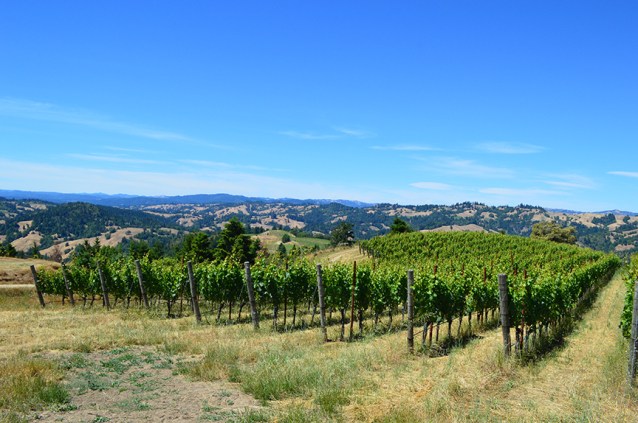
Above: the West Sonoma Coast is one of California’s youngest wine regions. Growers are petitioning to create a new Americana Viticultural Area designation there. The Pacific Ocean lies just a stone’s throw to the west of the vineyard in the photo.

Much has been written about the impact of newly legalized recreational cannabis on the California wine industry. The fear among some trade observers is that consumers will spend less on wine as their spending on pot grows.

But weed is affecting the California wine trade in unexpected ways, even just four months into legalization (which took effect in January of this year).

One of the most interesting elements to emerge from a touring tasting organized by West Sonoma Coasts Vintners last week was the winemakers’ concern that the lucrative cannabis business is attracting current vineyard and farm workers.

“It’s a lot nicer to be using tweezers in a greenhouse” to pare cannabis flower “than it is to be working in a vineyard,” noted one winemaker. Evidently, according to the growers, it also pays better.

Making matters even more challenging for wineries is the fact the the Sonoma, Napa, and Paso Robles fires last fall have drastically reduced the availability of affordable housing. This, combined with the current White House hard-line on immigration, has also made the industry less attractive to the migrant and seasonal workforce.

Another issue faced by wineries, said the vintners, is the decreased availability of storage and industrial space. The cannabis business is so lucrative that the new wave of pot growers is willing to pay higher rent for coveted warehouse and industrial park rentals. Winemakers need those spaces to store and age their wines.

The West Sonoma Coast is just one of the many wine growing areas affected by the nascent recreational cannabis business. But as a relative newcomer, in one of California’s more remote locations, it seems — at least anecdotally — to have been more acutely affected.

There is no doubt that cannabis is already reshaping the California’s agricultural landscape. It remains to be seen how its viticultural industry will react in the face of mounting challenges.

A world without Trump (exists)…

Yesterday, on Easter morning around 7:30 a.m., President Trump wished his Twitter followers a “HAPPY EASTER!” in all caps.
An hour and a half later, the President tweeted “NO MORE DACA DEAL!” also in all caps.

Another two hours would pass before he, his wife, and one of his daughters attended church for Easter services.

I wasn’t the only one who noted the jarring juxtaposition and incongruity between the occasion and the sentiment.

Is this what my Christian sisters and brothers hoped for when they voted for him? Is this how George W. Bush, Richard Nixon, or Mitt Romney would have acted on one of the holiest days in the Christian calendar?

I ask the same of my Jewish sisters and brothers who support Trump. Sunday was the second day of the Passover, a remembrance of how we were all once immigrants in Egypt. Can any one of them say that their forbears — immediate or ancient — were not immigrants?

Tracie, our daughters, and I spent the Passover holiday with my brothers, their families, and our mother in San Diego. That was the view from my mom’s house above.

It was nice to be in a place like (mostly) liberal California where the majority opposes Trump, his willful degradation of civic discourse, and his continued efforts to use the children of immigrants — the DACA dreamers — as a political bargaining chip. Where I grew up in Southern California, it’s mostly socially awkward to speak favorably about Trump and his policies and dehumanization of immigrants. Mostly…

People call California a liberal bubble. I was reminded of this when one of my detractors recently wrote the following on my blog: “You dont know a godam thing about the south u bathroom swapping western bitch!!” [sic, sic, and sic]

But it’s actually not a bubble. In fact, one of my best friends from my childhood in San Diego, with whom I’m still very close, is an adamant and vehemently vocal Trump supporter. And so is one of my immediate family members, although not as loudly so.

My California family lives along the coast. But head inland and you’ll find plenty of Trump supporters. Similarly, you’ll find a predominance of liberals in blue-state Houston where we live. But move outside the urban area — north, east, south, or west — and you will find the political attitudes inverted.

As much as I enjoyed being home with my family and being in a place where we were mostly shielded from politics and political discussions, I also realized that California is not a world without Trump. That world exists in the future and in my mind. It exists in my hopes and dreams. But it is not a real world or real place. Yet…

In the meantime, Tracie and I will continue to teach our children that Easter and the Passover are holidays meant to make us reflect on our shared humanity — regardless of religion, ethnicity, or geography. The Resurrection of Jesus Christ and G-d’s redemption of the Jews in ancient Egypt remind us that we are all emigrants and immigrants, traveling between the physical and the spiritual. Between the real world and the one that awaits us.

Passover narrative: a story of refugees and immigrants

The Passover. The very name of the holiday implies movement.

The text it comes from, the Book of Exodus, tells the story of Hebrew refugees who migrate from Egypt to Israel as they flee persecution and bondage.

It’s a powerful narrative remembered and celebrated by Jews every year across the world. Even for secular Jews like me, the holiday and the retelling of the story have deep meaning.

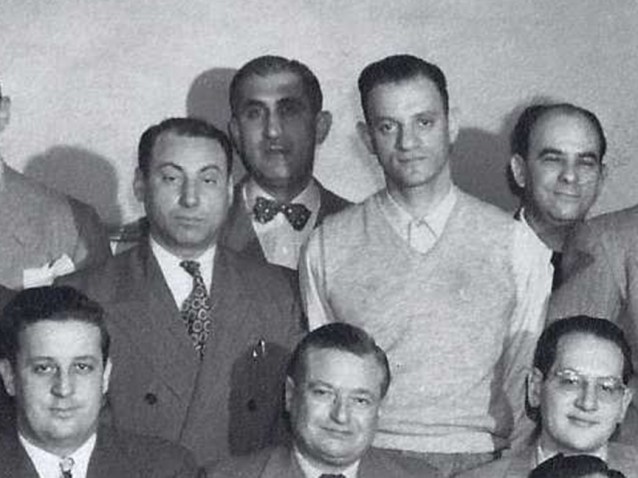
That’s my maternal grandfather Maurice “Poppa” Bailie above (center left, with tie) with my great-uncle Ted Eder (center right, without tie). Both were children of immigrants who fled economic and religious persecution in Europe in the early 20th century.

When he arrived in this country, my Poppa and his family were seen as undesirables and potentially dangerous: impoverished Jews from countries where Bolshevism and Zionism were on the rise, unwanted immigrants who would take jobs away from Americans. After landing in New York at Ellis Island, they were shipped off to the midwest by the Hebrew Immigrant Aid Society.

In South Bend, Indiana, my great-grandparents scrimped and saved up to buy a small grocery store. When they ultimately achieved financial security, their children flourished and thrived. It’s a story not dissimilar from that told in Barry Levinson’s 1990 film “Avalon” (my paternal grandmother owned a “Radio-Television Mart” like the one owned by the characters in the movie). They went to college, they opened businesses, they saved money and speculated on the stock market.

They were the children of refugees. And my parents were the grandchildren of refugees. And I am the great-grandchild of refugees. And our children are the great-great-grandchildren of refugees.

In every Passover Seder (the symbolic meal and narrative that retell the story of the Passover), the Seder leader encourages the guests to see themselves as active participants in the story with the following exhortation: “in each generation, each person is obligated to see himself or herself as though he or she personally came forth from Egypt.”

The Seder’s invitation to the guests “to break the fourth wall” (and become themselves characters in the narrative) is based on a passage from Leviticus (19:33-34):

    And the Lord spoke to Moses, saying…
    When a stranger sojourns with you in your land, you shall not taunt him.
    The stranger who sojourns with you shall be as a native from among you, and you shall love him as yourself; for you were strangers in the land of Egypt. I am the Lord, your G-d.

Click here for Christian Bible versions of the same passage.

Our children are still too young to wrap their minds around its meaning. But as he leads the Seder tomorrow night, my older brother will remind them that they, too, were personally delivered from Egypt and from persecution by G-d. And every year, I’ll tell them the story again and again and again… until they can tell the story themselves.

Chag sameach, everyone! Happy Passover and happy Easter!