
 When professor Michele Fino, director of the master’s programs at the University of Gastronomic Sciences (the Slow Food university in Piedmont, above), asked me to deliver his department’s matricula lecture this term, I couldn’t have been more thrilled or honored.
This morning, I led the first of 12 three-hour seminars for the assembled group of master’s students: “Food writing from Maestro Martino to #MeToo: the arc of Marxist alienation in modern gastronomy.”
Needless to say, the first recipe we discussed was for pizza dough cinnamon rolls.
(Saturday marks the 200th anniversary of Marx’s birthday, btw.)
Teaching is always such a rewarding experience for me and we have an awesome group of genuinely motivated and thoroughly talented philomaths — a very international crowd this year. It’s a drag to be away from home but the students and our rich confabulations really make it worthwhile.
In other news…
My Name Is Barbera, a collaborative blog published by the Barbera d’Asti growers association, shared my most recent post for the group this morning: “When Barbera Saved the (Wine) World.”
The deeper I dig into my research into Barbera and its legacy, the more I realize that we would be (and should be) drinking Barbera today instead of Merlot… that is, had things played out differently. There’s no doubt in my mind: the grape variety was positioned to become the red grape of the world — par excellence.
I’ve discovered compelling evidence of its widespread popularity in the landmark Ampélographie universelle (1841) by Alexandre-Pierre Odart.
The French ampelographer (who existed) shouldn’t be confused with the canard Louis Oudart: despite the lack of any evidence whatsoever, many wine writers — Italian and American — continue to propagate the erroneous nugget that “Oudart” was summoned by Barolo grower Camillo Cavour (the noted Italian statesman and architect of Italy’s unification) because the latter hoped he would teach the Langhetti how to make proper wine.
Will the real Odart please stand up? He was much more interested in Barbera than in Nebbiolo.
Please check out my post: I think you’ll find my discoveries as fascinating as I do (and there’s a bottle of Barbera in it for anyone who can prove me wrong!).
In other other news…
I’m really loving Renaissance Woman: The Life of Vittoria Colonna (Farrar, Straus and Giroux, April 2018) by Ramie Targoff. I picked it up to read on the plane and haven’t been able to put it down.
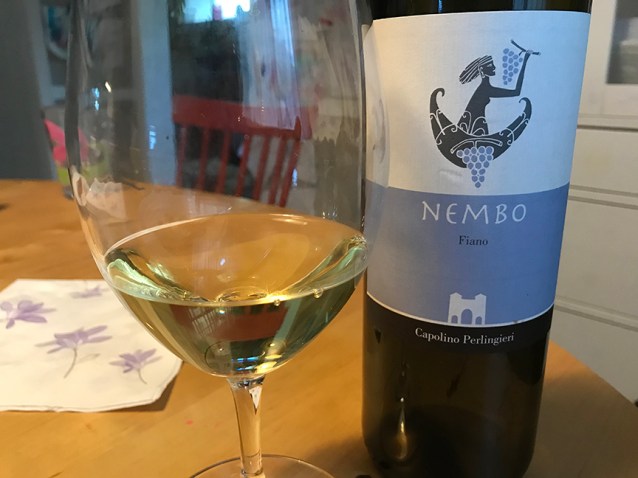 It may compromise my professional reputation to reveal that this extraordinary wine was paired with
 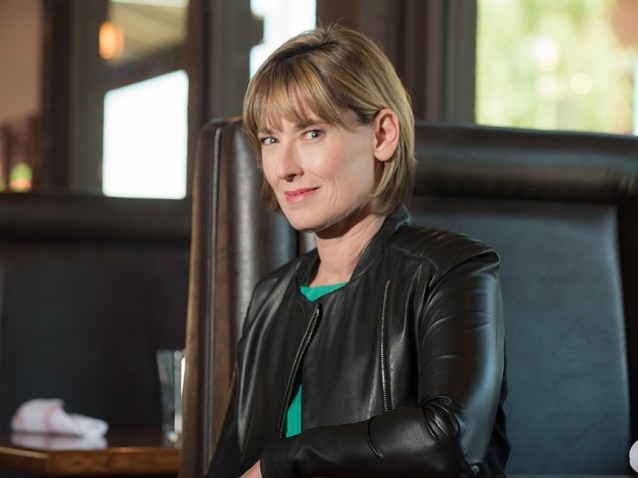 The
The  Another cool thing about
 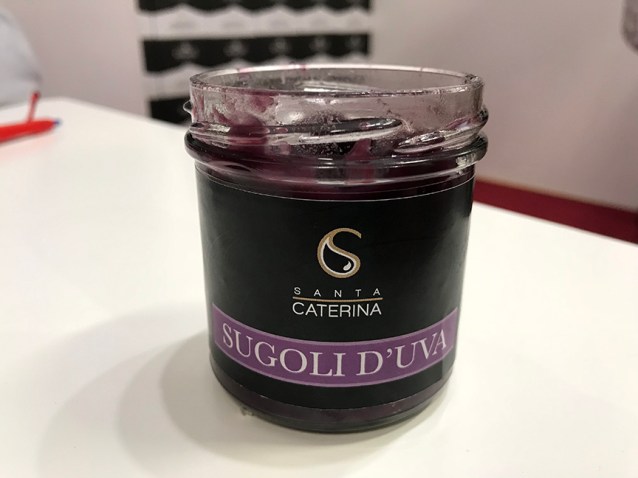 Another compelling taste came in the form of Sugoli d’Uva, a grape pudding obtained by thickening
 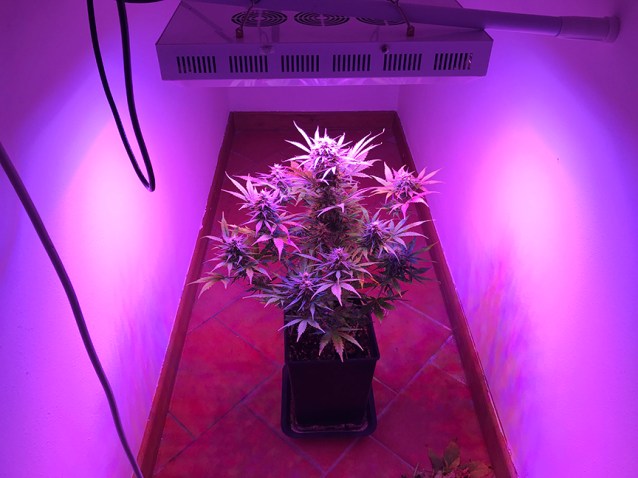 The first time I smoked cannabis in Italy it was in 1987 at a Peter Gabriel concert at
 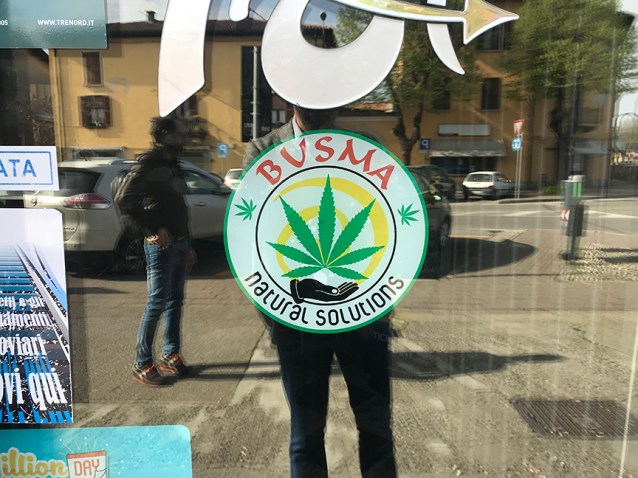 In Saturday’s online New York Times, one of the paper’s Italy correspondents, Elisabetta Povoledo, published a piece titled
  Whether it’s 0.2 or 0.6 percent THC content is besides the point. At those levels, the THC is imperceptible and the effect is purely analgesic (i.e., relaxing and therapeutic but not hallucinogenic and not a “high”). The average THC content for recreational cannabis in the U.S. is around 18 percent. And some flowers can have up to 30 percent. (I speak from personal experience.)
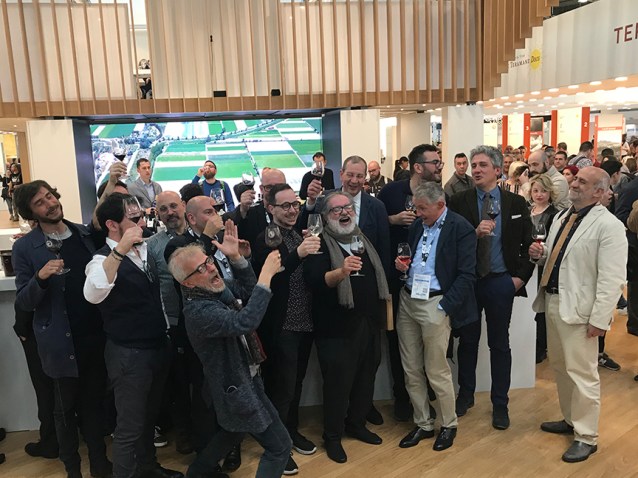 Above: many of Italy’s best wine writers and bloggers gather each year at the Intravino party at Vinitaly, the annual Italian wine trade fair in Verona. Intravino is Italy’s most popular wine blog and one of the few platforms where readers enjoy a broad spectrum of voices.
 Above: this week’s fair marked the 52 years since the first gathering. Vinitaly remains unrivaled for its scope and size.
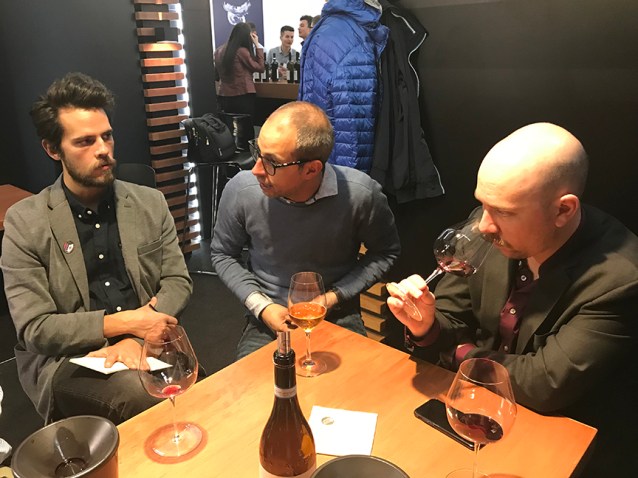 Above: I spent a lot of my time at the fair with two young wine professionals from Los Angeles, Skylar Hughes (left) and Theo Greenly (right). Gianluca Colombo (center) was one of the many winemakers who tasted with us.
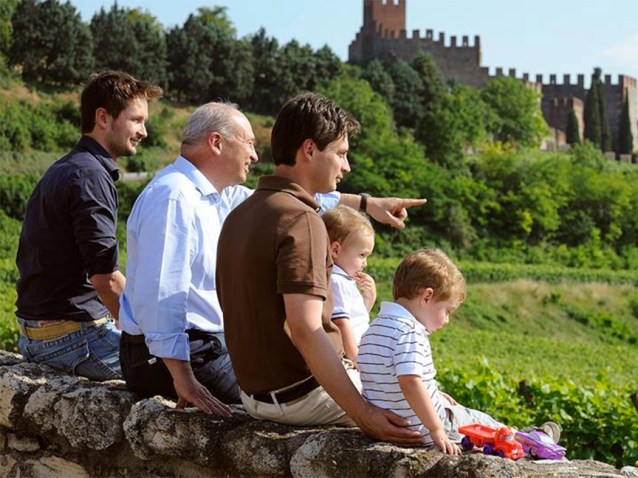 Above: Legacy producer Leonildo Pieropan with his two sons and grandchildren in an udated photo (image via
  I couldn’t be more thrilled to share the news that
  After
After  Gambero Rosso was back in town this week with their traveling road show.
 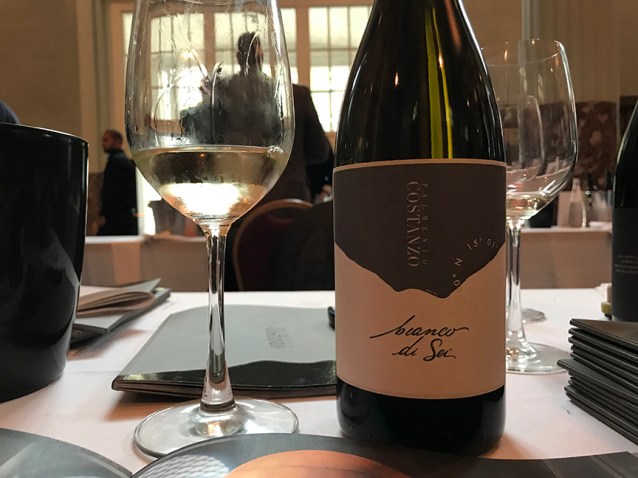 Another stand-out discovery for me was the Costanzo Etna Bianco di Sei (above).
 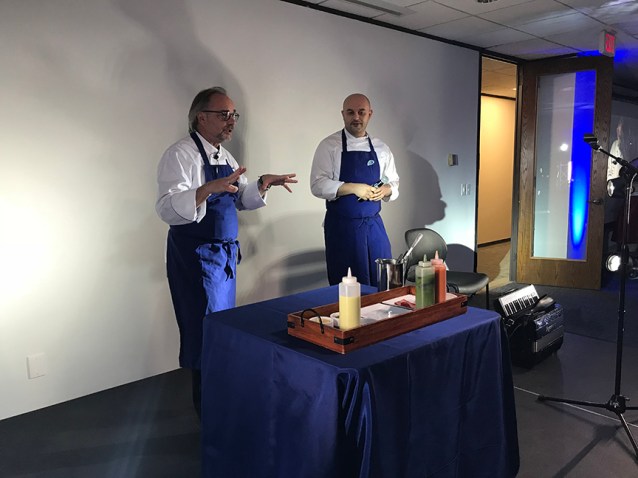 And just in case you were worried that we weren’t eating and drinking well in our adoptive city, Tracie and I attended a dinner last night hosted by Chef Marco Sacco (from restaurant Piccolo Lago in the Lake District, 2 Michelin stars) at a new event space launched by an Italian gazillionaire here.
  Last week, the Barolo, Barbaresco, Alba, Langhe, and Dogliani consortium elected Matteo Ascheri (above) as its new president (source:
  Do Bianchi