Thanks for being here and for all your support in 2017! Wishing everyone and happy happy holiday and sending lots of love!
When it comes to sparkling wine for the holidays, there’s really no good reason for Champagne to eclipse the myriad classic-method wines available today from other appellations.
But let’s face it: even for the hippest and most ardent lovers and defenders of pét[illant]-nat[urel], there’s nothing that beats a great Champagne house — large, small, storied, best-kept-secret, corporate-owned, or family-run — on New Year’s Eve.
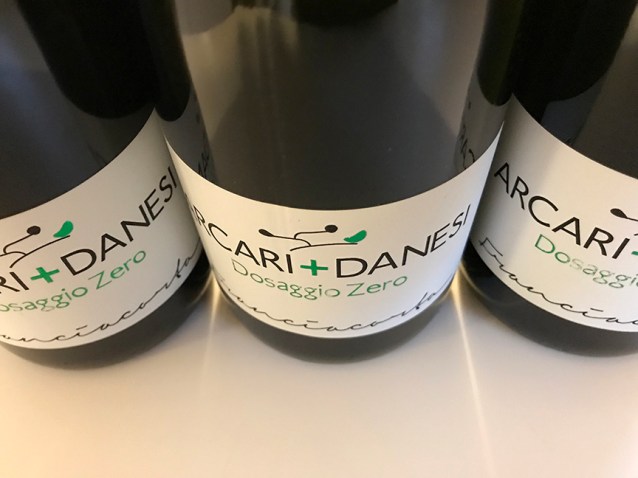
At our house, we will be drinking my favorite Franciacorta over the holidays (yes, Arcari + Danesi is now legal in Texas!). But we will also be drinking Champagne with the family friends we will be hosting for New Year’s.
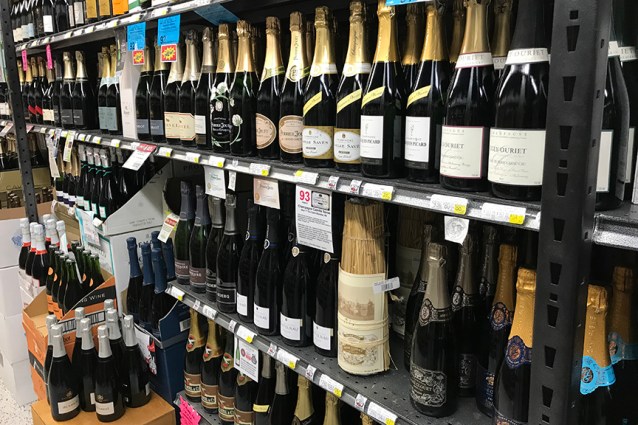
Yesterday, I made the rounds of some of my favorite wine shops in Houston and here’s what I found.
America’s behemoth wine and spirits retailer Spec’s has its flagship store in Midtown (on the “verge of downtown,” as my current favorite singer-songwriter-guitarist Robert Ellis would say). When it comes to Champagne, the outfit has cornered the market on the most aggressive pricing for the top domaines. And it also had the biggest selection of large-format Champagne — a great option for entertaining during the holidays.
I can’t ever recommend shopping at Spec’s without adding this caveat: when buying entry-tier wines there, you have to be sure to check the vintage to make sure that you’re getting the current release. Unfortunately, there are legions of stale wines that populate its shelves (especially when it comes to white wines). But when it comes to premium appellations like Champagne, Bordeaux, and Burgundy, Spec’s pricing is the most competitive.
Delamotte, Pol Roger, Bollinger, Pierre Péters, Billecart-Salmon, Henriot, Gaston Chiquet, André Clouet… Paying cash/debit and buying six bottles or more, all of the above wines landed at more-than reasonable prices (even when compared with more liberal markets like California, where wine sales are less heavily regulated by the Communist government there, a paradox and conundrum of contemporary American mores).
Spec’s also had a great price on La Montina Franciacorta, the vintage-dated rosé and the Satèn. If you’re looking to spend something closer to $30 as opposed to $50 (the average price for a decent bottle of Champagne), this is my number-one recommendation. I like the wines a lot from La Montina, an organic grower and solid winemaker.
Next on my itinerary was the Houston Wine Merchant where prices are higher but you the level of wine knowledge among the staff and attentive customer service are more than worth the admission price. I was impressed by some of the more coveted bottles they had there.
I wish I could afford the Pierre Gimonnet 2010 Spécial Club, for example, or the Vouette & Sorbée Saignée de Sorbée Rosé Brut Nature. I couldn’t find wines like that anywhere else in my adoptive city. Alas, they won’t be served at our house this year. Great wines…
One of the most overlooked venues for fine wines in Houston is the Kroger’s supermarket on North Shepherd, where a purchase of six bottles or more (mix-and-match) gets you a 10 percent discount.
You won’t find some of the more esoteric bottles of Champagne that some of us prefer for special occasions like New Year’s. But you will find extremely aggressive pricing. Entry-tier Taittinger and Perrier-Jouët — perfectly respectable, delicious wines — both clock in around $40 if you hit the six-bottle threshold (mix-and-match on any wine, including great prices on Qupé and Mattiasson, two of my favorite Californians, for example).
And if you want to land below $30, the Californian classic-method Domaine Carneros by Taittinger is a great option for a great domestic sparkler, available at Kroger’s.
Whatever you drink this year for the holidays, I hope you drink it with someone you love.
Happy holidays, everyone!
Over the weekend, Tracie, our girls, and I hosted a holiday party for roughly 50 people in our home. In keeping with seasonal spirit, I wanted to greet every adult guest with a glass of sparkling wine. And so I had chilled a six-pack of one of my favorites.
In order to have the wine ready, I decided to open the bottles a few minutes before guests were to arrive.
And that’s when something DISASTROUS happened: the cage on every bottle was faulty. Something at the winery must have gone awry when the wine was disgorged and sealed. Either that or the cages themselves were defective.
As any wine pro should be able to tell you, it takes six turns to remove the cage from a bottle of sparkling wine. But occasionally (rarely though it does happen), the wire will break before the cage can be removed. (It wasn’t the wine in the photo above btw; it was a wine from another European appellation.)
How do you deal with this issue when it arises? I’d really appreciate any insights.
Here’s how I handled the situation.
First of all, I took all the wine outside. I knew that the pressure of cutting the wire from the cage would agitate the bottle, making the pressure inside the bottle even strong and increasing the risk that I would not be able to contain the cork. I wanted to make sure that no one (including me) would be hurt.
Armed with a wine key, kitchen shears, and a dish towel, I gingerly used the knife of the wine key to pull the wire a few millimeters away from the bottle.
Then with my thumb placed firmly over the cage, I used the shears to cut the wire.
As I suspected, the cork was ready to pop. Even though I had been extremely carefully not to disturb the bottle too much, the force exerted to pry away and then cut the wire was enough to increase the pressure in the wine to the point that the cork would pop off if left unchecked.
Holding the cork tightly with my thumb, I loosened the cage until the cork popped off. It was extremely difficult to keep the corks from being shot across the backyard. I managed to hold on to all of them. But I was glad that I had stepped outside: it was clear to me that I risked not being able to control the situation.
Sommeliers, what tool should you have on hand for this situation? I had kitchen shears but I could have also used needle-nose wire cutters (that I always have handy for when I work on my guitars).
What do you do when this happens on the floor of a restaurant during service?
Touch it, feel it, kiss it, smell it, taste it…
My favorite Franciacorta — Arcari + Danesi by my good friends Giovanni Arcari and Nico Danesi — is FINALLY available in Texas thanks to importer and distributor Rootstock (thank you, Ian and Nathan!). I picked up a case yesterday at the Houston Wine Merchant. But wherever you live, just ask your favorite wine merchant to order it for you. It’s now available in Texas.
The 2013 Franciacorta Dosaggio Zero is 90 percent Chardonnay and 10 percent Pinot Blanc fermented in stainless-steel and aged on its lees for 30 months. While many Franciacorta producers are leaning toward monovarietal Chardonnay wines, Giovanni and Nico’s use of Pinot Blanc (the traditional cuvée in Franciacorta) gives the wine a wonderful aromatic character. And thanks in part the balanced 2013 vintage (one of the best of the decade so far imho), the wine’s rich stone fruit flavors play beautifully against its lip-smacking minerality. The wine isn’t topped off when it’s disgorged and bottled (no added sweetener) and its own reserved grape must (from the same vintage) is used to provoke the second fermentation during tirage. Nothing but grapes are used to make it (no cane sugar is employed). The sweetness that you taste when you drink it is the natural flavor of the fruit. What a wine, people!
It’s what Tracie and I will be serving at our Hanukkah latke party this week. A great pairing btw.
My recommendation? Run don’t walk to your nearest wine shop: Texas received a limited amount of this highly allocated wine and I just depleted another case! Seriously, this is a wonderful wine for the holidays and the dudes who make it and import it couldn’t be nicer folks.
And speaking of the Festival of Lights…
The Parzen family celebrated the first night of Hanukkah last night with candle lighting, dreidels, and donuts (a traditional Hanukkah food because they are fried in oil).
The miracle of Hanukkah was sweetened by the fact that ALABAMA IS SENDING A DEMOCRAT TO THE U.S. SENATE! The news is a bright ray of hope in this dark time in America.
When Moore’s wife gave her “some of my best friends are Jews and blacks speech” the night before the election, she and her husband managed to take civic discourse in this country to a whole new low. The best line was “my attorney is a Jew.”
Anyone who denies that anti-semitism is on the rise in this country is either blind or a fool. Or worse… Had Alabamans sent Moore to the senate, they would have reaffirmed the GOP’s new Trumpian embrace of racist-driven politics and its current abandonment of Christian values.
G-d bless Alabama for doing the right thing! Finally, Americans have stood up for what is right instead of acting like dumb sheep who hope Trump will make America white again.
The Maccabees of the Hanukkah narrative stood up to a tyrant who wanted to impose his religious beliefs on them. Moore made it very clear that in his view, Christianity — or at least the hate-filled pseudo-Christianity that he and Trump and their supporters believe in — was the only religion that should be allowed in our country.
BLESSED BE THE SOVEREIGN OF THE UNIVERSE FOR THIS MACCABEE MIRACLE!
And thank you, Alabamans, for embracing humanity over hate. G-d bless America.
Happy birthday, Georgia Ann Parzen! You are six years old today! And your mommy, daddy, and sister love you so much!
Today is your actual birthday but we had your party this last Saturday so all of your friends could come.
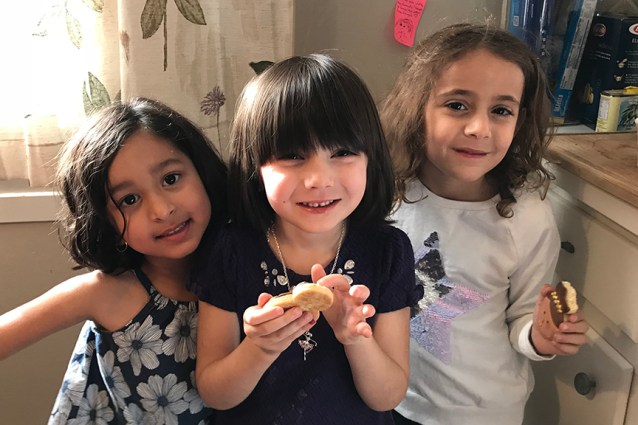
That’s you with your friends Suhani (above on the left) and Sylvie. They had so much fun at your party and so did we. Mommy made you Nutcracker cupcakes, cookies, and cake. They were delicious! Everyone enjoyed them.
My goodness, Georgia Ann, you are such a special little girl to me and your mother.
You started kindergarten this year and you’ve really been enjoying your violin lessons at the music magnet school you attend in our neighborhood. Hearing you draw the bow across the strings of your instrument for the first time was one of the proudest and joyous moments of my life. It really and truly was.
You’re really into Broadway musicals (who would have ever thunk it?). Currently, you love to sing all the songs from “Hamilton.” You listen to the music over and over again and you memorize all the words and you practice the delivery until you get it just right. My GOODNESS, Georgia Ann Parzen, you are just like your daddy! When we are driving around Houston in our minivan, hearing you belt out the tunes at the top of your lungs fills me with unimaginable joy. I love that about you, sweet girl.
This year, you’ve been learning to read; you’ve been learning to write; you’ve been learning addition and subtraction… You are always brimming with a thousand questions for me: what does this mean, daddy? how does this work, daddy? where does this come from? why is the world the way it is? Every day, it seems, you and I sit and discuss the world around us and I giddily look forward to the next question. You are such a bright and inquisitive little girl. You couldn’t make your father more proud. You really couldn’t.
But the thing that fills me with the greatest pride and happiness, sweet Georgia Ann, is your deep empathy. You are such a polite little girl and you know how important politeness is to me and mommy. But you also care deeply about your family and friends and all the people around you. You comfort people when they are sad. You share your toys with your sister when she’s grumpy. And when your daddy cries at the front door before he leaves on a business trip, you always tell me not to be sad and that you love me.
Sweet Georgia Ann, I am so frightened of the way the world is changing around us. When mommy and I read the news about the growing tolerance of intolerance and the way our politicians and religious leaders are abandoning common decency and humanity for the sake of building walls, keeping people out, and keeping people down, I am afraid that you will inherit a world where people like you and me won’t enjoy freedom and safety the way we deserve. Yes, sweet Georgia Ann, you are like me and there are many people around us who don’t like people like you and me. But we will always have each other. We will always have our love, our smiles, our songs, our knock-knock jokes, and our stinky feet. No matter how sad I am about the world outside, your smiles and your hugs and kisses remind me that the good in this world can’t be destroyed by the mean people — no matter how hard they try.
Georgia Ann, today is your birthday and tonight we will eat jelly-filled donuts as we celebrate the day you were born and we light the first candle on our menorah.
That’s a photo of you from when you were one year old below, Georgia. You are such a good little girl and the miracle of your life is the greatest thing I have ever known. I love you, Georgia. I love you… Happy birthday! I can’t wait to celebrate with you tonight!
Your loving and adoring father, Jeremy

What an incredible flight of wines — true unicorns! — with Prince Alessandrojacopo and what a fantastic menu of classic Roman dishes by chef Steve last night at Rossoblu!
A few months ago, when I made my first call to Alessandro inviting him to join us in Los Angeles for the dinner we hosted last night, I was truly giddy — and not just because of the wines.
“Georgia,” I said to our soon-to-be-six-year-old, I just got off the phone with the prince!”
“Does the prince have a castle, daddy?” she asked me in earnest.
“Let’s take a look on the internets and see,” I told her.
Sure enough, he does.
The 1987 Fiorano Rosso was probably the winner in the flight of extraordinary wines we shared with the sold-out private dining room at the restaurant. It seemed only fitting: that was the fall that I met chef Steve on our junior year abroad in Italy (my first year in the country).
Thanks, chef Steve and Dina, for letting us create this unforgettable evening and dinner. And thank you, Alessandro, for believing in a crazy dude from Houston who called you a few months ago and invited you out to LA.
But thanks most of all to the simpatico group who joined us. It was a night to remember and a flight of wines that will never be again — true unicorns, thanks to the prince and his generosity.
I have many stories to tell about my conversation with Alessandro and our tasting. But they will have to wait: it’s time for me to get my butt back on a plane for Houston, where I belong.
Buon weekend a tutti…
Above: cannabis grown on a private biodynamic farm in Sonoma, California. I spent the day yesterday in Sonoma county touring some of the damage from the wildfires.
Major-league wine blogger, marketer, and lobbyist Tom Wark is worried.
He’s concerned that legal recreational cannabis, which goes into effect in California in January 2018, will eclipse the sales of wine.
Earlier this week, he wrote that “cannabis is bad for wine.” He quotes a new and widely reported study whose authors claim that “alcoholic beverage sales fell by 15 percent following the introduction of medical marijuana laws in a number of states.”
And just today on his blog, he included “Cannabis and Wine” as one of the top 10 “wine stories” of 2017 (leave it to Tom, a blogger and writer I admire greatly, to nail it when it comes to listicles).
“Some [in the trade] like myself,” he wrote, “have been looking closely at the degree to which cannabis will cannibalize sales from the wine industry.” (Great parononmasia!)
Save for linguistics (a sine qua non tool in any self-respecting philologist’s gearbox), I’m not well versed in hard sciences like psephology. I can’t counter the results of studies like this one, which came to my attention via Tom’s blog (which I highly recommend to you btw, one of the best wine blogs out there).
But I can speak from personal experience. Like many in the industry (see this article by Eric Asimov for the New York Times), I don’t see cannabis as a threat to wine sales or consumption because pot smoking is already pervasive among grape growers, winemakers, and wine consumers. And it’s been that way for decades.
The fact that recreational cannabis will soon be available for retail purchase won’t change the robust cannabis culture that already exists across the United States — most vibrantly in California, where I grew up and where pot and wine are woven into the fabric of everyday consumption since the 1970s when I was a kid.
I’ve got news for white bread wine lovers: Americans love pot, they have for generations, and even though some Americans still associate it with sinfulness (like Tom, who calls it a “sin industry”), pot culture is an all-American tradition — from San Diego to Austin, from Portland to New York City, from Seattle to Boca Raton. The fact that it’s now becoming part of the mainstream business community doesn’t really change much in the way that I or hundreds of my colleagues and peers will consume cannabis (after all, you can’t write business without writing sin).
I’ll never forget when, in 2010, then Governor Rick Perry said: “if you don’t like medical marijuana and gay marriage, don’t move to California.”
I’ve got news for you, Rick. It’s not just coming to a town near you soon. It’s already there…
Check out Tom’s blog. It’s a daily read for me and one of the best wine blogs out there.
Last week, Slow Wine editor-in-chief Giancarlo Gariglio and I began publishing the first winery profiles from the 2018 Slow Wine guide to the wines of California on the Slow Wine blog.
Even though we will be publishing a hardcopy version of the guide (slated for release in early 2018), each one of the profiles of the 70 wineries featured in the book will be published online. In keeping with the spirit of Slow Wine, the guide and its editorial mission, the idea is to make the book an open source of information about the estates, the wines, and the evolving California wine trade. As with the Italian and Slovenian sections of the guide, the entire California guide will ultimately be available online.
We plan to publish nearly one a day, four-to-five every week.
In other news, the New York public relations firm who handles logistics for the Slow Wine U.S. tour, Colangelo, has launched a website devoted to the annual tasting itinerary. This year, the tour will be visiting Atlanta, New York, Houston, and San Francisco. I’m so glad that Giancarlo decided to include Houston for 2018: our city is a major hub for fine wine in general and a great destination for Italian wine in particular. I’m also glad that Colangelo has agreed to publish the site and update it regularly. It’s an important resource for info that’s bound to come in handy.
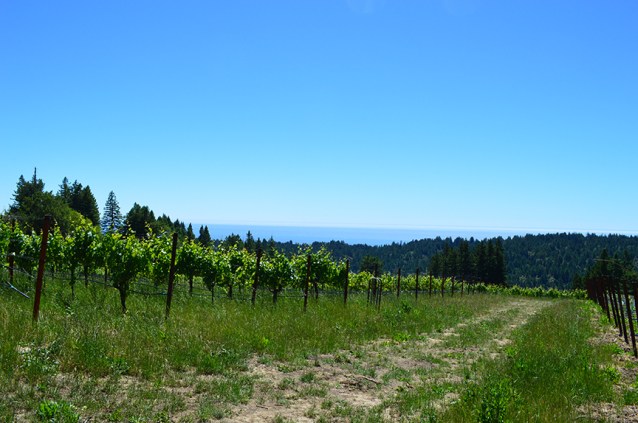
That’s a photo I shot earlier this year at Hirsch Vineyards in Sonoma (Sonoma Coast). You can see the sloped growing site; the proximity to the Pacific Ocean (and the resulting maritime influence); you can see the naturally occurring grass and plants growing between the rows. What you can’t see is the ancient-seabed subsoil, ideal for growing Pinot Noir and Chardonnay. The presence of ancient seabed there is owed to the nearby San Andreas site.
I’ve written here before that I was wrong about California wine. At another time in my life, in the early years of my career as a wine writer, I wrote-off California wine as being too jammy, too oaky, overly concentrated, too hot (alcoholic), and lacking balance.
My experience this year as the coordinating editor of the guide and one of its contributors has really reshaped my thoughts and impressions of the California wine industry.
And California wine country needs us all — you and me — more than ever before. Tomorrow, I’ll be heading to northern California to survey the damage and recovery in the aftermath of this year’s terrible wildfires.
Stay tuned: I’ll be posting about the trip here and on the Slow Wine blog as well.
Thanks for reading and thanks for drinking California wine.
Please see my post, from earlier this year, California wine, I was wrong about you. I’m sorry…
This week found me in LA where I checked in on the wine lists I author and co-author at Sotto and Rossoblu. I also spent some time this week eating out around town to catch up with what has shaped up to be a genuine Italian culinary renaissance here.
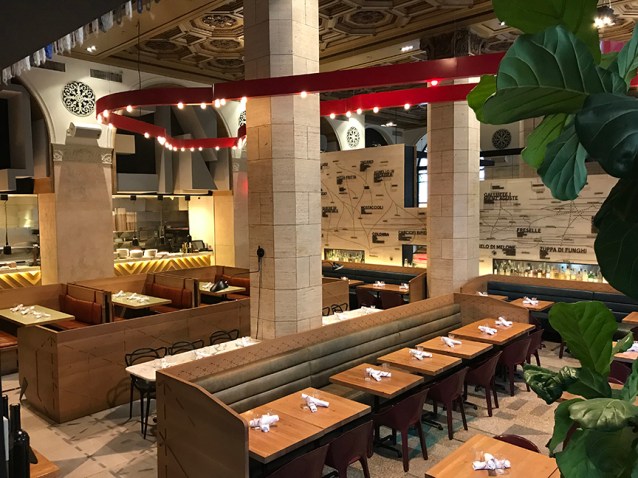
Unfortunately, I didn’t get a chance to eat at the new downtown location for Terroni (above). But man, what a gorgeous room! I’ll actually be eating there next week and am really looking forward to it. Owner and wine buyer Max Stefanelli is so rad. I had a chance to visit with him and was amazed by the restaurant and cellar tour he offered.
He doesn’t serve a Prosecco by the glass in any of his restaurants. How cool is that?
Bestia was completely packed on Monday night. The Monday after Thanksgiving! I had to pull a restaurant connection string to get a table but man, was it worth it.
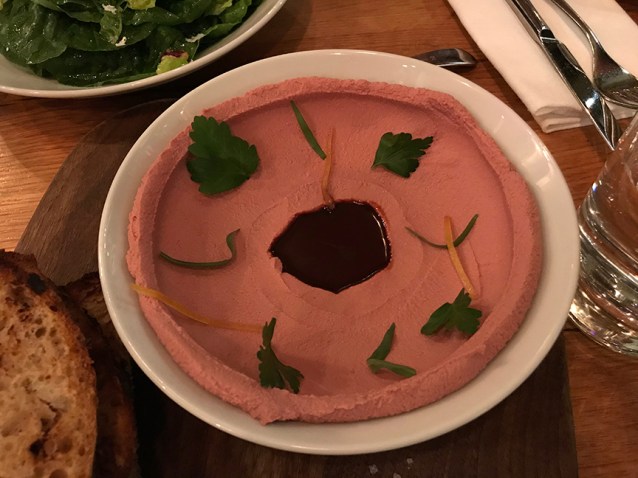
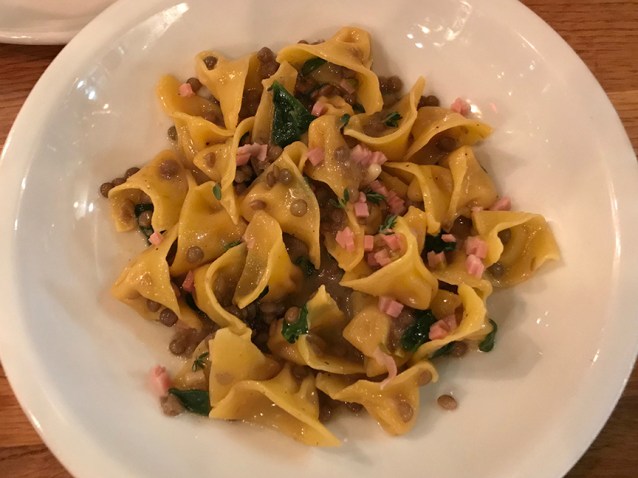
I loved the mortadella tortellini (above). I also really loved the pâté and the presentation of the dish (below). Great wine list and great overall vibe and energy in this restaurant, which was one of the pioneers (roughly five years ago?) of the downtown culinary new wave here.
But as much as I loved Bestia and as much as I love the two restaurants I consult with here, the all-time king of Italian cuisine in Los Angeles will always and forever be Gino Angelini, owner and chef at the eponymous Angelini Osteria.
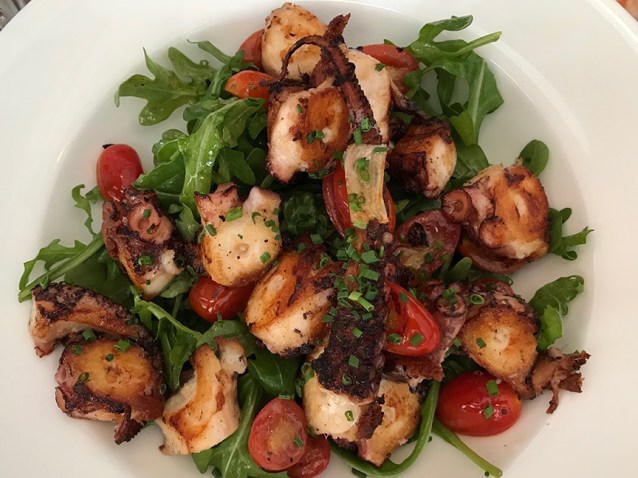
That’s his octopus below. Perfection…
The legendary tagliolini al limone (below).
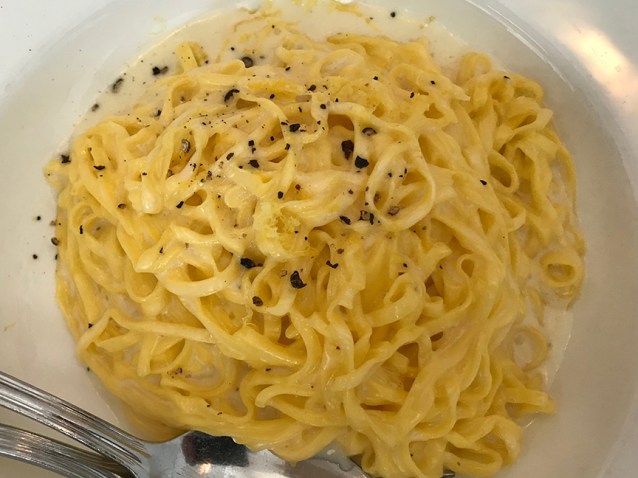
There’s so much good housemade pasta in LA right now. But Gino was the first to really turn Angelinos on to how great it can be. I can’t think of an LA chef who doesn’t point to him as a pioneer and inspiration for her/his own pasta program.
The pappardelle with duck ragù (below) were also fantastic.
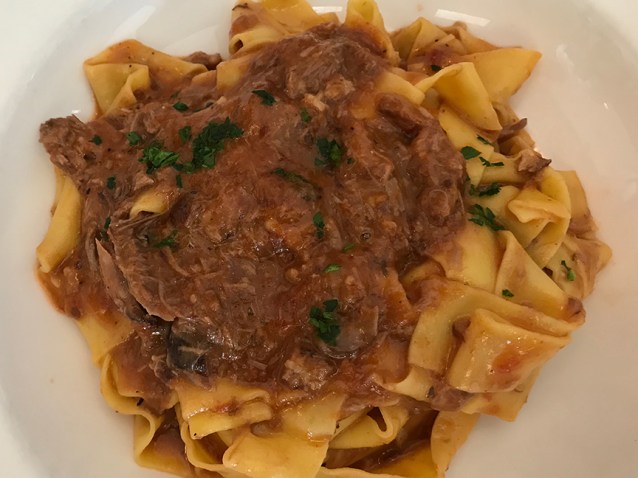
As simple as a dish like that may seem, it really takes a deft hand to achieve the balance that it needs.
Wow, Gino, as always, ubi major minor cessat. I really love and have always loved your cooking. It was great to be back. Thanks for taking such good care of us (and thanks Anthony for treating!).
Now time to get my butt on a plane to Houston where I belong…
If you’ve ever studied Italian as a second language, you know that you invariably encounter irregular nouns early on in your class.
In nearly every curriculum, the examples the pedagogues use are the same: amico (friend) is pluralized as amici (and not amichi as the velar-paroxytone model would suggest); greco (Greek) becomes greci; and porco (pig) becomes porci.
It’s only natural that amico would come up frequently in Italian 1 class. The word greco is not as common in rudimentary Italian but it also has a place in introductory Italian language instruction since Greek culture pervaded the fabric of ancient Italy.
But porco? Ask any Italian instructor and she or he will answer similarly and without skipping a beat: gli uomini sono porci – men are pigs (a sentence that incorporates not one but two irregular nouns!).
It’s an aphorism that evidently comes up frequently in Italian colloquialism.
I can only wonder how many times the expression has been uttered in Italy as the American and Italian media has devoted ample coverage to widespread allegations of sexual harassment among U.S. politicians and in the U.S. entertainment, news, and restaurant trades.
Any member of the U.S. wine trade would be hard-pressed to deny that sexual harassment is sadly all too common in the industry.
While I was in Italy teaching earlier this month, many Italians — consumed, like their America counterparts, by this watershed cultural moment — asked me about it. When I got home to my wife Tracie in Texas, we spent a lot of time talking about it over the holiday weekend (the allegations began to circulate before I left but they seemed to explode in their scope and reach while I was gone).
We both remembered myriad episodes of highly inappropriate behavior over the course of our careers in wine.
When I first met Tracie nine years ago, she was a sales rep for Glazer’s in Texas (now Southern Glazer’s, a major American wine distributor). I’ll never forget her telling me about having to sell wine at an adult entertainment venue (an account that was assigned to her by her superiors; she had no voice in the matter). The club’s owner regularly harassed her.
Over the course of our conversations this weekend, she also remembered a ride-with with a particularly aggressive supplier rep who was widely known in the Texas wine community to harass young women (a supplier rep[resentative] is a sales agent for a particular brand or portfolio of wines; a ride-with is typically a day of sales work, when a rep for a local distributor hosts a supplier rep and the supplier rep rides with her or him).
I remembered a 2010 trip to northern Italy with a group of leading sommeliers from across the country. There was one woman among us. During one of our daily bus rides, the conversation became so sexually charged that I insisted that it stop. We rode in silence for the rest of that day.
I also remembered a 2007 dinner in lower Manhattan with a Tuscan winemaker. It was clear to everyone at the table that he was harassing his importer’s publicist. I tried as graciously as I could to separate them. But looking back now, I am filled with regret: I should have told him, however discreetly but firmly, that he had to stop. I feel so bad about that now. I can remember the look of terror in her eyes and her inability to reach out for help.
By the time we went to bed on Saturday night, my mind was swirling with memories of similar episodes: a so-called American wine writer who asked a Neapolitan publicist to take a shower with him (sound familiar?); a celebrity wine writer who literally groped a publicist at a popular Manhattan restaurant in front of the whole table (we all hovered like flies waiting for a windshield on a freeway); a respected old-line wine writer who agreed to take a trip to Italy with a publicist and then expected her to have sexual relations with him (she broke away from the trip on the first day).
And who can forget the immensely popular wine blogger who regularly attacks women wine writers with sexually crude language? Sexual harassment also occurs in the virtual realm of the U.S. wine trade.
Following the revelations about rampant sexual harassment in the U.S. restaurant industry, many high-profile restaurant groups are taking steps to address the issue.
It’s time that wine industry leaders do the same. When is the other bottle going to break?
Image created using Wikipedia Creative Commons images here and here.