 In early December, I had the remarkable opportunity to sit down with Giancarlo Moretti Polegato (above), CEO and legacy owner of his family’s Villa Sandi estate in Valdobbiadene, one of Prosecco’s greatest pioneers and one of its enduring cultural icons.
When our conversation turned to the “Biodiversity Friend Certification” of Villa Sandi’s vineyards, he explained to me that Villa Sandi had implemented the association’s environmentally friendly protocols for two main reasons.
First and foremost, he said, is the fact that the Prosecco DOCG is one of the few appellations in the world where residents literally live among the vines. If you’ve ever driven through the appellation, you know that town squares, schools, and residences are surrounded by and in many cases abut on vineyard land. In the light of how grape farming can impact residents’ quality of life, the winery felt it was imperative, he told me, to lead the way in creating a new benchmark of sustainability and biodiversity.
The other reason, he said, is that he expects Valdobbiadene and Conegliano to be added shortly to the list of UNESCO Heritage Sites.
Some readers may be unaware that “The Prosecco Hills of Conegliano and Valdobbiadene” were included in the “tentative list” of candidate sites in 2010. And in 2017, the area was upgraded to official candidate status. With heritage status on the horizon, he noted, maintaining and fostering Prosecco’s natural beauty and its unique landscape will be key elements in developing the wine- and nature-tourism industry they expect to grow there.
(Read the UNESCO entry for the Prosecco Hills here.)
 Above: Biodiversity Friend certification reflects the growers commitment to sustainable vineyard and winery practices.
Another topic I was keen to cover with Giancarlo was the estate’s production methods. It’s not the only estate, nor was it the first, to make its Prosecco DOCG using must instead of a base wine for the second fermentation. But it is one of the few estates (if not the only) to produce all of its wines this way.
Villa Sandi began making its wines this way when it first started to ship its wines outside of Italy, said Giancarlo. It ensured the freshness of the products even after a year of shelf-life, he explained. Because the vinification process takes place in a reductive environment (i.e., in the absence of oxygen), it’s easier for the winemaker to preserve the distinctive fresh aromas of Glera. It also reduces the amount of sulfur needed to stabilize the wine.
He reminded me that in another era (one that I remember well from my university days in Veneto more than 30 years ago), Prosecco was always consumed within a year of the harvest. Today, the wines travel much greater distances and often spend more time on wine shop shelves.
I know that a handful of Prosecco producers use this method for some of their production. But to my knowledge, Villa Sandi is the only one that uses it exclusively for all of its Prosecco DOCG.
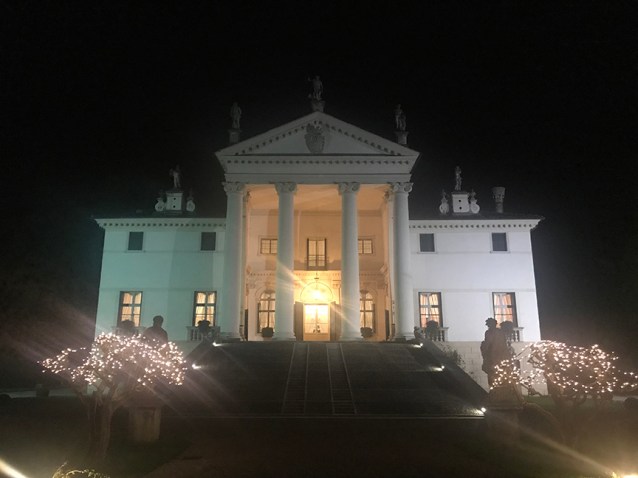
Our conversation spanned a number of topics, including the 17th-century Palladian-school villa that stands at the center of the Villa Sandi hydro-powered campus (below).
They use it for the winery’s gala events, of course. But it’s also open to the public year round.
All in all, it was a fascinating chat, with one of the wine world’s most charismatic and inspiring figures. His family is the embodiment of the Veneto spirit of entrepreneurship and the winery’s reception area is lined with photographs of Popes, aristocrats, politicians, and celebrities who have visited the estate.
But with is classic Veneto cadence and warm demeanor, he was also easy going and easy to talk to. He apologized profusely that he had to cut our conversation short: after his Do Bianchi interview, RAI 3 television would be filming him for a national broadcast.
I can’t wait until I can make it back that way again…

 For more than four years, I’ve been working as a media consultant for the Italy-America Chamber of Commerce Texas (recently ranked the top chamber in North America and eighth in the world).
  Alejandro Escovedo (above, third from left) is one of America’s most iconic songwriters and performers. His new album,
  Happy new year, everyone!
  5. Italian winemakers, both large- and small-scale, will face expanding difficulties in getting their wines to the U.S. market.
 A trip to the land of Prosecco in early December was an opportunity to taste at a couple of my favorite houses.
  It was such a thrill for me to get to taste with Francesco Drusian, a legacy producer and appellation pioneer. His insights into the evolution of Prosecco and its extraordinary arc — literally from rags to riches — were fascinating to hear.
  The Ruggeri Vecchie Viti was another highlight.
  One of the biggest thrills of my year in wine was my first taste of the newly released 2015 Produttori del Barbaresco (classic) Barbaresco with one of Barbaresco’s coolest homeboys, Luca Cravanzola.
 People who work in the wine business get asked the same question by laypeople all the time: what’s your favorite wine?
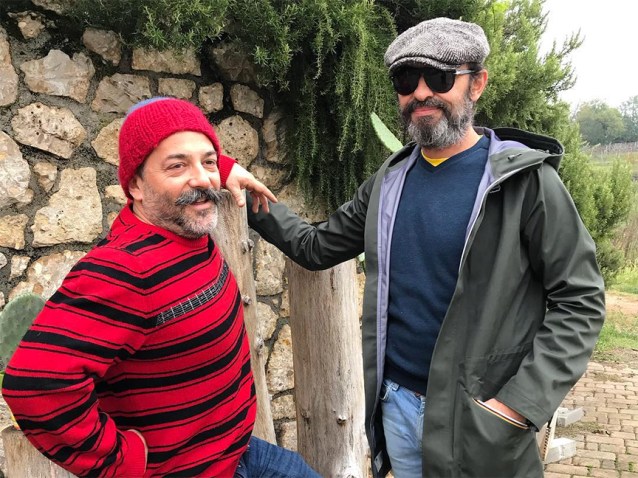 Above, from left: Nico Danesi and Giovanni Arcari are among my best friends in the world and they produce one of my favorite expressions of Franciacorta (image via
  Last week the European Union drastically reduced the amount of copper that grape farmers can use each year in their vineyards.
 Whenever people ask for recommendations on where to eat in Bologna, my answer is always the same: there’s great food in Bologna but the best expressions of true Emilia cuisine are found in the countryside.
  One of my best friends and clients, Paolo Cantele, and I had carved out time for a “working dinner,” so to speak. And he suggested we go there.
 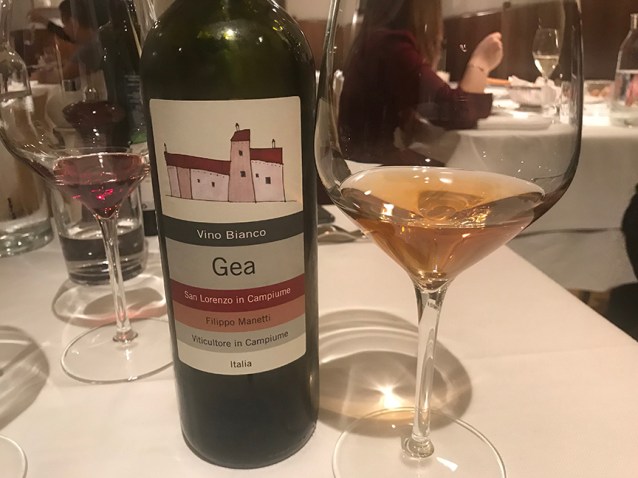 But the thing that really took it over the top for me personally was the wine list.
  And of course, no evening in Bologna is complete without a stroll sotto i portici, a walk under the porticoes, one of the city’s defining architectonic features.
