The color of Dolcetto…

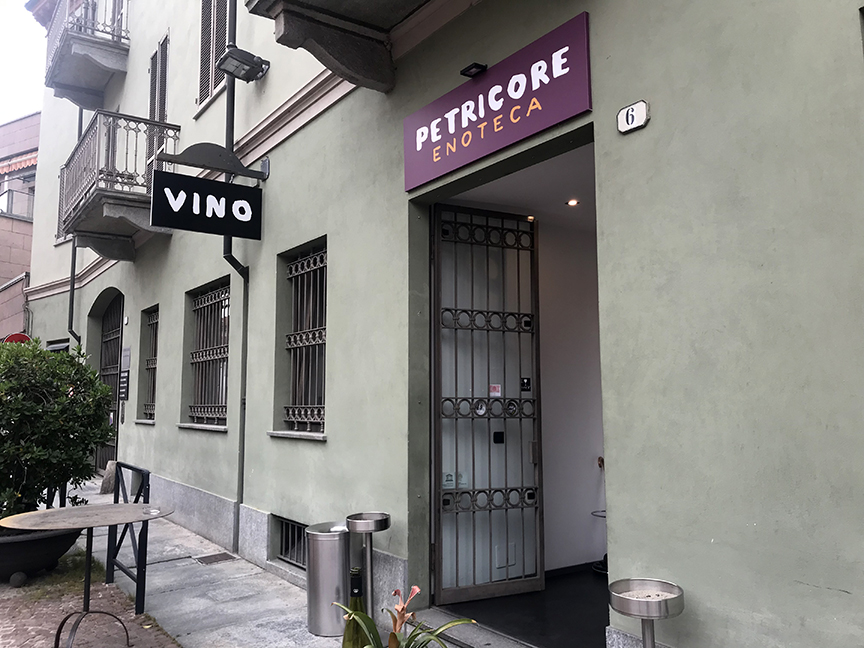
Posting on the fly this Friday afternoon from Bra in Piedmont where I’ve been teaching this week for the Master’s program at the Slow Food University of Gastronomic Sciences.

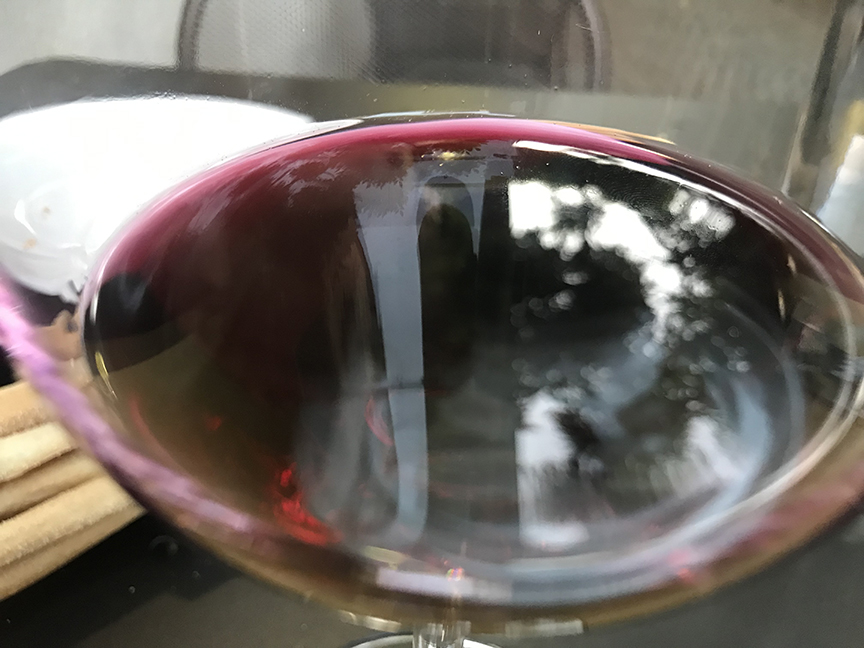
So little to tell and so much time… but I just had to share the above photo that I snapped the other night when I got here: that’s Chionetti 2017 Dolcetto di Dogliani in my glass, one of the greatest expressions of the appellation and one of my faves.

See that purple rim on the wine? That’s CLASSIC Dolcetto by one of its greatest OG masters. 100 percent DELICIOUS.

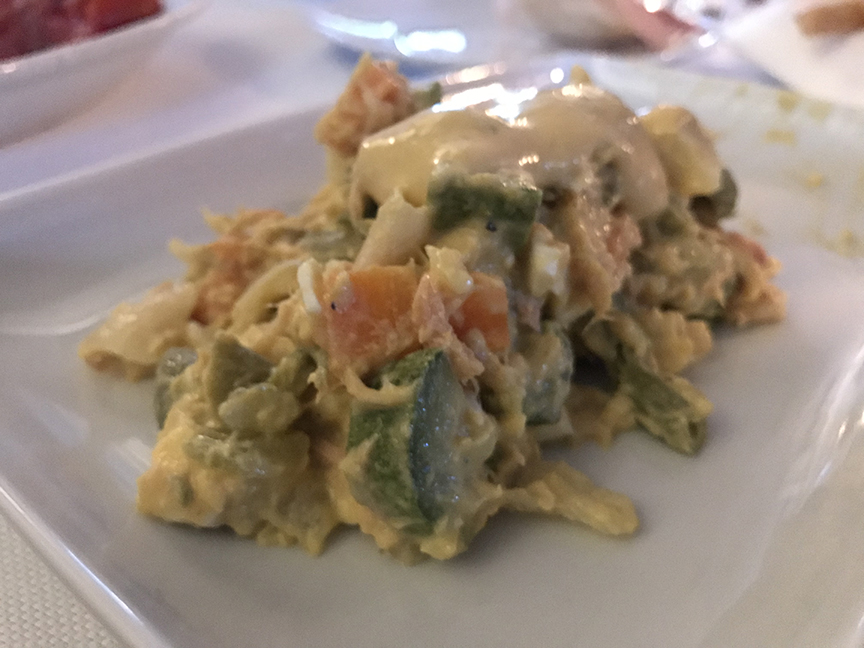
And of course, what would a proper dinner in Piedmont be without cheese and cognà (below)?

I have some killer winery visits scheduled for tonight at tomorrow (one of the perks of the teaching gig is simply being here in wine country). Gotta run. Thanks for being here. Buon weekend a tutti.

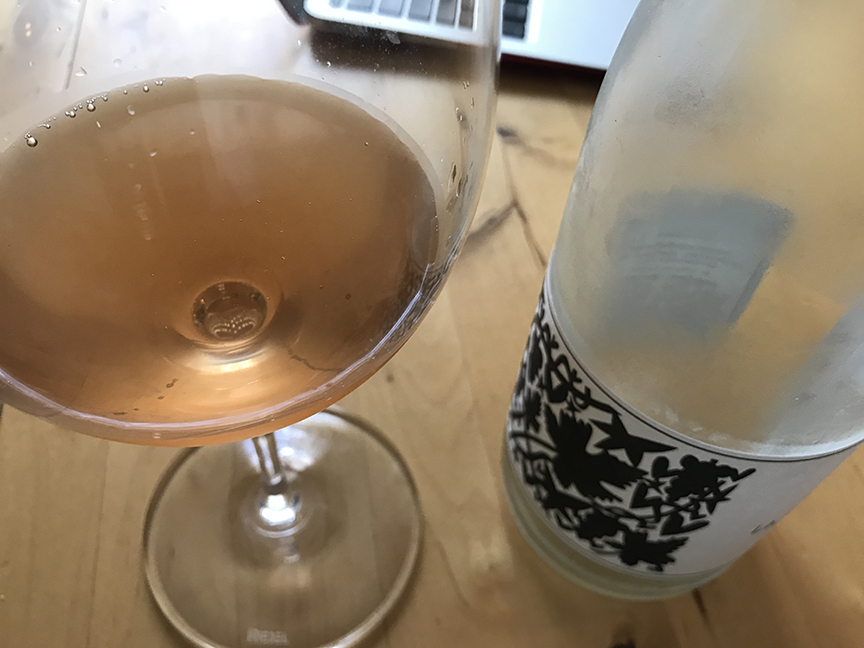
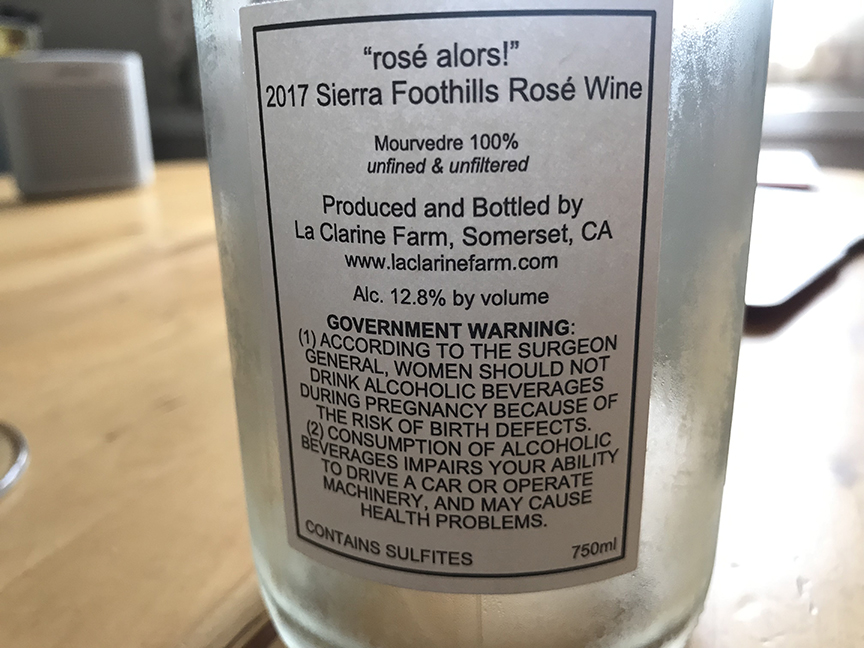
Color, nose, mouth, finish? Please add joy to your descriptors: Clarine Farm Rosé Alors!

From the department of “school’s out for summer”…

“No, the wine doesn’t taste better in Italy! It tastes just the same as in America.”

That’s what a longtime Italian restaurateur in New York used to moan when his guests would claim that the opposite was true.

Was it because the Italians (and French) saved the good wine for themselves and sent only the crap wine to America? (Believe it or not, a lot of folks still think that.)

Was it because the best wines simply don’t travel well? (There’s actually some truth to that, especially when it comes to natural wines.)

No, he insisted vehemently.

In his view, it was because you are more relaxed when on vacation. You sleep better and you eat better. And so everything tastes better.

When Tracie and I opened the 2017 Rosé Alors! by La Clarine Farm on Saturday night, his nugget of wisdom popped to mind.

Beyond the purely technical and the aesthetic, can true greatness in wine lie in its ability to spark a beloved memory, evoke a cherished sensation, or create welcomed harmony out of the workaday?

Many wine purists wouldn’t consider my friend Hank Beckmeyer’s La Clarine Farm wines to be great in a technical sense. They are good and they are correct, they might say, free of the often overlooked flaws that you find in low-input, low-intervention wines like his.

But you’d be hard-pressed to find a wine that can inspire so much joy. And please trust me when I say: greatness therein lies.

As the Parzen mère, père et filles munched on grilled steak, grill-charred corn-on-the-cob and sweet zucchine rounds, wilted spinach dressed with California olive oil, and a favorite brand of Abruzzo spaghetti dressed with olive oil and kosher salt, the parents loved his Rosé Alors! (from Mourvèdre) so much that they saved the last glass for a libation — a true libatio, a glass to offer in sacrifice to the gods. The wine was that great: we couldn’t bear to drink the last glass. I know that sounds impossible and ridiculous but neither wanted to deprive her/his lover the last sip. It’s still sitting in a Bordeaux glass in fridge on Monday morning!

It was an early June evening and we were all a little sun-burned and puckered out from a day of birthday and end-of-school pool parties.

And the wine was pure joy, just like a summer’s eve in the countryside — Italian, French, Californian, or Texan. Greater than any other wine could have been in that moment.

Thanks again, Hank, for all the joy you’ve brought into our lives over the years. Saturday night, Tracie and I remembered, so fondly, tasting your wines for the first time at chez Alice in NYC more than a decade ago, on our way back from our first trip to Europe together.

Shitting good. That’s what I love about natural wine.

From the department of “good morning, Sunshine!”…

Many, many moons ago, a doctoral candidate in Italian accompanied a group of visiting professors to a favorite Chinese restaurant in downtown Los Angeles. He was the only American in the group of eight or so scholars who had come from Italy to attend a conference.

When they all took their places at the round table, with a lazy Susan at its center, beer and tea were promptly ordered. But before the food order was placed, something remarkable happened.

A professor from Bologna, an older gentleman, asked whether or not wine would be served. When he learned that the establishment didn’t have any wine, he stood up and declared plaintively: “If there is no wine to be had, I cannot eat here.”

“What are you saying?” cried the chair of the Italian department, who had organized the gathering.

“If there’s no wine,” the professor from Bolgona explained matter-of-factly, “I prefer not to dine. I don’t eat unless I can have wine with my meal. Otherwise, I don’t digest well.”

The chair turned to the doctoral candidate and asked him to find a bottle of wine — as soon as humanly possible.

Those were the days before the Google (yes, it was that long ago). But somehow, the future Ph.D. tracked down a bottle of Pinot Grigio.

And all was right again.

Those were also the days before “natural wine.” And the wine proffered was hardly what the enohipsters of today would find remotely acceptable. But it was wine. And that it was wine was all that mattered.

That episode springs to mind often these days, although the name of the professor from Bologna is long forgotten.

For many young Americans who travel to Italy for the first time, the fact that Italians consider wine to be a vital metabolic component is often a revelation.

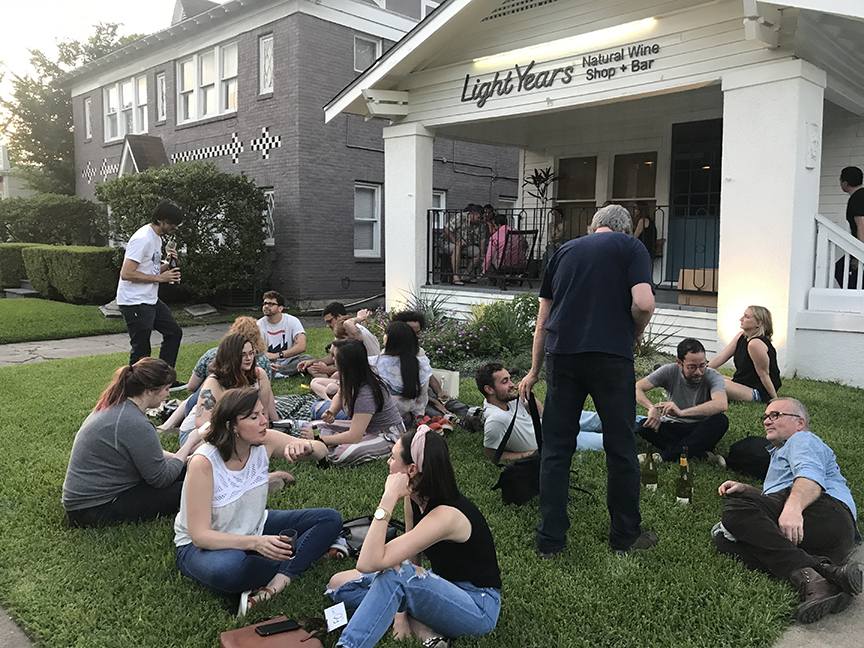
That notion was on my mind last night as I enjoyed a bottle of the reasonably priced I Pentri 2014 Fiano last night at Light Years, Houston’s most radical natural wine bar.

The oxidation and slightly cooked character on this wine would have been called out as a flaw by many wine purists. But its ripe white fruit and rich minerality on the mouth were delicious nonetheless. I enjoyed it thoroughly.

Even though there’s no agreed-on definition of what natural wine is or isn’t, many would call this a natural wine: it’s organically farmed, it’s spontaneously fermented using wild yeast, and its low-intervention winemaking style makes it a compelling, even if technically flawed, expression of place.

But none of that mattered last night.

What matters to me most about wine is how it makes you feel the next day. And in my experience, the natural wines are the ones that make me feel best.

Let it suffice to say that all was right again this morning.

Have a great weekend, everyone. Drink some natural wine. You and your colon will thank me.


Her first Kistler (was delicious)…

Update: niece Emilee should be able to come home from the hospital today. She has a long road to recovery ahead of her. But we’re just glad that she’s going to get there. Thanks for all the wishes. They really mean a lot to our family.

In the late 1990s and throughout the early 2000s, when American enohipsters were vociferously shunning “California Chard” and “Napa Valley Cab,” there were standouts among their objets of derision.

One of those was Kistler Chardonnay. Even for those who had never tasted it, it represented the apotheosis of the “oaky buttery Chard” that had become their rallying cry.

I’m sorry to say that I was one of them. But I’m happy to report that I’ve seen the light in the meantime.

Last week, Tracie and I opened a bottle of 2016 Kistler Chardonnay Sonoma Mountain that had been graciously and generously given to us by our good friend Paolo — an unabashed lover of California Chardonnay.

Knowing that he loved the category, I had bought a couple of my favorite expressions of California Chardonnay to share with him while he was here in Houston visiting and working. He returned the favor with the above bottle after he heard me mention that Tra had never tasted Kistler before (that’s the kind of wonderful friend that he is).

This wine is still very early in its evolution. The notes of oak in the nose and mouth, however elegant, aren’t yet entirely integrated into the wine. But on the palate, the lithe wine’s mouthwatering fruit and savory character — stone fruit, dried and ripe, with hints of wild herbs — were already brilliant and rich. It was one of the best wines we’ve drunk at home this year and we both loved it. My only lament is that it could have used some more bottle age before we cracked it open.

If there’s one thing I’ve learned after more than 20 years working in and writing about wine, it’s that it takes years and years of tasting (and tasting different styles) to develop your “palate,” as they call it.

It also takes equally long to dispel and dispense with your prejudices and preconceptions.

Kistler, I’m sorry I doubted you. And I’m so glad I’ve come around. My wife’s first Kistler was delicious!

Two California Chardonnays that really wowed me this week (an ongoing apostasy)

There was another time in our lives when the binomial California Chardonnay was anathema to us.

I deeply regret it now: California Chardonnay, like Napa Vally Cab[ernet Sauvignon], was a byword for everything that we didn’t like in wine. Even without tasting such a wine, we just knew that it was oaky and buttery, with ramped up alcohol and yeasted flavors.

Attribute it to youth: I was in my 30s back then, living in New York, and we wouldn’t have been caught dead with a glass of then loathsome “Chard” (as it was called) in hand.

I use the royal we here because my (now unforgivable) attitudes toward Californian interpretations of the Burgundian white were shared nearly unanimously by my peers. We didn’t even trust the newly coined “unoaked Chardonnays” that began to appear in the aughts of our lives. Surely, we were confident, they had been tricked out by their Dr. Frankenstein creators using unnatural enzymes and inauspiciously administered yeast and synthetic additives we couldn’t even named if we tried.

Looking back on it all now, there’s really no excuse.

But enough with my apostasy! I’ve already renounced my creed and screed about California wine (California wine, I was wrong about you. I’m sorry…).

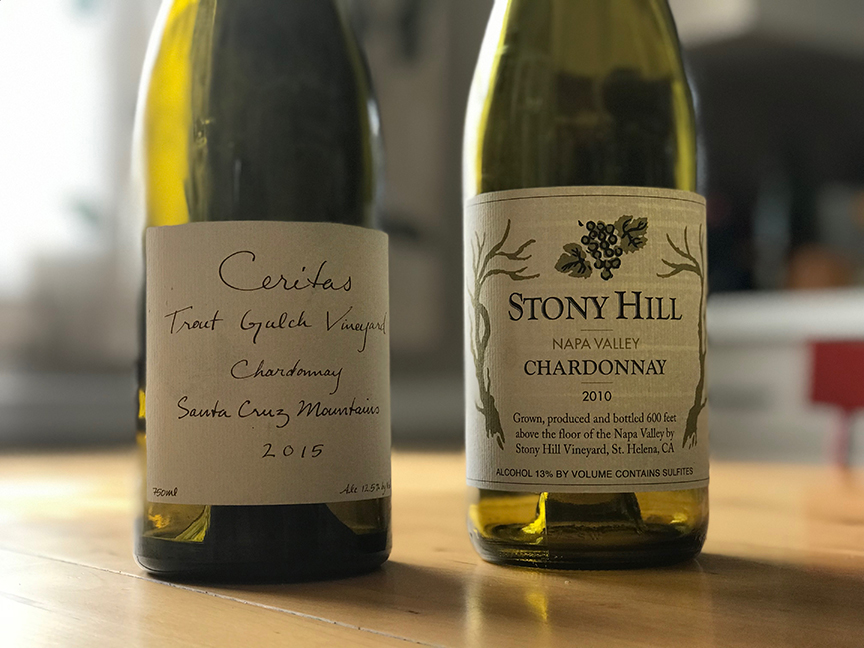
I continued my rehabilitation last week with the two bottles above.

Paolo, one of my best friends, was in town from Puglia. He’s always been an unabashed lover of Californian Chardonnay. I wanted to share a couple of my recent favorites with him and so I splurged on two expressions of California Chardonnay that I can hardly afford.

I tasted the 2010 Stony Hill (a current library release for the estate) for the first time earlier this year. Chardonnay’s primary flavors here have evolved into a nuanced spectrum of rich fruit and gentle nutty flavors. I can’t think of a better example of elegance and balance in California. What a wine!

This is Napa Valley Chardonnay at its best imho.

The 2015 Ceritas Santa Cruz Mountains Trout Gulch had been on my radar for a few years now, since I tasted it for the first time while working on the first edition of the Slow Wine Guide to the Wines of California.

Arguably a more au courant interpretation of Chardonnay, this wine has only gotten better with age, with its minerality and tropical fruit coming into fine focus with hints of spearmint and sage.

Even though both wines strain my personal budget, they both represent extreme value for their quality and collectibility.

California Chardonnay, I hope you’ve begun to forgive me. But I fear not: though the road through Purgatory may be steep, my penance is ever so sweet…

What a groovy week in wine in Texas!

Paolo Cantele and I will be pouring his family’s wines tonight at Vinology in Houston from 6-8 p.m. Please come out and taste with us!

It felt like the world of groovy wine had descended on Texas this week.

That was the scene on Wednesday, above, at the Rootstock portfolio tasting preview at Light Years, Houston’s newest all-natural wine bar.

Rootstock, a mid-sized importer and champion of natural wine, had coordinated their events and the incoming winemakers with the Wild World Natural wine festival, which is happening this weekend in Austin. Alice Feiring is the featured speaker and I’ve even heard that natural wine maven and mensch Lou Amdur will be there (I’m so bummed I can’t be there but I have to be in Houston this weekend for a food festival I”m presenting and a blow-out music and wine party we’re hosting at our house tomorrow; message me if you want to come and need details).

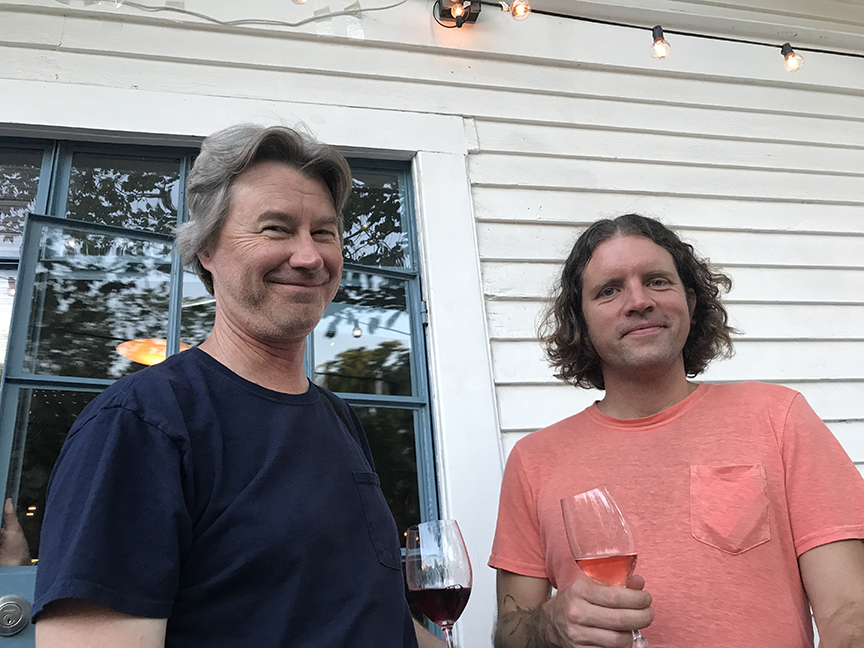
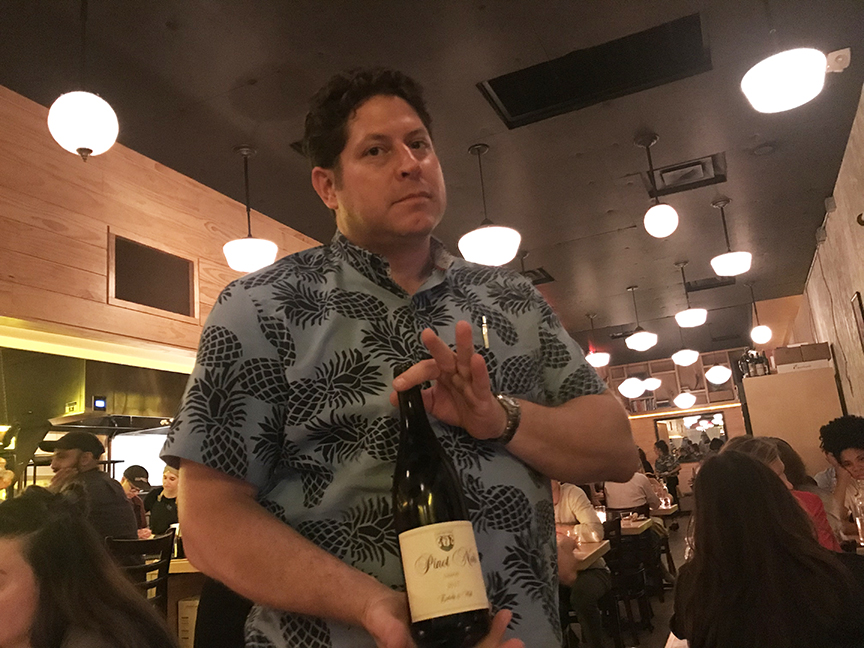
That’s Hank Beckmeyer of Clarine Farm, left, with Rootstock rep Dustin Popken.

Hank is good friend but I’m also one his biggest fan boys — a lover of the wine and the man. Such a cool dude and such great wines. Dustin’s also a good friend from our Austin days.

After I hit the Light Years event, where my buddy and natural wine pro Steven Dilley was literally slinging his now legendary Bufalina pizzas (with a line that stretched literally around the block), I headed over to Nancy’s Hustle where owner and wine director Sean Jensen was pouring some equally groovy natural wine.

Nancy’s Hustle is such a great example of what’s happening here in Texas: soulful, thoughtful food paired with equally meaningful wines. I was blown away by the enthusiasm and table-side knowledge of the servers. Man, this place was killing it on Wednesday night and the vibe was just right.

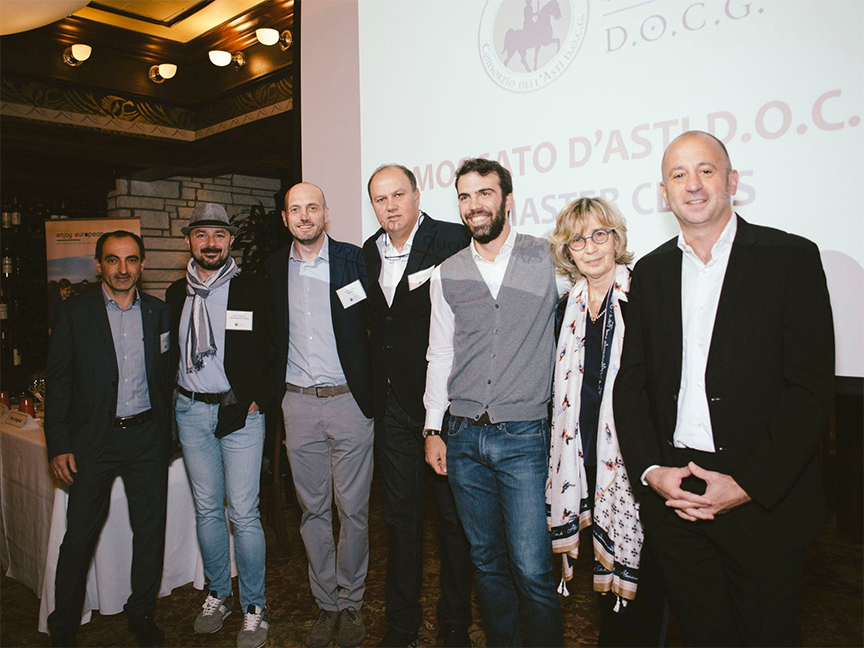
Earlier in the day, I had presented a master class on Moscato d’Asti at the swank Pappas Bros. Steakhouse downtown.

That’s me in the photo with a whole lotta Moscato d’Asti right there. It was a super cool event.

Shit, even Eric Asimov wrote a story about the renaissance of Texas winemaking in this week’s Times.

It’s just felt like one of those weeks when the wine stars have aligned seamlessly over my adoptive state.

Come see me and Paolo tonight at Vinology, come to our house party tomorrow, or come out and see me at the Houston Pasta Festival on Sunday where I’m emceeing! Wherever you are this weekend, DRINK GOOD WINE AND EAT GOOD FOOD! And ROCK ON!

When is white wine too young? Deconstructing (in the true sense of the word) Massican…

Jacques Derrida’s 1967 book Of Grammatology is considered by many to be an early manifesto of deconstruction (in the literary, critical sense of the word).

By the 1980s, his notion of différance would become a battle cry for a generation of critical theorists.

For them deconstruction didn’t mean taking a work of literature apart and breaking it down into its essential components (a popular but erroneous definition of the term). Instead, it meant looking at the ever widening gap between the author’s intention and the reader’s perception.

The concept (described hastily and imcompletely here, it’s important to note) came to mind when I tasted my friend Dan Petroski’s Massican 2018 Hyde.

Where, what, and how is the différance between the winemaker’s intent and the drinker’s sensation? I wondered. How do time, place, and movement impact our enjoyment of a given wine?

Dan graciously and generously sent me a flight of his new releases to taste at home and Tracie and I opened two of them the other night.

The 2018 Hyde, a 100 percent single-vineyard Chardonnay sourced from vines that are more than a quarter of a century old, was laser-focused in its brilliant mouth-watering white and stone and tropical fruit flavors. But its racy acidity and intense minerality made me think that it still hasn’t come into full focus yet. Was this the winemaker’s intent? Or was it just my perception? There’s no doubt in my mind that this wine will age gorgeously (for the price, it’s an extreme bargain for collectors). I loved this complex and compelling bottling but it felt like it’s going to need some time in the cellar.

The 2018 Annia, the other wine we opened that night, is Dan’s flagship wine, a classic Friulian-style blend made from California fruit. Historically, it’s the label that put Massican on the map (I can still remember the first time I tasted it a decade ago). Here the balance was impeccable: white flowers and stone fruit (ripe peach and ) danced against the moreish texture. This wine is drinking so beautifully right now, another immense value for white wine lovers like me and Tracie.

Both wines were great. But we definitely enjoyed the Annia more than the Hyde the other night, even though the Hyde presumably lies higher in the Massican hierarchy.

Once Tra and I taste the other two wines, Dan and I will trade emails and share notes, I’m sure.

But in the meantime, I’m going to enjoy the différance.

Dan, thanks again for sharing these wonderful wines with us!

Ronchi di Cialla 1998 Schioppettino and King Ranch Chicken (plus Houston music and tastings update)

On Saturday night, Tracie made a couple of my favorite dishes from her repertoire: King Ranch Chicken, a Tex-Mex classic, and fried okra fritters, a staple of her southeast Texas upbringing.

And Aunt Joanne and uncle Marty, who joined us for dinner, generously shared a bottle of 1998 Schioppettino, a library release from Ronchi di Cialla, Friuli’s legacy champion of native grape varieties and one of the region’s most soulful wineries.

The more-than-20-year-old wine was fresh and vibrant, with robust ripe berry flavors and a gentle touch of minerality and earth. Its sweet fruit made for a wonderful pairing with the casserole.

King Ranch Chicken is an ultimate Texas comfort food. For Tracie, it evokes memories of growing up on the Gulf Coast. For me, it conjures the aromas and flavors of the first meals she cooked for me when we were dating more than 10 years ago.

It’s not as spicy as you might think. And the surprisingly rich fruit of the wine and restrained alcohol sang beautifully against the creamy texture and richness of the food. We all loved it.

But before the casserole was served, Tracie also treated us to those okra fritters, which we paired with a Trebbiano d’Abruzzo from Cirelli (one of our house wines).

“Why do I like to fry stuff so much?” Tra asked our chihuahuas who huddled at her feet hoping for a morsel to be dropped.

The worst of last week’s rain had passed and it was a fine evening. All is well at the Parzens’.

In other tasting and music news…

I’ll be hosting, moderating, and leading a bunch of fun food and wine and music events this week and next.

Moscato d’Asti DOCG
Guided Tasting & Seminar
at Pappas Bros. Steakhouse (downtown)
Wednesday, May 15

There’s just a few seats left for this Wednesday morning tasting where some of Moscato d’Asti best and brightest will be pouring. Click here to reserve.

Paolo Cantele
in-store tasting
at Vinology
Friday, May 17

Paolo and I will be literally taking over the bar at Vinology on Friday night. Paolo is one of my best friends and we have worked together for 10 years. It should be a super fun evening.

Blow-out Party
and Potluck
live music and wine
Chez Parzen
Saturday, May 18

On Saturday afternoon/evening, Parzen family is hosting one of its house parties and Paolo is providing the wines. Everyone is invited — and yes, I mean everyone. If you have my phone number or we are friends on social media, just hit me up and I will send you details.

Houston Pasta Festival
Bayou City Event Center
Sunday, May 19

Click here to register for this Sunday afternoon festival (1 p.m. – 4 p.m.). I’ll be emceeing. Come hungry! There will be wine and Peroni beer, too.

My new band Problem Child
at Mongoose Versus Cobra
Sunday, May 26

We’ll actually be debuting the new band at the party but our first real show will be at the Mongoose Versus Cobra anniversary/Memorial Day party. We’ll be the first band to take the stage, at 6 p.m. Come drink craft beer, munch out at the food trucks that will be there for the occasion, and rock out with me.

The bastardization of Tuscan cuisine (test your Tuscan cookery knowledge)

Above: this dish is a classic of Tuscan cuisine. A bottle of juicy Sangiovese for anyone who can tell me what it is (see answer below; image via the Taverna dei Barbi Facebook).

Try the following experiment.

Ask any well-informed Italian or pseudo-Italian food and wine professional to name the classic standbys of Tuscan cuisine.

You’ll undoubtedly get an answer that sounds something like the following.

bruschetta (hopefully pronounced correctly), crostini, pappa al pomodoro, ribollita, pappardelle with wild boar sauce, fiorentina (butchered from a Chianina, no doubt), and of course, the ubiquitous tagliata — a grilled strip steak accompanied dutifully by arugula topped with shaved Parmigiano Reggiano and balsamic vinegar.

You had me at Parmigiano Reggiano and balsamic vinegar!

What about scottiglia, peposo, or cibreo?

You won’t find any of those dishes mentioned in the “Tuscan Cuisine” sub-section of the Wikipedia entry for Italian cuisine.

You will find, however, “Forentine steak” and “minestrone” (mentioned as the foundation of ribollita). Parrina and Sassicaia are also listed side-by-side as top wines from Tuscany. Who can tell me where the Parrina DOC lies without cheating?

Today, I wanted to draw attention to a wonderful post by my friend and client Stefano Cinelli Colombini, owner and winemaker at the legacy Brunello estate Fattoria dei Barbi where the family also runs a restaurant — the Taverna dei Barbi. Many of the recipes on the menu there are culled from a cookery book scribed by his great-grandmother. I wager that few Italian-focused food and wine professionals would recognize some of the traditional dishes (I’d love to be proved wrong!).

“Is Tuscan cuisine just bruschetta and tagliata?” he asks as he points out that a bruschetta topped with diced tomatoes has nothing to do with Tuscan cookery. Nor does a tagliata served with arugula, Parmigiano Reggiano (from Emilia), and faux balsamic vinegar (I’ll reserve my harangue on the criminality of so-called balsamic vinegar for another day).

In his post, which I highly recommend to you, he offers a troubadourish plazer of genuinely Tuscan victuals.

The Tuscans are among the world’s masters of food and wine tourism. And they deftly offer my countryfellows what they want. Any American who has visited the region will boast of the unforgettable night when they paired Sangiovese and a blood-rare steak. But few will revel in the memory of a gosling’s neck stuffed with ground pork, bread crumbs, anchovies, and garlic (the dish above is actually a stuffed duck’s neck, currently served at the Taverna).

There’s so much more under the Tuscan sun for us to discover. It’s a crime that we don’t make the effort to see beyond the Olive Garden version of true Tuscan cuisine.

Vlog post: tasting some Super Tuscans at 8:15 a.m. at Ca’ Parzen (video)

Super Tuscans aren’t really my thing but I was happy to taste these wines for an old friend who works as a publicist in the New York wine trade.

The wines were very good. Not my style but very well made, balanced, and tasty. The flagship wine, Monteti, just needs some bottle aging to integrate its oak. Very nice wines. Probably well priced.

There’s been a lot of investment in “upper” (as I call it) or central Maremma. It’s a swath of land that lies inland from the coast between two mountain chains (as you can see in the Google map screenshot above).

We’re going to be seeing a lot more international-style wines coming from that part of Tuscany. The wines I tasted this morning are indicative of the style.

I hope you enjoy the video! Thanks for tasting with me.