Slow Wine 2020 needs you! Accepting applications for field contributors (to visit and profile Slow wineries)

From the department of “labor amoris”…

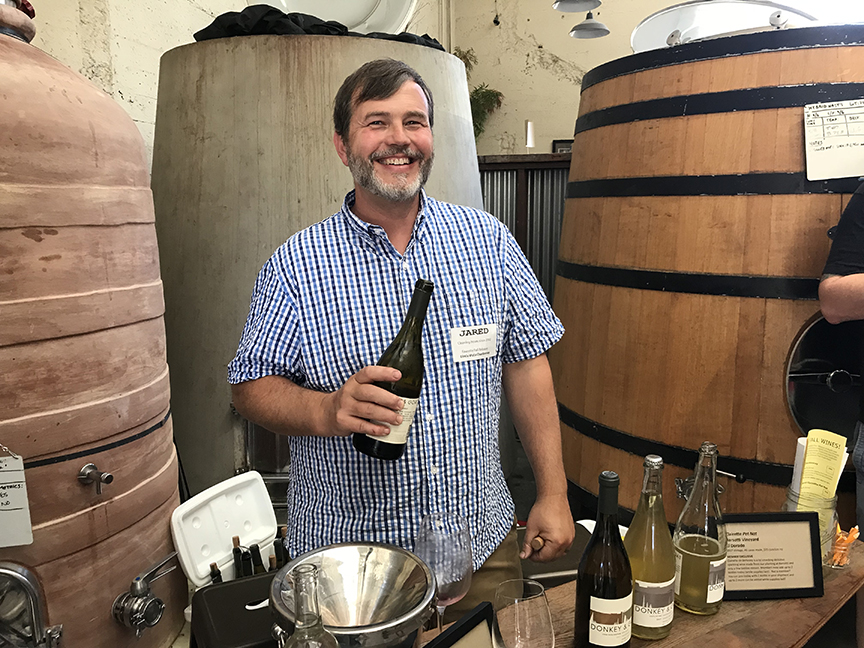
Above: Jared Brandt of Donkey and Goat at the winery’s tasting room and winemaking facility in Berkeley.

It’s a thankless job and pays just a pittance. But it’s one of the most fulfilling and fun gigs in the wine world (that is, if you’re into California and Oregon wine).

The editors of the Slow Wine guide 2020 are currently accepting applications for field contributors.

Please email me here if you would like us to consider you for the position (I’m the guide’s coordinating editor for California and Oregon).

Field contributors are tasked with the following:

– contact producers to set up winery visits;
– visit wineries to taste, interview, and photograph;
– write roughly 300-word profiles of roughly 10 estates (some contributors do more).

It’s now our third year of putting together the west coast guides and we’ve managed to streamline the process this time around. I’ll fill you in once I hear from you (including deadlines etc.).

The best part of the gig is the interaction with the producers and the opportunity to taste some of the best wines in the U.S.

And of course, there’s also In-N-Out burger (below). Not very slow but man, it sure hits the spot after a long day of tasting through California.

I look forward to hearing from you! Please help spread the word: we are expanding the guide again this year and need all the filed editors we can get.

Thanks in advance! Evviva Slow Wine!

Taste, party, rock out with me in Texas this month…

Don’t be shy! Come to our house party on Saturday, May 18. All are welcome and I’ll be debuting my new band. Here are some events where I’ll be pouring, speaking, emceeing, and jamming this month in Texas. Come party out with me…

Cantele Wine Dinner
at Il Brutto in Austin
Tuesday, May 14

Email the restaurant to reserve. I’m psyched to check out Il Brutto, one of the many new Italians to pop up in the Live Music Capital of the World (we’ll probably go to the Continental afterwards).

Moscato d’Asti DOCG
Guided Tasting & Seminar
at Pappas Bros. Steakhouse
Wednesday, May 15

Open to trade only. Here’s the link to register. I’ll be presenting the tasting and moderating a panel that will include Andrea Costa from Marenco, Stefano Chiarlo from Chiarlo, and Luigi Coppo from Coppo. Three of my favorite producers from the appellation (and three super nice and brilliant dudes).

Paolo Cantele
in-store tasting
at Vinology
Friday, May 17

Paolo and I will be pouring and talking about his wines 6-8 p.m. at this fave Houston wine bar and shop. No need to register. Here’s the Google map. We’ll be hanging at the bar afterwards. Always a good time at Vinology.

Blow-out Party
and Potluck
live music and wine
Chez Parzen
Saturday, May 18

Parzen family is hosting one of its house parties and Paolo Cantele is providing the wines. Everyone is invited — and yes, I mean everyone. If you have my phone number or we are friends on social media, just hit me up for the address if you don’t already have it. Kids performances will begin at 2 p.m. Adult music will begin at 4. Bring your favorite potluck dish. We will party until the wine runs out (and there will be plenty of wine, believe me).

Houston Pasta Festival
Sunday, May 19
Bayou City Event Center

Click here to register for this Sunday afternoon festival (1 p.m. – 4 p.m.). I’ll be emceeing this event this Italy-America Chamber of Commerce event this year. And my friends and food writers Renia Butler, Chris Reid, and Eric Sandler will be joining me on a panel that Eric’s moderating. Some of the top Houston-area Italian restaurants will be sharing their favorite pastas. But I’m especially geeked to taste the entries from Pepper Twins (Chinese) and Harlem Road BBQ.

“Organic farming is under attack in Europe, especially in Italy.” Interview with Matilde Poggi, president of the Italian Federation of Independent Grape Growers

Happy International Workers’ Day, everyone!

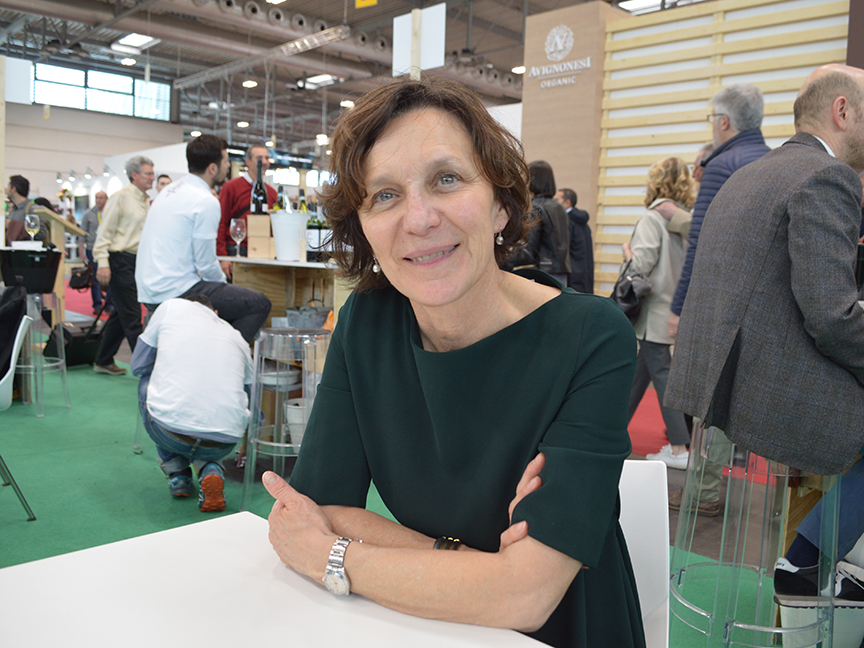
At Vinitaly this year, I had the opportunity to sit down with Matilde Poggi (above), president of the Italian Federation of Independent Grape Growers (FIVI as it is known in Italy). I was eager to ask her about the EU’s newly implemented limits on the use of copper to combat downy mildew (peronospora). And I was also keen to hear her insights into the white-hot debate over organic agriculture in Italy. Matilde is one of the people I admire most in the Italian wine trade: FIVI advocates for wineries who grow their own grapes, make and bottle their own wine, and market and sell their own wines. You can identify FIVI-member wine by the FIVI logo on the bottle. The following is an excerpted translation of our conversation.

We believe that the four kilos per hectare [allowed], including the average [of 28 kilos per hectare allowed] over seven years, is fine.

For certain organic wineries in certain growing areas that are less suitable and more problematic, where there is a greater risk of peronospora, four kilos aren’t going to be enough in some instances.

In the light of this, we would have preferred that the European Community would have given us a little more time to prepare. A five-year grace period would have been great. Especially for organic wines. Because conventionally farmed wines have many other chemically based alternatives to copper that can compensate for peronospora.

The EC chose not to make a distinction between organic and conventional and so this is the result.

There was a study of organic wineries in France that found that nearly 20 percent will have to convert to conventional farming. We don’t believe this is a positive message.

There are 1,200 [FIVI-member] wineries in Italy. Roughly half of them are organic. Many have told me that it’s going to be a challenge [to maintain organic practices]. This is especially true in certain zones where there are different amounts of rainfall, where the vigor of the vines is different. There’s no question there will be problems.

One thing that I’d like to point out is that we producers only use copper when it’s necessary. None of us want to use 10, 15, or 20 kilos [per hectare] of copper the way it used to be done. It’s not in our best interest. First of all, because we need to contain our costs. And more than anyone else, we are the ones who want to keep our land as pristine as possible. This isn’t something we enjoy. If we could avoid using even one gram of copper, we’d be happy. But if we do use copper it’s because we want to obtain healthy grapes and that’s the first step in creating good wines.

Conventional farming also impacts the environment. The difference is that we use only copper. It’s a metal that can be found in nature. But conventional farmers use chemical products. Many of those are systemic and so they enter into the plants and they end up in the wine.

Our position is that we want change attitudes about organic monitoring and certification.

Organic certification requires a big commitment of time to complete the required bureaucratic procedures. It’s a lot of work between filing documents and reporting. For example, organic farmers have to file a production estimate. What’s the point for someone with a vineyard? You already know, more or less, how much you are going to produce. It becomes onerous for producers because if you make a mistake, even just an incorrect date, you get fined.

We believe that the resources should be shifted to monitoring of the wines on the shelves of wine shops; monitoring of the wines stored at the wineries where wines are labeled as organic; monitoring of leaf samples taken from our vineyards without us knowing about it. This is the type of monitoring that should be done instead of the [authorities’] visits to the wineries to make sure that all the forms have been filled out correctly.

Organic farming is under attack in Europe, especially in Italy. There are a lot of opinion leaders who claim that organic farming isn’t really organic.

I believe that more post-production monitoring would be really useful and it would help to eliminate any doubts regarding organic farming. When a vineyard is declared to be organic, the inspectors should go into the vineyards and take a handful of soil and leaf samples and determine whether or not it’s really organic. This is what we feel should be done instead of focusing on pre-production.

Organics isn’t a fraud. It’s a guarantee for the consumer that the product is [organic] certified. That’s why certification is so important. All of us can say that we do one thing or another but when a wine labeled as organic certified, the consumer can be confident that it’s really organic.

Where Jews are unafraid to pray…

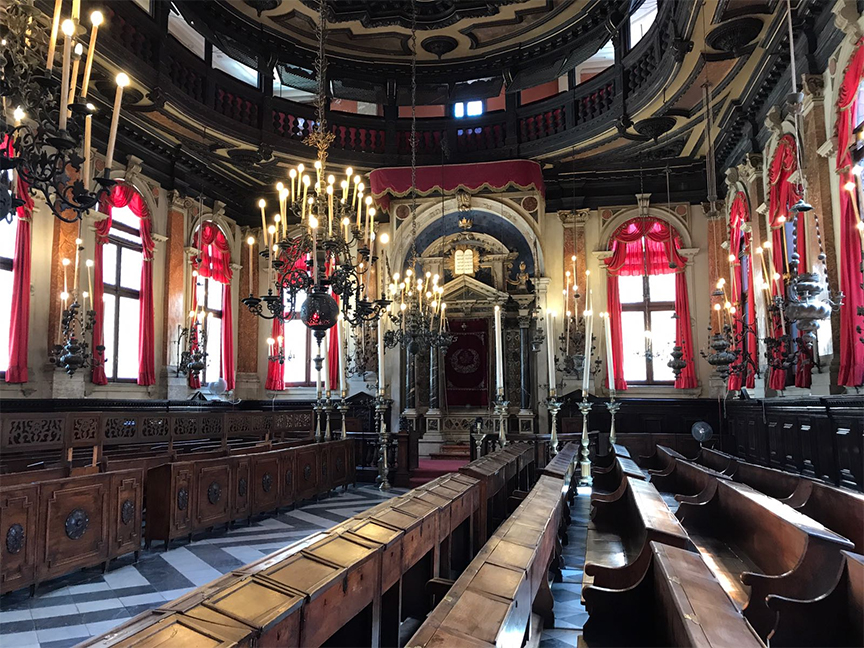
Above: the Spanish Synagogue in Venice, Italy (image via the Venice Museo Ebraico [Jewish Museum] Facebook). There’s no big sign outside revealing the presence of a house of worship. And there’s a reason for that.

The text messages began to arrive from Italy via WhatsApp and Facebook around 3 p.m. on Saturday.

“Are you okay? Are you in San Diego? Is your family alright?”

I hadn’t felt my phone vibrate in my pocket because I was playing guitar, loudly, with some of my neighbors.

When I saw the texts, I searched frantically for timely news from San Diego.

One Dead in Synagogue Shooting Near San Diego; Officials Call It Hate Crime, read the headline.

I broke away from my bandmates and called my mom. Everyone in our family was okay, she said.

It turned out that the attack happened in Poway, a roughly 50-minute drive from where my brothers and I grew up in La Jolla and where my mother and older brother still live and where he attends shul with his family. Thankfully, they were never in harm’s way.

My mother reminded me of the first time I went to synagogue in Venice, Italy, when I was a junior in college studying abroad for the first time.

Remember how surprised you were? she asked me. You had never been to a synagogue with armed guards outside, she remembered.

That was back in 1987 and I had never attended a Jewish house of worship beyond my hometown and Los Angeles where I went to school (and the occasional shul I visited in the midwest for bar/bat mitzvah ceremonies and funerals).

I was just a green 19-year-old who was learning about the world. It had never occurred to me that Jews were at risk of violence — simply because they congregated to pray.

But in Italy at the time, the memories of the “Years of Lead” and the terror of the 1970s were still fresh in people’s minds. And although it wasn’t as visible as it is today, anti-Semitism in Italy and Europe was unavoidable.

I can remember so clearly in mind thinking to myself: aren’t we fortunate to live in a country, America, where Jews can worship free of fear? I never imagined, in a million years, that one day synagogues in my country would need to be protected by armed guards outside — like I saw for the first time more than 30 years ago in Italy.

But then again, this is the America we live in today: a place where Jews are now afraid to pray.

Our hearts and prayers go out to everyone who was affected by the Poway shooting. What a world — what an America — we live in!

The shul where the attack occurred is run by the orthodox movement Chabad. In a newsletter it circulated last night, the editors wrote: “Cold-blooded, fanatical, baseless, relentless hatred can be uprooted from its core only by saturating our world with pure, undiscriminating, uninhibited, unyielding love and acts of kindness, and by teaching that to all our children, in our schools and our homes.”

Words to live by in a dark time for America.

G-d bless America. G-d bless us all.

Fast vs. organic food in Italy: a battle played out in the streets

Above: Joe Bastianich, one of the architects of the current Italian food and wine renaissance and one of Italy’s biggest television stars, now has a signature line of sandwiches at McDonald’s.

Earlier this year, an itinerant American professor took an old friend out for dinner in Milan. Their friendship stretches back more than 20 years: they met when he was studying philology in Rome and Pisa and she was completing her degree in Milan.

They were joined by her teenage daughter, who’s grown up in Milan where her mother practices law.

The American asked the young Italian what she and her schoolmates like to eat most. The answer? The Double Down at KFC, the “panino senza pane,” in other words, “the breadless sandwich.”
Continue reading

Good (and unusual) things I ate in Italy where the gastronomic landscape is increasingly globalized

These days, my trips to Italy are all about maximizing my time on the ground and making the most of the days that I have to spend away from Tracie and our girls. Long gone are the times that I would indulge in wandering the halls of a crusty museum or poring over an incunable in a dark seminary library. Instead, it’s always a mad rush to the next tasting, event, meeting, or seminar, with little time to soak in Italy’s rich cultural landscape and to visit with my old university chums there.

A boy’s gotta eat though!

Those are nervetti above: slow-cooked chunks of veal cartilage served at room temperature. That was at old-school Osteria La Colonna in downtown Brescia.
Continue reading

Houston wine professional Joseph Kemble needs our help

It’s with a heavy heart that I share the following: Joseph Kemble, one of Houston’s leading wine professionals, is dying and he needs our help.

Late last week, a friend of Jospeh’s created the “Help for Joseph” GoFundMe.

“For those of you who may not be aware,” she writes, “Joseph Kemble has a terminal illness and has been given only 6 months to live. Due to this prognosis, he has not been able to work for many months. He is unemployed with no income, nor insurance whatsoever. He has also lost his life insurance. After Harvey flooded his home, he was forced to find alternate housing for over a year, which put quite a strain on his savings. In the last 6 months, he was forced to use what savings her had left for medical care. He has been the sole caregiver for his mom, Francis, who still resides with him. He has medical cost that are mounting as well as living expenses that will go uncovered. This has left him in a frightening place, possibly facing the loss of everything he has when he should be able to live out his life in peace doing things he loves and spending time with close friends and family.”

Read her complete post here.
Continue reading

Chag Pesach Sameach! Wishing everyone a good Passover!

I dunno why but there’s nothing quite like the flavor of Premium Gold Gefilte Fish in Jellied Broth by Manischewitz paired with fiery horseradish. Seriously… I’m not kidding. It’s just one of the memories from childhood whose deliciousness can never be replaced.

Serve with a fresh California rosé (that’s what we’ll be doing).

Chag Pesach sameach, everyone! Happy Passover!

Happy Easter, too!

Enjoy the holidays. See you next week!

A Pinko Passover and Easter: holiday wine recommendations for anywhere USA

Click here for my Marxist-friendly holiday wine recommendations today for the Houston Press.

Happy pagan rite, everyone!