Wine shop workers are essential workers too. They need and deserve our support.

Above: Riccardo Guerrieri hands off a curbside delivery at Vinology in Houston.

Many Americans will scoff at the thought that wine shop workers are “essential” workers.

But they might also be surprised to learn that most states have designated liquor stores as essential businesses — and that includes wine shops.

In Houston where we live, like elsewhere in our nation, health officials have openly shared their reasoning behind the decision to allow the retail sale of alcohol during mandatory lockdown: “to avoid a spike in residents flooding hospitals with symptoms of alcohol withdrawal,” according to the Houston Chronicle, the city’s paper of record.

The move by cities, counties, and states across the country is part of a larger wave of legislators and administrators relaxing restrictions on alcohol sales during the ongoing pandemic.

In Texas, for example, our otherwise microcephalic governor has allowed restaurants to sell alcohol, including wine, directly to customers. Before the health crisis, this would have been unthinkable in a state with some of America’s most restrictive laws regulating the sale of alcohol (geared to appease the powerful wholesaler lobby, a classic case of Republican hypocrisy where all-American fair competition is stifled by government overreach).

So, yes, wine shop workers, just like the importers and distributors that supply the products they sell, are essential. They are also mothers, fathers, spouses, partners, and caretakers for the elderly and disabled, human beings with mortgages, rent, and health insurance premiums to pay and kids to feed.

And we can and should support them by patronizing the businesses where they are employed.

Since the pandemic and lockdowns began, our family has continued to buy wine regularly, although our budget is much tighter these days and our price ceiling has lowered significantly.

Because of disruptions in the supply chain, I’ve come to rely even more heavily on my local wine merchants for the selection we bring home.

At Vinology in Houston, for example, my friend Riccardo Guerrieri selects all the wines I purchase. I give him a price ceiling and general notes on what Tracie and I want to drink. And he’s done an incredible job of surprising and delighting us with his picks. Because he knows our palates so well, he’s also been finding us great deals on wines he knows we’ll like (he’s literally batting a thousand right now).

At the Houston Wine Merchant, on the other hand, another retailer I rely on for sourcing wine, the staff has been keeping the online inventory up-to-date with meticulous precision. This allows me to browse the “shelves” as if I were visiting the shop in person. And more importantly, when I can’t find the exact wine I want, the portal’s filters make it possible to narrow my searches. As a result, we’ve discovered producers we don’t commonly reach for.

One positive thing about the new normal in wine sales is that all of my favorite retailers are doing curbside delivery, thus ensuring my safety and their own.

Every time someone from Vinology or Houston Wine Merchant emerges from the shop and puts a case of wine in the back seat of my F150, I remember that they are front-line, essential workers. And they need and deserve our support.

You can also support wine retailers, wine-focused restaurateurs, wine distributors and importers by leaving a comment on the U.S. Trade Representative website expressing your concern that expanded and increased tariffs on European wines will have an outsized impact on small businesses in the U.S. at a time when they are already facing enormous challenges owed to the ongoing pandemic. Use the U.S. Wine Trade Alliance portal to streamline the process. The deadline for comment is July 26.
Why most Americans don’t care about wine tariffs.

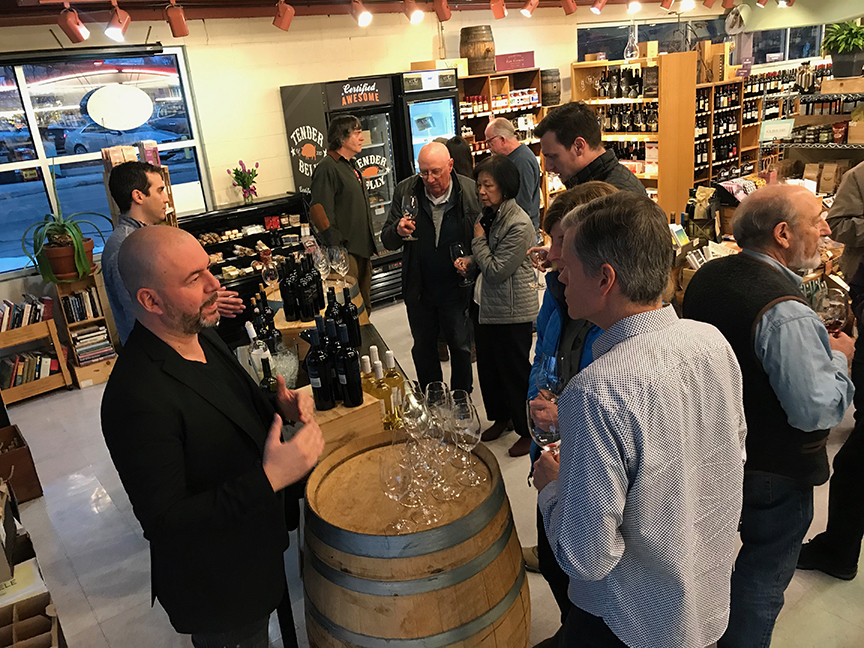
Above: a European winemaker hosts a tasting of his wines in Colorado in late February, 2020.

“Tariff threats return,” read one of the wine retailer email newsletters that reached my inbox over the last week. “Our business could totally get blown up by a trade Death Star.”

“[My business partner] and I have spent 19 years building our business,” reported another, “and it could get wiped out in one blow. For better or worse, we’ve tied our love of European wine to the life of our shop. We have 25 employees, many with families; we pay their health insurance; we pay a boatload of taxes. [Our shop] is a micro business, but there are many thousands of employees and owners around the country who will be similarly affected — to say nothing of how this will impact our wine loving customers.”

Across the U.S., wine retailers are mobilizing their customer base and trade networks in an effort to raise awareness of how potentially increased and expanded tariffs on European wines could — literally — decimate their ranks.

Most of the roughly 20 or so similarly conative messages received over the past few weeks weeks point to a portal recently created by the U.S. Wine Trade Alliance (USWTA), an advocacy group formed by European wine-focused small businesses. It streamlines the process whereby the user, whether trade member or consumer, can comment on the U.S. Trade Representative site and express their concerns regarding the tariffs currently under consideration. The deadline for comment is July 26. The decision on whether or not to remove, expand, and/or increase the duties will be announced on August 12.
With so much energy being poured into this campaign by understandably qualmish wine merchants, it’s hard to imagine that the U.S. government won’t take note of the existential threat posed by the potential tariffs and their resulting dismay.

But tradesfolk in our country’s major cities often forget that they remain a minority in our nation.

I was reminded of this when I recently contacted the office of a top anti-tariff congressperson whose district lies just north of metropolitan Houston where I live. The area where he lives and dines (as I discovered) is one of greater Houston’s more affluent. But despite the extreme concentration of wealth in his neck of the woods (Houstonians will get the pun), there isn’t much in terms of haute cuisine in the community he represents beyond the quintessential high-end and highly predictable steak house franchises.

When I spoke to the owner and executive chef of the seemingly lone high-concept restaurant there (where, I learned, said representative frequently eats), the food professional told me that while he was aware of the tariff issue, it hasn’t affected his business at all.

How is that possible? I asked him.

His wine program does include a sizable allocation of expensive French wines. But those lots were purchased some time ago, he said, partly as an investment (a classic restaurant model). Like the guests he serves, he focuses primarily on top California wines.

And when he revealed his overarching approach to his restaurant group’s wine programs, the axiomatic delivery rolled off his palate so mellifluously that I can’t imagine it was his first time uttering the phrase.

“If it doesn’t have the grape name on the label,” he informed me, “they ain’t going to drink it.”

He was referring to pecunious Americans’ well-documented penchant and preference for “varietal wines,” bottlings sometimes even blended using different varieties but labeled with a single grape name, e.g., “Chardonnay,” “Merlot,” “Cabernet Sauvignon, Pinot Noir,” etc.

His aphorism rang true when I spoke to said representative’s office. The person on the other line seemed entirely unaware of the heightened interest in European wines that has taken shape in this country over the last two decades.

For the record, both the restaurateur and the government official with whom I spoke were exceedingly generous with their time and both were glad to lend a hand in connecting me with the persons I was trying to reach.

But the notion that the tariffs under consideration would disproportionately affect Americans without achieving the desired result was something that hadn’t previously or remotely crossed their minds.

Wine culture has grown enormously in the U.S. over the last 20 years or so. But for most Americans, it doesn’t really matter where that Pinot Grigio comes from. It might as well be from Australia or Texas, as long as the grape name is inscribed on the package.

Just think of how wine is sold in American airports (or should I say, try to remember the way wine used to be sold in airports). In these transport hubs, where Americans from all walks of life and of all stripes meet (however fleetingly), the sale of wine is primarily categorized, classified, and bartered using its designate ampelonym: what wines do you have by the glass? is commonly answered by Chard, Sauv Blanc, Cab, Syrah, Pinot, and Merlot.

Shortly before the pandemic redefined “living” in America, a European winemaker and I took a road trip that led us from Houston to Dallas to Tulsa to Boulder. We hosted well-attended wine tastings in each city we visited.

But what about all the places and people in between?

Until a majority of Americans dives into the nuanced and subtle differences between Nebbiolo from Langa and its varietal counterpart from upper Piedmont, the threat of wine tariffs will be as ephemeral to them as it is existential to us.

Please visit the USWTA portal and make your voice heard!

“Any additional tariffs will basically put a nail in the coffin.” Act now to voice your concerns about European wine tariffs.

Image via Adobe Stock.

“Any additional tariffs will basically put a nail in the coffin,” said one of the nation’s top French wine buyers in a text late last week.

“I have known Americans who lost jobs as a direct result of tariffs,” he told me. “But [I] have yet to hear of any French wineries letting people go due to tariffs. [Because of] COVID yes, tariffs, no.”

As the U.S. Trade Representative (USTR) considers new, expanded, and increased tariffs on European wines, U.S. wine importers, distributors, retailers and wine -focused restaurateurs face the prospect of even more layoffs. And if implemented, the new round of tariffs would come at a time when they are already under extreme strain due to the ongoing pandemic.

Last year, the USTR imposed 25 percent duties on French wine in response to the World Trade Organization ruling that the European Union had violated the terms of its agreement with the U.S. when it subsidized the production of the Airbus.

On August 12, the USTR will announce its decision to augment the current tariffs. These could include tariffs of up to 100 percent and they could be expanded to include Italian wines as well (currently, only wines from the Airbus partner countries are affected).

The 2019 tariffs (still in place) have already had a devastating effect on the U.S. wine trade.

They were intended to impact European wine growers. Whether or not they have achieved the desired outcome is debatable. But anecdotally it seems that they have caused minimal economic pain in European wine country.

The economic pain inflicted on U.S. small businesses, on the other hand, has been acute.

The U.S. Wine Trade Alliance (USWTA), a consortium of small business owners formed last year in response to the tariffs, argues that the USTR duties are more harmful to American small businesses than they are to European wine growers. And the harm they do is exacerbated and amplified by the fact that closures due to the current health crisis (with no end in sight) has practically decimated a generation of U.S. wine professionals.

The USTR is currently accepting public comments on potential new and expanded tariffs (see below). The deadline for comment is July 26.
See the of possible new, expanded, and increased tariffs here (Annex II).

You can find the USTR comment portal here.

Before you comment, please be sure to read the USWTA guidelines for commenting here.

Beyond adding a comment to the USTR portal, here are some of things you can do to support the USWTA campaign as we await the USTR decision:

– become a USWTA member here (by filling out the form, you will be added to the mailing list);
– follow the USWTA Instagram and Twitter and please join the Facebook group;
– share, retweet, and repost USWTA media, and encourage your employees, colleagues, and peers to do the same.

Alicia Lini joins me Thursday, July 16 for a virtual wine dinner at ROMA in Houston.

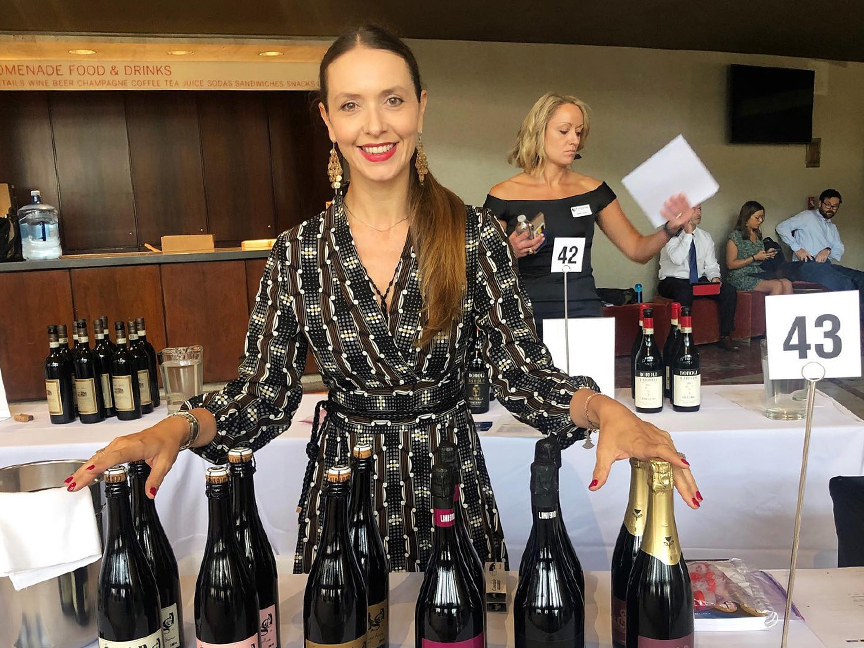
I’m thrilled to announce that Alicia Lini (above), one of my best friends in the wine business and producer of some of my favorite Lambruscos, will be joining me for a virtual wine dinner on Thursday, July 16 at ROMA here in Houston.

Alicia and I first met more than a decade ago while I was working in the wine trade in New York. The launch of her brand was my first major campaign as a media consultant and its success shaped my career for the decade to come.

A few years ago, Alicia asked me to give her hand promoting her brand again here in the U.S. and it’s been another immensely rewarding experience — especially because of our friendship.

Next Thursday, she’ll be joining me for an ongoing series of virtual wine dinners I’ve been leading for ROMA, where I’ve been running media for owner Shanon Scott for a few years now.

These events have taken on a truly magical feel: they are a world unto themselves, where everyone can cast away the worries, pressures, and stress of what’s happening around our families.

They sell out regularly and we have capped them at 25 couples and/or individuals so that everyone can be onscreen throughout.

Chef Angelo Cuppone and Shanon are working on the menu as I write this and I’ll share as soon we publish it on the restaurant’s website and social media.

Alicia and I have shared so many unforgettable moments over the course of our time working together. Here’s the story of how she and I ended up in a green room with Pattie Boyd, the woman who inspired some of the greatest love songs of all time.

Houston wine and food friends: please join us next Thursday for what is sure to be a great evening of Lambursco and classic Emilian cuisine (email or PM me if you want me to hold a spot for you).

Thank you for your support and solidarity. Tracie, the girls, and I are still hunkered down, healthy and safe in our house in southwest Houston. But our city and state continue to report record numbers of daily contagions and hospitalizations. And members of our extended family continue to battle the virus. COVID-19 is real. We are seeing it firsthand. Please where a mask when you go out and stay home if you can. Support those who have no other choice but to work outside their homes. G-d bless America. G-d bless us all.

Wine professionals: please follow the U.S. Wine Trade Alliance as we gear up to fight new tariffs!

Parzen family COVID-19 update: our nuclear family is healthy, safe, and isolated in Houston. Unfortunately, some of our extended family members are now ill and we are praying for their speedy recovery. Many of our friends in Southeast Texas have also been infected. But Tracie, the girls, and I are hunkered down at our house and we’re all healthy. Please keep all affected Americans in your thoughts and prayers. Please wear a mask and stay home if you can. Support those who have no other choice but to work outside the home.

Yesterday a Houston-based wine blogger had the great fortune to sit in on a Zoom call organized by the U.S. Wine Trade Alliance (USWTA). It was humbling to share the time and conversation with some of the greatest wine professionals active in our country today.

On the call, USWTA president Ben Aneff described the group’s efforts to lobby the U.S. Trade Representative (USTR) on the issue of existing and potentially increased and expand tariffs on European wines.

Currently, the USTR is considering a new round of tariffs. And it is hosting a comment portal on its site where Americans can express their concerns about how current and new tariffs do and will affect their livelihoods.

Read about it in the USWTA newsletter here, including the timetable for comments and the decision-making process.

Ben and his team are currently working on a new online portal that will help guide wine trade members and consumers across the U.S. as they post their comments on the USTR site. Please stay tuned for that.

As Ben mentioned on the call, the U.S. wine trade wasn’t prepared for the first round of tariffs that were imposed last year. But the newly founded USWTA is now aggressively using all resources available to make the wine industry’s voices heard in Washington. And it needs all of our support.

As we wait for the new USWTA portal to come online, please:

– become a USWTA member here (by filling out the form, you will be added to the mailing list);
– read the USWTA guidelines for commenting on the USTR site (extremely important);
– please follow the USWTA Instagram and Twitter and please join the Facebook group;
– share, retweet, and repost USWTA media, and encourage your employees, colleagues, and peers to do the same.

A pandemic-era wine sales strategy that works at Roma in Houston.

best italian houstonIn the wake of yesterday’s post (“The age of arrogance is over. Winemakers, please check your hubris at the (virtual) door!”), a lot of people have asked me about the restaurant that had organized the virtual wine dinner.

It’s a “trattoria inspired” independent venue called Roma in Rice Village, the Houston neighborhood where Rice University is located. I help out with its online presence.

Owner Shanon Scott is a Houston restaurant trade veteran and one of our community’s most beloved restaurateurs. A former maître d’ at some of the city’s highest-profile Italian dining destinations, he opened his own place in a classic Houston-style bungalow about three and half years ago. He’s also become a good friend of ours over the years. I love working with him and share his passion for great Italian cuisine.

Every week, he hosts a virtual wine dinner: guests (mostly couples) pick up their food and three bottles of wine between 5-7 p.m. each Thursday and then settle in around a computer or smart phone with a Zoom link. Most Thursdays, a winemaker or winery ambassador from Italy dials in as well and leads the participants through the wines. I serve as event moderator.

The campaign has been highly successful for both Roma and the distributor Shanon’s partnered with, Impero Wine Distributors, a Florida-based importer with wholesale operations scattered across the U.S.

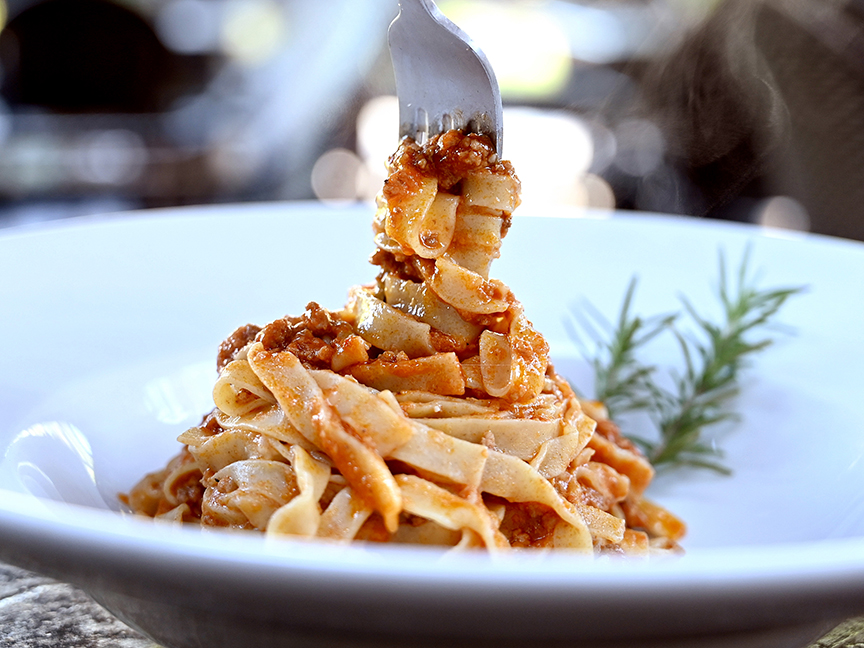
pasta with tuna and capersThe man in the back of the house, Angelo Cuppone, is a classically trained chef from Pesaro (the Marches, Italy) and his cooking style is classic. My favorite dishes there are the lasagne and the carbonara but our 11-year-old cousin (whose family lives down the street) is partial to the grilled octopus. All the prosciutto they serve is sliced on a Berkel — another huge plus in our book. The restaurant is one of our extended Houston family’s go-tos.

For those who have never worked in the food service industry, it may be hard to fathom what a challenging time this is for food and wine professionals. Landlords don’t stop charging rents even when pandemics force lockdowns and catastrophic loss of business. And restaurant workers — from dishwashers to back waiters to line cooks to servers — have rents to pay and kids to feed even when an epidemic forces restaurateurs to entirely reimagine their business models.

Scores of Houston restaurants have permanently shuttered their doors in recent weeks. Bernie’s Burger Bus, for example, an immensely popular independent Houston hamburger chain (the kitchen was housed in a yellow school bus), had just begun an expansion when the virus arrived. No one in our community could believe that such a successful model could fall victim to COVID-19. But it did.

Similarly, the wine trade has been decimated by the fallout. Last week, Southern Glazer’s, one of our nation’s largest wholesalers, laid off most of its sales force according to anecdotal reports. I recently contacted its Houston sales office to help out a restaurant owner friend in Orange, Texas (where Tracie grew up). He wanted to set up an account with company to service his new wine program. The sales rep I spoke to told me that he is the sole agent taking orders for Southeast Texas. I can’t imagine that Southern Glazer’s will share the exact number of fired workers but the fact that there’s just one rep for such a huge swath of Texas is an indication that it’s currently working with a skeleton crew.

In my view, Shanon and his Impero sales rep, Melania Spagnoli, are true heroes. The virtual wine dinner model they’ve created is “moving boxes” (wine tradespeak for selling wine) in a perilous time and it’s helping to feed a lot of families — including my own.

Food photos by Al Torres Photography.

The age of arrogance is over. Winemakers, please check your hubris at the (virtual) door!

Above: Petulantia meet Hybris.

Speaking Italian well can be a blessing and curse. Sometimes both at once.

The other evening, when an Italophone Houston-based wine professional led a virtual wine dinner for a local Italianate restaurant, he was dismayed by the sheer aloofness, arrogance, and downright rudeness of his Italian counterparts on the other end of the call.

During the pregame call, they insulted the owner and chef (before the proprietor and his colleague joined the meeting). And during the event itself, they practically refused to thank their hosts even though the latter were “moving boxes,” as they say in the trade, selling their wine.

Instead of heeding an appeal by the moderator to avoid overly technical language (this was a consumer dinner after all), the winemaker — the son of one of Italy’s most prolific enologists — literally recited the information from technical sheets. And what made matters worse was the fact that he doesn’t speak English. Not a sin in and of itself but why was he on the meeting in the first place? By the time he got to “cryomaceration,” said Houston-based professional was ready to throw his hands in the air!

And from the frying pan into the fire, the self-proclaimed “experienced wine professional” who interpreted for him (“I’ve done events like this a thousand times”), couldn’t even render the word argilla into the English clay, one among many of the lacunes and, dare I add, personal shortcomings in his professional formation.

At a time when wineries, their importers, and their distributors on the ground are struggling to “move boxes,” there is no time for such insolence.

At a time when restaurants, one of the top channels for selling wine, are scrimping to survive, it is no time for such impertinence.

The other day I moderated an Italy-American Chamber of Commerce webinar on Italian wine trends in the pandemic era. The panelists were two of the highest-volume Italian wine buyers in the state. They spoke openly about how we are in a “buyer’s market” when they are literally inundated by inquiries from Italian winemakers who hope they’ll sell their wine. They don’t even read the emails, they said. They go straight away to the attachment to see if the pricing aligns with the current market. If it doesn’t, they hit delete.

The restaurant that I consult for has been one of the survivors in a time when scores of eateries are closing their doors permanently in Houston. The owner developed this virtual dinner format together with the local distributor and it’s been highly successful for both. Because our otherwise myopic governor has decreed that restaurants can now retail wine, the restaurateur also sells the wine at his cost to the guests. It’s another example of creative thinking that has helped keep him and the distributor afloat in this Darwinian era for wine and food professionals.

Especially as the trade wars are about to be stoked up again by U.S. government, winemakers — and not just Italian winemakers — need to partner and cooperate with American wine and food professionals instead of undermining and demeaning them.

The age of arrogance is over and they need to check their hubris at the door.

Deborah Parker Wong, new Slow Wine USA editor, discusses 2021 guide (VIDEO).

Last week, leading California wine educator Deborah Parker Wong — and the new editor for the Slow Wine Guide to the Wines of North America — talked to me on Zoom about the guide and how she and her team of editors are putting the 2021 edition together even as they face the challenges of the pandemic era.

See the video of our Zoom chat below.

Deborah, above, served as a senior editor for the guide for the 2020 and 2019 editions (you can download a free e-book version of the 2020 guide here). And this year, as the new coordinating editor, she’s also overseeing an expansion of the book to include Washington and New York states.

It seems like a lifetime ago that my friend Giancarlo Gariglio, the guide’s editor-in-chief, asked me to help him launch a U.S. version. It was one of the most rewarding experiences in my career as a wine writer and I couldn’t be more happy that Deborah, one of the best technical tasters I’ve ever worked with and a true California wine insider, has stepped up to lead the team of contributors in these challenging times. Slow Wine USA couldn’t be in better hands.

Of course, Deborah and I weren’t going to waste an opportunity to taste some great wine together. Thanks to the generosity of the folks at Scarpa in Monferrato (for whom I do media consulting), we each had a bottle of Scarpa 2013 to taste. It was a thrill to get to open that bottle — however virtually — with one of my favorite people in the wine world.

What a wonderful wine, from a fantastic vintage!

Tracie and I paired it with her homemade focaccia (a Parzen family favorite) that night for dinner. Deborah checked in later in the day and said she poured with a salmon and spinach frittata. The wine, a current release, is showing beautifully right now.

No violence but tensions high at our Saturday protest of the Confederate memorial in Orange, Texas. Thank you Orange PD for keeping us safe.

Above: Tracie and her friend LaToya at the Saturday, June 13 protest of the Confederate memorial in Orange, Texas where Tracie and LaToya both grew up and attended high school together.

Despite threats of violence and rumors that “Antifa” would be at our Saturday protest of the Confederate memorial in Orange, Texas, our demonstration was peaceful and without incident.

You can watch footage of the event, including interviews, here on the local Fox affiliate.
Continue reading

What does the Confederate flag mean in Texas? Racism! Join us in protest of the newly built Confederate memorial in Orange, Texas this Saturday.

“NASCAR bans Confederate flag from all its events, including races,” reported the venerable news agency Fox News yesterday. News of the ban was also published by leftwing lamestream media outlets.

Here’s an excerpt of the statement issued by NASCAR, as published by Fox: “The presence of the confederate flag at NASCAR events runs contrary to our commitment to providing a welcoming and inclusive environment for all fans, our competitors and our industry… Bringing people together around a love for racing and the community that it creates is what makes our fans and sport special. The display of the confederate flag will be prohibited from all NASCAR events and properties.”

NASCAR has banned all displays of Confederate flag. The U.S. Marine Corps also just banned all displays of the Confederate flag.

Is there any question in anyone’s mind at this point as to whether or not the Confederate flag is an offensive and divisive symbol of racism?

In case you’re wondering what the Confederate flag means in Texas, I’d like to share another statement with you, one that was published by the state of Texas in 1861.
Continue reading