What is a “Super Tuscan” and where did the term come from? The answer might surprise you.

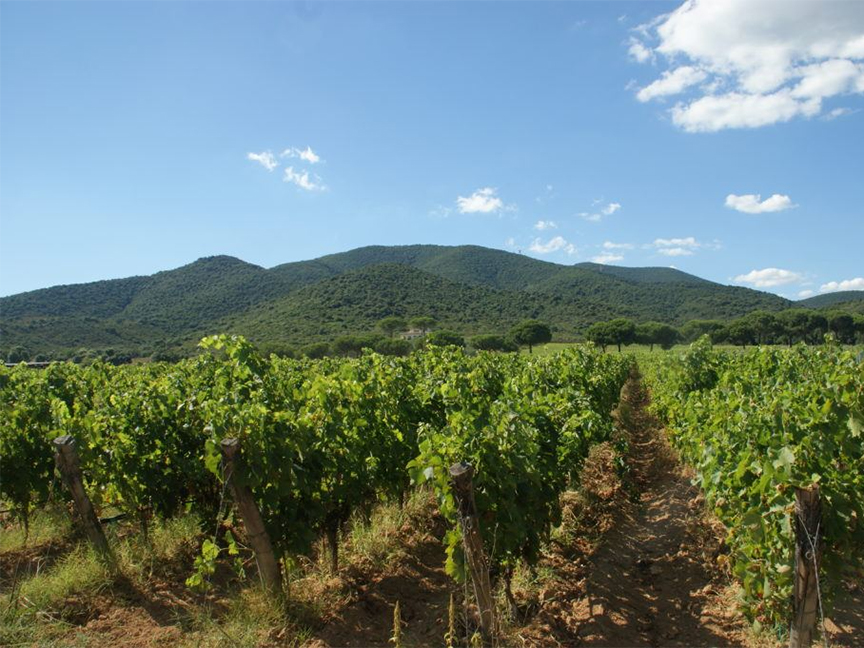
Above: vineyards in Maremma along the Tuscan coast where “Super Tuscans” are produced (image via the Wilson Daniels website).

The more closely you look at a word, wrote the early 20th-century aphorist and poet Karl Kraus, the more distantly it looks back at you.

This couldn’t be more true when it comes to the meaning and origin of the expression “Super Tuscan.”

Historically, the named was used unofficially to denote high-quality Tuscan wines that were classified as vino da tavola (table wine) because they didn’t qualify to be included among the “designations of controlled origin” (DOC). Ostensibly, the reason they didn’t qualify was because they used Bordeaux grape varieties that weren’t recognized by the Italian DOC (appellation) system at the time.

The earliest mention of a Super Tuscan (wine) I’ve been able to find in Google Books is in a 1987 tasting note in America Wine Society News. It references a Sangiovese and Cabernet Sauvignon blend “that cannot be considered a true Chianti.” You can’t read the entire passage on Google but it’s likely that the writer was referring to Tignanello, the famous blend of Sangiovese and Cabernet Sauvignon that Antinori first produced as a “table wine” with the 1975 vintage.

There are, however, antecedents beyond the wine world.

In his 1972 monograph, The Fascist Experience Italian Society and Culture, 1922-1945, Edward R. Tannenbaum calls Italian writer Curzio Malaparte a “super Tuscan publicist.”

And in 1915, in Howard’s Blue Book: The Only Index-catalogue of the Paint, Oil, and Varnish Industry, there is mention of a “Super Tuscan Red” paint, possibly a reference to the distinctive light red color we call “Sienna Red” today.

Most Italian wine trade observers agree that Tignanello (produced in Chiantigiana) and Sassicaia (produced in Bolgheri on the Tuscan coast) are the earliest examples of wines that were commonly referred to as Super Tuscans. Sassicaia was available in the U.S. in the early 1970s. According to the winery that produces it, San Guido, the 1968 vintage of Sassicaia was the first to ship to the U.S. (thus predating the arrival and advent of Tignanello).

But no one knows for sure who first used or coined the term in the context of wine.

By the late 2000s, it had become fashionable in the alternative U.S. wine media to denigrate the Super Tuscans — the “aia wines,” as some of us called them — as bottlings created specially for the American market. The wines were excessively “oaked,” writers moaned, overly concentrated (“extracted”), and jammy like the “fruit bombs” that Napa-loving Americans preferred.

But cum granus salis, the claim wasn’t entirely true. In 1989 when I visited Montalcino for the first time, sommeliers there were eager to pour Sassicaia and Ornellaia side-by-side with Brunello (another wine that had yet to make its name on this side of the Atlantic). Looking back on it now, there’s no doubt in my mind that these wine professionals were extremely proud of the wines and considered them some of the best expressions of Italian viticulture at the time. And many of the wines, especially from the top tier, were and are still today elegant, restrained, and impeccably balanced. They may be “oaked” but they are not necessarily “oaky.”

Other Tuscan winemakers would try to reproduce the historic Super Tuscans model — some successfully and some not so much. But the legacy of the aforementioned wines was firmly and undeniably established by the late 1990s when Italian wine would begin trending upward in the U.S.

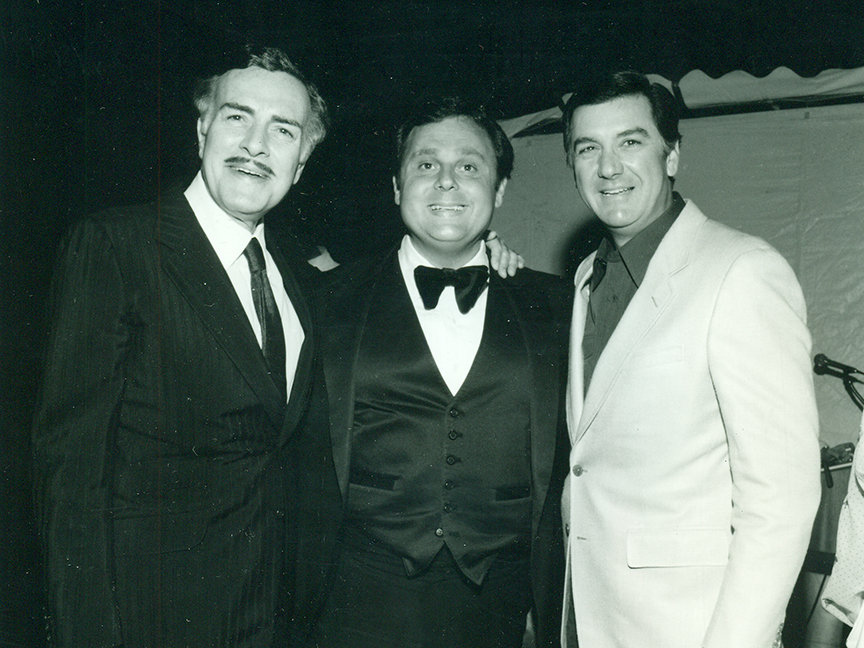
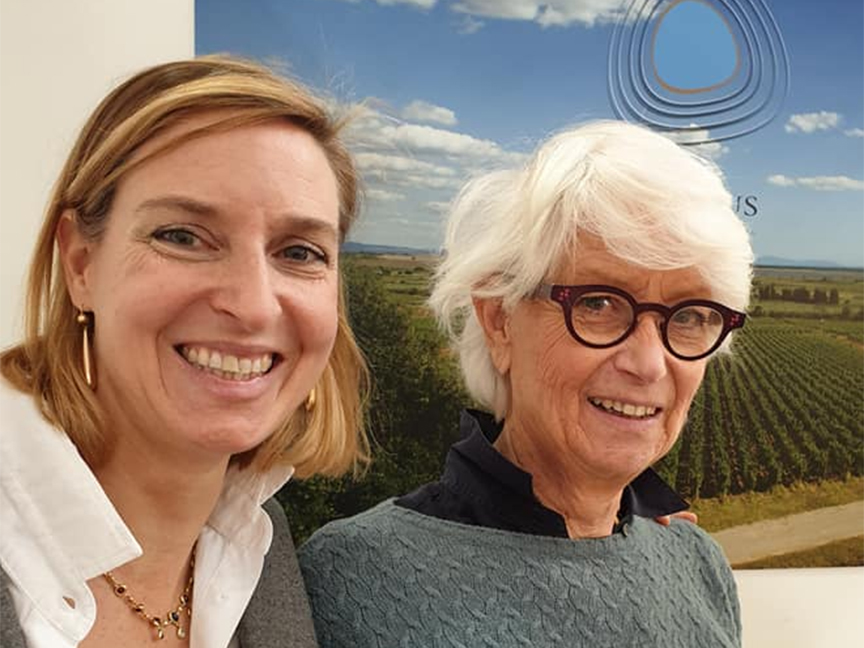
On Thursday night here in Houston, I’ll be co-hosting a guided wine tasting and dinner with a genuine Super Tuscan, Federica Mascheroni Stianti (below, left, with her mother Giovannella Stianti Mascheroni, another Super Tuscan woman) at Roma restaurant (my client). We’ll be tasting her family’s Castello di Volpaia Chianti Classico together with one of their more recent entries, the Prelius Cabernet Sauvignon raised in Grosseto province in Maremma along the Tuscan coast.

Their Cabernet Sauvignon is aged in large cask — not the small French barriques commonly used for the historic Super Tuscan wines. Restrained and lithe on the palate, with classic varietal expression, it’s not “oaky” or “jammy” or “overly extracted.” Is it a Super Tuscan?

As another Super Tuscan, Dante, once wrote, nomina sunt consequentia rerum.

I hope you can join us this week to taste it and join in the conversation!

Here’s the menu and reservation details.

Wine for voter enfranchisement in Texas: Vines for Votes raises money for Texas ACLU.

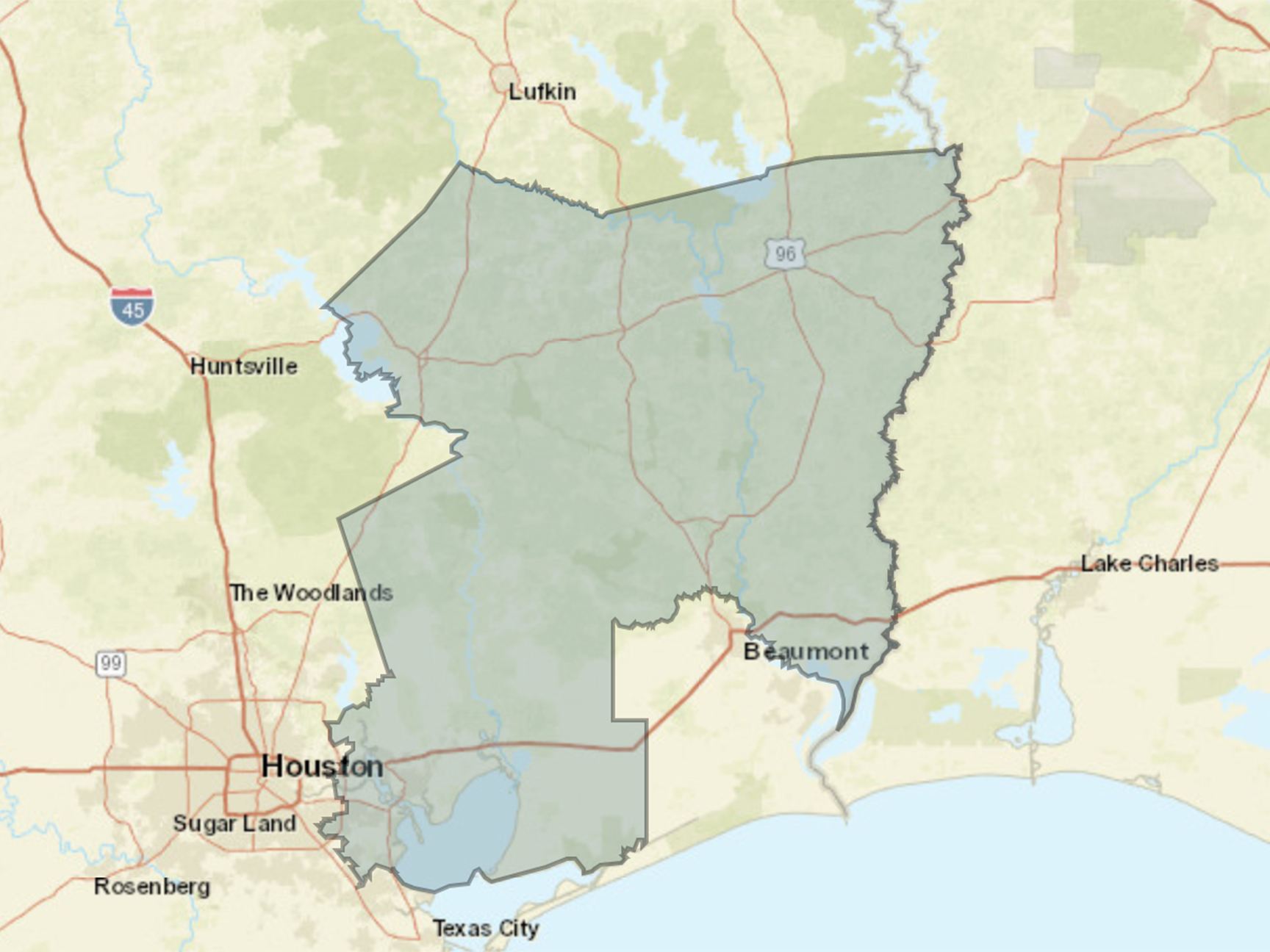
Above: Texas congressional district 36. Source: House.gov.

That’s a map of Texas congressional district 36. It stretches from Orange, Texas on the Louisiana border where Tracie grew up all the way to Clear Lake, Texas, where the Johnson Space Center is located south of Houston, roughly 85 miles away as the crow flies from Tracie’s hometown.

The population of Orange is more than 30 percent black.

The population of Clear Lake is roughly 4 percent black.

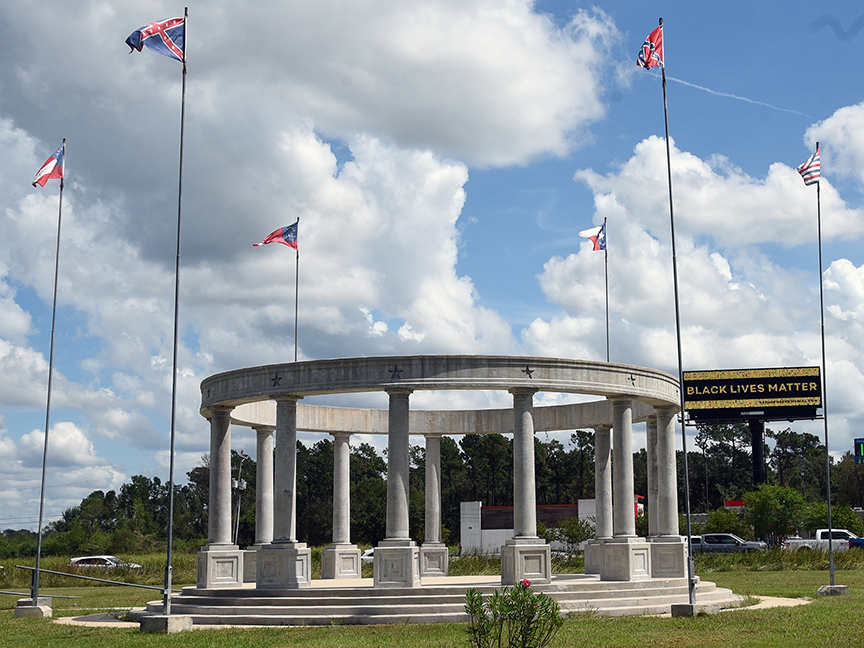
And this is a classic example of Texas gerrymandering and voter disenfranchisement.

Thanks to its convoluted layout, Texas congressional district 36 has an overwhelming white ruby red Republican majority that essentially eclipses the black and democratic vote in places like Orange where most of its black residents live.

In June, Tracie and I met with Democratic candidate Rashad Lewis who’s running against the Republican incumbent for the 36th district Brian Babin.

As you might imagine, Lewis advocates for repurposing the district’s neo-Confederate memorials. Babin opposes their repurposing.

A few days ago, a group of wine professionals in New York, including two prominent Texans, launched a campaign to raise money for the Texas ACLU fight for voter enfranchisement in Texas.

It’s called Vines for Votes and if you are reading this, you probably know at least a couple of its members.

Using its website, you can donate directly to Vines for Votes and you can offer wines for auction (proceeds will go to Texas ACLU). And of course, you can also give directly to the ACLU or Texas ACLU.

Wasn’t it Baldo Cappellano who quixotically said “there are some battles in life that you know you will lose and these are sometimes the ones most worth fighting”?

Words to live by in our book of life. Thanks for reading.

Texas wine, food, media professionals: please join me for virtual tastings with Italian producers September 21-22.

Some of the most rewarding work I’ve ever done has been for the Italy-America Chamber of Commerce South Central. Previously covering just Texas but now also Louisiana, Arkansas, and Oklahoma (hence “south central”), the Houston-headquartered IACC is ranked number one among chambers in North America and number eight throughout the world.

Sorry, New York!

The IACC has achieved that status in part by mounting truly compelling events with top wine and food producers from Italy, leading wine and food professionals here in Texas, and high-profile journalists and tastemakers from across the U.S.

In March, the IACC would have presented the sixth annual Taste of Italy trade fair, the largest wine and food gathering in the U.S. devoted exclusively to Italian products and producers. I’m a consultant and emcee for the event. Last year, we hosted more than 100 producers and 500+ attendees.

This year, we’ve moved the event online: on Monday and Tuesday, September 21-22 wine and food professionals across the state of Texas will have the opportunity to attend one-on-one virtual tastings with producers in Italy via Google Meet.

And here’s the even cooler part: once you schedule your tasting appointments, the wines and food products will be delivered to your home or office. It’s that simple.

The other cool thing is that the IACC has partnered with a super groovy new platform called GrapeIn to coordinate the tastings (more on GrapeIn forthcoming).

If you are a wine and food professional or a culinary-focused social media user active in Texas, click here to see a list of participating wine and food producers. Click on the producers you’d like to taste with, indicate the time slot, and the IACC will take care of the rest.

This 100 percent virtual event represents an extraordinary opportunity to connect in real-time with Italian producers as you taste their products.

Please join me in just a few weeks as we explore some great Italian wines and foods. Ping me if you need more info or guidance. But it’s all pretty straightforward.

Austin, San Antonio, Dallas: I’m talking to you, too!

Oh and that photo at the top of this post? I took that in our kitchen. It gives you an idea of what these tastings will look and feel like.

I hope you can join me! Thanks for supporting Italian wine and food and the people who make them (in the comfort of your own home)!

Cloudbursts, wind, extreme weather cause massive vineyard damage in Italy.

Above: weather-damaged Pinot Blanc grapes in Franciacorta at the Arcari + Danesi winery. “We’ve lost 30 percent of our harvest due to extreme weather,” said grower Giovanni Arcari in text message this morning.

Cloudbursts, high winds, and other extreme weather events caused widespread vineyard and property damage and even loss of life across Italy over the weekend.

In one tragic case, two children were killed when a tree, toppled by wind gusts, fell on their campsite along the Tuscan coast on Saturday.

Last weekend’s weather events came on the heels of a series of severe storms that have vexed Italian winemakers and farmers throughout the month of August.

According to mainstream media reports, an intense storm that struck Valpolicella (Verona province, Veneto) on Sunday, August 23 caused an estimated €6 million in vineyard damage.

Over the weekend, Verona province experienced more extreme weather. The video below, posted on the Veneto-based journal Il Dolomiti YouTube, is dated Saturday, August 28, 2020:

In a blog post published yesterday on its website, Coldiretti (Italy’s national agricultural confederation) wrote that:

    A crazy August has been marked by nearly 10 storms each day throughout the [Italian] peninsula, including torrential rain, tornados, cloudbursts, and hailstorms of anomalous proportions…
    In just a few seconds, many farms have lost an entire year of production. But there is also structural damage to fields that won’t be able to produce crops for a long time…
    We are faced with the obvious consequences of climate change. In Italy, the exception has become the rule as weather events are undergoing a tropicalization. This can be seen in the high frequency of violent storms, seasonal shifts, brief but intense rainstorms, rapid changes in weather from sunny skies to inclement weather, [and] remarkable temperature shifts that compromise crops in the field.

Over the last decade, extreme weather events have more than €14 billion in agricultural damage in Italy according to authors of the post.

Count Alberto Tasca joins me for dinner at Roma in Houston this Thursday.

With no small amount of envy, I grabbed the above photo from the Tasca d’Almerita Facebook this morning.

After six months and counting cloistered at home, I have to concede that a little bit of Mediterranean would do a body (including my own) some good!

This Thursday, we’ll enjoy the flavors of the Mediterranean when we host Count Alberto Tasca at our weekly virtual wine dinner at Roma (one of my clients here in Houston).

Click here for the menu, wines, and reservation details.

Alberto and I had dinner last year when I was asked to present his and other leading Italian wineries at the Grandi Marchi tasting here.

I was keen to hear his thoughts on the positive and negative impacts of organic viticulture in Europe. And I found his insights into lutte raisonnée or lotta integrata (what we sometimes call integrated) farming practices as compelling as they were fascinating.

There’s an important different between “sustainable” and “integrated” farming. Technically speaking, “sustainable farming” doesn’t mean making a better product for the consumer. The term actually refers to making food and wine products that have less impact on the environment. The best way forward, in Alberto’s view, is somewhere in the middle between sustainable and organic (the core idea of integrated farming). I know it’s going to be an interesting conversation this Thursday.

If you’re in Houston and have never attended one of our weekly events, I highly recommend it: 3-course dinner for 2 including 3 bottles of wine for $119. It’s a pretty nifty deal. But more importantly, these events have become a wonderful escape for our guests and Tracie and me. We look forward to it each week. I hope you can join us. It’s become our moveable immobile feast.

Support local businesses (including my own) by eating great food, drinking great wine, and having dinner with a Sicilian count!

A virtual dinner with one of my Italian wine heroes: Brian Larky, industry pioneer and apotheosis of all that’s great about the wine trade.

Please read “California Wildfires and the Wine Community – What You Need to Know,” Beck Hopkins’ post from last week. We are praying for all of our sisters and brothers in my home state.

And here in Houston, we are all holding our breath as we wait for Hurricane Laura to develop. See updates on the excellent Space City Weather blog. Hoping for the best but expecting the worst.

On Thursday, August 27, one of my all-time wine heroes, Brian Larky (above), will be joining me for the weekly virtual wine dinner that I host for Roma here in Houston.

Brian created a new model for Italian wine imports here in the U.S. when he launched his Napa-based company Dalla Terra three decades ago. Since that time, countless wines selected by him have become Italian wine standbys and favorites across our country.

On Thursday, he and I will be pouring and discussing three of those, including the Selvapiana Chianti Rufina, one of our family’s go-to red wines.

In many ways, Brian is the “Steve Jobs” of our industry. For many of the wineries he works with, he has created a “market” where previously there was none. Like Jobs, he introduced American wine lovers to wines they didn’t know they “needed.”

He’s also a winemaker (a Franciacorta alumnus with an enology degree from UC Davis), a brilliant speaker (we’ve presented seminars together in the past), a wonderful dinner companion (I speak from personal experience!), and the apotheosis of everything that’s good about the wine business.

I hope you can join us. Stay tuned for details. And feel free to email me if you’d like me to save you a spot.

A new book from Montalcino is going to change the way you think of Brunello.

Grape grower, winemaker, and author Stefano Cinelli Colombini.

In 1550, another Tuscan writer made (art) history when he wrote The Lives of the Most Excellent Painters, Sculptors, and Architects.

Not only did Giorgio Vasari single-handedly invent “art history” with his book, but he also opened a window on to a previously cloistered world: the lives of the people who were changing the meaning of art and the way we, even today, perceive works of art and the role they play in culture and human experience.

It’s important to remember that artists and artisans were considered second-class citizens at the time. They served their aristocratic patrons. But with Vasari’s work, they came to vivid three-dimensional life on the page for the first time.

In many ways, Vasari also created (or at least opened the path for) the “celebrity artist” by giving us gossipy, juicy details about their personal histories and intrigues. The parallels with modern-day food and wine writing and the rise of celebrity chefs, celebrity sommeliers, and celebrity winemakers are myriad.

I’ve teased legacy Montalcino winemaker Stefano Cinelli Colombini that the title of his wonderful book Brunello, ritratti a memoria (Brunello, Portraits from Memory, Fattoria dei Barbi Edizioni, Montalcino, February, 2020) should have been The Lives of the Most Excellent Brunello Growers and Winemakers. Currently available in Italian (see link), it’s a roman d’aventure that brings to life the people who made Brunello di Montalcino what it is today.

I know that when Anglophone wine insiders pick up the translation I’m working on, they’ll skip directly to the handful of household and tableside names we know here in the U.S. But those who want something deeper than workaday hagiography will find that Brunello’s arc is a synecdoche for post-war Italy and the heroic women and men who built it and who came before it. I believe that even the most savvy among the Brunellisti will be surprised and thrilled by Stefano’s Melvillian pastiche of characters, their sacrifice, ingenuity, and achievement.

With acute clarity, Stefano’s work shows that the history of Montalcino is an epoch story of tragedy, resilience, and ultimate triumph.

My translation will be published by Fattoria dei Barbi Edizioni this fall. Stay tuned for previews.

Taste bradyseism (yes, bradyseism) with me and Alessio Inama this Thursday in Houston.

Image via the Inama Facebook.

One of the cool things about doing wine dinners in Houston, the world’s petroleum capital, is that there will always be an abundance of geologists among the guests. And these women and men LOVE to talk about rocks and soil!

This Thursday, I’ll be leading a virtual wine dinner with a bunch of rock-friendly folks and the current generation of one our favorite wineries, Inama. And so it’s only natural that geology will be part of the conversation. The event is hosted by my client Roma, a local go-to Italian.

Among the wines we’ll be pouring is the Inama “Bradisismo.” The word is akin to the English bradyseism, menaing a “slow vertical movements of the earth’s crust, caused by volcanic action” (Geological Nomenclature, ed. A.A.G. Schieferdecker, 1959). It comes from the Greek βραδύς meaning slow and σεισμός, movement.

The phenomenon causes volcanic material (like the mixture of basalt with limestone in the image above) to rise to the surface. And it’s part of what gives the wines of the Soave appellation their unique mineral character.

I feel a deep connection to Soave and its wines because of the many years I spent living, studying, and working in Italy’s Veneto region in the northeast (where the Soave, Gambellara, and Valpolicella appellations are located).

Tracie and I are particularly fond of the Inama white wines. But when we drink the reds (like the Bardisismo we’ll be pouring on Thursday), I am reminded of how Veneto is one of the greatest places on earth to grow grapes like Carménère, Merlot, and Cabernet Sauvignon. These are not wines that were created “especially” for the U.S. market, although many enjoy them here. They are expressions of Bordeaux grapes that been part of Veneto’s enogastronomic culture since the years following the Second World War when this war-ravaged part of the country was rebuilt and replanted.

I’m super stoked to “sit down” virtually with Alessio Inama (below) who will be joining us via Zoom. I hope you can join us, too, for what is sure to be a great evening of eating and drinking (and not having to drive home!).

Chef Angelo is even making a bacalà mantecà (baccalà mantecato, creamed salt cod), one of my all-time favorites to pair with the Soave and gnocchi di Malga, the classic Alpine dumplings, to pair with the Carménère. What could be better than that?

I can’t wait! Check out the restaurant’s site for menu (not up yet as of this post but it will be there soon).

As Italy shows us, retail is future for wine sales.

The Angolo Divino wine shop in Ruvo di Puglia. “I am Vinarius,” the Association of Italian Wine Shops, reads the sign they are holding.

Retail sales of wine in Italy grew by 20 percent in June 2020 with respect to the same month in 2019. In July, they grew by 40 percent compared with the same month in the previous year.

These data come via Vinarius, the Association of Italian Wine Shops.

This growth in sales, wrote in an email Francesco Bonfio, president of the Association of Italian Wine Shop Professionals (AEPI), comes on the heels of a 50 percent drop in March (following Italy’s national shelter-in-place order) and a 30 percent drop in April.

La Capannina Più, Capri.

Francesco (a close friend of mine) ascribed the growth to the fact that Italian wine shop owners have embraced new sales models, including online sales and delivery services. He also noted that wines sales in supermarkets and big box outlets saw an initial boom in the period immediately following the lock down. But this trend was followed by a drop in wine retail revenue as independent and chain wine shops adapted to the new needs of the market.

The numbers from June and July are also a reflection of new consumption trends, as Francesco noted in his email. People in Italy, he wrote, have a “sort of subliminal apprehension” about dining in restaurants. He didn’t have any hard data on the number of people dining out. But he has observed anecdotally that Italians who frequently went out to eat before the pandemic now have rediscovered the joy of eating at home with friends and family.

Enoteca l’Etichetta, Bastia Umbra (Umbria).

These figures and observations came to mind yesterday when I spoke to a top sales manager for a top U.S. importer specialized in Italian wine. She told me that her company is working closely with their Italian partners to re-package their wines in order to make them more retail friendly.

With so many restaurants closing or doing significantly less business in the U.S., she said, her company is being forced to pivot toward retail.

Enoteca de Candia, Bari.

I’ve spoken to a number of retailers here in Texas and across the U.S. who tell me that their sales are booming right now, especially those who have shifted to online sales. My observations are anecdotal, of course, but I’m convinced that retail is where the potential for future growth lies right now. And in order to be part of this new wave, importers, distributors, retailers and the Italian wineries they work with need to focus on streamlining, repositioning, repackaging, and even rebranding products to work within this new paradigm.

As I wrote last month, wine shop workers are essential workers. They and the winemakers whose wines they sell need to work together to create new win-win opportunities as the wine trade continues to navigate the uncharted waters — the nec plus ultra — of wines sales in the time of the pandemic.

Enoteca Collovà, Capo d’Orlando (Sicily).

Thanks for reading. And thank you to Vinarius, AEPI, and my dear friend Francesco Bonfio for providing the data and images.

In the time of the pandemic, the three-tier system needs to go the way of the dinosaurs.

Above: a wine shop in California, a state where wineries have the option to work within the three-tier system or without. As a result, Californians can drink whatever their hearts desire. Here in Texas, it’s a lot better than it used to be, but the three-tier system still controls what wines we have access to.

About a year or so after I moved to Texas and had made friends in the wine business here, I ran into a couple of top wine professionals at the Austin airport (Tracie and I were living in in the state’s capital at the time).

“Where you guys heading?” I asked them.

“San Francisco,” they answered.

“Oh, cool! What’s going on in SF?” I inquired.

“We’re going there to study for our exam,” they said.

Why on earth, I wondered, would they have to fly to California to taste wine when they could simply have the wines shipped here? It turns out they couldn’t.

Both were candidates for the Court of Sommeliers pin and the reason they were traveling to the west coast, they explained, was because some of the wines they needed to taste (Burgundian, if I remember correctly) simply weren’t available in their home state. Not only could they not find them in the Texas three-tier system, they couldn’t have them shipped here because of the state’s highly restrictive and exclusionary shipping laws — a sine qua non element of the three-tier system in the state.

Nonplussed by the fact that the Texas government was practically forbidding them from accessing wines they needed to taste in order to further their careers (and as result, forcing them to travel out of state), I began reading up on and writing about the history of the three-tier system in Texas, the wholesale lobby that essentially wrote the laws making it illegal to enjoy certain wines here, and the people who have aggressively supported the status quo.

Last week I sat down to talk about the relevance of the three-tier system with one of the most brilliant people I know in the wine trade, Ron Prashker, MBA and attorney, startup guru, and owner of the Salcheto winery in Tuscany. On a previous webinar that I moderated (on a new startup that will help small wineries work in the U.S. outside of the three-tier system), Ron had shared some compelling insights regarding the current system for wine shipping and sales in our country. I was eager to dig deeper and he graciously accepted my invitation to chat. We even tasted one of his delicious wines together.

I hope you’ll find our conversation as interesting as I did. Thanks for watching.