Boulder Burgundy Festival virtual seminars open to all for free. Wine professionals encouraged to attend.

Above: Boulder Burgundy Festival founder Brett Zimmerman (left) with winemaker Jean-Marc Roulot at last year’s gathering. This year’s event marks the festival’s tenth anniversary.

The organizers of the Boulder Burgundy Festival have decided to open up their virtual winemaker seminars to anyone who would like to attend — free of charge.

Speakers this year include Dominique Lafon, Julie Gros (Anne Gros), Coravin founder and inventor Greg Lambrecht, and renowned Burgundy importer Daniel Johnnes. Festival founder Brett Zimmerman and Lyle Railsback of Kermit Lynch will also be leading seminars.

Attendees are given the option of making donation to the festival’s charity partners. But as Brett told me by phone last week, he encourages wine professionals to join even if they prefer not to make a donation.

As many sommeliers across find themselves with extra time on their hands, these seminars represent a wonderful opportunity to interact with some of the leading names in Burgundy today.

I began working with the festival in 2014 as its in-house blogger and media creator. It’s been a fantastic experience: the caliber of the speakers and the quality of the content has been nothing less than spellbinding (not an exaggeration). I sincerely hope that wine professionals will take this opportunity to expand their knowledge of Burgundy. And I’m thrilled that Brett made this move. It’s something that he wouldn’t have been able do in a “normal” year.

To sign up for the seminars, just visit BoulderBurgundyFestival.com. You’ll see that there are options for $0, $25, $50, or $100 donations. Again, Brett highly encourages people to sign up free of charge. And there’s no limit to how many people can join. Brett’s even brought a Zoom specialist on board to manage the sessions.

New Yorkers, taste with me and the “best wine shop in the world” this Friday. Houstonians, join me for a favorite Sangiovese this Thursday.

Image via Wikipedia Creative Commons.

This Friday in New York, I’ll be leading a virtual tasting with wines that I selected together with my good friend Jamie Wolff, owner of the “best wine shop in the world” Chambers Street Wines (according to the readers of JancisRobinson.com, 2014).

Reserve for the virtual tasting here.

(I won’t actually be in the city. I’ll be at my desk here in Texas.)

And not only will we be pouring three wonderful Italian wines, but I’ll also be discussing my ongoing research on the role that wine plays in Boccaccio’s Decameron. I promise it won’t be boring! I think a lot of people, even those who haven’t read his collection of stories, will be surprised by my findings.

New Yorkers can still purchase the wines in time for the event, which benefits Animal Zone International.

I’d love to get to taste these with you. See the EventBrite for the wines.

And on Thursday in Houston at the weekly virtual wine dinner I host, I’ll be welcoming winemaker Francesco Carletti of Poliziano, one of my favorite producers of Vino Nobile di Montepulciano.

Click here for menu and details.

These truly magical events have been one of the most rewarding experiences of my career in wine. For those who have never attended, I know you won’t be disappointed. These are super fun and the wines and food are great.

We expect this dinner to sell out quickly so please feel free to shoot me an email if you want me to hold you a spot.

Thanks for the support and thanks for drinking Italian wines. Italian winemakers need your support now more than ever.

Check out a song I co-wrote and produced in “Emily in Paris.”

It seems like a lifetime has passed since my band Nous Non Plus released its third album “Freudian Slip” in 2011.

One of the tracks that I co-wrote and produced, “Bunga Bunga,” can be heard this month in Darren Star’s new show “Emily in Paris” on Netflix.

For those who want to check it out, it’s in episode 2, around 4 min. 30 sec. before the end of the show. It’s a really funny scene and I don’t want to spoil it.

The track, as you can imagine, was inspired by Berlusconi’s “bunga bunga” parties.

I also drew inspiration from a sonnet by Medieval Italian poet Francis Petrarch (the subject of my doctoral thesis) where he strings the names of Europe’s most important rivers one after another across the hendecasyllables (11-syllable lines) in the first stanza of the poem.

In our song, we imagine that the “bunga bunga” is a dance being performed in cities across the world. Lovers of pop music will also recognize the classic Motown hit “Dancing in the Streets” as another inspiration.

Singer Céline Dijon belts out world capitals as the drums and keyboards drive the beat.

The idea is that sexual fulfillment is something that we all share, everywhere in the world, and not just in the cloistered palazzi of Milan and secluded villas of the Emerald Coast.

Milan ou Tripoli
Vilnius ou Benghazi
Paris, Moscou on fait le Bunga Bunga

Most of the song was recorded at our house in Austin, where we living at the time. The song’s pulsing sequenced drums were created by Julien Galner of Paris-based electronica band Château Marmount. And singer/songwriter David Garza also sings on the track. He shared a production credit on the album (check out his amazing guitar solo on “Neil,” which we wrote for a noted New York wine blogger). I did all the keyboards (my first keyboard credit on one of our albums).

As we face the dismal news of the day and hurricane Delta heading for the Gulf Coast, our oldest, Georgia, is playing guitar for online show-and-tell in our living room. She only knows a few chords but it’s enough to make her father remember the hope and joy of life lived before and the life to come.

She was born about nine months after we finished tracking the album. It seems like a lifetime ago…

Thanks for listening. It’s one of the songs I’m most proud of. Be well, stay safe, do good work, and have a restful weekend.

What’s the best glass for serving Lambrusco?

The quest for the perfect glass for the perfect wine is one that has long vexed wine lovers and professionals.

While there are some genuine technical aspects to consider when pairing stemware and wines, the fetishization of matching glass and fermented grape must is driven primarily by glaziers. They need, after all, to sell you more glasses.

In regard to stemware shapes historically paired with regional wines, the match is more often than not determined by one simple variable: local tradition. Whether the slightly flared balloons of Langa or the broader vessels of Burgundy, the different shapes perform the exact same functions (aeration and heat diffusion). But their shapes are different because the people who make the wines “have always done it that way” and “as long as anyone can remember.”

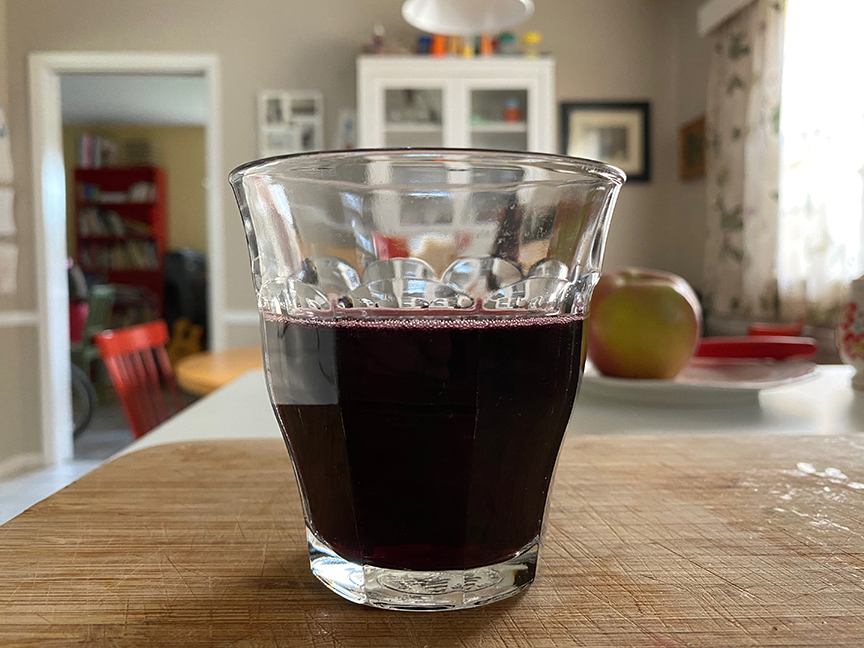
Like most 21-century wine professionals in the U.S., we use a classic Bordeaux glass for nearly all the wines we serve at our house — red, white, and sparkling — with one notable exception: Lambrusco. When it comes to the many wonderful sparkling reds and rosés from Emilia that we love to pour, the “stem” has to be a classic tumbler like the one in the image above. It’s what we call a “glass of the world” in our family lexicon because it’s the type of drinking vessel that you find in taverns and public houses across the globe.

In Emilia, where the locals drink Lambrusco ubiquitously and nearly exclusively (don’t ever try to bring them Brunello as I once foolishly did), the tumbler is the hands down glass of choice.

Is there a technical motivation behind this tasting? No, not as far as I can ascertain. Lambrusco tastes just as good in our tumblrs as it does in our Bordeaux stems. (But please, please, please: never serve Lambrusco in a flute. And on second thought, never serve ANY wine in a flute. But that’s another story for another day.)

In my view, the glass choice for Lambrusco is an aesthetic and ideological one. Low in alcohol and (ideally) with bright fruit and gentle fizziness, Lambrusco is meant to be a crowd pleaser for everyone to enjoy at the table. And so it only makes sense for it to be served in a “glass of the world,” a nod to its demotic nature.

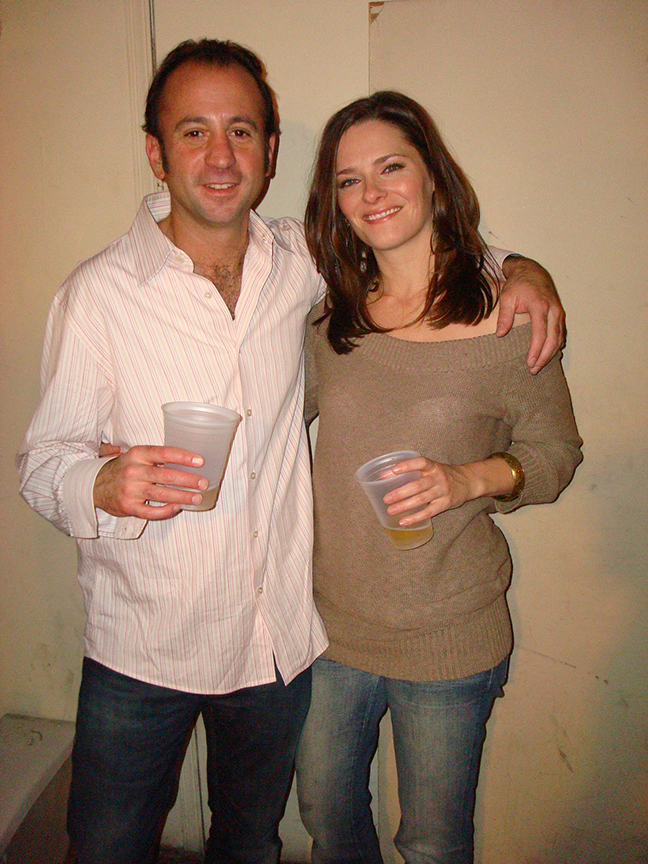
No matter what wine you are pouring tonight, remember: if you can’t be with the glass you love, love the glass you’re with. One of the greatest wine experiences I’ve ever had was sharing Bollinger Special Cuvée Champagne with Tracie backstage at one of my band’s show at the Mercury Lounge on the Lower East Side when we were first dating. We poured it in clear plastic cups, the only option available (below). So go figure!

Oh and by the way, the Lambrusco in the glass last night was paired with nachos topped with refried beans and freshly sliced jalapeños. It one of the most satisfying pairings I’ve had this month. For real.

If you’re joining me tonight for our virtual wine dinner with Alessandro Medici of Lambrusco great Medici Ermete, be sure to use your tumblers instead of traditional wine glasses. And you’ll see what I’m talking about.

I heart Lambrusco: Taste with Alessandro Medici and me this Thursday in Houston.

In my experience, there’s no other wine in the world that more ably expresses the character of the people who make it than Lambrusco.

It’s as if the Emilians — the most joyous and sensual of Italians — had found a way to bottle themselves.

I’ve found this across the board, whether tasting with my many close friends there or opening a bottle at home with dinner. I don’t quite know how to describe or explain it. But if ever there were a genie in a bottle, it’s got to be a bottle of Lambrusco.

The magic ethos of their wines is just one of the reasons I’m thrilled to welcome my friend Alessandro Medici this week for our Thursday night virtual wine dinner at Roma in Houston (my client).

Alessandro is a rising star of Italian sparkling and he’s bringing fresh new ideas and energy to his family’s winemaking legacy. I like him a lot and he’s also a graduate of the Slow Food University of Gastronomic Sciences where I teach (in normal years), another reason I think he’s got the “right stuff.”

See the menu and reservation details here.

And thanks for the support: these events are what’s keeping this restaurant alive. Support local businesses, including my own, by eating great Italian food and drinking great Italian wines with the people who love and make them.

Nicola “Dudu” Durandi, beloved Friulian winemaker, dies at 43.

Above: Nicola “Dudu” Durandi (right), beloved Friulian winemaker with Melania Spagnoli, Texas sales manager for his U.S.-based importing and distributing company.

Nicola Durandi, 43, a legacy grape grower and winemaker from Friuli has died. According to a local media report, the cause was a heart attack.

Known affectionately as “Dudu,” Nicola was a beloved figure in Udine where he lived with his wife and children.

His family’s Antonutti winery is one of Friuli’s leading producers of fine wines. He worked as the estate’s brand ambassador in the U.S.

Over the years, I met and tasted with Nicola on a number of occasions in Texas, a state he visited regularly. Earlier this year, he was the featured guest at one of the virtual wine dinners I host for a restaurant here in Houston.

Nicola was a warm man, with a broad smile and a hearty handshake. And he had that classic Friulian eagerness and genuineness about him.

Tracie and I were both immensely saddened to hear of his sudden passing and we would like to share our heartfelt condolences with his family. Our condolences also go out to the Impero wine team. Nicola will be sorely missed.

Sit tibi terra levis Nicolae.

Donald Trump and the Partisan Johnny (Beppe Fenoglio)

Yesterday, my Italian colleague and friend Filippo Larganà, editor of the popular Piedmont-centric wine blog Sapori del Piemonte, asked me to write a note about the Tuesday evening presidential debate for his site.

Here’s a link to my “op-ed” entitled “Donald Trump and the Partisan Johnny” (in Italian).

For readers who don’t know the works of Beppe Fenoglio, he was one of the most widely read authors of the 20th-century in Italy. His most famous work was his auto-biographical novel Il partigiano Johnny (The Partisan Johnny), the story of an Italian soldier in the Second World War.

After the 1943 armistice with the Allies, Johnny abandoned his post and headed back to his native Piedmont where he joined the partisans fighting German and Fascist armies.

In my post for Filippo’s site, I wrote about how Fenoglio saw Piedmont’s farming culture and its values as the source for the human courage and solidarity that were needed to vanquish the occupying forces.

Piedmontese viticulture grew out of that same culture and humanity.

It’s up to us to draw on those same values as we face the rising but still stoppable racism and racist violence in our own country.

When we find it, we’ll share the human courage and solidarity of those partisans. And perhaps instead of saying, I’m not a racist, but…, we’ll say I’m not a racist, but instead an anti-racist.

Heartfelt thanks to Filippo for letting me share my thoughts with his readers. And special thanks to Strega Off for allowing me to use their photo.

Image courtesy Strega Off, the organizers of an event that celebrates the prestigious Italian Strega literary prize.

Taste one of my all-time favorite wines with me this Thursday in Houston: Pertinace Barbaresco with winemaker Cesare Barbero

In case you haven’t been following the news about the fires in Napa and Sonoma, please see this harrowing account by leading wine blogger Alder Yarrow. Our heartfelt thoughts and prayers go out to our sisters and brothers on the ground there. See also this Calfund.org link with information about the current status of the fires and relief organizations that are taking donations.

This Thursday for our weekly virtual wine dinner at Roma restaurant in Houston, we’ll be hosting Pertinace winemaker Cesare Barbero (above) and presenting the cooperative’s Dolcetto, Barbera, and Barbaresco.

Whether the single-vineyard designates or the classic Barbaresco (the one we’ll be drinking on Thursday), these are some of my all-time favorite wines.

I started following Pertinace back in the early 2000s when I was still living and working in New York. For nearly two decades now, I continue to reach for these wines as one of Langa’s best values and one of the greatest expressions (imho) of Italian viticulture.

Roma owner Shanon and I have been working with the distributor to make the wines available at the same price he charges for all of these dinners. I couldn’t be more thrilled to be hosting Cesare and the wines this week.

See the menu and details here.

You can reserve by simply sending me an email (here).

I’ll look forward to tasting these extraordinary wines with you. Thank you for your support.

And btw, the importer recently gave me a bottle of the 2016 Dolcetto by Pertinace because I wanted to make sure the vintage was showing well. This wine knocked me off my feet with its vibrant fruit and balance. I thought it was stunning. I know our guests are really going to love these. They are really special wines.

Have you ever tasted a still Sorbara? I have thanks to a virtual trade tasting.

When the Italy-America Chamber of Commerce South Central, my longtime client, first contacted me about helping out with a virtual trade tasting, I have to admit that I was skeptical.

The concept was as simple as it was ambitious. The project leader planned to convince producers in Italy not to send just a handful of bottles for each of their labels but rather multiple cases of each one. He and his team (I’m a member) would then reach out to leading Texas wine professionals across the state to set up one-on-one virtual conferences where the Texans and the Italians would each have the same wines in front of them. Using a time-tested logistics partner on the east coast and a new digitally based importing platform, the wines would be gathered in Florence and then sent to Texas to be distributed between trade members and media in Houston (where the chamber is based), Dallas, San Antonio, and Austin.

On paper and in practice, it was nothing short of a herculean effort.

I was surprised that the producers were willing to ship so much wine for the uncharted waters of a massive virtual wine event. But ultimately, when they factored in all the money they were saving by not traveling to the U.S., scores of wineries were eager to participate.

And when you explained to incredulous Texas-based wine and restaurant professionals that the wine would be delivered to their doorsteps and that all they had to do was log on to a virtual 30-minute call with producers they selected, they were happy to take part. After all, not only did you get to taste the wine, but you had the opportunity to “spend some time with it” later in the day and at dinner. That’s something that rarely happens at a conventional trade tasting where you line up to get a small pour in a crowded and often chaotic ballroom or events space.

My ah-ha moment came when I sat down to taste a line of sparkling wines with a newish producer from Modena, Venti Venti. We had a great chat about the use of copper in organic farming as we tasted through their classic-method Lambruscos.

The wines were very good but I was the most curious about a still rosé they included in the flight. It was from Sorbara grapes, they told me.

I’ve been working in the wine trade for more than two decades now and Lambrusco and sparkling wine in general are some of my main interests. But I had never tasted a still wine made from a Lambrusco clone in all my years.

The day after the two-day event, I caught up with a Hosuton-based importer who was raving about a Gutturnio from Piacenza producer Zerioli.

That was when it struck me: if two veteran wine professionals can learn something new in a virtual tasting like this, there must be something to it.

I have seen the future of trade tastings and it’s name is “virtual.”

How to open a wine shop during a pandemic. Video interview with James Oliver of Vesper Wine.

Above: Vesper Wine owners and founders Aisha Savage-Shirley and James Oliver.

Late last week, I had the good fortune to get on a Zoom call (below) with James Oliver (above) who opened Houston’s newest wine shop, Vesper Wine, earlier this year.

Licensed as a winery, Vesper Wine is located in a part of Houston that some might call a “wine desert.” The status as a grape-to-wine transformer allows the business to considerable leeway in how it stocks and delivers its wines to customers across the state (wineries in Texas essentially exist outside the three-tier system and the state’s notoriously restrictive and anti-competitive regulation of the wine industry).

Working beyond the city’s inner loop (where most of Houston’s wine culture is concentrated), the new shop serves an under-served and wine-thirsty community eager for high-quality wine and high-caliber wine education.

Anchored around highly focused wine pedagogy combined with finely honed social media strategies, the store’s business model has proved an unmitigated success at a time when consumers have pivoted toward retail. As wine lovers go out to eat less often and increasingly want to create a high-end dining experience at home, wine merchants like Vesper Wine have become the focal point of the new wine normal. And James, who has that “people person” demeanor that you need to succeed in the wine trade, is providing his clients with consumer-friendly and tech-savvy wine knowledge that enhances their enjoyment — a sine qua non of the New Wine.

Check out the Vesper Wine site and the shop’s Instagram.

And watch the video below to learn how James managed to open a super successful wine shop in the middle of a pandemic that has gripped our city for more than half a year.

Thanks for being here. I know you’ll enjoy our chat as much as I did.