Taste with me online and in person in Houston: Thursday 1/13 Chianti tasting/seminar; virtual dinners “at” Roma with favorite producers.

Many of us in the U.S. wine industry had hoped that January would see the return of Italian winemakers to the U.S.

Unfortunately, as all of us know too well, that’s not going to happen. Even though Europeans are allowed to travel to the U.S. right now, wine industry professionals are rightfully concerned that they might test positive while overseas and not be able to return until they test negative.

From what I’ve been hearing on the ground, all the big distributors are telling their producers not to come because so many clients have canceled in-person tasting with sales reps etc.

Even the venerable Italian Wine Guy, now retired and blogging from his Dallas home, is telling Italians, “don’t come to America now.” Yes, you heard it from the horse’s mouth.

The good news about Italians not coming to the U.S. is that we are revving up the virtual wine dinner program at Roma in Houston where I’ve been writing the wine list since last June. Even though the Italians aren’t locked down right now, many of them are happy to get up at 2:30 in the morning to connect with clients and consumers since they can’t be here in-person.

I’m presenting a virtual dinner this Thursday 1/13 (Tenuta San Guido’s Le Difese). Just me on this one but it’s going to be a fun one. We’ll be talking about wine, yes, but what I’m really excited about is telling the story of Italy’s most famous racehorse, who was bred at San Guido.

On 1/20, Valeria Odero, owner of Frecciarossa in Oltrepò Pavese (my favorite producer of Pinot Noir in Italy), will be joining us for a virtual dinner featuring her Pinot Noir Giorgio Odero. We have the 2013 vintage here in Houston. I’m super geeked about that.

On 1/27, Alberto Cordero, legacy grower at Cordero di Montezemolo, will be joining us online to taste his family’s 2017 Barolo Monfalletto (what an incredible wine; Tracie and I drank it over the holidays with friends). Alberto is a super cool dude and we finally have his wines in Houston, which is great.

DM me if you want to attend any of our virtual events.

It’s still not clear whether or not Slow Wine will be coming to Texas later this month. I spoke to one of the organizers last week and he told me they still hadn’t made a decision on whether or not to cancel. Just fyi.

But the Chianti consortium is moving ahead with its in-person seminar and tasting this Thursday, 1/13 in Houston. I’ll be masked up and presenting. (Please mask up if you plan to attend.) Some of the producers have dropped out. But the gregarious Chianti consortium ambassador Luca Alves will be there to do a technical presentation. The seminar is full, I’ve been told, but there is a waiting list. And there is still space for the walk-around tasting. Click here to reserve.

Whatever you’re up to this month, please stay safe and mask up. And please hit me up if you’d like to join one of our virtual events this month in Houston. They are super fun.

Thanks as always for the support.

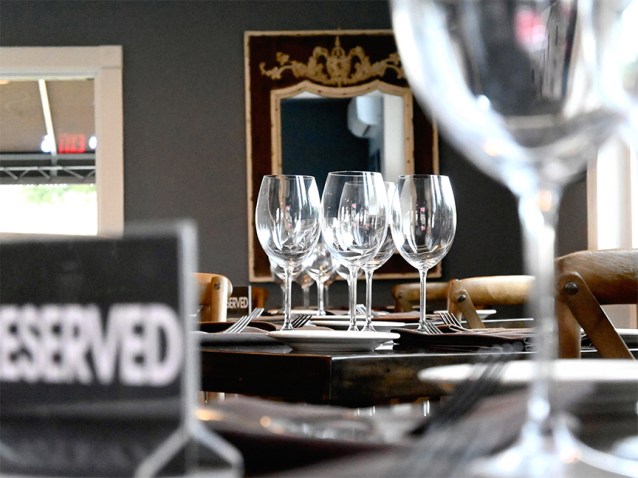
Image via RomaHouston.com. Photo by Al Torres Photography.

Heartfelt thanks to everyone who made the MLK billboard possible. It will look out over the neo-Confederate memorial in Orange, Texas.

To the uninitiated, the cultural resonance of a street or road name may not be immediately apparent. But to many people who live, work, and socialize on those streets, those designations often carry meaning and memory that stretch back to a time before they were born.

In 2017 Houston’s city council voted to rename Dowling St., the main artery of the city’s Third Ward, its historic Black Community (George Floyd grew up there).

The street had been named after Dick Dowling, the Confederate commander at the battle of the Sabine Pass.

It’s incredible to think that in 2017 the main street in the Third Ward was still named after a Confederate military leader, a man who received the Confederate congress “Southern Cross of Honor” and “Confederate Medal of Honor.”

The new name of the street, as of four years ago, is Emancipation Ave. The name was inspired by the fact that the street “serves as the front door to Emancipation Park,” the historic block of greenery where some of the earliest Juneteenth celebrations were held. There’s no doubt in anyone’s mind that the urban planners who named the street Dowling did so because it was connected to Emancipation Park. For at least three generations of Third Ward residents, the street was a reminder of the legacy of racist violence that terrorized and subjugated their ancestors.

My wife Tracie grew up in Orange, Texas, not far from the Sabine Pass, where two of the Civil War’s major battles were fought.

Just a few blocks away from the street where she lived until going away to college and where her parents still live, there is still a street named Dowling.

Back in 2013, when an Orange resident named Granvel Block decided he would build a neo-Confederate monument, he purchased land along Martin Luther King, Jr. Dr. The cultural resonance of the street name surely was not lost on him.

To understand just how insidious his intentions were, see this flier he distributed during his fundraising campaign.

In 2017, he and his fellow Sons of Confederate Veterans (a neo-Confederate group of re-enactors and cosplay enthusiasts), completed construction of the monument. That’s when Tracie and I began protesting and working to raise an MLK billboard that overlooks the site.
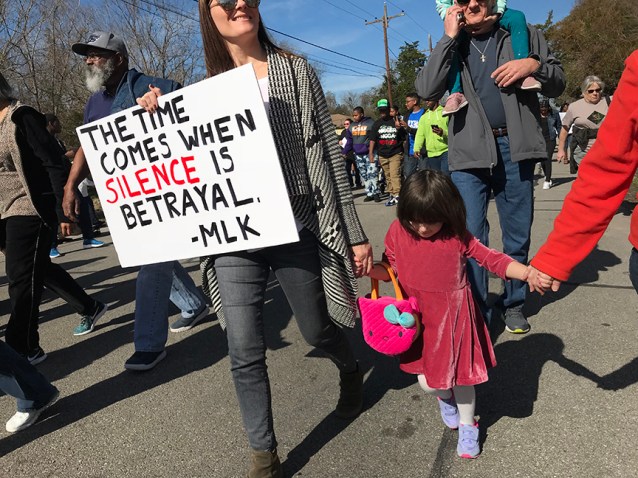
Thanks to the support and solidarity of donors, our recent GoFundMe campaign has raised enough money to post the billboard in time for MLK Day 2022. And it will remain in place throughout February, Black History Month.

There will be no organized protest this year. But Tracie and I will be out there on the morning of January 17 with our signs. DM me if you’d like to join us (socially distanced).

We can’t thank our donors enough. Even everyone who merely clicked and shared has helped to raise awareness of the Sons of Confederate Veterans efforts to remind residents of their presence through the conspicuous display of neo-Confederate (not historical) paraphernalia. Even everyone who merely clicked and shared has helped to remind people that Monday, January 17, 2022 is Dr. Martin Luther King, Jr. Day and that February is Black History Month.

We realize that we may never get the Sons to repurpose the site. But sometimes the battles you know you will lose are the most important ones to wage.

Thank you for your generosity, support, and solidarity.

The best Pinot Noir from Italy?

Pinot Noir is grown across northern Italy and in a few notable spots in Tuscany.

Some of it reflects a long tradition of growing the variety, in places like Trentino-South Tyrol and some would argue Friuli, although most of the Pinot Noir in Friuli was planted in the years after the Second World War.

Pinot Noir didn’t come to Franciacorta until the 1960s when Franco Ziliani, the industrialist and later winemaker, famously decided to make classic method wines there (read Robert Camuto’s excellent obituary for Ziliani, who died late last year, here).

Piedmont growers have planted a lot of Pinot Noir in Alta Langa in recent years as they geared up for the launch of Alta Langa classic method wines. And there is the occasional Langa grower who has some rows of Pinot Noir.

One of the oldest and continuously productive plantings of Pinot Noir is found in none of the above regions.

Back in July of last year, while teaching at the Slow Food University in Piedmont, I took a drive down to Oltrepò Pavese to meet and taste with Valeria Odero, the owner of Frecciarossa, one of the appellation’s most revered wineries.

(For those who may be new to Italian wine, Oltrepò Pavese is a small appellation that lies just south of the Po River in Pavia province in the region of Lombardy. The topography and soil types share a kinship with Langa where Barolo and Barbaresco are grown.)

I had tasted a lot of her sparkling wine during my New York years but during the pandemic closures, I had finally had the chance to taste her still wines thanks to a small independent importer here in Houston. Here and then later in Oltrepò, I was utterly blown away by the depth of her flagship Pinot Noir, grown in vineyards that were planted in the early 20th century. It was no surprise to discover that Cristiano Garella, one of hipster Italy’s most in-demand winemakers, was overseeing the winemaking for her.

She opened the 2016 for me during my visit last summer. But on January 20, we will be pouring her 2013 — a stunning vintage — at our first virtual winemaker dinner of the year at Roma in Houston. Valeria and I spoke this morning and I’m super geeked that she’s joining us. It’s going to be one to remember.

We don’t have the menu yet but the price will be same as always, $119 per couple, including a 3-course dinner for two and a bottle of Valeria’s 2013 Pinot Noir Giorgio Odero.

Please send me an email if you like to attend by clicking here.

Thank you for your support and happy new year!

We need $700 to raise an MLK billboard over a neo-Confederate monument during Black History Month.

Please consider giving to our GoFundMe campaign to raise an MLK billboard overlooking a neo-Confederate memorial in Tracie’s hometown.

We need just $700 more to reach our goal of $2,000. The billboard will be posted on the weekend of MLK Day, January 17, 2022, and will remain in place throughout the month of February, Black History Month.

Please visit our GoFundMe here. Thank you for your support and solidarity.

The photo above is from one of our MLK Day protests at the site. There will be no organized protest this year because of health concerns.

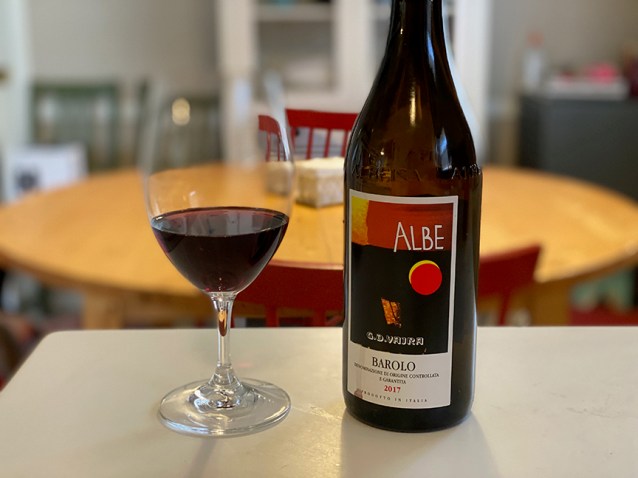
We weren’t the only ones drinking Giuseppe Vaira’s excellent Barolo last night. One of his best vintages of Albe to date.

Please consider donating to our GoFundMe campaign to raise an MLK billboard overlooking the neo-Confederate memorial in the southeast Texas town where Tracie grew up. We plan to have the artwork up in time for MLK Day 2022. And if we can raise enough money, it will remain in place throughout Black History Month. Thank you.

There are certain nights when work doesn’t feel like, well… “work.”

Yesterday evening was one of those times. Last night, Giuseppe Vaira, legacy grower and winemaker at G.D. Vajra in Barolo, joined Roma restaurant guests and me for a tasting of his excellent 2017 Barolo Albe.

It’s a wine that his family has been making for roughly two decades and it’s always been a go-to wine for me, whether as a wine lover or a wine director looking for an approachable but still classic Barolo that even guests with little Nebbiolo experience will love.

But last night’s 2017 was a cut above. It had a depth of flavor that was only matched by its balance and grace. Maybe it was just our mood at our last virtual wine dinner of the year. Maybe it was just that the stars were perfectly aligned.

Or maybe it’s just that this wine, as Giuseppe so beautifully put it, has grown up like the vines that were planted many years ago to produce it. In his view, it was the age of the vines combined with the uniqueness of the vintage that brought the wine into crystal clear focus.

Or maybe, just maybe… it was because we weren’t the only ones drinking it. While we were chatting and tasting over a Zoom call (at 2:30 in the morning for Giuseppe!), one of America’s most famous sports figures was enjoying it at the restaurant. I dunno… there was just something in the air!

My heartfelt thanks goes out to Giuseppe for joining us so early in the morning. It was a truly magical event and a fantastic way to close out our year in wine. Thanks to all our guests at the restaurant who have supported the virtual events over the last two years. We have every intention of bringing you more and more virtual content. Stay tuned and happy new year!

“Weather and Wine,” last night’s show by 60 Minutes, raises awareness of wine’s (often whispered but rarely spoken) existential threat.

It was impressive to watch last night as 60 Minutes journalist Lesley Stahl dived into one of wine’s thorniest issues: the impact of climate change on grape growing.

Doubly impressive when you consider that the overwhelming majority of commercial winemakers are deeply reluctant to raise awareness of the climatic issues they face now with every vintage. To talk about the severe weather events of the current or a past vintage, the thought process goes, would be to threaten the harvest’s commercial viability. And it’s not an off-the-mark attitude: by the time vintage notes make it to the layperson consumer, who knows and probably cares little about the nuance of vintage or terroir, a stigmatized vintage can radically diminish the retail value of a given wine in the mind of the uninformed buyer.

I highly recommend checking out the broadcast, which — it’s important to note in my view — had the following subtitle: “Drawing truth to power.” (Wow!)

I was eager to watch the show last night because I had been contacted by the producers during the Christmas break: they wanted to use a photo of frost damage that they had found here on the blog.

Dario Vezzoli, the author of the photo and son of Franciacorta grower Giuseppe Vezzoli, swiftly agree to let them use it (thank you again, Dario!).

But I also told them that the person they needed to speak to was Alberto Cordero, legacy grower at the Cordero di Montezemolo winery in La Morra, Barolo.

Where so many producers have been extremely tip-lipped about the effect of climate change in Langa, Alberto has spoken openly about the challenges his estate faced with the April frost in 2017. He also graciously agreed to let the show use his photos. (Alberto’s wines are imported to the U.S. by Ethica Wines, one of my clients; see their post on the show here.)

As it so happens, we opened Alberto’s 2017 Barolo Monfalletto during our (ongoing) Christmas break. Besides the 1998 Giacosa white label Barolo Rocche Falletto that a friend brought to our holiday party this year, the Monfalletto was one of the best wines we tasted this year. It was surprisingly approachable, with great freshness and drinkability, elegant and nuanced with wonderful balance between the acidity, alcohol, and tannin. We — Tracie, me, and another couple — loved it.

The fact that Alberto and his family decided to release their top wine from the now infamous 2017 vintage reflects their confidence that they were able to make great wine from the 2017 harvest — maybe not as much wine but great nonetheless, as the bottle in question showed.

It brings to mind an adage often attributed to the great Montalcino winemaker Piero Talenti (I’ve never been able to verify if and/or where he said or wrote it): there are no “bad” vintages; there are simply vintages when we make less wine.

As Alberto pointed out in his newsletter in February of this year, the frost caused the most damage in lower-lying spots where the freeze really took hold. Top vineyards, like his family’s Monfalletto, were high enough to be spared.

For Christmas Eve, Tracie and I opened a bottle of the 2017 Produttori del Barbaresco, a classic “blended” Barbaresco, sourced from multiple vineyards in the historic cooperative’s family of parcels.

This wine, one of my all-time favorites, also showed beautifully. My only lament would be that the fruit was very restrained when we first opened it. We drank it over three nights (one of awesome things about top Nebbiolo) and by last night, it had come into glorious focus (paired with pork loin tacos, black beans, and 60 Minutes!).

It was another example of how 2017 will be remembered for both its challenges and its great wines.

I know the 60 Minutes show will be endlessly parsed in coming days. Although I found it to be well balanced, it could have also addressed issues like copper, the wine industry’s true “dirty little secret.” It also could have taken a closer look at the many excellent wines that are being released from 2017 and will be released from 2021.

There were other issues — mostly lacunae — as well. But I think it’s fantastic that the mainstream media is beginning to make “climate change and wine” part of the cultural conversation. Maybe some of the oil barons here in Houston will start paying attention when they realize that their precious wines are under threat.

Chianti comes to Houston January 13, 2022: seminar and trade tasting. Please come out and taste with me.

Above: I last visited Chianti in January 2020, not long before the lockdowns.

Please join me on Wednesday, January 13 in Houston for a tasting and seminar followed by a walk-around tasting of 20+ Chianti producers.

The event is part of the Chianti bottlers and growers association “Chianti Lovers U.S. Tour 2022.”

Click here to register.

I couldn’t be more thrilled to be presenting the seminar that day. And I’m looking forward to catching up with friends and colleagues for the first major wine event of 2022.

I hope you can join us. Glorious Sangiovese awaits!

“A draught of vintage!” Wine as a “shadow of a lie”: an enocentric reading of John Keats, the wine writer.

From the department of “de poëse”…

Above: a plaque outside the Keats-Shelley museum in Rome located in the palazzo where Keats died at age 25 (image via Wikipedia Creative Commons).

One of the observations uttered on Friday night (during a lively virtual reading and discussion of poetry accompanied by wine) was that John Keats, the Romantic poet, was a great wine writer. The text in question was what is arguably his most famous poem, one we all read (and hardly understood) in high school English class, “Ode to a Nightingale.”

“O, for a draught of vintage!” wrote Keats, probably referring to a wine (mostly likely a fortified wine) that was coveted for the high quality of its harvest:

O, for a draught of vintage! that hath been
Cool’d a long age in the deep-delved earth,
Tasting of Flora and the country green,
Dance, and Provençal song, and sunburnt mirth!
O for a beaker full of the warm South,
Full of the true, the blushful Hippocrene,
With beaded bubbles winking at the brim,
And purple-stained mouth…

Now, THAT is a great example of synaesthesia!

Tasting of Flora [with a capital F] and country green/Dance, and a Provençal song, and sunburnt mirth!

What a verse!

But the one that gets me personally is the allusion to the “blushful Hippocrene,” the spring on Mt. Helicon, a body of water sacred to the Muses. Now THAT is a tasting note! 99+ points Robert Parker!

As much as our enocentric reading of the text, performed by none other than Edoardo Ballerini, thrilled the attendees, it was a closer look at the poem that raised eyebrows on Friday evening.

In the first half of the work, Keats alludes to wine as a source of solace and forgetting as he contemplates the ephemeral, fragile nature of human experience. But before the second part begins, “Bacchus and his pards” (his cronies, as it were) would not be the ones to lift him to reach the singing nightingale.

No, it would be “poesy” (nota bene: not poetry) whose wings he would ride:

Away! away! for I will fly to thee,
Not charioted by Bacchus and his pards,
But on the viewless wings of Poesy,
Though the dull brain perplexes and retards…

Note the rhyme scheme (and more importantly the prosody) here. Brilliant imho. Poesy with a capital P.

It’s possible that Keats was referring to Francis Bacon’s observation that poesy is the wine of demons.

“One of the fathers [of the Church],” wrote Bacon in his essay “Of Truth,” “in great severity, called poesy vinum daemonum, because it filleth the imagination; and yet it is but with the shadow of a lie.”

That passage was later corrupted and transformed into the aphorism poetry is the Devil’s wine, an adage hegemonically read to mean poetry is the idle work of the Devil.

But what Bacon meant was that poesy, the act of creating art, or better yet, artifice could be likened to wine, a drink that seems to transcend the sum of its parts, so to speak, and go beyond the realm of human understanding — nec plus ultra.

Making art, as Bacon suggests and as Keats ponders throughout his writing, is something beyond human capacity. It is the lie, the artifice, that reveals a greater truth that could not be revealed otherwise (a concept central to the notion of the sublime).

It’s key to remember that the science of wine was still scarcely understood in Keats’ time (more than four decades before Pasteur would publish his studies on wine, to put it into context). For the Romantic poet, as for Bacon, an analogy between poesy and wine could be made for their shared ability to surpass human understanding.

Even though we know much more (although not all) about the science of wine today, the binomial wine and poesy (again, not wine and poetry) continues to pervade our ongoing fascination with the enoic stuff.

Enjoy the poem here. Happy reading!

Dante on the miracle of wine and life. A new translation worth checking out.

Our hearts and prayers go out to families impacted by the Kentucky tornados. Click here to learn how to donate to relief efforts (via the Lexington Herald Leader). As residents of Houston, we know all too well how natural disasters continue to affect families long after the media attention has waned. Please consider giving.

Above: “Dante and Statius Sleeping with Virgil Watching,” ink on tracing paper, after William Blake’s illustrations to the Divine Commedy, by John Linnell. Source: Beinecke Rare Book and Manuscript Library (Yale).

What a thrill to learn that the New York Review of Books published a new translation of Dante’s “Purgatory” earlier this year!

The excellent English rendering by poet D.M. Black fills a much bemoaned lacuna: while the “Inferno” has been translated countless times, often by leading poets, the “Purgatory” and “Paradise” have too often been relegated to seemingly hermetic English-language versions nearly impenetrable for the layperson of Dantean hermeneutics. This is owed in part to the challenges of translating the Purgatory and Paradise where Dante elevates the register of his language. It’s also owed to the fact that the Inferno, with all its blood and guts, has always been the most accessible and appealing to the greater reading public.

The drawing above, traced from William Blake’s illustration from the 27th canto of the Purgatory, shows Dante and the Roman poet Statius sleeping as Dante’s guide, Virgil, looks on. As they ascend the rings of Mount Purgatory, Virgil relies on Statius, a Christian, to explain “eternal truth[s]” of Christian theology that Virgil is unable to comprehend or explicate because of his pre-Christian status.

In the passage below, gleaned from the 25th canto, Statius explains to Dante how an embryo is transformed from a living being into a being with a soul.

In order to help Dante understand this miracle of G-d, Statius makes an analogy with how the heat of the sun transforms grape must into wine. It’s a powerful passage that, for reasons abundantly apparent, is of great interest to me.

I’m overjoyed to share the lines, transcribed here. But please check out the new translation, published on the occasion of the 700th anniversary of Dante’s death.

Open your heart now to the truth that follows:
and learn that in the embryo, as soon as
the brain’s articulation is completed,
to it, and joyfully, the Prime Mover [G-d] turns,
and in his joy at Nature’s handiwork
breathes a new breath into it full of power,
which takes what it finds active there and draws it
into its substance, creating a single soul
to live and feel and center on itself.
To make what I am saying less surprising,
think of the heat of the sun, that turns to wine
when joined with the juice the generous vine produces.

I’ll be discussing these lines, and acclaimed actor Edoardo Ballerini will be reciting them, on a Zoom call this Friday evening. Click here to learn more.

A brush with celebrity: taste with acclaimed actor Edoardo Ballerini and me as we discuss “the Devil’s wine,” Friday, December 17 (virtual event).

Above: acclaimed actor Edoardo Ballerini, “the voice of G-d,” as the New York Times recently called him (image via edoardoballerini.com).

You may remember him from shows like “The Sopranos” or “Law and Order.” You may have seen him in now cult films like “Dinner Rush” (where he played a celebrity chef and Sandra Bernhard played a food critic).

Edo (as we all affectionately call him) and I became good friends in Los Angeles thanks to his father, my dissertation advisor and friend Luigi Ballerini, the celebrated Italian poet and scholar.

But it wasn’t until fate brought me to Park Slope, Brooklyn in the late 1990s that we formed a deeper bond.

He had just been cast to play alongside Armand Assante in “Looking for an Echo” as an up-and-coming singer-songwriter. We were already hanging out in the city when he asked me if he could join my music crew’s almost nightly jam sessions at my apartment: he wanted to develop his guitar playing and singing for the role. “Tall boys and Marlboros” were the bywords of those days and man, what a time it was to be in Brooklyn playing music! So many great memories and stories from those days!

But when we connect next Friday evening for a Zoom call and wine tasting, Edo and I won’t be rehashing the good old days when people like us could still afford to live in Park Slope.

Instead, we’ll be discussing “the Devil’s Wine” — poetry.

He’ll be reading a selection of wine-hued poems and I’ll be tracing wine’s arc in Western culture as a source of mystery, wonder, and forbidden knowledge.

Oh and here’s the thing… In recent years, Edo has become the number-one narrator of audiobooks in the world today. I’m not shitting you! Check it out in the New York Times and the Guardian.

It’s always a sinfully delicious treat to hear him read. As the Times called him, he’s the “Vladimir Horowitz of his cohort.”

The virtual event is to be held next Friday, starting at 7:30 EST. It’s not a cheap date but it’s going to be a good one. And all the proceeds — Edo and I are both doing it pro bono — go to charity, in this case Animal Zone International.

Click here to register.

And what will we be tasting, you ask? Good question! Next week, I’ll be recommending wines, based on the location of the attendees, for all of our guests to open, although wine is not required.