Pergola-trained Schiava that blew us away… @MasVinoPorFavor

From the department of “ampelography and vinography as exegetic tools that help us to achieve a more profound understanding of the human experience and condition”…
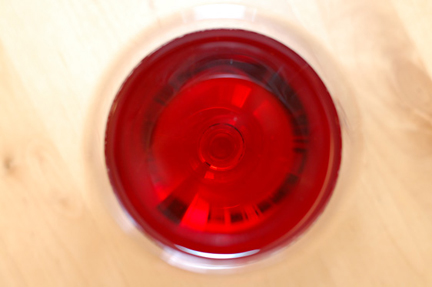
schiava

Photos by Tracie P.

Every once in a while, you stumble upon a bottle of wine that expands your vinous horizons.

Once such bottle came into our lives the other day after wine seller Marcy Jiminez in Houston recommended it to me: the 2008 Laimburg Alto Adige/Südtirol Kalterersee Auslese Classico Superiore DOC Ölleiten (Kalterersee is German for [Lago di] Caldaro Scelto; “Ölleiten” refers to the fact that the vineyards lie adjacent to olive groves).
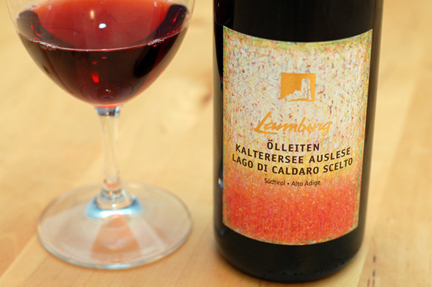
Here’s the link to the winery and link to the wine and fact sheet.

The wine was bright and fresh, with the zinging acidity and balance of technicolor (red berry and black cherry) fruit and earthiness that really turn us on. And even in a market like Texas, where we pay more for European wines than our counterparts in New York and California (thanks to higher alcohol tax, higher storage cost, and the big distributors’s choke-hold monopoly on the Texas legislature), this wine weighed in at only $23.

We love, love, loved it…

Especially after tasting a wine like this, it’s not hard to understand why Schiava was such a popular grape in another era.

As editors Calò et alia write in Vitigni d’Italia (Grape Varieties of Italy, Calderini, Bologna, 2006), Schiava (pronounced SKEE’AH-vah) “was one of the first grape varieties to be cited in the legal documents and treatises of the Middle Ages.” Its popularity was so great that “it represented the viticultural model for Slavic grape growing by antonomasia.”*

The name Schiava comes from the High German Schlaff, an ethnonym denoting “A person belonging by race to a large group of peoples inhabiting eastern Europe and comprising the Russians, Bulgarians, Serbo-Croats, Slovenes, Poles, Czechs, Slovaks, etc.” (Oxford English Dictionary). And it is related to the Italian schiavo (meaning slave, from the Latin sclavus) only in its morphology.

In other words, it was (and is) an ampelonym that, by synecdoche,** represented a cultural epoch in which Slavic culture dominated that part of the world.

When I attended Vinitaly earlier this year, I asked Florian Gojer of the Gojer winery to pronounce Lagrein for the Italian Grape Name & Appellation Pronunciation Project. When I asked him to pronounce Schiava, he insisted on using the German name, noting that in “Alto Adige, we use the German” Vernatsch.

My philological intuition points me to a relationship with Vernaccia but that inquiry will have to wait for another day. In the meantime, here’s Florian…

* antonomasia: “The use of a proper name to express a general idea, as in calling an orator a Cicero, a wise judge a Daniel” (Oxford English Dictionary).

** synecdoche: “A figure by which a more comprehensive term is used for a less comprehensive or vice versâ; as whole for part or part for whole, genus for species or species for genus, etc.” (Oxford English Dictionary).
Franciacorta “reset” applauded by winemakers

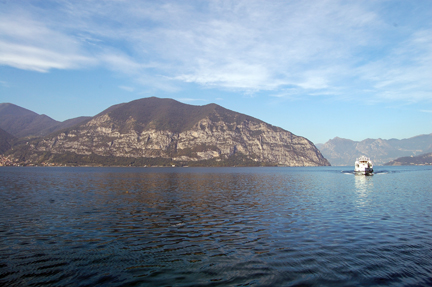
Above: The gorgeous Lago d’Iseo (Lake Iseo) provides maritime influence for the vineyards of Franciacorta. The beauty of Italy’s topography is immeasurable.

“No inflated numbers this time. No triumphalism. And not even any orgasms during a ‘Ring Around the Rosie,'” wrote my good friend, winemaker, and Franciacorta superhero Giovanni Arcari on his blog yesterday. “Nonetheless, it feels like a good moment to celebrate a success, even if that success was generated by a problem.”

Giovanni was referring to newly announced Franciacorta appellation regulations that will lower yields, raise the minimum vineyard age, and help to raise production standards throughout the appellation, where Champagne-method sparkling wines are produced.

By all accounts, Italy produces more sparkling wine than any other country: at latest count, “400 million bottles with Euro 1.7 billion in sales.”

Despite the generally bleak outlook for Italian winemakers, these figures have resulted in robust chest-beating, fist pumping, and a surplus in funds devoted to marketing (the “triumphalism” to which Giovanni refers).

But Franciacorta, an affluent appellation created in the 1960s and funded by Italian steel magnates, has suffered the economic crisis more acutely than any other sparkling wine producer: as Franco Ziliani reported on his sparkling wine blog earlier this year, prices for Franciacorta — a luxury product — have reached alarming lows, with wines being sold in Europe for as low as Euro 4.

Above: One of the most interesting tastings I attended during the 2011 European Wine Bloggers Conference was a flight of nearly 30 Franciacorta crus at the Berlucchi winery. I think that many would be surprised at the diversity of growing sites in the appellation (but more on that in a future post).

The new appellation regulations were approved by an overwhelming majority (by Italian standards) of 80% of consortium members, reports Giovanni.

And the measures will deliver significant change in an appellation dominated by large commercial producers whose bottom line often trumps character and originality in the wines they bottle.

Of all the sparkling appellations in Italy, Franciacorta — there’s no doubt in my mind — has the potential to deliver truly great and original wines: even though very few of the top bottles make it to the U.S., I’ve tasted some stunning wines in Franciacorta, where fresh, clean, bright Pinot Noir and Chardonnay take on an intensely saline quality that pairs superbly with the fresh water cuisine of the Italian Lake District.

And the new appellation regulations, everyone seems to agree, are a step in the right direction. [We must] “improve to grow and grow to improve,” wrote Giovanni in the chiasmus of his title. And they are sure to do more than consortium president Maurizio Zanella’s recent appeal to the Italian media to stop using the term bollicine (tiny bubbles) when referring to Franciacorta.

Franciacorta and sparkling wines from Italy have been on my mind lately because I’ve been asked to speak on a panel devoted to the subject at the upcoming Viva Vino conference in Los Angeles.

The Holy Grail quest to produce sparkling wines has played an enormous role in shaping the history of Italian wine in general. And I’ll devote an upcoming post to my research.

In the meantime, if you want to get the discussion rolling, please share your thoughts in the comment section.

What is it, after all, that makes sparkling wine play such a powerful role in our vinous psyche?

Entomatada: the Italian-inspired enchilada? @eatlamex @kshilcutt

Even though I grew up eating Mexican food in La Jolla, California, and traveled extensively in Mexico as a teenager, there are still so many wonderful dishes in the Mexican gastronomic canon that I have yet to experience.

Yesterday, when my colleague from the Houston Press and one of the Texas food writers I admire most, Katharine Shilcutt, took me to La Mexicana in Houston, she introduced me to the entomatada (on my plate above, right), a tortilla stuffed with chicken, beef, beans, or (in my case) cheese and then dressed with a light tomato sauce.

(Nota bene: The dish isn’t listed on the menu but can be ordered à la carte.)

La Mexicana is one of the first places that Tracie P took me in Houston when I first moved to Texas: the food is fresh, wholesome, and reasonably priced, the atmosphere is cheerful and family friendly, and the service is dignified and attentive — a Houston classic and favorite.

For obvious reasons, the dish got me thinking about parallels between Italian and Mexican gastronomic traditions: both are based on highly localized ingredients and regional specializations and both have been immensely successful exports for their respective countries.

Forty years ago, the “red sauce” dishes and flasked Chianti of Italian cuisine were considered “ethnic” food (what a despicable word, btw). Today, can you imagine Manhattan without ravioli stuffed with beef cheeks?

Forty year from now, what role will Mexican cuisine play in the world?

All I know is that my entomatada was delicious (and I just love saying entomatada).

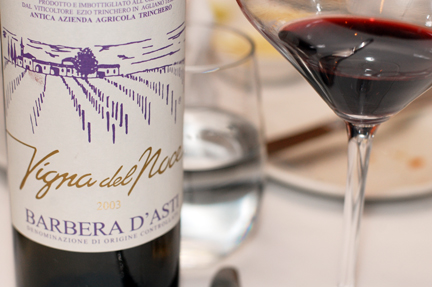
03 Barbera d’Asti Vigna del Noce was insanely good (and the best Malbec I’ve ever had)

The Trinchero winery first came to my attention many years ago while living and working in New York and I have followed the wines ever since, tasting them whenever I get the chance.

Of all the Barbera that floods the U.S. market these days, Trinchero — a Barbera d’Asti producer and Natural winemaker — is one of the least likely to reach a city like Houston, Texas, where the “100-point burning embers” (thank you, Robert Parker!) of Colgin Cellars are considered a benchmark for the finer things in life.

But for reasons not wholly unknown to me, a small Houston-based importer called Dionysus brings in a number of Piedmont wines that I love.

When my friend and colleague Scott Sulma included the 2003 Vigna del Noce in a tasting menu flight the other night at Tony’s, I was skeptical. The last time I tasted this wine, a few years ago, it seemed to be succumbing to the overly ripe vintage. And while it still had healthy acidity, a jammy note had begun to emerge.

But when we tasted it a week ago Tuesday and then again last Tuesday, it showed brilliant acidity, meaty but balanced fruit, and the focused tannin that Asti-grown Barbera often develops when vinified in the traditional Astigiano and Monferrato style.

Revisting the wine made me think that the previous bottle I had purchased at a wine store in Houston had been slightly cooked.

I thought the wine was fantastic…

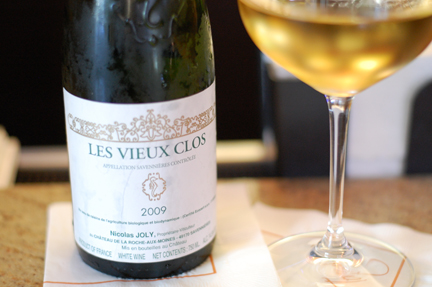
I was surprised to find a bottle of entry-tier Joly labeled Vieux Clos (the way it is labeled in France) as opposed to the Americanized Clos Sacres (when we visited Coulée de Serrant, Virginie Joly told us that a previous U.S. importer had advised her father that Americans would never buy anything labeled vieux).

The 2009 had more body in the mouth than recent vintages I’ve tasted but it was fresh and clean on the nose. Another huge winner for me (although at $25 a glass at Tony’s it’s not exactly recession friendly).

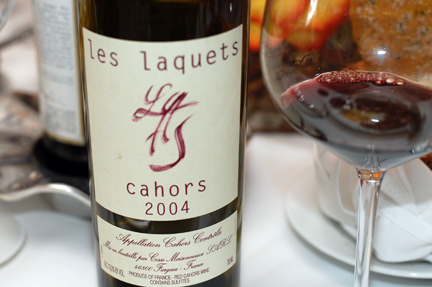
But the biggest surprise of dinner on Tuesday was an AMAZING Cahors by (Natural?) winemaker Domaine Cosse Maisonneuve. (The winery doesn’t have a website but I did find this page.)

Most of the Cahors that makes the Atlantic crossing is so tricked out and oaked that it tastes like sawdust (at least in my experience).

This wine had acidity and fruit and an ethereal earthiness that really thrilled me… I have no idea how this wine made it to Houston (another crazy importer?) but I’m looking forward to putting a few bottles down in our cellar.

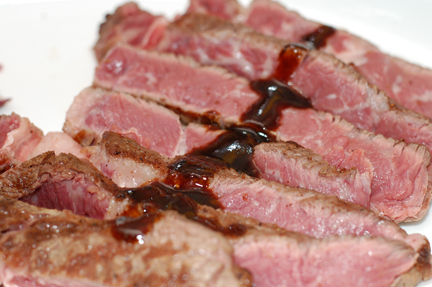
It paired brilliantly with the rib-eye with balsamic reduction at Tony’s.

In other news…

I was dismayed to read 1 Wine Dude’s post on Robert Parker’s nastiness and wholly unwarranted rant against our dear friend Alice Feiring in a recent Sommelier Journal interview.

IMHO, 1 Wine Dude (aka Joe) is the top wine blogger in the enoblogosphere right now: he knows how to balance the tannin of truth with the fruit of joy, adding just enough acidity to keep it all bouncing. I liked the way that he approached this sticky subject and how he moderated the comments that followed.

Here’s the post.

Chapeau bas, Joe.

My life as a Knight of Malta (and why wine blogging matters)

Above: The amazing Hawk Wakawaka posted this wonderful depiction of our family yesterday on her blog. Click the image to enlarge.

For many years now, I’ve thought of enogastronomy as an exegetic tool that can be mustered to achieve a deeper and greater understanding of the human experience and condition.

And over the course of nearly five years that I’ve maintained my blog, I’ve discovered that above and beyond the epistemological discourse spurred through the enoblogosphere’s hypertext, wine blogging has also unexpectedly delivered other rewards through intensely and intrinsically meaningful friendships with other wine bloggers across the world.

Alfonso (Dallas) is one such friend. Brookyn Guy (Brooklyn) another. And there are so many others, many of them in Italy, France, Britain, and even Australia.

Of course, Tracie P and I met through wine blogging (here’s the post on the story of how we met). Our union ultimately led to the birth of our beautiful daughter, Georgia P (who, as you can imagine, already has a blog).

Earlier this year, when Alfonso suggested that I contact Hawk Wakawaka and ask her to join the Colli Orientali del Friuli blogger project, I knew that I would find in her a friend, colleague, and peer: our tightly knit community of wine bloggers prizes collegiality and camaraderie, professionalism and courtesy, brilliance and acumen.

You can imagine my joy this morning when I awoke to discover that Hawk Wakawaka had depicted me as a Knight of Malta and a protector of my family (in the image above).

I’ll point you to her post for the story behind the drawing and our experience together in Friuli.

And I’ll send her a heartfelt thanks for helping me to understand the human condition and experience in a new and newly meaningful way… all thanks to wine blogging…

Magliocco: Italian Grape Name & Appellation Project

Here’s the link for previous entries in the Italian Grape Name & Appellation Pronunciation Project.

When I first launched the Italian Grape Name & Appellation Pronunciation Project I wanted to give a voice to Italian winemakers by creating a public platform where they could “speak” their grapes. The pronunciation of their grape names — their ampelonyms — can often prove challenging for Anglophones.

But as the project expands, I’m including a “layperson” of wine in this entry.

My friend Giovanni Gagliardi is not a winemaker: he’s what I call a “cultural entrepreneur” of Italian wine. A native of Calabria, he curates a website devoted to the wines of Calabria (VinoCalabrese.it) and he travels the country attending and speaking at all sorts of wine festivals (that’s how we met).

But most of all I wanted to include him because he is a simpaticone (see photo taken from his Facebook below).

In this week’s entry, Giovanni speaks “Magliocco,” a grape that we’ve seen very little of in the U.S. but that is making new inroads here.

Where Cirò is known for its Gaglioppo, the winemakers of Cosenza view Magliocco as the greatest indigenous expression of their enologic landscape.

In the U.S., I’ve tasted superb bottlings of Magliocco, including wines by Terra di Balbia (by my good friend Giampaolo Venica) and Librandi. And there are more and more wines making it here.

Magliocco (also called Magliocco Canino, Magliocco Ovale, and Magliuacculu) is a tannic grape with a wonderful roundness to it (when vinified monovarietally), good dark red fruit, and healthy acidity. The Terra di Balbia Magliocco is one of the best selling wines by the glass at Sotto in Los Angeles (where I author the wine list).

Thanks for speaking Italan grapes!

Bobby Stuckey & Lachlan Patterson in Austin (Georgia’s first wine tasting!)

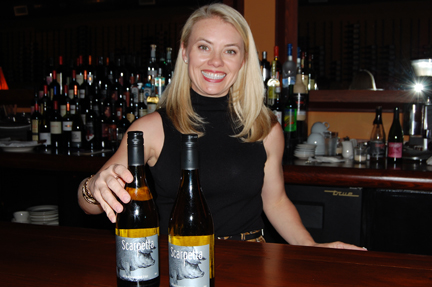
Bobby and Lachlan were in town yesterday hosting a luncheon at Vino Vino for their line of wines, Scarpetta, including their new Barbera del Monferrato, which we loved.

We’ve become friends after we traveled to Friuli together a few years ago and then Tracie P and I had one of our all-time favorite meals at their restaurant last year before Georgia P arrived.

Master Sommelier Bobby is the apotheosis of cool and the sweetest guy…

Chef Lachlan is the Indiana Jones of Italian restaurateurship in the U.S. His focus is intense but it never blurs his passion. The soulfulness of his cooking is never eclipsed by his celebrity. And yes, ladies, he’s single!

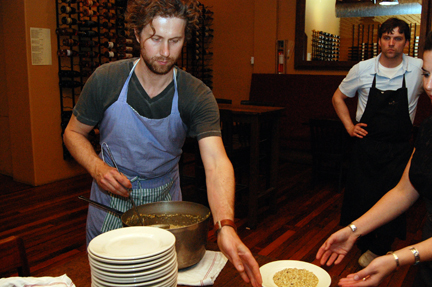
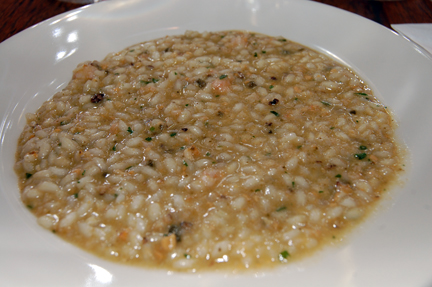
His riso adriatico was stunning. They had been in Dallas the day before and Alfonso posted on the lunch here. “One of the best meals of 2012,” Alfonso told me a voce.

Our good friend April Collins, their Texas broker and one of the most beloved wine professionals in the state, did a superb job orchestrating the event.

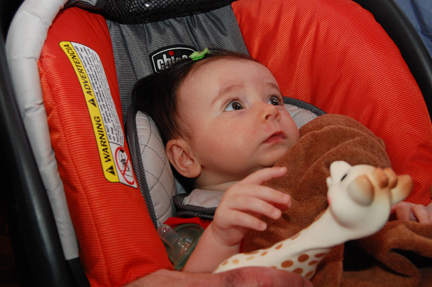
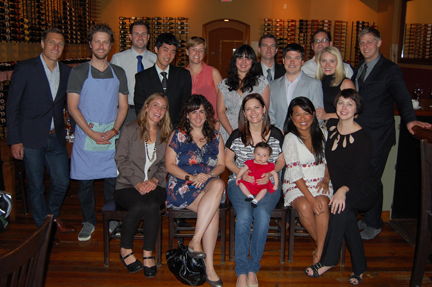
Georgia went to her first fancy wine tasting and luncheon! She was SO good and a lot of friends got to meet her for the first time.

All of the top Austin wine professionals were there. We’re lucky to be part of such a close-knit wine community.

Mussolini’s Brunello

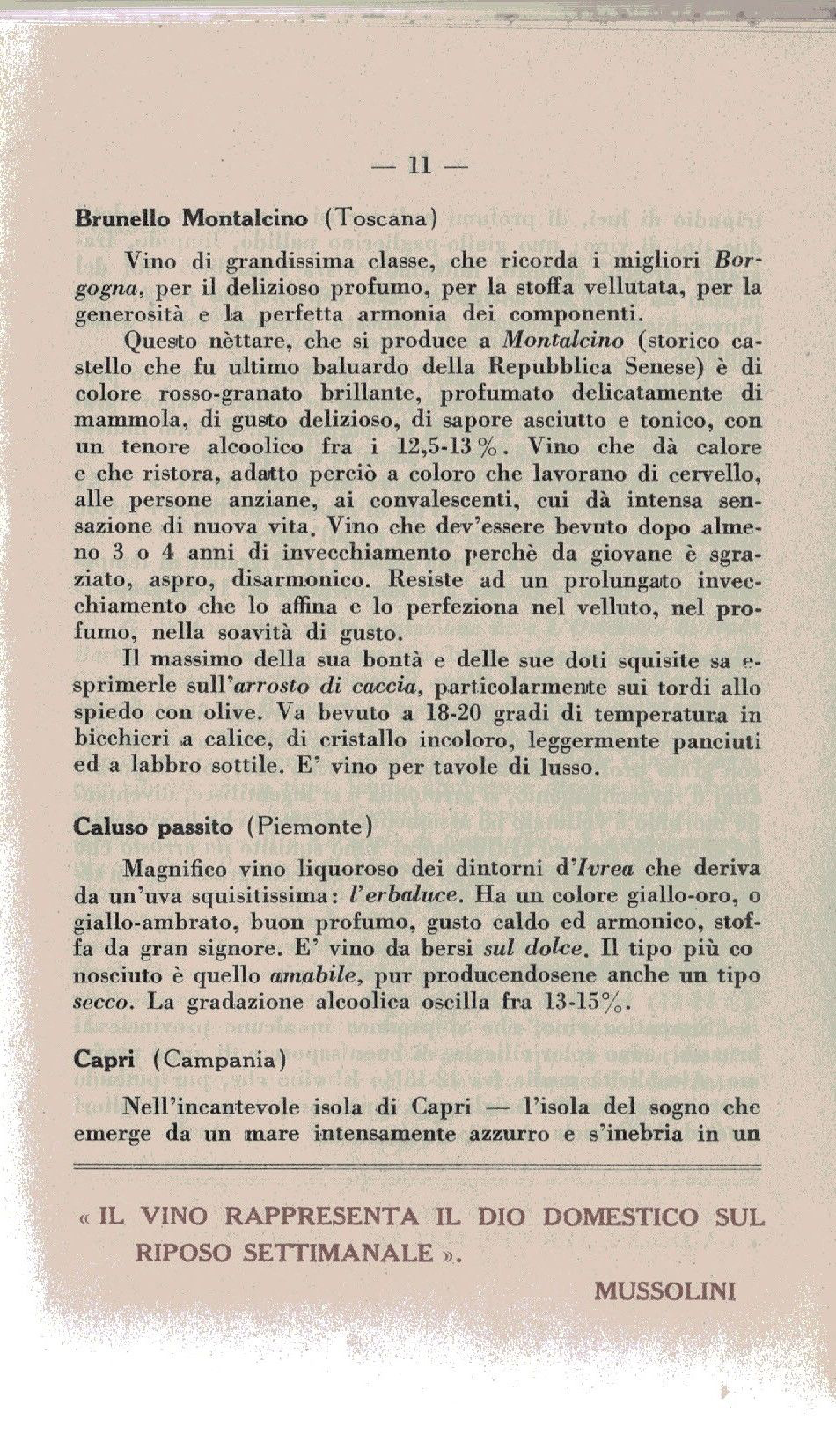
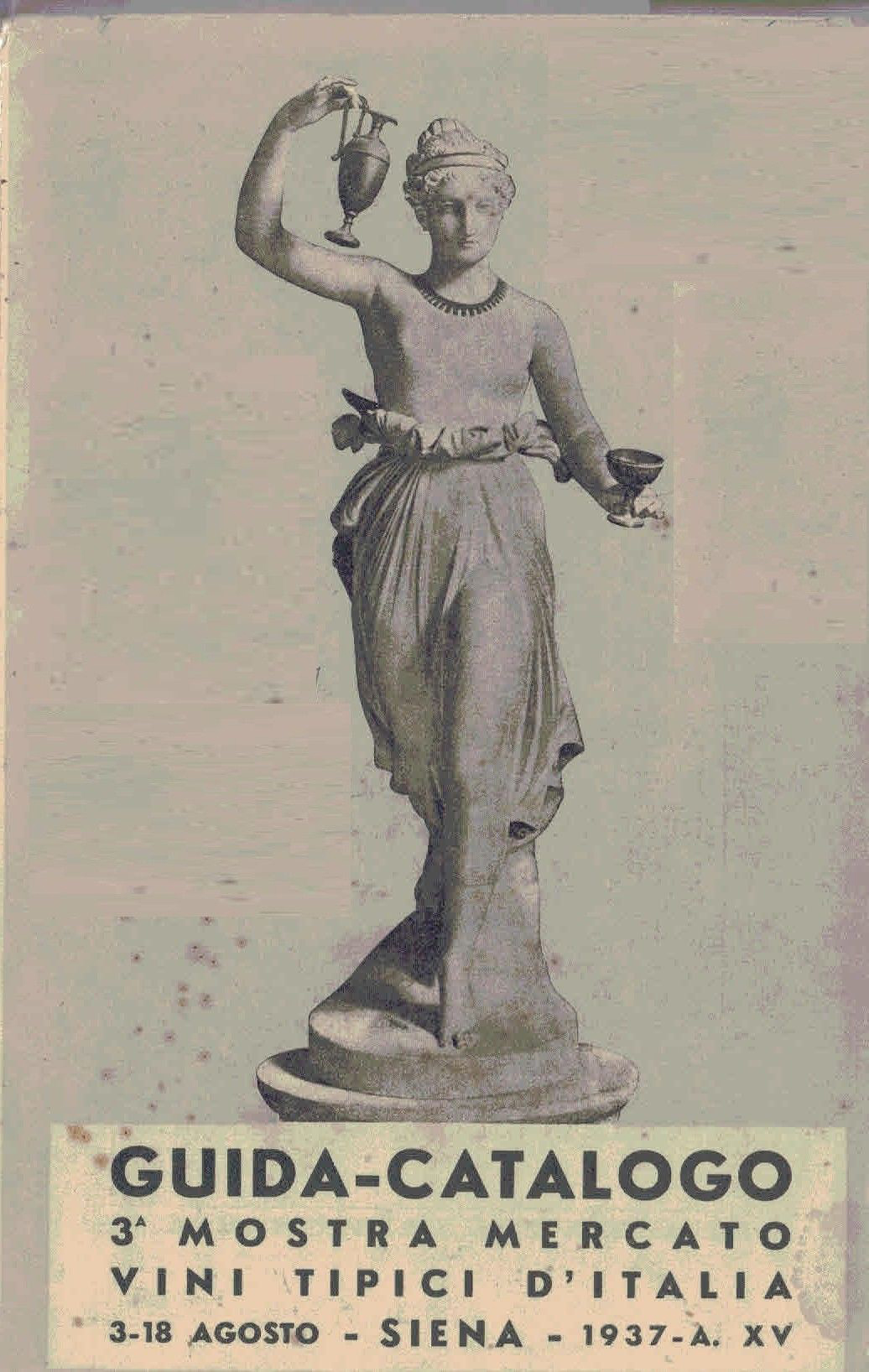
I was thrilled to read this translation of the entry for Brunello di Montalcino in a 1937 (fascist era) catalog for an exhibition of Italian wines in Siena by my friends at Tenuta Il Poggione.

The document offers us a window onto how Brunello was perceived in another era. In 1937, fascism was at its zenith and Mussolini had yet to adopt Hitler’s race laws (1938). It was a time filled with national pride for many Italians (members of the fascist party) and the exhibition of “typical Italian wines” in Siena that year was indicative of the spirit of italianità that gripped the Italian collective psyche.

Alessandro Bindocci, who posted the document and translation on his blog, neglected to translate the quote from Mussolini at the bottom of the page (btw, I asked Ale to send me hi-res versions of the document; click the images here to view), il vino rappresenta il dio domestico sul riposo settimanale: wine represents the domestic god of weekly rest.

The quote is significant for many reasons. But most importantly in my mind, it offers us a trace of how fine wine was considered a medicine with health-enhancing properties in the era before the Second World War.

Brunello di Montalcino, write the editors of the catalog, has an alcohol content of “12.5-13%” (!!!) and is recommended for “those who work with their brains, the elderly, and those recovering from illness. It will give the drinker a sensation of new life.” They even suggest that Brunello di Montalcino has a “tonic” (i.e., medicinal) flavor.

It’s a fascinating however short text and I highly recommend it to you.

I hope to consult the catalog when I visit Montalcino later this year.

Buona lettura…