White asparagus penne & @CanteleWines Negroamaro Rosato

penne white asparagus

Now that we’re rolling into the last few months of our second pregnancy, I’ve begun cooking dinner nearly every night so that Tracie P can rest at the end of her day.

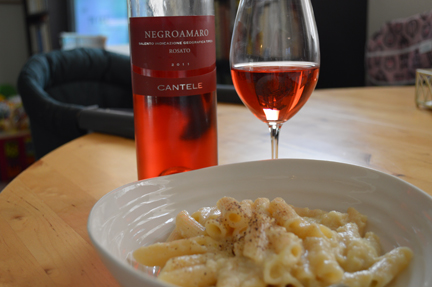
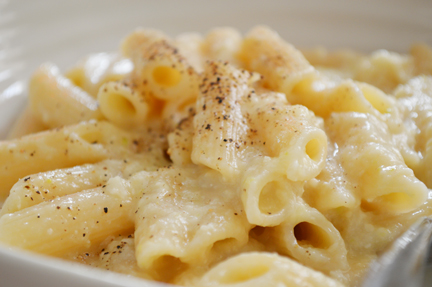
The star of last night’s dinner was penne with white asparagus (above).

I peeled, trimmed, washed, and steamed a bunch of beautiful white asparagus until tender and then puréed the stalks and tips with about a quarter cup of white wine (I added the wine while the asparagus was still piping hot so that the alcohol would evaporate).

Then I folded in some freshly grated Parmigiano Reggiano and an eighth of a cup of milk.

Before folding in the Rustichella d’Abruzzo (our house brand) penne, I added some of the pasta’s cooking water to the purée.

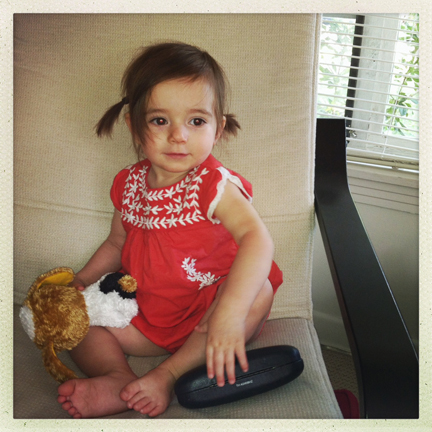
As Tracie P likes to say, one of the greatest feelings in the world is when your daughter enjoys eating something you cooked for her. Georgia P INHALED it. :)

best negroamaro rosato

Tracie P (who has a glass of wine a couple nights a week) and I paired with one of our all-time favorite Apulian wines, our good friend and client Paolo Cantele’s 2011 Rosato from Negroamaro.

The wine had actually been open since the night before but hadn’t lost any of its freshness or zing. And its balance of delicate tannin and fruit was a superb complement the sweet asparagus and salty Parmgiano Reggiano.

If I do say so myself, it couldn’t have been a better pairing.

Paolo and became fast friends back in 2009 when we first met and I’ve been giving him and his family a hand with their English-language media for about two years now.

This year, we launched a new blog devoted to their presence in the U.S. market, CanteleUSA.com.

Check out my post today for their blog on “Why Italians drink more rosé than you’d think”.

Rufina as spoken by Federico Giuntini A. Masseti

The latest installment of the ongoing Italian Grape Name and Appellation Pronunciation Project.

One of the greatest lacunae of the Italian Grape Name and Appellation Pronunciation Project has been the appellation name Rufina, pronounced ROO-fee-nah, with stress on the first syllable.

It’s a tough one for non-Italophones in part because they are accustomed to the stress falling the penultimate (as opposed to antepenultimate) syllable of most Italian words.

But it’s also challenging because many confuse it with the Chianti Classico producer Ruffino (roof-FEE-noh).

While there are a handful of Chianti Classico producers that I follow and collect, I believe that the greatest Chianti comes from the village of Rufina, where higher altitudes make for greater acidity and freshness in the wines. If you ever get a chance to visit the village, you’ll see how your ears pop as you drive up the winding road that leads to its center.

At this year’s Vinitaly, I asked Federico Giuntini A. Masseti, a Rufina native and managing director at one of my all-time favorite producers, Selvapiana, to pronounce Rufina for my camera.

Check out this excellent profile of the winery from the Dalla Terra website.

And please click here to view my thread of posts devoted to this special winery, one of Italy’s gifts to the world.

selvapiana 93

Solaris: disease-resistant hybrids make waves in Italy @CorriereDiVini @terrauomocielo

werner mornadell

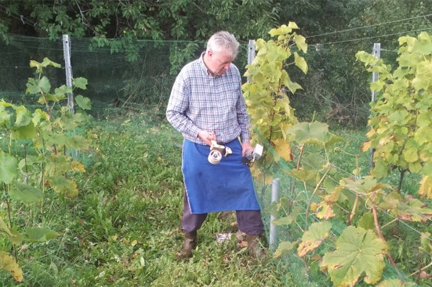
Above: Werner Morandell netting his vineyards in the Mendel Pass (image via his Facebook).

As Giovanni notes today on his excellent blog Terra Uomo Cielo, this is the time of year when grape growers treat their vineyards with sulfur and copper to reduce the risk of fungal diseases, chiefly oidium and perenospora.

At the sound of the tractors’ motors revving up on their way to the vineyard, he is reminded that “not only do the products used to safeguard the fruit pollute. So does the movement of the tractors” belching out diesel aromas more offensive to Giovanni, he writes, than the smell of the sulfur.

There is at least one grape grower in Italy who believes he has found a chemical-free solution to fungal disease: Werner Monrandell (above), winemaker in German-speaking South Tyrol, where his “super-organic” vineyards have no need of sulfur or copper treatments thanks to disease-resistant hybrids he has been developing since 1993, Solaris and Bronner.

The latter is named after the researcher who developed it. The former, evidently, after the 1961 novel and 1972 film.

According to a post by Corriere della Sera wine writer Luciano Ferraro, published on Saturday, the dried-grape Bronner is already available for sale in Italy and the Solaris, while not commercially available, has been offered to Italian sommeliers and viticultural research institutes where it is being studied.

Morandell is one of roughly fifteen grape growers, mostly from Trentino-Alto Adige but also Piedmont and Veneto, who are working together on this project.

“Every year in Europe,” say Morandell in an interview with Luciano, “72,000 tonnes of poison (pesticides, fungicides, insecticides, herbicides, etc.) are scattered on the fruit crop. Roughly 70% of those are employed in viticulture and they leave a residue on the grapes. It’s time to stop this [practice] because it’s possible to make fabulous wines even without chemical treatments to combat oidium and peronospora.”

Some winemakers remain skeptical, like Giovanni, who recently became a grape grower himself.

“I wonder if Solaris will have the same results if it’s planted elsewhere,” he writes.

Hemingway on Asiago & a rant (sort of) on Wendy’s Asiago Ranch Flatbread Grilled Chicken Sandwich

hemingway war wounded

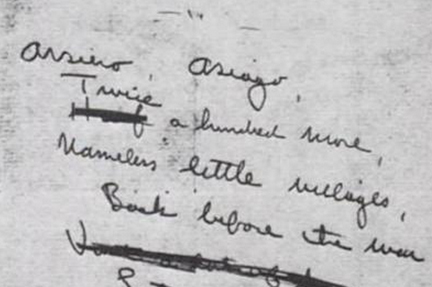
Above: I found this reproduction of Hemingway’s handwriting in this edition of his complete poems.

Last night after dinner as Georgia P slumbered, Tracie P read a book on birthing, and I relaxed watching Star Trek: First Contact (the movie), an ad came on the television for the Asiago Ranch Flatbread Grilled Chicken Sandwich at Wendy’s fast food.

It got me thinking about the Asiago high plateau and fond memories of visiting the village of Asiago many years ago.

And so I wrote this rant for the Bele Casel blog, where I regularly describe the symptoms of acute Venetophilia.

I was also reminded of Hemingway’s verses dedicated to the many villages that dot the landscape of the foothills of the Dolomite Alps in my beloved Veneto:

Arsiero, Asiago,
Half a hundred more,
Little border villages,
Back before the war,
Monte Grappa, Monte Corno,
Twice a dozen such,
In the piping times of peace
Didn’t come to much.

They were the sites of some of the most terrible battles of the first world war.

And many of them still look the same was as they did when Hemingway saw them for the first time.

And the sandwich, you ask? Here’s my rant.

Thanks for reading and buon weekend yall!

Borgo del Tiglio one of Italy’s greatest white wines (& the ancient cult of the linden tree)

tiglio di malborghetto

Above: The famous Tiglio di Malborghetto (in the village of Malborghetto, Udine province, not far from the Austrian border) is believed to be more than 400 years old (image via the Unità Pastorale di Gradisca d’Isonzo).

Since antiquity, the linden treeTilia platyphyllos or Tiglio nostrano, as it is known in Friuli — has been revered for its longevity and the malleability and sturdiness of its wood. (See the excellent verses from Virgil’s Georgics below.)

The name Lindenburg — literally, the linden borough (Lindenberg, Lindenbergh, etc.) — is an expression of northern Europeans’ ancient fascination with it. Throughout Europe, towns and villages are named after this quasi-sacred plant.

borgo del tiglio

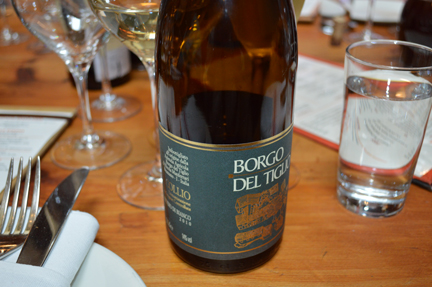
Above: Many Italian wine insiders consider Borgo del Tiglio to be one of the country’s greatest white wine producers.

Last Friday in NYC, invited to join a generous group of Nebbiolo collectors who wanted to share some old bottles with me, I brought a bottle of Borgo del Tiglio (Borough of the Linden Tree) 2010 Collio Studio di Bianco, a blend of separately vinified Sauvignon Blanc, Tocai Friulano, and Riesling Italico, one of the winery’s top wines.

Located in the village of Brazzano in the township of Corna di Rosazzo Cormons (Udine Gorizia province, Friuli), Borgo del Tiglio is relatively unknown among Italian wine appassionati in the U.S.

As far as I know, the wine is only available for sale to consumers in a few northeast corridor markets, thanks to NYC retailers Moore Bros., whose affiliated importer brings the wine to our country.

I was first introduced to the wine by Friulian aesthete Master Sommelier Bobby Stuckey a few years ago when Tracie P and I ate at his excellent Frasca in Boulder.

But in Italy, the wines made by Borgo del Tiglio are stuff of legend.

When I mentioned to Francesco Bonfio — Paduan-born, Siena-based and erudite wine retailer, friend, and collector extraordinaire — that I’d be drinking the wine at lunch, here’s what he wrote back:

“Studio di Bianco is made by Nicola Manferrari owner of Borgo del Tiglio. One of the best producers in Collio. I have bottles of his Friulano (at that time it used to be labeled as Tocai Friulano) from the mid 80s. Next time, we’ll taste them together. Marvellous. It is a 30 years old white that shows 6 years aging.”

The wines aren’t cheap but they’re worth every penny.

Here’s what my friend, Master Sommelier Jesse Becker, says about the wines on his retail site:

“Nicola Manferrari founded Borgo del Tiglio in 1981 when he took control of his family’s vineyards. Low yields, strict vineyard selection and meticulous cellar work result in some of the most powerful, intensely ripe and textural wines in Friuli. Monferrari describes his style as ‘beautiful and kindly’. All wines are fermented and aged in 250L barrels.”

Ubi maior, minor cessat: there was no way I could deliver a bottle of Nebbiolo that could hold its own with the bottles opened at Friday’s lunch.

But I hope and believe that Borgo del Tiglio thrilled my hosts as much as it did me with its delicate and focused but muscular minerality and its layers and layers of white and stone fruit.

The following are the verses from Virgil where he praises the wood of the linden tree in his description of the farmer’s tools.

Thanks for reading and enjoying the epistemological implications of oenophilia with me. You see? Wine is just an excuse to dust off my copy of the Georgics! :)

caeditur et tilia ante iugo leuis altaque fagus
stiuaque, quae currus a tergo torqueat imos

Georgics 1.173-4

Now to tell
The sturdy rustics’ weapons, what they are,
Without which, neither can be sown nor reared
The fruits of harvest; first the bent plough’s share
And heavy timber, and slow-lumbering wains
Of the Eleusinian mother, threshing-sleighs
And drags, and harrows with their crushing weight;
Then the cheap wicker-ware of Celeus old,
Hurdles of arbute, and thy mystic fan,
Iacchus; which, full tale, long ere the time
Thou must with heed lay by, if thee await
Not all unearned the country’s crown divine.
While yet within the woods, the elm is tamed
And bowed with mighty force to form the stock,
And take the plough’s curved shape, then nigh the root
A pole eight feet projecting, earth-boards twain,
And share-beam with its double back they fix.
For yoke is early hewn a linden light,
And a tall beech for handle, from behind
To turn the car at lowest: then o’er the hearth
The wood they hang till the smoke knows it well.

Georgics 1.160-75
(translation by J. B. Greenough)

Nebbiolo fetishization: a religious experience with the amazing Ken Vastola

1958 bartolo mascarello bis

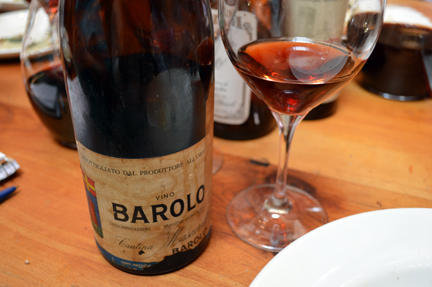
Bartolo Mascarello 1958 Barolo, a holy grail of wines for me. If ever there were a wine that embodied the “unbearable lightness” of Nebbiolo, this would be it. A wine from an extraordinary vintage in Langa and an apotheosis of Barolo. One of the most remarkable wines I have ever tasted — perhaps the greatest.

fetish, “an inanimate object worshipped by preliterate peoples on account of its supposed inherent magical powers, or as being animated by a spirit [Oxford English Dictionary],” from the Latin factīcĭus meaning factitious (made by or resulting from art).
bartolo mascarello 1980

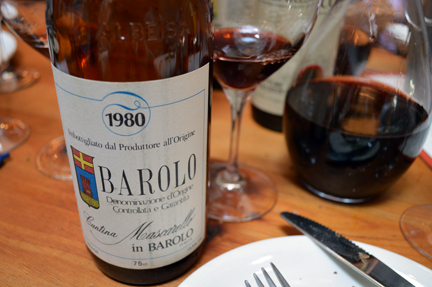
Everyone agreed that the Bartolo Mascarello 1980 Barolo was a standout in the flight. It had that electric vibrancy and magnetic focus in its rich, dark fruit. Wow, what a wine this was… 1980 is regarded as a fair to poor vintage in Langa and this wine was a great example of how great winemakers can deliver outstanding wines even in challenging vintages.

Dayenu! If only just one of the bottles in the flight had been opened over lunch at Il Buco Alimentari e Vineria in lower Manhattan, it would have sufficed to satiate our Nebbiolo fetish!

On Friday, I had the immense fortune to be invited to a meal and tasting by Nebbiolo connoisseur and Langa chronicler Ken Vastola (check out his amazing blog).

Even though we’d never met in person, I’ve known Ken for many years virtually: we follow each other on social media and often exchange notes and information about the winemakers we both follow (remember this post on the origins of the term piè franco that I wrote a few weeks ago inspired by Ken?).
rinaldi barolo 1985

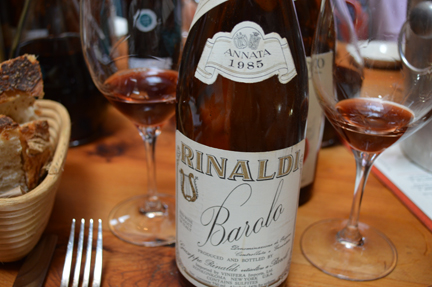
The Giuseppe Rinaldi 1985 Barolo was another standout for me personally. Like the 1980 Bartolo Mascarello, it seemed to be at the peak of its evolution, a “great wine” on a “great day.”

We’d been trying to get together for some time now. But the fact that I no longer live in NYC and he lives outside the city have made it tricky to make our schedules and travels align.

But on Friday, the stars smiled upon me: Ken invited me to join him and his regular group of collectors and Nebbiolo fetishists.

rinaldi barolo 1974

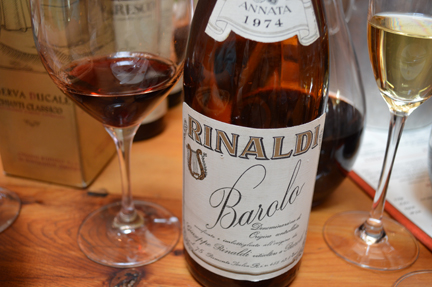
A great wine from a good (but not great) vintage, the Giuseppe Rinaldi 1974 Barolo was in the late fall of its evolution, with an ethereal lightness of nuanced fruit. One of my personal favorites, although not the best of the best.

Fetishists, you ask? No, I’m not referring to the colloquial usage of the term fetish. There was nothing sexual or otherwise titillating about our lunch and tasting.

I’m talking about the way that Nebbiolo from Langa often assumes a a cultish and even spiritual significance among collectors and connoisseurs (the same way high-profile restaurateurs and top-spending diners often fetishize beef in our country).

produttori barbaresco pora 1970

Like the 1980 Mascarello Barolo, this wine was stunning for its vibrancy and richness. The Pora cru tends to be generous with its fruit in the wine’s early years. And this was a illustrative example of how Pora retains that brilliance of fruit even as it evolves. I think that all agreed that this, the 80 Mascarello, and the 58 Mascarello were the top wines in the flight.

After all, between the eight persons in attendance, we could have never consumed all the superb wine on the table before us. Much of the wine was left over — a libatio, a drink-offering, a “pouring out of wine or other liquid in honour of a god” (OED).

In fact, the purpose of the gathering wasn’t to nourish ourselves or to employ or apply the wines as they had been conceived — as nutrients themselves, an accompaniment and complement to food.

Instead, we were there to worship these wonderful, wonderful wines. And before us, my generous hosts had erected a temple that literally overflowed with rare treasure and religious artifacts.

borgogno barolo 1966

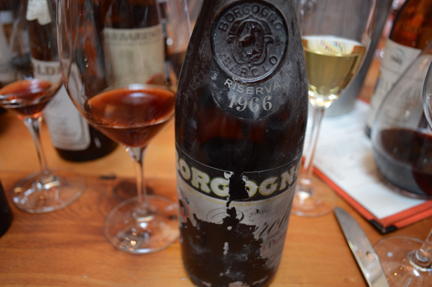
Over the last decade, shiny library-release bottles of old-vintage (topped-off?) Borgogno have made their way to the U.S. market. I was thrilled to taste an original release from the 1966 vintage and was impressed by how fresh and lively this wine was. A personal stand-out for me.

For me, such an opportunity is golden. Although I do collect wine and have a nice library of twenty or so cases of Nebbiolo, I rarely get to taste old vintages of top wines like this.

And I am humbly and eternally grateful to the whole group — Marc, Frank, Jamie, Carl, Joe, and Ken (in the order that they sat at the table) — for its extreme generosity.

Guys, I can’t thank you enough for inviting me to “pray” with you.

And Ken, as much as the wine thrilled my senses and my mind, the best part was gleaning your insights on Nebbiolo, Langa, and the people who produce (and who have historically produced) these wines.

You are a rabbi in my world and anytime you need me for a minyan, I am available to daven on the bema of the Langa hills.

money shot nebbiolo

One of the most remarkable flights of wine I’ve ever seen before me. Other highlights were Taittinger 1995 Comtes de Champagne, Mastroberardino 1968 Taurasi (classic, not single-vineyard designate), and Ruffino 1961 Chianti Classic Riserva (gold label).

Coulée de Serrant 1991 & @TimAtkin has kind words for wine @SottoLA

From the department of “some how, some way, I get to drink funky-assed wines like every single day”…

coulee serrant 1991

Tracie P and I are so fortunate to belong to such a wonderfully collegial and unabashedly generous community of wine writers and professionals.

Knowing that we are diehard fans of Joly and his Coulée de Serrant and ever thirsty to taste older vintages, a colleague and client of mine recently set me a six-bottle vertical of the wine stretching back to 1991.

We had let the wine rest for a few weeks and decided to open a bottle last night for Mother’s Day (at 32 weeks into our pregnancy, Tracie P drinks one glass of wine a couple of times a week).

Sadly, the 2000 (opened first) was maderized… Drinkable but lacking the electricity we had hoped for.

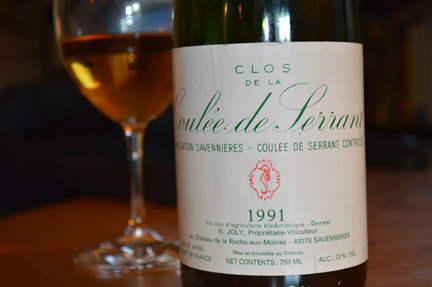
The cork on the 1991 broke as I pulled it but after straining and decanting to remove a few crumbs that had fallen into the bottle, the wine showed beautifully, with intense freshness (after about 20 minutes of aeration). The wine had layer upon layer of ripe and dried stone fruit and zinging acidity in perfect harmony with the wine’s unctuousness. We loved it (paired with a late spring Texas basil pesto).

It was a very special and unforgettable Mother’s Day for us. :)

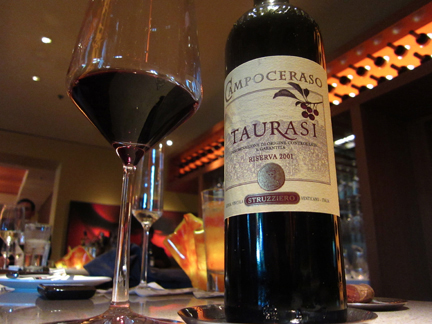
best taurasi

I spent the day offline yesterday but this morning was thrilled to discover a review of our wine list at Sotto in Los Angeles (which I curate together with Rory Harrington) by Master of Wine Tim Atkin for The Economist online magazine Intelligent Life.

“If you want to drink Chardonnay and Cabernet Sauvignon, the default choices of too many American diners,” he writes, “you will be disappointed. But if you’re interested in Greco di Tufo, Nerello Mascalese, Aglianico and Negroamaro – or prepared to give them a try – Harrington is a very enthusiastic advocate of these and other native varieties.”

Click here for the complete review.

What a thrill to know that Tim enjoyed our list! And how great to be connected to such a brilliant wine writer and authority through our virtual community!

bartolo mascarello 1958

And thanks to that very same community, I had the immense fortune to taste drink 1958 Bartolo Mascarello on Friday. I had been invited to lunch with a group of NYC-based collectors who happen to read my wine blog (do people still read wine blogs?).

It was one of the most memorable wines I’ve ever tasted in my life. And I thank my lucky stars for the generosity of the friends who shared it with me. It was just one in a remarkable flight of wines that I’ll post about tomorrow (80 B. Mascarello, 70 Pora, 85 Rinaldi etc.). Stay tuned…

some how, some way, I get to drink funky-assed wines like every single day…

Happy Mother’s Day Tracie P!

happy mothers day

Happy Mother’s Day, Tracie P! :)

Georgia P and I love you so much. You are so sweet to us and you make us feel loved each and every minute of every day.

Every time I look at Georgia P or hear you say that little Baby P is moving around inside your belly, my heart feels like it will burst with the love we feel for you.

Thank you for giving us these precious little girls, who bring so much joy into the world.

You are the best mommy ever and we love you.

polkadots cupcake factory austin

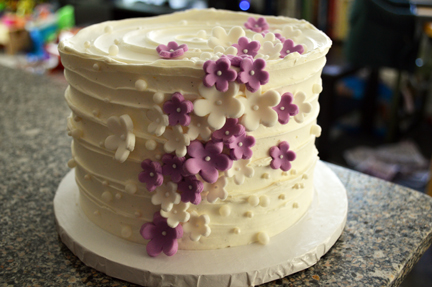
Cake by our friend Olga at Polkadot Cupcake Factory.

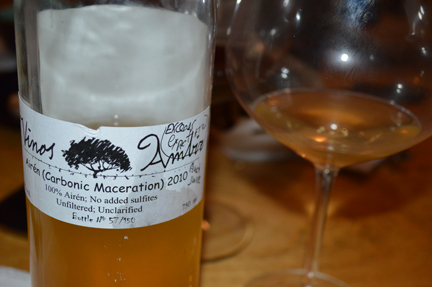
Back to natural Vinos Ambiz gets me back in the groove

vinos ambiz

Just in case you were concerned that I had lost my way among the rich folk back in the big New York City, I’m happy to report that I found my way from James Suckling’s Wednesday night tasting in midtown to Alice’s place downtown where I recharged my sanity drinking some crunchy wine from Vinos Ambiz in Spain.

The folks there are an “organic vineyard, winery and natural wine company. We practice sustainable viticulture, and make natural, authentic, good quality wines that express the terroir. We improve the fertility of the soil, don’t use chemicals or additives and we recycle our bottles.”

The Suckling tasting was impressive but the carbonic maceration Airén, unfiltered, unclarified, and with no added sulfites by Vinos Ambiz — let’s just say — was a little more my speed.

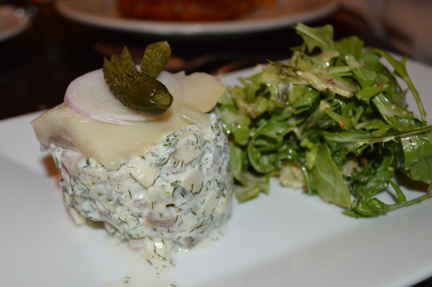
pickled herring salad blau gans

And just to remind myself what I love about the borough of Man-atan, I met Brooklyn Guy the next day for lunch at the Blaue Gans in Tribeca where I thoroughly enjoyed the pickled herring salad.

The service there may not be what it once was at this Teutonic casual, but the food is always great, the wine list tidy and solid, the beers appropriately bitter, and I love the Zabriskie Point poster in the toilet (worth a visit to the head by any means).

My short visit to New York is about to come to an end but not before I go taste a buttload of old Nebbiolo (you are not going to believe the sick flight of wines that await me at lunch). Stay tuned…

In praise of James Suckling & 07 Giacosa Rocche del Falletto Red Label

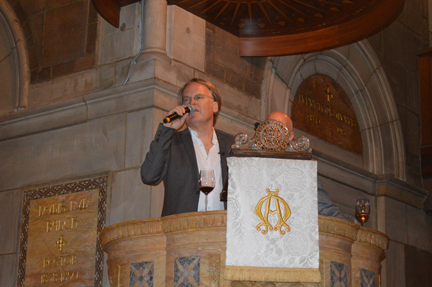
james suckling

Last night in Manhattan, wine writer James Suckling spoke from the pulpit of St. Bartholomew’s Episcopal church at his Great Wines of Italy event.

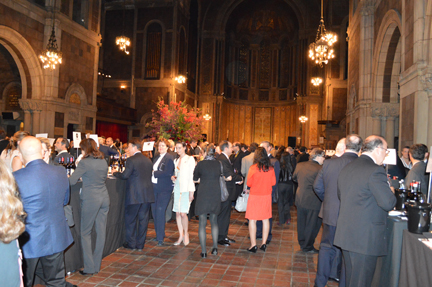
I can’t say that his taste in wine always aligns with mine but I will say that the event he orchestrated and hosted was remarkable not only for its breadth and ambition but also for the marquee names that gathered for the two-day affair.

Bruna Giacosa, Giacomo Neri, Francesca Planeta, and Marco Caprai were just some of the celebrity Italian winemakers who came to New York to pour and talk about their wines. And there were many others…

st barts cathedral new york

I was in town to pour and speak about the wines of friend who couldn’t be there.

As a lover of Italian wines, I can only offer my greatest praise for James and this landmark event. The model is, of course, the Wine Spectator New York Wine Experience. And there are other annual NYC events, like the Gambero Rosso guide presentation, where scores of top Italian winemakers show their wines.

But, to my knowledge, there’s never been such an ambitious high-end, consumer event devoted exclusively to Italian wine: it cost roughly $200 to attend last night’s event and tickets to tonight’s dinner are $275.

I was also really impressed by the guests’ level of wine knowledge and many grilled me about vintage characteristics and growing sites.

Chapeau bas, James. The tasting set a new and higher bar for Italian wine in this country. An event like this would have been unimaginable in 1998, the year that the Italian wine renaissance began to take shape in this country.

rocche falletto

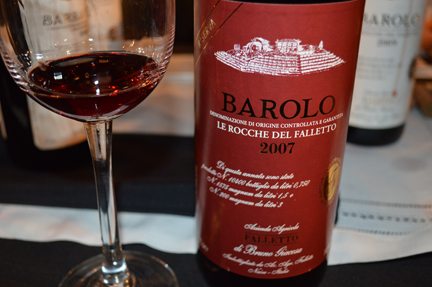
Bruno Giacosa 2007 Barolo Le Rocche del Falletto (red label) was the wine I was most thrilled by, poured by Bruna herself!

Wow, what a wine… no one can rival the elegance that Bruno Giacosa achieves in his Barolo. And where so many 2007s are dominated by the power of their tannin (in part due to the odd winterless vintage in Langa), his already shows gorgeous balance (even at this early stage of its evolution).

I had tasted the wine at the winery back in 2010 when Bruno hadn’t yet decided whether he would make a red label for this designation. Tracie P and I were on our honeymoon and we tasted the Rocche del Falletto out of cask.

Here are my notes from that tasting.

The other highlight was hearing Isabel Suckling, James’ daughter, rehearse for the performance she will give at tonight’s event.

She’s a truly electric performer and I’m looking forward to her main event at tonight’s dinner.

More New York Stories to come… Stay tuned…