Ridiculously good things I’ve eaten in Puglia and Franciacorta tasting January 21

I am buzzed to announce the first Franciacorta Real Story tasting of 2016, which will take place in Miami on Thursday, January 21. Click here for details. And honestly, Miami is a market where I don’t have a lot of contacts so if anyone can give me a hand in spreading the news, there’s a bottle of Franciacorta in it for you! Thanks and please join me if you can!

burrata ravioli recipeIt may seem glamorous and super fun to be on the road with a bunch of coolio wine writers in Italy. In fact, it means very early mornings and late evenings for me keeping up with all my work back home.

Having said that, this trip has been a lot of fun and it’s a truly simpatico group of folks with whom I’m glad to spend some one-on-one time.

Yesterday, my friend and client Paolo Cantele (who sponsored the trip) treated us to a private dinner at his family’s winery. Those are burrata-stuffed ravioli, above, topped with baby shrimp and broccoli raab. Unbelievably good. They prompted a lively discussion of the tabu of mixing seafood and dairy. I can’t reveal the name of the chef because Paolo doesn’t want to risk offending other local chefs. But man, he just friggin’ killed it last night.

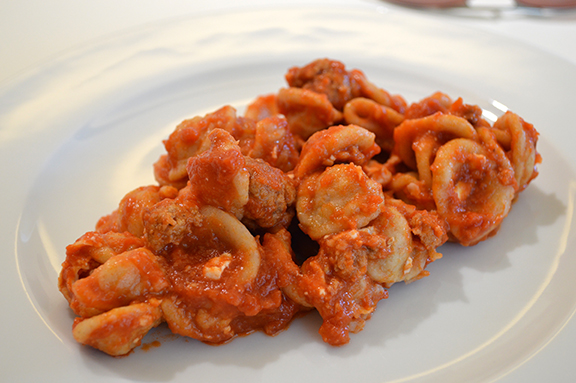
Below is a snap of the homemade orecchiette with meatballs we had for lunch as we tasted through the wines at the winery (yes, they traditionally serve pasta with meatballs here in Puglia).

They were made by a famous local pastmaker aptly called L’orecchietta. I can’t share the website because it’s been hacked by an online prostitution page.

It was a game-changing dish, for reals.

I now have literally 10 minutes to shit, shower, and shave (as we used to say in my rock ‘n’ roll touring days) before heading downstairs to meet the group. We’re touring vineyards and Pierce’s Disease-affected olive groves today.

More to come… stay tuned!
orecchiette recipe

A mozzarella backwater in Caianello (Caserta province, Campania)

caianello mozzarellaHonestly, I can’t tell you why the small town of Caianello, about 30 minutes north of Naples on the autostrada heading south from Rome, is an epicenter for artisanal mozzarella production.

All I do know is that Tracie P and I stopped there a few years ago when we traveling in southern Italy with our then one-year-old daughter Georgia P and Tracie was pregnant with Lila Jane.

Tra had a case of hunger pangs and so we literally took the first exit we could find. And it was only by chance that we stumbled on to this mozzarella backwater.

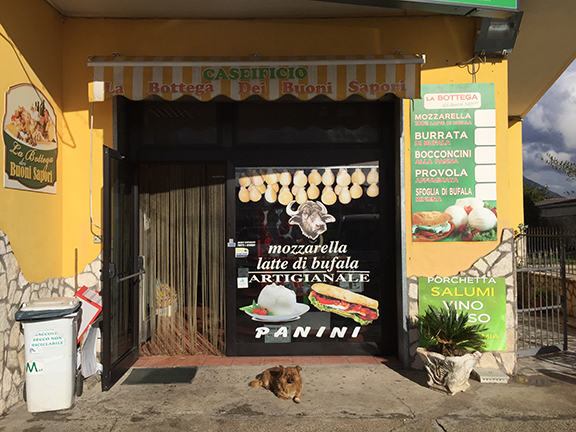
caianello caseificioYesterday, when our group of wine writers made a lunch pitstop there, the lines at the (evidently super famous) Caseificio La Pagliara were just as long as the last time. And so we headed down the road to the Bottega dei Buoni Sapori for simple sandwiches of moreish plastic cheese and delicious bread.

If you ever make the same journey, I highly recommend it.

Today, we’re in Lecce, Puglia where we’ll be heading out to taste with my good friend and client Paolo Cantele at his family’s winery…

The future of Italian wine…

Take us the foxes, the little foxes, that spoil the vines: for our vines have tender grapes.
Song of Solomon 2:15

english name marche marchesIn his predictions for “The Wine Stories That Will Shape 2016” published by PUNCH a few weeks ago, Jon Bonné included Italy… but only as an afterthought.

Actually, Italy is an after-afterthought in his view of the international vinous landscape.

“Greece,” he wrote in the last paragraph, “after years of being patted on the head, will rise from its economic muddle to become a serious contender to Spain and Italy.”

That’s all the space he devoted to one of the world’s largest producers of fine wine.

In the light of Italy’s uninteresting status in the global enonarrative, you might think that it’s time for all of us Italian wine bloggers to hang it up and call it a day.

But respectfully, I beg to differ with Mr. Bonné.

And my appetite for compelling Italian wine stories has already been whetted in 2016 by Mr. Cevola’s post yesterday, “What Will the Next Ten Years Hold for Italian Wine in America?” Whether you’re an Italian wine lover here in the U.S. or an Italian winemaker, I highly recommend it to you.

But the story that sticks in my mind this morning as I prepare to board a flight for Rome (my first trip of many this year) doesn’t have anything to do with indigenous or exogenous grape varieties, organic and biodynamic grape growing, or the world’s expanding and unquenchable thirst for Italian bubbles.

No, it has to do with the birth of a child in Verdicchio country (one of the coolest undiscovered categories in Italian wine today in my view).

In November of last year, a child was born to our dear friends Silvia and Alessandro in Maiolati Spontini (Ancona province in the Marches or Marche as the region is known in Italian).

Even in a time when consumption of wine is declining rapidly in Italy; a time when 70 per cent of Italian wine is exported and it’s virtually impossible to survive as a winemaker unless you are selling most of your products in foreign markets; a time when Italy’s economic and cultural challenges are so great that the nation seems locked in an unshakable malaise; a time when the country’s negative birthrate continues to dip even lower

Even in these trying times for Italian winemakers, there are those among them who look to the future with hope in their hearts and minds.

In the Marches, when a child is born, family friends fasten decorations like the swan above to the parents’ house. They won’t remove them until the newborn’s family invites them all over for a celebratory meal. It’s a local tradition, as Silvia explained in an email she sent me a few weeks ago.

Biodynamic farmers, Silvia and Alessandro grow grapes for wine and olives for oil without the use of chemicals or additives. They advocate for wholesome living and sustainable consumption. They count their carbon footprints down to the weight of the bottles they ship their wines in.

They’re confident that there is a future in what they are doing.

And from where I stand, there couldn’t be a more compelling story than their newborn son Cesare and the tender grapes they grow.

Happy 2016, everyone! Thanks for being here. I’m leaving today for Rome and then heading to Salento with a group of some of my favorite writers. I’ll see you on the other side… Stay tuned for more and new boring stories from Italian wine country.

Lambrusco New Year’s: my recommendations in the LA Times

podere saliceto isabellaAbove: winemaker Gian Paolo Isabella of Podere Il Saliceto in Modena province in June of 2015 when Chef Steve Samson and I visited and tasted with him. His Lambrusco is one of the wines I recommended in an Los Angeles Times piece published this weekend. A super nice guy, he used to be a professional kickboxer. He developed an interest in wine, he told me, touring the world for his sport. I liked the wines a lot.
One of the gifts tucked in my Christmas stocking this year was a Los Angeles Times feature on my good friend Steve Samson, chef and owner of Sotto in Los Angeles where I serve as wine director: “Chef Steve Samson shares a New Year’s Eve tradition: tortellini” by the paper’s restaurant critic and wine writer S. Irene Virbila.

Tortellini is a classic New Year’s dish in Bologna (in the region of Emilia-Romagna) where Steve spent summers as a kid.

The article is paired with my Lambrusco recommendations: “Looking to drink something a bit different this New Year’s? Pour a fizzy Lambrusco.”

Chef Steve is planning to open an Emilia-themed restaurant and Lambrusco garden later this year to be called RossoBlu. I will be authoring the wine list there as well.

He and I visited the region in June of this year for some “research and development” (read: some mighty eating and drinking).

I’ve spent a lot of time in Emilia over the years and I still have a lot of really close friends there. It was such a thrill for me to see the piece in the Times.

Tanti auguri di buon anno! Happy new year, everyone!

Christmas SONG 2015: “Christmas Comes Just Once A Year” by the Parzen Family Singers

Merry Christmas, everyone!

Thank you for all your support here on the blog in 2015.

Wishing everyone a Merry Christmas
and a Happy and Healthy New Year!

somewhere a wise rabbi once said:
“it is the dream of every Jewish songwriter
to write a great Christmas song…”

Download or stream the Parzen Family Singers 2015 Christmas Song here (FREE)!

parzen christmas card 2015

My hipster guide to sparkling wines and getting laid in Houston

terry theise“It always makes me very happy to learn that my wines helped someone to get laid,” said importer Terry Theise when I bumped into him at the excellent Ribelle in Boston a few weeks ago.
That’s Terry (above, left) with my friend Adam Japko (with whom I’ll be leading a Design and Wine trip to Italy next year).

Terry was responding to my telling him about how Tracie P and I drank and enjoyed so many of his “grower Champagnes” during our early courtship.

Even in Austin, Texas, where we lived at the time and where wines generally cost a little more than in other major markets across the U.S., we could afford them (they fall in the $40-60 price range in our state) and they were always delicious.

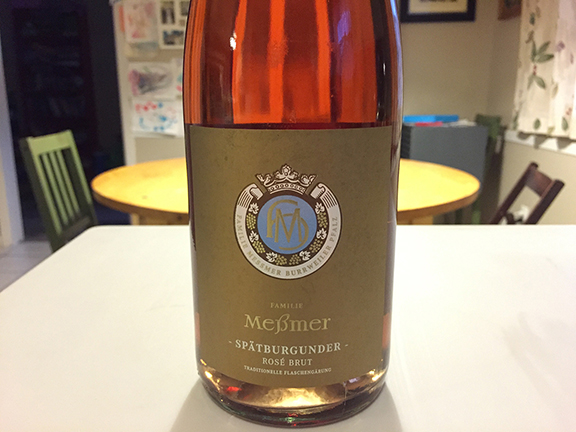
That evening in New England, he tasted Adam and me on a sekt rosé from Spätburgunder by Messmer (below). It’s what what Tracie P and I — now married with children — will be drinking on Christmas day with our family in southeast Texas.

And it’s also one of my top picks for sparkling wines for the holidays for the Houston Press in my HIPSTER’S GUIDE TO SPARKLING WINE [and getting laid] IN HOUSTON.

The list includes recommendations from some of our city’s leading wine professionals. You might be surprised by some of their picks (most of them recommended Italian wines!). But it also gives a good indication of the savvy that shapes the fine wine scene here.

Sparkle on you crazy diamonds and please don’t serve your bubbles in flutes! Happy holidays!

best champagne houston price

Racial and religious profiling in Italy, the ugly truth about the world’s most beautiful country

From the department of “I hate to be a bummer the week before Christmas but”…

italy racisimThe photo above was published yesterday on social media by one of Italy’s leading wine professionals in a post that generated scores of comments, mostly authored by high-profile wine tradespeople who condemned and repudiated its sentiment.

Brown-colored signs like this one are part of Italy’s officially sanctioned cultural heritage system. They are used for historically significant sites like churches or works of art — the so-called segnaletica monumentale.

In this sign, posted to mark the township of Pontoglio (in Brescia province, in the region of Lombardy, not far from Milan, roughly 7,000 inhabitants according to its Wiki), the panel at the bottom reads as follows (translation mine):

“A Western-culture village with deep-rooted Christian traditions. Anyone who does not intend to respect local culture and traditions is invited to leave.”

I’ll let the reader infer whatever meaning she/her likes from this text.

But it’s abundantly clear that non-Westerners and non-Christians are not welcome in Pontoglio.

It’s an expression of life in Italy that many Americans don’t notice when they visit wine country there. But sadly, however extreme the sentiment that inspired this particular sign, cultural insensitivity like this is not uncommon there, especially in the north.

Pontoglio literally means bridge on the river Oglio. The Oglio river is one of the boundaries of the Franciacorta DOCG. The Franciacorta consortium has been one of my clients in 2015 and I travel there often.

I wonder how the residents of Pontoglio would feel about a Jewish-American wine blogger visiting their town…

I plan to find out next year when I return to Franciacorta and will report back.

But in the meantime, I wanted to write a note about the Facebook post because I applaud the Italian wine community for its repudiation of the racial and religious profiling that is becoming increasingly common and bold in Italy today.

It’s one of the ways that the wine community can and does make the world a better place.

I stand in absolute solidarity with the two wine professionals who posted this on their Facebooks.

Sorry to be a bummer the week before Christmas (which I will be celebrating in southeast Texas with my family). But I felt it was important to share this here today.

“Sauvignon Connection”: analysis of wines reveals no signs of prohibited additives says defense attorney

It has been dubbed the “Sauvignon Connection” by the Italian news media (who use an English-language reference to the 1971 crime thriller starring Gene Hackman in their shorthand).

In September of 2015, 17 wineries were implicated in an Italian anti-adulteration investigation of the use of prohibited additives in the production of Sauvignon Blanc wines in northeastern Italy.

The “magic potions,” as they were called by investigators, posed no health risks, they said. But they allegedly gave the wines aromas considered atypical by many Italian wine trade observers and local growers and bottlers.

Among the wines confiscated for analysis by Italian officials, some have won top awards in international wine competitions and have received top ratings from leading Italian wine reviewers.

According to a statement last week by defense attorney Giuseppe Campeis who represents one of the central figures in the inquiry, “chemical” and “microbiological” analyses of sequestered wines have revealed no prohibited substances in the wine.

In reports circulated by Italian media outlets, Friulian investigator Antonio De Nicolo has countered that laboratory analysis of the wines is just one of the elements of his investigation of the alleged adulteration.

He has also claimed that efforts by the defense to delay the examination of the wines may have attenuated the presence of the alleged unauthorized additives.

The parties are scheduled to meet in court today. But trade observers note that the outcome of the inquiry may not be known for years.

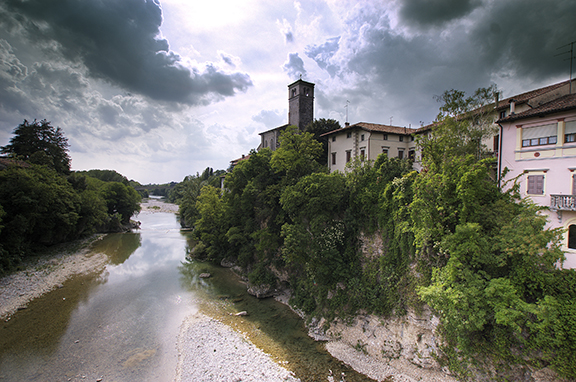
sauvignon scandal connectionAbove: the Natisone river flows through the city of Cividale del Friuli not far from the office of the Consortium of Colli Orientali del Friuli Grape Growers and Winemakers (image via Wikipedia Creative Commons).