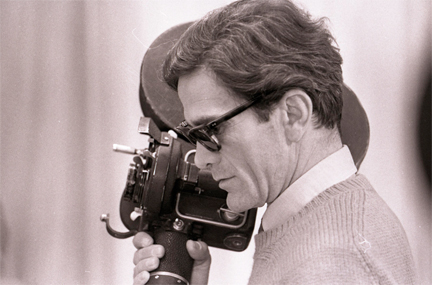
Scenes from the “Pasolini in Rome” show at the Cinémathèque Française

Comrade Howard graciously sent me these images from the current “Pasolini in Rome” exhibition at the Cinémathèque Française where he toured the show last week with the museum’s director.

It runs through January 26.

La poésie, la politique, le sexe, l’amitié, le cinéma… The stuff that life is made of.

The track “Pasolini” in the slideshow comes from my band Nous Non Plus’ release Le sexe et la politique (Terrible Kids Music 2012).

pasolini

Vinous aromas of yesteryear: Italy’s 2013 vintage reminds many of a pre-climate change era

grape pomace grappa marc

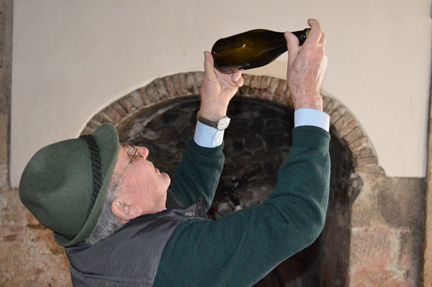
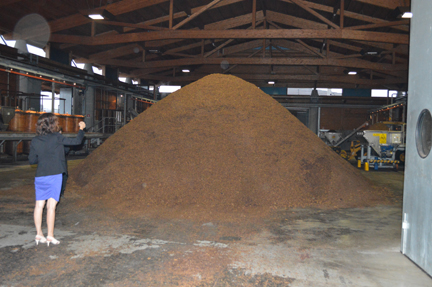
Above: That’s Hawk Wakawaka, one of my favorite people on the wine blogging scene. She’s dwarfed (and she’s not a short person) by a hill of grape pomace at the Nonino distillery in Udine province in Friuli.

Borrowing a line from my wife, Tracie P, who couldn’t have said it more brilliantly, grappa is the ultimate expression of the grape.

In other words, the grape’s very last gasp is its distillation into a spirit.

When I visited the Nonino distillery in Udine province a few weeks ago, it occurred to me that pomace brandy is also the ultimate expression of the vintage.

Unlike the overwhelming majority of Italian distillers, the Noninos only distill once a year — during harvest.

As Elisabetta explained to the group of writers with whom I was traveling, one of her parents’ great innovations was that they were the first to work directly with growers to ensure the freshness of the pomace that arrived at the distillery and to distill as quickly as possible in order to retain that freshness.

The Noninos — one of the great Italian success stories of the 1990s and one of the most recognizable “made-in-Italy” brands — need no introduction or endorsement from me. In Italy and abroad, their products are considered benchmarks for the category. And they essentially created the category when they launched their distinctive bottles and monovarietal grapps in the early 1980s. And they are largely responsible for grappa mania in the U.S. in the 1990s.

I always have a blast and learn something new when I visit with them. And I know my wife will forgive me for the huge crush that I have on matriarch Giannola. She — one of the most glamorous women in Italian viticulture and a genius marketer — always has me on the edge of my seat with her tales of Marcello Mastroianni kneeling before her in a theater in Rome in the 1960s.

But the thing that I couldn’t get out of my head as we visited over a day and a half was what one of their vineyard managers, Denis Cociancig, said to me when toured their famous Picolit and Fragolino vineyards (where they grow their own grapes destined to become Nonino monovarietal grappas).

“The vinous aromas that are coming out of the cellars” across Friuli, he said, reminded him “of the harvests of another era.”

The “aromas of the courtyard,” as he put it, “are like the ones I remember from my childhood.”
nonino sisters

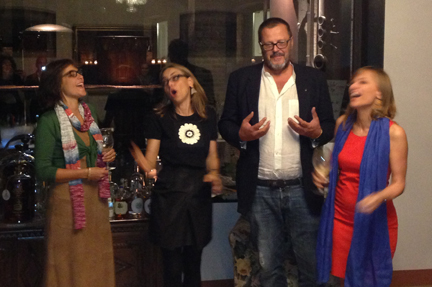
Above: It’s not a stretch to say that the Noninos are the nuttiest people I’ve ever met in the wine and food trade. Those are sisters, from left, Elisabetta, Cristina, and Antonella Nonino, with Cristina’s husband Tony. They are always so sweet and energetic. Every time I visit, I learn something new…

Across Italy, yields are lower than they have been in recent years but that “courtyard aroma” has returned.

And he wasn’t the only grower/winemaker who told me that. In the Veneto and Tuscany, I heard cellar masters say exactly the same thing.

And you could smell it everywhere we went. It’s a brilliant aroma of fresh, young wine that literally seduces you.

Most attribute those aromas to the fact that the vintage was a “classic” one: the late spring rains and cooler temperatures made for a more balanced vegetative cycle and pushed back harvest by roughly two weeks. More than one grower noted that she/he hadn’t harvested this late since the 1980s, an era before climate change — whatever its cause — delivered a nearly uninterrupted string of warm, bountiful crops.

Like their winemaking counterparts, the Noninos are expecting to produce less this year but they are thrilled by the quality of the materia prima that arrived at their distillery with this harvest.

When we began to see the 2013 wines in the market, it will be interesting to taste them and remember the aromas of my recent trip. And when I sip a Nonino grappa from Fragolino (my personal favorite) after dinner, I’ll remember that visit to the Nonino vineyards where the yields were low but offset by the rewards of the “courtyard aromas of yesteryear.”

In unrelated news…

One of the winners of the prestigious Nonino prize for the arts and sciences in 2013, physicist Peter Higgs, also became a Nobel laureate this year.

Those crazy Noninos: I don’t know how they do it, but they always seem to be one step ahead of the rest of us.

Robert Parker looks beyond Tuscany & Italy stands at a precipice

robert parker vintage charts

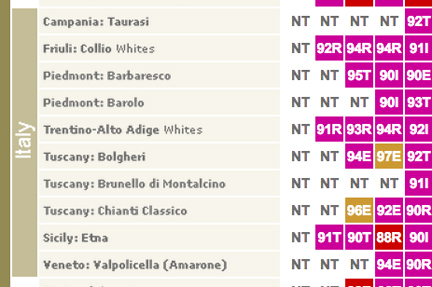
“For the first time, Piedmont and Tuscany won’t be the only regions to appear in the Italy column of the Wine Advocate vintage chart,” writes Italian enojournalist Luciano Ferraro this week on the Corriere della Sera wine blog (one of the highest-profile media platforms in Italian wine writing today).

“Beginning this year, Trentino-Alto Adige whites, Friuli wines, Veneto’s Amarone, Campania’s Taurasi, and Sicily’s Etna have been inserted,” reports Luciano.

News of this new vision for Robert Parker, Jr. comes in the form of an interview with the new Wine Advocate Italian editor, Monica Larner.

“The moment to tell the story of Italy’s other wonders has arrived,” says Monica. “Robert Parker agreed.”

You don’t need to be a subscriber to view the chart (here).

Italian wine and its relation with mainstream media still has a long way to go. But — there’s no doubt — this is a literally wonderful step in the right direction.

Chapeau bas, Monica!

Sadly, this good news comes along with some terribly unfortunate developments in Italy’s political scene.

umberto d

As loudly as I applaud former prime minister Silvio Berlusconi’s conviction on tax evasion by Italy’s highest court, I fear that the power imbalance caused by his tenuous political situation bodes badly for the country.

The “epic fail” of his People of Freedom party has considerably weakened the already fragile governing coalition.

On his Facebook, my good friend and client Paolo Cantele posted this quote from an editorial by Luca Ricolfi that appeared this week in the national daily La Stampa:

“If we are at this point today, it’s not because the judicial system has not allowed politicians to govern. It’s because of an entire class of politicians’ inability to govern… They have allowed judicial events to occupy an abnormally large space in our history.”

This dismal view of the current situation is echoed in a New York Times editorial that appeared two days ago, “It’s not just Silvio Berlusconi”:

“With such obvious weaknesses on both sides of the spectrum, the real winner of February’s elections was ‘none of the above.’ The patched-together government that finally emerged in April is an ungainly coalition with few achievements to its credit so far.”

I spent nearly a decade of my adult life living, studying, and working in Italy. And I continue to travel regularly there. So many of my closest friends live and work there. I have devoted my intellectual life to the study of Italian language, culture, and history, and more recently, to Italian enogastronomy.

My friends and their country are in my heart and in my prayers.

repubblica italiana

More @arpepe1860 from @ItalianWineGuy @WinechefPDX & @Jbastianich opens restaurant Italy

valtellina

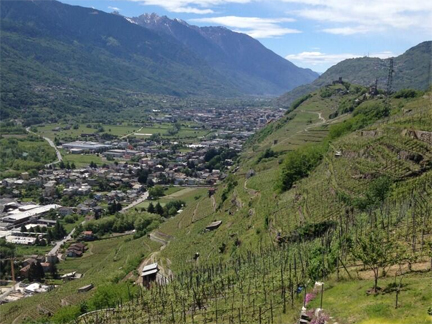
Above: “@DoBianchi [the wines of Ar.Pe.Pe. are] beauties!” wrote Michael Garofala yesterday on the Twitter. “We’re very lucky in Pdx [Portland, Oregon] to have them. Valtellina’s also not such a bad place to visit.”

Yesterday’s post on Ar.pe.pe. generated a lot of positive response.

Michael Garofola aka @WineChefPDX, who works in Portland, posted this beautiful photo of the Valtellina (above).

And Alfonso aka @ItalianWineGuy reminded me of this excellent post on his vist to the Valtellina from 2007, including tasting notes for Ar.pe.pe. (highly recommended).

bastianich mozza aragone

Above: The news of Joe’s new restaurant in Italy nudged me to grab this bottle of his Mozza 2008 Aragone from my samples bin. A blend of Sangiovese with smaller amounts of Syrah, Alicante, and Carignan, the wine was fresh and the ripe red fruit was bright, balanced by wholesome earthiness. According to WineSearcher.com, it sells for under $35 in the U.S. market. Another gem of a wine from the great enologist Maurizio Castelli, it paired nicely with some chicken tacos.

Things are insanely busy these days at the home office, but I did manage to catch up on my Feedly reading yesterday.

I’m surprised that virtually no one in the U.S. has written about Joe Bastianich’s soon-to-be-launched new restaurant in Friuli, “Orsone” (the big bear), the name of farmhouse and vineyard where he sources fruit for one of his vineyard-designated wines in the Colli Orientali del Friuli.

I read about it on one of my favorite Italian-language food blogs, Dissapore (where you can also see a photo of the venue’s façade).

One of the things that fascinates me about Joe’s career is his reverse immigration. There are many Italian-American restaurateurs in the U.S. who own vineyards in Italy (as he does) but I don’t know of any who are megagalactic (to borrow an Italianism) television celebrities and restaurant-owners on the other side of the Atlantic.

It will be interesting to see what he does with it… And like any high-profile “restaurant man” (the title of his memoir, published while in his early 40s), I’m sure that Orsone will be the subject of intense scrutiny…

So much more to tell but I’ve got hungry mouths to feed. Thanks for reading. Stay tuned…

Eataly founder Oscar Farinetti bans racist politician

oscar farinetti

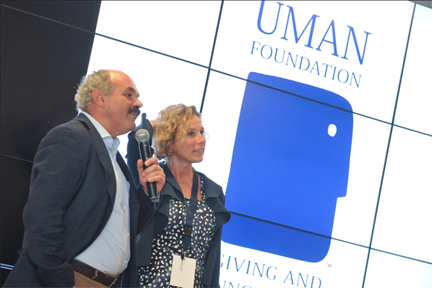
Above: Eataly founder and Italian entrepreneur Oscar Farinetti with Uman foundation president and environmental activist Giovanna Melandri in Rome, October 2012 (image via the Uman Foundation Flickr).

“Entry to Eataly is forbidden to people like [Italian senior parliamentarian] Calderoli,” said the food emporium’s founder Oscar Farinetti to a radio interviewer this week in Italy, adding that the ban was “for hygienic reasons.”

He was referring to Roberto Calderoli, Northern League (Separatist) party member and vice-president of the Italian senate, whose recent racist comments have been the subject of controversy this week in Italy.

At a political rally on Saturday in Treviglio (Lombardy province), Calderoli used a racial slur in reference to Italy’s first African-born minister, Italo-Congolese politician and opthamologist Cécile Kyenge.

Calderoli and his racist cohorts, suggests Farinetti in the interview, “shouldn’t just resign from politics… They should resign from the human race… They lack the conscience that distinguishes humans from chimpanzees.”

Click here for an updated English-language report on the episode and steps Italian officials are taking to censure Calderoli.

You can listen to the interview here.

As an Italian wine and food historian and an observer of Italy’s wine and food trade, I applaud Farinetti for his “no racists allowed” policy.

His statements came in response to the interviewer’s question: As someone who works abroad, are you ever embarrassed by the attitudes of Italian politicians?

While many international ambassadors of Italian wine and food avoid the sticky, unsavory issues of politics and racial tensions in Italy today, Oscar Farinetti’s decisive stand on this issue — zero tolerance for the manifest racism expressed by Italy’s separatist movement leaders — deserves our attention and commands our respect.

Enogastronomy is one of the greatest expressions of the Italian soul — no matter what the political affiliation. As the highest-profile representative of Italian wine and food throughout the world, Farinetti’s example should be a model for us all.

“Universe in a glass of wine”: who really said that? The answer…

galileo wine glass

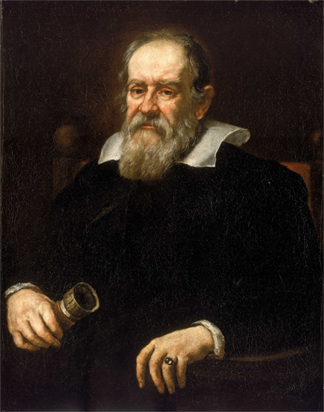
Above: Portrait of Galileo Galilei (1564-1642) by Justus Sustermans (1597-1681; image via the Wiki).

Reading the excellent Italian-language food and wine blog Porthos this morning, I was reminded by the authors of the famous and brilliantly topical lecture by U.S. physicist Richard Feynman, “The Universe in a Glass of Wine.”

“A poet once said,” it begins, “‘the whole universe is in a glass of wine.’ We will probably never know in what sense he said that, for poets do not write to be understood. But it is true that if we look in glass of wine closely enough we see the entire universe.”

Click here for the entire text (it’s very short) and the audio. If you’ve never heard it, it’s worth listening (in part because Feynman’s immense ability as orator).

(Today’s post on Porthos takes the form of a Socratic dialog on biodynamics and Natural wine and the interlocutors cite Feynman as an example of the powerful mythology of Nature as expressed through wine.)

Feynman doesn’t seem to know who the poet was. (And he notes — for comic effect but erroneously in my view — that poets “don’t write to be understood.”)

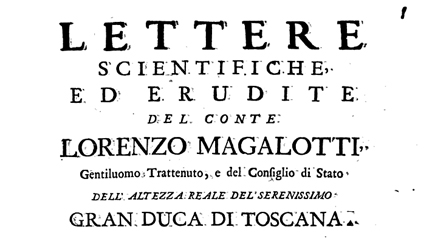
I believe that the imagery comes from a “scientific letter” by Italian philosopher Lorenzo Magalotti (1637-1712) who cites Galileo’s [attributed] maxim, wine is a compound [mixture] of moisture [humor] and light (il vino è un composto di umore e di luce).

Note that humor denoted moisture in seventeenth-century Europe (cfr. “1697 Dryden tr. Virgil Georgics i, ‘Redundant Humours thro’ the Pores expire,'” Oxford English Dictionary).

This celebrated observation of the physical world was transmitted anecdotally by Galileo’s student Raffaello Magiotti (1597-1656), who is quoted by Magalotti in the letter.

magalotti letters

In the text (the fifth letter in the collection), he uses the maxim as a thesis in his dissertation on the nature of light. The grape and its transformation, he writes, are a perfect example of light’s ability to “penetrate a body.”

In Dante’s Commedia (Purg. 25, 76-78), the Latin poet Statius compares G-d’s creation of life to Nature’s transformation of moisture into wine by means of light:

    E perché meno ammiri la parola
    guarda il calor del sol che si fa vino,
    giunto a l’omor che de la vite cola.

    [And, that you may be less bewildered by my words,
    consider the sun’s heat, which, blended with the moisture
    pressed from the vine, turns into wine.]

(Some have translated Dante’s omor [umore] with the English sap but moisture is a more accurate translation, especially given the context.)

In the light of Dante’s popularity during Galileo’s time, it’s likely (guaranteed, really) that Galileo was familiar with these lines. Magalotti cites the Dantean verses as well in his letter.

So did a poet once say that you could see the whole universe in a glass of wine?

It’s possible but unlikely.

Did the poets, as far back as Statius, consider wine to be a substance that could reveal the nature of the universe? Yes, most definitely.

Like me (however small I am compared to those giants), they were negotiating the epistemological implications of oenophilia.

Thanks for reading…

From sharecropper to landowner, an Italian parable

gregoletto prosecco

Looking back on my April 2013 visit to Prosecco legacy winemaker Luigi Gregoletto (above), I realized that I’m going to need to devote a series of posts to our fascinating conversation about pre-autoclave Prosecco, Prosecco Colfòndo, and his recent embrace of biodynamic farming practices.

But first, I’d like to share this video, shot the day of our visit.

In the film, he and I make a Dantean ascent to the villa where his parents — Proseccoland sharecroppers — were born.

Luigi was born a sharecropper in 1927, five years after Mussolini’s March on Rome.

As he explains in the video, he began to purchase land from the owners about twenty-five years ago.

Today, the hilltop that overlooks the owner’s villa is planted to his prized Verdiso, from which he makes his top wine. It’s a powerful metaphor for the arc of his life.

As we began our climb up the hill that leads to the villa, I was struck by how his family’s story is an Italian parable that spans Italy’s industrialization in the twentieth century to the rise of the proletariat in the years that followed the Second World War.

Sharecropping — a form of indentured servitude — was not officially abolished in Italy until the 1960s. Its prohibition was not implemented until the 1970s. And only in the 1980s did the Italian legislature set out parameters for the redistribution of land.

His truly inspirational story reveals so much about the evolution of Prosecco and the renaissance of Italian wine. And it tells us even more about Italy’s twentieth-century history.

I have a lot more to share about our visit, but in the meantime please have a look at the video. I hope you find the experience as moving as I did.

Mothers aided by @WWF in pesticide battle in Proseccoland cc @Bele_Casel @ZanottoColfondo

baby in the vineyards

Above: We took Georgia P to Proseccoland for the first time in September 2012 when she was about nine months old. The grapes were still on the vines and about to be harvested. She loved playing in the vineyards and Tracie P and I felt good about it because the two vineyards we visted — Bele Casel and Zanotto — are both organically farmed.

On Friday of last week, a friend of ours from mainland Venice, Paola, alerted me to a report in Oggi Treviso (Treviso Today) about daycare mothers protesting the use of pesticides and herbicides in Proseccoland.

According to the author of the article, the local chapter of the WWF has helped them to organize an assembly (this coming Friday) to address their concerns about chemicals being sprayed in vineyards that lie adjacent to a preschool daycare center.

Yesterday, I wrote about the event for the Bele Casel blog, a site devoted to the Veneto and viticulture in Proseccoland.

pesticide protest

Above: During the “Prosecchissima” festival in the village of Miane in April of this year, the WWF Altamarca displayed signs calling for the abolition of chemical-based farming in the Prosecco DOCG appellation (source: PDQNews.it). The signs were removed by thieves.

But this morning, as I poked around the internets looking for more info about the situation “on the ground” in Proseccoland, I learned that similar protests, assemblies, and impassioned calls for a chemical-free Prosecco DOCG have been going on since 2011 when the WWF opened a local chapter, WWF Altamarca (no website).

I also discovered a video feed by European parliament deputy Andrea Zanoni, a Treviso resident and native, who has been documenting his battle with “big Prosecco” to curb the use of chemicals and to stop the deforesting of woods in the appellation.

Here’s a video from his YouTube page:

The video was shot in the township of Tarzo, not far from the preschool where mothers first raised concerns about pesticides being sprayed.

Like the WWF Altamarca, Zanoni has also called for a halt to helicopter spraying.

In another of his videos, he notes that restaurant-diners were recently affected by pesticide-spraying aircraft. Such spraying, he says, is only allowed in extreme cases and he believes that recent airborne spraying is in direct violation of EU regulation.

Before his passing, even the great Veneto poet Andrea Zanzotto lent his gravitas to the cause, publicly aligning himself with the WWF mission.

I first traveled to Proseccoland in 1989 (playing music) and I think it’s safe to say that no other Italian appellation has been transformed so radically by “big wine.”

The Prosecco boom of the last two and half decades and the ever growing demand for grapes are so enticing that chemical-farming and the clearing of land has become a way of life there.

I’ll be following these stories and will continue to report on them here and on the Bele Casel blog.

Please tweet or share this on Facebook if you feel so inclined.

Addio Franca Rame…

franca rame

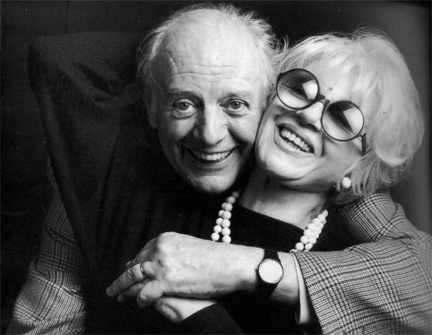
Above: Activist, writer, and actor Franca Rame (right) with husband Dario Fo. Image via Eclap.

One of the most thrilling moments of my university years in Italy was seeing Franca Rame perform and meeting her and Dario Fo in Rome. They were in the lobby of the theater before the show and very graciously gave their autographs to a starstruck American student.

Here’s her obit in the Guardian.

What an incredible performer, what an incredible life…

Andreotti dies & blows a last kiss from the 20th century

andreotti

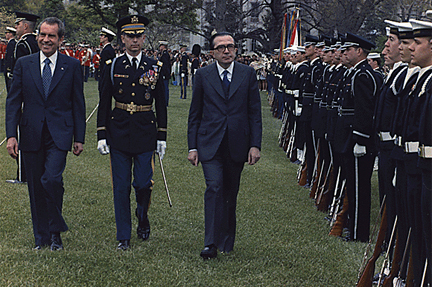
Andreotti (right) with Nixon in 1973. Image via the Wiki.

“The great winemakers,” said my client Silvano “die during harvest or during Vinitaly,” Italy’s annual trade gathering in Verona where we were meeting.

He was referring to the passing of Franco Biondi Santi, whose death — at 91 years — cast a long shadow over the fair when the news broke on the first day of the event.

And so is the case with Italian politics.

Today, Italy has new Pope, a new prime minister (elected last week), a new president (also recently elected), and Giulio Andreotti, the seven-time prime minister who defined politics in Italy and reshaped the country’s political and economic legacies in the twentieth century, has died at 94 years of age.

When I traveled to Italy for the second time, to spend the 1989-90 scholastic year at the university in Padua, Andreotti was in his last term as premier.

In every way, he represented everything that my leftist Italian counterparts and friends abhorred: he was the face of Italy’s right wing, considered by many a torch-bearer of fascism, a censor (who once repudiated De Sica for the fim Umberto D.), a mafia-tainted and wily politician who was implicated in the assassination of his friend and political rival, Aldo Moro, not to mention the murder of a journalist who had become a nuisance to him.

umberto d

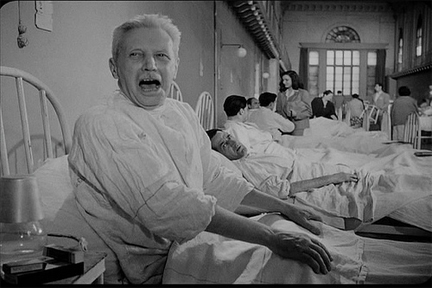
Above: Andreotti chastised director Vittorio De Sica for his iconic film Umberto D.

In 1993, during his mafia-association trials, authorities revealed that they had obtained a photograph of Andreotti shaking hands with mafioso Vincenzo Pernice at a private ceremony in a church in Rome. There was also an account that he had exchanged a kiss with Salvatore Riina, the boss of bosses at the time.

I’ll never forget how Professor Branca — one of my mentors and a staunch supporter of Andreotti’s Christian Democrats, a rightist in an academic world dominated by the left — finally conceded that Andreotti was as crooked as the figures with whom he’d been linked.

“Si è fatto fotografare con quel mafioso,” he said to me and my dissertation advisor, another one of his protégés. “He allowed himself to be photographed with that mafioso.”

There was no denying that Andreotti was a criminal, not even for Vittore Branca.

Italy’s current generation faces enormous challenges — economic, political, and cultural. Some would even go as far to say that the current financial crisis is one of the greatest crises Italians have faced in the history of the Italian republic (born after the second world war).

In the light of recent events, it’s as if Andreotti’s death were a congedo, a coda to his twentieth-century legacy. It’s as if he were saying, I don’t know where you’re going but don’t forget that I’m the one who got you here…