Monty Waldin on Decanter’s claim that Banfi has been “cleared of Brunello adulteration”

In case you don’t know him already, “Monty Waldin, a British wine writer who has been living in Italy for the last few years, is one of the best known commentators on (and advocates of) biodynamic wine growing.” — Jamie Goode

Here’s just part of what British television wine personality and wine writer Monty Waldin had to say about Decanter’s post on Friday claiming that Banfi has been “cleared of Brunello adulteration”:

    Decanter also swallowed a press release last year in which Brunello’s biggest winery Banfi declared itself as innocent — when this was absolutely not the case as the Siena prosecutor subsequently made perfectly clear. Although some (most in fact) of the wineries who were investigated have not been charged others — perhaps with something to hide, perhaps not — have taken the option of plea bargaining pre-trial (a perfectly legitimate option in Italy if you, ahem, feel you may have broken the “Brunello must be 100% Sangiovese” rule).

Monty posted his thoughts on Jancis Robinson’s pay-per-view site and Franco was gracious enough to repost them at Vino al Vino.

Read the entire post here.

Evidently, Franco and I are not the only ones outraged by Decanter’s egregiously disinformational post. Today, I’m trying to get to the bottom of what actually happened in their editorial offices. Stay tuned…

A quixotic appeal to Brunello producers must not go unheard

One of Italy’s greatest and most polemical wine writers, Franco Ziliani is first and foremost a friend. He is also a mentor and a partner: together we edit the Italian wine world news blog, VinoWire. He was one of the first to encourage me to expand my own blog and the often self-deprecating honesty of his writing has always inspired me to examine my own perceptions of wine and wine writing. I like to call Franco the Giuseppe Baretti and Aretino of Italian wine writing today. That’s Franco and me, outside the Vini Veri tasting in April in Isola della Scala.

Today, Franco has posted an appeal to the director and president of the Consorzio del Vino Brunello di Montalcino (the Brunello Producers Association), demanding they step down in the wake of the Italian Treasury Department’s findings that members of the consortium have “cheated in commercial transactions” (the culmination of “Operazione Mixed Wine,” an investigation launched by Italian officials in September 2007). In lieu of their resignation, he is calling on the consortium’s estimated 250 members (the consortium does not publish an official number of members) to leave the body.

It is a quixotic appeal, no doubt, but a voice that must not go unheard.

The other day, I was dismayed to read a pusillanimously anonymous comment on Alfonso Cevola’s post on recent developments in Montalcino. “Italians love their ‘crisi,'” wrote the would-be pundit, who identified himself solely as Scott, “and it was wine’s turn after calcio [football] had the headlines for a while. As with all things Italian, life goes on and things work themselves out.”

This sort of stereotypical reductive attitude is entirely inappropriate and frankly offensive in this case. And it was authored by someone who doesn’t read beyond the sports page.

What happened in Montalcino is a tragedy and the omertà — the screaming silence — that followed is doubly tragic. Just go ask the many folks there — old and young (and I have asked them personally) — who have fought vigorously if not always successfully to protect the traditions of their land against the evils of globalization.

In other news…

Some good news has arrived from Montalcino today, in the form of a post by my friend Alessandro Bindocci who reports that the Regione Toscana has approved legislation lowering the maximum yields allowed for Brunello and Rosso di Montalcino.

Not everything coming up rosés in Montalcino

Above: I had fun pouring this flight of rosé, including the 1998 López de Heridia Viña Tondonia Rosado Reserva last night at Jaynes Gastropub in San Diego. I’ll be there on the floor (pouring not lying!) again tonight. Please come down to say hello if you’re in town (Comicon conventioneers receive a 10% discount for having monopolized all rental cars within a 100-mile radius! Just mention this ad…).

Franco and I have published an excerpted translation of a letter to Brunello association members from the body’s director today at VinoWire. For the first time — nearly 16 months after the Brunello investigation was first reported — the association director has begun to address the issue, not publicly, but internally… Click here to read… It just blows my mind that the association has waited so long to respond to accusations but I’m glad the truth — or at least some of it — is beginning to emerge. All I can say is, in vino veritas, the truth is in the wine.

For a reaction on this side of that misunderstanding otherwise known as the Atlantic Ocean, read Alfonso’s moving post here.

*****

From “Roses” by Outkast

I know you’d like to think your shit don’t stink
But lean a little bit closer
See that roses really smell like boo-boo
Yeah, roses really smell like boo-boo

I know you’d like to think your shit don’t stink
But lean a little bit closer
See that roses really smell like boo-boo
Yeah, roses really smell like boo-boo

Wineries named in Brunello investigation

i_heart

The server that hosts VinoWire is having problems today and so I’m unable to post there but I will do a detailed post asap.

Today’s Florence edition of the Italian national daily La Repubblica reports the names of the seven wineries investigated in the Brunello inquiry, dubbed by Italian authorities, “Operazione Mixed Wine” or “Operation Mixed Wine.” The five that were found by the Italian Treasury Department to have bottled wine “not in conformity with appellation regulations” are: Antinori, Argiano, Banfi, Casanova di Neri, and Marchesi de’ Frescobaldi. According to the article, Biondi Santi and Col d’Orcia were also investigated by were cleared by investigators of any wrongdoing.

Sunday Poetry on Friday and a painting too: Parmigianino and Ashbery

Tracie B and I are headed out to spend the weekend with her family at Canyon Lake — for swimming, relaxing, visiting, and playing Mexican Train. I’m really looking forward to going offline for the next few days and so I thought I’d post Sunday Poetry today (next week, btw, I’ve got a great post on deck on Petrarch’s “generous wine”).

The reflection in the spoon in the photo of the panna cotta in yesterday’s post made me think of the great American poet John Ashbery’s poem “Self-Portrait in a Convex Mirror,” in which he writes — ut pictura poësis — about Italian Renaissance master Parmigianino’s wonderful oil on wood. When I was studying poetry as a graduate student at U.C.L.A. and in Italy, I was fascinated by both works and every time I read the poem, I discover a new layer of meaning and semiosis — the “secret knowledge” that a distorted image can often reveal.

From “Self-Portrait in a Convex Mirror”
by John Ashbery

As Parmigianino did it, the right hand
Bigger than the head, thrust at the viewer
And swerving easily away, as though to protect
What it advertises. A few leaded panes, old beams,
Fur, pleated muslin, a coral ring run together
In a movement supporting the face, which swims
Toward and away like the hand
Except that it is in repose. It is what is
Sequestered. Vasari says, “Francesco one day set himself
To take his own portrait, looking at himself from that purpose
In a convex mirror, such as is used by barbers . . .
He accordingly caused a ball of wood to be made
By a turner, and having divided it in half and
Brought it to the size of the mirror, he set himself
With great art to copy all that he saw in the glass,”
Chiefly his reflection, of which the portrait
Is the reflection, of which the portrait
Is the reflection once removed.
The glass chose to reflect only what he saw
Which was enough for his purpose: his image
Glazed, embalmed, projected at a 180-degree angle.
The time of day or the density of the light
Adhering to the face keeps it
Lively and intact in a recurring wave
Of arrival. The soul establishes itself.
But how far can it swim out through the eyes
And still return safely to its nest? The surface
Of the mirror being convex, the distance increases
Significantly; that is, enough to make the point
That the soul is a captive, treated humanely, kept
In suspension, unable to advance much farther
Than your look as it intercepts the picture.
Pope Clement and his court were “stupefied”
By it, according to Vasari, and promised a commission
That never materialized. The soul has to stay where it is,
Even though restless, hearing raindrops at the pane,
The sighing of autumn leaves thrashed by the wind,
Longing to be free, outside, but it must stay
Posing in this place. It must move
As little as possible. This is what the portrait says.

Read the poem in its entirety here.

Eating for Beginners once interviewed John Ashbery. I’m really looking forward to her upcoming posts on her passage on the Queen Mary 2 back from Europe with the German Professor and the Cheese Hater.

Thanks for reading and have a great weekend y’all!

Drinking great at the G8? No great moment in history without Spumante

tony the tigerYou might remember my post White, Green, and Red All Over: Obama to eat patriotic pasta at G8 from a month ago. The G8 summit began today in L’Aquila in Abruzzo and the Italian press is relishing the Obamas’s every move with great gusto.

As Franco pointed out today at Vino al Vino, there was even a post today at the ANSA (National Italian Press Association Agency) site that includes not only the official schedule for today but also the official bottles of wine and spirits to be given to Italy’s “illustrious” guests. G8 members will receive a “magnum of Amarone Aneri 2003 in a wooden box on which the initials of each of the presidents or prime ministers present has been engraved. All official lunches will begin with a toast with Ferrari spumante, [a wine] which is never missing at great appointments with history [sic; can you believe that?]. As an official gift for the illustrious guests, a highly rare ‘Ferrari Perle’ Nerò has been chosen [sic; the wine is actually called Perlé Nero], together with ‘Solera’ Grappa by the Segnana distillery. 1-3 p.m.: working G8 lunch on global economy.” (The post at ANSA’s English-language site did not include the wines or plugs.)

The American press doesn’t seem to be taking the G8 Summit and Silvio Berlusconi’s carefully choreographed hospitality as seriously as the Italian press corps. “Inexcusably lax planning by the host government, Italy, and the political weakness of many of the leaders attending, leave little room for optimism,” wrote the editors of The New York Times today.

With more humble tone, I was forwarded an email from the Dino Illuminati winery announcing that one of its wines had been chosen as the official wine for the luncheon and another for the closing dinner tomorrow. “We are sure You’ll like to enjoy,” it read, “the very good news with us: Our wine ZANNA Montepulciano d’Abruzzo Colline Teramane DOCG 2006 has been choiced as official red wine for the G 8 lunch of Wednesday July, 08. Besides, our wine LORE’ ‘Muffa Nobile’ will be the dessert wine for the G 8 dinner of Thursday July, 09.”

I guess Dino didn’t make the ANSA deadline.

In other news…

Check out our post today at VinoWire: Barbaresco producers speak out on Giacosa’s decision not to bottle his 2006. Giacosa claims that the rains of September ruined the vintage but our post reveals other points of view.

Americanata: Mondavi in Italy

From the “no go paroe” department…

big_gulpAs much as Italians generally like Americans and the U.S. of A., they also love to make fun of us. They even have a word for it, americanata: the word (a noun) is used disparagingly to describe Americans’s tendency toward the grandiose, the overblown, exaggeration, bad taste, and kitsch. A classic if banal example of an americanata would be the Big Gulp. According to Wikipedia, the Big Gulp was introduced by 7-Eleven in 1980 and in its largest size, contains 64 fluid ounces of soda pop. Is it humanly possible to drink 64 ounces of Coke in one serving? That’s a lot of corn syrup. The Big Gulp is clearly an americanata.

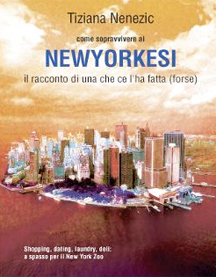
tiziana nenezicThere is an entire genre of commentary on Americans and their americanate in Italian journalism. Vittorio Zucconi writes about the U.S. from an Italian perspective for the Italian national daily La Repubblica and is perhaps the most famous chronicler of americanate. There is even a blog called Americanata, authored by an Italian writer living in the U.S. Tiziana Nenezic has published two books: How to Survive New Yorkers, the Tale of a Woman Who Managed to Do So (Maybe) and Love in the Times of Globalization.

Over the weekend, Franco and I reported on a new and disturbing wine industry partnership that represents another step in globalization’s seemingly unstoppable march of progress: the behemoth Cantina di Soave has become the exclusive distributor of mammoth Constellation Brands in Italy and will begin to market and sell “new world products of excellence” like Mondavi.

Do Italians really need another barriqued and oaky, overly extracted, jammy, hyperalcoholic Merlot? From California? I fear that this merger does not bode well for those of us who love Italy for its mosaic of indigenous grapes and who crave food-friendly wines made in the traditional style (wines for which no new oak has been used, no artificial concentration has been employed, and wines that express grape and place and people). It will only foster the continued Coca-Colization of the Italian palate. I can’t think of a bigger americanata.

I’m going to get down off of my soap box now but before I do, I invite you to watch the following Coca Cola commercial that aired recently in Italy. In the spot, a girl named Giulia from Pisa says, “lately everyone’s been talking about [the economic] crisis.” But she’s an optimist because she likes “simple things.” She eats pizza instead of sushi, a sandwich with salami instead of caviar. She likes to stay home and eat with her family instead of going to “gala dinners.” The spot ends with a message from Coca Cola, la felicità a tavola non va mai in crisi: “happiness at the table is never in crisis.”

Now watch the parody. In the original version, the girl has an Italianized Tuscan accent in the voice over. In the parody, she has a strong Tuscan accent (the use of dialect and dialectal accents is important and very Pasolinian here, btw). Bear with me if you don’t speak Italian: it’s worth it for the images.

No go paroe, I am speechless, as they say in the Veneto.

(Thanks Ale for sending me the “Real Giulia Commercial”!)

Petrarch and the unbearable thought of life without the wines of Burgundy

From the “Sunday poetry” department…

Above: In this Renaissance illuminated manuscript (painted book), Petrarch and Laura appear on the banks of a river. Laura, the river (the Sorgue), and the laurel tree (also depicted) are central to Petrarchan iconography. Petrarch knew the wines of Burgundy well but he liked the wines of Italy better.

Petrarch (1304-1374) knew the wines of Burgundy well. He spent most of his early life in and around Avignon, where his father followed the Babylonian exile of the papal court, and where the wines of the Côte d’Or already enjoyed considerable fame. It wasn’t far from Avignon where he first saw Laura, for whom he would write 366 poems, later gathered in his Rerum vulgarium fragmenta (Fragments of Vernacular Things, the title he gave to his Canzoniere or Song Book). Their first meeting took place in Vaucluse in 1327 (according to his own mythology).

Petrarch spent much of the latter half of his life trying to bring the papacy back to Rome. After one of his appeals to Pope Urban V, some of the cardinals argued that a return to Rome would be unthinkable: how could they survive, they told the pope, without the health-enhancing properties of the wines of Burgundy? Petrarch responded with one of his most famous political letters and a passage, often cited but seldom revisited, in which he chastises the gluttonous cardinals. But in the same stroke, he invites them to experience the wines of Italy:

    Is it not a puerile ambition to malign the many types of wines, so plentiful, found in all parts of Italy? … Let them come and see for themselves — all those for whom life would be unbearable without the wines of Burgundy! They will find copious amounts of grain, olive oil, wines, plants, and fruits. Here there are fruits unfamiliar to you and unknown in your [colder] climate. The woods, beasts, wild animals, game, and food and spices are so abundant that no one dies of hunger…

    Seniles 9, to Pope Urban V, August 1366 (translation adapted from Aldo Bernardo)

In last week’s Sunday poetry post, Petrarch flowed the rivers of the world together in verse. Laura is absent and he longs for the river where she appeared: no other river, he cries, could quench the fire burning in his soul.

In this week’s post, he happens upon Laura by a river, innocently washing her veil. She is more beautiful than the huntress goddess Diana who turned Acteon’s dogs upon him when he happened upon her bathing nude in a river.

Magridal 52 is one of the most exquisite compositions in Petrarch’s Rerum. As summer temperatures rise here in Texas, there is a someone special in my life, too, who can still make me “tremble with a chill of love.”

    Not so much did Diana please her lover when, by a similar
    chance, he saw her all naked amid the icy waters,

    as did the cruel mountain shepherdess please me, set to wash a
    pretty veil that keeps her lovely blond head from the breeze;

    so that she made me, even now when the sky is burning, all
    tremble with a chill of love.

    (translation by Robert Durling)

    Non al suo amante più Diana piacque
    quando per tal ventura tutta ignuda
    la vide in mezzo de le gelide acque,

    ch’a me la pastorella alpestra e cruda
    posta a bagnar un leggiadretto velo
    ch’a l’aura il vago e biondo capel chiuda;

    tal che mi fece, or quand’egli arde’l cielo,
    tutto tremar d’un amoroso gelo.

What would the Iron Baron Ricasoli say if he were alive today?

In a 1989 show entitled Le balene restino sedute (Whales, please stay seated), the Bolognese comedian Alessandro Bergonzoni (left) noted that if Sigmund Freud (center) were alive today, he would say: “Well, I sure have lived for a long time.”

Above: The Sala delle Armi or Armory Hall in the Brolio Castle in the township of Gaiole in the heart of Chianti.

Reading Carlo Macchi’s post about yesterday’s conference on the Ricasoli-Studiati Papers, held at the Ricasoli family’s Castello Brolio in Chianti Classico, I couldn’t help but wonder what would the Iron Baron Bettino Ricasoli (1809-1880, above right) say if he were alive today? Among other significant entries on Italian unification, Italian national identity, and the importance of agriculture and winemaking in the forging of a new Italian nation, the correspondence between Ricasoli — Italy’s second prime minister, one the architects of its independence, and a champion of Sangiovese — and Pisan professor Cesare Studiati contains the famed letter in which the Baron described his experimentation with “every grape variety” in his vineyards and his conclusion that Sangiovese — or Sangioveto, as it was called in Tuscany then — was the ideal grape to grow in Tuscany. (You can read my translation of the letter here.) Many claim erroneously that the Iron Baron wrote a formula or recipe for Chianti. He did not. But when he tore out international grape varieties from this vineyards and replanted with Sangiovese, Canaiolo, and Malvasia, the land holders of Tuscany followed suit. If you read the series of letters between the two men during that period, you will discover that he was trying to create (and he ultimately succeeded in creating) a fine wine that could be shipped abroad. He realized that Italian wine could help to fuel the nascent national economy if and only if it could be shipped abroad. And through his experiments, he discovered that Sangiovese grown on Tuscan soil was ideal for this purpose.

According to Carlo, who attended the event yesterday, the discussion — moderated by megawatt Italian television personality Bruno Vespa — centered around the controversial expansion of the Chianti appellation. Would this have concerned the Iron Baron? Perhaps. But if he were to taste the Chianti produced by the “40 or so winemakers” who attended the celebrity-studded event, what would he say? Would he recognize his beloved Sangiovese in those wines, now dominated by Merlot and Cabernet?

I’ll let you fill in the blank…

Poetry for Sunday: Petrarch’s musical rivers

People seemed to enjoy last week’s Poetry for Sunday so I thought I’d try another one this week…

A quick search online revealed this wonderful gallery at the Beinecke Library (Yale) site. Petrarch’s script inspired a generation of Northern Italian amanuenses and calligraphers who developed what would later be called “humanist script.” The inscription at the top of the folio reads: “Here happily begin the songs in verse in elegy of Laura by the illustrious poet Francis Petrarch.”

When I lived in Italy in the 1990s as a graduate student, I had the great fortune to meet a number of twentieth-century Italian poets, including Giovanna Sandri, whose poetry I translated for a collection of modern poetry published by my dissertation adviser. One day, when I was doing research for my dissertation at the Vatican library, she invited me over for a lunch of rice and baby shrimp — “translation and risotto di gamberetti” she wrote playfully in a dedication she signed in a copy of one of her books that she gave to me. Her primary literary interest was the group of Roman poets and the Gruppo 63 poets among whom she had come of age literarily and literally. But when she asked me about my studies devoted to Petrarch (Francesco Petrarca, fourteenth-century Italian poet and humanist) she fondly remembered her favorite sonnet. She loved the way that Petrarch ingeniously listed the great rivers of the world in meter (in this case, rhymed hendecasyllables — eleven-syllable lines, the classic meter of Italian medieval lyric).

The following is Robert Durling’s translation of the sonnet and the original Italian. Even if you don’t read Italian, try reading the lines out loud to hear the music of Petrarch’s verse.

The tree in the poem is central to the body of poetry and the new poetical language that Petrarch created for his beloved Laura: the laurel tree (do you hear the paronomasia between Laura and lauro or laurel?), the tree so dear to Apollo the god of music and poetry (among other things) because his beloved Daphne had been transformed into a laurel tree so she could escape his amorous advances.

    Not Tesino, Po, Varo, Arno, Adige, or Tiber, Euphrates, Tigris, Nile, Hermus, Indus or Ganges, Don, Danube, Alpheus, Garonne, the sea-breaker Timavus, Rhône, Ebro, Rhine, Seine, Elbe, Loire, or Hebrus —

    not ivy, fir, pine, beech, or juniper — could lessen the fire that wearies my sad heart as much as a lovely stream that from time to time weeps along with me, and the slender tree that in my rhymes I beautify and celebrate.

    I find this a help amid the assaults of Love, where I must live out in armor my life that goes by with such great leaps.

    Then let this lovely laurel grow on the fresh bank; and he who planted it, let him — in its sweet shade, to the sound of the waters — write high and happy thoughts!

    Non Tesin, Po, Varo, Arno, Adige e Tebro
    Eufrate, Tigre, Nilo, Ermo, Indo et Gange,
    Tana, Istro, Alfeo, Garona, e’l mar che frange,
    Rodano, Ibero, Ren, Sena, Albia, Era, Ebro —

    non edra, abete, pin, faggio o genebro —
    poria ‘l foco allentar che’l cor tristo ange
    quant’un bel rio ch’ad ogni or meco piange
    co l’arboscel che’in rime orno e celebro

    Questo un soccorso trovo fra gli assalti
    d’Amore, ove conven ch’armato viva
    la vita che trapassa a sì gran salti.

    Così cresca il bel lauro in fresca riva,
    e chi’l piantò pensier leggiadri et alti
    ne la dolce ombra al suon de l’acque scriva!

What does wine have to do with any of this? In his prose, Petrarch wrote famously about wine and in particular about the wines of Burgundy, but that will have to wait for another post. Today, let’s just enjoy his musical rivers.

Thanks for reading…