A note on Italian winery designations: azienda, cascina, fattoria, podere, et cetera

This post originally went live on May 5. Please continue to send me your suggestions, queries, corrections by leaving comments below. Most recently added: ca’, cantina, casa, vignaiolo (May 18).
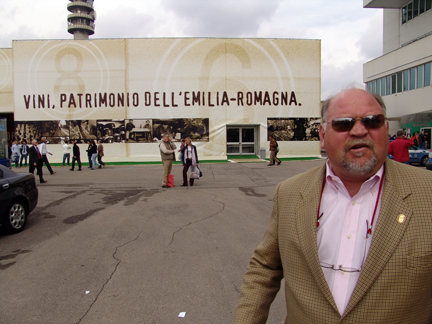
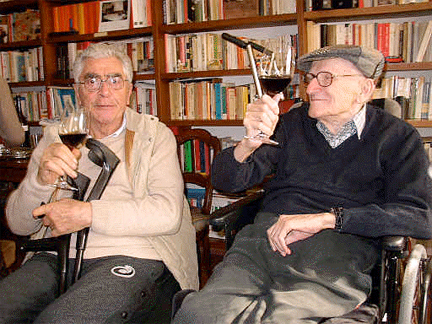
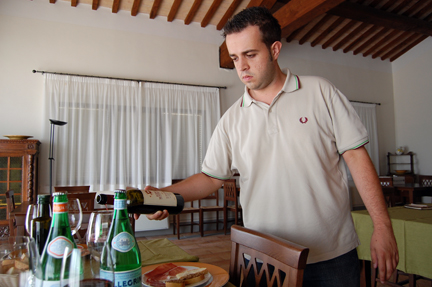
Yesterday, while I was attending a tasting with one of the leading wine professionals in the country, Texan Master Sommelier Guy Stout (above, at Vinitaly), he asked about the meaning and origin of the term podere. Guy is a true mensch, a wonderful character, and a beloved figure in the Texas and U.S. wine scene. He has mentored a generation (literally) of wine professionals studying for their Master Sommelier exams. Getting to taste with him is always a pleasure and an enlightening experience. A lot of people ask me to explain the meanings and origins of Italian winery designations. So I decided to write a hand-list of terms used commonly in the names of wineries in Italy. I hope it will be helpful to Master Sommelier candidate and anyone who shares my passion for Italian wine. I’ve included etymologies (studies of their origins) because believe that the etymon (origin) helps to shed light on the meanings of the designations. This post is dedicated fondly to Guy. (Photos by Alfonso Cevola, his friend and colleague.)

azienda, landed property, estate, domestic work, from the Spanish hacienda, from the Latin facienda meaning things to be done from facere, to do.

The term azienda means business and is used to denote a company or firm in Italian. An azienda agricola is a farming business; an azienda vinicola is a winery (a wine business).

ca’, see entry for casa.

cantina, literally cellar or cool place to store perishable goods and by extension tavern, probably from the Italian canto meaning angle or corner from the Greek kampthos, bend or angle.

The word cantina has a wide variety of applications in Italy (often used for restaurants and food stores, as well as wineries) and can be found across Italy to denote wine cellar.

casa, literally, a building, house, or habitation, from the Latin casa, a small house, cottage, hut, cabin, shed.

The term casa is used throughout Italy as a winery designation and is often abbreviated as ca’, as in Ca’ del Bosco (it’s important to note that it’s often erroneously abbreviated as Cà [using the accent grave diacritic], when in fact the inverted comma [‘] denotes the elision of the final two letters, often derived from a dialectal locution). A casa vinicola (pronounced KAH-sah vee-NEE-koh-lah) is a winery/négociant.

cascina, farm house or other structure used to house livestock or farm tools, from the late Latin capsia meaning case or receptacle.

It can also denote a structure used to store cheese and other dairy products. The term is used primarily northern Italy and especially in Piedmont to denote a farmhouse or winery or dairy farm.

fattoria, farm, from the Latin factore, literally maker, from facere meaning to do.

You find usage of fattoria generally in Tuscany where it can denote a winery or a farm, keeping in mind that most wine-producing estates in Tuscany also grow olives and other crops.

Guy Stout

podere, country estate with farm house (according to the Zingarelli dictionary), akin to the Italian potere, meaning can or to have the ability to do, from the late Latin, potere, from the Latin possum, meaning to be able, have power.

The term is used today primarily in Tuscany where it denotes, literally, a seat of [agricultural] power, hence the late Latin origin of the word, potere, literally power or possession (who also share kinship with the Latin etymon). According to the Cortelazzo etymological dictionary, the word first appears in the Middle Ages in northern Italy.

poggio, hill, from the Latin podium, meaning an elevated place, a height.

As Virgil wrote famously, Bacchus amat colles, Bacchus loves hills. The usage of poggio in Tuscany is documented dating back to the thirteenth century and the term appears in Dante. There are many related words like poggiolo, poggiuolo, and in the case of one of my favorite wineries, poggione. Guy and I were tasting yesterday with the nice folks from Banfi: Poggio alle Mura and Poggio all’Oro (the hill at the village walls and the gold hill, respectively) were among the wines in the flight.

ronco, literally a growing site on a hill used for farming, from the Latin runco, meaning to weed out, root up; to weed, clear of weeds, akin to the Friulian dialectal term ronc.

To my knowledge, ronco is used exclusively in Friuli. Akin to the Italian roncola or pruning hook, it probably comes from the past participle of the Friulian runcar (to clear of weeds, runcà, in other words, a site cleared for planting.

tenuta, a [land] holding or property, past participle of the Italian tenere, from the Latin teneo, meaning to hold, have, or keep.

Tenuta is a term that you see applied across northern and central Italy. Its relation to the pre-industrial age, when land ownership denoted nobility, is clear.

vignaiolo (plural vignaioli), vine tender or grape grower, derived from the Italian vigna, meaning vine, from the Latin vinea, vineyard, from the Latin vinum, wine.

Pronounced VEEN-y’eye-OH-loh (plural VEEN-y’eye-OH-lee), vignaiolo is used to denote a winery that uses estate-grown fruit in the production of its wines.

I hope this post is helpful to wine professionals and laypersons alike! If I forgot a term and/or if you have other terms you’d like me to write about and explain, please leave a comment. Thanks for reading!

The monkey drinks the wine and gets dessert.

Above: I FINALLY got to taste one of the Cornelissen wines from Mt. Aetna in the home of total strangers, the lovely Lars and Kelly of Chicago, the other night! That’s the Susucaru, a field blend, as it were, of red and white grapes. Utterly delicious… Bibulously Yours brought that bottle.

Your probably wondering about the title of today’s post. It comes from a promise. A promise made in Chicago to Lars and Kelly’s sleeping twins.

I promised them that I would use their translation of the anisette poster (left) that resides in their bathroom as the title of this post: “The monkey drinks the wine and gets dessert.” As an accomplished translator of Italian with a doctorate in Italian and a few university press titles under my belt, I wholly endorse their rendering of the text into English.
Let me explain.

You see, wine blogging — despite all of the haters’s attempts to ruin it for everyone else — is really about bringing like-minded, nice folks together. And that’s exactly what happened the other day when Bibulously Yours (a Chicago wine blogger and wine lover whom I’d never met and with whom I trade emails and notes occasionally) wrote me the other day saying, “Welcome [to Chicago], and congrats on the new gig. Hope you’re having a nice trip. I’m sure you’re busy with work, but please let me know if you have any spare time while you’re here. I would love to meet up for a drink.”

Above: 1998 Valpolicella by Quintarelli. Lars got it on a close out and it showed splendidly. Do you ever say no to Quintarelli?

Since Bibulously’s son was ill that evening, we ended up in the home of his lovely friends Lars and Kelly who so graciously invited me to their home and so generously opened fantastic bottles of wine for me to taste with them. As it turns out, Lars and Kelly and I have a great deal in common since we have all been involved in the indy music scene and Lars even saw my old band play once in Detroit!

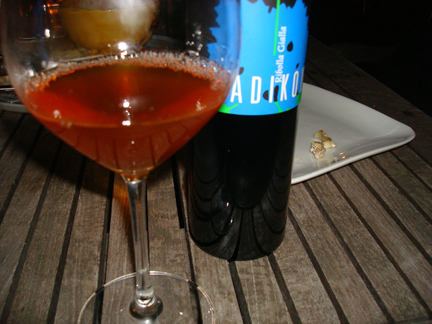
Above: This 500 ml bottle of 2002 Radikon Ribolla was opened at what might have been the perfect moment in its evolution, although I would guess it still has many years ahead of it. Brilliant wine. Simply brilliant.

Honestly, I was so thrashed from 3 days of eating way too much food and way too many tastings and meetings that I was entirely stoked to just hang out with the coolest folks, drink awesome wine, nibble on cheese and salame, and just shoot the shit and laugh my ass off.

As Anthony said the other day, I wish folks would stop drinking the “hatorade.” THIS IS WHAT WINE BLOGGING SHOULD BE ABOUT. Sharing wines, sharing experiences, learning and giving, having fun, and fueling our curiosity and minds with interesting wines and enriching our hearts with generosity and kindness.

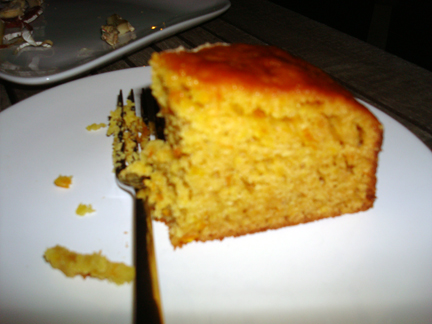
Above: Bibulously’s wife stayed home with their kid. But she sent over this excellent savory cake. She said “the cake was plain and simple,” Bibulously wrote me the day after, “olive oil and preserved oranges.” It was off-the-charts delicious.

Everyone who knows me knows that I rarely eat desert. I was chubby as a kid and so I only eat desert when I REALLY LOVE it.

That night in Chicago, the monkey drank the wine and he got desert, too!

Thanks again, Nathan, Lars, and Kelly. You guys R O C K! And thanks for reminding me what it’s all about

The wine world mourns the loss of Alfredo Currado, one the “great elders” of Langa

Above: Alfredo Currado (left) and Bartolo Mascarello. Photo courtesy Weimax.

My friend Michele Scicolone sent me a Facebook message yesterday to let me know that one of the most beloved figures of Italian wine, Alfredo Currado, has sadly passed away. He will be remembered for his “pioneering” work in crafting cru Barolo and Barbaresco, for his revival of Arneis, his winery’s single-vineyard expressions of Barbera, and his legacy as a true humanist winemaker. Mr. Franco Ziliani and I have published an obituary this morning at VinoWire.

More on Produttori del Barbaresco’s decision not to bottle their 2006 crus

Thor, a wine writer and blogger whom I greatly admire and an all-around mensch, wrote the other day to winemaker Aldo Vacca (left) inquiring about his decision not to bottle his 2006 crus. Thor was kind enough to share Aldo’s response and Aldo was kind enough to allow me to post it here.

Technical reason: 2006 is a very good vintage, but warm and ripe, lacking a little bit of the finesse and complexity to make a truly great S[ingle]V[ineyard wine] and yet preserve excellent quality in the regular bottling. We think 2005, lighter in body, has more fruit and balance, at least in Barbaresco and at least for Produttori.

Marketing: with the current economy we thought it more appropriate to produce a larger quantity of solid, extremely good 2006 Barbaresco avoiding a flooding of the market with too many SV wines, since 2007, 2008, 2009 will all be produced. Had 2007 or 2008 been bad vintages, we would have released 2006 SV, but since we have so many great ones, we felt we could skip one and stay on the safe side of the fence.

—Aldo Vacca

The saga of 2006 Nebbiolo continues…

produttori del barbaresco

Above: I snapped this photo when I visited what may be my favorite winery of all time, Produttori del Barbaresco, in March of this year. Are the 09s destined to be bottled as crus?

Yesterday, in the wake of the publication of Antonio Galloni’s superbly written and recently published notes on 2006 Barolo, friends Thor and Scott brought to my attention the fact that Aldo Vacca of Produttori del Barbaresco has decided not to bottle his 2006 crus.

Aldo’s been traveling in the U.S. and while I haven’t spoken to him directly about this, various emails and links thrown about led me to a thread in the unforgiving landscape of WineDisorder.com, where a kind gentleman named Bob wrote the following:

    Attended a Produttori event last night. Asked Sr. Vacca about the 2006 standard. He mentioned a couple of items that went into the decision re: no riservas. One was the concern that the standard bottle would be be too unbalanced with not enough fruit to match the structure. Too lean for the style that they try to produce. They take the standard bottling very seriously at the co-op. Also, given the embarrassment of riches in recent vintages, he felt that the co-op could go a vintage without the range of riservas for one year. He mentioned experience with previous vintages like 1995 (riservas made because none since 1990, but standard was perhaps too lean) and 1998 (standard might have been too lean, so riservas not produced after a few vintages in a row that were) that informed their thinking in 2006. Also, there was first lot of standard released locally in Albese before the potential riserva juice was blended in. All lots since then have been blended, including what’s in international markets now. Co-op’s current plans include riservas in 2007 and 2008.

And so the saga of 2006 Nebbiolo from Langa continues…

In other news… that’s what friends are for…

poggione

Got to drink the above last night thanks to my friend Tom. Wow… Did I mention that I love Il Poggione? Both wines were simply stunning. Thanks, Tom! You R O C K!

And in aesthetic news…

chicago

Chicago is such an interesting city to look at. Whenever I visit the city, I can’t help but think of how it represents an encyclopedia of and monument to America’s industrialization and its twentieth-century pre-imperial glory. It was a beautiful day in the city yesterday when I arrived. Snapped the above walking from the L Train to my hotel.

Gotta run now… Meetings, meetings, meetings… Thanks for reading, ya’ll!

A big tree and a little tree in Montalcino

Above: Alessandro Bindocci (above) and his father are “on a roll,” wrote one of my favorite wine writers, Antonio Galloni in the April issue of The Wine Advocate published today. I took the photo of Ale in September 2008 at Tenuta il Poggione.

Alfonso does a series of posts on his blog about “big trees” and “little trees,” in other words, mothers and fathers and daughters and sons who work and live in the Italian wine industry. Alfonso’s worked in Italian wine for some time now and let’s just say that he’s seen a few big trees go and a few little trees sprout up.

One of the things that Tracie P and I thought and talked a lot about on our February trip to Italy was the relationships between mothers and fathers who make wine and their children. In some cases, the children aren’t interested in furthering the legacy of their parents, in other cases they are. Sometimes the conflict that arises thereof can lead to bitter quarrels. Other times there is a harmony — not always perfect but ultimately sturdy — that ensures the continuity of the parents’s legacy.

In March when I went back to Piedmont, I asked Enrico Rivetto’s father what he thought about his son’s newfangled blog. “I think he’s crazy,” he replied. “But, then again, my father thought I was crazy when I told him we should make a single-vineyard Barolo.” However reluctantly, the elder Rivetto supports his son’s blogging project.

My friend Alessandro Bindocci is a blogger as well. His father Fabrizio the winemaker at Tenuta Il Poggione (one of my favorite Brunello producers and my long-time friend), can’t even send an email. Alessandro can monitor vinfication using his blackberry.

I was thrilled to read Antonio Galloni’s glowing words for Fabrizio and Alessandro’s wines on Ale’s blog this morning.

As Tracie P and I talk about us making little trees ourselves, it’s a wonderful and warm thought to think that some day they may get to taste wines in the same traditional style Brunello that we love so much. By the time our putative children will be old enough to appreciate fine wine, the wines won’t be Fabrizio’s any longer. They’ll be Alessandro’s.

Mazel tov, Ale. Congrats on your superb scores from Galloni!

Alice in the news, but not for wine (you’re not going to believe this)

Above: Alice, Tracie P, and I had dinner together last year in Paris and did some natural winebar hopping together.

One of the things I admire the most about our good friend Alice Feiring is that she’s a great writer — a great American writer, a great New York writer — and she writes about wine the way Philip Roth would write about wine if he wrote about wine. Her subject is non-fiction but she approaches it the way a novelist approaches narrative: like a fiction writer, she tells a story about wine — often personal, often drawing from her own life experience — to reveal truths about her subject otherwise lost upon the naked eye.

Alice was in the news this morning, but not for wine. She was one of the scores of women “persuaded to pose” for the “Dating Game Killer,” Rodney Alcala in the late 1960s. Here’s a link to the story that appeared today in the Daily News.

I’m just so glad that she’s okay… I just can’t imagine a world without her.

Together again, naturally

breg

Above: Nothing to Breg about, to borrow Alfonso’s pun. Last night, he, Tracie P, and I shared a bowl of her slow-cooker cannellini beans and escarole in our home in Austin. Decanted and with a few hours of aeration, the 2000 Breg by Gravner bowled me over, in every sense of the word. Thanks, Alfonso!

Natural wine has been on my mind (again) lately. In part because of a recent appeal posted on the Slowine website (and brought to my attention by Italy’s top wine blogger, Mr. Franco Ziliani) calling for Italy’s “natural wine” fairs (namely, Vini Veri and VinNatur) to be incorporated into the annual Italian wine industry mega-fair Vinitaly. I stayed home this year and didn’t attend but when I posted event details for Vini Veri, a number of folks — including some high-profile industry types — weighed in on the side of consolidation.

slowcooker

Above: There’s just no other way to put this. Tracie P’s legumes were divine last night. Every bean was perfectly whole but then melted in the mouth. Did I mention that the beautiful lady behind the lens also has a natural gift for photography? She snapped the above.

Natural wine has also been on my mind because I’ve been following Alice’s truly excellent posts on the nature — semantic, metaphysical, and sensorial — of natural wine, the winemakers and movement(s) that support and profess it, and the new space it occupies in the language and the perceptions of the mainstream. The latest post, entitled “What is Natural Wine?”, may be the best, but I highly recommend the previous two posts (here and here) and the Washington Post article that prompted the series, “Natural Isn’t Perfect” by Dave McIntyre.

bacon

Above: Not only did Alfonso bring the Gravner last night, he also brought some awesome bacon from Robertson’s in Salado, Texas. @BrooklynGuy, you would love this stuff.

In other natural wine news, the excellent Italian wine blog Intravino posted a profile of natural wine trailblazer Joe Dressner and the blog devoted to his truly heroic battle with brain cancer (also brought to my attention by Mr. Ziliani and btw here’s a link to Joe’s blog).

In an email I received yesterday from Étienne de Montille, the famous winemaker wrote that “I should have left for Tokyo Sunday but… Nature has decided otherwise.”

Volcano or no volcano, the transatlantic dialogue moves forward as “natural wine,” however it is conceived or perceived, indelibly enters into the collective vinous consciousness. Only good can come of it.

Whadda night! Anthony Wilson Trio at the Neurosciences Institute, La Jolla

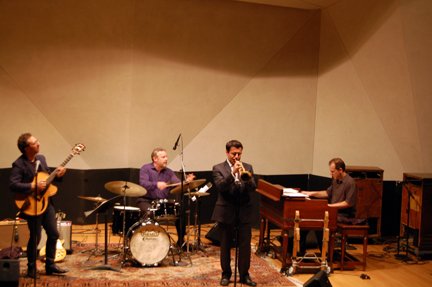
Above: What a mindblowingly great show last night by The Anthony Wilson Trio, with Larry Goldings on Hammond B-3, Jeff Hamilton on drums, and guest Gilbert Castellanos on trumpet! The old auditorium at the hyberbolically postmodern Neurosciences Institute in La Jolla continues to be a great “room” to hear jazz.

Wow, last night, whadda night… At the last minute, our good friend Robin Stark hooked me up with a ticket via her frequent flier miles and got me into La Jolla for Anthony Wilson Trio’s show at the Neurosciences Institute.

These guys — each of them a jazz master in his own right — performed two spell-binding sets, with original composition “Mezcal” flooring me in the first, and the theme to the movie Chinatown transporting me (and a lot of other folks) to a new plane of consciousness (I’m not kidding) in the second. Both tracks appear on Anthony’s latest disk, Jack of Hearts. They also did a hauntingly gorgeous cover by Judee Sill (can someone remind me of the title?) and a a couple of Ellington covers.

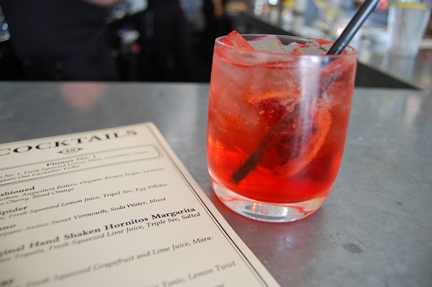
Above: Stopped in briefly for a Campari and soda at Jaynes, now serving cocktails nightly.

Brother Tad and nephew Cole (both of them jazz aficionados) were there, as were Yelenosky and Jon and a whole mess of nice La Jolla folks I know. Jayne and Jon hosted the after-party for the band and Robin’s posse at their home. Robin, who underwrote the performance, was talking up her ProKids charity: “The mission of Pro Kids is to positively impact the lives of inner-city youth by providing programs that promote education, character development, life-skills, and values through the game of golf.”

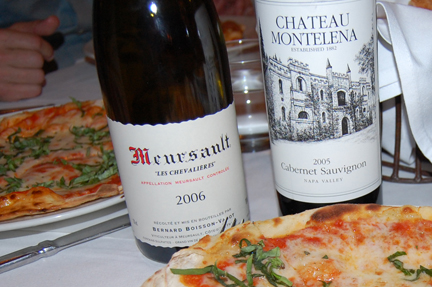
Above: 2006 Meursault Les Chevalières by Boisson-Vadot and 2005 Cabernet Sauvignon by Chateau Montelena with pizza for dinner. That’s how one rolls in La Jolla. The Montelena, which I was tasting for the first time, impressed me with its restraint. The Boisson-Vadot? Killer. To borrow Lyle’s phrase, rocks and fruit.

I’m already on a plane back to Texas (posting from the plane!) and I’m looking forward to a weekend at home with that super fine lady of mine.

With the arrival of spring and the wine industry and its media back at full throttle these days, I have to confess that the lame-assed negativity of certain bloggers (and haters) has been bringing me down lately. I don’t know why certain folks can’t realize this blog — my blog — is about my life and nothing more… It’s a journal, its entries filled with my experiences, the wines I taste, the foods I eat, the pairings I stumble upon, the music I like to listen to, and my impressions of the places where I travel and the people I meet.

Anthony Wilson is definitely one of the coolest dudes I’ve ever met and we all had a blast drinking some killer wines, listening to vinyl, munching out, and hanging at Jayne and Jon’s after the show. A truly “epic” night, as we say in Southern California.

I was reminded just how lucky I am to be surrounded by such wonderful folks who truly care about and for me, warm family that cherishes my happiness and my achievements, and a gorgeous and loving lady, whose affection and carbonara truly rock my world…

Yesterday, I was treated to a heaping serving of awesome music, thanks in part to friends who know how much I like that type of thing and who just generally like having me around.

This post is for me to look back on and remember this moment and how it made me feel. This post is dedicated to those friends…

Thanks for reading…

Vinitaly observed from afar

Vinitaly went on without me this year. As much I was glad to spend some time at home this week, after already too much time on the road in 2010, I can’t conceal that I was disappointed not to attend this year. But I’ve been following a lot of truly great blogging from the fair. Here’s a round-up of some of the blogs I’ve been following so that I can get my virtual fair on…

Avvinare really took it up a notch with some great coverage of the tastings she attended. I really liked her post on the Franciacorta seminar (and highly recommend all of her posts from the fair).

I’m also dying to read Tom Hyland’s notes on the Franciacorta tasting but his not-yet-posted notes on a Vermentino Nero (!!!) are the ones keeping me on the edge of my seat and glued to my screen. He posted some first impressions here.

A lot of folks received fancy awards, including Eric Asimov who was given a Grandi Cru d’Italia prize for best foreign wine writer, as reported by the excellent blog Consumazione Obbligatoria.

Ale over at Montalcino Report posted about a prize given to his family’s importer Tony Terlato (and to other Italian American notables) by the American Chamber of Commerce in Italy. I grabbed that picture of Ale’s stand, above, where I taste every year, from Ale’s Facebook fan page.

I also read about Italian president Giorgio Napolitano’s historic visit to the fair over at the ANSA English-language feed and I translated some of Mr. Franco Ziliani’s thoughts about lame duck agriculture minister Luca Zaia’s braggadocio over at VinoWire.

And of course, Vinitaly wouldn’t be Vinitaly without at least one day of rain, as Ale reported, and some Miss Vinitaly watching by top sommelier Andrea Gori.

But the blogger that’s really been killing me has been Alfonso, who’s been “turning Visentin” without me!

Xe sempre l’ultimo giosso queo che imbriaga…